
新概念英语第二册第一课
PRACTICE & PROGRESS
实践与进步
本课程强调五项综合技能训 练
listening:
听力 speaking: 说话 reading : 阅读 writing :写作 translation :译
grammar 语法
本课程将结合中考系统讲授初
中语法知识 进行大量的词汇扩展,使你的 词汇量倍增 在课堂上进行大量口语练习, 系统纠正发音,训练英语思维 大量的文化背景知识介绍
eg: This man is very interesting. The book is so interesting that I do not want to put it down.
interested adj. .对…感兴趣的
be interested in sth/ doing sth eg. I am interested in sports. 乔教授对集邮非常感兴趣. Professor Qiao is very interested in collecting stamps.
No, he didn't.
Last week I went to the theatre.上星期我去看戏。
*theatre (theater AmE)剧场,戏院
go to the theatre 看戏去 eg: Shall we go to the theatre tonight, I have got two tickets. cinema n.电影院 eg: There are few fine cinemas in the city. go to the cinema 看电影去。
enjoy v.享受…之乐,欣赏,喜爱
enjoy doing sth enjoy swimming 喜欢游泳。 How did you enjoy your trip 旅行如何? enjoy one's dinner 饭吃得津津有味。
vt. enjoy sth enjoy doing sth have fun 尽情玩 We enjoyed ourselves at the party.
Thank you for listening, see you next time
Useful words: 1. drama: 剧本, 戏剧 eg. He is writing a new drama. 2. show business : 表演业
I had a very good seat. The play was very interesting. I did not enjoy it.我的座位很好,戏很有意思,但我却无法欣 赏。 interesting adj .引起兴趣的,有趣的
A young man and a young woman were sitting behind me. They were talking loudly.一青年男子与一青年女子 坐在我的身后,大声地说着话。 behind prep.&adv. 在…后面 eg. She stood behind a tree. behind the times 落伍, 赶不上潮流 eg. I am sorry to say, my dear, your clothes are a bit behind the times. back of ( in back of ) 在…后面 eg: He hid in back of the house.
要求学生背诵每课课文
课后作业跟进检验学习效 果
以不发音的e----planned
肯定式: John wrote a letter to his father yesterday.
否定式: John didn't write a letter to his father yesterday. 疑问式: Did John write a letter to his father yesterday? 回答: Yes, he did./
I got very angry. I could not hear the actors. I turned round. I looked at the man and the woman angrily. They did not pay any attention. 我非常生气,因为我听不见 演员在说什么。我回过头去怒视着那一男一女,他们却 毫不理会。 actor 演员, 男演员 actress 女演员 waiter侍者 waitress女侍者 host主人, 节目主持人 hostess女主人
在前面 : in front 在前面adv. eg: I will go in front, you come after. in front of 在…前面 prep eg: He was standing in front of me. in the front of 在…(整体内部的)前面 eg: He is sitting in the front of the car with the driver. ahead 向前 adv. eg: Wait here, I will go ahead and see if everything is all right. ahead of 在…之前prep. eg. She is ahead of all the other girls in her class in English.
新概念英语第二册第一课课文及翻译

新概念英语第二册第一课课文及翻译之邯郸勺丸创作【Text】 Last week I went to the theatre. I had a very good seat. The play was very interesting. I did not enjoy it. A young man and a young woman were sitting behind me. They were talking loudly. I got very angry. I could not hear the actors. I turned round. I looked at the man and the woman angrily. They did not pay any attention. In the end, I could not bear it. I turned round again. "I can't hear a word!" I said angrily. "It's none of your business," the young man said rudely. "This is a private conversation!"
参考译文:上星期我去看戏. 我的座位很好, 戏很有意思, 但我却无法欣赏. 一青年男子与一青年女子坐在我的身后, 大声地说着话. 我非常生气, 因为我听不见演员在说什么. 我回过头去怒视着那一男一女, 他们却毫不睬会. 最后, 我忍不住了, 又一次回过头去, 生气地说: “我一个字也听不见了!” “不关你的事, “那男的毫不客气地说, “这是私人间的谈话!”。
新概念英语第二册第一课词汇讲解
新概念英语第二册第一课词汇讲解Lesson 1 A private conversation【New words and expressions】(12)private adj. 私人的 conversation n. 谈话 theatre n. 剧场,戏院 seat n. 座位 play n. 戏 loudly adv. 大声地 angry adj. 生气的 angrily adv. 生气地 attention n. 注意 bear v. 容忍 business n. 事 rudely adv. 无礼地,粗鲁地★private adj.私人的① adj. 私人的 private life 私生活 private school 私立学校 It's my private letter. (如果妈妈想看你的信) It's my private house. (如果陌生人想进你的房子)② adj. 普通的 private citizen 普通公民 I’m a private citizen. (citizen n. 公民) private soldier 大兵《Private Ryan》(《拯救大兵瑞恩》) public adj. 公众的,公开的(private的反义词) public school 公立学校 public letter 公开信 public place 公共场所 privacy n.隐私It’s privacy. 这是我的隐私!(不愿让别人知道的) ★conversation n.谈话 have a + talk/chat/dialogue/conversation/gossip 名词变动词 conversation 一般用于正式文体中, 内容上往往不正式subject of conversation 话题They are having a conversation. talk 内容可正式可不正式, 也可以私人 Let’s have a talk. dialogue 对话, 可以指正式国家与国家会谈 China and Korea are having a dialogue. chat 闲聊,就是北京人说的“侃”,说的是无关紧要的事。
新概念英语第二册 第一课(共22张PPT)
12. It’s none of your business. 关你屁事;这不关你的事。
class.上课期间你要专心听老师讲课。 15. ___I_n__th__e__e_n_d____they reached a place of safety.
他们终于到达了一个安全的地方。
16. Peter and Tom made up __in___th__e__e_n_d____.
彼特和汤姆最后和解了。 17. The shelf, too weak to ___b__e_a_r___all the books,
14. private ['praɪvət] adj. 私人的;个人的;私下的;私有的
The president is paying a private visit to Europe. 总统正在欧洲进行私人访问。 We each have our private views about it. 我们每个人对这件事都有自己的看法。
关你屁事;这不关你的事。 13. __r_u_d__e_l_y_ adv. 无礼地;粗暴地 14. __p__ri_v_a_t_e__ly___ adj. 私人的;个人的;
私下的;私有的 15. __c_o__n_v_e_r_s_a__ti_o_n_ n. 谈话;会话
Step 2 在语境中加深对词汇短语的理解与记忆,掌握其具体用法。 1. theatre [ˈθiːətər] n. 电影院,戏院;戏剧
《新概念英语第二册》第一课笔记
n./pron. vt. n./pron. n./pron.
5. 主语 + 谓语 + 宾语 + 宾语补足语(宾补).
n./pron. vt.
n./pron. adj./to do sth.
e.g: He found this trip very exciting.
系动词:
1 . be 动词(am/is/are; was/were) 2. 感官动词(look, smell, taste, sound, touch, feel) 3. 保持(keep, stay, remain, maintain) 4. 变化(go, get, grow, turn, become)
4
4. enjoy doing sth. 喜欢做某事
9. pay attention to sth. 注意某物
enjoy oneself 玩得开心;过得愉快
10. in the end 最终;最后
= have fun/have a good time
11. bear sb./sth. 容忍某人/某事
5. have a conversation with sb. = talk with sb.
1. 上周我去剧院。_________________________________________. 2. 一青年男子与一青年女子坐在我的身后。
________________________________________________________. 3. 我非常生气。__________________________________________. 4. 我回头。_________________________________. 5. 最后,我忍不住了。 _____________________________________.
新概念英语第二册第一课
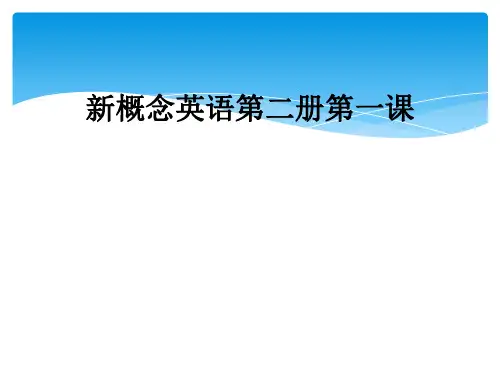
不注意 有点注意 亲密注意 更多注意
10. bear v. 容忍
eg. I can't bear it. 我受不了了。 stand=put up with=bear 都可以表示容忍
bear n. 熊 a big black bear 一头大黑熊
11. business n. 事
12. rudely adv. 粗鲁地
疑问式: Did John write a letter to his father yesterday?
答复: Yes, he did./ No, he didn't.
Last week I went to the theatre. I had a very good seat. The play was very interesting. I did not enjoy it. A young man and a young woman were sitting behind me. They were talking loudly. I got very angry. I could not hear the actors. I turned round. I looked at the man and the woman angrily. They did not pay any attention. In the end, I could not bear it. I turned round again. 'I can't hear a word!' I said angrily. 'It's none of your business,' the young man said rudely. 'This is a private conversation!'.
新概念英语第二册第一课

go to + 人’s 表示去这个人开的店或者某人家
go to the doctor’s 去看医生 go to the butcher’s 去买肉 go to the Sally’s 去Sally家
enjoy + sth. 喜欢;从中得到一种享受
eg. I enjoy the class/music/book/movie. enjoy yourself/ have fun: 玩的开心
attract/ draw attention 吸引注意 eg.
Films with stars always attract great attention .
As the youngest child, she was always the center of attention.
bear : (bore , borne) v. 容忍
Let’s get down to our business. 让我们言归正传。
Note on the text
go to the theatre 去戏院
go to + place(地点) 表示去某地干什么
go to the hospital 去医院看病
go to school
去上学
go to the cinema 去看电影
turn round = turn around 转身
turn sb. away : 拒绝,(戏院,电影院等)不让进。
turn back 掉头,折回 turn back the clock 重归于好,倒退 turn on/ off 打开/关掉 turn into 变成 turn sb./sth. into sb. In a flash light, the prince turned into a frog.
逐句精讲新概念英语第二册第一课 私人谈话
逐句精讲新概念英语第二册:第一课私人谈话Lesson 1 A private conversation课文内容:Last week I went to the theatre. I had a very good seat. The play was very interesting. I did not enjoy it. A young man and a young woman were sitting behind me. They were talking loudly. I got very angry. I could not hear the actors. I turned round. I looked at the man and the woman angrily. They did not pay any attention. In the end, I could not bear it. I turned round again. 'I can't hear a word!' I said angrily.'It's none of your business, ' the young man said rudely. 'This is a private conversation!'本文语法:简单陈述句语法归纳:一个完整的简单陈述句一般包括主语+谓语(+宾语+方式状语+地点状语+时间状语),其中状语可前置于句首。
逐句精讲:st week I went to the theatre.上星期我去看戏。
语言点1 时间状语开门见山,点明时态为过去时,因而谓语动词go to使用过去式went to。
语言点2 在theatre,cinema,picture等名词前一定要加定冠词the。
如:go to the theatre/play去看戏;go to the cinema/movies去看电影(英/美);go to the pictures/films去看电影;be at the theatre/cinema在戏院看戏/在电影院看电影。
新概念英语第二册第一课附中考练习题
新概念英语第二册第一课附中考练习题Last updated on the afternoon of January 3, 2021l e s s o n1A p r i v a t e c o n v e r s a t i o n私人谈话First listen and then answer the question.听录音,然后回答以下问题。
Why did the writer complain to the people behind him?Last week I went to the theatre. I had a very good seat. The playwas very interesting. I did not enjoy it. A young man and a youngwoman were sitting behind me. They were talking loudly. I gotvery angry. I could not hear the actors. I turned round. I looked atthe man and the woman angrily. They did not pay any attention. Inthe end, I could not bear it. I turned round again. 4I can't hear aword!’I said angrily.It’s none of your business,’the young man said rudely. ‘Thisis a private conversation!'New words and expressions 生词和短语private /'praivit/ adj. 私人的conversation [.kɑnvr'se()n]谈话theatre ['θitr/]剧场,戏院seat /si:t/ n.座位play /plei/ 戏loudly [ladl]adv.大声地angry /'aengri/ adj.生气的angrily /'aengrili/adv.生气地attention ['ten()n] n.注意bear [ber](bore ,borne ):n/) v.容忍,小熊business ['bzns]n.事Rudely [ru:dli]adv.无礼地,粗鲁地Notes on the text 课文注释go to the theatre,去看戏got angry,生气。
(完整word版)新概念英语第二册第一课课件
Lesson 1 A private conversation1. private: ['praivit] Adj. 私下的,私有的( secret; not for everyone's use)I wish to have a private conversation with you.联想: public 公共的;privacy隐私;清净经典用法: in private 私下里private school 私立学校2. theatre: n. 剧场,戏院;戏剧;A building where plays are performed; play London has more theatres than any other British city.经典用法: go to the theatre 去看戏theatre-goer n.看戏的movie theatre 电影院the theatre of Shakespeare 莎士比亚戏剧3. seat: [si:t] n. 座位; vt. 使坐下a place to sit ;to let somebody sit down.Ladies and gentlemen, please be seated.经典用法: have a seat / take a seat 就坐be seated / seat oneself /坐下4. play: [plei] c. n.戏剧;u. n. 游戏联想: play 无规则的游戏;玩game 有规则的游戏;运动,比赛经典用法: put on a play(上演一场戏)children at play(玩耍的孩子)5. loudly: [`laudli] Adv. 大声地,高声地Don't talk so loudly.联想: (同) aloud 出声地;read aloud(朗读)noisily(嘈杂地)6. angry: adj.发怒的,生气的;狂暴的(风雨)Please don't get angry with me.联想: get cross/ mad(发怒); unhappy(不快)经典用法: angry person/ look(愤怒的人/表情)be/get angry with somebody.(生某人的气)7. pay: [pei](to give money for something you have bought)n. 薪水vt. 付款;给予I paid her $200 for the painting.经典用法: pay attention to (注意); pay sb a visit (拜访某人)8. attention: n. 注意,关心;注意力Now they have stopped paying attention to the film star.经典用法: pay no attention to (毫不在乎…)the center/focus of attention (关注的焦点)9. end: [end] (the last part of sth;to finish or stop)n. 末了,终点;v.结束Then he sat down on the seat at the end of the garden.经典用法: at the end of something(在...的末尾);in the end(最后)联想: finally;at last(最终);eventually[终于(经过努力之后)10. bear: suffer from; put up with vt.忍受;负担;带来I don't feel very well. I can't bear this weather.联想:(同)stand(忍受); tolerate(宽容); sustain(支撑)11. none: pron.没有人(事);adv.(决不)None of them speaks English very well.联想: no one , not any one (后不可加of)(注意:none 后可接of)12. business: [`biznis] n.事务,职责,生意(the activity of buying and selling; sth that concerns you)经典用法: It's none of your business.(不关你的事。
新概念英语第二册第一课-PPT
business [ˈbɪznɪs]
n. 事
rude rudely
[ruːd] [ˈruːdli]
adj. 粗鲁的 adv. 粗鲁地
1、What did the writer do last week? 2、Why couldn't the writer enjoy the play?
Last week I went to the theatre.I had a very good seat.The play was very interesting.I did not enjoy it.A young man and a young woman were sitting behind me.They were talking loudly.I got very angry.I could not hear the actors.I turned round.
一般过去时的否定句:主语+didn’t + v原形+ 其它 主语+wasn’t/ weren’t+其它
过去进行时
A young man and a young woman
were sitting behind me.
They were talking loudly. 过去进行时:表示过去某一特定时刻正在进行的 动作。 与现在进行时相比,过去进行时的区别就在于要 用be的过去式。 主语+was/were+动词ing .
get angry 系表结构,生气
be angry with sb. 表生气的状态
get angry with sb. 表生气的过程
I could not hear the actors.