
2019年精选牛津上海版小学英语六年级下册unit 5 What will I be like习题精选-含答案解析五十五
2019年精选牛津上海版小学英语六年级下册unit 5 What will I be like习题精选-
含答案解析五十五
第1题【单选题】
parents took part in our Open Day last Thursday.
A、Two hundreds
B、Two hundred of
C、Hundreds of
D、Two hundreds of
【答案】:
【解析】:
第2题【单选题】
Would you like coffee?
A、any
B、a lot
C、much
D、some
【答案】:
【解析】:
第3题【单选题】
Eric would rather at home on such a rainy and windy day.
A、to stay
B、staying
C、stays
D、stay
【答案】:
【解析】:
第4题【句型转换】
We get to our school at 8 o"clock. (保持句意基本不变)
We____________our school at 8 o"clock.
We______our school
at 8 o"clock.
【答案】:
【解析】:
第5题【句型转换】
They got to the airport at twelve last night. (保持句意基本不变) They____________the airport at twelve last night.
【答案】:
【解析】:
第6题【句型转换】
They have already packed their suitcases. (改为否定) They____________their suitcases______.
【答案】:
【解析】:
第7题【句型转换】
Would you like some coffee? (保持句意基本不变)
______you______some coffee?
【答案】:
【解析】:
第8题【单词拼写(词汇运用)】
A f______helps
people to put out fires.
【答案】:
【解析】:
第9题【单词拼写(词汇运用)】
An a______travels
in a spacecraft.
【答案】:
【解析】:
第10题【语法填空】
This heavy box______twenty kilograms. (weight) 【答案】:
【解析】:。
牛津上海版六年级英语下册unit 5 what will i be like 教学课件

这些工具你见过吗?
这些工具你见过吗?
这些工具用过的工具
工具名称 可以做哪些事 工具名称 可以做哪些事
剪刀 螺丝刀 羊角锤 小刀
剪纸,裁布,剪头发, 剥线钳
刮鱼鳞,撬图钉等
拧、卸螺丝,撬盖子, 扳手
敲钉子等
撬钉子,钉钉子,敲 开瓶器
平铁片,敲核桃等
削铅笔,切水果, 裁纸,割木板等
---What will Jill possibly be in 15 years’ time?
---She will possibly be a singer.
Read and fill in the blanks
Jill loves__l_is_t_e_n_in_g__t_o_m__u_s_ic_. She is good at___s_in_g_i_n_g__. In 15 years’ time, Jill will be___t_a_ll_a_n_d__s_li_m_. She will be _1_6_8_centimetres tall. She will weigh __5_2_kilograms. She will be___g_o_o_d_-l_o_o_k_i_n_g_. She will possibly be___a_s_i_n_g_e_r_.
羊角锤
是美国人在20世纪初发明的,如今被 广泛使用,是一种常用手动敲击类工具. 可以用来拔钉子,也可以用来敲击工件.
各种各样的工具
活动扳手
是用来紧固和起松螺母的一种工具。
各种各样的工具
管钳
铁质管道,管件连接时,用来紧固或松动 的工具.
各种各样的工具
开瓶器
钳工锤
用于物体加工敲击用.
Unit 5 What will I be like 单元分析以及教学设计 牛津上海版英语六年级下
Unit 5 What will I be like一、单元教学内容与目标1. 语言知识● 核心词汇:possible,future,button, press, back, weigh, kilogram, slim, reporter, baker. singer, agree, possibly, grow, bakery, report, poor,拓展词汇:magic, astronaut, centimeter, good-looking, slim, spacecraft● 词组:1.my possible future 我可能的未来2.stand in front of a magic camera 站在一个神奇的照相机面前3.take a photograph with it 用它照张相4.wait for the red light 等待红灯5.look for the START button 寻找开始键6.read the note on the back 看看在背面的信息7.in 15 years’ time 过15年之后8.will be 165 centimeters tall 将会165厘米高9.will weigh 55 kilograms 体重将有55公斤重10.more beautiful 更美丽(是beautiful的比较级)11.an astronaut 一个宇航员12.be good/poor at sth. 擅长/不擅长于某事be good/poor at doing sth. 擅长于做某事13.wear glasses 戴着眼镜14.put out fires 灭火15.will be tall and strong 将又高又强壮/ will be good-looking 将很好看16. grow bigger 长得更大17. will read and write a lot 将大量地看和读 a lot 大量,许多● 词性转换1.reporter (n.) 记者report (v.) 汇报,报道2.baker (n.) 面包师bake (v.) 烘,烤3.singer (n.) 歌手sing (v.) 唱歌4.possibly (adv.) 可能地possible (adj.) 可能的impossible (adj.) 可能的5. weigh (v.) 称出重量weight (n.) 重量● 知识点:1)Show agreement(同意)and disagreement(不同意)-- Peter will possibly be a policeman.-- Yes, I agree. /No, I don’t agree.I think he’ll possibly be a fireman.2)Talk about future appearances(谈论将来的容貌)-- What will I be like?-- You will be 165 centimeters tall.3)Show possibility(可能性)I’ll possibly be a policeman or a fireman..4) 情态动词have to后面跟动词原形5)用First, Next, Then, Finally等副词来表示时间顺序6) 一般将来时will be2. 语言技能1能运用情态动词have to来表示在客观要求下不得不做某事。
牛津版上海版英语六年级下册 Unit 5 What will I be like 课件1
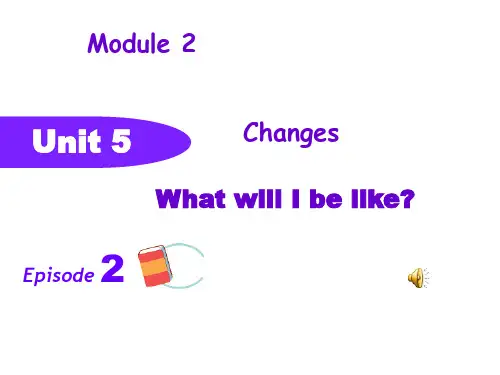
He is good at sports.
☆ What will Peter be like in 15
years’ time?
Peter will be tall and strong.
☆ Will he wear glasses?
No, he will not.
3.She will be______
…
Jessica
sing er
sing some songs
Look and learn beautiful
good-looking
slim ---fat
good at singing (poor at singing)
What will Jessica possibly be?
In 15 years’ time
tall, slim, 168cm, 52kg, good-looking …
Look and think Jill
In 15 years’ time
Jill loves listening to music. She is good at singing. In 15 years’ time, Jill will be tall and slim. She will be 168 centimetres tall. She will weigh 52 kilograms. She will be good-looking.
S1 Yes, I agree./
: No, I don’t agree. She will possibly be
a/an _____.
good at
slim
tall
【牛津上海版】(一起)六下:Unit 5《What will I be like》ppt课件(2)
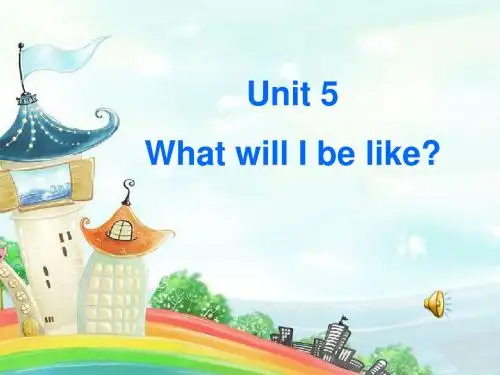
I have to learn how to make sick people better.
Listen and write(exercise) 1
About Joe What would Joe like to be? Write a report.
I will possibly be __________________. an astronaut I am poor at ______________________. Maths
I have to practise ____________ Maths more.
Read, guess and talk(exercise)2
1.Read the essay twice. 2.Tell your parents and your friends about your possible jobs in future. 3.Do a report about your jobs in future.
Unit 5
What will I be like?
Module
2
Changes
Unit 5
What will I be like?
Episode
4
Writing:
ቤተ መጻሕፍቲ ባይዱ
A report on my future
Think and say
I’m good at flying a plane in the sky, but I’m poor at flying a spacecraft in space.
Look and read
I’ll possibly be a policewoman or a teacher, but I’d like to be a doctor.
牛津上海版英语六年级下册Unit5WhatwillIbelike单元分析以及教学设计

(二)教学设想
1.创设情境:通过多媒体展示不同职业的图片和视频,让学生在真实语境中感知和运用目标语言,增强学习的趣味性和实用性。
-例如,展示医生、教师、科学家等职业的工作场景,引导学生用英语讨论:“What do you think I will be like when I grow up?”
4.词汇教学:通过词汇游戏、例句展示等方式,帮助学生记忆和运用新词汇。
-例如,设计“Word Chain”游戏,让学生在游戏中练习使用新词汇。
5.写作练习:引导学生撰写关于自己未来梦想的短文,巩固一般将来时态和目标词汇的运用。
-例如,布置“Letter to My Future Self”写作任务,让学生以信件的形式表达自己的梦想和期望。
3.写作练习:学生根据课堂讨论和个人思考,撰写一篇关于未来自己的短文。
-例如,以“Imagine My Future”为题,让学生运用新学的词汇和语法,描述自己的未来梦想和计划。
(五)总结归纳
1.教师引导学生回顾本节课的学习内容,总结一般将来时态的用法和重点词汇。
-例如,通过快速问答的方式,让学生回顾并巩固新学的知识。
-例如,听力材料中描述一个人的未来梦想,学生听后回答:“What does he/she want to be in the future?”
2.口语练习:学生两两搭档,使用一般将来时态和目标词汇,进行对话练习。
-例如,设计“Future Interview”活动,一位学生扮演记者,另一位学生扮演未来的自己,进行问答。
三、教学重难点和教学设想
(一)教学重难点
1.语法知识:一般将来时态的运用,特别是情态动词“will”的用法,以及与之相关的疑问词“what”引导的疑问句。
【牛津上海版】(一起)六下:Unit 5《What will I be like》ppt课件(2)

climbing tree
horse
running
dove
flying
fish
swimming
Listen and guess
1
2
3
4
听录音,猜职业。
Look and say( group work )
S1: What would you like to be?
S2: I’d like to be a reporter.
What are you good at and what are you poor at?
Suppose you are one of the animals. Tell others what you are good at and what you are poor at.
I’m good at …, but I’m poor at ….
• dentist • reporter
• baker • cook
• secretary • astronaut
Look and read
I’ll possibly be a policewoman or a teacher, but I’d like to be a doctor.
I’m good at Chinese, but I’m poor at English and Maths.
Unit 5 What will I be like?
Module
2
Changes
Uபைடு நூலகம்it 5
What will I be like?
4 Episode
Writing: A report on my future
牛津上海版英语六年级第二学期:Unit 5 What will I be like 学案设计(无答
Unit 5 What will I be like?【学习目标】1.能正确理解和运用本课出现的重要单词和短语。
2.读懂课文,能掌握主要信息和细节信息,并能介绍相关内容。
【学习重难点】1.正确理解和运用本课出现的重要单词和短语。
2.掌握主要信息和细节信息,并能介绍相关内容。
【学习过程】1.possible (a)可能地。
impossible:_______________________。
possibly (ad):_______________________。
2.magic (a)有魔力的。
magician(n) :_______________________。
3.press (v)按压。
press the button:_______________________。
4.kilogram (n)千克;公斤。
5.centimeter (n)厘米。
6.weigh (v)称重。
weight (n)重量:_______________________。
7.an astronaut 宇航员。
8.button (n)按钮。
9.What will I be like? /How will I be? 我将来会怎样?(外貌方面)What will I be?_______________________。
10.my possible future. 我可能的将来。
11.in front of 在……前面。
A tree in front of classroom._______________________。
in the front of在……前部。
A blackboard in the front of classroom._______________________。
12.take a photograph= take photographs 拍照(photos).13.smile at sb. 对某人微笑。
2019年牛津上海版六年级英语下册Unit 5 What will I be like 公开课课件
3.She is beautiful.
3.She will be______
…
Look and learn
Jessica
beautiful good-looking
slim ---fat
singer
good at singing (poor at singing)
sing some songs
What will Jessica possibly be?
Look and think Jill
In 15 years’ time
Jill loves listening to music. She is good at singing. In 15 years’ time, Jill will be tall and slim. She will be 168 centimetres tall. She will weigh 52 kilograms. She will be good-looking.
☆
What is he good at?
He is good at sports.
What will Peter be like in 15 years’ time?
☆ ☆
Will he wear glasses? What will he do?
No, he will not.
Peter will be tall and strong.
Module 2
Unit 5
Changes
What will I be like?
Episode
2
Look and guess
Jessica
What is Jessica like now?
牛津上海版六年级下册英语Unit5-What-will-I-be教案
Unit 5 What will I be?一、单元分析(Unit Analysis)(一)单元地位(Unit Position)1 本课中重点学习了“He/She/You will be____ centimeters taller./________ kilogrammes heavier.”“He/She/You will be____ and_____.”“He’ll/She’ll/You’ll possibly be a/an _____.”等使用一般将来时来叙述将来事实的句型.一般将来时在前面的课文中已经学过,但在课文中增加了与现在的一个比较,还要进一步的进行巩固性操练。
2 be good at sth/doing sth 的用法在本册书本Module One, Unit Three 的课文中出现过,在本单元中大量使用,并且新增了反义词组be poor at sth/ doing sth 的使用. 教师可通过问题化设计,让学生进行操练并掌握.3 用First, Next, Then, Finally等副词来表示时间顺序在6A中被介绍使用过,在本课中让学生进一步巩固复习。
4 在本单元中涉及的有关工作的词汇,建议以旧带新,在复习的基础上掌握新的内容。
(二)单元目标(Unit Target)1 运用情态动词have to来表示在客观要求下不得不做某事。
如I have to practise English and Chinesemore. / I have to learn to make sick people better.2 运用固定表达Yes, I agree. /No, I don’t agree. 来表达意见。
如Peter will possibly be a policeman.Yes, I agree. /No, I don’t agree. I think he’ll possibly be a fireman.3 操练有关将来外貌、喜好、职业的各种提问和对话。
牛津版上海版六年级下册 Unit 5 What will I be like 教学设计
牛津版上海版六年级下册 Unit 5 What will I be like 教学设计一. 教材分析牛津版上海版六年级下册Unit 5的主题是“What will I be like”,通过本单元的学习,学生将能够预测自己将来的外貌、性格和生活,并能够用一般将来时进行表达。
本单元的主要语言点包括一般将来时的构成(will + 动词原形)、外貌、性格和生活方式的描述词汇以及相关交际用语。
二. 学情分析六年级的学生已经掌握了英语学习的基本语法和词汇,对于一般将来时的概念也有了一定的了解。
学生具备一定的听说读写能力,能够进行简单的交际。
然而,部分学生可能在表达自己的预测时存在一定的困难,需要教师给予一定的引导和鼓励。
三. 教学目标1.知识目标:学生能够掌握一般将来时的构成和用法,学会用英语描述自己的外貌、性格和生活方式。
2.能力目标:学生能够在真实情境中运用所学语言进行交际,提高口语表达能力。
3.情感目标:学生能够激发对未来的憧憬和探索欲望,培养积极的人生态度。
四. 教学重难点1.重点:一般将来时的构成和用法,外貌、性格和生活方式的描述词汇。
2.难点:如何运用所学语言进行真实的交际,表达自己的预测。
五. 教学方法1.任务型教学法:通过设计各种交际任务,让学生在实践中学习和运用语言。
2.情境教学法:创设真实的情境,激发学生的学习兴趣和积极性。
3.合作学习法:鼓励学生进行小组合作,培养学生的团队精神和交际能力。
六. 教学准备1.教学课件:制作与本单元主题相关的课件,包括图片、视频等素材。
2.教学道具:准备一些与外貌、性格和生活方式相关的小道具,如眼镜、帽子等。
3.练习题:设计一些练习题,用于巩固所学知识。
七. 教学过程1.导入(5分钟)利用图片或视频展示一些未来的场景,引导学生思考未来的自己会是什么样子。
例如,可以展示一些未来的职业、科技发展的场景。
2.呈现(10分钟)教师通过展示一些与外貌、性格和生活方式相关的小道具,引导学生用英语描述自己的预测。