
外研版(三起)-英语-四年级下册--Moudle8 Unit 2教材同步讲解
【新课堂】Moudle8 Unit 2教材同步讲解
(教材47~49页)
1.Listen, point and say.听一听,指一指,说一说。
(教材第47页)课文英汉互译
2.Listten and say.听一听,说一说。
(教材第47页)
课文英汉互译
朗读参考
新词速记
①tell/tel/v.(动词)说,讲述
短语:tell about讲述tell sb. sth. 告诉某人某事
例句:My grandpa is telling a story.我爷爷正在讲故事。
②delicious/di'liʃəs/adj.(形容词)美昧的,可口的
短语:delicious food美味的食品
例句:It is delicious.它很好吃。
③took /tuk/v.(动词)(take的过去式)拍摄
短语:took photos拍了照片
例句:They took some photos in the park.
他们在公园里拍了一些照片。
巧记:look(看) l变为t took(拍摄)④poster/'pəustə/n.(名词)海报,招贴画
短语:poster board广告板
例句:I saw a poster on the wall.我看见了墙上的一张海报。
即学即用
选词填空
Tell delicious took poster
1. This is a ______.
2. The fish is ______.
3. They ______ a photo.
4. ______ me about the game.
答案速查:1. poster 2. delicious 3. took 4. Tell
重难点精析
一、lots of的用法
1.We ate lots of delicious food.我们吃了许多美味的食物。
点拨:lots of意思是“大量的,许多的”,它与a lot of的意思和用法是完全相同的,都是起形容词作用的词组,其后可接可数名词复数或不可数名词,相当于many或much。
例如:There are a lot of children in the park.
=There are lots of children in the park.公园里有许多孩子。
It drinks a lot of water.
=It drinks lots of water.它喝了大量的水。
即学即用
There are lots ______ birds in the forest.
A. on
B. in
C. of
二、picture的用法
2.I took some pictures and I made a poster.我拍了一些照片并做了一张海报。
点拨:在这里picture意为“照片”,用法同photo。
例如:
He took a picture yesterday.昨天他拍了一张照片。
It is Mike in the picture.照片里的是迈克。
picture还可意为“图画,画”。
例如:
He likes drawing pictures.他喜欢画画。
即学即用
Amy is drawing a ______.
A. picture
B. photo
C. pictures
答案速查:1.C 2.A
3.Point and say.指一指,说一说。
(教材第48页)
课文英汉互译
操作练习
4.Listen and say. Then sing and do.听一听,说一说。
然后唱一唱并做一做。
(教材第48页)
课文英汉互译
新词速记
①piano/pi'ænəu/n.(名词)
短语:play the piano弹钢琴
例句:He is playing the piano.他正在弹钢琴。
拓展:guitar吉他
②enjoy/in'dʒɔi/v.(动词)欣赏,喜爱
短语:enjoy oneself过得愉快
例句:I hope you will enjoy these.我希望你喜欢这些。
即学即用
根据汉语提示完成句子
1.This is a new ______(钢琴).
2.What do you ______(喜欢)?
答案速查:1. piano 2. enjoy
5.Do, guess and say. 做一做,猜一猜,说一说。
(教材第49页)
课文英汉互译
6.Do and say.做一做,说一说。
(教材第49页)
课文英汉互译
主题作文园地
技巧点拨
同学们,你们去过动物园吧。
你在动物园都看到了什么动物,快来介绍一下吧。
At the Zoo
Last weekend I ______ the zoo with ______ . We saw______ there.
There are some ______ there. I______ some bananas to ______ . They______ happy. And they ______ them.
I saw ______. They are ______ . I like them.
I saw ______ too. They ______ beautifully.
I love animals. I like the zoo.
写法指导
经典例文
At the Zoo
Last weekend I went to the zoo with my grandparents. ① We saw many animals there.
There are some monkeys there.② I gave some bananas to the monkeys. They were happy. And they ate them.
I saw a mother tiger and her baby. They are strong and beautiful. ③I like them.④
I saw some birds too. They sang beautifully.⑤
I love animals. I like the zoo.
①此句用with短语说明“我和祖父母一起去的动物园”,使本句的信息容量增大。
②此句用了一般现在时的语句,是因为动物园里有猴子是“我”去动物园时有现在仍有一个事实。
③④句同②句一样,陈述的事实现在仍然存在,因而用一般现在时而不是一般过去时。
⑤sang是动词,因而用副词beautifully进行修饰。
例文翻译
在动物园
上周末我和我的祖父母去动物园了。
我们在那儿看到了许多动物。
那里有许多猴子。
我给那些猴子一些香蕉。
它们很高兴。
它们吃了它们。
我看见一个老虎妈妈和它的孩子。
它们很强状,很美丽。
我喜欢它们。
我也看见了一些鸟。
它们唱得很动听。
我爱动物。
我喜欢那个动物园。
外研版四年级英语下册《Module 8 Unit 2》精品教案教学设计优秀公开课
2.Tellthe class what your families did lastSunday.
说一说你的家人在上周日都做了什么。
观察并描述图片,巩固练习本科重点词汇和举行。将所学运用到实际交流中。
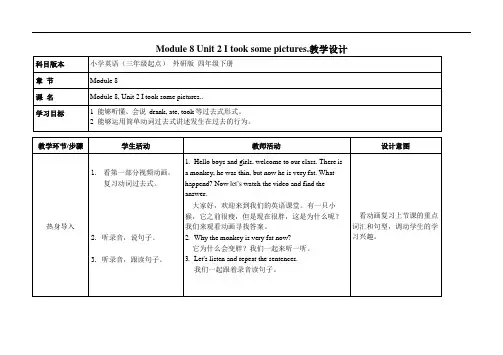
大家好,欢迎来到我们的英语课堂。有一只小猴,它之前很瘦,但是现在很胖,这是为什么呢?我们来观看动画寻找答案。
2.Why the monkey is very fatnow?
它为什么会变胖?我们一起来听一听。
3.Let's listen and repeat thesentences.
我们一起跟着录音读句子。
以下的句子供你参考,相信你会写出更好的句子。5.Here is a little song, its name is ‘I went to a concert’ . Let’s sing it together.
有一首歌,名字叫“I went to a concert”。我们一起跟着动画唱一唱。
在复习巩固重点词汇的基础上,让学生加强记忆。
Sam上周日去野餐了,他正在给妈妈讲述他们的活动。他们都做了什么?我们一起来看一看。
2.Wasit great? What did they do there?Let’sfind out one byone.
他们玩得很开心吗?他们都做了什么呢?我们一个一个地来听听。
3.Good job! Now we know they had a good time.Let’sfill in the blanks using followingwords.
Module 8 Unit 2 I took some pictures.教学设计
四年级下英语教案-Moudle8Unit2Itooksomepictures-外研社(三起)

四年级下英语教案Moudle8 Unit 2 I took some pictures外研社(三起)教学内容:本课为外研社(三起)四年级下册英语第8模块第2单元《I took some pictures》。
教学内容围绕过去时态,主要句型为:“I took some pictures. I visited ”。
通过本课学习,学生能够描述过去发生的事情,并能够运用过去时态进行简单交流。
教学目标:1. 知识目标:学生能够听懂、会说、会读本课单词和句型,并能够在实际情境中运用。
2. 能力目标:学生能够运用过去时态描述过去发生的事情,提高英语交流能力。
3. 情感目标:培养学生对英语学习的兴趣,增强学生的合作意识和团队精神。
教学难点:1. 过去时态的运用。
2. 句型“I took some pictures. I visited ”的理解和运用。
教具学具准备:1. 教师准备:PPT、教学卡片、录音机、磁带。
2. 学生准备:英语课本、练习本、彩色笔。
教学过程:1. 导入:通过图片展示,引导学生回顾过去的活动,激发学生学习兴趣。
2. 新课呈现:教师呈现教学卡片,教授新单词和句型,并进行示范。
3. 操练:学生分组进行角色扮演,运用新学句型进行交流。
4. 巩固:教师设计游戏,巩固新学单词和句型。
板书设计:1. Module 8 Unit 2 I took some pictures2. 新单词:picture, visit, took3. 句型:I took some pictures. I visited作业设计:1. 听录音,跟读课文。
2. 用过去时态写一段关于自己过去活动的英语短文。
3. 预习下一课内容。
课后反思:本课通过丰富的教学活动,激发学生的学习兴趣,使学生在轻松愉快的氛围中学习英语。
在教学过程中,教师应注重引导学生运用过去时态进行交流,培养学生的英语实际运用能力。
同时,教师还需关注学生的学习反馈,及时调整教学策略,提高教学效果。
外研版四年级下册英语Module 8《Unit 2 I took some pictures.》教案
外研版四年级下册英语Module 8《Unit 2 I took some pictures.》教案一、教材分析:本节课是外研版四年级下册Module 8的第二单元,名为《Unit 2 I took some pictures.》。
教材主要围绕描述过去发生的事情展开,学生将学习并掌握动词的过去式形式。
教材中包含了一篇对话和相关的练习题,通过听、说、读、写等多种方式培养学生对动词过去式的理解和运用能力。
二、教学目标:知识目标:1. 学生能够掌握单词:took, tell, great, delicious, made, poster。
2. 学生能够在实际生活中正确运用动词的过去式。
能力目标:1. 学生能够区分并正确运用学过的动词的过去式的规则变化和不规则变化。
情感态度与价值观:1. 培养学生乐观向上、热爱生活和积极参加课外活动的态度。
三、教学重难点教学重点:1. 学生能够掌握单词:took, tell, great, delicious, made, poster。
2. 学生能够在实际生活中正确运用动词的过去式。
教学难点:1. 学生能够区分并正确运用学过的动词的过去式的规则变化和不规则变化。
四、学情分析:学生已经具备了一定的英语基础,能够较熟练地运用一般现在时的动词。
本节课是引入过去式的内容,对于学生来说可能是一个新的挑战。
需要通过多种形式的练习帮助学生理解和掌握动词过去式的规则和不规则变化。
此外,学生在日常生活中可能有一些拍照、制作海报等经历,可以引导学生运用所学内容进行实际情境的交流。
五、教学过程:Step 1: Warm-up1. Greet the students and elicit the vocabulary from the previous lesson by asking questions like "What did we learn last time?" or "Can you remember the words we studied before?"2. Show some pictures of different activities, such as eating, playing, and drawing. Ask the students to describe what they see using the present tense. For example, show a picture of someone eating and ask, "What is he doing?" Students can respond with sentences like "He is eating."Teacher: Good morning, everyone! I hope you're all ready for another exciting English lesson. Let's start by reviewingthe vocabulary from our last class. Can anyone remember the words we learned before?(Student responses)Teacher: Great job! Now, let's take a look at some pictures. What do you see in this picture? (Show a picture of someone eating.)(Student responses)Teacher: That's right! He is eating. Excellent! Let's move on to our new lesson.Step 2: Presentation1. Introduce the target vocabulary: took, tell, great, delicious, made, poster. Write the words on the board and explain their meanings using simple language and gestures.2. Present the past tense form of the verbs by using gestures and examples. For example, act out taking pictures and say, "I took some pictures." Show a picture of a delicious meal and say, "It was delicious." Emphasize the past tense form in each sentence.3. Write the past tense forms on the board and drill the pronunciation and meaning with the students. Have them repeat the words after you several times.Teacher: Now, let's learn some new words for today. Repeatafter me: took, tell, great, delicious, made, poster.(Students repeat)Teacher: Excellent! Now, let's focus on the past tense form of these verbs. Watch me closely. (Teacher acts out taking pictures) I took some pictures. (Teacher shows a picture of a delicious meal) It was delicious.(Students repeat after the teacher)Teacher: Good job! Now, let's practice the pronunciation and meaning of these past tense verbs together.Step 3: Practice1. Divide the class into pairs or small groups.2. Ask the students to share and discuss their past experiences using the target vocabulary. For example, they can talk about a recent trip and use the past tense to describe what they did and saw. Encourage them to ask follow-up questions to their partners, such as "Where did you go?" or "What did you see?"3. Circulate among the pairs or groups and provide assistance as needed. Encourage the students to use the past tense forms correctly and give positive feedback on their efforts.Teacher: Now, it's time to practice using the past tenseverbs in conversations. I want you to work in pairs or small groups. Choose a partner and talk about a past experience using the target vocabulary. For example, you can talk about a recent trip or a fun activity you did. Remember to ask questions to your partner and use the past tense verbs correctly.(Students work in pairs/groups and have conversations) Teacher: Great job, everyone! I heard some interesting stories. Remember to use the past tense correctly and ask follow-up questions to your partners. Keep up the good work!Step 4: Consolidation1. Play a game of "Guess the Verb" with the class to reinforce the past tense forms.2. Write some past tense verbs on slips of paper and put them in a bag or container. Each student takes turns picking a verb and acting it out while their classmates try to guess the verb. For example, if a student picks the verb "made," they can mime making something with their hands.3. After each correct guess, ask the students to use a complete sentence in the past tense to describe the action. For example, if the verb was "took," the student can say, "I took some pictures."Teacher: Let's have some fun with a game called "Guess theVerb!" I have some past tense verbs written on these slips of paper. One student will pick a slip and act out the verb while the rest of the class tries to guess the verb. Remember to use a complete sentence in the past tense to describe the action once we guess it correctly.(Students play the game)Teacher: Fantastic! You're all doing a great job guessing and using the past tense. Keep up the great work!Step 5: Production1. Have the students work in pairs or small groups to createa short dialogue using the target vocabulary.2. Give them a prompt, such as "Talk about a fun activity you did last weekend." Encourage them to incorporate as many past tense verbs as possible.3. Allow time for the groups to practice their dialogues and then have them present to the class. Provide feedback and praise for theirefforts.Teacher: Now, let's get creative and create some dialogues using our target vocabulary. Work with your partner or group and imagine a fun activity you did last weekend. Use as many past tense verbs as you can. I'll give you a few minutes to practice, and then I'll ask some groups to present theirdialogues to the class. Remember to speak clearly and use the past tense correctly.(Students work in pairs/groups to create dialogues)Teacher: Okay, let's hear some of your dialogues. Who wants to go first? Remember, speak loudly and clearly.(Students present their dialogues)Teacher: Well done, everyone! I was impressed by your creativity and use of the past tense. Great job!Step 6: Wrap-up and Extension1. Review the key vocabulary and the concept of past tense by asking questions like "What are some past tense verbs we learned today?" or "Can you give me an example of a sentence in the past tense?"2. Assign a homework task where students need to write a short paragraph about a past experience using the target vocabulary. Remind them to use the past tense correctly.3. Provide feedback and praise for their efforts in the classroom and encourage them to continue practicing and using the past tense in their daily lives.Teacher: Before we end today's lesson, let's quickly review the key vocabulary and what we learned about the past tense. Can anyone tell me some of the past tense verbs we studied today?How about giving me an example of a sentence in the past tense?(Students respond)Teacher: Excellent! You all did a fantastic job today. For homework, I'd like you to write a short paragraph about a past experience using the target vocabulary. Remember to use thepast tense correctly. I'm excited to read your stories in thenext class.六、板书设计:took tell great delicious made poster七、教学反思:本节课通过多种形式的练习帮助学生理解和掌握动词过去式的规则和不规则变化。
外研版(三起)-英语-四年级下册--Module 8 Unit 2教材同步讲解
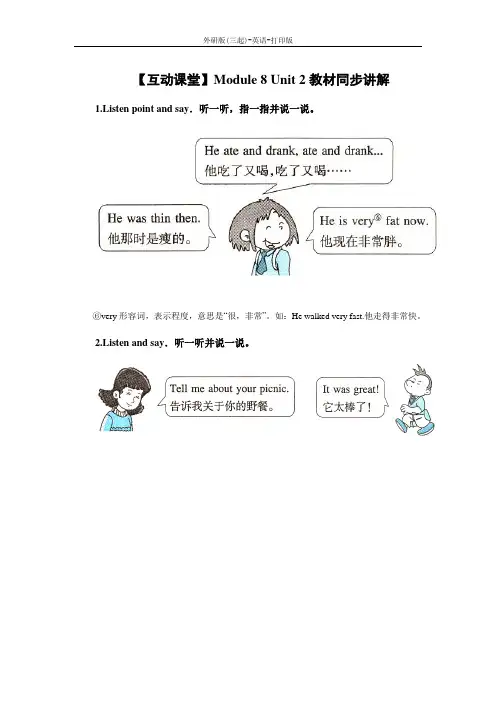
【互动课堂】Module 8 Unit 2教材同步讲解1.Listen point and say.听一听,指一指并说一说。
⑥very形容词,表示程度,意思是“很,非常”。
如:He walked very fast.他走得非常快。
2.Listen and say.听一听并说一说。
⑦lots of许多、非常多,与a lot of意义相同,可以跟可数名词或不可数名词。
如:lotsof friends很多朋友。
⑧took some pictures照了很多照片。
take picture意为“照相”,是固定搭配。
如:We took many pictures in our trip.在旅程中,我们照了很多照片。
3.Point and say.指一指,并说一说。
Yesterday I...昨天我……4.Listen and say. Then sing and do.听一听并说一说。
然后唱一唱并做一做。
I WENT TO THE CONCERT我去了音乐会I went to the concert, the concert, the concert yesterday.我昨天去了音乐会,音乐会,音乐会。
I played in piano, the piano, the piano beautifully.我弹了优美的钢琴,钢琴,钢琴。
I sang with Amy, with Amy, with Amy happily.我和埃米开心地唱了歌,和埃米,和埃米。
La la-la-la, la-la-la, la-la-la, la-la-la.啦啦啦啦,啦啦啦,啦啦啦,啦啦啦。
I enjoyed the concert, the concert, the concert yesterday,我昨天欣赏了这个音乐会,音乐会,音乐会。
La la-la-la, la-la-la, la-la-la, la-la-la.啦啦啦啦,啦啦啦,啦啦啦,啦啦啦。
外研版小学英语(三年级起点)四年级下册Module8 Unit2 一般过去时专项语法讲解
rain-rained
like-liked
have-had
1
2.
3
3
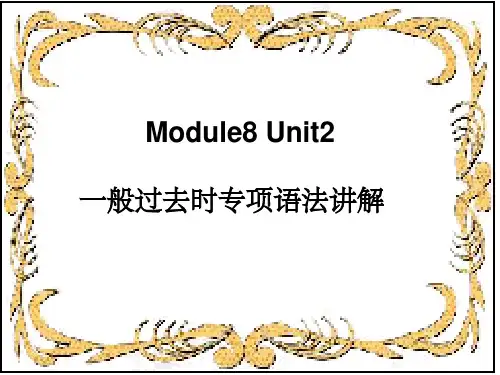
1.以“辅音字母+y”结尾的词, 先变“y”为“i”再 加—ed
study
studied
worry
worried
2.重读闭音节词,先双写这个辅音字母,再加—ed
stop plan
stopped planned
.
4
用所给动词的正确形式填空
.
7
Review some verbs in past tense(过去式).
is am was
are were
enjoy enjoyed
have
take
run
had
took
ran
rain
eat
don’t
rained
ate
didn’t
go went
want wanted
start started
.
1.We didn’t want(want) to get
wet.
2.I took (take) some photos for
you.
3.Those ducks ate(eat) all the food.
.
5
Write:
Dear_____ ,
I went to a fast food restaurant last
I went to the park yesterday .
.
2
is-wWashat capnlayy-opluayefidnd? go-went
want-wanted take-took
listenΒιβλιοθήκη listenedeat-ate
四年级英语下册课件-Module 8 Unit 2 I took some pictures19-外研版(三起)

Yes, they did.
Choose“T”or“F”
1.Sam and Amy saw some birds last Sunday. ( T ) 2.They ate some food and drank some drinks. ( T ) 3.They went there on foot. ( F ) 4.They helped farmers too. ( F ) 5.They had a busy day. ( T )
字母,再加 -ed (5)注:不规则动词的过去式变化规律性不强,须多加记忆。
小练习
写出下列单词的过去式。
see ( saw ) sing ( sang ) do ( did ) have ( had ) walk ( walked )
go ( went ) drink ( drank )
eat ( ate ) listen ( listened ) are ( were )
have-过--去--式--had 有
New words
We had a picnic last Sunday.
Was it fun ?
Yes ,it was.
New words
What did you do last Sunday? We saw some birds.
see-过--去---式saw 看见
Mum , we saw some children. They played games.
听录音,跟读对话。
And they sang songs too.
Revision看图,完成单词。源自have a picnic
外研社三年级起点英语四年级下册教学课件 Module8 Unit2
Listen
点击,播放视频
Look and answer
1.What about the picnic? It was great 2.What did they do during picnic? They played games and ate lots of food. They drank milk and juice. 3.Did he take pictures during picnic?
?listenandsing点击图片播放视频点击图片播放视频listenandsaynewwordstooktake的过去式拍摄tell告诉告知great非常好的delicious美味的mademake的过去式做制作poster海报newwordsphraseslotsoftakesomepicturesmakeaposter许多拍照做海报whatsmissing
Listen and sing
点击图片,播放视频
Listen and say
点击图片,播放视频
New words
took (take的过去式)拍摄 tell 告诉,告知 great非常好的
New words
delicious美味的
made(make的过 去式)做,制作
poster海报
phrases
lots ofate
foodd.eTlichieoyus milk and jduriacnek.
Daming
sometopoikctures and he a postemr.ade
Read and choose
( B )1.She doesn’t want to _______ anyone about his family.
Module 8 Unit 2 I often go swimming.(说课稿)外研版(三起)英语
Module 8 Unit 2 I often go swimming一、教材分析本单元是《外研版(三起)英语》六年级上册的第八模块第二单元。
本单元主要让学生学习“ I often go swimming.”这个简单的句型,学生可以通过本单元了解如何正确运用频率副词进行描述及其构成方式。
本单元主要内容包括以下几个方面:1.学生能听懂、读懂、拼读并正确运用频率副词。
2.学生能够熟练运用现在进行时表述自己的日常活动。
3.通过学习本单元,学生可以提高对英语语言的感性理解,培养学生的英语听、说、读、写能力。
4.通过本单元的学习,可以让学生从简单的英语句型入手,对英语语法有一个初步的认识和实践。
二、教学目标知识目标1.能够熟练运用频率副词always、often、sometimes、never描述日常活动。
2.能够掌握现在进行时的用法,并正确运用。
3.能够从简单的英语句型入手,对英语语法有一个初步的认识和实践。
能力目标1.培养学生的英语听、说、读、写能力。
2.培养学生的分析、判断、解决问题的能力。
情感目标1.培养学生学习英语的兴趣和习惯;2.注重培养学生的自学能力和学习兴趣。
三、教学重点和难点教学重点:1.频率副词always、often、sometimes、never 的正确运用;2.现在进行时的用法及运用。
教学难点:1.对频率副词always、often、sometimes、never 的理解和运用;2.对现在进行时的理解和识别。
四、教学过程设计教学步骤:1.Warming-up:播放音乐,带领学生跟着音乐做运动。
然后,通过询问学生在做哪些运动,引出频率副词always、often、sometimes、never,并介绍它们的意思和构成方式。
2.Presentation:通过呈现图片的方式,引出现在进行时,并通过范例教授它的构成方式。
3.Practice:分组进行简单的口语交流练习,让学生在现实场景中及时运用所学的现在进行时。
四年级英语下册说课稿-Module 8 Unit 2 I took some pictures.(1
四年级英语下册说课稿-Module 8 Unit 2 I took some pictures(1)-外研版(三起)一、教材分析1. 教材的背景和情境本单元的情境为一组朋友参观动物园,并拍下了动物的照片,学生通过学习本单元的知识和技能,可以学会描述图片中的动物和场景。
2. 教材的重点及难点本单元的重点和难点在于词汇和语法的学习,包括询问和回答问题的方式,动物的名称和特征等,同时还需要学会运用过去式来描述过去发生的事情。
二、教学目标1. 知识与能力1.熟练掌握本单元的词汇和句型;2.学会询问并回答有关照片的问题;3.能够描述图片中的动物和场景。
2. 情感态度和价值观1.培养学生的观察能力;2.培养学生的爱护动物的意识;3.培养学生的团队合作精神。
三、教学重点1.熟练掌握本单元的词汇和句型;2.学会询问并回答有关照片的问题。
四、教学难点能够描述图片中的动物和场景。
五、教学步骤1. 导入新课1.引导学生回忆上一节课学习的内容,如询问和回答Have you ever…?;2.呈现一张有动物的图片,让学生猜测图片中的动物。
2. 学习新课1.呈现本节课的课文,并给学生一定时间熟悉课文内容;2.边听边看,帮助学生理解课文,并解释生词和语法;3.模仿教材中的句型,进行练习。
3. 操练与表现1.组织学生进行角色扮演,模拟在动物园拍照的情境;2.学生自由交流,表现自己的照片并描述其中的动物和场景;3.学生按照老师的要求进行分组,进行照片展示比赛。
六、教学评估1. 评价方式采用观察法、测试法、讨论法等多种教学评价方式,定期对学生进行成果检测。
2. 评价标准1.能够准确地描述图片中的动物和场景;2.能够熟练运用所学词汇和句型;3.具备团队合作精神和良好的表现能力。
七、教学反思本节课主要是通过生动的情境,让学生学习到如何描述并分享自己的照片,同时学生在小组中能够积极合作,从而增强了学生的交际能力和团队意识。
在之后的教学中,我将继续尝试更多的教学方式,让学生充分参与到教学过程中,从而激发学生的学习兴趣和主动性。
四年级下册英语教案Module8Unit2Itooksomepictures外研社(三起)
四年级下册英语教案Module 8 Unit 2 I took some pictures 外研社(三起)教学内容本课为外研社《新标准英语》四年级下册第8模块第2单元。
教学内容主要围绕过去时态,以及表达过去发生的动作和经历。
通过本课的学习,学生能够掌握描述过去活动的句型"I took some pictures",并能够运用过去时态来描述自己的经历。
教学目标1. 知识与技能:学生能够理解并运用过去时态来描述过去发生的活动。
2. 过程与方法:通过图片展示、情景模拟等活动,学生能够练习并掌握目标句型。
3. 情感态度价值观:培养学生对英语学习的兴趣,增强学生分享个人经历的愿望。
教学难点1. 正确运用过去时态。
2. 准确描述过去发生的活动。
3. 合理组织语言,流畅表达。
教具学具准备1. 教学课件。
2. 学生用书。
3. 情景图片或实物。
4. 彩色笔、卡片等辅助教具。
教学过程1. 导入:通过展示与过去活动相关的图片,引发学生对过去经历的回忆,激发学习兴趣。
2. 新课呈现:教师呈现句型"I took some pictures",并引导学生通过图片或实物来练习此句型。
3. 实践练习:学生分小组,用过去时态描述各自的经历,教师巡回指导。
4. 巩固提高:通过角色扮演、情景模拟等活动,让学生在实际语境中运用目标句型。
板书设计课程目标语型:"I took some pictures"关键词汇过去时态的构成作业设计1. 书面作业:完成课后练习,巩固语法点。
2. 口头作业:与家长或同学分享自己的过去经历,用过去时态描述。
3. 扩展作业:收集并展示自己过去的照片,用英语进行解说。
课后反思课后,教师应反思教学效果,包括学生对过去时态的掌握程度、课堂活动的参与度以及目标句型的运用情况。
针对学生的掌握情况,及时调整教学策略,以提高教学效果。
同时,关注学生的学习兴趣和情感态度,确保教学内容既严谨又生动,激发学生的学习热情。