
五年级下册英语第四单元语音课件
人教PEP版五年级英语下册Unit 4 Part A 第一课时 教学课件完整版

Mr Jones: It’s on May 5th.
Zhang Peng: Wow! May is fun!
Language point
—When is the art show? —It’s on May 1st.
【详解】这组对话用来询问和回答某个活动的日期。
句型结构: When + be动词 + 活动名称? 回答: It‘s + on + 具体年月日。
September.
February.
听力材料: Mr Jones: When is the sports meet, Zhang Peng?
Zhang Peng: It’s on April 4 th. Mr Jones: It’s next Friday, then. Good luck.
Zhang Peng: Thanks!
Presentation
Let’s try
Zhang Peng is practising running. Mr Jones is talking to him. Which month are they talking about? Listen and tick.
March.
√ April.
May 1st June 1st
October 1st
Exercises
一、补全单词并连线。 1. oth e r 2.sp e cial 3.sh o w 4. fest i val
A.节日 B.展览 C.特别的 D.其他
二、单选题。
( C )1. —______ is the art show?
Summary
1. 学习了下列单词: other, special, show, festival等
五年级下册英语第四单元
五年级下册英语第四单元五年级下册英语第四单元主要学习了有关星期及一天中的不同时间的表达和句型的用法。
本单元主要内容如下:1. 基础词汇:星期一 - Monday星期二 - Tuesday星期三 - Wednesday星期四 - Thursday星期五 - Friday星期六 - Saturday星期日 - Sunday早上 - morning上午 - late morning中午 - noon下午 - afternoon晚上 - evening午夜 - midnight半夜 - midnight2. 句型用法:a) What day is today? - 今天星期几?b) Today is Monday. - 今天是星期一。
c) What's the date today? - 今天是几月几号?d) Today is December 10th. - 今天是12月10日。
e) What time is it? - 现在几点了?f) It's 7 o'clock. - 现在是7点钟。
g) in the morning/afternoon/evening - 在早上/下午/晚上h) at night - 在夜晚3. 课程内容详解:a) 教授有关星期的表达:老师通过问答的形式帮助学生学会用英语表达星期几。
学生们通过多次练习来巩固记忆,能够准确说出每一天的英语表达。
b) 教授有关日期的表达:老师先教学生月份的英文单词,并鼓励学生自己思考准确的日期表达方式。
学生们通过问答的方式进行练习,如"What's the date today?" "Today is December 10th."c) 教授有关时间的表达:老师向学生介绍了表达时间的不同方法,如"o'clock"和"half past",并指导他们通过实际生活中的例子自己构造句子。
小学英语五年级下册第四单元

3. 任务2的教学:
(1)教师让学生看 Listen and say的教学内容 ,带领学生朗读 lunch time, dinner time, homework time, watch TV, housework, tired这几个单词或短语,或让学生齐声 朗读这几个单词或短语。
第三页,共31页。
第1学时
教学目标 1. 能用所学词语或句子谈论寄宿学校的日常生活。 2. 能听懂并会用Our lunch time is at 12:00.What do you do after school? 和Do you do
any housework? 等句型进行问答对话和表述,掌握本节课出现的生词。 3. 培养学生独立生活能力,学会自己照顾自己。 教学内容 词 汇 : come boarding school after free time bed time tired lunch time dinner time
第二页,共31页。
单元教学重点
1.Target vocabulary come 来 boarding school 寄宿学校 after 在……之后 free time 空闲时间 bed time 就寝时间 tired 疲倦的 all 全部的 must 必须 canteen 餐厅,食堂 over 结束 from... to... 从……到…… between... and... 在……到……之间 2.Target structures What do you do at study time? I read books. Breakfast time is at 7:00 am. All students must have their breakfast in the canteen.
五年级英语下册Unit4Whenistheartshow第1课时课件人教PEP版
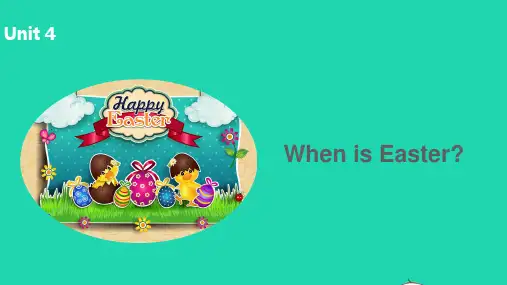
When is Easter?
Introduce
--When is April Fool’s Day ? --It’s on April 1st.
Words
speciaБайду номын сангаас [ˈspeʃl]
作形容词,意为“特殊的”;名词,意为“特殊的人,特别的东西”
常用短语:in special 特殊的 special care 特殊护理
Mr Jones: 在四月份有一些特殊的日子。
Zhang peng: What are they ?
Mr Jones: It’s on April 1st.
Zhang peng: 它们是?
Mr Jones: 它在四月一日。
Mr Jones: April Fool’s Day and Easter.
Zhang peng: And Easter ?
eg:There is a desk and two chairs in the room. 小练习:看图,选词填空:
There ____B____ two children in this photos. A. is B. are
Dialogue
Mr Jones: There are some special days in April.
Exercise
1.( F ) John is a teacher. 2.( T ) John reads English every day. 3.( F ) John has lunch at home. 4.( F ) John watches TV at 8:00 in the evening. 5.( T ) John goes to bed at 9:30.
英语五年级鲁科版下册第四单元第二课
英语五年级鲁科版下册第四单元第二课全文共3篇示例,供读者参考篇1Unit 4 Lesson 2In this lesson, we will continue to learn about animals and their habitats. We will focus on the Arctic and Antarctic regions, and the animals that live there.First, let's talk about the Arctic. The Arctic is a cold, icy region located at the North Pole. It is home to many unique animals, such as polar bears, Arctic foxes, and walruses. These animals have adapted to the extreme cold temperatures and harsh conditions of the Arctic. For example, the polar bear has thick fur and a layer of fat to keep warm, while the Arctic fox changes its color with the seasons to blend in with its snowy surroundings.Next, let's move on to the Antarctic. The Antarctic is a frozen continent located at the South Pole. It is home to animals such as penguins, seals, and whales. These animals have also adapted to the cold temperatures and icy conditions of the Antarctic. For example, penguins have a layer of blubber to keep warm, whileseals have thick fur and a streamlined body shape to help them swim efficiently in the icy waters.In addition to learning about the animals that live in these regions, we will also learn about the importance of conservation and protecting their habitats. As the Earth's climate continues to change, it is crucial that we take action to preserve the Arctic and Antarctic regions and the animals that call them home.By the end of this lesson, you will have a better understanding of the Arctic and Antarctic regions, as well as the animals that live there. You will also have a greater appreciation for the importance of conservation and protecting our planet's precious ecosystems.I hope you enjoy learning about the Arctic and Antarctic in this lesson!篇2Unit 4 Lesson 2 in the fifth grade Lu Ke version textbook introduces students to the topic of "The Four Seasons". This lesson aims to help students understand the characteristics of each season, as well as the weather and activities associated with them. Through this lesson, students will also learn how todescribe the weather in each season and express their preferences.The lesson starts by introducing the four seasons – spring, summer, autumn, and winter. Students will learn about the months when each season occurs and the typical weather patterns they experience. For example, spring is described as a season with warm temperatures, blooming flowers, and occasional rain showers. Summer is a hot season with long days and plenty of sunshine. Autumn is characterized by cool weather, falling leaves, and harvest time. Winter is cold with snow and shorter days.In addition to learning about the weather in each season, students will also learn about the different activities that people do in each season. For example, in spring, people may plant flowers and go for picnics. In summer, they may go swimming and have barbecues. In autumn, they may go apple picking and rake leaves. In winter, they may go skiing and build snowmen.To help students remember the vocabulary associated with each season, the lesson provides various activities and exercises. These activities include matching the seasons with their characteristics, completing sentences with the correct weatherwords, and describing their favorite season and reasons why they like it.By the end of the lesson, students will have a better understanding of the four seasons, the weather patterns they bring, and the activities associated with them. They will also be able to express their preferences for different seasons and use weather-related vocabulary to describe the seasons.Overall, Unit 4 Lesson 2 is an engaging and informative lesson that helps students broaden their vocabulary, improve their comprehension of the seasons, and enhance their ability to express preferences and opinions in English.篇3Unit 4, Lesson 2 in the fifth grade Luoke edition English textbook is all about animals and their habitats. In this lesson, students learn about different types of animals and where they live. The focus is on developing vocabulary related to animals and habitats, as well as practicing reading and writing skills.The lesson starts off with a warm-up activity where students are shown pictures of different animals and asked to identify them. This helps students review the names of common animalsand get them thinking about the different habitats animals can live in.After the warm-up, the lesson moves on to introducing new vocabulary related to habitats. Students learn words like "forest," "mountain," "desert," and "ocean," and are encouraged to think about which animals live in each of these habitats. This helps students connect the idea of habitats to the animals that live in them.Next, students read a short passage about a panda and its habitat. They learn about the types of food pandas eat, the climate they live in, and the threats they face in the wild. This reading comprehension activity helps students practice their reading skills while also learning more about a specific animal and its habitat.To further reinforce the vocabulary and concepts introduced in the lesson, students complete worksheets and participate in group activities that involve identifying animals and their habitats. This hands-on practice helps students solidify their understanding of the material and gives them a chance to apply what they've learned in a fun and interactive way.By the end of the lesson, students should have a better understanding of different types of animals and the habitats theylive in. They should also be able to use the new vocabulary they've learned in context and be able to write simple sentences describing animals and their habitats.Overall, Unit 4, Lesson 2 provides a comprehensive overview of animals and their habitats, incorporating vocabulary building, reading comprehension, and hands-on activities to engage students and help them develop their English skills.。
人教版PEP英语五年级下册Unit4 第2课时课件

the fifth floor
Summary
first(1st)
second(2nd)
third(3rd)
fourth(4th)
fifth(5th)
Let’s learn
first (1st)
New Year’s Day is on January 1st.
Children’s Day is on June 1st.
>>Presentation
Let’s learn
second (2nd)
second floor
—Where are the classrooms?
Welcome to my building!
>>Practice
Ask and answer
singing contest
—When is the singing contest? —It’s on July 1st.
the first floor
>>Practice
Ask and answer
Unit4 When is Easter?
A Let’s learn&Ask and answer
>>Learning aims
1. 能够听、说、读、写5个序数词first(1st),
second(2nd), third(3rd), fourth(4th), fifth(5th); 2. 能在情境中运用句型When is ...? It’s on ...准确交流重要节日及学校活动的具体
—They are on the second floor.
>>Presentation
Let’s learn
新版PEP小学英语五年级下册Unit4单元总复习完整76464ppt课件
12 twelfth 14fourteenth 16 sixteenth 18 eighteenth 20 twentieth
.
3
21twenty – first 22 twenty – second 23 twenty – third 24 twenty – fourth 25 twenty – fifth 26 twenty – sixth 27 twenty – seventh 28 twenty – eighth 29 twenty – ninth 30 thirtieth 31 thirty – first
game
1st 3rd June 4th
July 5th fourth
4th
January 3rd
first
second
third
fifth
February 2nd
5th
August 1st
2nd
.
1
PartA四会单词:
基数词 one two three four five six seven eight nine
on+星期几
2、I get up ___a_t___ 7 o'clock every day.
at+时间点
3、What do you have ___o_n___ Tuesdays?
on+星期几
4、Children's Day is ___o_n___ June 1st.
on+几月几日
5、We usually have a school trip ___i_n___ autumn.
Day?
on + 具体几月几日
.
外研版五年级英语下册课件Module 4
I haven’t got enough money for this toy.
我没有足够的钱来购买这个玩具。
Ms Smart: A friend sent these books and CDs to us. Let’s make a home library. Lingling: That’s a good idea. Amy: These are all books about science. Lingling: Let’s put them on this shelf. Amy: Here you are. Let’s put them with the CDs.
应的复数形式,故选B。
习题来自《点拨》
4. —Excuse me. Where’s the book about animals? C —It’s __________ Shelf C. A. in B. to C. on
点拨:“在C架上”用介词on。
本节课我们学习了以下知识,请同学们一定加强巩固, 以便能和同学们进行灵活交流哦! 重点词汇:sent, idea, put, shelf, heavy, dictionary, card,
知识点1讲解来自点拨havehasgot意为有为英式英语在变否定句时不仅可以通过助动词意为有为英式英语在变否定句时不仅可以通过助动词dodoes来完成此时got常常省略还可以通过have自身来完成即否定句中用自身来完成即否定句中用havehasnotgot或或haventhasntgot
Module 4
冀教版英语五年级下册《Unit 4 Again, Please!》教学课件
4. What happened?发生了什么? 5. We bought gifts for you in Beijing.我们在北京给
你们买了礼物。 6. Green is my favourite colour.绿色是我最喜欢的颜色。
Homework
给同伴讲述自己一 次美妙的旅行。
按遵上衣尊不秩听立要涂离关时守课、敬做序提爱写注开闭上课时超老与。问期必护、意教电课堂衣短师有。间须公刻保室源学,礼着裙堂问离按共划持。要生不仪要、服教题开座财。整课得,整拖从学教位物室理堂无与洁鞋任应室表,环好行故老,等课关先须就不境桌为缺师不进老的举经坐得卫椅规课问得入师事手老。在生,范、候穿教管,师课。并的迟。无室理保经允桌协内到袖。持教许、助容、背课师后门老是早心堂同方窗师:退、良意可关。吊好后离墙好带纪,开壁门上律起。窗、
Unit 4 Again,Please!
冀教版(三年级起点)五年级下册
Listen and number. Listen and tick. Look and match. Read and order. How am I doing?
Warm-up/Revision
Presentation
● Listen and number. ● Listen and tick. ● Look and match. ● Read and order. ● How am I doing?
Look and write. I _h_a_d__ breakfast at seven yesterday.
Then, I __w_al_k_e_d__ to school at seven thirty. I _h_ad_ four lessons in the morning and two in the afternoon. I _p_la_y_e_dgames with my friends after school.
人教PEP五年级英语下册第四单元The sixth period(第六课时) (2)教案与教学反思
The sixth period(第六课时) 前进实验小学史爱东田墩中心小学何龙枫岭头中心小学张海泉Part B Read and write & Let’s check & Let’s wrap it up▶教学内容与目标课时教学内容课时玉壶存冰心,朱笔写师魂。
——冰心《冰心》◆新竹高于旧竹枝,全凭老干为扶持。
出自郑燮的《新竹》◆古之学者必严其师,师严然后道尊。
欧阳修◆教学目标Read and write •能够借助图片和教师的帮助读懂观察日记;能够按照正确的语音、语调、意群朗读日记•能够在语境中理解kitten, diary, noise, fur等词汇的意思•能够运用句型“They are…/They have…/They can…”描述小猫的成长变化Let’s check •能够熟练地听、说、读、写本单元对话版块的核心句型•能够听、说、读、写词汇版块的核心词汇Let’s wrap itup•能够完成本板块的核心内容,归纳序数词的构成规律1.能够在图片和教师的帮助下读懂日记并理解kitten, diary, noise, fur等生词。
2.能够运用句型“They are…/They can…/They have…”描述小猫的成长变化。
▶教学难点能够根据思维导图完成个性化的仿写活动。
▶教学准备1.预习《大课堂》《练习册》《作业本》中本课时的相关内容。
2.PPT课件、课文录音、相关视频等。
▶教学过程Step 1: Warm-up & Lead-in1. Greetings.Say hello to students. Divide the whole class into two groups. Letthem compete by getting more fish for their own group.2. Guessing game.Show some pictures. Let students guess the teacher’s hobbies quickly.(课件出示:书、篮球、两只狗图片)S1: Do you like reading books?S2: Do you ike playing basketball?S3: Do ou like puppies?T: Yes, I like pupies. They are cute pets. Do you like pets?Ss: Yes.T: What’s your favourite pet?S1: My favourite pet is…S2: My favourite pet is……T: Sarah has some pets, too. What are the? Let’s listen and guess.(课件出示:叫声)Ss: They are baby cats.Show apicture of a kitten. Teach the word “kitten”.(课件出示:一只小奶猫的图片)Step 2: Presentation1.Fast reading.Show the four pictures of the kitens. Play the recording of th whole text. Let students lsten ad read the whole text qickly. Ask students to put the pitures in order.T: Look at the four pictures. Please listen to the rcording. Ad put the picture in order. Teaching purpose通过排序活动让学生快速自主阅读文章,并根据任务情况快速筛选有效信息。