
外研版英语中考一轮复习七下 Modules 7-12教材考点梳理课件
【 解 析 】 考 查 形 容 词 辨 析 。 necessary“ 必 要 的 ” ; difficult“ 困难的 ” ; different“ 不同的 ” ; possible“ 可能
________ any pollution.
A.with B.without C.out D.in
【解析】考查介词的用法。由句意可知,“我”梦想中
的家乡应该是一个没有任何污染的地方。故选B。 答案:B
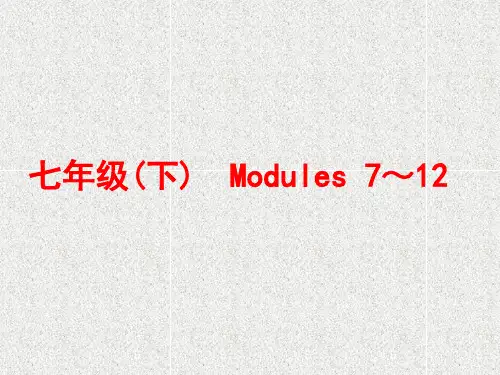
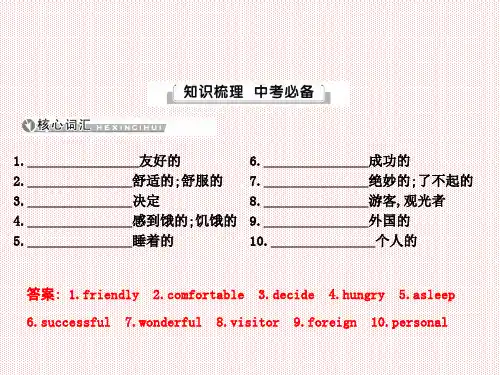
☞词汇拓展 1. village(n.) → villager (n.)村民 2. difficult( adj.)→ difficulty (n.)困难 3. bore(v.)→ boring (adj.)令人厌烦的→ bored (adj.)厌 倦的;厌烦的 4. gold(n.)→ golden (adj.)金黄色的 5. one(num .)→ once (adv.)一次;一回 6. dark(adj.)→ darkness (n.)黑暗
4.How long did it take to get there? (你)去那里用了多长时间? 5....don't stand too close to North Americans! ……不要和北美人站得太近! 6.Give them more personal space. 给他们更多的个人空间。
3 . (2015· 衢 州 改 编 )We should always speak to our parents __________(polite). 【解析】 副词 politely 修饰动词 speak ,表示 “ 有礼貌地 和父母说话”。
答案:politely
4.(2014· 义乌 )Nothing is __________ if you put your
13. wonder(n.) → wonderful (adj.)绝妙的;了不起的 → wonderfully (adv.) 绝妙地 14. German(n.&adj.) → Germans (pl.)德国人 → Germany (n.)德国 15. visit(v.)→ visitor (n.)游客;观光者 16. person(n.)→ personal (adj.)个人的→ personality (n.) 个性 17. west(n.)→ Western (adj.)西方的 18. music(n.)→musician (n.)乐手;音乐家 19. slow(adj.) →slowly (adv.)缓慢地
10.in the 1860s/1860's 在 19 世纪 60 年代 11.around the world 世界各地 12.shake hands 握手 13.each other 互相;彼此 14.arm in arm 臂挽臂地 15.not at all 一点也不 16.in fact 事实上
的 ” 。由句意 “ 世上无难事,只怕有心人 ” 可知, B项
符合题意。 答案:B
5 . (2014· 绍 兴 )—Do you __________ your son after
school? —No. He comes back home on the school bus. A.pick up C.drop in B.look after D.send for
☞金牌句型 1.I was born in a small village. 我出生在一个小村庄里。 2.It was great to play there. 在那里玩耍很开心。 3.She decided to go for a walk in the park with her basket. 她决定提着篮子去公园里散步。
七年级(下)
Modules 7~12
1.(2015· 杭州)Unfortunately I was sitting at the table
with smokers on ________ side of me.
A.either B.both C.other D.all 【 解 析】 考 查不 定 代词 辨 析。 either 两 者 之中 任 一; either后跟名词的单数,side为名词的单数形式,其他三
☞重点短语 1. once upon a time 从前 2. go for a walk 散步 3. all alone 独自一人的 4. pick up 拿起;举起 5. in pieces 破碎 6. at first 起初;首先 7. point at 指着…… 8. find out 发现;查明;弄清 9. at the age of 在……岁时
both两者都;other另外的,其他的;all所有的,全部的。
个选项后面的名词都为复数。故选A。
答案:A
2 . (2015· 衢 州 改 编 )Shakespeare wrote many great
________(poem).
【解析】many后修饰名词复数形式,故填poems。
答案:poems
7. hunger(n.)→hungry (adj.)感到饿的;饥饿的 8. nation(n.)→ national (adj.)国家的→ international (adj.)国际的 9.exact(adj.)→exactly (adv.) 确切地,精确地 10.excite(v.) → exciting (adj.)令人兴奋的,使人激动 的→excited (adj.)激动的;兴奋的 11.France(n.)→ French (adj.)法国的;法语的;(n.)法 国人;法语 12. sell(v.)→ sale (n.)销售;出售;降价出售
【解析】考查动词短语辨析。pick up“接(某人 )”;look
after“照顾”;drop in“拜访”;send for“派人去请”。 由答语中的 “他坐校车回家”可知,问句询问的是 “你 放学后接儿子吗?”故选A。 答案:A
6.(2013· 衢州)My dream hometown is an amazing place
外研版英语中考一轮复习七下 Modules 7-12教材考点梳理课件
10.in the 1860s/1860's 在 19 世纪 60 年代 11.around the world 世界各地 12.shake hands 握手 13.each other 互相;彼此 14.arm in arm 臂挽臂地 15.not at all 一点也不 16.in fact 事实上
【归纳拓展】 (1)as well as 连接两个并列成分作主语 时,谓语动词和 as well as 前面的成分保持数的一致,而 not only...but also...连接并列成分作主语时,谓语动词依据 “就近原则”。 (2)as well as 还可表示“和…… 一样好”, well 是副 词,用于修饰句中的实义动词。 (3)as well 可单独作副词,表示 “也,还” ,常用于句 末。
parents __________(polite). 【解析】 副词 politely 修饰动词 speak ,表示 “ 有礼貌地 和父母说话”。 答案:politely
4.(2014· 义乌 )Nothing is __________ if you put your heart into it.
【归纳拓展】 与 take 相关的常用短语: take after(外貌)相像 take down 写下,记下 take care of 照顾,照料 take away 带走 take pictures 照相 take part in 参加
take off 起飞;匆匆离开;脱下 (2)in the 1860s 意为“在 19 世纪 60 年代”。表示 “……世纪……年代”可用复数形式, 也可用所有格形式。 in the 1990s 在 20 世纪 90 年代 in the 1750's 在 18 世纪 50 年代
外研版英语七年级下册 Module12 复习课件(共37张PPT)

B. Neither
C. Both
D. All
( D )2. (19贺州中考) — Do you like rock music or country music?
— ________. I like Beijing Opera.
A. Either
B. None
C. Both
D. Neither
( D )3. (19邵阳中考改编) — Which singer do you like, Zhang Liangying or Zhou Bichang?
Module 12 Western music
辨析both, either与neither
意为“两个(都);两者(都 Both of his parents are doctors.=His
both )”,指两个人或物,谓语 parents are both doctors.他的父母都是
动词用复数
类型
结构
例句
What+a/an+形容词+可数名词 What a beautiful girl she is!她是多 的单数形式(+主语+谓语)! 么漂亮的女孩啊!
You must arrive home before nine o'clock. 你必须在九点之前到家。
Have you ever been to Beijing before? 你以前曾经去过北京吗? 例 Mr. Smith has a habit of taking a shower
he has breakfast.
afternoon可知,要用一般现在时的被动语态,结构为“be+过去分词”,故答案 为A。 答案 A
noisy的用法 教材原文 It's so noisy!它太吵闹了! 本句中的noisy是形容词,意为“吵闹的”。例如: It's too noisy here. 这里太吵闹了。 拓展 同根词:noise n.噪音 反义词:quiet adj.安静的 派生词:noisily adv.吵闹地
15版导与练中考总复习英语外研版教材梳理课件七年级(下)Modules7~12
加-ed
加-d 双写辅音字母加-ed 改y为i,加-ed
2.一般过去时态的用法 (1)表示过去某个时间发生的动作或存在的状态。常与last night, yesterday,last week,some years ago,in 1995,in the past,the other day,at that time,just now 等时间状语连用。如: We visited the science museum yesterday. 昨天我们参观了科学博物馆。 (2)表示过去的习惯或经常发生的动作,通常与often,usually,seldom等表 示频度的副词连用,但这种用法是以一个过去时间为前提的。如: Tom often rode his bike to school last term. 上学期汤姆经常骑自行车去上学。
strict的用法 【归纳】 strict意为“严厉的;严格的”。常用于以下短语:
1.be strict with sb. 意为“对某人要求严格”。如:
Teachers should be strict with students. 老师应该对学生严格要求。 2.be strict in sth.意为“对某事要求严格”。如: Mr.Wang is strict in his work. 王老师对他的工作要求很严格。
答案:1.foreign 2.gold 3.noisy 4.successful 5.strict 6.born 7.musician 8.German 9.writer10.friendly 11.Another 12.arrive 13.excited 14.believe
1.how long引导的特殊疑问句,询问时间长短。 ——到那里需要多长时间? ——大约九个小时。 — did it take to get there? —About nine hours. 2.祈使句 多给他们一些私人空间。 them more personal space. 不要站得离北美人太近。 too close to North Americans. 答案:1.How long 2.Give;Don’t stand
2024年中考外研版英语一轮复习课件七年级下册 Modules7~12
【拓展】类似结构的表达还有: hand in hand手拉手地 side by side肩并肩地 face to face面对面地 heart to heart心连心地 shoulder to shoulder肩并肩地 one by one一个接一个地
核心词汇训练 用适当的单词填空 1.Tom pointed at the map on the wall and told us where his home was. 2.We must find out the truth. 3.The star waved to us at the airport yesterday. 4.The price includes tax. 5. What careful students they are!
一、 语法选择 I haven't seen Mr.Jenkins since I finished school,but I often think about
him.I wasn't very good __1__ most school subjects.I suppose I was a bit lazy and now I wish I'd done more work,especially in __2__.The only thing I could remember is where the rain comes from! But when I was 15 and went into Mr.Jenkins' class,everything changed.
adj.
令人放松的→
relaxaindgj.放松的;悠闲的8.vriesliatxoerdn. 游客;观光者→
2013中考一轮复习精品课件英语外研版七下Modules7-12

语法 结构
1. 掌握一般过去时的用法。[详见P82,语法互 动(九)]
重点突破
1
词汇点睛
through,across,over与past [辨析] 这四个词都有“穿过,通过”之意。不同的是: (1)through多指从事物内部穿过,如穿过森林、隧道, 阳光透过窗户等,强调的是空间穿过,含义与in有关。 The river runs through the city. 这条河流经这座城市。
重点 句型
7. 她急忙走向房子去询问她现在的位置。 She _________ ____ the house to ask hurried to where _______ she was. 8. 最后,我买了一些东西,Jenny在公园里听了 一场演唱会。 Finally shopping _________ I _____ ______ ___________ did some listened to and Jenny __________ ____ a concert in the park.
(2)asleep作形容词,意为“睡着的,睡熟的”,表示睡 眠状态,只能作表语,常构成短语be/fall asleep,“入 睡”。相当于get/go to sleep。如: He fell asleep soon.=He got/went to sleep soon. 很快他就进入了梦乡。 He seems to be fast asleep. 他好像睡得很熟。
(4) attend意思是“出席;参加”,指参加会议或仪 式、婚礼、葬礼、上课、上学、听报告等,强调的是这一 活动本身,而不是强调参加者在活动中的作用。如: Did you attend his last lecture? 你听了他上次的讲课了吗?
外研版七年级下册Modules7---12复习导学案设计(无答案)
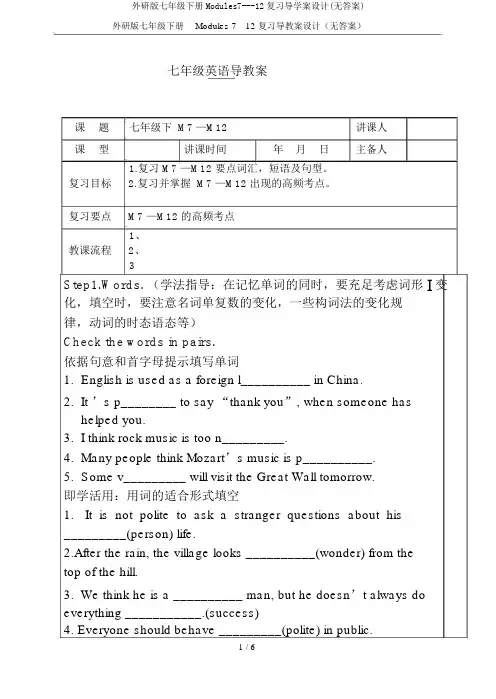
外研版七年级下册Modules 7---12 复习导教案设计(无答案)七年级英语导教案课题七年级下 M7 —M12讲课人课型讲课时间年月日主备人1.复习 M7 —M12 要点词汇,短语及句型。
复习目标 2.复习并掌握 M7 —M12 出现的高频考点。
复习要点M7 —M12 的高频考点1、教课流程2、3Step1.Words. (学法指导:在记忆单词的同时,要充足考虑词形I变化,填空时,要注意名词单复数的变化,一些构词法的变化规律,动词的时态语态等)Check the words in pairs.依据句意和首字母提示填写单词1.English is used as a foreign l__________ in China.2.It ’s p________ to say “thank you”, when someone hashelped you.3.I think rock music is too n_________.4.Many people think Mozart’s music is p__________.5.Some v_________ will visit the Great Wall tomorrow.即学活用:用词的适合形式填空1.It is not polite to ask a stranger questions about his_________(person) life.2.After the rain, the village looks __________(wonder) from thetop of the hill.3.We think he is a __________ man, but he doesn’t always do everything ___________.(success)4.Everyone should behave _________(polite) in public.5. This is an __________ story, so I am very ____________.(excite) Step2.Phrases(.学法指导:填写短语时,要充足考虑动词的语态时态及非谓语形式等)Check the phrases.依据短语达成句子。
外研版英语七年级下册 Module 7 巩固与复习 课件(共22张PPT)
Module 7
My past life.
Knowledge allows you to dream.
01. 单 词
目 录 02. 词 组
CONTENTS 03. 句 型
04. 语 法
单词的发音和 词性巩固 归纳不同的短 语类型 重点句子回顾
一般过去时
第一章
单词发音与词性
town[taʊn] n. 城镇;市镇 village['vɪlɪdʒ] n. 村庄 bathroom['bɑːθruːm; -rʊm] n. 浴室 bedroom['bedruːm; -rʊm] n. 卧室 coast [kəʊst]n. 海岸 president ['prezɪd(ə)nt]n. 总统 lake[leɪk] n. 湖 garden ['gɑːd(ə)n] n. 花园 store [stɔː] n. 商店
sit-sat bring-brought can-could cut-cut become-became begin-began draw-drew feel-felt find-found forget-forgot hear-heard keep-kept know-knew learn-learnt(learned) leave-left let-let lose-lost meet-met read-read sleep-slept speak-spoke take-took teach-taught tell-told write-wrote think-thought
外研版英语七下Module7-Module12的教材分析(共44张PPT)
本模块需掌握的单词有: hair, gold, basket, go for a walk, forest, once, upon, once upon a time, decide, notice, all alone, dark, pick, pick up, around, little, knock, door, soon, lost, towards, answer, right, push, finish, enter, bowl, hungry, asleep, piece, return, cry, point, point to, jump, shout, middle, either, in piece, at first和without。
七年级英语下册 外研版
M7—M12教材分析
《初中英语新课程标准》分级目标:7-9年级分别
1
完成三,四,五级目标
三级总目标
对英语学习表现出积极性和初步的自信心。能
听懂有关熟悉话题的语段和简短的故事。能和教 师或同学就熟悉的话题(如学校,家庭生活)交 换信息。能读懂小故事及其他文体的简单的书面 材料。能参照范例或借助图片写出简单的句子。 能参与简单的角色扮演等活动。能尝试使用适当 的学习方法,克服学习中遇到的困难。能意识到 语言交际中存在文化差异。
教学重点是通过对过去生活和经历的描述,掌握本模块中 出现的重点词汇、短语、固定搭配和句型。
本模块需掌握单词有: born, strict, primary, primary school, town, friendly, US, hey, village, nice, good, difficult, bathroom, bedroom, garden, living room, coast, east, ago, store, movie theater / theatre, bored, president, lake, last and comfortable。
2019年外研版中考英语复习习题课件:7下 Modules 7-12(共28张PPT)
8. arrive
9. German 10. through 11. both 12. writer 13. another 14. feel
modern 15. asleep 16. believe 17. century 18. excited 19.
v.到达 n.& adj.德国人(的);德语(的)
—About nine hours.
2.(1)多给他们一些私人空间。 Give them more personal space.
(2)不要站得离北美人太近。
Don’t Be
stand careful
too close to North Americans.
(3)
! 小心!
3.看I别t 的地方是不礼貌p的ol。ite isn’t
uncomfortable(不
舒服的).
Ⅱ.用所给单词的适当形式填空 6.Miss Wang is a kind teacher.She is
friendly (friend) to us.
7.Finally the firemen saved the little girl under the damaged building
Ⅰ.根据首字母或汉语提示,完成下列单词
1.He used to be a manager who ran a hotel.But now he worked as a wri.ter
(作家).
2.My father reads n ewspapers and magazines after supper every day.
orpop
music,Betty?
7.还不到六岁,他就既会弹钢琴,又会拉小提琴。
中考英语第一部分教材梳理第4节七下module7module12
5.电影院____m__o_v_ie__th_e_a_t_e_r_____
6.最后一次___f_o_r_t_h_e_l_a_s_t_t_im__e____ 7.从前(cóngqián)__o_n_ce__u_p_o_n_a__t_im__e_____ 8.散步_____g_o_f_o_r _a_w_a_l_k______ 9.拿起;举起___p_i_ck__u_p____________ 10.指 着……________p__o_in_t__a_t _____
4.What was it like?它(那次假期)怎么样? 5.How did they get to the Eiffer Tower?他们如何
到达埃菲尔铁塔?
12/10/2021
第十九页,共四十四页。
第四节 七年级(下) Module 7~Module 12
【 】 练习(liànxí) ①( A)—___________are you going to buy for your
第十八页,共四十四页。
第四节 七年级(下) Module 7~Module 12
4.一般过去时(Ⅳ) 【教材典句】
1.Who was with you?谁和你一起去的?
2.How long did you stay there?你们在那里待了 多长时间?[HJ1.7mm]
3.When did Betty go to Los Angeles?贝蒂什么(shén me)时候去的洛杉矶?
外研版教材(jiàocái)梳理
第四节 七年级(下) Module 7~Module
12
12/10/2021
第一页,共四十四页。
第四节 七年级(下) Module 7~Module 12