
深圳牛津版英语八年级上册课件U5 Grammar
learned English
past
future
present
Look at these sentences.
Maggie got sick two days ago.
Maggie has been sick for two days. (Maggie生病的状态持续了两天。) Maggie has been sick since two days ago. (Maggie自从两天前开始生病,到目前已 经持续了两天。)
现在完成时的结构: have/has+ V-ed
have has
Past participles
A. +ed finish B. +d cry
arrive work C. 双写词尾+ed stop D. y i +ed study drop
live
Irregular Verbs
Verbs Past tense Past participle
cleaned the present in some way. teeth
past
future
present
Look at these sentences.
-It’s so dark.
-Someone has turned off the light. (有人刚才把灯关了,对现在的影响是:现 在很黑。) -Are you free?
have met
P72 Check your answer! havEerpilcayheads been in Beijing for a
has wcoeoekke.dComplete his email to his
havemstoutdhieerd with the present perfect hatevhneassveeeenon’fttvhiesitveedrbs in brackets.
2. He has just finished his homework. He _h_a_sn__’t_ _f_in_i_s_h_e_dhis homework _y_et_.
3. I have been to Beijing once. I _h_a_v_e_ n__ev_e_r_ _b_e_e_n_ to Beijing.
already. 6. We _h_a_v_e_w__a_s_h_e_d (wash) our clothes.
They’re clean now.
现在完成时
一、用法: 表示动作发生在过去,并对现在有影响。 (常与already, yet, never, ever, just等词连 用)
二、结构:
keep trying. 7. I’_v_e_ _m_a_d_e_ many new friends.
John, clean your teeth please.
Mum, I have already cleaned them.
现Wt在alek完uasbe成otuht时etph表rinesge示sntth动paet作rhfaecp发tptee生nnesd在e itno 过t去he ,pas并t b对ut h现av在e a有co影nne响cti。on to
have/has been to 表示“曾到过”,说明 已经去过某地; have/has gone to 表示“已去(某地)”,说 明正在途中或已到目的地。 试翻译:
He has been to England. 他去过英格兰。 (说明已经去过) He has gone to England. 他去了英格兰。 (说明正在途中或已到目的地)
haven’t done
Pair work
B1 Sarah wants to know whether the students from Beijing have visited any places in London before. Ask and answer questions in pairs. Follow the example.
肯定句:have/has+ V-ed 注意:该句式中的have或has是助动 词,has用于第三人称单数,其它人称 一律用have。 否定句:haven’t (hasn’t)+V-ed 一般疑问句:把助动词 have或has提到 主语之前 回答用 Yes, …have (has).
No, …haven’t (hasn’t).
MaHTrTH_thyahh_aeveTHMh_ePs___ebAaG__hap_sayuost__hle_ulsrohaysa_ne_esTaeGucen_t_aeeul_eirhe_rvvp__tm_maeeMa_ee__lW_vlaash_rr__i__eebdanut_a__acbv__r,yyesW_s__llle_e_eerl,ibn;___b,rme__uevaae’_m__nnu__atebmrle_b__le_s_drranaet;_e__,v,__oiyekr?dcv__hete__nreltoem__rva__iith,mv__taehvA__eaohyer__ee__cbdudea__Gt_b_abG;teshv____,keyrteee__ar_,_neev__eab_ab_tPnocea_._l_t_eytaarit__tae__Wklob__Wan__e_?uc_a_.ta_es_l_oll__l.?
1. I’_v_e_l_ea_r_n_t_ to use chopsticks, and they’re teaching me a little Chinese.
2. It ’_s_ _b_e_en__ a fantastic experience so far. 3. We_’v_e_ _a_lr_e_a_d_y_ _le_a_r_n_t_ a lot about Chinese
culture and history. 4. The teachers h__a_v_e i_n_t_r_o_d_u_c_e_d us to Chinese
go painting as well.
Ready? 5. We’_v_e_ _a_l_so_ _t_ri_e_d_ to paint some pictures ourselves. 6. I h_a_v_e_n_’_t_ _h_a_d_ much success yet, but I’ll
-I have finished my homework. I am free. (我已经完成了家庭作业,对现在的影响是: 我有空。)
Lily has learned English for five years. for+段时间
Lily has learned English since five years ago. since+点时间
2. It’s been a fantastic experience so far. 3. We’ve already learnt a lot about Chinese
culture and history. 4. The teachers have introduced us to Chinese
三、标志词:
already 意为“已经”,表示在此之前或 某个特定时间之前,一般用于肯定句。如:
We have already met. 我们已经见过面了。 yet 意为“还;尚未”,常用于疑问句或 否定句。在疑问句中用来询问某事是否发 生,在否定句中用来表示某事尚未发生但 有可能发生。
—Have you met yet?
Unit 5 Educational exchanges
Grammar
Objectives To learn the present perfect tense
1. I’ve learnt to use chopsticks, and they’re teaching me a little Chinese.
We have been to Beijing.
ห้องสมุดไป่ตู้past
Shanghai
present (now)
Beijing
--Where is Judy?
present(now)
--She has gone to the Great Wall.
have been to Beijing
Shanghai
has gone to
—We haven’t met yet.
—你们见过面了吗? —我们还未见面。
ever 意为“在任何时候;从来”,用 于疑问句或否定句。
Have we ever met? 我们曾见过面吗? never 意为“从不”,表示否定意思。 We’ve never met. 我们从未见过面。
含义 用法
例句
already 已经 just 刚刚
尚未; 否定句、He has not heard from 还未 疑问句 her yet.
Has Mr Wang arrived yet?
把下列句子改为否定句。
1. I’ve already had dinner. I _h_a_v_e_n_’_t_ _h_a_d__ dinner _y_e_t___.
painting as well. 5. We’ve also tried to paint some pictures
ourselves. 6. I haven’t had much success yet, but I’ll
keep trying. 7. I’ve made many new friends.
Activity
Team racing
根据以下图片和文字提示,用
Ready? 现在完成时态补充句子。
合集下载
牛津译林版八年级英语上册Unit5grammar课件 (共35张PPT)
Free talk Wild animals may become dishes on the table any time. I / You may die without them.
What may happen?
It may rain.
It may snow.
She may be on the playground.
She may be in the Reading Room.
read play chess
They may be reading. They may be playing chess.
do homework have lunch They may be doing homework. They may be having lunch.
1. Can pandas live a happy life if…? √ 补充1. May pandas live …? ×
表示推测时,may 通常不用于一般疑问句。 can常用于否定句、一般疑问句。
2. He can’t know the truth. 他不可能知道真相。 He may not know the truth. 他可能不知道真相。 意思不同
Millie is in the zoo. She is telling Sandy on the phone about what happens. Complete what Millie says using may with the words in brackets.
1. The elephant is going towards the water. may need (need) a bath. It ___________
What may happen?
It may rain.
It may snow.
She may be on the playground.
She may be in the Reading Room.
read play chess
They may be reading. They may be playing chess.
do homework have lunch They may be doing homework. They may be having lunch.
1. Can pandas live a happy life if…? √ 补充1. May pandas live …? ×
表示推测时,may 通常不用于一般疑问句。 can常用于否定句、一般疑问句。
2. He can’t know the truth. 他不可能知道真相。 He may not know the truth. 他可能不知道真相。 意思不同
Millie is in the zoo. She is telling Sandy on the phone about what happens. Complete what Millie says using may with the words in brackets.
1. The elephant is going towards the water. may need (need) a bath. It ___________
八年级英语上册 第05期课件 牛津深圳版

最新初中英语精品课件设计
4. The small village d__ev_e_l_o_p_e_d_i_n_t_o_ a big city.
5. Eating too much sugar can _l_e_a_d_t_o__ health problems.
6. _T_h_e_n__u_m_b_e_r__o_f_ students in Grade 2 is 1000.
【操练场】 根据句意从上面选择适当的短语并用其 正确形式填空, 补全句子。 1. The paper _i_s _m_a_d__e_f_ro_m__ wood.
2. I didn’t like the job much a_t__fi_r_s_t .
3. _T_h_e_a_m__o_u_n_t_o_f_ money spent on his hobby is quite a lot.
8. She has read _a_h_u_n_d__re_d__ (100) books all her life.
最新初中英语精品课件设计
9. Our flat is on the _e_i_g_h_th__ (8) floor. 10. The Berlin Wall fell near the end of
13. 60÷3=20 ___6_0__d_i_v_id_e_d__b_y_3__e_q_u_a_l_s_2_0_.__________
14. 36×35=1260 ___3_6__m__u_lt_i_p_li最_e新_d初_中b_英y_语_精3_品5_课e件_q设_计u__a_ls_1_2_6_0_._____
second (第二), third (第三)。 2. 序数词4-19在相应基数词词尾加-th构
4. The small village d__ev_e_l_o_p_e_d_i_n_t_o_ a big city.
5. Eating too much sugar can _l_e_a_d_t_o__ health problems.
6. _T_h_e_n__u_m_b_e_r__o_f_ students in Grade 2 is 1000.
【操练场】 根据句意从上面选择适当的短语并用其 正确形式填空, 补全句子。 1. The paper _i_s _m_a_d__e_f_ro_m__ wood.
2. I didn’t like the job much a_t__fi_r_s_t .
3. _T_h_e_a_m__o_u_n_t_o_f_ money spent on his hobby is quite a lot.
8. She has read _a_h_u_n_d__re_d__ (100) books all her life.
最新初中英语精品课件设计
9. Our flat is on the _e_i_g_h_th__ (8) floor. 10. The Berlin Wall fell near the end of
13. 60÷3=20 ___6_0__d_i_v_id_e_d__b_y_3__e_q_u_a_l_s_2_0_.__________
14. 36×35=1260 ___3_6__m__u_lt_i_p_li最_e新_d初_中b_英y_语_精3_品5_课e件_q设_计u__a_ls_1_2_6_0_._____
second (第二), third (第三)。 2. 序数词4-19在相应基数词词尾加-th构
初中英语 牛津深圳版八年级上Unit 5 Revision课件

1. 起初 2. 到目前为止 3. 小量 4. 互相 5. 高兴做某事 6. 持续做某事 7. 使⋯初次了解 8. 从⋯到⋯
•4
Exercises
请完成【课堂导学】单词拼写 和完成句子
Check your answers in groups in one minute.
start
0
3 157194806320 1
3. I’ve invited a special g_u_es_t_ to our party.
Guess who?
名词
4. I know a lot about the city because I often
t_ou_r_/_t_ra_v_e_l a动ro词und the city with some friends. 5. Young people should re_s_p_e_c_t the old and help
start
0
90 157194806320 30
•8
60
语1-5法CA选CD择A
6-10 BBCCD
An exchange visit is educational and interesting!
“I was very nervous at first,” says Sarah.H”ow1e,vemry host family are
America Guangzhou
10
你将听到一段有关李华的介绍。请根据所听到的内容和所 给的提示,在60秒钟内复述李华在美国做交换生的经历, 包含五个要点的内容。
much 9 yet, but I’ll keep trying.” “I’ve made many new friends,” says Sarahs.u“cIcpelsasn to keep in touch with them when I return home. We’ll
牛津深圳版八年级英语上册:Unit5P3Grammar
6.—HaveyouevervisitedtheSummer Palace? —No,IhavenevervisitedtheSummer Palace. 7.HassheevervisitedTowerBridge? 8.ShehasneverseenBigBen. 9.Haveyoudoneanyshoppingyet,Alice?
动词过去分词的变化形式大部分与动词 过去式形式相同,但是不规则动词的变 化形式没有规律,需要记忆,比如:
see-saw-seen;be-was,were-been eat-ate-eaten;break-broke-broken go-went-gone;take-took-taken send-sent-sent;find-found-found make-made-made;have-had-had
现在完成时
定义:表示过去发生或已经完成的某一 动作对现在造成的影响或结果。
构成: 1.肯定句:现在完成时的肯定句式是 “have(has)+过去分词”。 注意:该句式中的have或has是助动 词,has用于第三人称单数,其它人称 一律用have。
2.否定句:现在完成时的否定句式是 “haven’t(hasn’t)+过去分词”。 3.疑问句:现在完成时的一般疑问句式 是把助动词have或has提到主语之前。 回答用Yes,…have(has). /No,…haven’t(hasn’t). 连用时间状语:already,yet,ever, never,just,before,severaltimes等。
Practice
看图说话 Ican’tplaycomputergamesnow, becauseIhaven’t…
用所给单词的正确形式填空。 1.I________(have)dinner.Iamfull. havehad 2.We_________(read)thisstory. haveread 3.They_________(see)themovie. haveseen hasbought 4.She__________(buy)somenicetoys. 5.I____________(finish)myhomework havefinished already. 6.We___________(wash)ourclothes. havewashed They’recleannow.
牛津深圳八年级英语上册Unit 5 Period 3 课件
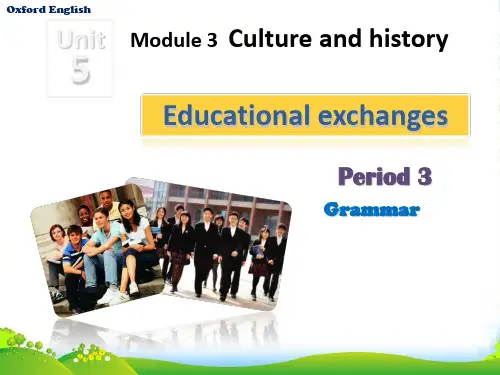
with already, yet, ever and never
zxxkw
Read and learn
zxxkw
Would you like to have dinner with me? Yes, I’d like to. I haven’t had dinner yet. No, thank you. I’ve already had dinner.
Write the words in the present perfect tense.
the simple present
tense
you allow
1
he goes
2
we are
3
you sing
4
they teach
5
I bring
6
she sits
7
we live
8
he opens
9
the present perfect tense
6、does not mean teaching people to kow what they do not know ; it means teachng them to behave as they do not behave. 教育不在于使人知其所未知,而在于按其所未行而行。2021年11月2021/11/262021/11/262021/11/2611/26/2021 7、is a progressive discovery of our ignorance.教育是一个逐步发现自己无知的过程。2021/11/262021/11/26November 26, 2021 8、is a admirable thing, but it is well to remember from time to time that nothing worth knowing can be taught.教育 是令人羡慕的东西,但是要不时地记住:凡是值得知道的,没有一个是能够教会的。2021/11/262021/11/262021/11/262021/11/26
zxxkw
Read and learn
zxxkw
Would you like to have dinner with me? Yes, I’d like to. I haven’t had dinner yet. No, thank you. I’ve already had dinner.
Write the words in the present perfect tense.
the simple present
tense
you allow
1
he goes
2
we are
3
you sing
4
they teach
5
I bring
6
she sits
7
we live
8
he opens
9
the present perfect tense
6、does not mean teaching people to kow what they do not know ; it means teachng them to behave as they do not behave. 教育不在于使人知其所未知,而在于按其所未行而行。2021年11月2021/11/262021/11/262021/11/2611/26/2021 7、is a progressive discovery of our ignorance.教育是一个逐步发现自己无知的过程。2021/11/262021/11/26November 26, 2021 8、is a admirable thing, but it is well to remember from time to time that nothing worth knowing can be taught.教育 是令人羡慕的东西,但是要不时地记住:凡是值得知道的,没有一个是能够教会的。2021/11/262021/11/262021/11/262021/11/26
Unit5 Grammar-八年级英语上册(牛津译林版)

Tips:may 用与否定句时,直接在后面加not,构成may not …结构,意味“可能不”
You may not like having a snake as a pet. 你可能不喜欢养蛇作为宠物。
This news may or may not be true. 这消息有可能是真的,有可能不是真的。
Unit 5.3 Wild Animals Grammar
Guess : What wild animal is it?
It may be a panda.
It’s black and white.
It may be a zebra. It may be a snake.
It may be a spider.
What does “may” mean?
Presentation:
We use ___m__a_y___ to say something is possible.
情态动词may除了可用来表示请求许可,还可以用来表示猜测某件事发 生的可能性,表示“也许,可能”,多用于肯定句和否定句中。
It may be a spider in the picture. They may be eating bamboo from China. He may work as a volunteer.
Example: At four years old, she decided to go outside for the first time. When she was six month old, she began to eat bamboo.
When she was 20 months old, she learnt to look after herself.
You may not like having a snake as a pet. 你可能不喜欢养蛇作为宠物。
This news may or may not be true. 这消息有可能是真的,有可能不是真的。
Unit 5.3 Wild Animals Grammar
Guess : What wild animal is it?
It may be a panda.
It’s black and white.
It may be a zebra. It may be a snake.
It may be a spider.
What does “may” mean?
Presentation:
We use ___m__a_y___ to say something is possible.
情态动词may除了可用来表示请求许可,还可以用来表示猜测某件事发 生的可能性,表示“也许,可能”,多用于肯定句和否定句中。
It may be a spider in the picture. They may be eating bamboo from China. He may work as a volunteer.
Example: At four years old, she decided to go outside for the first time. When she was six month old, she began to eat bamboo.
When she was 20 months old, she learnt to look after herself.
最新牛津深圳版八年级英语上册 Unit 5 Educational exchanges Grammar课件
•B1 Sarah wants to know whether the
students from Beijing have visited any places in London before. Ask and answer questions in pairs. Follow the example.
• __s_ta_y_e_d____(stay) here ? — For two weeks.
9. I have been to Macau before. • (改为否定句)
I __h_a_v_e____ _n_o_t_____ been to
• Macau before.
10. He hasn't come to school because he's ill. (就划线部分提问) _W__h_y____ __h_a_s____ he come to
• We often use yet at the (beginning /end)of a question or a negative sentence.
• 我们可以把already , ever and never 放在have,has 或者实义动词 前或者后面。
• 把 yet放在疑问句或者否定句中,置 于句子的结尾。
•…
See Big Visit
Tour
Ben Tower
around
Bridge Bucking-
ham Palace
Alice ×
√ two
×
years ago
George √(one and ×
×
a half
years ago)
Robin ×
新牛津译林版八年级英语上Unit 5 Grammar教学课件
Using verbs + to-infinitives
当我们要表示“想做某事、需要做某事 或决定做某事”时,就会出现两个动词 连用的情况,这时应如何表达呢? 同学们自然会想到want to do sth., need to do sth.和decide to do sth. 等表达方式。
Please go on to look at the sentences below. Pay attention to the colored words.
1. 当我们猜测某件事发生的可能性时,常 用may来表示“也许”、“可能”。 2. 当句子中已经有谓语动词,而我们又要 表达不止一个动作概念时,其余的动词 可以使用非谓语形式表达。动词不定式 就是动词的一种非谓语形式,其肯定形 式是“to + 动词原形”,其否定形式是 “not to + 动词原形”。无人称、数和时 态的变化。
3. — Excuse me, when are we going to have a picnic? — I’m not sure, Ask our monitor, please. He ______ know. A. need B. can C. may D. shall 4. — Do you have any plans for this weekend? — I'm not sure. I ______ go climbing Mount Yuntai. A. must B. need C. may D. can
什么是动词不定式 (‘to-infinitives’)?
上面例子中主要行为动词后面的动词 都采用了“to + 动词原形”的结构,我 们把这种结构称为动词不定式(有时 可以不带to)。动词不定式没有人称 和数的变化,在句子中不能单独作谓 语,其否定形式是“not to + 动词原形”。
牛津深圳八年级英语上册Unit 5 Period 5 课件
Part 2
You will: • __tr_av_e_l_to__y_ou_r_e_x_c_h_a_n_g_e_p_a_rt_n_e_r’_s_h_o_m_e_c_o_u_n_tr_y_; • __st_a_y_w_it_h_h_i_s_o_r _h_e_r _fa_m_i_ly_________________; • __go__to__sc_h_o_o_l _w_it_h_h_im__o_r_h_e_r_______________;
Posters are full of things to attract the readers’ attention. Here are some sentences in the poster on page 77 that interest reazxdxkwers in taking part in the educational exchange.
谢谢观赏
You made my day!
我们,还在路上……
• What are her reasons for
applying?
She loves to travel and meet new people. She wants to experience life in an English-speaking country and also be able to practise English every day.
zxxkw
Part 1
Two parts of an educational exchange
An exchange student will: • _tr_a_v_e_l t_o_y_o_u_r_h_o_m_e_c_o_u_n_tr_y__; • __st_a_y_w_it_h_y_o_u_r_fa_m__ily_______.
牛津译林版八年级英语上册unit5Grammar
3. I cannot go near the lions and tigers. They _m__a_y_h_u_r_t__ (hurt) me.
4. The baby panda is not drinking its mum’s milk. It __m_a_y__n_o_t_b_e___ (not be) hungry.
4.I can’t play with you. I ___m_u_s_t____finish my homework first.
5.I____m_u_s_t___ get up early tomorrow. because I have a meeting.
6._____C__a_n______you please open the window?
My mother forgot to turn off the lights yesterday. 我妈妈昨天忘记关灯了。
注意: 动词不定式在句子中不作谓语, 因此没 有人称、数和时态的变化。
动词不定式在句中常作谓语动词的宾
语, 这一类谓语动词常见的有:
agree choose decide forget
5. The monkeys are jumping around. They _m__a_y_b__e_p_l_a_y_in_g__ (be playing) with each other.
6. The horse is standing with its eyes closed. It _m_a_y__b_e_s_l_e_e_p_in_g_ (be sleeping).
1. _C_a_n_ Daming play basketball after school? 肯定回答:__Y__es_,_h_e__c_a_n__.
4. The baby panda is not drinking its mum’s milk. It __m_a_y__n_o_t_b_e___ (not be) hungry.
4.I can’t play with you. I ___m_u_s_t____finish my homework first.
5.I____m_u_s_t___ get up early tomorrow. because I have a meeting.
6._____C__a_n______you please open the window?
My mother forgot to turn off the lights yesterday. 我妈妈昨天忘记关灯了。
注意: 动词不定式在句子中不作谓语, 因此没 有人称、数和时态的变化。
动词不定式在句中常作谓语动词的宾
语, 这一类谓语动词常见的有:
agree choose decide forget
5. The monkeys are jumping around. They _m__a_y_b__e_p_l_a_y_in_g__ (be playing) with each other.
6. The horse is standing with its eyes closed. It _m_a_y__b_e_s_l_e_e_p_in_g_ (be sleeping).
1. _C_a_n_ Daming play basketball after school? 肯定回答:__Y__es_,_h_e__c_a_n__.