
牛津上海版(试用本)四年级下册英语Module 3 Unit 2 Time Period 2教案
Oxford English4B M3 <Things around us>Unit 2 <Time> Period 2<Using time properly>目录第一部分【单元主题和单课话题】第二部分【单元目标、分课时话题和分课时目标】第三部分【本课时教学目标和文本内容】第四部分【本课时教学过程】第五部分【本课时课堂练习设计】第六部分【本课时评价设计】第七部分【本课时教学说明】第一部分【单元主题和单课话题】第二部分【单元教学目标】知识与技能:1.学习音标/au/ 并了解其在单词中的发音情况。
e.g., mouse, cloud, cow2.初步感知、理解并能尝试运用核心词汇表达时间以及描述活动。
e.g. seven o’clock, a quarter past seven, half past seven, a quarter to eight; get up,brush my teeth, wash my face, have breakfast3.初步感知、理解并能尝试运用目标句型询问时间、询问正在参与的活动以及感受。
e.g. It’s …(time)It’s time for…… (be) doing … He/she/… (be) …(feelings).4. 初步感知、理解时区time zone以及时差的概念。
文化与情感:1.通过学习与体验,了解时间在日常生活中的重要性。
2.通过联系实际,逐步学会合理安排时间,做时间的主人。
3.通过体验、感受不同时区不同文化不同活动同样快乐,能够热爱生活中的每时每刻。
学习策略:1.学生在语境中,交流不同时间、不同时区,人们正在参与的活动,以及感受,了解时间的重要性、如何合理的安排时间以及不同国家和城市不同文化特色。
2.学生在交互式的教学活动中,学会相关的表达,并进一步感受时间的重要,生活的美好,培养学生时间观念等语用任务:以“Time”为主题,通过3个课时“Telling time correctly”, “Using time properly”, “Enjoying time happily”三个话题的学习,学生能够达成:描述他人和自己不同时间正在参与的活动以及感受;能够较合理的安排时间;能够根据time zone推测不同国家的时间,了解地理常识,增强人文素养。
【分课时教学目标】第三部分【本课时(第二课时)教学目标】知识与技能:1. 在“Using time properly”的语言环境中感知、理解词汇及词组:half past two, three o’clock, ten to five, five to five; do a puzzle, watch the cartoon, wait for mum, go out to play 并初步尝试运用。
2. 在“Using time properly”的语言环境中理解、学习核心句型:What time is it? It’s … What … (be) … doing…? … (be) doing …并进一步尝试表达交流。
3. 在“Using time properly”的语言环境中理解并学习句型: It’s …(time)It’s time for…… (be) doing … He/she/… (be) …(feelings).能在交际中选择语言进行会话表达。
过程与方法:1. 听:通过听力的输入,感知、了解文本内容。
2. 说:用What time is it? It’s …来询问、正确表达时间。
What … (be) …doing…? … (be) doing …来询问和回答正在参与的活动。
并能用It’s …(time)It’s time for…… (be) doing … He/she/… (be) …(feelings). 表达在具体时间正在参与的活动以及感受。
3. 读:通过各种形式的朗读,进一步掌握新授的词汇和句型。
4. 写:通过小组合作,讨论并描述如何合理安排老师为学生储存的时间。
情感态度与价值观:学生在“Using time properly”的语境中感受时间的可贵,学会合理安排时间,让生活更美好。
本课时(第二课时)教学重难点1.理解词汇及词组:half past two, three o’clock, ten to five, five to five; do a puzzle, watch the cartoon, wait for mum, go out to play 并初步尝试运用。
2.在“Using time properly”的语言环境中理解、学习核心句型:What time is it? It’s … What … (be) … doing…? … (be) doing …并进一步尝试表达交流。
【本课时(第二课时)文本】Using time properly文本说明:其中黑色部分为本课主文本,蓝色部分为本课辅助文本。
主文本:It’s Friday evening, Kitty is at home. After doing her homework, she is having dinner with family. It’s seven thirty. Kitty is doing a puzzle. After that Kitty is watching the cartoon ‘Doraemon’ at 9:15. Kitty can use her time properly.Doraemon and Noby have a time bank. They can store time and take out time freely in a day.It’s 2:30. Noby is waiting for mum at home. He is bored.It’s 3:30. Noby is going out to play. He is excited.It’s 4:50. It’s time for games. Noby is playing cards with Sue. He is glad.It’s 4:55. It’s time for games. Noby is playing with the toy car. He is happy.It’s 9:00. It’s time for bed. Noby is crying on the floor. He is sad. Poor Noby.There’s no time to do his homework, because he can’t use the time properly.If I were Noby, I can use the time properly.Hi, I’m Noby. I can use my time properly now.Look! It’s ______(time). I’m ______(be doing). I’m ____(how).It’s ______. It’s time for _________. I’m _________. I’m _________.It’s _____________________________.… …Using time properly, studying well and playing well, I enjoy my day!Hi, I’m __________. Kiki saved ______ hour(s) for us.With the time, we can do some interesting things.It’s __________. It’s time for ______. I’m ___________. I’m ________________!辅助文本:Noby: What? Why is it nine o’clock now?Time bank: You borrowed three hours . You must give it back.Noby: Mum, how about my dinner?Mum: What are you talking about? It’s nine o’clock now. Go back to finish your homework.Noby: Ah? Doraemon, my cartoon and my dinner. Give them back to me.Doraemon: I think you should do your homework now. Or you can’t sleep tonight.Noby: Ha?? Please help me, Doraemon.第四部分【本课时(第二课时)教学过程】3. Learn to use time properly.【板书设计】4B Module 3 Unit 2 (Period 2)Using time properlyTime It’s time for be doing How2:30 waiting for mum bored3:30 going out to play excited4:50 games playing cards glad4:55 games playing with the toy car happy9:00 bed crying on the floor sad time bank第五部分【本课时(第二课时)课堂练习设计】Task 1: Let’s fill in the blanks.Task 2: Let’s talk about the pictures.Task 3: Let’s watch and tick.Task 4: Let’s act .Task 5: Let’s say.【评价设计】评价设计(1)I can act在学习本课后,能够模仿文本表演片段I can act表述正确语言流畅表演精彩通过模仿对话片段,与同伴合作表演。
小组互评评价设计(2)I can say在学习本课后,能积极通过小组合作,共同表达如何合理安排老师为自己存入的I can say表达正确语言流畅内容丰富能够借助句型框架,小组合作,合理安排时间互评(以小组为单位)【本课时(第二课时)教学说明】单元设计思路一、单元统整下的课时划分教师根据本单元的主题、结构、功能意念以及语用任务,将本单元划分为三个课时,并确立话题为:Telling time correctly, Using time properly以及Enjoying time happily. 学生通过三个课时的语言训练,能够逐步培养珍惜时间、合理安排时间的好习惯,能够达成在创设的环境中运用目标语言完成相应活动的语用目标。
牛津上海版小学英语四年级下册全册教案

牛津上海版小学英语四年级下册全册教案牛津上海版小学英语四年级下册全册教案目录Module1 Using my five senses《Unit1 What can you smell and taste》 (2)Module1 Using my five senses《Unit2 How does it feel》 (8) Module1 Using my five senses《Unit3 Look at the shadow!》(13)Module2 My favourite things《Unit1 Sports》 (17)Module2 My favourite things《Unit2 Cute animals》 (25)Module2 My favourite things《Unit3 Home life》 (31)Module3 Things around us《Unit1 Sounds》 (36)Module3 Things around us《Unit2 Time》 (43)Module3 Things around us《Unit3 Days of the week》 (51) Module4 More things to learn《Unit1 A Music class》 (56)Module4 More things to learn《Unit2 Festivals in China》 (62) Module4 More things to learn《Unit3 Story time》 (66)《Daily expressions》 (74)Module1 Using my five senses《Unit1 What can you smell andtaste?》1教学目标1)能感知、理解水果类的单词,如:watermelon, strawberry, cherr y, grape, plum等。
牛津上海版(试用本)四年级下册英语Module 3 Unit 2 Time课件
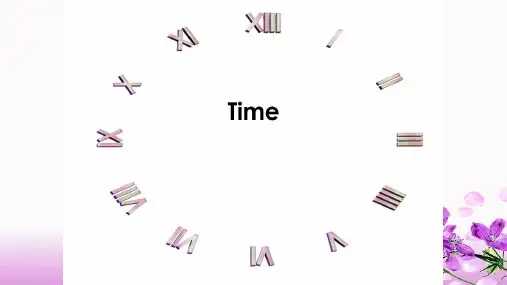
What time is it? It’s ……
7:00 seven o’clock
ə’klɔk
What time is it? It’s ……
7:15 a quarter past seven
/’kwɔ:tə/ /pɑ:st/
What time is it? It’s ……
早餐
breakfast
用早餐
have breakfast
Kitty’s Friday morning
1. What time does Kitty get up? (When does Kitty get up?) She gets up at aLeabharlann quarter past seven.
2. What time/When does Kitty brush her teeth? She brushes her teeth at half past seven.
Mum: Get up, Kitty. Kitty: What time is it? Mum: It’s a quarter past seven.
Mum: It’s half past seven. What are you doing, Kitty? Kitty: I’m brushing my teeth.
7:30 half past seven
/hɑ:f/
What time is it? It’s ……
7:45 a quarter to eight
Mum: Get up, Kitty. Kitty: What time is it? Mum: It’s a quarter past seven.
(沪教牛津版)四年级英语下册课件 MODULE3 unit2
Oxford English 4B
Module 3 Things around us Unit 2 Listen!
任务目标(MAIN TASK)
学生学会歌曲《Clock 》,并了解各类钟发出的不同声音 学生学会半点与整点的时间表达法,并能说出自己的作息 常规 学生学会《A typhoon》的儿歌,了解自然界的各种声音, 并能试着自己编创儿歌 学生学会“th”在具体单词中的发音
Module 3 Things around us Unit 2 Listen!
语言学习目标(LANGUAGE LEARNING OBJECTIVES)
语言知识(LANGUAGE) 词汇(VOCABULARY)
学习掌握时间表达法:o’clock , half past … 学习一些自然界的东西及其发出的声音,如:wind – Whoo--whoo, thunder --Crack –crack等 学习带有“th”的单词,掌握发音规律 学习一些动词短语,如go to bed , get up
Module 3 Things around us Unit 2 Listen!
语言学习目标(LANGUAGE LEARNING OBJECTIVES) 语言知识(LANGUAGE) 语法(GRAMMAR) 掌握时间表达法,如:It ’s six o’clock.. It’s half past five 掌握时间的回答,如What time is it? It’s five o’clock. 掌握一些祈使句,如 Get up, Kitty. Do your homework.
Oral English Prae 3 Things around us Unit 2 Listen!
牛津上海版(试用本)四年级下册英语Module 2 Unit 3 Home life_教案
Unit 3 Home life【教学目标】1.掌握英语单词:bedroom, living room, bathroom, kitchen.2.能正确使用现在进行时态描述正在发生的事情:… am/is/are … (doing)【教学重难点】能正确使用现在进行时态描述正在发生的事情:… am/is/are … (doing)【教学过程】师:播放<Look and say>一遍生:集体观看<Look and say>1-1 师:出示房间照片,指图提问:Where are you?生:I’m in the ... (如果学生不能回答,则由老师自问自答)1-2 师:示范读bedroom.生: 集体跟读3遍。
1-3 生:个别读bedroom.1-4 生:拼读单词2遍:b-e-d-r-o-o-m, bedroom1-5 师:用教bedroom相同方法教授living room,生:跟读并拼读living room.1-6 师:出示bathroom, kitchen图片。
提问:I want to brush my teeth, where can I go? Bathroom or kitchen?生:Bathroom.师提问:I want to cook, where can I go? Bathroom or kitchen?生:Kitchen.师:带领学生朗读单词bathroom, kitchen各3遍。
生:集体跟读并和同桌一起拼读单词。
2-1师:出示四个房间图,指向其中一张图片,提问:What is it?生:快速回答It’s a ...3-1师:提问:What can we do in the …?生:小组讨论。
生:个别回答,例:We can wash our faces in the bathroom.3-2 师:介绍某一的房间。
例:It’s small. My mother often cooks in it. Where is it?生:猜一猜It’s a kitchen.4-1 师:播放<Look and say>一遍。
沪教牛津版英语四年级下册《MODULE3UNIT2(2)》课件

six o’clock 整点
ten o’clock
half past eleven 半点
half past eight
What time is it? It’s ….
★拨钟游戏
No.1
No.2
No.3
No.4
No.5
演一演Sandy的一天
What time is it? Mum!
把你在生活中做的事情和 组内同学交流,谈谈你一
分钟能做什么事情?
What can you do in a minute? (一分钟)
Time is gold, money can’t buy time.
一寸光阴一寸金, 寸金难买寸光阴。
For today’s homework
Design your time table 通过今天的学习,希望同学们合理 的安排自己的时间,制作自己一天
Module 3 Unit 2 Listen!
Guessing game
谜语
It has a round face and it has two hands. One hand is long. One hand is short. It says “ticktock, tick-tock! What is it?
10:00p.m.
Get up,Sandy. It’s eight o’clock
Oh,dear!
I’m late for school! It’s half past eight.
You’re late, Sandy.
Come and eat, Ben.
Do your home work.
Go to bed, Sandy.
沪教牛津版四年级下册英语Unit3第2课时教学课件
看图,根据首字母提 示补全单词。
At n_i_g_h_t ___, the m__o_o_n___ and the stars are h______ig_hin the sky.
第五页,共十八页。
看图,根据首字母 提示补全单词。
—At n_i_g_ht__, the sun is high in the s_k_y___.
沪教牛津版四年级下册英语Unit3第2课时教学课件
科 目:英语 适用版本:沪教牛津版 适用范围:【教师教学】
• Unit 3 Look and see
第一页,共十八页。
学Байду номын сангаас目标
1.词汇:him; stop; take a walk 2.句型:He sees a black shape behind him. 3.能力目标:能够读懂故事并正确回答问题
—Yes. The moon looks like a boat. 3. —When ___E_ the sun ____?
—The sun rises in the morning.
4. —When does the sun ____?—In the evening.
5. —Look at the stars. They areCbeautiful!
—Look at the tree. Its shadow is s_h_o_rt___.
第六页,共十八页。
单元新词
代词:他(宾格) 例句:She gives him a cake. 她给了他一个蛋糕。
第七页,共十八页。
单元新词
代词:他(宾格)
例句:A car stops before him. 一辆车在他前面停下了。
牛津上海版四年级下册《Module 3 Unit 2 Time》 同步练习卷(第四课时)
牛津上海版四年级下册《Module 3 Unit 2 Time》小学英语-有答案-同步练习卷(第四课时)一. Read and choose(选出不同类词)1. 选出不同类词()A.triangleB.shapeC.squareD.circle2. 选出不同类词()A.mouseB.bearC.owlD.plant3. 选出不同类词()A.living roomB.kitchenC.parkD.bedroom4. 选出不同类词()A.brushB.washC.breakfastD.draw5. 选出不同类词()A.fortyB.cartoonC.story bookD.fairy tale二. Write the words (写出与划线部分同类的单词):I can hear a ________. You can hear an________. My brother can see two________. The ________ is sour. The________ is sweet. The________ is soft.I don't like ________. I like________. Do you like________?We can watch TV in the ________ and cook in the________.三. Fill in the blanks (用所给词的适当形式填空):Please________(put) the battery in the clock, Ben.My little sister________(like)________(drink) juice.An old tortoise________(live) by a small pond.It's nine fifteen. Kitty________(watch) TV on the sofa.I can________(do) a puzzle. Look, I________(do) a puzzle now.Danny's sister is doing________(she) homework in the bedroom.My father usually________(brush) his teeth at half past six. Now it's half past six. He________(get) up.四. Choose the best answers(选出最恰当的答案):Here _________ the Zhous.()A.areB.isC.have﹣﹣ _______ do you come home?﹣At four o'clock in the afternoon.()A.WhatB.What timeC.HowIt's time _________ lunch.()A.to haveB.for haveC.to havingIt's a quarter _________ twelve in the morning.()A.passB.atC.toCan I finish _________ the cartoon, Mum?()A.watchingB.to watchC.watchI'm thirsty. I want _________ some water.()A.drinkB.to drinkC.to drinking五. Rewrite the following sentences(按要求改写句子):Mr Li is ________ in the garden.(划线部分提问)________I ride a bicycle to school every day.(句意不变)I________ to school________ bicycle every day.Kitty is doing a puzzle ________.(划线部分提问)________Here's a grey wolf.(改为复数句)________It's a ________.(划线部分提问)________六. Read and judge (阅读短文,用T或F判断对错):We need food in the morning because we have plenty of time to eat something.________ (29). On a cold morning we can only drink a cup of hot drink for breakfast.________ (30). We should get up early because we need time to have breakfast.________ (31). A good breakfast can help us do morning activities better.________ (32). Eating breakfast makes us fat easily.________七. Think and write以My day为题写一篇30词的小短文,要求语句通顺,意思连贯,句式三种或以上________________参考答案与试题解析牛津上海版四年级下册《Module 3 Unit 2 Time》小学英语-有答案-同步练习卷(第四课时)一. Read and choose(选出不同类词)1.【答案】B【考点】类别分类Things around us: Time【解析】triangle三角形,shape形状,square正方形,circle圆形.【解答】该题考查类别分类.triangle三角形,shape形状,square正方形,circle圆形,ACD具体描述形状,B笼统表述形状.故选:B.2.【答案】D【考点】类别分类Things around us: Time【解析】mouse老鼠,bear熊,owl猫头鹰,plant种植.【解答】该题考查类别归类.mouse老鼠,bear熊,owl猫头鹰,plant种植.ABC都是表示动物的名词,D是动词或植物.故选:D.3.【答案】C【考点】类别分类Things around us: Time【解析】living room客厅,kitchen厨房,park公园,bedroom卧室.【解答】该题考查类别归类.living room客厅,kitchen厨房,park公园,bedroom卧室,ABD 表示家庭的房间,C是公共场所.故选:C.4.C【考点】词性分类Things around us: Time【解析】brush刷,wash洗,breakfast早饭,draw画.【解答】考查词性分类.brush刷,wash洗,breakfast早饭,draw画.ABD是动词,C是名词.故选:C.5.【答案】A【考点】词性分类Things around us: Time【解析】forty四十,cartoon动画片,story book故事书,fairy tale童话.【解答】考查词性分类.forty四十,cartoon动画片,story book故事书,fairy tale童话,BCD都属于名词,A表示数量,属于数词.故选:A.二. Write the words (写出与划线部分同类的单词):【答案】car,airplane,buses【考点】类别分类Things around us: Time【解析】我可以听到一辆汽车的声音.你可以听到一架飞机的声音.我的哥哥可以看到两辆巴士.【解答】本题考查类别分类.car汽车,是交通工具类名词.与car同类的单词:airplane(飞机);bus(公交车).an用于元音音素前,airplane是元音音素开头,其前用an修饰.two二,后跟可数名词复数buses.故填:airplane,buses.【答案】lime,apple,banana【考点】类别分类Things around us: Time【解析】酸橙是酸的.苹果是甜的.香蕉是软的.本题考查类别分类.结合生活常识可知"酸橙是酸的.苹果是甜的.香蕉是软的.".lime酸橙,是水果类名词,与之同类的单词:apple(苹果);banana(香蕉).故填:apple,banana.【答案】tigers,monkeys,monkeys【考点】类别分类Things around us: Time【解析】我不喜欢老虎.我喜欢猴子.你喜欢猴子吗?【解答】本题考查类别分类.tigers老虎,是动物类名词复数,与之同类的单词:monkeys(猴子).like后跟复数可数名词monkeys.故填:monkeys,monkeys.【答案】living room,kitchen【考点】类别分类Things around us: TimeMore things to learn: A music class【解析】我们会在客厅看电视,在厨房做饭.【解答】本题考查类别分类.living room客厅,是我们看电视的地方.cook做饭,结合生活常识可知"我们会在厨房做饭".厨房kitchen.故填:kitchen.三. Fill in the blanks (用所给词的适当形式填空):【答案】put【考点】单词、词组Things around us: Time【解析】请把电池放在钟里,本.【解答】本题考查单词填空.根据Please﹣﹣(put) the battery in the clock, Ben.可知句子无主语,是一个祈使句,以动词原形开头.故填:put.【答案】likes,drinking【考点】单词、词组Things around us: Time【解析】我的小妹妹喜欢喝果汁.【解答】本题考查单词填空.根据My little sister﹣﹣(like)﹣﹣(drink) juice.可知句子使用一般现在时,主语是单数形式,这里用likes,而后面跟动名词形式.故填:likes,drinking.【答案】lives【考点】单词、词组Things around us: Time【解析】老乌龟生活在一个小池塘.【解答】本题考查单词填空.根据An old tortoise﹣﹣(live) by a small pond可知句子叙述一件事实,时态用一般现在时,主语是单数.故填:lives.【答案】is watching【考点】单词、词组Things around us: Time【解析】现在是9:(15)基蒂正在沙发上看电视.【解答】本题考查单词填空.根据It's nine fifteen,可知现在是九点十五,后面说的应该是正在做某事,这里用现在进行时,构成be+V﹣ing.故填:is watching.【答案】do,am doing【考点】单词、词组Things around us: Time【解析】我会做猜谜题.看,我现在正在做一个谜题.【解答】本题考查单词填空.根据I can﹣﹣(do) a puzzle,可知这里放在情态动词后面跟动词原形,而Look, I﹣﹣(do) a puzzle now这里look用于现在进行时,构成be+Ving.故填:do,am doing.【答案】her【考点】单词、词组Things around us: Time【解析】Danny的妹妹正在卧室写她的家庭作业.【解答】考查形容词性物主代词.根据题干及句意,空格处应填入一人称代词,即"她的".故填:her.答案:her.【答案】brushes,gets【考点】单词、词组Things around us: Time【解析】我爸爸常常在6点半刷牙.现在是6点半,他起床了.【解答】考查一般现在时的三单.根据题干,第一空前的usually表明此句为一般现在时;根据句意,第一空短语为"刷牙",即brush one's teeth;第二空短语为"起床",即get up,根据三单规则,故填:brushes;gets.答案:brushes;gets.四. Choose the best answers(选出最恰当的答案):【答案】A【考点】主谓一致Things around us: Time【解析】周姓一家人在这里.【解答】考查主谓一致,句子是倒装句,"here +be+主语";"the Zhous"表示"周姓一家人",复数名词,"be"动词用复数,A.are系动词复数;B.is系动词,单数;C.have动词,表示"有";按要求完成题目.故选:A.【答案】B【考点】疑问词组Things around us: Time【解析】你什么时候回家?﹣下午四点.【解答】该题考查疑问词辨析.What什么,What time什么时间,How怎样;根据答语"At fouro'clock "可知问句询问时间,用What time提问.故选:B.【答案】A【考点】动词不定式Things around us: Time【解析】该吃午饭的时间了.【解答】该题考查动词不定式."It's time…"该是做某事的时候了,It's time to do sth.to后跟动词原形;It's time for (doing)sth,后加动词ing形式或名词,结合选项可知,A正确.故选:A.【答案】C【考点】介词Things around us: Time【解析】现在是上午十一点四十五分.【解答】本题考查时间介词.根据It's a quarter _________ twelve in the morning.可知这里考查a quarter to twelve表示差一刻钟不到十二点,这里用介词to.故选:C.【答案】A【考点】动名词Things around us: Time【解析】妈妈,我可以看完动画片吗?【解答】该题考查动名词.finish to do 是指 "做完某事以后去做某事";finish doing 是指 "做完正在做的事",根据句子信息推测该句句意:妈妈,我可以看完动画片吗?用finish doing.故选:A.【答案】B【考点】动词不定式Things around us: Time【解析】我渴了.我想喝点水.【解答】该题考查动词不定式.want后面要跟动词不定式,所以填to drink.故选:B.五. Rewrite the following sentences(按要求改写句子):【答案】reading a book,What is Mr Li doing in the garden?【考点】就划线部分提问Things around us: Time【解析】李老师正在花园里读书.【解答】考查划线部分提问.句子中"reading a book",表示"正在读书";句子用现在进行时;对其划线提问,用疑问词"what",询问"正在做什么";结合句式"what+be+sb+doing+其他"进行填写.故填:What is Mr Li doing in the garden?【答案】go,by【考点】同义句转换Things around us: Time【解析】我每天骑自行车去上学.【解答】考查同义句转换,"ride a bicycle to school"表示"骑自行车去学校",表示句子是一般现在时;同义词短语"go to school by bicycle";结合要求,进行填写.故填:go,by.【答案】in the classroom,Where is Kitty doing a puzzle?【考点】就划线部分提问Things around us: Time【解析】凯蒂正在教室里猜字谜.【解答】考查划线部分提问,句子是陈述句,"is doing a puzzle"表示句子是现在进行时;"in the classroom"表示"在教室里";对其划线提问,用疑问词"where",后面跟一般疑问句;系动词"is"引导一般疑问句;结合要求,完成题目.故填:Where is Kitty doing a puzzle?【答案】Here are some grey wolves.【考点】转为单复数句Things around us: Time【解析】这是一只灰狼.这里有一些灰狼.【解答】考查单复数句子转换.原句是单数句,转为复数句时:Here不变;把is变为are;然后去掉不定冠词a,加上some;最后把可数名词wolf变为复数形式wolves.故答案是:Here are some grey wolves.【答案】quarter past three,What time is it?【考点】就划线部分提问Things around us: Time【解析】现在三点十五分.【解答】考查划线部分提问."is"表示句子是一般现在时;句子表示"现在三点十五分";"quarter past three"表示"三点十五",对其划线提问,用疑问词"what time",后面跟一般疑问句,"is it"一般疑问句;按要求完成题目.故填:What time is it?六. Read and judge (阅读短文,用T或F判断对错):【答案】F,F,T,T,F【考点】判断正误Things around us: Time【解析】丰盛的早餐很重要.我们能容易的理解.因为截止到早饭时,我们十二小时没有吃饭了.我们的身体需要食物进行早晨的活动.一顿丰盛的早饭应该包含米饭,鸡蛋,牛奶和水果.在寒冷的早上,喝热饮是一个好主意.我们必须早起床,有充分时间吃早饭.一个丰盛的早饭帮助我们保持活跃.它帮助我们更加健康,工作更好而且玩的很快乐.【解答】(1)F.考查细节理解.根据文中" our bodies need food for doing morning activities",可知"我们需要食物进行早晨活动,不是因为有充足时间吃早饭",故填:F.(2)F.考查细节理解.根据文中"On a cold morning, drink a cup of hot drink is also a good idea",可知"在寒冷的早上,喝杯热饮料是很好的主意,不是仅仅喝热饮",故填:F.(3)T.考查细节理解.根据文中"We must get up early to have plenty of time to eat breakfast",可知"我们必须早上早起,以便有充足时间吃早饭.",故填:T.(4)T.考查细节理解.根据文中"A good breakfast helps us to keep active",可知"丰盛的早饭能帮助我们保持活跃",故填:T.(5)F.考查细节理解.根据文中"It helps us to be more healthy, work better and play more happily",可知"丰盛的早餐能让我们更健康,工作更有效率,更快乐",故填:F.七. Think and write【答案】MyDay,SaturdayismyfavouritedayOnSaturday,Igetupat7:30ThenIhavebreakfastwithmyparentsAt9:00,mymotherandIgotothesupermarketThenIcanbuymyfavouritefoodIntheafternoon,myfatherandIgoswimmingWehavesupperathomeAfterthat,IwatchcartoonswithmyparentsWhatahappyday!【考点】作文Things around us: Time【解析】写作思路:该短文要求以"My day"为题,可以从一天的时间表和日常生活着手,条理一定要清晰,按要求来写.注意时态用一般现在时,可以选择自己比较熟悉的内容发挥,利用自己熟悉的单词句式.重点词汇、短语:at 7:30在七点半,on Saturday在星期六,in the afternoon在下午,go swimming去游泳,watch cartoons 看卡通片.重点句型:(1)I do sth at…我在几点做某事.【解答】My DaySaturday is my favourite day.On Saturday,I get up at 7:(30)Then I have breakfastwith my parents.At 9:00,my mother and I go to the supermarket.Then I can buy my favourite food.In the afternoon,my father and I go swimming.We have supper at home.After that,I watch cartoons with my parents.What a happy day!我的一天星期六是我最喜欢的一天.在星期六,我七点半起床.然后我和我的父母一起吃早饭.九点,妈妈和我去超市.然后我就可以买我喜欢吃的东西.下午,爸爸和我一起去游泳.我们在家吃晚饭.晚饭后,我和爸爸妈妈一起看动画片.多么开心的一天!。
牛津上海版(试用本)四年级下册英语Module 3 Unit 2 Time Period 2课件
How
Let’s watch then tick.
Time
4:50 4:55
It’s time for…
be doing
games sports games sports
playing basketball playing cards doing a puzzle playing with the toy car paying on the seesaw playing video games
dinner. Give them back to me.
Doraemon: I think you should do your homework
now. Or you can’t sleep tonight.
Noby:
Ha?? Please help me, Doraemon.
Let’s act.
…
Hi, I’m Noby. I can use myok! It’s ______(time). I’m ______(be doing). I’m
____(how).
It’s ______. It’s time for _________. I’m _________.
now. Or you can’t sleep tonight.
Noby:
Ha?? Please help me, Doraemon.
If
you were Noby…
Hi, I’m Noby. I can use my time properly
now.
Look! It’s ______(time). I’m ______(be doing). I’m
… 6:30 … afternoon. …
上海牛津英语四年级下册Module 3 Unit 2 Listen! 4课时英文表格式教案
Unit 2 Listen!The First PeriodLanguage focus:Learn how to ask and answer the timeMain and difficult points:1. Asking ‘Wh-‘ questions to find out the time.2. Reading the sentences fluently.Teaching breach: using the clocks to practice ask timeProcedures Contents Methods PurposePre-task Preparation Warming-upTo elicit:the timeSing a song1. Ask the students to puttheir alarm clock on theirclocks2. Introduce the time利用实物引出话题,简单易行.While-task ProcedureSing asongSay andactLookand talk1. Play the recording.2. Students listen and singalong.3. Invite groups of thestudents to sing thesong.1. Teacher takes out a clockand tell the students thetime.2. Teaching: nine o’clock,half past nine.3. Listen to story4. Students listen andrepeat the dialogue.1. Ask the students to findout the time in eachpicture.2. Divide the students intogroups to complete thedialogue orally.利用,引起学生有意注意。
小学英语牛津上海版四年级下册《Module3》课件
I’m… I have… I …on Monday. I …on Tuesday.
1.Listen and read p45
听磁带模仿朗读p45
2.Retell the story.
复述故事
3.Exercise Book p63,64
完成练习册p63,64
Period 2
Do a survey Read a story (SB: P.44; P45)
教学目标:
1.复习巩固频度副词的使用方法: always, usually, often, sometimes, never
2.能向他人提问做某事的频率: Wh
______ is my classmate.
He/She usually/ always/ often/ sometimes/ never…
What does Mr Sunday have? He has a black coat and hat. How is Mr Monday? What does he like? He is a happy young man. He likes singing. How is Mr Tuesday? What does he love doing? He is tall and strong. He loves playing sports. What does Wednesday always do? He always smiles.
What do you usually do at weekends? I usually…
What do you usually do at weekends? I usually play badminton with my father. Do you go to the park at weekends? Yes. Sometimes I go to the park with my family.