
人教版七年级英语下册Unit3 Section B 2a-3b
在……和……之间 __________________________________________
There is a Yuxi River
______________________________________ 我家和学校之间有一条榆溪河。
Section B 2a-3b
A:How do you get to schoItolis?easy for us
to go to school.
How long does it take?
How far is it from your home to school?
But in the village, it is ndoiftfiecausltyto go to school . n. 村庄;村镇
3. There is no bridge and the river runs too quickly for boats. ) run ,在不同语境中分别有不同的用法和含义。 I run to my room and get my bag. run 意思是________ the river runs too quickly for boats. run 意思是________ 4. One 11-year-old boy, Liangliang, crosses the river every school day.
to have
not afraid
a
bridge
loves school
1.Where do you live? 2.What time do you get up? 3.How far is it from your home to school? 4.How do you get to school? Why? 5.How long does it take? 6. Are you afraid? 7.What’s your dream?
Liangliang
又急又险的怒江水 孩子们上学,需要横跨怒江。每天就靠这个索道渡江。
由于体重太轻,会影响滑行的速度。有时候小女孩 会两人一组结伴滑过.
Insist(坚持)
Love
Come true
Homework:
1. Improve your composition again. 2. Please retell the passage again.
Fast reading.快速阅读
Read the passage quickly and answer the question.
1. How do the students in the village go to school?
They go on a ropeway to cross the river to
3. They cannot go by boat because the river runs too______.
4. It is not easy to cross the river on a ropeway, but the boy is not ________.
5. The students and villagers want to have a bridge. Can their dream come ______?
difficult no bridge no boats
go on a ropeway
Read Para.2 and answer the questions.
a bLigiarnivgelriang
difficult no bridge
go on a ropeway
students in one
亮亮,一个11岁男孩,每天过河上学。 11-year-old“11岁的” 构成一个复合_______,修饰名词boy。 I am a ______________________(14岁)boy/girl. 5. But he is not afraid. 但是他不害怕。
_____________________ 害怕做某事
2a
Guess(猜) what the passage is about.
Crossing the River to School
What are they doing? Where are they going?
It’s about the students how to cross the river to school.
6. He’s like a father to me. 对于我来说,他像一个父亲。 be like_______ ___________________________我像我妈妈。 2) like v. 喜欢 __________________________我喜欢打篮球。 7. Many of the students and villagers never leave the village. __________村庄 _________村民 leave+ 地点 + for + 地点”表示“离开某地去某地” I will __________________Beijing我要离开榆林去北京。 四.反馈展示 对以上的语言学习中存在的疑难问题,请提问并请其他组同学帮忙 解决。
合作探究 释疑解难
1. For many students, it is easy to get to school. 对于许多学生来说,上学很容易。 (对某人来说)做某事怎么样
__________________________________ (1).It’s easy for me ____________my homework. (finish) (2) It’s difficult for him _________up early .(get) 2. There is a very big river between their school and the
Dear editor(编辑), I need your help. My name is…___________ ______________________________________ ______________________________________ ______________________________________ ______________________________________
Read Para.3 and answer the questions.
It is their dream to have a 4. What is the vbilrlaidgegres.’(村民) dream?
Their dream is to have a bridge.
5.Do you think their dream can come true?
2c Read the passage again. Complete the sentences
with words from the passage.
1. For the students in the village, it is ________ to get to school.
2. They have to cross a very ____ river between their school and the village.
/ Yes, I do. No, I don’t.
100 分
Maybe the government can build a bridge for them.
Group work
Discuss in groups组内讨论 我们该如何帮助他们 How can we help them?
Everyone needs help. Everyone can help . Let’s help each other and make the world more beautiful!
How to get to school ?
for many students
easy
a big river
Dream
students in one small village
difficult
go on no bridge a
ropeway no boats
Liangliang
11 years old
go to school.
dHale Waihona Puke fficultgo on a
ropeway
students in one
small village
2. Is it easy or difficult?
It’s difficult.
Careful reading仔细阅读
Read Para.1 and answer the question.
3. sHmoawll voillladgeis he?
He inso1b1oaytesars old.
11 years old
4. Is he afraid ofLitaankgliianngg a nrootpaefrwaiday? Why?
No, he isn’t.
Becauselohveesloscvheososl chool.
2. Why do they go to school like this?
There is a big river. There is no bridge, and the river runs too quickly for boaatbsi.g river
students in one small village
人教版英语七年级下册 Unit 6 Section B (2a-3b)
Period 4Section B (2a-3b)1.Today's story is about Zhu Hui, a student from Shenzhen.今天的故事是关于一个来自深圳的学生--朱辉。
(课本第35页)a student from Shenzhen在此作Zhu Hui的同位语,用来补充说明Zhu Hui。
句子中存在同位语的情况往往是由两个或两个以上同一层次的语言单位组成,其中前项与后项所指相同,句法功能也相同。
后项是前项的同位语,前后两项常用“,”连接。
判定同位语的最简单方法是将同位语删除后仍然不影响句子的结构。
2.But there isn't a Dragon Boat Festival in the US, so it's like any other night for Zhu Hui and his host family.但是在美国没有端午节,所以对朱辉和他的房东家人来说,今晚和平时的晚上是一样的。
(课本第35页)any other night意为“任何(一个)其他的夜晚”。
其中any表示“任何一个;任意一个”。
any other意为“任何别的;任何其他的”。
3.Zhu Hui misses his family and wishes to have his mom's delicious zongzi.朱辉想念他的家人,希望吃到他妈妈包的美味的粽子。
(课本第35页)(1)miss作动词,意为“思念;想念”。
miss还有“错过”的意思。
(2)wish作动词,意为“希望;盼望”。
“希望做某事”可用wish to do sth.;“希望某人做某事”可用wish sb.to do sth.。
wish还可作名词,意为“祝愿”。
4.Here is a picture of my family.这是我的一张全家福。
(课本第36页)(1)“here is+单数主语/here are+复数主语”表示“这是……”。
七年级英语下册unit3课件人教版
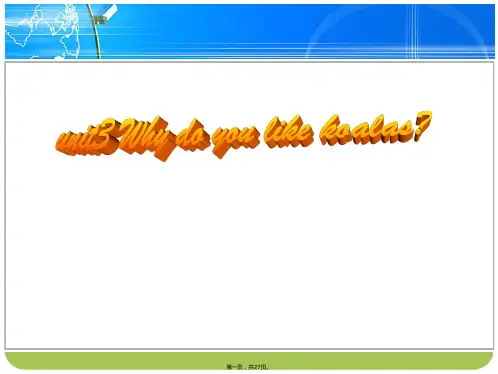
in front
of
betwee
nex
n and behintd
be
to
across
panda cute China
gate
第三页,共27页。
You
_____ _____
_____
_____
_____ _____
_____ _____ _____
_____
_____
_____
❖ Section B-1,2a
name animal age where
qualities
Molly elephant 12 Africa
like to play & eat grass
Ling Ling
panda
5
China
beautiful, shy
Bill koala
Australia
cute, sleep during the day, eat at night
3. But I don’t like_______because they’re______
人教版新目标七年级英语下册Unit3教学设计
Unit 3 How do you get to school?Learning Objectives一、Topics(话题):Transportation二、Functions (功能)Talk about how to get to places三、Structures (结构)1. How questions2. How long questions3. How far questions四、Target Language (目标语言)How do you get to school?I ride my bike.How long does it take to get to school?It takes about 20 minutes.How far is it from your home to school?It’s about two kilometers.五、V ocabulary (词汇)train, bus, subway, bike, car, boat, river, year, minute, kilometer, sixty, seventy, eighty, ninety, hundred, ride, drive, live, leave, cross take the train/bus, go by bike/subway, ride a bike, drive a car, think of, between … and …, leave home/school, come true六、Skills (技能)Listening for key informationScanning in reading七、Recycling (复习巩固)Numbers 1–30I usually …It is easy to …Thanks for …八、教材分析本单元以How do you get to school?为中心话题,主要运用How long/How far 询问“去某地的交通方式、时间、距离”,简单描述路线。
人教版七年级英语下unit3SectionB

Section B
3a Read the description and match them with the animals.
Molly This is Molly. She is
twelve years old. She is from Africa. She likes to play with her friends and eat grass.
fruit. 改为eat或to climb → climbing 8. Penguins from the South Pole.
前面加are或come 9. —What do you like elephants? Why
—Because they are friendly. 10. We can see many animal in the zoo.
5. The music sounds r_e_l_a_x_in_g_ (relax).
Ⅲ. 根据短文及首字母提示, 补全单词。
This is Larry. He’s (1) f _r_o_m_ Africa. He’s six (2) y____ eoaldr.sHe is (3)l___ . Hazey usually (4)s_le_e_p_s20 hours every day. He likes (5)e_a_ti_n_g_ meat, and he likes to (6)p_la_y_ with his friends. He’s kind of popular in the (7)z_o_o_. Many people like this interesting (8)a_n_im__a_l_.
人教版七年级英语上册Unit3SectionB(2a3b)教学设计

1.教学活动:学生分组讨论,了解组内成员的兴趣爱好,并互相交流。
2.设计意图:培养学生的合作能力、口语表达能力,以及学会倾听他人的观点。
3.操作步骤:
-教师给出讨论话题:“What are your hobbies? Let's talk about our favorite sports and hobbies.”
-注重学生的情感需求,关注学生的心理健康,使学生在学习过程中保持积极态度。
4.教学评价:
-形成性评价:关注学生在课堂上的表现,如:参与度、口语表达、合作能力等,给予及时的反馈和鼓励。
-总结性评价:通过课后作业、单元测试等形式,了解学生对本节课知识的掌握程度,为下一节课的教学提供参考。
四、教学内容与过程
在此基础上,教师在教学过程中应关注以下几点:
1.针对学生对一般现在时态掌握不足的问题,设计丰富的语境和练习,让学生在实际运用中掌握语法知识。
2.注重培养学生的词汇运用能力,通过例句、游戏等形式,帮助学生巩固和拓展兴趣爱好类词汇。
3.针对学生在口语表达方面存在的困难,提供充足的口语练习机会,鼓励学生大胆开口,提高口语水平。
3.操作步骤:
-教师引入一般现在时态,讲解其构成和用法,如:主语+动词原形(第三人称单数主语+动词三单形式)。
-教师给出示例句子,如:“I like playing football. He enjoys playing basketball.”
-学生模仿示例句子,用一般现在时态表达自己的兴趣爱好。
4.通过课文阅读,提高阅读理解能力,掌握文章主旨大意。
(三)情感态度与价值观
在本章节的学习中,学生将培养以下情感态度与价值观:
初中英语_Unit3 Could you please clean your room Section B教学设计学情分析教材分析课后反思
Unit3 Could you please clean your room?Section B(2b-3b)一解读理念:面向全体学生,着眼于学生阅读和写作水平的提高,关注英语工具性和人文性的统一;尊重学生,充分调动学生学习的积极性和主动性;提高学生的阅读能力和口语表达能力;培养学生积极分担家务的情感教育。
二学情分析:八年级学生的语言知识积累已经有一定的基础,但随着年龄的增长,学生性格逐渐稳重,课堂发言积极性降低。
本单元的话题更接近学生的生活实际,易于接受。
但是本单元文章的词汇量很大,学生接受起来有一定难度。
三教材分析:教学目标知识目标:掌握词汇stress, develop, neighbor, in order to, independence, fairness; 能力目标:通过任务型阅读的设计,培养学生的阅读策略,学会略读技巧。
情感目标:让学生体会父母的不容易,培养家庭责任感,让学生明白很多事情要自己动手,培养独立性,进一步落实情感教育。
教学重点掌握新单词以及新的句型还有固定搭配;掌握略读策略,会用不同句型来表达自己的观点;教学难点提高学生的综合阅读能力,尤其是skimming, scanning阅读技巧。
四教学过程:One Lead inBefore the class do a questionnaire first. Ask questions and fill in the blank. Lead in the topic.Two PresentationStep1. Before reading:Background introduction: Sunday Mail Magazine invited some parents to write a letter about whether kids should do chores at home.(介绍文章的写作背景,国外一些杂志经常邀请读者写关于热点话题的文章,指出中西方文化的不同)Step2. While reading1.SkimmingSee the two letters together to see which one is agree and which one disagree. Ask the Ss to read the first sentence to get the main idea of this passage, that is to help them to understand what is “Skimming.”(引导学生快速阅读文章的第一句,去找出文章的中心大意,也就是“略读”的阅读策略。
人教PEP版英语七年级下册 Unit 3 Part B
主语
谓语
宾语
think of意为“认为;想起”。 of为介词,其后可接名词、代词或动名词形式。
例: 你认为跳舞怎么样? What do you think of dancing?
句型:What do you think of… = How do you like… 你认为……怎么样? 用来询问某人对某事或某人的看法。
Pair work
Look at the picture to tell how Tom gets to his aunt’s home.
First he walks to the bus stop.He takes a bus to the train station.Then he takes the train.Next he takes a bus from the train station to his aunt’s home.
Mary wants to know…____ where Bob lives.____ how far he lives from his grandparents’ home.____ how he gets to his grandparents’ home.____ how long it takes to get to his grandparents’ home.____ what he thinks of the trip.
Sentences: — How do you get to school? — Well, I ride my bike to the subway station. Then I take the subway.
walk to the bus stop
人教版七年级英语上册Unit3SectionB(2a3b)优秀教学案例
一、案例背景
本案例背景基于人教版七年级英语上册Unit 3 Section B(2a-3b)的教学内容。单元主题围绕“How old are you? How old is he/she?”展开,通过介绍不同年龄的人及其兴趣爱好,让学生掌握一般现在时态的提问和回答方式,以及运用基数词进行年龄的询问。此阶段的学生已初步掌握了英语学习的基本语法和词汇,但对于一般现在时态的运用尚处于初级阶段,需要通过实例和活动进一步巩固。
2.创设一个真实的语境,如“生日聚会”,让学生在为角色准备台词的过程中,运用一般现在时态描述年龄和兴趣爱好。
3.利用多媒体手段,如图片、视频等,展示不同年龄阶段的人的兴趣爱好,激发学生的学习兴趣,增强课堂趣味性。
(二)问题导向
1.教师可设计一系列问题,引导学生思考和讨论,如:“How old are you?”, “What do you like to do?”等,让学生在回答问题的过程中,运用一般现在时态。
(二)讲授新知
1.教师可通过讲解、示范等方式,向学生介绍一般现在时态的疑问句和回答方式,以及年龄的表达方法。例如:“How old are you? I am twelve years old.”
2.教师可设计一些实例,让学生区分一般现在时态和其他时态,如:“I like playing soccer.”(一般现在时态),“I played soccer yesterday.”(一般过去时态),帮助学生掌握一般现在时态的特点。
2.教师要求学生在课后反思自己的学习过程,发现自己的不足,制定改进措施。
3.教师鼓励学生在下一堂课前,展示自己的作业成果,进行同伴评价和自我评价。
人教版初中七年级英语下册第三单元Unit3教案含教学反思
第3单元How do you get to school?本单兀教学计划弋,本单元知识梳理类别课程标准要求掌握的内容话题Transportation交通方式Section A 单词train n.火车bus n.公共汽车subway n.地铁ride v.骑n.旅程bike n.自行车sixty num.六十seventy num.七十eighty num.八十ninety num.九十hundred num.一百minute n.分钟far adv.&adj.远;远的kilometer(-kilometre)(abbr.km)n.千米;公里new adj.新的;刚出现的every adj.每一;每个by prep.(表小方式)乘(交通工具)drive v.开车earn.小汽车;轿车live v.居住;生活短语get to到达take the subway乘地铁ride a bike骑自行车every day每天by bike骑自行车from home to school从家到学校how far多远句型1.—How do you get to school?你怎样去上学?一I ride my bike.我骑自行车。
2.一How long does it take to get to school?去学校要多长时间?—It takes about15minutes.大约15分钟。
3.—How far is it from your home to school?从你家到学校有多远?一Ifs only about two kilometers.大约只有2千米。
4.H ave a good day at school.祝你在校过得愉快。
5.D oes Jane walk to school?简步行去学校吗?Section B 单词stop n.车站;停止cross v.横过;越过river n.河;江many adj.&pron.许多villagen.村庄;村镇between prep.介于....之间bridge n.桥boat n.小船year n.年;岁afraid adj.害怕;畏惧like prep.像;怎么样villager n.村民leave v.离开;留下dream n.梦想;睡梦v.做梦true adj.真的;符合事实的ropeway n.索道短语think of认为;想起between...and...在....和....之间come true实现;成为现实have to不得不;必须句型1.Mary wants to know what he thinks of the trip.玛丽想知道他认为这次旅行怎么样。
人教版七年级英语下册教案与习题:Unit 3 How do you get to school
Unit 3 How do you get to school?Section A (1a-2d)一、教学目标:1. 语言知识目标:1) 能掌握以下单词:train, bus, subway, ride, bike, sixty, seventy, eighty, ninety, hundred, far, minute, kilometer, new, every, every day2) 能掌握以下句型:①—How do you get to school? —I ride my bike.②—How does Mary get to school? —She takes the subway.2. Talk about how to get to places (谈论出行方式)take the bus /subway /train /taxi , ride a bike /walk .3. how引导的特殊疑问句,表示乘坐何种交通工具的方式。
how far, how long 引导的特殊疑问句。
4. 复习基数词及时间的表示方法。
2. 情感态度价值观目标:让学生感受到他们学习英语是为了在现实生活中进行交流,而不单纯是为了英语课和应付考试而学习,了解东西方国家出行方式的不同,以及不同的交通规则,教育学生注意交通安全, 加深对交通知识的了解。
倡导自觉遵守交通法规及礼貌,构建和谐的人际关系。
了解交通的发展,培养创新精神。
二、教学重难点1. 教学重点:1) how /how far /how long 引导的特殊疑问句.2) 乘坐交通工具的表示方法.3) It takes / sb some time to do sth .2. 教学难点:—How do you get to school? —I take the …/ride …/ walk…—How does Mary get to school? —She takes the subway.—How long does it take? —It takes forty minutes.—How far is it from… to…—It's… kilometers.三、教学过程Ⅰ. Warming-up and Lead in学生和老师进行简单的问候Ss : Good morning , teacher.T: Good morning , classT: Look at the picture. What can you see? Do you like your school? I usually get to school by bike, but sometimes on foot . How do you get to school?Ss 按实际情况作答S1: I ride my bike.S2: I go by bus.S3: ………T: Very good. You’re clever. Let’s learn Unit 4 Section A.之后板书:“Unit 4 How do you get to school?”Ⅱ. Presentation1. T: If you are here, but your school is in Shanghai. How do you get to school?Ss: I take the bus /plane/ boat / ship / car / taxiI ride a bike / motorbikeT: Do you know any other way?2. Teacher shows pictures on the big screen .归纳出行方式和常用短语.Ask some questions about how you get to…?(让学生积极主动的思考想象总结,多媒体增加趣味性,加强直观性,效果事半功倍)3. Show a picture about Part 1, on the screen.Point at girls or boys in the picture.Ask students to answer and write in the blanks.S1 : How does he / she go to school?S2 : He / She … …Ⅲ. 1aT: Look at the picture on your book. Match the words with the picture.(学生们完成1a的学习任务,然后校对答案)Ⅳ. Listening1. Make sure the Ss know what to do. Give them an example orally if possible.2. Read the names in the box.3. Play the tape and check the answers.Ⅴ. Pair workAsk two students to read the dialogue in the speech bubbles to the class. Then ask students to work in pairs. Ask and answer how students get to school in the picture.Finally ask some pairs of students to present their conversations to the class.Ⅵ. Listening1. Revise the numbers, first, zero~nine, next, ten~nineteen, then, twenty, thirty, forty…finally,twenty-one, twenty-two…Teach the new word "hundred".2. Play the tape for the students to finish 2a. Then play again and check the answersⅦ. PresentationShow a picture on the TV and explain these are your home and school.Teach: home----school How long 10 minutes How far two kilometersThen make up a dialogue to practice.A: How do you get to school?B: I usually take the bus.A: How far is it from your home to school?B: It's about two kilometers.A: How long does it take?B: It takes 30 minutes by busⅧ. Listening1. Tell Ss the following recording is about how Tom and Jane go to school.2. First, listen to the recording fill in the first column.3. Then, play the recording for the Ss again. Ss listen and complete the rest of the chart.4. Check the answers.Ⅸ. Role-play1. Read the dialogue and find the answer to these questions:①How does Jane get to school?②How far is it from home to school?③How long does it take to get to school from her home?2. Ss read the conversations and then find the answers to the questions.3. Check the answers with the class.4. Play the recording for the Ss to listen and repeat.5. Ss read the conversation then role-play the conversation.6. Let some pairs act out the conversation.Homework1. Remember the new words and expressions in this period.2. Role-play the conversation after class.Section A (Grammar Focus-3c)一、教学目标:1. 语言知识目标:1) 继续练习谈论出行方式take the bus /subway /train /taxi, ride a bike /walk .2)用不同方式练习how引导的特殊疑问句,表示乘坐何种交通工具的方式。