
幼儿基础英语水果篇
幼儿启蒙英语单词大全(含音标)
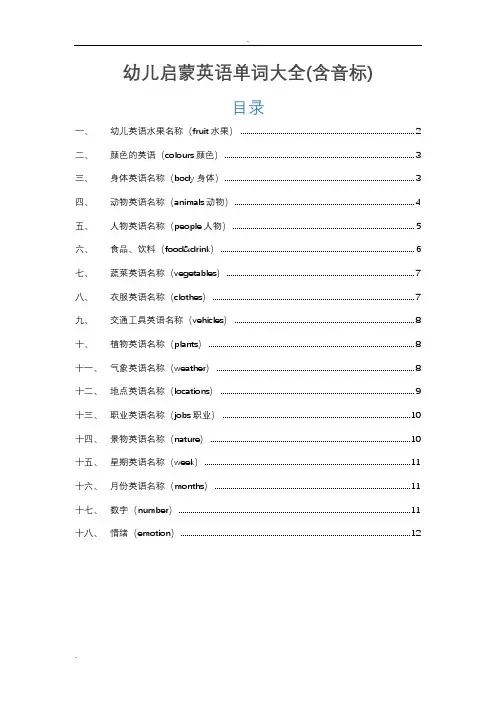
幼儿启蒙英语单词大全(含音标)目录一、幼儿英语水果名称(fruit水果) (2)二、颜色的英语(colours颜色) (3)三、身体英语名称(body身体) (3)四、动物英语名称(animals动物) (4)五、人物英语名称(people人物) (5)六、食品、饮料(food&drink) (6)七、蔬菜英语名称(vegetables) (7)八、衣服英语名称(clothes) (7)九、交通工具英语名称(vehicles) (8)十、植物英语名称(plants) (8)十一、气象英语名称(weather) (8)十二、地点英语名称(locations) (9)十三、职业英语名称(jobs职业) (10)十四、景物英语名称(nature) (10)十五、星期英语名称(week) (11)十六、月份英语名称(months) (11)十七、数字(number) (11)十八、情绪(emotion) (12)一、幼儿英语水果名称(fruit水果)apple苹果[ˈæpəl]banana香蕉[bəˈnænə]pear梨[per]orange橙子[ˈɔ:rɪndʒ] Watermelon西瓜[ˈwɔ:tərmelən]grape葡萄[ɡrep]peach桃[pitʃ]strawberry草莓[ˈstrɔ:beri] betelnut槟榔['bi:tlˌnʌt] carambola杨桃[ˌkærəm'boʊlə] cherry樱桃[ˈtʃɛri]chestnut栗子[ˈtʃɛsˌnʌt] coconut椰子[ˈkoʊkənʌt] cumquat金桔['kʌmˌkwɒt] durian榴莲[ˈdʊriən]filbert榛子[ˈfɪlbərt]grape葡萄[ɡrep] guava番石榴[ˈɡwɑvə]haw山楂[hɔ]Hami melon哈蜜瓜[ˈmɛlən] Juicypeach水蜜桃[ˈdʒusi pitʃ] kiwifruit猕猴桃[kɪwɪf'ru:t] lemon柠檬[ˈlɛmən]lichee荔枝[ˌlaɪ'tʃi:]longan龙眼['lɒŋgən]loquat枇杷[ˈloʊkwɑ:t]mango芒果[ˈmæŋgoʊ] nectarine油桃[ˌnɛktəˈrin] olive橄榄[ˈɑ:lɪv]Pawpaw木瓜[ˈpɔpɔ] persimmon柿子[pərˈsɪmən] pineapple凤梨[ˈpaɪnˌæpəl] pomelo柚子[ˈpɑ:məloʊ]plum梅子[plʌm]sapodilla人参果[ˌsæpəˈdɪlə]二、颜色的英语(colours颜色)red红[rɛd]blue蓝[blu] yellow黄[ˈjeloʊ] green绿[ɡrin] white白[waɪt] black黑[blæk]pink粉红[pɪŋk] purple紫[ˈpɜ:rpl] orange橙[ˈɔ:rɪndʒ] brown棕[braʊn]三、身体英语名称(body身体)hair头发[her] head头[hɛd] eye眼睛[aɪ] face脸[fes] neck脖子[nɛk] arm手臂[ɑ:rm] leg腿[lɛɡ] hand手[hænd] foot脚[fʊt] toe脚趾[toʊ]finger手指[ˈfɪŋɡɚ]ear耳朵[ɪr]nose鼻子[noʊz]mouth嘴巴[maʊθ]tooth牙齿[tuθ]shoulder肩膀[ˈʃoʊldə(r)] knee膝盖[ni]chin下巴[tʃɪn]cat猫[kæt]dog狗[dɔ:g]pig猪[pɪɡ]duck鸭[dʌk]rabbit兔[ˈræbɪt]horse马[hɔ:rs]elephant大象[ˈɛləfənt] ant蚂蚁[ænt]fish鱼[fɪʃ]bird鸟[bɜ:rd] eagle鹰[ˈiɡəl]beaver海狸[ˈbivɚ]snake蛇[snek]mouse老鼠[maʊs]squirrel松鼠[ˈskwɜ:rəl] kangaroo袋鼠[ˌkæŋɡəˈru] monkey猴[ˈmʌŋki]panda熊猫[ˈpændə]bear熊[ber]lion狮子[ˈlaɪən]tiger老虎[ˈtaɪɡɚ]fox狐狸[fɑ:ks]zebra斑马[ˈzibrə]deer鹿[dɪr]giraffe长颈鹿[dʒəˈræf] goose鹅[ɡus]hen母鸡[hɛn]turkey火鸡[ˈtɜ:rki] lamb小羊[læm] sheep绵羊[ʃip]goat山羊[goʊt]cow奶牛[kaʊ]donkey驴[ˈdɑ:ŋki]squid鱿鱼lobster龙虾shark鲨鱼[ʃɑ:rk]seal海豹[sil]killerwhale虎鲸[ˈkɪlɚhwel]friend朋友[frɛnd]boy男孩[bɔɪ]girl女孩[gɜ:rl]child孩子[tʃaɪld]baby婴儿[ˈbeɪbi]kid小孩[kɪd]son儿子[sʌn]daughter女儿[ˈdɔtɚ] classmate同学[ˈklæsmeɪt] mother母亲[ˈmʌðɚ] father父亲[ˈfɑðɚ]sister姐妹[ˈsɪstɚ] brother兄弟[ˈbrʌðɚ] uncle叔叔/舅舅[ˈʌŋkəl] man男人[mæn]woman女人[ˈwʊmən] Mr.先生Miss小姐lady女士/小姐[ˈledi]mom妈妈[mɑ:m]dad爸爸[dæd]parents父母['peərənts] grandparents祖父母grandma/grandmother(外)祖母grandpa/grandfather(外)祖父aunt姑姑[ænt]cousin堂(表)兄弟/堂(表)姐妹['k ʌzn]queen女王[kwin]visitor参观者[ˈvɪzɪtɚ] neighbor 邻居[ˈnebɚ]principal校长[ˈprɪnsəpəl] universitystudent大学生[ˌjunɪˈvɜrsəti ˈstudnt] tourist旅行者[ˈtʊrɪst]robot机器人[ˈroʊbɑ:t]六、食品、饮料(food&drink)rice米饭[raɪs]bread面包[brɛd]beef牛肉[bif]milk牛奶[mɪlk]Yogurt 酸奶[ˈjoɡət]water水[ˈwɔtɚ]egg蛋[ɛɡ]fish鱼[fɪʃ]tofu豆腐cake蛋糕[keɪk]hotdog热狗[hɑtˌdɔɡ]hamburger汉堡包[ˈhæmbɜ:rgə(r)] French fries炸薯条[frɛntʃfraɪz] cookie曲奇[ˈkʊki]biscuit饼干jam果酱[dʒæm]noodles面条['nu:dəlz]meat肉[mit] chicken鸡肉[ˈtʃɪkən]pork猪肉[pɔ:rk]mutton羊肉[ˈmʌtn]vegetable蔬菜[ˈvɛdʒtəbəl] salad沙拉[ˈsæləd]soup汤[sup]ice冰[aɪs]ice-cream冰淇淋['aɪskri:m]Coke可乐[koʊk]juice果汁[dʒus]tea茶[ti]coffee咖啡[ˈkɔ:fi]breakfast早餐[ˈbrekfəst]lunch午餐[lʌntʃ]dinner/supper晚餐[ˈdɪnɚ] [ˈsʌp ɚ]meal一餐[mil]七、蔬菜英语名称(vegetables)eggplant茄子[ˈegplænt] greenbeans青豆['bi:nz] tomato西红柿[təˈmeɪtoʊ] potato土豆[pəˈteɪtoʊ] cucumber黄瓜[ˈkjuˌkʌmb ɚ]onion洋葱[ˈʌnjən]carrot胡萝卜[ˈkærət] cabbage卷心菜[ˈkæbɪdʒ]八、衣服英语名称(clothes)jacket夹克衫[ˈdʒækɪt] shirt衬衫[ʃɜ:rt]T-s h i r t丅恤衫skirt短裙子[skɜ:rt]dress连衣裙[drɛs]jeans牛仔裤[dʒi:nz]pants长裤[pænts]socks袜子[sɑks]shoes鞋子['ʃu:z]sweater毛衣[ˈswɛtɚ] coat上衣[koʊt]raincoat雨衣[ˈreɪnkoʊt] shorts短裤[ʃɔ:rts] sneakers网球鞋['sni:kəz] slippers拖鞋['slɪpəz]sandals凉鞋[sændlz]boots靴子[buts]hat(有沿的)帽子[hæt]cap便帽[kæp]sunglasses太阳镜[ˈsʌnglæsɪz] tie领带[taɪ]scarf围巾[skɑ:rf]gloves手套[ɡ'lʌvz]trousers裤子[ˈtraʊzərz]cloth布[klɔ:θ]九、交通工具英语名称(vehicles)bike自行车[baɪk] bus公共汽车[bʌs] train火车[tren] boat小船[boʊt] ship轮船[ʃɪp] yacht快艇[jɑ:t]car小汽车[kɑr]taxi出租车[ˈtæksi] jeep吉普车[dʒi:p] van小货车/面包车[væn] plane/airplane飞机[plen] [ˈerpleɪn]subway/underground地铁[ˈsʌbˌwe] [ˈʌndərgraʊnd]motorcycle摩托车[ˈmoʊtərsaɪkl]十、植物英语名称(plants)flower花[ˈflaʊɚ] grass草[græs]tree树[tri]seed种子[sid] plant植物[plænt] rose玫瑰[roʊz] leaf叶子[lif]sprout幼苗[spraʊt]十一、气象英语名称(weather)cold寒冷的[koʊld] warm温暖的[wɔ:rm] cool凉爽的[kul] snowy下雪的[ˈsnoʊi] sunny晴朗的[ˈsʌni] hot炎热的[hɑ:t]rainy下雨的[ˈreni] windy有风的[ˈwɪndi] cloudy多云的[ˈklaʊdi] weatherreport天气预报[ˈwɛðɚrɪˈpɔrt]十二、地点英语名称(locations)home家[hoʊm]room房间[rʊm]bedroom卧室[ˈbɛdˌrʊm] bathroom卫生间[ˈbæθru:m] livingroom起居室[ˈlɪvɪŋ] kitchen厨房[ˈkɪtʃən] classroom教室[ˈklæsru:m] school学校[skul]park公园[pɑ:rk]postoffice邮局[post ˈɔfɪs] policeoffice警察局[pəˈlis] hospital医院[ˈhɑ:spɪtl] cinema电影院[ˈsɪnəmə] bookstore书店[ˈbʊkˌstɔr] farm农场[fɑ:rm]zoo动物园[zu]garden花园[ˈgɑ:rdn]study书房[ˈstʌdi] playground操场[ˈpleˌɡraʊnd] canteen食堂[kænˈtin]teacher’soffice教师办公室library图书馆[ˈlaɪbreri]gym体育馆[dʒɪm]washroom卫生间[ˈwɑ:ʃru:m] artroom绘画教室[ɑ:rt] computerroom计算机室[kəmˈpjut ɚ]musicroom音乐教室[ˈmjuzɪk] flat公寓[flæt]company公司[ˈkʌmpəni] factory工厂[ˈfæktəri]fruitstand水果摊[frut stænd] petshop宠物商店[pɛt ʃɑp] naturepark自然公园[ˈnetʃɚ] themepark主题公园[θim]busstop公交车站[bʌs stɑp].sciencemuseum科学博物馆[ˈsaɪəns mjuˈziəm] theGreatWall长城supermarket超市[ˈsu:pərmɑ:rkət] bank银行[bæŋk] country国家[ˈkʌntri]village乡村[ˈvɪlɪdʒ]city城市[ˈsɪti]hometown家乡[ˈhoʊmtaʊn]十三、职业英语名称(jobs职业)teacher教师[ˈtitʃɚ] student学生[ˈstu:dnt] doctor医生[ˈdɑ:ktə(r)] nurse护士[nɜ:rs]driver司机[ˈdraɪvɚ] farmer农民[ˈfɑ:rmə(r)] singer歌唱家[ˈsɪŋɚ] writer作家[ˈraɪtɚ] actor男演员[ˈæktɚ] actress女演员[ˈæktrɪs] artist画家[ˈɑ:rtɪst] TVreporter电视台记者[rɪˈpɔ:rtə(r)]engineer工程师[ˌendʒɪˈnɪr] accountant会计[əˈkaʊntənt] policeman(男)警察[pəˈlismən] salesperson销售员[ˈseɪlzpɜ:rsn] cleaner清洁工[ˈklinɚ] baseballplayer棒球运动员[ˈbesˌbɔl]Assistant店员[əˈsɪstənt] police警察[pəˈlis]十四、景物英语名称(nature)river河流[ˈrɪvɚ] lake湖泊[lek]stream河/溪[strim] forest森林[ˈfɔ:rɪst] path小道[pæθ] road公路[roʊd] house房子[haʊs] bridge桥[brɪdʒ]building建筑物[ˈbɪldɪŋ] rain雨[ren]cloud云[klaʊd]sun太阳[sʌn]mountain山[ˈmaʊntn] sky天空[skaɪ]rainbow彩虹[ˈreɪnboʊ] wind风[wɪnd]air空气[er]moon月亮[mun]十五、星期英语名称(week)Monday星期一[ˈmʌndeɪ] Tuesday星期二[ˈtu:zdeɪ] Wednesday星期三[ˈwɛnzdi] Thursday星期四[ˈθɜ:rzdeɪ] Friday星期五[ˈfraɪˌdeɪ] Saturday星期六[ˈsætərdeɪ] Sunday星期天[ˈsʌnˌdeɪ] weekend周末[ˈwi:kend]十六、月份英语名称(months)Jan.(January)一月[ˈdʒænjueri] Feb.(February)二月[ˈfebrueri] Mar.(March)三月[mɑ:rtʃ]April四月[ˈeprəl]May五月[mei]June六月[dʒu:n]July七月[dʒʊˈlaɪ]Aug.(August)八月['ɔɡəst] Sept.(September)九月[sɛpˈtɛmb ɚ]Oct.(October)十月[ɑ:kˈtoʊbə(r)] Nov.(November)十一月[noʊˈvemb ə]Dec.(December)十二月[dɪˈsɛmb ɚ]十七、数字(number)One 1 [wʌn] Two 2 [tu]Three 3 [θri] Four 4 [fɔr] Five 5 [faɪv]Six 6 [sɪks] Seven 7 [ˈsɛvən] Eight 8 [et] Nine 9 [naɪn] Ten 10 [tɛn] Eleven 11 [ɪˈlɛvən] Twelve 12 [twɛlv] Thirteen 13 [ˌθɜ:rˈti:n] Twenty 20 [ˈtwɛnti] Thirty 30 [ˈθɜ:rti] Hundred百[ˈhʌndrɪd] Thousand千[ˈθaʊzənd] Million 百万[ˈmɪljən]十八、情绪(emotion)love爱[lʌv]like喜欢[laɪk]depressed沮丧[dɪˈprɛst] Disappointment失望[ˌdɪsəˈpɔɪntmənt]Sad伤心[sæd]exciting兴奋[ɪkˈsaɪtɪŋ] agitate激动[ˈædʒɪˌtet] melancholy忧郁[ˈmelənkɑ:li] grieved难过[gri:vd]sorrow悲伤[ˈsɑ:roʊ] amazed惊讶[əˈmeɪzd]fear恐惧[fɪr] lose失落[luz]angry生气[ˈæŋɡri]envy嫉妒[ˈɛnvi]miss想念[mɪs]admire羡慕[ædˈmaɪr] inquietude不安[ɪn'kwaɪəˌtju:d] nervous紧张[ˈnɜ:rvəs] nuisance讨厌[ˈnu:sns]detest厌恶[dɪˈtɛst]worried着急[ˈwɜ:rid]sky害羞[ʃaɪ]confused迷茫[kənˈfjuzd]pain痛苦[pen]。
幼儿启蒙英语词汇大全
幼儿启蒙英语词汇大全幼儿英语词汇大全(带音标)本文将介绍幼儿常用的英语词汇,包括水果、颜色、身体、动物、人物、食品饮料、蔬菜、衣服和交通工具等方面。
一、水果名称(fruit)1.apple 苹果[ˈæpl]2.banana 香蕉 [bəˈnɑːnə]3.orange 橙子[ˈɔːrɪndʒ]4.strawberry 草莓[ˈstrɔːbəri]5.watermelon 西瓜[ˈwɔːtərmelən]二、颜色的英语(colours)1.red 红色 [red]2.blue 蓝色[bluː]3.yellow 黄色[ˈjeləʊ]4.green 绿色 [ɡriːn]5.purple 紫色[ˈpɜːpl]三、身体英语名称(body)1.head 头 [hed]2.eye 眼睛 [aɪ]3.nose 鼻子 [nəʊz]4.mouth 嘴巴 [maʊθ]5.hand 手 [hænd]四、动物英语名称(animals)1.cat 猫 [kæt]2.dog 狗 [dɒɡ]3.elephant 大象[ˈelɪfənt]4.n 狮子[ˈlaɪən]5.giraffe 长颈鹿 [dʒɪˈrɑːf]五、人物英语名称(people)1.XXX 母亲[ˈmʌðər]2.XXX 父亲[ˈfɑːðər]3.XXX 老师[ˈtiːtʃər]4.friend 朋友 [frend]5.baby 婴儿[ˈbeɪbi]六、食品、饮料(food&drink)1.bread 面包 [bred]k 牛奶 [mɪlk]3.rice 米饭 [raɪs]4.juice 果汁 [dʒuːs]5.cake 蛋糕 [keɪk]七、蔬菜英语名称(vegetables)1.carrot 胡萝卜[ˈkærət]2.tomato 番茄 [təˈmeɪtəʊ]3.potato 土豆 [pəˈteɪtəʊ]4.cucumber 黄瓜[ˈkjuːkʌmbər]5.cabbage 卷心菜[ˈkæbɪdʒ]八、衣服英语名称(clothes)1.shirt 衬衫 [ʃɜːt]2.pants 裤子 [pænts]3.dress 连衣裙 [dres]4.hat 帽子 [hæt]5.shoes 鞋子 [ʃuːz]九、交通工具英语名称(vehicles)1.car 汽车 [kɑːr]2.bicycle 自行车[ˈbaɪsɪkl]3.bus 公交车 [bʌs]4.train 火车 [treɪn]5.airplane 飞机[ˈeəpleɪn]以上是幼儿英语常用词汇的介绍,希望对孩子们研究英语有所帮助。
零基础幼儿英语词汇分类大全
幼儿英语词汇大全一、幼儿英语水果名称(fruit 水果)apple 苹果——banana 香蕉——pear 梨——orange 橙子——Watermelon 西瓜——grape葡萄——peach桃——strawberry 草莓——betelnut 槟榔——carambola 杨桃——cherry 樱桃——chestnut 栗子——coconut 椰子——cumquat 金桔——date枣子——durian 榴莲——filbert 榛子——grape 葡萄——guava 番石榴——haw 山楂——honey-dew melon 哈蜜瓜——juicy peach水蜜桃——kiwifruit 猕猴桃——lemon 柠檬——lichee 荔枝——longan 龙眼——loquat 枇杷——mango 芒果——nectarine 油桃——olive 橄榄——papaya (Pawpaw) 木瓜——persimmon 柿子——pineapple 凤梨——pomelo 柚子——plum 梅子——sapodilla 人参果二、颜色的英语(colours颜色)red红——blue蓝——yellow黄——green绿——white白——black 黑——pink粉红——purple紫——orange橙——brown棕三、动物英语名称(animals动物)cat猫——dog狗——pig猪——duck鸭——rabbit兔——horse马——elephant大象——ant蚂蚁——fish鱼——bird鸟——eagle鹰——beaver海狸——snake蛇——mouse老鼠——squirrel松鼠——kangaroo袋鼠——monkey猴——panda熊猫——bear熊——lion狮子——tiger老虎——fox狐狸——zebra斑马——deer鹿——giraffe长颈鹿——goose鹅——hen母鸡——turkey火鸡——lamb小羊——sheep绵羊——goat山羊——cow奶牛——donkey驴——squid鱿鱼——lobster龙虾——shark鲨鱼——seal海豹——sperm whale抹香鲸——killer whale虎鲸。
幼儿英语水果单词大全
幼儿英语水果单词大全Fruit水果字母A、B开头的水果英语单词:Almond杏仁Apple苹果Apricot杏子ArbutusxxAvocadoxx梨Bagasse甘蔗渣Bana香蕉Bergamot佛手柑Berry桨果Betelnut槟榔Bilberry野桑果Bitter orange苦酸橙Blackberry刺梅Black brinxxxxxxxxBlack brin的图片Blueberryxx,蓝莓Bryony野葡萄Bullace野xxBush fruitxx果字母C、D开头的水果英语单词:Cantaloupexx甜瓜CarambolaxxCasaba冬季甜瓜Cascara鼠xxCherry樱桃ChestnutxxCoconut椰子Codlin未熟苹果Core果心CranberryxxCumquatxxCustard apple番荔枝Damson洋xxDate枣子Date palm枣椰子Dew果露Durian榴莲字母F、G、H、J、K开头的水果xx:Fig无花果Filbert榛子榛子filbert的图片Flat peach蕃桃Foxnut鸡头果GinkgoxxGooseberry醋栗(Chinese gooseberry猕猴桃)Grape葡萄Grapefruit葡萄柚子Guava番石榴Haw山楂Herbaceous fruit草本果HickoryxxxxHoney-dew melonxxJuicy peach水蜜桃Kernel fruit仁果Kiwifruit奇异果,猕猴桃字母L、M、N开头的水果xx:Lemon柠檬Lichee荔枝Longan龙眼、xxLoquat枇杷Lotus nut (seed)莲子Mandarinxx柑桔Mango芒果Mangosteenxx果Marc果渣MelonxxxxMini watermelon小xxNectarine油桃Newton pippinxxNucleus核仁字母O、P、Q、R开头的水果类xx:Olive橄榄Orange橙子Papaya (Pawpaw)木瓜Peach桃子Peanut花生Pear梨Persimmon柿子Phoenix eye nutxx果PineapplexxPistachio开心果Pitaya火龙果PlumxxPomegranate石榴Pomelo柚子Quarenden大红苹果RambutanxxRaspberry覆盆子字母S开头的水果类xx:Sapodilla人参果人参果Sapodilla的图片Sapodilla plum芝果Seedless watermelon无籽西瓜Segment片囊Shaddock文旦SorgoxxSorosis桑果Strawberry草莓Sugarcane甘蔗Sultanaxx葡萄:一种黄色的无核小葡萄原产于xx Sweet acorn甜栎子Syrup shaddock汁柚字母T、V、W开头的水果类英文名称:Tangerine蜜柑桔Tangor广柑Teazle fruit刺果Tough pearxxVermillion orange朱砂桔Walnut核桃(Chinese walnut山核桃)Warden冬梨Water Caltrop菱角Water-chestnut马蹄、荸荠WatermelonxxWhite shaddockxxWild peach毛桃。
少儿英语公开课_水果篇

少儿英语公开课_水果篇在少儿英语教育中,为了帮助孩子们更好地学习英语,提高他们的听说能力和词汇量,公开课是一种非常有效的教学方式。
而在公开课的选择上,水果篇无疑是一个非常受欢迎的主题。
本文将从水果的分类、特点以及相关的英语词汇学习等方面来探讨少儿英语公开课的水果篇内容。
一、水果的分类水果是一种非常广泛的食物,按其综合特征可以分为多种类型。
首先是浆果类水果,如蓝莓和草莓,它们小巧玲珑,鲜艳多汁。
其次是核果类水果,如苹果和梨,它们拥有坚硬的果核并呈现出不同的形状和颜色。
还有瓜果类水果,如西瓜和哈密瓜,它们以其清凉爽口的特点深受孩子们的喜爱。
另外还有柑橘类水果,如橙子和柠檬,它们具有酸甜可口的特点。
总的来说,水果的分类丰富多样,每一类水果都有其独特的风味和营养价值。
二、水果的特点在进行少儿英语公开课的水果篇教学时,除了了解水果的分类外,还需要让孩子们了解不同水果的特点。
比如,苹果是一种脆甜多汁的水果,通过吃苹果可以补充维生素和纤维素,有助于增强孩子们的免疫力。
另外,香蕉是一种受欢迎的水果,它富含钾元素,有助于维持心脏和神经系统的正常功能。
还有草莓,它是一种鲜红多汁的水果,不仅味道酸甜可口,还含有丰富的维生素C和抗氧化物质,对于提高孩子们的抵抗力和养护皮肤有很好的作用。
通过了解水果的特点,可以帮助孩子们更好地选择和享用水果,从而保持健康的生活方式。
三、水果的英语学习在少儿英语公开课的水果篇教学中,学习水果的英语表达是非常重要的一部分。
通过学习水果的英语单词,孩子们可以扩大他们的词汇量,提高他们的语言表达能力。
在教学中,可以通过播放相关的视频或者图片展示的形式来帮助孩子们认识不同种类的水果,并教授相应的英语单词。
比如,“apple”表示苹果,“orange”表示橙子,“banana”表示香蕉等等。
此外,还可以进行一些互动游戏,如水果拼图游戏、水果猜谜等,通过游戏的方式来帮助孩子们巩固记忆。
总结:少儿英语公开课的水果篇是一个非常有趣和实用的教学内容。
适合幼儿园的水果英语作文

适合幼儿园的水果英语作文Apples are juicy and delicious. They come in different colors like red, green, and yellow. When you bite into an apple, you can taste the sweetness and the crunchiness.It's a perfect snack for kids because it's easy to hold and eat. You can also make apple juice or apple sauce. Apples are not only tasty, but they are also good for your health. They are full of vitamins and fiber, which help to keep your body strong and healthy. So next time you're looking for a snack, grab an apple!Bananas are a popular fruit among kids. They are soft and easy to eat. You can peel a banana and eat it right away. Bananas are also a good source of energy. They contain natural sugars, which give you a quick boost of energy. They are also rich in potassium, which is good for your muscles and helps to regulate your blood pressure. You can eat bananas on their own or add them to your cereal or yogurt. They are a great choice for a healthy and tasty snack!Oranges are bright and refreshing. They are a great source of vitamin C, which helps to boost your immunesystem and keep you healthy. Oranges are easy to peel and eat. You can enjoy them as a whole fruit or squeeze them to make fresh orange juice. Oranges are also a good source of fiber, which helps to keep your digestive system healthy.So next time you're thirsty, reach for an orange instead of a sugary drink. It's a delicious and healthy choice!Grapes are small and sweet. They come in differentcolors like green, red, and purple. Grapes are easy to eat, you can just pop them into your mouth. They are a great snack for kids because they are bite-sized and easy to hold. Grapes are also a good source of antioxidants, which helpto protect your body from damage. You can eat grapes ontheir own or add them to your fruit salad. They are a tasty and healthy treat!Watermelons are juicy and refreshing. They are perfect for hot summer days. When you bite into a watermelon, you can taste the sweetness and feel the coolness. Watermelonsare also a good source of hydration because they are mostly made up of water. They are also rich in vitamins A and C, which are good for your skin and immune system. So next time you're feeling thirsty, grab a slice of watermelon.It's a delicious and hydrating snack!In conclusion, there are many different fruits that are suitable for kindergarten kids. Apples, bananas, oranges, grapes, and watermelons are all tasty and healthy choices. They are easy to eat and full of vitamins and fiber. So next time you're looking for a snack, reach for a piece of fruit. It's a delicious and nutritious option!。
幼儿学英语入门篇
幼儿学英语入门篇以下为您生成 20 个幼儿学英语入门的内容示例,包含英语释义、短语、单词、用法和双语例句:---1. **单词**:Apple (['æpl] )- **释义**:苹果- **短语**:an apple(一个苹果)- **用法**:作名词,表示一种水果- **例句**:I have an apple. (我有一个苹果。
)我喜欢吃苹果。
I like eating apples.2. **单词**:Banana ([bəˈnɑːnə])- **释义**:香蕉- **短语**:a bunch of bananas (一串香蕉)- **用法**:作名词- **例句**:She ate a banana. (她吃了一根香蕉。
)这些香蕉很甜。
These bananas are very sweet.3. **单词**:Cat ([kæt] )- **短语**:a black cat (一只黑色的猫)- **用法**:作名词- **例句**:The cat is sleeping. (这只猫在睡觉。
)我有一只可爱的猫。
I have a lovely cat.4. **单词**:Dog ([dɒɡ] )- **释义**:狗- **短语**:a little dog (一只小狗)- **用法**:作名词- **例句**:The dog is barking. (这只狗在叫。
)那是一只白色的狗。
That is a white dog.5. **单词**:Egg ([eɡ] )- **释义**:鸡蛋- **短语**:fried eggs (煎鸡蛋)- **用法**:作名词- **例句**:I want an egg. (我想要一个鸡蛋。
)她煮了一些鸡蛋。
She boiled some eggs.6. **单词**:Fish ([fɪʃ] )- **短语**:a big fish (一条大鱼)- **用法**:作名词- **例句**:There are many fish in the river. (河里有很多鱼。
幼儿英语学习-水果篇
mangosteen 山竹
[英]:[ˈmæŋɡəstiːn] [美]:[ˈmæŋɡəstiːn]
melon 瓜,甜瓜
[英]:[ˈmelən] [美]:[ˈmelən]
nectarine 油桃
[英]:[ˈnektəriːn] [美]:[ˈnektəriːn]
lemon 柠檬
[英]:[ˈlemən] [美]:[ˈlemən]
lime 青柠,酸橙
[英]:[laɪm] [美]:[laɪm]
longan 桂圆;龙眼
[英]:['lɒŋgən] [美]:['lɒŋgən]
loquat 枇杷
[英]:[ˈləʊkwɒt] [美]:[ˈloʊkwɑːt]
mango 芒果
英语学习(English Study)
水果类(Fruits)
fruit 水果
[英]:[fruːt] [美]:[fruːt]
apple 苹果
[英]:[ˈæpl] [美]:[ˈæpl]:[ˈwɔːtəmelən] [美]:[ˈwɔːtərmelən]
orange 橙子,柑橘
[英]:[ˈhɔːθɔːn] [美]:[ˈhɔːθɔːrn]
cherry 樱桃
[英]:[ˈtʃeri] [美]:[ˈtʃeri]
pomegranate 石榴
[英]:[ˈpɒmɪɡrænɪt] [美]:[ˈpɑːmɪɡrænɪt]
litchi 荔枝
[英]:['li:tʃi:] [美]:['litʃi]
cantaloupe 哈密瓜,甜瓜
[英]:[ˈkæntəluːp] [美]:[ˈkæntəluːp]
趣味英语(水果篇)
规则:任选2个单词作为相反词,当老师读出单词①时,小朋友作为跷跷板的另
PA一R方T ,01就要说出相反的那个词,即单词②。
小游戏:跷跷板
第一章
小游戏:水果蹲
规则:每位小朋友各以自己喜 欢的水果为名,设定一个喜欢 的动作,当一位小朋友说完水 果名两次并把动作做了两遍后, 说出一个代表另一个小朋友的 水果名,则点到名的小朋友要 做动作。速度要快喔。
小谜语 你来猜
胖娃娃,没手脚,红尖嘴,一身毛,背 上一道沟,肚里好味道。 富含维C味极酸,烹饪榨汁好材料。 浑身黄袍皮粗糙,头顶冠芽不算高。 A B C
小谜语 你来猜
绿纱帐里珍珠藏,剥开紫衣水汪汪。用 它酿酒美天下,果实晒干肉软香。 体圆似球,色红如血,皮亮如珠,汁甜 赛蜜。 高高树上结果实,插入吸管尽情饮。 A B C
趣味英语 (水果篇)
——
单击此处添加正文,文字是您思想的提炼,请尽量言简意 赅的阐述观点。
你最喜欢吃什么 水果? what is your favorite fruit?
PART 01
苹果பைடு நூலகம்
apple
PART 02
梨
pear
PART 03
peach
桃子
orange
橙子
01
banana
02
香蕉
龙眼
pawpaw
木瓜
litchi
荔枝
durian
榴莲
01
02
coconut
椰子
01
02
pomelo
柚子
PART 09
sugar cane
甘蔗
cherry tomatoes
01
圣女果
少儿英语单词水果
少儿英语单词水果Fruits are an essential part of a healthy diet, and they are also a great way to introduce young children to new vocabulary in English. In this article, we will explore some common fruits and their names in English, as well as some fun facts and activities to help children learn and remember these words.First, let's start with one of the most popular fruits – apples. In English, we simply call them "apples." You can teach children about different types of apples, such as red apples, green apples, or even yellow apples. You can also introduce the concept of apple picking and explain how apples grow on trees.Next, we have bananas. The English word for bananas is, well, "bananas." You can teach children about the color yellow and the unique shape of bananas. You can also talk about how bananas are a great source of potassium and are often used in smoothies and desserts.Moving on to oranges, the English word for oranges is "oranges." You can teach children about the color orange and the sweet, tangy taste of oranges. You can also explain how oranges are a good source of vitamin C and are often eaten as a snack or used to make juice.Another common fruit is strawberries. In English, we call them "strawberries." You can teach children about the color red and the small seeds on the outside of strawberries. You can also talk about how strawberries are often used in desserts like cakes and ice cream.Grapes are another popular fruit. In English, we call them "grapes." You can teach children about the different colors of grapes, such as green grapes and purple grapes. You can also explain how grapes are often used to make juice, wine, or even raisins.Now, let's talk about watermelon. The English word for watermelon is "watermelon." You can teach children about the color green on the outside and the pink or red color onthe inside of a watermelon. You can also explain how watermelon is a refreshing fruit often enjoyed in the summer.Finally, we have peaches. In English, we call them "peaches." You can teach children about the fuzzy skin of peaches and the sweet, juicy fruit inside. You can also talk about how peaches are often used in pies, jams, and other desserts.To help children learn and remember these fruit names, you can use flashcards, games, and songs. For example, you can create a matching game with pictures of the fruits and their names in English. You can also sing a simple song about fruits to the tune of a familiar nursery rhyme.In conclusion, teaching young children about fruits in English is not only a great way to expand their vocabulary, but it also helps them develop healthy eating habits. By introducing fruits in a fun and engaging way, children can learn to appreciate the variety of fruits available and the benefits of including them in their diet. So, let's encourage children to explore the world of fruits and enjoy learning new words in English!。