
外研版九年级英语上册Module1Unit3Languageinuse课件
Summary:
Complete the sentences with the correct form of the words in the box.
1. Listen! It _i_s_r_a_in_i_n_g_ (rain) outside. 2. The great musician _w_i_l_l _g_iv_e___
4. My grandmother ____ in Yangzhou.
She was born there and has never
lived anywhere else.
A. lived
B. lives
C. was living D. will live
5. A number of tourists ____ Yangzhou
the Giant’s Gauseway
1. She, visit the Giant’s Causeway, two years ago. She visited the Giant’s Causeway two years ago.
2. She, visit the Giant’s Causeway, every year. She visits the Giant’s Causeway every year.
A. play
B. are playing
C. have played D. were playing
7. —Millie, where is Miss Li?
—She ______ a speech on Chinese art
to the first-year students in the hall.
_3_8_1___ About metres. _1_3_7___
metres now.
_10_2____ About floors. _4_50_0___
years old.
English newspapers:
1. Henry will give us a report as soon as
but to get inside you must (3) _g_o__t_h_r_o_u_g_h a giant glass pyramid that is (4) m__o_r_e_t_h_a_n_ 20 meters tall. The entrance to the museum is (5) _a_t_t_h_e_b_o_t_t_o_m__o_f the pyramid. Some people do not like the glass pyramid. They say it looks too new and does not suit the older building. I do not (6) _a_g_r_e_e_w__it_h___ them. I think it looks great.
friends then.
A. play
B. played
C. am playing D. was playing
3. Mr. Green, a famous writer, ____ our
school next week.
A. visited B. visits
C. was visiting D. will visit
9. Miss Lin ______ a lot of work for
the poor area since 2010.
A. does
B. did
C. has done
D. will do
along the Great Wall every year.
appear finish give rain talk visit 6w. Aalkfew minutes later, a stranger
_a_p_p_e_a_r_e_d_ (appear) at the end of the street. 7. The students _w__e_r_e_t_a_lk_i_n_g_(talk)
many times because it is such a
beautiful city.
A. have been to B. has been to
C. has gone to D. have gone to
6. Sally took a photo of her friends while
they ____ computer games.
agree with at the bottom of go through looking forward to milIl’imonrseaolflym(1o) r_leo_o_tkh_i_an_ng__fo_r_w__a_rd__t_o my visit to the Louvre Museum in Paris. It’s the most visited museum in the worldevery year, (2) _m__il_li_o_n_s_o_f_ people visit it. The Louvre is in an old building,
Work in pairs:
A: What do you often do at the weekends? B: I often… A: What did you do last weekend? B: I… A: What will you do next weekend? B: I …
Oral practice:
the Great Pyramid
Mount Qomolangma
the Empire State Building
Listen and complete the table.
Locatio n
Mount The
The
Qomolan Empire Great
gma
State
Pyramid
Building at Giza
(give) a concert in Guangzhou next month.
3. Last summer, my parents _v_is_i_te_d_ (visit) the Terracotta Army in Xi’an.
4. He _h_a_s__ already __f_in_i_s_h_e_d (finish) a new book about travel. 5. Thousands of people __w_a_l_k_(walk)
about the journey to the Grand Canyon when the teacher came into the classroom.
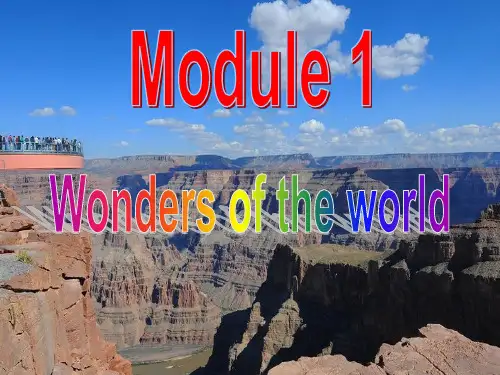
The Grand Canyon is in America.
the Louvre Museum
Complete the passage with the expressions in the box.
he _______.
A. arrives
B. arrived
C. is arriving D. will arrive
2. —Linda, I called you this morning,
but nobody answered the phone.
—I’m sorry. I ___ football with my
Make sentences:
1. the monkey, read newspapers, now The monkey is reading newspapers now.
2. the monkey, read newspapers, at this time yesterday
The monkey was reading newspapers at this time yesterday .
1. the sun, rise, already The sun has already risen.
2. the sun, rise, in a minute The sun will rise in a minute.
3. the sun, rise, now
The sun is rising now.
A. gives
B. gave
C. is giving
D. has given
8. — Have you had your breakfast yet? —Yes. Mom ____ it for me. A. was cooking B. is cooking C. will cook D. cooked
Betwee _in__N_e_w__ In Egypt
n China _York,
and
_th_e__U_S__
Nepal _
_______
Height
Interes t-ing facts
_8_8_4_4_.4_3____ _ metres.
First people to climb to the top: Sir Edmund Hillary and Tenzing Norgay.
合集下载
初中英语外研版九年级上册《Moudle1第二课时 Unit3 Language in use 》课件
外研(新标准)版-九年级上册
Module 1 Wonders of the world
Unit 3 Language in use (2)
教学课件
外研(新标准)版-九年级上册
Look at these sentences.
眺望
(某物上面)看过 去在底部 俯视 一条银色的小河 够到顶部 峡谷的另外一边 向左看 延伸 据某人看来
上21世纪教育网 下精品教学资源
外研(新标准)版-九年级上册
the Changjiang River The Changjiang River is very long.
上21世纪教育网 下精品教学资源
外研(新标准)版-九年级上册
the Terracotta Army The Terracotta Army is a famous wonder in China.
上21世纪教育网 下精品教学资源
外研(新标准)版-九年级上册
Mount Qomolangma Mount Qomolangma is very high.
上21世纪教育网 下精品教学资源
外研(新标准)版-九年级上册
the Great Wall
The Great Wall is very old and very long.
C. sounds
D. feels
2. ——When is the school art festival? ——It will be held on time if it _____ next Monday.【202X年四川南 充】
A.don't rain B.won't rain C.doesn't rain D.didn't rain
Module 1 Wonders of the world
Unit 3 Language in use (2)
教学课件
外研(新标准)版-九年级上册
Look at these sentences.
眺望
(某物上面)看过 去在底部 俯视 一条银色的小河 够到顶部 峡谷的另外一边 向左看 延伸 据某人看来
上21世纪教育网 下精品教学资源
外研(新标准)版-九年级上册
the Changjiang River The Changjiang River is very long.
上21世纪教育网 下精品教学资源
外研(新标准)版-九年级上册
the Terracotta Army The Terracotta Army is a famous wonder in China.
上21世纪教育网 下精品教学资源
外研(新标准)版-九年级上册
Mount Qomolangma Mount Qomolangma is very high.
上21世纪教育网 下精品教学资源
外研(新标准)版-九年级上册
the Great Wall
The Great Wall is very old and very long.
C. sounds
D. feels
2. ——When is the school art festival? ——It will be held on time if it _____ next Monday.【202X年四川南 充】
A.don't rain B.won't rain C.doesn't rain D.didn't rain
外研版九上M11 U3 Language in use课件

which引导的定语从句修饰的是无生 命的东西。which在从句中的成分是 可以作主语,也可以作宾语。 如果先行词是人,那么定语从句的引 导词就可以是who。
先行词是物 引导词在从句中作宾语
The photo which we liked best in the City and People group was taken by Zhao Min.
2. I would like to visit a place that _h_a_s___ __lo_t_s_o_f_s_u_n_n_y__b_ea_c_h_e_s_._______________
3. I go to a school which __o_n_ly__a_cc_e_p_t_s____ _s_tu_d_e_n_t_s_w__h_o_a_r_e_g_o_o_d__a_t _E_n_g_l_is_h_.______
Complete the poster for the photo competition. Use that, which or who. There may be more than one answer.
Photo competition Send us your photos and win a new camera!
● The photos t_h_a_t_/w__h_ic_h____ you take should
be active, beautiful and true. ● The photost_h_a_t_/w__h_i_ch____ you send should
include some words about them. ● The size of the photos _th__a_t _/w__h_ic_h___ you take should be 9cm × 13cm. ● Students _th__a_t _/w__h_o____ enter the
外研版九年级英语上册 Module 1 Unit 3 Language in use课件
A. gives
B. gave
C. is giving
D. has given
8. — Have you had your breakfast yet? —Yes. Mom ____ it for me. A. was cooking B. is cooking C. will cook D. cooked
Summary:
Complete the sentences with the correct form of the words in the box.
1. Listen! It _i_s_r_a_in_i_n_g_ (rain) outside. 2. The great musician _w_i_l_l _g_iv_e___
many times because it is such a
beautiful city.
A. have been to B. has been to
C. has gone to D. have gone to
6. Sally took a photo of her friends while
they ____ computer games.
the Great Pyramid
Mount Qomolangma
the Empire State Building
Listen and complete the table.
Locatio n
Mount The
The
Qomolan Empire Great
gma
State
Pyramid
Building at Giza
1. the sun, rise, already The sun has already risen.
外研版英语九上Module 1 Unit 3 Language in use B (共51张PPT)
expressions in the proper tense 3. To learn to make a poster of one of
the wonders
一般现在时 现在完成时
Pay attention to the tenses.
一现般在现完在成时时可可以以用用来来:: 1.表表示述动或作说发明生某在一过事去物,的强特调性对现 2.在描的述结现果在、的影状响况等。
一过现一般去在般将进过来行去时时时
Pay attention to the tenses.
过去进行时可以用来: 1. 表示过去某时正在进行的
动一现作一般在或般将进存过来行在去时时的时可可状可以以态以用用用来来来::: 2.表表表表示示示示将说在过来话过去某时去某个正某个时在段时间进时间要行间发发的一生生,直的的目在动动前进作作 行或的正或存动在存在作发在的生的状的状态动态。作。。
动词的时态
到目前为止,我们已学过英语中常用的六
种时态:
①一般现在时
②一般过去时
③现在进行时
④过去进行时
⑤一般将来时
⑥现在完成时
该时态可以用来: 1. 表述或说明某一事物的特性; 2. 描述现在的状况; 3. 描述经常发生的事情或真理。
I go to school at 6:30 every morning. 我每天早上六点半去上学。
Module 1 Wonders of the world
What can you get?
Two years ago, I went hiking weaxgiptahie不状来nrmiwe同态表Raynitetctp时要示haeeand.t间 用 ,rtTheTioeon和谓这ommntms方语种.t.o’oMIrs式动表trtdouhwi发词示wmeaarps生的动Iyiasawra的不作swtinhslldo动同或oignpnpo作形状dpareiheyn或式态rdifgku.iolnngline now.发S生he时of间ten和s方ho式ps的on动lin词e.形D式ad称is sear作ch动ing词fo时r 态inf。ormation on the Internet. He will visit Japan next week. He has been to Japan twice. I am writing my diary.
the wonders
一般现在时 现在完成时
Pay attention to the tenses.
一现般在现完在成时时可可以以用用来来:: 1.表表示述动或作说发明生某在一过事去物,的强特调性对现 2.在描的述结现果在、的影状响况等。
一过现一般去在般将进过来行去时时时
Pay attention to the tenses.
过去进行时可以用来: 1. 表示过去某时正在进行的
动一现作一般在或般将进存过来行在去时时的时可可状可以以态以用用用来来来::: 2.表表表表示示示示将说在过来话过去某时去某个正某个时在段时间进时间要行间发发的一生生,直的的目在动动前进作作 行或的正或存动在存在作发在的生的状的状态动态。作。。
动词的时态
到目前为止,我们已学过英语中常用的六
种时态:
①一般现在时
②一般过去时
③现在进行时
④过去进行时
⑤一般将来时
⑥现在完成时
该时态可以用来: 1. 表述或说明某一事物的特性; 2. 描述现在的状况; 3. 描述经常发生的事情或真理。
I go to school at 6:30 every morning. 我每天早上六点半去上学。
Module 1 Wonders of the world
What can you get?
Two years ago, I went hiking weaxgiptahie不状来nrmiwe同态表Raynitetctp时要示haeeand.t间 用 ,rtTheTioeon和谓这ommntms方语种.t.o’oMIrs式动表trtdouhwi发词示wmeaarps生的动Iyiasawra的不作swtinhslldo动同或oignpnpo作形状dpareiheyn或式态rdifgku.iolnngline now.发S生he时of间ten和s方ho式ps的on动lin词e.形D式ad称is sear作ch动ing词fo时r 态inf。ormation on the Internet. He will visit Japan next week. He has been to Japan twice. I am writing my diary.
外研版九年级英语上册课件:M1 Unit 3 Language in use(共78张PPT)

否定式
was
主语 +
not + 其他.
were
一般疑 Was / Were + 主语 + 其他? 问句及 (肯) Yes, 主语 + was / were. 回答 (否) No, 主语 + wasn’t /
主语 + 动词的过去式 + 其他. 主语 + didn’t + 动词 原形 + 其他.
Did + 主语 + 动词 原形 + 其他? (肯) Yes, 主语 + did.
becoming grey.
一般将来时
5. You’ll get there in five minut现es在. 进行时
6. Am I going the一r般igh过t去wa时y?
7. The sun rose behind me and shone on
the rocks.
一般现在时
1. To test your sense of observation 2. To test your ability of short-term memory 3. To test your ability of inductive method
外研 九年级 上册
Module 1 Wonders of the world
Unit 3 Language in use
Objectives:
To summarise and consolidate tenses learned before: 1) the present simple tense 2) the past simple tense 3) the future simple tense 4) the present continuous tense 5) the past continuous tense
2019教育外研版英语九上 Module 1 Unit 3 Language in use 共38张PPT数学

passes fixes teaches wishes does
studies carries flies
动词过去式的变化:
构成规则
一般在动词原形末尾加 -ed,(在清辅音后读∕t∕; 在浊辅音和元音后读∕d∕; 在 ∕t∕,∕d∕后读∕id∕
动词原形
look play work
动词过去式
looked played worked
结尾是e的动词在末尾 加-d
末尾只有一个辅音字母 的重读闭音节,先双写 这个辅音字母,再加ed 结尾是“辅音字母+y” 的动词,先变“y”为 “I”再加-ed
like live hope plan stop drop
study worry
cry
liked lived hoped planned stopped dropped
studies worries
cries
动词现在分词的构成:
规则
一般在动词原形末尾加ing
以不发音字母e结尾的动词, 先去掉e,再加-ing
以重读闭音节结尾的动词, 如果末尾只有一个辅音字 母,应先双写这个辅音字 母,再加-ing 以ie为重读音节结尾的动 词,先去掉e,把i改为y,再 加-ing 以er结尾的动词,如是重 读音节结尾,先双写r,再 加-ing;如不是重读音节 结尾,就直接加-ing
The structure of each tense
现在时:谓语动词用原形或第三人称单数形式 一般过去时:谓语用动词的过去式
常
将来时:谓语用will/be going to+动词原形
见
八
现在进行时:谓语用am/is/are+动词的现在分词 完成时:谓语用have/has+动词的过去分词
九年级英语上册 Module 1《Unit 3 Language in use》课件 外研
Part III: Work in pairs
1.you/see/the pyramids? 2.where/the pyramids? 3.when/the Egyptians/build them? 4.what/ a wonder of the world in 100 years from now?
ancient wonder
Part II Language practice
1 Is the Grand Canyon the greatest wonder anywhere in the natural world? 2 She sings with the band Crazy Feet. 3 We’re having a meeting. 4 She went to our school. 5 It was raining. 6 I’ve written down some ideas. 7 I’ll do an inerview with Becky Wang!
5 a) We’re making a poster about the Great Wall now.
b) We’ll make a poster about the pyramid.
2.Match the three parts of the sentences.
• They all
• Many people
3 a) They had an English class yesterday. b) They were having an English class at
nine o’clock yesterday morning.
4 a) He’s doing an interview. b) He’s done an interview.
九年级英语上册外研版课件:Module 1 Unit 3 Language in use (共11张PPT)
4.Mum has told me the story before.(改为一般疑问句) Has Mum ________ told ________ you the story before?
sleeping Be quiet! My father ________ ________. is
Ⅳ.句型转换。
1.Jim is doing an interview.(加时间状语at that time) doing an interview at that time. was Jim ________ ________ 2.Jim does his homework at home every evening.(改为 否定句) doesn't ________ do Jim ________ his homework at home every day. 3 . We are going to play soccer after school this afternoon.(对画线部分提问) going What are to do ________ ________ you ________ ________ ________ after school this afternoon?
( A )4.Steve ________ TV in the living room when his
mother came in.【高频考点】
A.was watching C.is watching ( D )5.I think it is true that Jill ________ to work today B.watches
3.雷锋已经去世很多年了,但是他的精神仍然鼓舞着我
外研版英语九上Module 1 Unit 3《Language in use》课件
过去进行时:表示过去某段时间或某一时刻正在发 生或进行的行为或动作。
结构:was/were+v.-ing 标志词:then,at this time yesterday,at that
time,at that moment yesterday,at 7 o’clock last night,以when引导的谓语动词是一般过去时的时间
标志词:tomorrow, the day after tomorrow ,next
day(week,month,year…),soon, in a few minutes (in +一段时间), from now on ,in the future等。 例句:I will work in a hospital next month.
appear finish give rain talk visit walk
1 Listen! It _is__r_a_in_i_n_g_ outside. 2 The great musician __w__il_l _g_iv_e___ a concert in Guangzhou next month. 3 Last summer, my parents __v_i_si_t_ed___ the Terracotta Army in Xi'an. 4 He __h_a_s__ already _fi_n_is_h_e_d_ a new book about travel. 5 Thousands of people __w__a_lk___ along the Great Wall every year. 6 A few minutes later, a stranger __a_p_p_e_a_r_e_d_ at the end of the street. 7 The students _w_e_r_e__ta_l_k_i_n_g_ about the journey to the Grand Canyon when the teacher came in.
初中英语外研版九年级上册《Moudle1第一课时 Unit3 Language in use 》课件
morning. 表示在具体的过去某个时刻,正在产生的动作或状态
4. a) He is doing an interview. 表示正在进行采访
b) He has done an interview. 表示已经做了采访
表示说话时正在进行的动作
5. a) We are drawing a picture of the Victoria Falls now.
外研(新标准)版-九年级上册
Explain the differences in meaning.
1. a) I often play basketball. 表示常常性、习惯性的动作。
b) I am playing basketball now. 表示说话时正在进行的动作或行为。
2. a) She has gone to the Great Wall. 表示去了长城,现在还没回来;不在说话现场。
The XXX was going down when we (1)a_r_r_iv_e_d__(arrive) at
the ground floor of the building. I (w2a)_s_____(be) afraid of going to the top of tall buildings, so I was a little nervous when
Grand Canyon when the teacher came into the classroom.
上21世纪教育网 下精品教学资源
外研(新标准)版-九年级上册
Complete the passage with the correct form of the words in brackets.