
牛津上海版六年级下英语Unit1 Great cities in Asia教案(英语教案)
Unit 1 Great cities in Asia一、单元分析(Unit Analysis)(一)单元地位(Unit Position)1 本课中出现了较多的特殊疑问句,用来询问。
询问方式,如How are we going to get to…?询问做某事花费时间的长度,如How long does it take?询问距离,如How far is it from … to …?询问方位,如Where…?这些问句及其答句,教师有必要在课堂教学中加以一定的机械性训练。
2在6A的同名模块中,学生已学习过How…? / How long…? 等特殊疑问句的表达方式。
已学习了用It takes sb. some time to do sth.的句型来回答做某事花费某人多少时间。
本unit中增加了疑问句“How far…?”。
建议温故知新,加以区分疑问词的意思及答句的不同方式。
3教授east, south, west, north四个方位,建议用指南针图表形式复习并学习其他四个方向,如north-east, south-east, south-west, north-west.4情态动词shall的用法在本课中多次出现,在课本中也为首次出现。
课文中主要结合旅行的方式提问。
教师可以设计多个场景,穿插各种不同的事物让学生进行操练。
5What …?/Which…?的句型最初在6A中就已出现。
本课中用来表示询问相关信息。
(二)单元目标(Unit Target)1 运用How far…?/ How long…?来询问距离及做某事花费时间的长度,并学会用It isabout…kilometers./It takes about…minutes.句式来回答。
2 掌握V+doing. 如love eating/enjoy swimming.3 操练有关How/Wh-的各种提问及其回答。
(三)单元重点(Unit Points)1 关键词:1)国名、城市名:Asia, Beijing, China, Tokyo, Japan, Bangkok, Thailand2)旅游展览相关词汇:exhibition, explore, pier, harbour, tunnel, midtown, route, international, capital, tourist, sightseeing, travel3)方位:east, south, west, north, north-east, south-east, south-west, north-west3)其他:enjoy, nowadays, quiz2 功能:1) Asking ‘How’questions to find out means/ the length of a peri od of time/ distance-- How are we going to get to the Exhibition Centre?●-- How long does it take?●-- How far is it from Beijing to…?2) Using prepositional phrases to indicate means●by bus/ by ferry/ by underground3)Using nouns to indicate distance/ time●It’s about …kilometers.●It takes about (number) and a half hours/ days.4)Using modals to make suggestions●Shall we travel by underground?5)Asking ‘Wh-’questions to find out about a place/ a specific object or specificinformation about a person●Where do tourists always visit in Beijing?●Which city do you like best?●What do you love eating?3 语法点:1)Using adjectives to show position●It is east of Beij ing.2) Using simple present tense to express interests●They like riding bicycles.二、教学设计(Teaching Designs)可借助活页资料这一城市的有关信内容后,再处理这两页上出现的[链接1]1教师通过“假期旅游”这一话题,由提问的方式,引导学生尽可能多的描述自己的旅程。
2播放录音(picture2),学生带着问题去听录音:Where are they going to visit?How can they get there?…3学生翻开课本,跟读、齐读对话。
4教师带领学生一起读地图,学习图标及新单词。
教师带读,学生跟读新单词、词组。
5在确保学生已能理解地图上的各种标记的基础上,看Route A,回答:How do they go?可多叫几位同学回答。
6播放录音(picture4),回答:How long does it take?(做加法,得出结果。
)7给学生一些时间,参照Route A 的学习,自己完成《活页资料》page1的填写。
教师此时可在班级走动,给予有困难的学生及时的帮助。
8给出dialogue pattern:A: How are you going to get there?B: It takes about… Then it takes……A: How long does this route take?B: Route __ takes about_______.请学生用pair work 的形式核对答案。
[链接2]1专有名词的学习。
a) 教师通过展示一些标志性景点的图片,让学生猜测城市、景点等专有名词。
b) 教师领读,学生跟读、齐读,熟悉这些专有名词。
c) 针对这些图片,教师可提问有关这个城市的问题,让能力更强一些的同学介绍相关城市,给他们自由表达的机会。
2 方位词的学习和使用。
a) 通过图表,直观的复习四个方位词,并学习四个新的方位词。
同时给出例句,复习方位词的表达。
(幻灯片显示如下,双击可演示。
)b) 接着教师可给出学校的大致方位图,先通过提问,引导学生用熟悉的环境内容操练方位词,接着可做pair work 。
随后再给出亚洲地图,可结合课文,再操练。
(幻灯片显示如下,双击可演示。
)Beijing Tokyo Bangkok3 课文的学习。
三个地点,可采取不同方式学习,比单一的阅读更吸引学生,更有效。
a) 教师展示北京的相关景点图片,通过问答形式,学习了解该城市信息。
b) 教师提供QUIZ CARD 有关东京的相关问题,例如:●Which city is the capital of Japan? ●Where is it? ●What can you see in Tokyo? ●What do tou rists usually do in Tokyo ? ●How many people are there in that city? ● What so they love doing ?让学生做pair work ,S1阅读短文Tokyo ,S2用QUIZ CARD 提问并得到答案,教师可选几组同学做report 。
c) 学生听录音,填写有关曼谷的表格,教师可先选几位同学核对答案,再请能力更较强的同学通过表格相关信息,复述短文。
South-westNorth-east North-westWestSouthSouth-eastEg, A is east of B.Eg, A 在B 的?面。
4拓展训练。
教师可在课前布置学生查找喜欢的大城市的图片、信息。
在熟悉了课文后,教师提供海报纸等材料,要求学生贴图片、模仿课文写某一城市介绍,分组做海报。
最后可评出最佳海报奖、最佳文字介绍奖等以资鼓励。
5 Homework(1). Workbook P1(2). Grammar Practice P2(3). Copy the text on P3 (translate)[链接3]1.教师提问有关page2内容:a. Which route do Kitty and her classmates choose to get to the Exhibition Centre?(Route C.)b. How will they get there? (Go by underground, then on foot.)c. How long does it take? (It takes about 12 minutes.)d. Why don’t they choose Route A or Route B? (Because Route C is the fastest way.)2.教师再问,以前没有地铁,那人们怎样出行呢?3.接着请学生阅读page4 look and read,并回答When exploring Asia, how did peopletravel to other places in the past and how do they travel nowadays?4.简单比较之后,教师可针对这个表格的内容以”How”, ”How long”, “How far”等句型配以过去时和现在时,由易到难进行提问。
与此同时,加以讲解语法要点:①How long & How far 的区别。
②数字的读法,如2100,41/2等。
5.在Ask and answer对话的基础上,教师可将How句型,及过去时等要点整合,编成更丰富的对话样式供学生操练。
6.学生集体跟读、朗读page3课文。
7.学生合上书本,以回答问题的形式复习全文。
8.教师限定时间,学生自主完成page4、5三张QUIZ CARD内容。
9.请学生以pair work形式核对答案。
(完整word)牛津上海版六年级下英语Unit1GreatcitiesinAsia教案
Unit 1 Great cities in Asia一、单元分析(Unit Analysis)(一)单元地位(Unit Position)1 本课中出现了较多的特殊疑问句,用来询问。
询问方式,如How are we going to get to…?询问做某事花费时间的长度,如How long does it take?询问距离,如How far is it from … to …?询问方位,如Where…?这些问句及其答句,教师有必要在课堂教学中加以一定的机械性训练。
2在6A的同名模块中,学生已学习过How…? / How long…? 等特殊疑问句的表达方式。
已学习了用It takes sb. some time to do sth.的句型来回答做某事花费某人多少时间。
本unit中增加了疑问句“How far…?”。
建议温故知新,加以区分疑问词的意思及答句的不同方式。
3教授east, south, west, north四个方位,建议用指南针图表形式复习并学习其他四个方向,如north-east, south-east, south-west, north-west.4情态动词shall的用法在本课中多次出现,在课本中也为首次出现。
课文中主要结合旅行的方式提问。
教师可以设计多个场景,穿插各种不同的事物让学生进行操练。
5What …?/Which…?的句型最初在6A中就已出现。
本课中用来表示询问相关信息。
(二)单元目标(Unit Target)1 运用How far…?/ How long…?来询问距离及做某事花费时间的长度,并学会用It isabout…kilometers./It takes about…minutes.句式来回答。
2 掌握V+doing. 如love eating/enjoy swimming.3 操练有关How/Wh-的各种提问及其回答。
(三)单元重点(Unit Points)1 关键词:1)国名、城市名:Asia, Beijing, China, Tokyo, Japan, Bangkok, Thailand2)旅游展览相关词汇:exhibition, explore, pier, harbour, tunnel, midtown, route, international, capital, tourist, sightseeing, travel3)方位:east, south, west, north, north-east, south-east, south-west, north-west3)其他:enjoy, nowadays, quiz2 功能:1) Asking ‘How’questions to find out means/ the length of a peri od of time/ distance-- How are we going to get to the Exhibition Centre?●-- How long does it take?●-- How far is it from Beijing to…?2) Using prepositional phrases to indicate means●by bus/ by ferry/ by underground3)Using nouns to indicate distance/ time●It’s about …kilometers.●It takes about (number) and a half hours/ days.4)Using modals to make suggestions●Shall we travel by underground?5)Asking ‘Wh-’questions to find out about a place/ a specific object or specificinformation about a person●Where do tourists always visit in Beijing?●Which city do you like best?●What do you love eating?3 语法点:1)Using adjectives to show position●It is east of Beij ing.2) Using simple present tense to express interests●They like riding bicycles.二、教学设计(Teaching Designs)教学内容教学实施建议教学资源参考1关于page2上内容的教学由于本课是开学第一课时,故教师可由“假期旅游”话题展开。
最新牛津上海版六年级下册《unit 1 great cities in asia》教案.doc
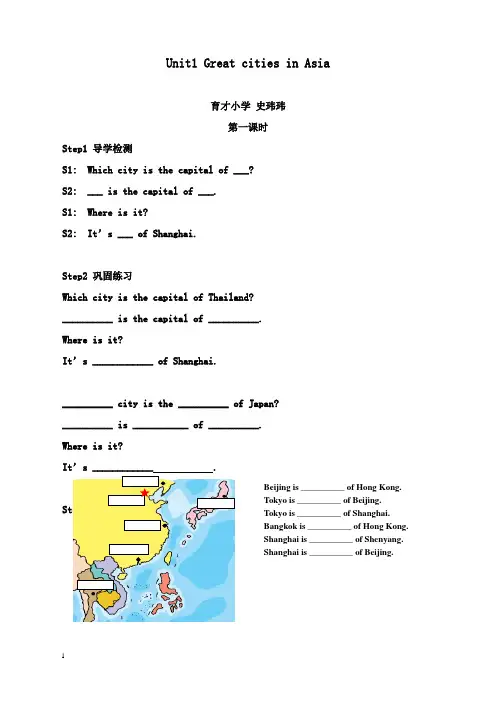
Unit1 Great cities in Asia育才小学 史玮玮第一课时Step1 导学检测S1: Which city is the capital of ___? S2: ___ is the capital of ___. S1: Where is it?S2: It ’s ___ of Shanghai.Step2 巩固练习Which city is the capital of Thailand? __________ is the capital of __________. Where is it?It ’s ____________ of Shanghai.__________ city is the __________ of Japan? __________ is ___________ of __________. Where is it?It ’s ____________ .Step3 课堂练习Beijin Tokyo Shang BangkShenyHongBeijing is __________ of Hong Kong. Tokyo is __________ of Beijing.Tokyo is __________ of Shanghai.Bangkok is __________ of Hong Kong. Shanghai is __________ of Shenyang.Shanghai is __________ of Beijing.Unit1 Great cities in Asia第二课时Step1 导学检测is it from Shanghai to Beijing? It ’s about kilometres. can we travel to Beijing? We can travel by .does it take to travel from Shanghai to Beijing by train? It takes about . Step2 巩固练习S1: How far is it from … to …? S2: It ’s about …S1: How can we travel to …? S2: We can travel by …S1: How long does it take to travel from … to … by …? S2: It takes …Step3 课堂练习2½ h2,100 kmeastTokyo4½ h 3,300 km south-west Bangkok 6 h 4,500 km south Singapore Time/by plane Distance Location City BeijingSingapore is _______ of Beijing. It is about _______ kilometres away from Beijing. It takes about _______ __________ to get there by plane.Unit1 Great cities in Asia第三课时Step1 导学检测(True or False )1.( )Tokyo is the capital of Japan. It is north of Shanghai.2.( )There are about 12 thousand people in Beijing.3.( )There are museums, palaces and parks in Beijing.4.( )Beijing is the capital of China. It ’s south of Shanghai.5.( )The Great Wall is in Beijing.6.( )People in Bangkok love eating dumplings.Step2 巩固练习Where is Tokyo?Which city is the capital of Japan?What do people in Tokyo love eating? How long does it take to travel from Shanghai to Tokyo by plane?How far is it from Shanghai to Tokyo?Step3课堂练习Which city is the capital of Thailand?Where is it?How far is it from Shanghai to Bangkok?How long does it take to get there by plane/ship? How many people are there in Bangkok?What do people in Bangkok love eating?What can tourists find in Bangkok?What do tourists enjoy doing in Bangkok?。
牛津上海版六下《Unit 1 Great cities in Asia》word教案
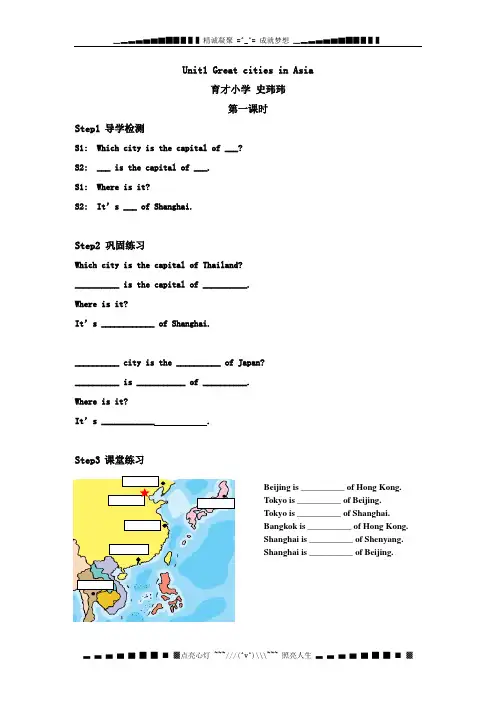
Unit1 Great cities in Asia育才小学 史玮玮第一课时Step1 导学检测S1: Which city is the capital of ___? S2: ___ is the capital of ___. S1: Where is it?S2: It’s ___ of Shanghai.Step2 巩固练习Which city is the capital of Thailand? __________ is the capital of __________. Where is it?It’s ____________ of Shanghai.__________ city is the __________ of Japan? __________ is ___________ of __________. Where is it?It’s ____________ .Step3 课堂练习BeijinTokyoShang BangkShenyHongBeijing is __________ of Hong Kong. Tokyo is __________ of Beijing. Tokyo is __________ of Shanghai.Bangkok is __________ of Hong Kong. Shanghai is __________ of Shenyang. Shanghai is __________ of Beijing.Unit1 Great cities in Asia第二课时Step1 导学检测is it from Shanghai to Beijing? It’s about kilometres. can we travel to Beijing? We can travel by .does it take to travel from Shanghai to Beijing by train? It takes about .Step2 巩固练习S1: How far is it from … to …? S2: It ’s about …S1: How can we travel to …? S2: We can travel by …S1: How long does it take to travel from … to … by …? S2: It takes …Step3 课堂练习Singapore is _______ of Beijing. It is about _______ kilometres away from Beijing. It takes about _______ __________ to get there by plane.2½ h2,100 kmeastTokyo4½ h 3,300 km south-west Bangkok 6 h 4,500 km south Singapore Time/by plane Distance Location City BeijingUnit1 Great cities in Asia第三课时Step1导学检测(True or False)1.( )Tokyo is the capital of Japan. It is north of Shanghai.2.( )There are about 12 thousand people in Beijing.3.( )There are museums, palaces and parks in Beijing.4.( )Beijing is the capital of China. It’s south of Shanghai.5.( )The Great Wall is in Beijing.6.( )People in Bangkok love eating dumplings.Step2 巩固练习Where is Tokyo?Which city is the capital of Japan?What do people in Tokyo love eating?How long does it take to travel fromShanghai to Tokyo by plane?How far is it from Shanghai to Tokyo?Step3课堂练习Which city is the capital of Thailand?Where is it?How far is it from Shanghai to Bangkok?How long does it take to get there by plane/ship? How many people are there in Bangkok?What do people in Bangkok love eating?What can tourists find in Bangkok?What do tourists enjoy doing in Bangkok?。
牛津版上海版六年级下册 Unit 1 Great cities in Asia 课件2
4. Which city dห้องสมุดไป่ตู้ you like best? Why?
12345
PIGGY BANK
GOLD MINE
Think and write
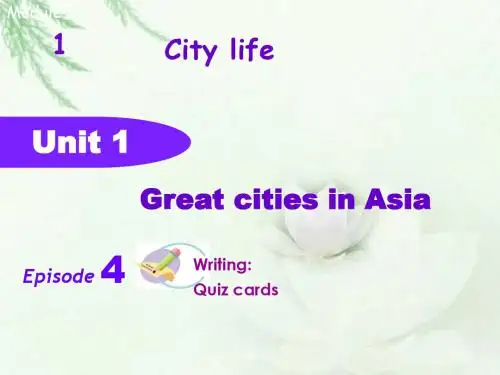
In pairs, make some quiz cards about great cities in Asia.
5-2
Quiz card 1 1. Which city is the capital of
Thailand? Bangkok.
2. Where is it? South-west of Shanghai.
3. How far is it from Shanghai to Bangkok? 3,050 kilometres.
Beijing
1
Guangzhou
3
Guangzhou Tokyo
Bangkok
2
Beijing
Tokyo
Bangkok
4
Consolidation
• Workbook 6B, page 7. • *Make some quiz cards about Shanghai and ask your
classmates the questions on your quiz cards.
Module
1
City life
Unit 1
Great cities in Asia
4 Episode
Writing: Quiz cards
Read and write
PIGGY BANK
GOLD MINE
六年级下英语教案-Module1Unit1GreatcitiesinAsia_牛津版(上海)

Module 1 City lifeUnit 1 Great cities in Asia教学目标:1.学习用north,south, east, west, north-east, north-west,south-east和south-west等词表示方位。
2.学习用How far is it from…to…?询问“从……到……有多远?3.复习用How can we travel to…?询问“我们可以怎样去……?”以及用“介词by+交通工具”表示交通方式。
4.复习用Howlongdoesittaketotravelfrom…to…询问“从……到……要花多长时间?”5.学习用like/love/enjoy doing…表示“喜欢做……”。
教具准备:small blackboard radio课时安排:四课时第一课时教学过程:Step 1: Show the subject and the aims.1. Greetings.2. Show the subject and the aims.T: Boys and girls, today we’re going to learn Module 1 CitylifeUnit 1 Great cities in Asia(板书)Here are our aims, theyare…(利用小黑板出示学习目标)Learn aims:1.学习本课的单词。
Step2:第一次先学后教先学:Show the learn guide one:请同学们自己先根据单词后面的音标进行拼读单词。
Iwillgiveyouaboutfiveminutes,thenwe’ll check up.后教:1、指名学生自己读单词,先让其他同学帮助解决,必要时教师再作指导。
2、师领读单词。
3、学生边拼边读单词。
4、English and Chinese.Step3:第二次先学后教先学:Show the learn guide two:请同学们边拼读边记忆单词。
牛津上海版六年级下《Unit 1 Great cities in Asia》ppt课件
3. famous adj. 著名的 同义词well-known eg. a famous writer 一位著名的作家
tour n. 旅行, 观光 My tour lasted two months. 我的旅行持续了两个月。 tour v. 旅行, 游历 They are touring in Spain. 他们正在西班牙旅行。 tourist (s) n. 游客,观光者 The tourists went sightseeing in the suburbs of the city. 游客们游览了市郊。
like / love / enjoy + v-ing 喜欢/爱/享受干某事 1>. enjoy, finish, mind (介意), can’t help (情不自禁)后面只 能跟动名词 eg. Many people enjoy taking a walk after dinner. Would you mind carrying this suitcase for me? This story was so funny that I couldn’t help laughing again and again. 2>.like, love后面可以跟动名词,也可以跟动词不定式, 意义相近 eg. I like / love being alone. I like / love to be alone.
7.My father is over 40 years old. How old is your father?
1. This book cost me ¥ 15.
How much did this book cost you?
2. There is only 1 student in the classroom.
六年级英语下册Unit1GreatcitiesinAsia教案牛津版
Unit1 Great cities in Asia一、课堂导入教师讲述一个与本节课题目有关的英文小故事,引出今日所要讲解的知识点,然后让学生简单梳理一下所涉及的问题,带着问题学习本节课的内容。
二、复习预习教师引导学生复习上节课学的重点内容,检测单词的用法,(以提问、回顾的形式进行),针对上节课的作业进行讲评、订正、答疑,并通过英文小故事导入本节课所要学习的新知识。
三、知识讲解1. 知识点一:重点单词1)Asia [ 'eiʃə]【词性】n.【词义】亚洲【易混淆点】Asian 亚洲的;亚洲人【经典例句】Miss Guo and her students are at an exhibition about great cities in Asia.郭女士和她的学生们在一个关于亚洲主要城市的展览会上。
2)Japan [dʒə'pæn]【词性】n.【词义】日本【易混淆点】Japanese 日本的;日本人【经典例句】Tokyo is the capital of Japan.东京是日本的首都。
3)Thailand [ 'tailænd]【词性】n.【词义】泰国【易混淆点】Thai 泰国的;泰国人【经典例句】Bangkok is the capital of Thailand.曼谷是泰国的首都。
4)capital [ 'kæpitəl]【词性】n.【词义】首都【易混淆点】captain 队长,船长【经典例句】Tokyo is the capital of Japan.东京是日本的首都。
5)information [ˌinfə'meiʃən]【词性】n.【词义】信息【易混淆点】news 消息【经典例句】Miss Guo and her students are reading some information about Beijing, Tokyo, Bangkok.郭女士和她的学生们正在读一些关于北京,东京,曼谷的信息。
六年级英语下册Unit1《GreatcitiesinAsia》教案牛津上海版(一起)
Unit 1 Great cities in Asia——Period 3:Reading :Great cities in Asia栏目一:Teaching objectives(教学目标)Knowledge objectives (知识目标)After learning this part students can①know about some basic information about several capital cities(了解几个首都城市的基本信息)②know about different culture of different places(了解不同地区的不同文化)Ability objectives(技能目标)Listening:Listen for specific information(能捕捉细节信息)Speaking:Maintain an interaction by answering questions(通过回答问题保持互动)Reading:Read written language in meaningful chunks(根据译群读文章,掌握停顿)Writing:Write out a piece of work when a framework is provided(能根据框架写出一篇文章)Emotional goalsInspiring love of the cities(激发对城市的热爱)栏目二:Teaching contentsVocabulary: capital, tourist,Phrase :love/enjoy/like doingSentence pattern(Grammar)there be 句型的运用栏目三:Teaching processReviewComplete the dialogue according to the Chinese.A:How Far is it from Shanghai to Beijing?B: ①(大约1400公里远)A:How can we travel to Beijing?B:we can travel to train.A:②(坐火车从北京到上海要多长时间呢?)B:It takes about 10 hours答案:①It is about 1,400 kilometers.②How long does it take to travel from Shanghai to Beijing by train?Lead-inReadingN①Beijing②Tokyo上海W E③BangkokSMore exploration①Beijing is the capital of China. It is north of shanghai.you can find museums, palaces and parks there. Many tourists like visiting those places. They always visit the great wall.there are more than 15 million people in Beijing.they enjoy eating dumplings.Practice 1:Find the key points :①the capital of China②it has many view③large amount of populationPractice 2:Retell the general idea according to key points.②Tokyo is the capital of japan. It is north-east of shanghai.you can see a lot of tall buildings, huge department stores and famous hotels there.tourists usually go shopping in Tokyo. There are about 12 million people in this city. They love eating sushi.Practice 1: Find the key points :①the capital of Japan②big modernized city③busy businessPractice 2:Retell the general idea according to key points.③Bangkok is the capital of Thailand. It is south-west of Shanghai. There are many temples and beaches in Bangkok. A lot of tourists enjoy swimming in the sea at these beautiful beaches. There are about 8 million people in Bangkok. They love eating fruit. They also love eating spicy food.Practice 1: Find the key points :①the capital of Thailand② typical tropical view③ many kinds of foodsPractice 2:Retell the general idea according to key points.栏目四:Summary...is the capital of ...:某地是哪个地方的首都/首府It is south-west/north-east... of ...:它位于某地的西南/东北等等 ...love/enjoy/like doing ... 某人或某物喜欢做某事Eg: London is the capital of the UK, it is north-west of Shanghai.伦敦是英国的首都,它位于上海的西北方。
【牛津上海版】六年级英语下册:Unit 1 Great cities in Asia 课件
牛津版上海版六年级下册 Unit 1 Great cities in Asia 教学设计
牛津版上海版六年级下册 Unit 1 Great cities in Asia 教学设计一. 教材分析本课是牛津版上海版六年级下册Unit 1 Great cities in Asia。
教材内容主要介绍了亚洲的几个大城市,包括北京、上海、东京、孟买和悉尼。
教材通过描述这些城市的特点、文化和生活,让学生了解亚洲的多样性和魅力。
本课包括阅读理解、听力理解、口语表达和写作等各个方面的内容,旨在提高学生的英语综合运用能力。
二. 学情分析六年级的学生已经具备了一定的英语基础,能够进行简单的英语交流。
他们对亚洲的城市有一定的了解,但对于北京、上海等大城市的特点和文化可能还不够深入。
因此,在教学过程中,需要引导学生通过阅读和听力材料,了解这些城市的特点和文化,提高他们的阅读和听力理解能力。
三. 教学目标1.能够理解并运用目标语言:Great cities in Asia, such as Beijing,Shangh, Tokyo, Mumb, and Sydney.2.能够通过阅读和听力材料,了解北京、上海、东京、孟买和悉尼的特点和文化。
3.能够用英语进行简单的描述和表达,提高口语表达能力。
4.能够通过写作,表达对亚洲城市的看法和感受。
四. 教学重难点1.目标语言的掌握:Great cities in Asia, such as Beijing, Shangh, Tokyo,Mumb, and Sydney.2.对阅读和听力材料的理解:北京、上海、东京、孟买和悉尼的特点和文化。
3.口语表达能力的提高:能够用英语进行简单的描述和表达。
4.写作能力的提高:能够通过写作,表达对亚洲城市的看法和感受。
五. 教学方法1.任务型教学法:通过各种任务,让学生在实践中学习和运用目标语言。
2.情境教学法:通过创设情境,让学生在真实的环境中学习和运用英语。
3.合作学习法:通过小组合作,让学生相互交流、讨论,提高他们的口语表达能力和团队合作能力。