
人教版(新起点)-英语-五年级上册-Unit 6 Chores 优质
五年级英语上册 Unit 6 Chores(Lesson 3) 人教新起点
SHOW TIME
Let’s report.
Susan and Nancy are busy on Sunday. On Sunday morning, Susan … On Sunday morning, Nancy … They both usually …
>>Practice
Let’s write.
>>Practice
>>Presentation
Let’s rБайду номын сангаасad.
2. Now read and underline the chores they do.
>>Presentation
Let’s read.
>>Presentation
Le’s read.
3. Fill in the chores they do in the right place.
Unit 6 Chores
Lesson 3
>>Warm-up
Let’s sing.
>>Presentation
Let’s read.
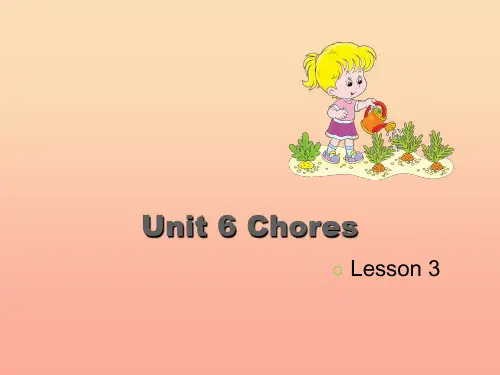
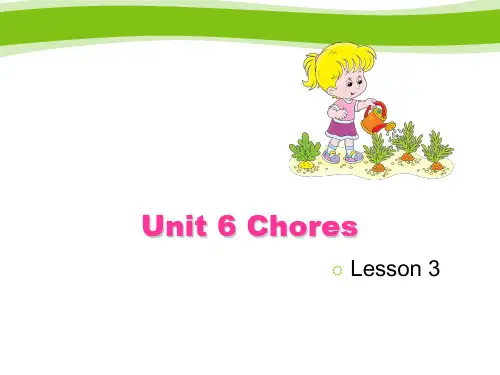
1. Look at pictures. Who are they? What are they doing?
They are Susan and Nancy. They are washing the clothes and making lunch.
>>Practice
Let’s retell.
in the morning
makes the bed
then
sweeps the floor, waters the plants
五年级上册英语课件-Unit 6 Chores Lesson 3_人教(新起点)(2014秋) (共14张PPT)
>>Presentation
Let’s read.
2. Now read and underline the chores they do.
>>Presentation
Let’s read.
>>Presentation
Le’s read.
3. Fill in the chores they do in the right place.
Read your passage.
SHOW TIME
>>Homework
1. 模仿课文写出你经常帮父母做的家 务。(至少6句话)
2.预习Unit6 Let’s Spell部分。
Let’s report.
Susan and Nancy are busy on Sunday. On Sunday morning, Susan … On Sunday morning, Nancy … They both usually …
>>Practice
Let’s write.
>>Practice
>>Practice
Let’s retell.
after getting up
makes the bedห้องสมุดไป่ตู้
in the morning
washes clothes, tidy bedroom
then help … make lunch
after lunch does the dishes
>>Practice
>>Presentation
Let’s read.
Susan’s day for chores Susan is always busy on Sunday. In the morning she makes the bed. Then she sweeps the floor and waters the plants. In the afternoon she usually washes clothes. Before dinner, Susan feeds her pet cat. After dinner, she often takes out the rubbish. She enjoys her day for chores.
五年级上册英语课件-Unit 6 Chores Lesson 3_人教(新起点)(2014秋) (共14张PPT)

SHOW TIME
>>Homework
1. 模仿课文写出你经常帮父母做的家 务。(至少6句话)
2.预习Unit6 Let’s Spell部分。
>>Practice
Let’s retell.
after getting up
makes the bed
in the morning
washes clothes, tidy bedroom
then help … make lunch
after lunch does the dishes
>>Practice
>>Practice
Let’s retell. in the morning
makes the bed
then
sweeps the floor, waters the plants
in the afternoon washes clothes
before dinner feeds pet
after dinner takes out the rubbish
Let’s report.
Susan and Nancy are busy on Sunday. On Sunday morning, Susan … On Sunday morning, Nancy … They boractice
Let’s write.
>>Practice
>>Presentation
Let’s read. Susan’s day for chores
Susan is always busy on Sunday. In the morning she makes the bed. Then she sweeps the floor and waters the plants. In the afternoon she usually washes clothes. Before dinner, Susan feeds her pet cat. After dinner, she often takes out the rubbish. She enjoys her day for chores.
五年级上册英语教案-Unit6《Chores》(FunTime)|人教(新起点)
五年级上册英语教案-Unit 6《Chores》(Fun Time)|人教(新起点)教学内容本单元主要围绕“家务事”这一主题展开,通过生动有趣的活动,让学生学习并掌握与家务相关的英语词汇和表达方式。
教学内容包括:学习单词“clean”, “wash”, “cook”, “fold”, “dust”等;学习句子“I can do the dishes.”, “Can you make the bed?”等;通过听力练习,提高学生对家务相关词汇和句型的理解和反应能力;通过口语练习,培养学生运用英语进行日常交流的能力。
教学目标1. 让学生掌握与家务相关的英语词汇和表达方式。
2. 培养学生运用英语进行日常交流的能力。
3. 提高学生的听力和口语水平。
4. 培养学生的合作意识和团队精神。
教学难点1. 家务相关词汇的发音和记忆。
2. 句型的正确运用和口语表达。
3. 听力练习中的细节理解和反应速度。
教具学具准备1. 多媒体设备:用于播放PPT和听力材料。
2. 教学卡片:用于展示和复习家务相关词汇。
3. 小组活动道具:用于小组活动和角色扮演。
教学过程1. 导入:通过图片或视频展示不同的家务场景,引导学生思考和讨论家务的重要性。
2. 新课内容学习:通过PPT展示家务相关词汇和句型,引导学生跟读和模仿,并进行适当的练习。
3. 小组活动:学生分成小组,进行角色扮演或讨论活动,运用所学的词汇和句型进行交流。
4. 听力练习:播放听力材料,让学生听并完成相应的练习,提高听力理解能力。
5. 口语练习:学生进行口语表达练习,如模拟对话或小组讨论,培养口语交流能力。
板书设计1. Unit 6 Chores (Fun Time)2. 重点词汇:clean, wash, cook, fold, dust等3. 重点句型:I can do the dishes., Can you make the bed?等4. 小组活动提示:Roleplay, Discussion作业设计1. 听力练习:完成听力练习题,巩固听力理解能力。
Unit6《Chores》()【一等奖教案】人教新起点五年级上册
Unit6《Chores》()【⼀等奖教案】⼈教新起点五年级上册Unit6 第1课时教学设计【内容来源】⼈民教育出版社(⼀起点)五年级上册Unit6 Chores【课时】第1课时⼀、教学⽬标1. 能够听懂、会说chore, clean the room, make the bed, take out the rubbish, wash clothes, tidy the desk和sweep the floor七个单词和短语,并尝试借助拼读规律记忆单词。
2. 能够运⽤已学功能句操练本课新学词汇,简单询问及描述在家所做的家务。
3. 能够根据语境从上述词汇中选择恰当的词填空。
⼆、教学建议A. Listen and match.1. 热⾝导⼊(1) 师⽣围绕⽇期、天⽓及放学后所做活动进⾏简单的交流。
在讨论最后⼀个问题时,可以使⽤如下语⾔:What do you usually do after school? Do you know what Lily, Bill and Andy do after school?(2) 教师引导学⽣观察Get Ready情境图,引出本单元有关家务的主题。
可以⽤以下问题进⾏引导:What are they talking about? What do they do after school? Can you guess?2. 呈现新的学习内容(1) 学⽣两⼈⼀组观察Get Ready中的六幅⼩图⽚,讨论⼀下图中都呈现了什么家务。
(2) 播放A项录⾳,让学⽣整体感知新语⾔,不做连线。
(3) 再次播放录⾳,学⽣尝试连线。
(4) 核对答案。
3. 词汇学习和操练(1) 词汇学习①学习wash clothes出⽰已学过的单词watch和fish,询问字母组合wa和sh的发⾳,引导学⽣尝试拼读出wash。
多次跟读wash clothes后,教师做洗⼿、洗脸等动作,让学⽣结合已学知识试说出新词组wash hands和wash face等。
五年级上册英语课件-Unit 6 Chores Lesson 3_人教(新起点)(2014秋) (共14张PPT)
>>Presentation
Let’s read.
Susan’s day for chores Susan is always busy on Sunday. In the morning she makes the bed. Then she sweeps the floor and waters the plants. In the afternoon she usually washes clothes. Before dinner, Susan feeds her pet cat. After dinner, she often takes out the rubbish. She enjoys her day for chores.
>>Presentation
Let’s read.
2. Now read and underline the chores they do.
>>Presentation
Let’s read.
>>Presentation
Le’s read.
3. Fill in the chores they do in thce
Let’s retell.
in the morning
makes the bed
then
sweeps the floor, waters the plants
in the afternoon washes clothes
before dinner feeds pet
after dinner takes out the rubbish
>>Presentation
Let’s read.
小学英语人教新起点五年级上册Unit6ChoresUnit6Chores
教学反思:In this lesson ,students are familiar with the expressions about chores. The teacher explains and emphasize some phrases,While students practice phrases and sentences.(sweep the floor,take out the rubbish....)
Do you help your parents do chores at home? Yes, I do.
What chores do you usually do at home? I usually wash
clothes. How often do you do it? Three times a week.
you read them?
clean the room, make the bed, take out the rubbish, wash
clothes, tidy the desk, sweep the floor and so on.
Can you make a survey with these words?
wash clothes tidy the desk sweep the floor
Do you help your parents do chores at home?
Yes, I do.
What chores do you usually do at home?
I usually wash clothes.
make the bed take out the rubbish wash clothes tidy the desk sweep the floor 2, Lead in the word”chores” T teach the word : or---for --more--chore 3, T show out PPT: Get ready:“Look! The three children are going to school. They are talking about chores. They can help their parents do chores at home. Can you do chores at home? In this unit , we’ll learn about chores. So today we learn Unit 6 Chores ( Read the tittle one by one)
五年级上册英语课件-Unit 6 Chores Lesson 3_人教(新起点)(2014秋) (共14张PPT)
>>Presentation
Let’s read.
Nancy’s day for chores
On Sunday Nancy often helps her parents do chores at home. After getting up, she always makes her bed. In the morning she usually helps her grandparents wash clothes and tidy their bedroom. Then she helps her mother make lunch. After lunch, she often does the dishes. She enjoys helping her family.
>>Practice
Let’s retell.
in the morning
makes the bed
then
sweeps the floor, waters the plants
in the afternoon washes clothes
before dinner feeds pet
after dinner takes out the rubbish
Read your passage.
SHOW TIME
>>Homework
1. 模仿课文写出你经常帮父母做的家 务。(至少6句话)
2.预习Unit6 Let’s Spell部分。
>>Practice
Let’s retel
in the morning
washes clothes, tidy bedroom
五年级上册英语教案-Unit6《Chores》(Let’sCheck)|人教(新起点)
五年级上册英语教案-Unit 6《Chores》(Let’s Check)|人教(新起点)教学内容本单元《Chores》是五年级上册英语课程中的第六单元,主要围绕家庭日常生活中的常见家务活动展开。
教学内容包括学习与家务相关的词汇和短语,如“clean the room”, “wash the dishes”等;掌握一般现在时态的陈述句和疑问句结构,例如“Do you often help with chores?”;以及通过Let’s Check环节,检查学生对家务活动的理解和对语言知识的运用。
教学目标1. 学生能够听懂、会说、会读本单元的关键词汇和短语。
2. 学生能够运用一般现在时态的陈述句和疑问句来询问和描述家务活动。
3. 学生能够在角色扮演活动中,模拟真实场景,运用所学知识进行交流。
4. 学生能够通过Let’s Check环节,自我检测对家务活动相关词汇和句型的掌握程度。
教学难点1. 家务活动词汇的发音和记忆。
2. 一般现在时态的疑问句构成及其用法。
3. 学生在实际场景中正确运用所学句型进行交流。
教具学具准备1. 多媒体教学设备,用于播放课件和视频。
2. 教学卡片,包括家务活动的图片和英文单词。
3. 学生活动手册,用于Let’s Check环节。
4. 角色扮演道具,如玩具扫帚、碗碟等。
教学过程第一阶段:导入通过播放一段关于家务活动的视频,吸引学生的注意力,激发他们对主题的兴趣。
提问学生视频中出现的家务活动,引导学生用英语进行简单描述。
第二阶段:新知识学习使用教学卡片展示本单元的关键词汇和短语,教授正确的发音,并进行跟读练习。
通过示例和练习,教授一般现在时态的陈述句和疑问句结构,让学生理解并练习其用法。
第三阶段:实践应用分组进行角色扮演活动,模拟家庭场景,让学生在实际语境中使用所学词汇和句型进行交流。
教师巡回指导,纠正发音和用法错误,确保学生能够正确运用所学知识。
第四阶段:Let’s Check学生打开活动手册,独立完成Let’s Check环节,自我检测对家务活动相关词汇和句型的掌握程度。
五年级英语上册Unit6Chores(Let’sSpell)ppt课件人教新起点
>>Presentation
Listen, point and repeat.
catch tch
match tch
itch tch
>>Presentation
Listen, point and repeat.
>>Presentation
Listen, point and repeat.
sh shop
>>Practice
Listen and repeat.
>>Summary
ch chair peach lunch tch catch match itch sh shop fish wash
1、不要做刺猬,能不与人结仇就不与人结仇,谁也不跟谁一辈子,有些事情没必要记在心上。 2、相遇总是猝不及防,而离别多是蓄谋已久,总有一些人会慢慢淡出你的生活,你要学会接受而不是怀念。 3、其实每个人都很清楚自己想要什么,但并不是谁都有勇气表达出来。渐渐才知道,心口如一,是一种何等的强大! 4、有些路看起来很近,可是走下去却很远的,缺少耐心的人永远走不到头。人生,一半是现实,一半是梦想。 5、没什么好抱怨的,今天的每一步,都是在为之前的每一次选择买单。每做一件事,都要想一想,日后打脸的时候疼不疼。 6、过去的事情就让它过去,一定要放下。学会狠心,学会独立,学会微笑,学会丢弃不值得的感情。 7、成功不是让周围的人都羡慕你,称赞你,而是让周围的人都需要你,离不开你。 8、生活本来很不易,不必事事渴求别人的理解和认同,静静的过自己的生活。心若不动,风又奈何。你若不伤,岁月无恙。 9、与其等着别人来爱你,不如自己努力爱自己,对自己好点,因为一辈子不长,对身边的人好点,因为下辈子不一定能够遇见。 10、你迷茫的原因往往只有一个,那就是在本该拼命去努力的年纪,想得太多,做得太少。 11、有一些人的出现,就是来给我们开眼的。所以,你一定要禁得起假话,受得住敷衍,忍得住欺骗,忘得了承诺,放得下一切。 12、不要像个落难者,告诉别人你的不幸。逢人只说三分话,不可全抛一片心。 13、人生的路,靠的是自己一步步去走,真正能保护你的,是你自己的选择。而真正能伤害你的,也是一样,自己的选择。 14、不要那么敏感,也不要那么心软,太敏感和太心软的人,肯定过得不快乐,别人随便的一句话,你都要胡思乱想一整天。 15、不要轻易去依赖一个人,它会成为你的习惯,当分别来临,你失去的不是某个人,而是你精神的支柱;无论何时何地,都要学会独立行走 ,它会让你走得更坦然些。 16、在不违背原则的情况下,对别人要宽容,能帮就帮,千万不要把人逼绝了,给人留条后路,懂得从内心欣赏别人,虽然这很多时候很难 。 17、要使整个人生都过得舒适、愉快,这是不可能的,因为人类必须具备一种能应付逆境的态度。——卢梭 18、不要太高估自己在集体中的力量,因为当你选择离开时,就会发现即使没有你,太阳照常升起。 19、时间不仅让你看透别人,也让你认清自己。很多时候,就是在跌跌拌拌中,我们学会了生活。 20、命运要你成长的时候,总会安排一些让你不顺心的人或事刺激你。 21、你的假装努力,欺骗的只有你自己,永远不要用战术上的勤奋,来掩饰战略上的懒惰。 22、成长是一场和自己的比赛,不要担心别人会做得比你好,你只需要每天都做得比前一天好就可以了。 23、你没那么多观众,别那么累。做一个简单的人,踏实而务实。不沉溺幻想,更不庸人自扰。 24、奋斗的路上,时间总是过得很快,目前的困难和麻烦是很多,但是只要不忘初心,脚踏实地一步一步的朝着目标前进,最后的结局交给 时间来定夺。 25、你心里最崇拜谁,不必变成那个人,而是用那个人的精神和方法,去变成你自己。 26、运气是努力的附属品。没有经过实力的原始积累,给你运气你也抓不住。上天给予每个人的都一样,但每个人的准备却不一样。不要羡 慕那些总能撞大运的人,你必须很努力,才能遇上好运气。 27、时间只是过客,自己才是主人,人生的路无需苛求,只要你迈步,路就在你的脚下延伸,只要你扬帆,便会有八面来风,启程了,人的 生命才真正开始。 28、每个人身上都有惰性和消极情绪,成功的人都是懂得管理自己的情绪和克服自己的惰性,并像太阳一样照亮身边的人,激励身边的人。