
英语课文《fun at the zoo》的说课稿
关于英语课文《fun at the zoo》的说课稿
大家好:
今天我说课的课题是《fun at the zoo》。
下面我对本课题进行分析:
一.说教材:
(一)教材的地位和作用
本套教材以“话题”为中心的任务型学习,是英语学科探究性学习的重要
方式。
本单元就是围绕着“动物”话题来介绍的,本课是这个单元的`第五课,以动物园的“提醒和警告”的话题为以后两课学习有关动物园起了承前启后的
作用,为提高学生保护动物,保护自然,保护环境增强意识。
并能从中掌握对
话中的重要语言和口头表达能力。
(二)教学目标:
1、知识目标:通过教学掌握本课的词汇运用
单词和词组:danger, sign, surprise, ad, laz, nearl, exit,entrance, g thrugh, N phts, ae sb ad, ae friends Is he laz?
⑤ Wh wants t ae friends with the be ar?
⑥ Can u feed anials?
⑦ The three friend have a ver gd da, dn't the?
让学生们带着问题听录音(两遍),不看书,回答问题然后打开书本核对
答案(10分钟)
(三)表演:
分组表演,学生自由组合分组每组三人,一组学生根据听力内容在班上表演,同是另外几组的同学,用本课所学的语言进行对话。
通过表演培养学生互
相协作精神。
以此来突破本课的重难点,最后老师做出总结。
(四)练习
老师把一些关于介绍动物的句子的顺序打乱,引导学生运用所学的知识把
顺序给改正过来。
从而加深学生对于动物及本课所学内容的印象。
(五)布置作业
1.朗读听力中的对话,起复习的作用。
2.把新单词各抄三遍。
3. 鼓励学生课后上网查阅有关动物园的。
目的是扩大学生的知识面,丰富学生课余生活。
(六)课后反思
(七)板书设计
单词:danger 解释语言点:
sign ① g thrugh the entrance
surprise wal past =pass
ad ② Danger! 提示语
laz in danger处在危险中
nearl ut f danger脱离危险
exit ③ N phts/ paring/ sing/ nise
entrance ④ ae sb ad 使某人发疯
ae sb +形容词 eg:ae sb scared
ae sb +动词原形 eg: ae hi wr
⑤ae friends with sb 与某人交朋友
eg: I ae friends with hi.
I have ade a lt f friends here
我的说课完毕,谢谢大家。
八年级英语教案LessonFunattheZoo教案
Teacher’s activity
Student’s activity
Step 1
Organization
1. Greet the students.
2. Play a game.
Greet the teacher and play a game.
Step2
Lead-in
Have you ever been to the zoo What animals can people usually see in the zoo
八年级英语教案LessonFunattheZoo教案
八年级英语公开课教案
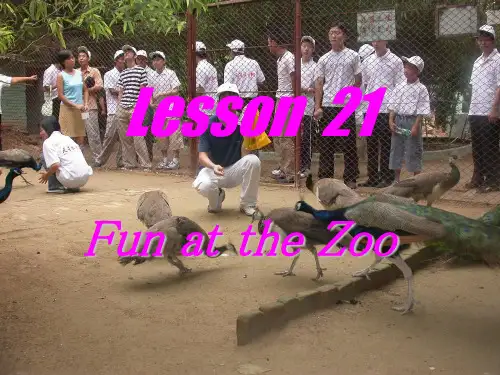
Lesson21 Fun at the Zoo.
安定区大营学校周耀凤
二0一0年四月十九日
Lesson 21 Fun at the Zoo.
Teaching aims and demands:
1. Knowledge objects
3. Moral object
Love the animals and get well with the animals.
Teaching important points:
1. Some words and phases:entrance, danger, surprise, mad, cage, lazy, nearly, exit
Groupwork
Each group member takes one of the three roles.
Step6
Practice
Change thesentences with right forms.
Do the exercises .
Step7
2021年冀教版八年级英语下册Lesson 21 Fun at the Zoo精品课件
2. Why can’t they take photos?
surprise sb./sth.
make sb./sth. mad
3. What does Brian think of the bear? lazy
4. Who wants to make friends with the bear??
mad
同义句转换,每空一词 1. It’s time for lunch.
It’s time __t_o___ __h_a_v_e__ lunch. 2. I want to make friends with Danny.
I __w_o_u_l_d__ __l_ik__e__ to make friends with Danny. 3. Maybe your book is still on my desk.
A discussion:
What can we learn from the dialogue?
9、春去春又回,新桃换旧符。在那桃花盛开的地方,在这醉人芬芳的季节,愿你生活像春天一样阳光,心情像桃花一样美丽,日子像桃子一样甜蜜。 2021/2/52021/2/5Friday, February 05, 2021
THE END 17、一个人如果不到最高峰,他就没有片刻的安宁,他也就不会感到生命的恬静和光荣。2021/2/52021/2/52021/2/52021/2/5
谢谢观看
zoo? Why? 4. Are you scared of bears? Why?
What do you know about bears? 5. What can’t we do to the animals in the zoo? 6. What signs can you see in the zoo? zxxk
Lesson21课件李金荣

内容
一级指标
学习态度
二级指标 小红旗
还喜欢上英语课,注 意力还算集中,课上 能够参与活动;
智慧花
比较喜欢上英语课, 注意力较集中;课 上参与比较积极; 能够仔细倾听别人 的发言
星
非常喜欢上英语 课,精神饱满, 注意力集中;课 上积极参与,在 学习活动中积极、 好动、充满好奇、 乐于尝试;积极 倾听别人的发言, 愿意接近教师, 在与教师的交流 中自然大方,不 紧张、不害羞
四
十三
一
十 二 七
ห้องสมุดไป่ตู้
十二
三
六
八
十一
五
九
四
十三
十二
十 二 panda 七
三
六
八
十一
五
九
四
十三
十二
十 panda snake 三 六 八 十一 七
五
九
四
十三
十二
十 panda snake 六 fox 五 九 八 十一 七
十三
sheep
十 panda snake 六 fox 五 九 八 十一 七
对听英语、说英 语、背歌谣、唱 歌曲、讲故事、 做游戏等活动表 现出持续的兴趣, 活动时情绪高涨
课 堂 表 现
学习兴趣
对听英语、说英语、 背歌谣、唱歌曲、讲 故事、做游戏等活动 表现出一定的兴趣, 但是不太高,活动情 绪一般
对听英语、说英语、 背歌谣、唱歌曲、 讲故事、做游戏等 活动表现出比较高 涨的兴趣,活动情 绪良好
十二
十三
sheep
十二
十 panda snake 六 fox 九 deer 八 十一 七
十三 sheep
十二
《At the zoo》说课稿

小学英语《At the zoo》说课稿Good afternoon, dear judges. I’m No.8. Today my topic is “At the zoo”. It’s my honor to present my teaching design with you. And I know , a good lesson needs a great design. I have been ready to begin this presentation with five aspects:1. The teaching materials2. The students3. The teaching and learning methods4. The teaching procedure5. The blackboard designAt the beginning, I will introduce the materials. This lesson is from Unit 2,primary English book 2, Hebei Education Press . This content is about the animals of zoo.And it’s important for students to learn about it in a daily life . So I’ll set many activities and games to help students obtain four skills,such as listening,speaking, reading, and writing. It follows that this lesson is an important position of the materials.According to the new curriculum standard, the teaching aims are as follows:1.The knowledge and the ability aim: to enable the studentsto master the new words, like zoo,panda,monkey, elephant,big,small and the new sentences:The elephant is big.The bird is small.The panda is fat.The monkey is thin....and so on. But the most important thing is to teach them how to use in the real situation.2.The process and the method aim: to arouse their interests in learning English. And to help the students foster the ability of communicating with others.3.The moral aim: to foster S s ’ consciousness of good-cooperation and proper competition .And then ,I’ll make my teaching key point and difficult point as follows: the key point includes the new words and sentences, such as zoo,panda,monkey, elephant,big,small and the new sentences:The elephant is big.The bird is small.The panda is fat.The monkey is thin.And the difficult point is to teach them how to use it with others.And also,I should to take care the students.Because they are active, competitive, and they are curious about everything. Obviously, students in Grade 3 have issues in learning English. It requires teachers to use attractive teaching method. So for the teac hing method, I’ll mainly use communicative method and seeing-hearing method to teach this lesson.At the same time ,tolead the students use cooperative inquiry method.The next is teaching procedure. It includes the following steps.Step 1. Warming upFor this step,I can speak a tongue twister.like this,Rain, rain,go away.This is mother’s washing day . Come again another day . We can waving have a happy date .After speaking a tongue twister some times together,it can mobilizing classroom atmosphere.Step 2. Lead inI’ll show some pictures about this lesson. And ask students:“Do you want to know the names about these pictures?” through this step,I will lead in the new words:zoo and so on.Step 3. PresentationI will point to a picture of zoo to ask students: “Where is this ?,what’s this?” students maybe point to the zoo and speak e the same method to teach other words ,such as panda,monkey and so on.After showing the new words,let students read one by one. Next I will ask S’s to read the new sentences.( The elephant is big. The bird is small. The panda is fat. The monkey is thin.)In the end,I will ask“What’s this?Big or small? F at or thin?”when I will point pictures of panda,monkey and so on.Through this step ,I will enable the students to know some new words and sentences.Step 4. PracticeA preliminary初步的 understanding,students need to train new knowledge. Firstly, divide the students into four groups and to train new sentences . Secondly ,we will have a competition. The fastest group to make up the sentences when I show the picture will get 5 scores. And I will give a gift to the champion.The reason that I do these activities is to draw the whole S s’ attention to spelling of the new words and consolidate the sentence pattern.Step5.SummaryThe whole class will review the all important words and sentences ,Such as new words,zoo,panda,monkey, elephant,big,small,and new sentences “The elephant is big.The bird is small.The panda is fat.The monkey is thin.”and so on.Step 6. TaskLet students communicate with parents and friends by using new words and sentences.Finally, I’ll talk about my blackboard design.Good blackboard design is the pocket edition. The title of this lesson is on the top of the blackboard.Divide the rest of blackboard into three parts. The left is for the key words,the middle is the main structures,while the right is for the scores of every group.OK , that’s all my teaching design. Thanks for your attention.。
《Unit5 Fun at the zoo》(教案)人教大同版(2024)小学英语三年级上册
- 学生能够正确朗读本单元的对话、故事和歌曲。
2. 文化意识目标
- 了解不同国家教室文化的差异,拓宽学生的国际视野。
- 培养学生爱护教室环境、遵守课堂纪律的意识。
3. 思维品质目标
- 培养学生的观察能力、思维能力和创新能力,能够根据所学知识进行拓展和运用。
- 探究学习策略:鼓励学生积极探究,培养学生的创新思维和解决问题的能力。
五、教学准备
1. 教师准备
- 教材、教学课件、单词卡片、图片、实物(教室中的物品)等教学用具。
- 准备一些小奖品,如贴纸、糖果等,用于奖励表现优秀的学生。
2. 学生准备
- 英语课本、练习本、铅笔等学习用品。
- 提前预习本单元的内容,了解一些与教室相关的英语词汇。
- 培养学生的逻辑思维能力,能够理解对话和故事的内容,并进行简单的分析和推理。
4. 学习能力目标
- 培养学生的学习兴趣和学习积极性,主动参与英语学习。
- 培养学生的自主学习能力和合作学习能力,能够在教师的指导下进行有效的学习。
三、教学重难点
1. 教学重点
- 掌握本单元的重点词汇和句型,能够准确描述教室里的物品和位置。
本单元主要包括以下几个部里的日常对话场景,如询问物品位置、介绍教室设施等。
2. Let's learn:学习教室中的物品词汇,如 desk, chair, blackboard, window, door 等。
3. Let's sing:一首欢快的英文歌曲,帮助学生巩固所学的词汇和句型。
- 阅读练习:教师让学生打开课本,阅读本单元的对话和故事。然后,教师提出一些问题,让学生回答,以检查学生的阅读理解能力。
人教版(PEP)三下《Unit 3 At the zoo》(第3课时)说课稿
人教版(PEP)三下《Unit 3 At the zoo》(第3课时)说课稿一. 教材分析《Unit 3 At the zoo》是人教版(PEP)三年级下册的一篇课文,以动物园为背景,让学生学习有关动物的词汇和描述动物特征的句型。
通过本节课的学习,学生能够进一步拓展动物词汇,学会用英语描述动物的外貌和习性,提高他们的观察力和表达能力。
二. 学情分析考虑到学生的年龄特点和认知水平,他们对动物充满了好奇和兴趣,因此在学习本节课文时会有较高的积极性。
然而,部分学生可能在英语表达上存在困难,特别是在描述动物特征方面。
因此,在教学过程中需要关注学生的个体差异,给予他们足够的鼓励和帮助。
三. 说教学目标1.知识目标:学生能够掌握有关动物的词汇,如monkey, panda, tiger,elephant等,以及描述动物特征的句型,如“It has a long tl.”和“It is very tall.”。
2.能力目标:学生能够在图片或实物的帮助下,用英语描述动物的外貌和习性。
3.情感目标:培养学生热爱动物,关爱大自然的情感。
四. 说教学重难点1.重点:动物词汇的掌握和描述动物特征的句型运用。
2.难点:正确发音和运用词汇描述动物特征。
五. 说教学方法与手段1.情景教学法:通过创设动物园的情境,让学生在实际语境中学习和运用动物词汇和描述句型。
2.任务型教学法:通过小组合作完成任务,激发学生的学习兴趣,提高他们的参与度。
3.游戏教学法:通过趣味性强的游戏活动,巩固所学知识,提高学生的英语素养。
六. 说教学过程1.导入:教师带领学生唱一首关于动物的英文歌曲,激发学生的学习兴趣,为课堂营造出轻松愉快的氛围。
2.新课呈现:教师展示动物园的图片,引导学生说出自己认识的动物,从而引入本节课的主题。
3.单词学习:教师通过实物、图片或动画展示本节课的动物词汇,让学生跟读并模仿发音。
4.句型学习:教师利用动物园的情境,引导学生运用描述句型来介绍动物。
atthezoo说课稿
atthezoo说课稿UNIT6 《At the Zoo》说课稿一、说教材1.教学内容与分析我说课的内容是人教版三年级下册Unit 6“At the Zoo”A部分第二课时。
包括Part A"Let’s learn”和“Let's do"。
本节课主要利用小动物的单词引出并活学活用单词small, big, long short.通过各种活动,调动学生积极性。
让学生能够灵活运用所学单词,并用到句子中去。
2.学情分析学生是在学习过动物的基础上来学习本课的,他们已有一定的英语基础。
在教学中要尽量充分设计生活情景,调动学生的情绪,让他们学会在实际情境中利用所学短语.3.教学目标根据学生实际和教材特点,我将本课的教学目标拟定为:知识目标:本部分主要呈现几个形容词:small, big, long short.要求学生能够听说认读,并练习Let's do。
能力目标:让学生能够运用所学的单词。
情感目标:培养学生热爱自然,热爱动物的习惯。
4.教学重、难点要求学生听、说、认、读单词small, big, long short,并学生能够灵活运用所学单词。
5.课前准备教师:录音机、磁带、单词卡和图片。
二、说教法和学法1、循序渐进原则,本节课的重点是单词的学习,并让学生能够在实际情景中运用所学单词。
我在教学中将这个目标进行分解。
先进行重点单词的操练,从易到难。
在此基础上学习运用单词就轻松多了。
2、生活化原则,学习是为了应用,在本课的练习中,鼓励学生用所学单词运用到具体生活语境中。
3、运用多媒体教学,运用多种游戏激趣,操练单词。
4、学生是说中学,多说多练,并联系身边的人和事进行交流和实际运用。
三、说教学过程(一)、Warm-up1、日常口语练习2、TPR3、建立小组评比(二)、Presenation课件快速闪过giraffe,让学生猜,最后边说边板书giraffe,出示单词卡,叫学生认读giraffe并书空拼读。
人教PEP版英语三年级下册Unit3《Atthezoo》说课稿
人教PEP版英语三年级下册Unit 3《At the zoo》说课稿一. 教材分析《人教PEP版英语三年级下册Unit 3 At the zoo》讲述了关于动物的认知和描述。
通过本节课的学习,学生能够掌握动物的名称以及描述它们的外貌特征和动作。
教材通过生动的插图和简单实用的句子,激发学生的学习兴趣,培养他们的观察力和想象力。
二. 学情分析针对三年级的学生,他们已经具备了一定的英语基础,对动物有一定的认知。
但在口语表达和听力理解方面还有待提高。
因此,在教学过程中,要关注学生的个体差异,充分调动他们的积极性,鼓励他们大胆开口说英语。
三. 说教学目标1.知识目标:学生能够听懂、会说、会读本节课所学的动物名称和描述动物的词汇。
2.能力目标:学生能够用英语简单描述动物的外貌特征和动作。
3.情感目标:通过本节课的学习,学生能够培养对动物的喜爱之情,提高保护动物的意识。
四. 说教学重难点1.重点:动物名称和描述动物的词汇。
2.难点:如何运用所学词汇和句型正确描述动物。
五. 说教学方法与手段1.采用情境教学法,通过设置动物园的场景,让学生在真实的环境中学习动物的名称和描述。
2.运用任务型教学法,引导学生通过完成各种任务,提高口语表达和听力理解能力。
3.利用多媒体教学手段,如图片、视频等,丰富教学内容,激发学生的学习兴趣。
六. 说教学过程1.导入:通过播放动物的歌曲,引导学生谈论自己喜欢的动物,激发学生的学习兴趣。
2.新课呈现:展示动物园的场景,引导学生学习动物的名称和描述词汇。
3.操练环节:通过各种游戏和活动,让学生在实际操作中运用所学知识。
4.小组活动:学生分组进行角色扮演,模拟在动物园的场景,运用所学词汇和句型进行交流。
5.巩固环节:通过听力练习和口语表达,检验学生对所学知识的掌握程度。
6.总结:对本节课所学内容进行总结,强调重点词汇和句型。
七. 说板书设计板书设计要简洁明了,突出本节课的重点词汇和句型。
可以设计成动物园的场景,将动物名称和描述词汇以图片和文字的形式呈现出来。
英语人教版三年级下册《At the Zoo》说课稿
英语人教版三年级下册《At the Zoo》说课稿一、说教材今天我要说课的内容是小学英语人教版三年级下册《At the Zoo》。
本课是小学英语从三年级开始学习动物话题的第一课,主要涉及介绍动物特征的几个动词短语:talk,eat,sleep,swing,walk,以及句型:What’s this?和It’s a …由于内容取材于学生比较熟悉和喜欢的动物,而且课外拓展的空间比较大,因此,本课除了新授单词和句型外,我将通过图片、实物、游戏、歌曲等多种方式让学生掌握和运用所学知识,培养他们的综合运用能力。
二、说教学目标1.知识目标:掌握单词:talk,eat,sleep,swing,walk;掌握句型:What’s this?和It’s a …2.能力目标:能用简单的英语介绍动物的特征并与他人交流。
3.情感目标:培养学生对小动物的喜爱,教育学生保护动物。
三、说教学重点与难点1.教学重点:掌握单词和句型。
2.教学难点:用英语正确描述动物的特征并流利地与他人交流。
四、说教法和学法本课我主要采用情景模拟和任务型相结合的教学方法,利用多媒体课件为学生提供一个动物园的情景,通过组织学生参加游戏、表演等活动来学习和运用语言。
具体方法如下:1.直观教学:利用图片、实物等教具让学生直接感知和理解所学内容。
2.情景教学:把学生带入动物园的情景中,让他们在具体的场景中学习和运用语言。
3.游戏教学:通过游戏的方式让学生在轻松愉快的氛围中学习和掌握知识。
4.任务型教学:让学生带着任务去学习,通过完成一个个任务来提高他们的语言运用能力。
五、说教学过程1.导入新课:首先我给学生播放一首动物歌曲,让学生进入英语学习的氛围中。
接着我提问学生:“你们喜欢动物吗?想不想去动物园看看?”然后我利用多媒体课件向学生展示动物园里的各种动物,并与学生进行简单的交流。
例如,教师问:“What’s this?”学生回答:“It’s a …”这样既复习了以前所学的动物单词,又引出了本课所学内容。
《Fun at the zoo》(教学设计)人教大同版)(2024)小学英语三年级上册(共3课时)
教师设计一些拓展练习,让学生在练习中巩固所学的知识。例如,教师可以让学生根据图片或提示,用所学的单词和句型写一段话描述一种动物,如 “My Favorite Animal” 等。或者让学生根据句子内容,判断形容词的使用是否正确,如 “The tiger is small and cute. (×)”“The elephant is big and strong. (√)” 等。
句型复习:教师拿着动物玩具,问学生:“Do you like...?” 让学生用 “Yes, I do.” 或 “No, I don't.” 回答。教师可以多进行几次这样的互动,复习上一课时所学的句型。
设计意图:通过单词和句型的复习,巩固上一课时的学习内容,为后续的学习做好准备。
2. 课文学习
(1)听读课文
设计意图:通过情景模拟和角色扮演等活动,让学生在实际情境中综合运用所学的知识,提高学生的语言运用能力和交际能力。同时,培养学生的社会责任感和环保意识。
4. 总结评价
(1)总结回顾
教师和学生一起回顾本单元所学的内容,包括动物的英文名称、描述动物特征的形容词、询问和表达喜好的句型以及动物保护的相关知识。教师可以用多媒体课件展示一些本单元的重点知识,让学生一起回顾和复习。
教师用多媒体课件展示一个关于动物的英文小故事,如《The Clever Monkey》。教师一边播放故事,一边用英文讲述,让学生在听故事的过程中感受动物的聪明和可爱。故事结束后,教师提问学生一些问题,如 “What did the monkey do in the story?”“Why is the monkey clever?” 等,引导学生思考故事的主题和意义。
2、能力目标:学生能够在实际情境中准确识别和说出动物的名称及特征;能够运用所学句型进行简单的对话交流。