
冀教版七年级英语Lesson 13
I have one nose. I can smell with my nose.
I have one mouth. I can talk with my mouth.
I have big ears. I can hear with my ears.
Look and Say
I have … I can …with my ...
Unit 3 Body Parts and Feelings
Lesson 13 Body Parts
Lead-in
head eye mouth hair
ear
nose face arm
foot ---feet(复数)
This is her …
hand
Listen and touch your body.
Presentation
robot
I am a robot. My name is Robin.
I have two big eyes. I can see with them. They are also my cameras.
I have ten fingers—just like you! I can write with them.
3. 练习册:lesson 13 基础演练
He who laughs last laughs best. 谁笑到最后,谁笑得最好。
have 6. They _____ big eyes.
Homework
1. book P:35 part 2 and 3
2. Draw a picture of yourself. Mark the parts of your
body. And write down what you do with them.
Read and Say
This is a robot.
His name is Robin.
He has … He can …with his ...
Language Points
have 意为“有;长着” has 为动词have的第三人称单数形式。
1. have用于第一人称(I,we),第二人称(you),
第三人称(they), 及名称的复数形式。 2. has 用于第三人称单数形式。
Practice
观察下列句子,用haБайду номын сангаасe,has填空
1. He ____ short hair. She ____ long hair. has has has 2. It ____ big ears and little feet. has 3. The little boy ____ black hair. has 4. My friend ____ a white eraser. have 5. I ____ a little cat.
冀教版七年级下册英语Unit 3 School Life Lesson 13 授课课件

m.
subjects
3.Ioften____________thelongjumpatthesportsmeet.
4.A:What________doyoulihfeave?
B:IhaveChinese, English, mathandsomeothers.
5.A:Howisyourschool________going?
Unit3 SchoolLife
Lesson13 HowIsSchoolGoing?
同学们,上一课学习的单词、短语和句型你们都掌握了 吗?现在大家来检验一下,点击下面的音频开始听写吧!
Nowyouareallmiddleschoolstudents. Howisyourschoollife? Whatsubjectsdoyouhave?
Jenny'sfavouritesubjectisshop. 5. WhatdidJennymakeinshopclasslastweek?
Shemadeabirdhouseinshopclasslastweek.
Let'sDoIt!
3)Fillintheblankswiththecorrectformsofthewords orphrasesinthebox.
拓展 有关life的常用短语:loseone’slife丧生; saveone’slife挽救某人的生命;inone’slife在某 人的生命中;allone’slife某人的一生,终生; live/leada (n) +adj. +life过……的生活。
速记 树叶半数自己黄(leaf,half,self),
知识点 5 You’regoodatthelongjump. 考点7 【高频】begoodat擅长
冀教版英语七年级下13-15课教案.docx

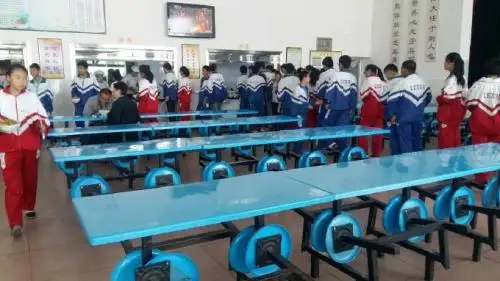
Lesson 13: How Is School Going?[Teaching Aims]Knowledge goals:1.Master the following words: life, term, start, finish, twice, win, social, myselfmon phrases: sport meet, twice a week \ year, long \ high jump, be good at, social studies, by oneselfAbility goal:1 ・ Continue to build up the ability in listening, speaking, reading, writing and translating, especially enable the students to make sentences in English about their school life.Emotion goal:1 ・ Get students to know how to describe their school life correctly・[Important Points 】1 ・ How is ... going?[Difficult Points]How is ... going?[Teaching Aids]Multimedia, radio-tape.【Teaching Procedures ]Step 1 Lead-inShow the students two pictures about their beautiful school and some studentsschool life.Ask and Answer:T: Our school life includes four aspects・ They arc school buildings, people, subjects and activities. Can you say something about these aspects?(The teacher presents the pictures to help students to answer the question.)SI: Teaching Building, Office, Washroom, libraryS2: Our English teacher is Miss Dai.S3: We have math, English, Chinese, music, art and so on.S4: We play basketball after class.T: What do you usually do after class?SI: I usually play football with my classmates.S2: I usually go to the library to read some books.S3:1 usually go to the school yard to take a walk.S4:1 usually have a talk with my friend.(The teacher presents the pictures to help students to answer the question.)Step 2 Aims presentationShow the aims to students and make them know about the aims.Step 3 Learn the new words1.Show pictures to learn new words. At the same time make a sentence with each word・2.Read the words to partners and show in the classStep 4 ListeningT: Play the audiotape for Lesson 13 (How Is School Life Going?) Play it once and ask the students just to listen.T: Play the audiotape a second time and ask the students to answer two questions・T: Cheek the answers as a class.Step 5 ReadingSs: Read the text twice and answer five questions.(1 )How is Jennyschool life going?(2)How many classes docs Wang Mei have every day?(3)What is Wang Mei?s favourite subject?(4)What is Jenny's favourite subject?(5)What did Jenny make in shop class last week?T: Check the answers as a class.Step 6 Language points1.How is ... going?意思是“.... 怎么样?”用来询问对方最近学习、工作、生活等状况。
冀教版七年级下册英语unit3 Lesson 13
10.—Hi, Mike! How’sitgoing?
—________ C
A. Goodidea. B. Ithinkso.
C. Notbad. D. Ofcourse.
二、用所给单词的适当形式完成句子
11. Howmany________ (class) classes
doyouhaveinthemorning?
4. Mikeiscrazyaboutstamps.
D
He________collectsstampsfirstwhereverhetravels.
A. neverB. seldomC. sometimesD. always
【点拨】考查频度副词辨析。句意为“迈克着迷于邮票。 无论在什么地方旅行,他总是首先集邮”。never从不; seldom不常; sometimes有时; always总是。故选D。
hday.
A. toB. forC. ofD. at
2.—Jack, youswamverywell. Whotaughtyou?
—Nobody. Itaught_______C_. A. IB. meC. myselfD. mine
3. Shesaysherfavourite______C__isEnglish. A. colourB. sportC. subjectD. project
start
4. Everyonelikesto____w__in__ (赢).
Noonewantstobealoser. 5. Ilearnhowtocookby________ (我自己).
myself
二、根据汉语提示完成句子, 并背记英语句子 6. 你的学校生活怎么样?
冀教版七年级英语下册教学课件:Lesson 13(共25张PPT)
点拨2 对频率副词提问用how often.
Quiz.
1. Yao Ming is good at ________(play) basketball. 2. I start school at 8:00 a.m. ____ ____ ____ you start school? 3. We have a big sports meet twice a week. _____ ____ we have a big sports meet? 4. I ____ have six classes every day. A. too B. alao C. either. 5. My school subjects are so _________(interest). 6. Last term I______ (win) first place. 7. Last week, I made a bird house all by ____(I).
Yao Ming is good at _______(play) basketball.
Zhang Jie is good at ________(sing)
Liu Xiang is good at ________(run)
点拨1 be good at sth.善长于某事 be good at doing sth.善长于做某事
By learning this lesson, I can: 1. read and write the new words. 2. use the new phrases 3. write about my school life.
New words
term /tɜ:m/
start /sta:t/
冀教版英语七年级上册_Lesson13_教材知识详解
Lesson13 教材知识详解1. They are also my cameras. 它们也是我的照相机。
also作副词,意为“也”,位于句中的系动词或助动词之后,实义动词之前。
如:Can he also swim? 他也会游泳吗?2. I have one nose and one mouth.我有一个鼻子和一张嘴。
本句的句子结构是:主语+ have+宾语。
one是定语修饰nose和mouth。
nose和mouth为名词,意为“鼻子”和“嘴”,都是可数名词,复数都是在其后加-s。
如:The girl has a small mouth.这个女孩有一张小巧的嘴。
①对鼻子、嘴等名词的单数提问时,我们用:一What is it?它是什么?—It’s a nose.是鼻子。
②而对眼睛和耳朵的提问,则要视情况而定。
强调复数时,要用:—What are they? 它们是什么?—They are eyes.是眼睛。
③当我们表示“用眼睛看”,“用耳朵听”时,常用复数形式。
如:We see with our eyes.我们用眼睛看。
I listen with my ears.我用耳朵听。
3. I can speak English and Chinese.我会说英语和汉语。
speak作动词,意为“说话;讲话”。
在本句中表示“说(某种语言)”。
speak 意为“说话”时,为不及物动词,作及物动词时其宾语一般是表示语言的名词。
常用结构:speak to sb.意为“同某人说话”。
如:I can speak a little Japanese.我会说一点儿日语。
4. I don’t have ears but I can hear you.我没有耳朵但是我能听见你。
hear为及物动词,意为“听见”。
hear sb. do sth.意为“听见某人做某事”,强调经常性和重复性的行为;hear sb. doing sth.意为“听到某人正在做某事”。
Lesson13课文原文翻译及重点冀教版七年级英语下册
冀教版英语七班级下册课文原文及翻译Lesson 13 Lesson 13 课文翻译Hi, Jenny. How is your school life going?嗨,詹妮,你的校内生活怎么样?Well, I am a little busy this term.这个学期我有点忙。
I have six classes every day.每天我有六节课。
My school days are very long.在校时间很长。
Me too. I also have six classes every day.我也是。
我每天也有六节课。
I start school at 8:00 a.m.我早上八点钟上课。
I usually finish at 5:00 p.m.通常下午五点放学It's a long day, but I like my school.漫长的一天,但是我喜爱我的学校。
My school subjects are so interesting.我们的学科都很好玩。
What subjects do you have?你学哪些课程?I have Chinese, English, math, history and some others.我学习语文,英语,数学,历史和其他科目。
P.E. is my favourite.我最喜爱体育课。
We always have a big sports meet twice a year.我们通常每两年进行一次大型运动会。
I often take part in the long jump.我常常参与跳远活动。
Last term I won first place!上学期我得了第一名!Wow! You're good at the long jump.哇!我擅长跳远。
Yeah! Thank you!是的,感谢!What subjects do you have?你学哪些课程?I have social studies, shop, math, French, English and art.我有社会讨论课,手工艺课,数学课,法语课,英语课和美术课。
冀教版(河北)七年级英语上册课件:Lesson 13 Body Parts(共13张PPT)
和功能。 • 【教学难点】have的简单运用。
Presentation
Hello! My name is Robin. I am a robot.
n. 机器人
Presentation
I have two big eyes. I can see with ቤተ መጻሕፍቲ ባይዱhem. They are also my cameras.
Unit 3
Body Parts and Feelings
Lesson 13:
Body Parts
Objective
Objectives 教学目标
• 1.掌握重点单词:(预习中掌握 :part,feeling,robot camera, smell, finger, player, homework。)
Presentation
I have two long legs and two big feet. I'm a good football player.
n. 比赛者;选手
Presentation
I like to play and have fun! Do you want to play with me? We can be friends!
冀教版七年级上册英语 Lesson 13 教案(教学设计)
Unit 3 Body Parts and FeelingsLesson 13 Body Parts1.能够掌握课标要求的“四会”词汇:part,feeling,robot,camera,smell,finger,player,homework。
2.让学生了解如何介绍身体部位。
3.让学生了解如何介绍身体部位的功能。
4.让学生理解介词with的基本用法。
1.掌握一些与介绍身体部位有关的词汇:have,with,mouth,eye,nose,ear,arm,hand,leg,foot。
2.激发学生兴趣,让学生运用所学知识介绍身体各部位能做的动作。
掌握以下重点句子:①I can smell with my nose.②And I can talk with my mouth.③I don’t have ears but I can hear you.④I can make noodles with my long arms and small hands.⑤I can write with them.⑥I like to play and have fun!⑦Do you want to play with me?Step 1:Lead-inLead-in by discussing the following questions:1.What are Robin’s cameras?2.What language can Robin speak?3.How many fingers does Robin have?Discuss the questions in groups. The teacher can show some pictures of different body parts,such as eyes,mouth,fingers,feet.Ask the students to talk about them for three minutes,and then let them present their results in class.Step 2:ListeningListen to the tape and find the answers to the questions:1.What can Robin smell with?2.Does Robin have ears?3.How can Robin make noodles?Finish the task in class orally.Step 3:ReadingRead the text and decide the following statements are true or false:1.Robin can speak English and Chinese.2.Robin is a good basketball player.Finish the task in class orally.Step 4:Activities1.Greet with friends in groups. Make up a dialogue between three of four students. Then present it in front of the class. The following sentences can be used:Can you tell me your body parts?What can you do with them?2.Think it over and tell us your report.Step 5:Write a short noteSuppose you are going to introduce your body parts to us. Write a short note and remember to tell your body parts and what we can do with them.Practice for a while. Then let some students read their notes in front of the class.Step 6:Come to “Let’s Do It!”Listen to the tape and finish Exercise 1 together. Read the lesson again,and finish Exercise 2.Work with your partner. Listen and do the actions of Exercise 4.Finish Exercise 3 in “Let’s Do It!”.。
七年级下册英语教案-Unit3-Lesson13HowIsSchoolGoing(冀教版)
七年级下册英语教案-Unit3-Lesson13HowIsSchoolGoing(冀教版)(冀教版英语七年级下册) Lesson 13 How Is School Going? 课题How Is School Going? 课时 1 课型new 教学内容分析本教学设计选自英语冀教版七年级下册第三单元第十三课。
本课的教学重难点是词组How is ......going? be good at、take part in、by oneself,频度副词及其用法。
所以本课的授课将采取讲练结合的方式帮助学生攻破难点。
教学目标设计本课教学中渗透了“知识与技能,过程与方法,情感与态度”三种目标。
首先,教给学生基本的知识内容,如什么频度副词。
然后通过对比和相关习题帮助学生掌握对这一知识点的运用。
学生情况分析七年级学生好动、好奇、好表现,应采用形象生动、形式多样的教学方法和学生广泛、积极主动参与的学习方式去激发学生学习的兴趣。
生理上,学生好动,注意力易分散,爱发表见解,希望得到老师的表扬,所以在教学中应抓住学生这一特点,发挥学生的积极性。
设计教学活动时关注整体,层次分明。
教1.Knowledge Goal:① Grasp the new words: life, term, start, finish,twice, win,social, myself②Master the usage of phrases:学目标How is ......going? be good at、take part in、by oneselfMake students be able to distinguish andmake use of the frequency adverbs.2.Ability Goal: By the method of Task-based Language Teachingand pair-work, students get to know the main ideaof the text and use the frequency adverbs fluently.3.Moral Goal: Make students be interested in studying and learnto cooperate with others.重点the new phrases and the frequency adverbs难点Distinguish the five adverbs: always, often, usually, sometimes,never教法Task- based Language Teaching, pair-work教具audiotape, PPT, some pictures for competition教学过程教学步骤教师活动学生活动设计意图新课导入Step I Warming up:(1 minute)Teacher plays the happy songand sing it with students.Step II Leading in: (1 minute)Teacher says: I feel happy. Howdo you feel today?Students sing thehappy song and dothe actions with theteacher.Students answer thequestion voluntarily.It aims tomake theclass activeand lead inthe newlesson.新课教学Step III New words:(5 minutes) life, term, start,finish,twice, win,social, myself Teacher says: Most of us arehappy at school, because there are many subjects we like. Nowplease look at the board and seewhat subjects we have. Teacherplays the PPT.Then teacher shows the newword “shop”Next T shows each new word withthe help of the phonetics. Then teacher check students pronunciation and lead them toread the new words.Game: Teacher shows the newwords on the PPT and asksstudents to have a competition toread the words and get scores fortheir groups.Exercises:(1)We ____ our class at 8 a.m.and _______it at 5 p.m. Today.(2)This year, we ____ thebasketball game and we were Students competeto read the words.Students are notsure if it’s a subject and ask some questions about it. Students read the words by themselves according to the phonetics. Students read the words as soon as possible. And the better group get scores.Students do the exercises according to what they have learnt. Motivatestudents totake part inthe activityand developtheir senseofcooperation. Students findthe questionand ask.Checkstudents’pronunciationand learn thenew words.Help studentsremember thewords.Consolidation新课教学proud of it.(3)______ do _____ homeworkby _______ every day. (I)Step IV Listening (2 minutes) Practice students’listening ability.T shows a picture by PPT to the students and play the audio tape. Step V Reading (5 minutes) Teacher asks the students to read the lesson and answer the questions. Teacher shows the questions by PPT.(1)How is Jenny’s school life going?(2)How many classes does Wang Mei have every day?(3)What is Wang Mei’s favourite subject?(4)What is Jenny’s favourite subject?(5)What did Jenny make in shop class last week?Then teacher checks their answers. (3 minutes)Step VI Text (20 minutes) Explain the whole text, especially the new phrases and the frequency adverbs.(1)New phrases:① How is ___ going?(......怎么样?)Teacher makes use of the sentence in the text to explain the Students listen to itquietly and writedown what subjectsthey have.Students read thetext and answer thequestions on theirown. They can have abrief understanding ofthe text at the sametime.Students listen tothe teacher carefully.Students answer thequestion andunderstand themeaning of thePracticestudents’listeningability andfinish the task.Practicestudents’readingability.Teach thecontentdirectly andmakestudents paymoreattention toit.新课教学phrase.“How is your school life going?”② be good at ......Teacher explains the phrase directly and show the phrase “do well in”for students. And the teacher shows some pictures for students to make sentences on their own.③ take part in④ by oneself(Teach the phrases in the same way.)(2)Frequency adverbs: always, often, usually, sometimes, neverTeacher explains the wordsdirectly with the help of some examples.(Skill: 位置记忆口诀-主谓之间,系表之间,sometimes要除外)①You’re late again. You are always late for school.(埋怨)② They often\ usually go on a trip on holidays.③On weekends, I visit my grandparents sometimes.④ Jenny tries her best to study, so she never fails in her exam.Step VII Consolidation(2 minutes)Fill in the blanks with the correct forms of the words or phrases in the box.life finish subject take part inbe good at(1)I ___ singing. I want to be a singer in the future.(2)I start school at 8 a.m. and phrase.Students listencarefully and makesentences with thenew phrase.Students distinguishthe usage of thefrequency adverbsaccording to teacher’sexplanation.Students do theexercises according tothe knowledge they’velearned on their own.Then, they compete toanswer the question andget scores for theirgroups.To improvestudents’ability ofmaking useof thephrases.Helpstudentsunderstandthedifferencesamong thefrequencyadverbs.Consolidatewhat wehavelearned.___ at 5 p.m.(3)I often ___ the long jump at the sports meet.(4)A: What ___ do you have?B: I have Chinese, English, math and some others.(5)A: How is your school ___ going?B: Well, it’s a little busy.Step VIII Activity (7 minutes)Teacher asks students to have a pair work and have a dialogue practice.A: What subjects do you have? B: ......A: How many classes do you have?B: ......A: When does the first\second... class start?B: ......Step IX Conclusion(1 minute) Teacher leads students to review the knowledge.Step X. Homework(1 minute)①. Recite the new words,phrases and frequency adverbs in Lesson13. (all the students)②. Recite Paragraph 5 .(students after No. 30)③. Retell the content of the text.(Students before No. 30 including No. 30)Students work in pairsand write down theirclass timetable. Then useit to make up a dialogue.Time SubjectStudents say what theyhave learned.Make theatmosphereactive andpracticestudentsspokenEnglish.It’s time forstudents toretell whatthey havelearned.板书设计Lesson 13 How Is School Going?New words: Phrases: Frequency adverbs: life /la?f/ How is ... Going? alwaysterm /t?:m/ be good at oftenstart /stɑ:t/ take part in usuallyfinish /fInI?/ by oneself sometimesnever课堂小结1.回忆本课的主要内容。
冀教版七年级英语上册 Lesson 13【精品课件】
拓展 talk with/to sb.意为“和某人交谈”,talk about...意 为“谈论……”,talk with/to sb. about sth.意为“和 某人谈论某事”。
知识点 4 like/laIk/ prep.像;像……一样
eg:Like father,like son.You're also good at basketball. 有其父必有其子,你也擅长打篮球。
动词,后常跟双宾语。 笑话吧。 tell tell sb.sth.告诉某人某事。 Tell him to come here
tell sb.to do sth.告诉某人 on time.告诉他按时
去做某事。
到这儿来。
典例 “Don't ___A__ to strangers(陌生人)on your way to
【点拨】本题采用词语辨析法。with表示使用工具,in后加 某种语言或材料。句意为“我喜欢用铅笔写字。”故选A。
4. The English teacher gives us some __A______ every day. A.homework B.homeworks C.housework D.houseworks
speak 时讲某种语言、(在会上) 我不会讲日语。
发言要用speak。
意为“说;讲”,强 She didn't say anything. say 调的是说话的内容。 她什么也没说。
意为“谈话;交谈”, I want to talk to my
可用作不及物动词和 English teacher.我想和