
沪教牛津版六年级英语上册教案 Module3 Unit3.
沪教牛津版六年级英语上册教案
Unit3Good food,bad food
一、单元分析(Unit Analysis)
(一)单元地位(Unit Position)
1.在前两个单元学习食品名称和食品分类的基础上,本单元要从身体健康的角
度,对食品进行分类和评价。
从词汇的角度来说,这一单元是前两个单元的综合和扩充,从语言知识和单元内容的角度来说也是如此,但该单元内容与下一单元无特别紧密的关联。
2.健康的饮食习惯在本书中被首次提出,将会在下学期Module4Unit3中进一步学习。
(二)单元目标(Unit Target)
1.词汇目标:能熟练使用英语表述各类食物
能正确使用量词:slices of,pieces of,cartons of,cans of…及限定词some,a
lot of,a little,plenty of
2.语法目标:能正确使用动词eat的完成式
3.功能目标:学会对自己和他人的食谱做出评论
4.情感目标:通过提建议帮助同学共同形成良好的饮食习惯
(三)单元重点(Unit Focus)
1.关键词汇
1)a piece of,a slice of,enough,a little,plenty of,bad,diet,unhealthy(这组词
汇与课文主题或目标密切相关,应重点掌握)
2)fish finger,ham,hamburger,pizza,soft drink,yoghurt(这一组为本模块专
有词汇,应熟练掌握,教师在教学时可滚动复习前几个单元中的同类词汇)3)运用词组too many,too much,too little,not enough对他人的饮食结构进行评价
2.语言功能
1)Asking for information询问信息:
A.---What have you eaten?
---I have eaten…
B.---What do you think of Eddie’s diet?
---There is too much/too little________.
There are too many_________.
There is/are not enough________.
2)Advice and suggestions劝告和建议:
…be good for us
…be bad for us
3.语法要点
1)使用some,plenty of,a lot of,too many,too much,too little,not enough来修饰名词的量。
2)正确使用量词来说明物品的数量。
二、教学设计(Teaching Designs)
教学内容教学实施建议教学资源参考
P47Look and read
P48Read,write and say P51Play a game 通过阅读练习学习本单
元目标语言点,通过选择
练习强化对正确饮食习
惯的认识。
活页资料64页
活页资料67页
活页资料68页
有关食物的有趣问题
P49Read think and speak以前一节内容引出如何学校一周菜单图
对具体的食谱用正确的观点做出评论。
P50Read a poem
Write a poem P52Make 先以量词练习引出诗歌
学习,然后动手学做三明
治。
活页资料65页
活页资料66页
活页资料69页。
牛津沪教版英语六年级上Unit3 Lesson 3 复习教案

10. 看一看
have a look at
11. 不知道
have no idea
ห้องสมุดไป่ตู้
12. 给汤姆一份精美礼物 give Tom a nice present
13. 带一份熏鱼过来
bring an order of smoked fish
14. 把书带过去
take the books there
15. 不同种类的蔬菜
Mary is much taller than the other students in her class. =Mary is much taller than the others in her class. 玛丽比班上其他学生高得多。 3、another 既可作形容词,也可作代词,只能用于三个或更多的人或物,泛指三个或以上的同类事物 中的“另一个”,只能代替或修饰单数可数名词。 I don’t like this bag. Please show me another one. 我不喜欢这一个,请给我看看另一个。
28. 我们自己做蛋糕
make the cakes by ourselves
Sentence patterns
表示建议的句型: *Why not+ do sth
3 / 10
*Why don’t you do sth *Shall we do sth *What/How about doing sth *Let’s do sth
I have three daughters. One is a nurse, one/another is a teacher and another is a worker. 我有三个女儿。一个是护士,另一个是教师,还有一个是工人。 4、others 只能作代词,表示一定范围内,除去一部分人或物,剩下的一些,泛指“另外几个人或物”, “另外一些人或物”,“其余的人或物”。other+可数名词复数=others Some people like singing, others like dancing. =Some people like singing, other people like dancing. 一些人喜欢唱歌,另一些人喜欢跳舞。 5、the others 只能作代词,表示一定范围内,除去一部分人/物,剩下的全部,特指某一范围内的“其 余所有的人或物”。 There are six students in the classroom.One is a girl,the others are boys. 教室里有六个学生,一个女生,其他的都是男生。 ★随堂练习
Unit3教案牛津上海版英语六年级上册

Lesson PlanUnit 3 Period 1(p 16-17)Course: Oxford English; Unit 3Class: B2Time: 40 minutesObjectives: 1. Near/ far away from2. This is a photo of somebody.3. Talk about the place you’ve been to and the activities you do at that time withyour pictures.Materials: computer, ppt, text book.1.Warm up(1)Do dictation:(2) (ppt 2) A game: Strong Memory. Ask each student to say one place she/he has been to, the nextstudents should recite all the previous places before she/he adds her/his own place. 一列一组,共六组。
2.While-teaching(1)(ppt 3) Look at the picture of the map of Green Island. Show the name of each place along thecoast of this island.(2)(ppt 4-7) Listen to the location of different places, ans then guess the name of that place beingdescribed in the audio, then, show them the scripts. Happy Town, Sunny Town, Star Town and Dragon Bay.(3)(ppt 8) Pair work: Ask students to make dialogues about two places, are they near/far awayfrom each other.(4)(ppt 9) Listen and read the text about Miss Guo and Kitty on weekends activities.(5)(ppt 10) Pair work: Imitate the dialog, then make their own conversation according to thepictures. Open books and page 16. Look at the map.(6)(ppt 11) When we are traveling in different places, we usually take photos. These photos couldhelp us remember what we did at that time. Photo story: show a picture of yellow duck, then the sentences. This is a photo of sb. Sb. is doing something in this picture.(7)(ppt 12-15) Look at the pictures and make dialogues in pairs.(8)(ppt 16-19) Read the dialogue after the tape. And learn new words, read together once. Andthen do some exercise after reading the short paragraph.(9)(ppt 20) Read this text together once.3.Post-teaching(1) (ppt 21) Take out your own photos. Display: Tell your classmates about your story in thepictures.(3) Homework:a.Copy new words: Spending a day out together. Dragon Bay, at weekends, Is Sandy Baynear or far away from Spring Bay. Where have you been in Garden City? This is a photo of my family and me.b.Workbook: page 15-17.c.Take one of your photos, and then write at least 6 sentences about it according to thepattern.Lesson PlanUnit 3 Period 2(p 18-19,22)Course: Oxford English; Unit 3Class: B2Time: 40 minutesObjectives: 1. Have a barbecue, have a picnic, make sandcastles, collect shells2. Where have you been in ... ? I have been to ... in/ on ... with ...3. Talk about the place you’ve been to and the activities you do at that time withpicturesMaterials: computer, ppt, text book.1.Warm up(1)Do dictation: Spending a day out together. Dragon Bay, at weekends, Is Sandy Bay near or faraway from Spring Bay. Where have you been in Garden City? This is a photo of my family and me.(2)(ppt 2-5) Brainstorm: different activities people do together in photos.2.While-teaching(1)(ppt 6) Show a picture of window shopping. Then invite students to read the dialogue aloud.S1: Where have you been in Shanghai?S2: I’ve been to Huaihai Road with my cousin. This is a photo of my cousin and me.S1: What are you and your cousin doing together?(2)(ppt 7) Take out your own pictures and make dialogues with your partner in the same pattern.(改成上前一半activities, 照片对话分享)所以为三课时,由此开始第三课时(3)(ppt 8) Listen to a dialogue among friends, then answer the following questions.When will they have a visit in Garden City?Which place will they visit?What time will they start?How are they going to get there?(4)(ppt 9) Listen again and then fill in the table.(5)(ppt 10) Open books page 19, read aloud following the tape.(6)(ppt 11) Practice: Look at the picture and then fill in the dialogue.3.Post-teaching(1) (ppt 12) Group work:Harry is an American boy. Your group plans to show him around Shanghai/China.Plan a ONE-DAY trip for him.Which place shall we visit?Is it far away from your home/ Is it near Shanghai?When shall we go there?How are we going to get there?How much does it cost?When are we going to come back?(2) (ppt 13) Give an example of write an article about your group’s plan.(3) Homework:a. Recite all the new words and key sentences (including the ones in Notes).b. Work book: page 15-20.c. Write an article about your group’s plan.。
沪教牛津版六上Unit 3 Healthy or unhealthy 课件(公开课) 3
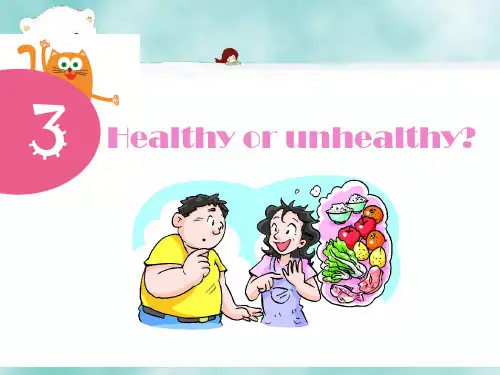
I like … because it is healthy. I don’t like … because it is unhealthy. I like … but it is unhealthy.
hamburger
cheeseburger
chickenburger
fishburger
I go to … very often. Sometimes I go to … I don’t like to go to … I never go to …
Yes, I’d like to.
do homework
Would you like to do homework with us?
Yes, I’d like to.
play football
Would you like to play football with us?
Yes, I’d like to.
I don’t have any e-friends.
Would you like to have one? Yes, I’d like to have an efriend in the US.
Would you like ...
Would you like...?是用来礼貌地询问对方的意愿,是否“想要... ... ” 或委婉地提出请求、建议或者陈述个人的想法。第一人称也可以用 should like。should / would like与动词want同义,但语气比want更委 婉,更礼貌。
Look and ask
Would you like...
Would you like to drink a cup of coffee?
Yes, I’d like to.
沪教牛津版六上Unit 3 Healthy or unhealthy 教案(公开课)
Module 1 Getting to know each otherUnit 3 Healthy or unhealthy? 教案一、教学目标1. 认知目标:学习掌握新词汇:healthy,unhealthy,hamburger,yesterday,fruit,pie,pizza,sandwich,vegetable,chicken,chocolate,掌握句型:What did you have for breakfast this morning? 以及答复:I had some …2. 能力目标:能运用所学句型描述自己的早餐吃了什么。
3. 情感目标:让学生通过对课文内容的学习掌握,增强学习的信心,调动学生的学习兴趣。
二、教学重难点1. 重点能运用所学句型描述自己的早餐吃了什么。
2. 难点句型:What did you have for breakfast this morning? 以及答复:I had some …的理解掌握。
三、教学用具照片、多媒体教学设备、单词卡片。
四、教学设计Step 1 warming1. 师生互相问好,教师询问大家今天早上吃早餐了吗?早餐吃了些什么呢?自己喜欢的食物有哪些呢?这些是否是健康食物呢?2. 教师向学生们说说自己的早餐吃了些什么,自己喜欢的食物。
Step 2 Revision and Presentation1. 教师告诉学生我们这节课就要学学如何用英语交流自己的早餐吃了些什么,是否健康。
2. 教师请学生谈谈自己的早餐及喜欢的食物。
3. 教师出示单词卡片进行新单词教学,带读并配合肢体动作让同学们印象深刻。
4. 教师播放课文内容录音,请同学们认真听一遍,争取做到理解内容。
Step 3 New Lesson活动Let’s do a survey教师制作一张表格,请同学们分别填上自己三餐所吃的食物,并在表格完成后请一位同学向其他同学介绍任意一位同学的三餐吃了什么,并评价是否健康。
牛津上海版六上《Unit 3 Spnding a day out together》word教案
Step3 New Lesson
1.新句型Where have you been? I have been to...
教师讲解并板书
2.教师提问Where have you been?
3.练习:Chain work
---Where have you been inTaiyuan?
【设计意图】通过学生感兴趣的活动——画画引入新课内容,调动学生学习的积极性,而且这一环节由旧知引入新知,学生并更容易接受新课的内容。
回答老师的提问。
Chain work操练句型和太原地名。
Pair work操练句型和同桌讨论在中国游玩过的地方。
【设计意图】通过板书让学生明确重点句型,并通过讨论学生和家人游览过的地方,熟悉句型。
1.Where have you been?句型问答
2.描述照片
教学过程
教师活ng up
1.问好
2.播放视频,英文歌曲If you are happy.
Step2 Revision
1.教师告诉学生最近游览过的地方,引出I have been to...句型和北京地名。
你去过哪里?TaiyuanZooFenhePark
I have been to ....JueweiMountainJinci
我去过....... Mengshan Buddha
This is a photograph of...
这是......的照片。
---I have been to _______.
4.通过图片展示中国的名胜古迹。
5.练习:Pair work
---Where have you been?
六年级英语上册Unit 3第三单元教案(牛津版)

六年级英语上册Unit 3第三单元教案(牛津版)六年级英语上册Unit3第三单元教案(牛津版)dule1GettingtneahtherUnit3Healthrunhealth?TeahingAis:1能听、说、读、写本的核心词汇:health,unhealth,haburger,fruit,pie,pizza,sandih,veg etables,hien,hlate,alittle2能熟练掌握核心句型:--hatdiduhavefrbreafastthisrning?--IhadsebreadandilTeahingIprtanesandDiffiulties:能在语境中运用本的核心词汇和句型。
2能正确理解和运用altf,se,alittle表达物品的数量。
TeahingTls:录音机、自制、照片等TeahingPredures:StepⅠarupandrevisin(热身与复习)Greetings2TalabutthefdStepⅡPresentatinandpratie(呈现新语言知识和练习)LeadinT:hatdiduhavefrbreafastthisrning?Ss:Ihadseil/sebread/anegg2LearntsaandusetherdsT:Latthepitureshat’sthis?Ss:It’sahaburger3Readandspellthenerds4aththesreenandlearntsathesentenesAspupilstpratiseingrups6TalandshareSeptⅢLearnthestrReadthestrandlearntsatheusefulsentenes2aththeartn3Studentsfllthererdingtreadthestr4ThepupilsreadthetextarefullAndthentrtanserthequest insAsthehildrentplainrlesStepⅣnslidatin(拓展延伸)DasurveAndpletethetable教学反思:通过学习,学生们能分辨出健康和不健康的饮食和生活习惯,他们知道了早餐的重要性,健康饮食习惯的重要性。
牛津上海版六年级上册U3教案
not + so (as) +原级
+as (不如……那样)
English is not so difficult as science. She does not study so well as I do.
比 较 级
最高 级
不同程度 (用于两 者比较)
程度加深
最高程度 (用于三 者或三者 以上)
上海牛津版英语六年级上册六上6AUnit3U3同步讲义教案
学员编号:年级:课时数:学员姓名:辅导科目:英语学科教师:授课类型TUnit3(牛津6上)基础知识梳理 C T教学目标使学生能够基本掌握牛津6年级上册Unit3中的基础词汇及重要句型星级★★★★授课日期及时段T同步-U3基础知识梳理(建议2-5分钟)批注:上面一幅图片是好朋友出游的图片,可以和学生一起聊去过哪些地方,还打算去哪些地方,远还是近,在哪?(建议20-25分钟)一、词汇与词组Words and words phrases1 .s p e n d v.度过(spend --- spent – spent)eg:They want to spend their summer holiday in the countryside.他们想去乡下过暑假。
【知识拓展】spend v. 花费(时间,金钱)批注:可扩展讲spend , take , cost 的用法① spend 主语为“人”② take 主语可以是“事或物”(包括形式主语it)③ cost 主语是“物”2. l u c k y a d j.好运的;幸运的eg: a lucky dog 幸运儿【知识拓展】luck n. 运气eg: Good luck! 祝你好运!批注:可给学生提下unlucky不幸,un-是否定前缀,并举例unhappy ,unlike,unfit,unfair,unusual等3.a c t i v i t y n.活动eg: Our school offers a lot of interesting activities to us.【知识拓展】active adj. 活跃的;积极的eg: Mary is always active in the party4 . c o l l e c t v.收集collect shells/ stamps 收集贝壳/邮票【知识拓展】collection n. 收藏品,收集物eg: The collection of these stamps took ten years.批注:tion是名词后缀,invitation, invention, information等5. p l a n v.计划plan to do sth 计划做某事eg: I plan to go to see a movie tonight.【拓展】plan n. 计划;方案eg: What's your plan for the weekend? 你打算如何过周末?二、重要句型Important Sentences structures1. I s S a n d y B a y n e a r o r f a r a w a y f r o m S p r i n g B a y?注意:①本句为选择疑问句,注意or的用法②在near 后直接跟地点,而在用far away from时,地点前不能遗漏介词from.far away from 也可用far from 来表达。
沪教牛津版六年级英语上册教案 Module3 Unit3
沪教牛津版六年级英语上册教案Unit 3 Good food, bad food一、单元分析(Unit Analysis)(一)单元地位(Unit Position)1. 在前两个单元学习食品名称和食品分类的基础上,本单元要从身体健康的角度,对食品进行分类和评价。
从词汇的角度来说,这一单元是前两个单元的综合和扩充,从语言知识和单元内容的角度来说也是如此,但该单元内容与下一单元无特别紧密的关联。
2.健康的饮食习惯在本书中被首次提出,将会在下学期Module 4 Unit 3 中进一步学习。
(二)单元目标(Unit Target)1.词汇目标:能熟练使用英语表述各类食物能正确使用量词:slices of, pieces of , cartons of, cans of …及限定词some, alot of, a little, plenty of2.语法目标:能正确使用动词eat的完成式3.功能目标:学会对自己和他人的食谱做出评论4.情感目标:通过提建议帮助同学共同形成良好的饮食习惯( 三) 单元重点(Unit Focus)1.关键词汇1) a piece of, a slice of, enough, a little, plenty of, bad, diet, unhealthy (这组词汇与课文主题或目标密切相关,应重点掌握)2) fish finger, ham, hamburger, pizza, soft drink, yoghurt(这一组为本模块专有词汇,应熟练掌握,教师在教学时可滚动复习前几个单元中的同类词汇)3) 运用词组too many, too much, too little, not enough 对他人的饮食结构进行评价2.语言功能1)Asking for information询问信息:A.---What have you eaten?---I have eaten …B. ---What do you think of Eddie’s diet?---There is too much / too little ________.There are too many _________.There is / are not enough ________.2)Advice and suggestions劝告和建议:… be good for us… be bad for us3. 语法要点1)使用some, plenty of, a lot of, too many, too much, too little, not enough来修饰名词的量。
沪教版六年级上册英语Unit 3 Healthy or unhealthy讲义(教师版)
Unit 3 Healthy or unhealthy一、重点词汇及拓展1. healthy adj. 健康的,有益健康的拓展:health n. 健康fine adj. 身体好well adj. 身体好e.g. We should eat healthy food. 我们应该吃健康的食物。
区分:well adj. 身体好adv. 干得好2. unhealthy adj.不健康的巧记:un表示否定不拓展unhappy 不开心的uncomfortable 不舒服的e.g. Fast food is unhealthy. 快餐是不健康的。
3. hamburger n..汉堡包拓展:ham n. 火腿burger n. 汉堡包e.g. There is meat and vegetables in a hamburger. 汉堡包中有肉和蔬菜。
4. cola n. 可乐(液体不可数)常见词coke cola 可口可乐e.g. Drinking too much cola may become fat. 喝太多可乐会变胖。
5. yesterday n.昨天拓展:the day before yesterday 前天tomorrow 明天the day after tomorrow 后天用法:一般过去时的重要标志词。
e.g. We had a big party yesterday. 昨天我们举行了一个大的聚会。
6. fruit n. 水果(不可数)7. pie n. 馅饼8. pizza n. 披萨饼(不可数)9. sandwich n. 三明治(复数:sandwiches)10. vegetable n. 蔬菜(可数)11. chicken n. 鸡肉(不可数)拓展:chick 小鸡hen 母鸡rooster/cock 公鸡肉类都不可数:meat 肉fish 鱼肉pork 猪肉beef牛肉mutton 羊肉12. chocolate 巧克力(不可数)拓展:a bar of chocolate 一块巧克力e.g. He had three bars of chocolate just now. 他刚刚吃了三块巧乐力。