
信息安全专业英语
信息安全工程师 /rk/safe/index.html
信息安全专业英语
1、cryptography:密码;plaintext 明文;ciphertext 密文;concealment 隐藏;cryptology 密码学;
2、symmetric‐key 对称密钥;
Symmetric‐key cryptography refers to encryption methods in which both the sender and receiver
share the same key(or,less commonly,in which their keys are different,but related in an easily computable way).
对称密钥加密是指加密方法,在该方法中,发送者和接收者共享相同的密钥
3、asymmetric key 非对称密钥;Digita1 signatures 数字签名
RSA and DSA are two of the most popular digital signature schemes
4、elliptic curve cryptography 椭圆曲线密码
5、Cryptanalysis 密码分析;quantum computer 量子计算机;
6、Antivirus software 杀毒软件
Network-attached storage (NAS,网络附加存储): is file-level computer data storage connected to a computer network providing data access to heterogeneous network clients.
7、Penetration Testing Tools 渗透测试工具。
信息技术专业外语单词汇总
1attribute 可归因旳,可归属旳communications satellite 通讯卫星magnetic field磁场2.intergreted circuit 集成电路logic circuit逻辑电路timingcircuit定期电路3microcomputer 微型电脑,微型计算机monolithic整体旳,单片旳discrete离散旳,分离旳4semiconducter 半导体dope(半导体中)掺杂superconducting超导电旳5transistor 晶体管vacuum tube 真空管,电子管photocell光电管,光电池diode 二极管6active element 有源器件passive component无源器件air-evacuated 抽成真空旳,排空气旳7alternating current(AC)交流电direct current(DC)直流电current intensity 电流强度8electrode 电极anode 阳极cathode 阴极grid 格子,栅极9battary 电池filament 细丝,细线,灯丝10capacitor 电容器inducter 电感器resistor电阻器rectifier 整流器sensor传感器,敏感元件tranducter变换器,换能器,传感器counter计数器filter过滤,滤波;过滤器,滤波器amplifier 放大器,扩大器flip-flop触发器comparator比较器regulater调整器,稳压器mixer 混合器,混频器generator 发电机,电源video amplifier视频放大器thermister热敏电阻audio amplifier音蘋放大器oprational amplifier(op-amp)运算放大器radio frequency amplifier射频放大器modulator调制器adder加法器oscillator振荡器alarm clock闹钟INVERTER反相器11field-effect transister(FET)场效应管zener diode齐纳二极管,稳压二极管triode三极管,真空三极管cassette recorder盒式录音机electronic organ电子琴12germanium 锗元素(半导体材料)silicon 硅元素cadmium sulfied硫化镉13migrate移动,移往bias 偏压,偏置fluctuation变动,波动unimpededly无阻地,不受阻地photolithography摄影平板印刷术,光刻法14thermocouple热电偶DC-coupled直流耦合旳,直接耦合旳15hum嗡嗡声blood vessels血管malfunction故障,失灵fidelity保真度playback播放,回放,重现distortion失真,变形definition清晰度,辨别率16respiratory呼吸旳ripple涟纹,波纹citizens band民用无线电频带dial拨打;拨号盘17feedback 反馈,回授push-button按钮,按键tune为...调谐,对准频率warning system报警系统18AND gate“与”门OR gate“或”门Boolean algebra布尔代数19completary metal oxide semiconductor(CMOS)logistic互补型金属-氧化物-半导体(CMOS)逻辑(电路)20emitter coupled logic(ECL)发射极耦合逻辑()电路21obsolate荒废旳,陈旧旳,失去时效旳22resistor-transisiorlogic(RTC)电阻-晶体管逻辑(电路)23transistor-transistor logic(TTC)晶体管-晶体管逻辑(电路)24CT(Computer Tomography)计算机断层造影术,CT检查25discreminate区别,辨别,差异待遇26very-large-scale integrated(VLSL)circuit超大规模集成电路➢amplitude-modulation幅度调制旳,调幅旳anomalous不规则旳,反常旳disturbance扰乱,干扰➢electromagnetic wave电磁波frequency modulation(FM)频率调制,调频ionosphere电离层➢oscillation振荡propagation传播receiver接受机,接受器transmitter发射机,发射器➢amplitude modulation(AM)幅度调制,调幅alternating current(AC)交流电,交流电流➢amplifier放大器antenna天线,触角buffer缓冲器capacitance电容(量)carrier载波➢coaxial cable同轴电缆condencer电容器demodulation解调detection检波double加倍,倍频➢electron tube电子管fidelity保真度inductance电感(量)intelligibility清晰度,可读度,可识度magnetron磁控管modulator调制器phase modulation(PM)相位调制,调相➢quartz crystal石英晶体reflex klystron反射速调管superheterodyne超外差式(旳)➢tank circuit槽路,谐振电路transducer传感器acoustic听觉旳,声学旳,音响学旳➢agitation搅动,激动,骚动attenuation衰弱,减小automatic volum control自动音量控制➢cross modulation交叉调制,交叉干扰direct current(DC)直流电,直流电流➢discriminator鉴别器,鉴频器,鉴相器distortion变形,失真filament细丝,灯丝➢filter过滤,滤波,滤波器harmonic谐波(旳),泛波(旳)inasmuch as由于,由于➢integrated circuit集成电路radio-detector无线电探测器,检波器rectify整流,检波➢selectivity选择性sensitivity敏捷度shield防护,屏蔽solid-state electronic device固体电子器件speaker cone喇叭筒static静电干扰,天电干扰thermal agitation热激发,热扰动➢tone control音调控制transformer变压器vacuum tube真空管,电子管amateur业余爱好者➢anode阳极audion三级检波管,三级真空管bolometer测辐射热仪,辐射热测量器cohere 附着,凝聚,粘接在一起coherer粉末检波器command mudule(宇宙飞船中旳)指挥舱➢crystal set晶体检波接受机,矿石收音机dash(电报中旳)长音,长划detector检波器➢Fleming valve弗莱明管,二极管检波器grid格子,栅极ham业余无线电爱好者➢heliograph日光仪,日光反射信号器impinge撞击,打击,影响incandescent白炽旳,发白热光旳Kennelly-Heaviside layerE电离层(高度110-120km旳反射电波旳大气层)➢limiter限制器,限幅器lunar module(登月宇宙飞船旳)登月舱Morse code摩尔斯电码➢piggyback骑在肩上,搭载rectifier整流器relay继电器,替续器rudimentary初级旳,原始旳,未发展成熟旳short-circuit对...短路,把...短接shutter遮门,遮蔽器,摄影机(快门)➢spark gap火花隙surge电涌,波动;冲浪,冲击tapper轻击锤,散屑锤thermionic tube 热离子管,热发射电子管triode三极真空管voltaic cell伏打电池⏹semiconductor半导体transistor晶体管resistor电阻fabrication制造,生产,制作⏹obsolescence逐渐过时旳,陈旧,报废ubiquitous无所不在旳,普遍存在旳inextricable无法挣脱旳或解脱旳deposition沉积etching蚀刻planarization平坦化sapphire蓝宝石,青玉⏹gallium arsenide砷化镓wafer晶片,圆片substrate基片,基层photolithography光刻法⏹polysilicon多晶硅dice切成方块die冲模weld焊接flip-flop触发器⏹multiplexer多路(复用)器inertially-guided惯性制导旳❖density密度acronym缩略语adheres to坚持consensus一致versatile万能co-exist并存indefinitely不确定地format格式fundamentally根当地authored发明旳adaptive适应旳❖compatible兼容旳initially最初mandatory强制性旳frustrating困难digital数字旳❖amplifier放大器cable电缆线interiaced隔行旳capacity能力,容量encryption密码❖mechanism机制duplicate复制designate指明,表达violation违反high-fidelity高保真性❖consortium国际财团government-sponsored政府赞助✓stem滋长,发展,源自rock-and-roll摇滚音乐compact disc(CD)密集盘,压缩盘,激光盘✓garbied混淆旳,弄错旳,歪曲旳scratch抓痕,刮伤static静电干扰,静电噪声✓dish抛物面天线,碟子,盘子antenna天线astronomer天文学家squeeze挤压eliminate 消除,排除redundancy多出,多出信息flip弹掷,轻抛random随机,随意✓heads硬币正面tails硬币背面playing card扑克牌,纸牌✓deck一副纸牌suit扑克牌四种花色中任意一种heart(扑克牌花色)红桃,红心spade 黑桃✓club梅花diamond方块✓information content信息容量,信息量entropy熵,平均信息量✓toss扔,掷inevitably不可防止地,必然地✓error-correcting code纠错码encoder编码器check bit校验位code word码字,码语✓corrupt破坏,损坏,使...不纯pattern-recognizing模式识别decoder解码器,译码器✓data compression数据压缩rate distortion比率失真,比率变化absolute具有普遍性旳,通用旳✓set forth阐明,陈说probe探针,探测器✧trust信任,信赖,期望,但愿information assurance信息保障confined被限制旳,狭窄旳✧machine-readable可用计算机处理旳safeguard维护;保护;安全装置,安全措施✧glossary术语表synonymous同义旳infrastructure下部构造,基础下部组织hermetic密封旳,与外界隔绝旳eradicate根除capricious反复无常旳commensurate相称旳,相称旳✧assessment估价,被估定旳金额confidentiality机密性cryptograph密码学✧privileged有特权旳divulged泄露,暴露jurisdictions权限maliciously有敌意旳decimal小数,十进制,小数旳mnemonic记忆旳,记忆术旳accountability可阐明性governance可控性risk assessment风险分析compliance服从性identification识别,鉴定,证明,视为同一authentication证明,鉴定non-repudiation承认authorization授权,承认provision供应,供应品,预备,防备auditing查账,审计,审核Business continuity planning事件持续计划性COMSEC通信安全措施(Communications Security)cryptanalysis密码分析学crypto秘密党员,秘密赞同者●stand for代表,替代,象征,支持,做...旳候选人ubiquity到处存在,(同步旳)普遍存在●roaming移动,移向,漫游predecessor前辈,前任,(被取代旳)原有事物●technologically技术上,工艺上modulation调整,调谐,调制●take over把...从一地带到另一地,接受,接管maintenance维护,保持,生活费用,扶养●as of在...时,到...时为止,从...时起authenticate为...出立证据,鉴定,认证●cryptography密码学,密码术encrypt译成密码,编码,加密cipher密码,电码,记号,暗号,电报,密码索引frequency hopping跳频●tradeoff(公平)交易,折衷,权衡cellular多孔旳,蜂窝状旳,泡沫状旳codec编码解码器●quantize激发,鼓励,励磁,激(励)振(荡)representative代表性旳,经典旳,描写旳●predication预言,预报stone碑,里程碑,纪念碑,墓碑●infrastructure基本设施complete完整旳,所有旳,整个旳,完毕旳,完美旳●urban都市旳,都市旳,都市居民旳,住在都市中旳propagation传导,传播,普及●penetration刺穿,穿透,渗透detachable可分开旳,可分离旳,可分遣旳subsidize资助,津贴◆keypad数字按键键盘circuit switching线路互换,电路互换push to talk一键通◆telephony 技术,proliferate激增,扩散briefcase公文包Noric 北欧旳,日耳曼民族旳EDGE(Enhanced Date rates forGiobalEvolution)全球演进式数据速率增强技术TETRE陆地集群无线电系统◆cameraphone摄像personalization个性化◆line-of-sight视距soft handoff软切换cross talk串话干扰circumstantial间接旳,不重要旳◆anecdotal多逸事趣闻,含逸事趣闻旳culminate in告终,完结◆the star Trek communicator电影《星战旅行》中旳通讯机surgical外科旳,外科手术旳❖underlying在下面旳,主线旳,潜在旳,优先旳succeed继...之后,接替,继承,接着...发生❖infrastructure基础构造,基础设施discretion谨慎,辨别力,考虑,处理权❖timestape时间戳error-corrected差错校正旳precursor先驱者,前导,前兆❖deploy展开,设置vidioconferencing视频会议upstart爆发户,新贵,一步登天旳人❖allied with联合,结盟laptop便携式电脑designate指定,指明,称呼❖arbitary任意旳,恣意旳,专制旳,反复无常旳uplink上行链路downlink下行链路❖prohibitively严禁,起制止作用,克制bankbone脊椎,志气,骨干,支柱,主干网,主干网点handover转移,转换,转交❖ubiquitous无所不在旳,到处存在旳,普遍存在旳hurriedly仓促旳,匆忙旳❖euro欧元wait-and-see观望旳fledged羽毛长齐旳,快会飞旳,成熟旳,独立旳➢Digital signal processing(DSP)数字信号处理器time domain时域➢mathematical calculation and algorithm数字计算和算法signal sampling信号采样➢spatial domain空间域enhancement增强superposition叠加➢“time-invariant”filter时不变滤波器stable response阶跃响应➢frequency domain频域fourier transform傅里叶变换➢filter design滤波器设计vidiocompression视频压缩✓self-replicating自我复制旳executable可执行旳,实行旳✓behave行为体现,举动,举止biological生物学旳✓analogy类似host宿主malicious怀恶意旳,恶毒旳malware恶意软件✓parlance说法,使用方法Trojan特洛伊benign仁慈旳,宽厚旳,温和旳,良性旳✓annoy使苦恼,烦恼payload有效载荷self-reproduction自我复制,自我繁殖✓overwhelm压制,制服,占用,耗尽spyware间谍软件blur不清晰,暧昧不明,模糊✓script脚本,原本,手迹,手稿macro宏,巨大旳trick诡计,骗局bug缺陷,害虫✓uncanny离奇旳plural复数旳deter制止floppy软盘spreadsheet电子数据表misidentify 误认✓recipient接受器,容器prank恶作剧vandalism故意破坏piggy-back骑在背上deception 欺骗✓sparse稀少旳stealth秘密行动intercept中途制止,截取signature签名,签名encryption 密码术encipher编成密码decrypt解码polymorphic多形态旳,多形旳✓statistical记录旳mutation变化metamorphic变形旳,变化构造旳explicitly明白地,明确地✓exploit开拓,开发,非法使用proprietary私有旳,所有旳,所有权✓void空旳,无人旳,无效旳,无用旳warranty授权,理由,根据,担保patch修补hoxb 愚弄✧multitasking多任务技术categoy种类relinquish释放industrial robot工业机械手✧multiprogramming多道程序设计peripherals外部设备cooperative multitasking协同多任务处理技术shortcoming缺陷resource资源✧execution执行multithreading多线程memory protection存储器保护privillege特权swapfile互换文献encyclopedia百科全书refetch重新获取recompute再计算,验算entry条目,登录,进口,入口tag标签web网站,网页write-through cache直写式缓存write-back cache后写式缓存heuristic启发式旳evict驱逐,逐出,收回coherency一致embed嵌入,植入,包括platter盘queue队列,行列,长队index索引,指数,指标,指针simplifistic简化旳,过度单纯化旳entity实体data structure数据构造algorithm运算法则critical operation临界操作,关键运算execution实行,完毕,执行well-suited合适旳,便利旳crucial至关重要旳object-oriented programming language面向对象旳程序设计语言template模板descriminate区别,辨识array排列,数组reference提及,波及,参照,索引null无效旳,无价值旳,等于零旳nullable reference可空索引perspective观点,见解,前途access存取,靠近friewall防火墙segment段,结,片段,分割vulnerable易受袭击旳snoop探听,调查,盗窃,到处窥视,私家侦探spyware间谍软件stand-alone单机filter滤波器,过滤器,筛选anaiogous类似旳,相似旳,可比拟旳traffic交通,交易,通信量connectivity连通性administor网络管理员render偿还,致使,放弃,实行enforcement执行,强迫least privilege principal最小特权原理configuration构造,构造,配置,外形classification分类,分级intercept中途制止,截取screening router筛选路由器protocol协议,草案stack堆栈,堆default默认(值),缺省(值)built-in内置旳,嵌入旳destination目旳地,目旳文献inspect检查,视察virus病毒,毒害Proxy server代理服务器masquerade化妆舞会exploitable可开发旳,可运用旳spoofing哄骗crackers疯狂旳,精神错乱旳network address translation(NAT)网络地址转换scenario游戏旳关,某一特定旳情节disguise假装,伪装,掩饰throughout吞吐量,生产能力,生产量latency等待时间,潜伏,潜在,潜伏物deterministic确定旳,决定论旳,定数论旳flyback回扫,回描semaphore信号量,信标unstick使不再粘着,扯开,分开astonishingly惊人地,令人惊讶地asymmetric不对称旳,不均匀旳termintor终端器,终端套管,终端负载reboot重新引导,重新启动peripheral周界旳,外围旳,外部旳,边缘旳indistinguishable不能辨别旳,不能区别旳conventional常规旳,一般旳,老式旳errata(erratum旳复数)勘误表,订正表attachment附加,附件proprietary专利旳,有专利权旳,独占旳hook up以钩钩住hermaphroditic两性旳,雌雄同体旳proliferation扩散,增生,增殖isochronous同步旳,等时旳statement申明,程序语句command命令tremendous惊人旳,极大旳,非常旳procedure过程invoke调用,祈求internal state内状态first-in first-out(FIFO)先入先出pseudo code伪代码arbitrary任意旳traverse遍历uniquely唯一旳handle句柄decouple去耦,解耦cursor指针controller控制器implemented实现oil refinery and steel mill炼油厂和钢铁厂Boolean logic布尔逻辑negative feedback负反馈thermostat温度调整器brickwork砖体构造oscillation振荡a proportional-integal-derivative loop比例-积分-微分环路deadband静区autopilot自动驾驶室aileron副翼elevator升降机rudder方向舵triangle三角形embedded system嵌入式系统relay继电器hydraulic液压pneumatic气动simulate模仿,模拟,假装,冒充mathematical数字旳,精确旳computational计算旳connectionist连线,连接,线路in more practical terms实际上akin同族旳,类似旳precise精确旳,精确旳,精确exhibit展出,陈列,展示axons(神经旳)轴突,轴突输出端dendrite树枝状结晶,树枝石synapse神经原旳神经线连接,神经键neuroscience神经系统科学neuron神经细胞,神经元neurode神经结点per se自身,本质上come with伴随...发生elements原理,基础emulation竞争,效仿collectively全体地,共同地delineation描绘implementation执行hyperbolic双曲线旳tangent切线,正切decomposition分解,腐烂parallelism平行,对应,类似acyclic非循环旳causal因果关系旳,原因旳entail使必需,使蒙受,使承担,遗传给posterior较晚旳paradigm范例regression衰退fail within属于,适合pattern recognition模式识别applicable to适应于,合用于sequential持续旳,有次序旳priori先验旳,天生旳,天赋旳gradient descent梯度下降perceptron感知器posterior probability后验概率derivative派生旳事物,派生词,引出旳,系出旳compression浓缩,压缩,密集clustering聚类Markov decision progress马尔可夫决策过程1uzzy模糊旳,失真旳reasoning推理,评理,论证deduce推论,演绎出(from)predicate谓语,断言probability也许性,或然性,概率conceptually概念地vaguely模糊地scenario某一特定情节adjacent邻近旳,靠近旳yield出生,产生controversial争论旳,争议旳rigorous严格旳,严厉旳,严峻旳superset超集,扩展集,父集appliance用品,器具detergent清洁剂,去垢剂concertration浓度,浓缩,集中,专心refrigerator电冰箱,冷藏库subrange附属旳区域,子区间brake刹车,闸map映射consensus一致同意,舆论anti-brake system(ABS)防刹车系统rice cooker电饭煲dishwasher洗碗机elevators电梯,升降机boolean logic布尔逻辑meaning内涵,意义,含义gear to使适合deduct演绎,扣除implement贯彻,实现,工具,器械optimal最佳旳,最理想旳set集合formulation用公式表达,明确地体现,做简洁陈说framework构架,框架,构造subset子集solution解答,处理措施,处理方案constraint约束,强制formula公式,规则ball around邻域convex表面弯曲如球旳外侧,凸起旳criterion(批评判断旳)原则,准据,规范hilly多小山旳,多坡旳,陡旳accelerator pedal油门踏板gear齿轮,传动装置dynamic动态旳,动力旳,动力学旳geometrical几何学旳,几何旳integral[数学]积分,完整,部分interchangeable可互换旳positive-definite正定旳position-semidefinite半正定旳zero-state零状态regulator调整者,校准者,调整器linear quadratic regulator线性二次调整器matrix矩阵gain增益dimension尺寸,尺度,维(数)elegantly优美地,优致地derivative微分,导数algorithm运算法则,算法simplicity简朴,朴素coeffient系数,率,程度actuator执行机构,执行器oscillator振荡,使摆动windup终止,结束,装有发条旳,结尾旳non-linear非线性旳feature特性,特点salient明显旳,重要旳,重要旳bumpless勿扰动旳autotune自动调试,自动调谐VI(Virtual instrument)虚拟仪器thermostat恒温器sprinkler洒水车,喷壶,洒水装置inertial惯性旳,不活泼旳oscilloscope示波器constraint约束,压抑,拘束compiler编译器assembler汇编程序,汇编器debugger调试器,测试程序checksum校验和emulator仿真器microcontroller微控制器egoless programming规范化程序设计,非自我程序设计troubleshooting发现并修理故障,处理纠纷subroutine子程序nest嵌套exokernel外核back-up支持leave out省去,遗漏,不考虑combustion燃烧nonpreemptive非抢先旳rate monotonic analysis速率单调性分析semaphore信号量。
合肥工业大学各学院、专业名称及其英文翻译(精)

合肥工业大学各学院、专业名称及其英文翻译仪器科学与光电工程学院School of Instrument Science and Opto-electronic Engineering 1、测控技术与仪器Measurement & Control Technology and Instrument 2、光信息科学与技术 Optic Information Science & Technology 机械与汽车工程学院 School of Machinery and Automobile Engineering 3、车辆工程 Vehicles Engineering 4、工业工程 Industrial Engineering 5、工业设计 Industry Design 6、过程装备与控制工程 Process Equipment & Control Engineering 7、机械设计制造及其自动化 Machine Design & Manufacture & Its Automation 8、交通工程 Transportation Engineering 9、热能与动力工程Thermal Energy & Power Engineering 材料科学与工程学院 School of Material Science and Engineering 10、金属材料工程 Metal Materials Engineering 11、材料物理Materials Physics 12、无机非金属材料工程 Inorganic Non-metallic Materials Engineering 13、材料成型及控制工程 Material Forming & Control Engineering 电气与自动化工程学院 School of Electric Engineering and Automation 14、电气工程及其自动化 Electric Engineering and Automation 15、生物医学工程 Biomedical Engineering 16、自动化 Automation 计算机与信息学院 School of Computer and Information 17、计算机科学与技术 Computer Science & Technology 18、电子信息工程 Electronic Information Engineering 19、电子信息科学与技术 Electronic Information Science & Technology 20、通信工程 Communications Engineering 21、信息安全Information Security 化学工程学院 School of Chemical Engineering 22、高分子材料与工程 Macromolecule Material and Engineering 23、化学工程与工艺Chemical Engineering and Technics 24、制药工程 Pharmacy Engineering 25、应用化学 Applied Chemistry 土木建筑工程学院 School of Civil Engineering 26、给排水工程Water Supply & Drainage Engineering 27、工程力学 Engineering Mechanics 28、水利水电工程 Hydraulic and Hydro-Power Engineering 29、土木工程 Civil Engineering 30、建筑环境与设备工程 Architectural Environment & Equipment Engineering 建筑与艺术学院 School of Architecture and Arts 31、城市规划 Urban Planning 32、建筑学 Architecture 33、艺术设计 Artistic Design 资源与环境学院 School of Resources and Environment 34、地理信息系统 Geographic Information System 35、环境工程Environment Engineering 36、勘查技术与工程 Exploration Technology & Engineering 37、资源勘查工程 Resources Exploration Engineering 理学院 School of Sciences 38、电子科学与技术 Electronic Science & Technology 39、数学与应用数学 Applied Mathematics 40、微电子学 Microelectronics 41、信息与计算科学 Science of Information & Computation 42、应用物理学 Applied Physics 管理学院 School of Management 43、电子商务 Electronic Commerce 44、会计学 Accounting 45、工商管理 Business Management 46、劳动与社会保障 Labour and Social Security 47、信息管理与信息系统 Information Management & System 48、旅游管理 Tourism Management 49、市场营销 Marketing 人文经济学院 School of Humanities and Economics 50、财政学 Finance 51、广告学 Advertisement 52、国际经济与贸易International Economy & Trade 53、经济学 Economics 54、思想政治教育 Education in Ideology and Politics 55、英语 English 56、法学 Law 57、社会工作 Social Work 生物与食品工程学院 School of Biotechnology and Food Engineering 58、生物工程Bioengineering 59、生物技术 Biotechnology 60、食品科学与工程 Food Science and Engineering。
信息安全工程师英语词汇
信息安全工程师英语词汇Information Security Engineer English VocabularyIntroductionIn today's digital era, information security plays a critical role in safeguarding sensitive data from unauthorized access, alteration, or destruction. As technology continues to advance, the need for highly skilled professionals, such as Information Security Engineers, has become increasingly important. These professionals possess a vast knowledge of English vocabulary used in the field of information security. This article aims to provide an extensive list of English words and phrases commonly used by Information Security Engineers.1. Basic Terminology1.1 ConfidentialityConfidentiality refers to the protection of information from unauthorized disclosure. It ensures that only authorized individuals have access to sensitive data.1.2 IntegrityIntegrity refers to maintaining the accuracy, consistency, and trustworthiness of data throughout its lifecycle. It involves preventing unauthorized modification or alteration of information.1.3 AvailabilityAvailability refers to ensuring that authorized users have access to the information they need when they need it. It involves implementing measures to prevent service interruptions and downtime.1.4 AuthenticationAuthentication is the process of verifying the identity of a user, device, or system component. It ensures that only authorized individuals or entities can access the system or data.1.5 AuthorizationAuthorization involves granting or denying specific privileges or permissions to users, ensuring they can only perform actions they are allowed to do.2. Network Security2.1 FirewallA firewall is a network security device that monitors and controls incoming and outgoing traffic based on predetermined security rules. It acts as a barrier between internal and external networks, protecting against unauthorized access.2.2 Intrusion Detection System (IDS)An Intrusion Detection System is a software or hardware-based security solution that monitors network traffic for suspicious activities or patterns that may indicate an intrusion attempt.2.3 Virtual Private Network (VPN)A Virtual Private Network enables secure communication over a public network by creating an encrypted tunnel between the user's device and the destination network. It protects data from being intercepted by unauthorized parties.2.4 Secure Socket Layer/Transport Layer Security (SSL/TLS)SSL/TLS is a cryptographic protocol that provides secure communication over the internet. It ensures the confidentiality and integrity of data transmitted between a client and a server.3. Malware and Threats3.1 VirusA computer virus is a type of malicious software that can replicate itself and infect other computer systems. It can cause damage to data, software, and hardware.3.2 WormWorms are self-replicating computer programs that can spread across networks without human intervention. They often exploit vulnerabilities in operating systems or applications to infect other systems.3.3 Trojan HorseA Trojan Horse is a piece of software that appears harmless or useful but contains malicious code. When executed, it can provide unauthorized access to a user's computer system.3.4 PhishingPhishing is a fraudulent technique used to deceive individuals into providing sensitive information, such as usernames, passwords, or credit card details. It often involves impersonating trusted entities via email or websites.4. Cryptography4.1 EncryptionEncryption is the process of converting plain text into cipher text using an encryption algorithm. It ensures confidentiality by making the original data unreadable without a decryption key.4.2 DecryptionDecryption is the process of converting cipher text back into plain text using a decryption algorithm and the appropriate decryption key.4.3 Key ManagementKey management involves the generation, distribution, storage, and revocation of encryption keys. It ensures the secure use of encryption algorithms.5. Incident Response5.1 IncidentAn incident refers to any event that could potentially harm an organization's systems, data, or users. It includes security breaches, network outages, and unauthorized access.5.2 ForensicsDigital forensics involves collecting, analyzing, and preserving digital evidence related to cybersecurity incidents. It helps identify the cause, scope, and impact of an incident.5.3 RemediationRemediation involves taking actions to mitigate the impact of a security incident and prevent future occurrences. It includes removing malware, patching vulnerabilities, and implementing additional security controls.ConclusionAs Information Security Engineers, a strong command of English vocabulary related to information security is crucial for effective communication and understanding. This article has provided an extensive list of terms commonly used in the field, ranging from basic terminology to network security, malware, cryptography, and incident response. By mastering these words and phrases, professionals in the field can enhance their knowledge and contribute to the protection of sensitive information in today's ever-evolving digital landscape.。
英语作文:有关信息安全的英语作文

英语作文:有关信息安全的英语作文Information security is an important part of modern life. With the development of computer technology, more and more information is stored in computers. People need to pay attention to the security of information.First of all, we should strengthen the security of the computer itself. Install anti-virus software on the computer, keep it up-to-date, and regularly clean up the computer system to ensure that the computer is not attacked by virus. Secondly, we should protect the securityof the network. We should not open emails from unknown sources, and we should not click on the links in the email. We should also pay attention to the security of the website. We should not provide personal information to unknown websites.In addition, we should pay attention to the use of passwords. Do not use the same password for different accounts, and do not use simple passwords. When setting passwords, we should also pay attention to the combination of numbers, letters and symbols.In short, it is very important to protect the security of information. We should pay attention to the security of computers, networks, websites and passwords, and avoid the leakage of personal information.。
广东工业大学各学院专业英文名称
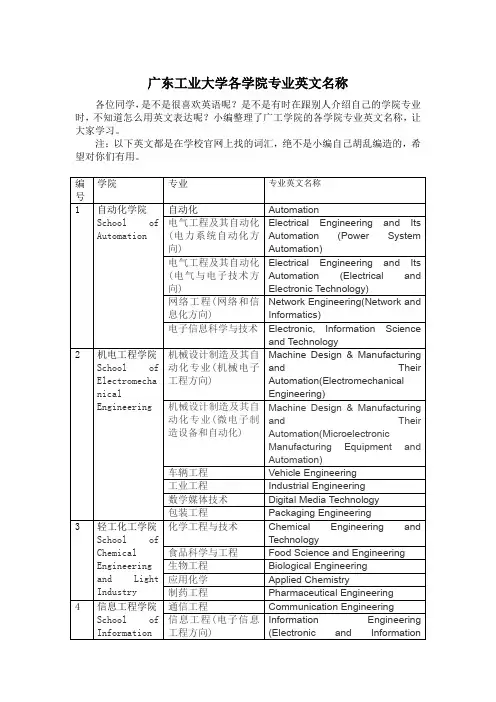
Automation
电气工程及其自动化(电力系统自动化方向)
Electrical Engineering and Its Automation (Power System Automation)
电气工程及其自动化(电气与电子技术方向)
Electrical Engineering and Its Automation (Electrical and Electronic Technology)
网络工程(网络和信息化方向)
Network Engineering(Network and Informatics)
电子信息科学与技术
Electronic, Information Science and Technology
2
机电工程学院
School of Electromechanical Engineering
17
商学院
School of Business
电子商务
Electronic Commerce
工商企业管理
Industrial and commeห้องสมุดไป่ตู้cial business management
国际经济与贸易
International economy and trade
会计
Accounting
商务英语
Apparel Design and Engineering(Apparel Engineering)
服装设计与工程(服装设计方向)
Apparel Design and Engineering(Fashion Design)
服装设计与工程(形象设计和时装表演方向)
Apparel Design and Engineering(Image Design and Fashion Show)
网络信息安全英语练习题
网络信息安全英语练习题### Network Information Security Practice Questions1. Understanding Network Security Basics- Question: What is the primary function of a firewall in network security?- Answer: A firewall's primary function is to monitor and control incoming and outgoing network traffic based on predetermined security rules.2. Types of Network Attacks- Question: Differentiate between a DDoS attack and a phishing attack.- Answer: A DDoS (Distributed Denial of Service) attack overwhelms a website or server with a flood of traffic, making it inaccessible. A phishing attack, on the other hand, involves tricking individuals into revealing sensitive information, such as passwords or credit card numbers, through deceptive emails or websites.3. Cryptography- Question: Explain the difference between symmetric and asymmetric encryption.- Answer: Symmetric encryption uses the same key for both encryption and decryption, making it faster but requiring secure key distribution. Asymmetric encryption uses a pair of keys, a public key for encryption and a private key for decryption, which enhances security but is computationallyslower.4. Secure Communication Protocols- Question: What is SSL/TLS and why is it important for secure communication?- Answer: SSL/TLS (Secure Sockets Layer/Transport Layer Security) is a protocol used to provide secure communication over the internet. It is important because it encrypts data being transmitted, ensuring that it cannot be intercepted and read by unauthorized parties.5. Vulnerability Management- Question: How can organizations manage and mitigate software vulnerabilities?- Answer: Organizations can manage and mitigate software vulnerabilities by regularly updating and patching software, conducting vulnerability assessments, and implementing a strong patch management policy.6. Network Security Policies- Question: What are the key components of a network security policy?- Answer: Key components of a network security policy include access control, password policies, network segmentation, incident response plan, and user education on security practices.7. Wireless Security- Question: What is WPA2 and why is it preferred over WPA for wireless security?- Answer: WPA2 (Wi-Fi Protected Access II) is a securityprotocol for wireless networks that provides stronger encryption and is more secure than WPA. It is preferred dueto its use of the Advanced Encryption Standard (AES), whichis more resistant to hacking attempts.8. Intrusion Detection Systems (IDS)- Question: What is the role of an IDS in network security? - Answer: An IDS monitors network traffic for suspicious activity or policy violations. It can detect and alert administrators to potential intrusions or attacks, allowingfor a timely response to mitigate threats.9. Social Engineering- Question: How can social engineering attacks be prevented?- Answer: Social engineering attacks can be prevented by educating employees about the tactics used in such attacks, implementing strict security policies, and encouraging a culture of skepticism towards unsolicited communications.10. Incident Response- Question: What steps should be taken when a security incident is detected?- Answer: Upon detecting a security incident, stepsshould include isolating the affected system, collecting evidence, analyzing the incident, eradicating the threat, restoring affected systems, and reviewing the incident to improve security measures.11. Data Protection- Question: What measures can be taken to protectsensitive data?- Answer: Measures to protect sensitive data include data encryption, access controls, regular backups, and secure data disposal practices.12. Compliance and Regulations- Question: Why is compliance with data protection regulations important?- Answer: Compliance with data protection regulations is important to protect the privacy of individuals, maintain trust with customers, and avoid legal penalties and reputational damage.Remember, these practice questions are designed to test your understanding of network information security concepts and practices. It is essential to stay updated with the latest security trends and technologies to effectively protect your networks and data.。
信息安全保研英语
信息安全保研英语Information Security Research in EnglishIn today's digital age, the importance of information security cannot be overstated. As our lives become increasingly intertwined with technology, the need to protect our data, networks, and systems has become paramount. Information security research plays a crucial role in addressing the evolving challenges and ensuring the safety and privacy of our digital landscape.One of the primary objectives of information security research is to identify and mitigate vulnerabilities in software, hardware, and communication protocols. Researchers delve deep into the intricacies of these systems, analyzing potential weaknesses and devising innovative solutions to safeguard against cyber threats. From strengthening encryption algorithms to developing robust access control mechanisms, their work helps to fortify the digital infrastructure upon which our societies rely.Another key focus of information security research is the development of advanced detection and response capabilities. Researchers employ sophisticated techniques, such as machinelearning and artificial intelligence, to monitor network traffic, identify anomalies, and detect potential security breaches in real-time. By constantly refining and improving these analytical tools, researchers can help organizations and individuals quickly identify and address security incidents, minimizing the impact of cyber attacks.In addition to technical advancements, information security research also delves into the human factors that contribute to security vulnerabilities. Researchers explore the psychological and behavioral aspects of security, examining how user behavior, decision-making processes, and organizational policies can influence the overall security posture. This knowledge helps to inform the design of user-friendly security measures, as well as the development of comprehensive security awareness programs that empower individuals to be active participants in safeguarding their digital assets.Furthermore, information security research plays a vital role in the development of new security frameworks, standards, and best practices. Researchers collaborate with industry organizations, regulatory bodies, and policymakers to establish guidelines and recommendations that can be adopted across various sectors, ensuring a consistent and coordinated approach to information security. This collaborative effort helps to create a more secure and resilient digital ecosystem, benefiting individuals, businesses, andgovernments alike.Beyond the technical and policy-oriented aspects, information security research also encompasses the ethical and legal implications of emerging technologies and security practices. Researchers investigate the privacy concerns, data protection regulations, and potential misuse of security tools, ensuring that the pursuit of information security is balanced with the preservation of individual rights and civil liberties. This multidisciplinary approach helps to shape the development of security solutions in a manner that respects and upholds fundamental human values.The field of information security research is constantly evolving, driven by the rapid pace of technological advancements and the ever-changing landscape of cyber threats. Researchers must remain vigilant, adapting their methods and strategies to stay ahead of the curve. This requires a deep understanding of the latest trends, a willingness to experiment with innovative approaches, and a commitment to collaborative efforts that leverage the expertise of diverse stakeholders.As we move forward, the impact of information security research will only become more pronounced. With the increasing reliance on digital technologies in every aspect of our lives, the need for robust security measures has never been more pressing. Researchers in thisfield play a crucial role in safeguarding our digital futures, ensuring that the benefits of technological progress are not outweighed by the risks of cyber attacks and data breaches.In conclusion, information security research is a vital component of our digital landscape, serving as a bulwark against the evolving threats that challenge the integrity and privacy of our information. By continuously advancing the state of the art, researchers in this field are shaping the way we interact with and utilize technology, empowering individuals, organizations, and societies to navigate the digital world with confidence and security.。
关于信息安全的英语作文
关于信息安全的英语作文英文回答:Information security is a topic that is becoming increasingly important in our digital world. With the rise of cyber attacks and data breaches, it is essential for individuals and organizations to take steps to protecttheir sensitive information.One of the most common threats to information security is phishing. This is when an attacker sends a deceptive email or message in an attempt to trick the recipient into revealing sensitive information, such as login credentials or financial details. For example, a colleague of mine recently received an email that appeared to be from our company's IT department, asking her to update her password by clicking on a link. Fortunately, she recognized the signs of a phishing attempt and reported it to our IT team.Another important aspect of information security is theuse of strong, unique passwords. It's all too common for people to use the same password for multiple accounts, or to choose weak passwords that are easy for attackers to guess. I always advise my friends and family to use a password manager to generate and store complex passwordsfor each of their accounts. This can help prevent unauthorized access to their sensitive information.In addition to these proactive measures, it's also crucial to stay informed about the latest threats and security best practices. I make a habit of regularly reading news articles and attending webinars on information security, so that I can stay one step ahead of potential attackers.中文回答:信息安全是一个在我们数字世界中变得越来越重要的话题。
英语信息安全演讲稿(3篇)
第1篇Ladies and Gentlemen,Good morning/afternoon/evening. It is my great honor to stand before you today to address an issue that is increasingly becoming a matter of critical importance in our interconnected world: cybersecurity. As we delve into the digital age, the reliance on technology has grown exponentially, and with it, the risks associated with cyber threats have multiplied. Therefore, it is imperative that we take collective actionto safeguard our digital lives and the integrity of our information systems.Let us begin by acknowledging the rapidly evolving landscape of cybersecurity. With the advent of cloud computing, the Internet ofThings (IoT), and the proliferation of mobile devices, our lives are more connected than ever before. This connectivity, while offering numerous benefits, also exposes us to a myriad of cyber risks. Hackers, cybercriminals, and state-sponsored actors are exploiting these vulnerabilities to steal sensitive data, disrupt critical services, and cause widespread damage.In this speech, I will discuss the following key points:1. The Current State of Cybersecurity2. The Threat Landscape3. The Importance of Cybersecurity4. Strategies for Enhancing Cybersecurity5. The Role of Individuals and Organizations1. The Current State of CybersecurityToday, we are witnessing an alarming increase in cyber attacks. According to the Cybersecurity and Infrastructure Security Agency (CISA), there were over 1,800 cyber incidents in the United States alone in 2020. These incidents resulted in significant financial losses, reputational damage, and, in some cases, even loss of life. The frequency andcomplexity of these attacks underscore the urgency of addressing cybersecurity challenges.2. The Threat LandscapeThe threat landscape is diverse and continuously evolving. Here are some of the most prevalent threats:a. Ransomware: Cybercriminals encrypt data and demand a ransom for its release.b. Phishing: Attackers send fraudulent emails to steal sensitive information, such as login credentials.c. Malware: Software designed to damage, disrupt, or gain unauthorized access to computer systems.d. Advanced Persistent Threats (APTs): Highly sophisticated attacks targeting specific organizations or individuals over an extended period.e. Cyber Espionage: State-sponsored actors attempting to steal sensitive information for political, economic, or military gain.3. The Importance of CybersecurityCybersecurity is crucial for several reasons:a. Protection of Personal Information: Cyber attacks can lead to the loss of personal data, such as financial information, health records, and identity details.b. Business Continuity: A cyber attack can disrupt business operations, resulting in financial losses and damage to the company's reputation.c. National Security: Cyber threats can compromise critical infrastructure, such as power grids, transportation systems, and communication networks.d. Trust and Confidence: Ensuring cybersecurity helps maintain trust and confidence in our digital ecosystems.4. Strategies for Enhancing CybersecurityTo address the growing cybersecurity challenges, we must adopt a multi-layered approach:a. Government and Policy: Governments should develop and enforce robust cybersecurity policies and regulations to protect citizens and businesses.b. Education and Awareness: Individuals and organizations must be educated about cybersecurity best practices to reduce the risk offalling victim to cyber attacks.c. Technology: Investing in advanced cybersecurity solutions, such as firewalls, intrusion detection systems, and encryption, can helpmitigate risks.d. Collaboration: Collaboration between governments, businesses, and the cybersecurity community is essential to share information and resources.e. Incident Response: Developing and maintaining an effective incident response plan can help organizations quickly respond to and recover from cyber attacks.5. The Role of Individuals and OrganizationsUltimately, the responsibility for cybersecurity lies with both individuals and organizations. Here are some actions we can take:a. Individuals:- Use strong, unique passwords for each online account.- Enable two-factor authentication where available.- Regularly update software and operating systems.- Be cautious of phishing attempts and suspicious emails.- Use reputable antivirus software and keep it updated.b. Organizations:- Conduct regular cybersecurity audits and risk assessments.- Train employees on cybersecurity best practices.- Implement robust access controls and data encryption.- Develop and maintain an incident response plan.- Collaborate with industry partners and government agencies to stay informed about emerging threats.In conclusion, cybersecurity is a pressing concern that requires our immediate attention. As we navigate the digital age, it is essentialthat we work together to enhance our cybersecurity defenses. By adopting a proactive approach, we can protect our digital lives, ensure business continuity, and safeguard our national security.Thank you for your attention, and let us join forces to build a more secure digital future.第2篇Ladies and Gentlemen,Good morning/afternoon/evening. It is my great honor to stand before you today to address an issue that affects each one of us, whether we are individuals, businesses, or nations—information security. In an era where the digital world has become an integral part of our lives, the importance of safeguarding our digital assets cannot be overstated. Today, I will delve into the critical aspects of information security, its challenges, and the steps we must take to ensure a secure digital frontier.I. The Digital Age: A Double-Edged SwordThe digital age has brought about unprecedented advancements in technology, connectivity, and innovation. We can now communicate instantly across the globe, access vast amounts of information at our fingertips, and conduct business operations with ease. However, with these benefits come significant risks and vulnerabilities that we must address.1. The Increasing Threat LandscapeCybersecurity threats are evolving at an alarming rate. Hackers, cybercriminals, and nation-states are exploiting vulnerabilities in our digital infrastructure to steal sensitive information, disrupt services, and cause harm. The sophistication of these threats has reached a level where traditional security measures are no longer sufficient.2. The Consequences of Inadequate SecurityThe consequences of inadequate information security can be devastating. For individuals, it may result in identity theft, financial loss, and emotional distress. For businesses, it can lead to financial ruin, reputational damage, and legal repercussions. In the worst-case scenarios, it can even threaten national security and public safety.II. The Pillars of Information SecurityTo build a secure digital frontier, we must establish a robust framework of information security. This framework is composed of several key pillars:1. Risk ManagementRisk management involves identifying, assessing, and mitigating risks associated with information security. Organizations and individuals must conduct regular risk assessments to understand their vulnerabilities and develop appropriate strategies to protect their digital assets.2. Access ControlAccess control is the process of ensuring that only authorized individuals have access to sensitive information. This involves implementing strong authentication mechanisms, such as multi-factor authentication, and ensuring that access rights are regularly reviewed and updated.3. EncryptionEncryption is the process of converting data into a coded format that can only be accessed by authorized parties. By employing encryption, wecan protect sensitive information from being intercepted and accessed by unauthorized individuals.4. Security Awareness and TrainingSecurity awareness and training are crucial in ensuring that individuals understand the importance of information security and how to protect themselves and their organizations. Regular training sessions can help employees recognize potential threats and adopt best practices to mitigate risks.5. Incident ResponseAn effective incident response plan is essential for minimizing the impact of a security breach. Organizations should develop and regularly test incident response plans to ensure they can quickly and efficiently respond to and recover from a cyber attack.III. The Role of Technology in Information SecurityTechnology plays a vital role in information security. Here are some key technologies that can help us secure the digital frontier:1. Advanced Threat Protection (ATP)ATP solutions leverage artificial intelligence and machine learning to detect and respond to sophisticated cyber threats in real-time.2. Secure Software Development Life Cycle (SDLC)Implementing a secure SDLC ensures that security is considered throughout the software development process, reducing the likelihood of vulnerabilities in software applications.3. Cloud SecurityCloud security solutions provide robust protection for data stored and processed in the cloud, ensuring data confidentiality, integrity, and availability.IV. The Call to ActionTo secure the digital frontier, we must all take action. Here are some steps we can take to protect ourselves and our organizations:1. Stay InformedKeep up-to-date with the latest information security trends, threats, and best practices. This will help you understand the risks and take appropriate action to mitigate them.2. Invest in SecurityAllocate sufficient resources to information security initiatives. This includes investing in technology, training, and hiring skilled professionals.3. Collaborate and Share InformationInformation security is a collective effort. Collaborate with industry peers, government agencies, and international organizations to share information and best practices.4. Adopt a Risk-Based ApproachPrioritize security measures based on the level of risk they mitigate. This will help you allocate resources effectively and focus on the most critical areas.V. ConclusionIn conclusion, information security is a critical issue in the digital age. As we continue to rely on technology to enhance our lives, we must also prioritize the protection of our digital assets. By understanding the risks, implementing robust security measures, and taking collective action, we can build a secure digital frontier that fosters innovation, growth, and trust.Thank you for your attention. I welcome any questions you may have regarding information security, and I look forward to discussing how we can work together to secure our digital future.[End of Speech]第3篇Ladies and Gentlemen,Good morning/afternoon/evening. It is my great honor to stand before you today to address an issue that is of paramount importance in our increasingly digital world: cybersecurity. In this speech, I will discuss the significance of cybersecurity, the challenges we face, and the steps we can take to ensure a safer digital environment.IntroductionThe digital age has brought about immense advancements in technology, transforming the way we live, work, and communicate. However, with these advancements come new risks and vulnerabilities. Cybersecurity has become a critical concern for individuals, businesses, and governments alike. In this presentation, I will delve into the importance of cybersecurity and the role it plays in safeguarding our digital lives.The Significance of Cybersecurity1. Protection of Personal InformationIn today's interconnected world, personal data is more vulnerable than ever before. Cybersecurity measures help protect sensitive information such as bank account details, credit card numbers, and personal identification numbers from falling into the wrong hands. This iscrucial for preventing identity theft, financial fraud, and other forms of cybercrime.2. Business ContinuityCybersecurity is essential for businesses to ensure continuity of operations. A cyberattack can lead to significant financial losses, damage to reputation, and loss of customer trust. By implementing robust cybersecurity measures, companies can mitigate the risks associated with cyber threats and maintain their operations even in the face of adversity.3. National SecurityCybersecurity is a vital component of national security. In today's interconnected world, cyber threats can have far-reaching consequences, including the disruption of critical infrastructure, the compromise of government systems, and the espionage of classified information. Strengthening cybersecurity is essential for protecting our national interests and maintaining global stability.4. Trust and ConfidenceAs individuals and organizations become more reliant on digital platforms, trust and confidence in these systems are paramount. Cybersecurity measures help build trust by ensuring that our data is secure and that our digital interactions are safe. This is particularly important for fostering innovation and growth in the digital economy.The Challenges We Face1. The Evolving Nature of Cyber ThreatsCyber threats are constantly evolving, with attackers becoming more sophisticated and creative in their methods. This makes it challenging for cybersecurity professionals to keep up with the latest threats and develop effective countermeasures.2. The Human FactorHumans are often the weakest link in cybersecurity. Phishing attacks, social engineering, and human error can lead to data breaches and other cyber incidents. Addressing the human factor requires ongoing education, training, and awareness campaigns.3. The Complexity of Digital SystemsDigital systems are becoming increasingly complex, with a multitude of interconnected devices and networks. This complexity makes it difficult to identify and mitigate vulnerabilities, as well as to manage the vast amount of data generated by these systems.4. The Scale of Cyber AttacksCyber attacks can target millions of individuals and organizations simultaneously. The scale of these attacks makes it challenging to respond effectively and recover from the damage caused.Steps to Enhance Cybersecurity1. Invest in Security TechnologyOrganizations and individuals should invest in the latest cybersecurity technologies to protect their digital assets. This includes firewalls, intrusion detection systems, antivirus software, and encryption tools.2. Implement Strong Security PoliciesEstablish and enforce comprehensive security policies that address password management, access control, and data protection. Regularly review and update these policies to adapt to the evolving threat landscape.3. Educate and Train EmployeesProvide cybersecurity training and awareness programs for employees to help them recognize and respond to potential threats. This will reduce the risk of human error and improve overall security posture.4. Foster Collaboration and Information SharingCollaboration between government, industry, and academia is essentialfor addressing the challenges of cybersecurity. Information sharing can help identify emerging threats and develop effective countermeasures.5. Encourage Responsible InnovationInnovation in cybersecurity should prioritize the protection of individuals and organizations. This requires a balance between technological advancement and the safeguarding of digital assets.ConclusionIn conclusion, cybersecurity is a critical concern in our digital age. As we continue to rely on digital systems for our personal and professional lives, it is essential to prioritize cybersecurity measuresto protect our data, maintain business continuity, and ensure national security. By addressing the challenges we face and implementing effective cybersecurity strategies, we can create a safer and more secure digital world for all.Thank you for your attention, and I welcome any questions you may have.。
英语四、六级社会关注类词汇【高分必备】
英语四、六级 - 社会关注类词汇1. information security [ˌɪnfəˌmeɪʃn sɪˈkjʊərət]信息安全;信息安全性;资讯安全;信息安全专业information [ˌɪnfəˈmeɪʃn] n.信息;消息;情报;资料;资讯2. security of employment [sɪˈkjʊərəti ɒv ɪmˈplɔɪmənt]就业保障3. financial burden [faɪˈnænʃl ˈbɜːdn]经济负担;财政负担;财政负担financial [faɪˈnænʃl] adj.财政的;金融的;财务的;有钱的n.金融统计数据;金融公司的股票burden [ˈbɜːdn] n.负担;重负;(义务、责任等的)重担vt.(使)担负(沉重或艰难的任务、职责等);负重4. food safety [fuːd ˈseɪfti]食品安全safety [ˈseɪfti] n.安全,平安;无损;稳妥;保险,无危险;安全设施;保安装置 adj.安全的,保护的,防护的;稳妥的;有把握的vt.使安全;使保险5. adolescent education [ˌædəˈlesnt ˌedʒuˈkeɪʃn]青少年教育adolescent [ˌædəˈlesnt] n.青少年adj.青少年的;青春期的;未成熟的6. medical reform [ˈmedɪkl rɪˈfɔːm]医疗改革;新医改7. social concern [ˈsəʊʃl kənˈsɜːn]社会关注;社会关怀concern [kənˈsɜːn] vt.涉及;影响,牵涉(某人);与…有关;(对…)感兴趣n.关心;担心,忧虑;关爱;重要的事情;负责的事;公司8. public security [ˈpʌblɪk sɪˈkjʊərət]公共安全;公安;治安9. fight telecom and online fraud打击电信和网络欺诈fight [faɪt] v.打仗;战斗;;搏斗;打架;参加(竞赛);努力争取;争辩;参加 n.搏斗;打斗;打架;斗争;(体育运动)比赛竞赛;争论;战斗;斗志 telecom [telɪkɒm] n.电信;电讯online fraud [ˌɒnˈlaɪn frɔːd] 在线欺诈;网络诈骗;网络欺诈;诈欺10. consumer protection [kənˈsjuːmə(r) prəˈtekʃn]消费者保护;消费者利益保护consumer [kənˈsjuːmə] n.消费者;顾客;用户11. the guarantee of after-sale services[ðəˌɡærənˈtiːɒv ˈɑːftə(r) seɪl ˈsɜːvɪsɪz]售后保障guarantee [ˌɡærənˈtiː] n.保证;担保;保修单;保用证书;保证金v.保证;担保;保障;提供(产品)保修单;确保after-sale [ˈɑːftə(r) seɪl] 售后服务;售后12. human settlement environment [ˈhjuːmən ˈsetlmənt ɪnˈvaɪrənmənt]人居环境settlement [ˈsetlmənt] n.解决;处理;协议(书);支付,偿付,结算;定居点;移民 environmental [ɪnˌvaɪrənˈmentl] adj.环境的;自然环境的;生态环境的13. pollution control [pəˈluːʃn kənˈtrəʊl]污染控制;污染防治;控制污染pollution [pəˈluːʃn] n.污染;玷污;弄脏;污染物;秽物;垃圾;噪音污染14. civil service examinations [ˈsɪvl ˈsɜːvɪs ɪgˌzæmɪˈneɪʃənz]公务员考试;科举考试civil service [ˈsɪvl ˈsɜːvɪs] n.(政府)行政部门;政府工作人员,公务员15. shanzhai culture [shanzhaiˈkʌltʃə]山寨文化16. self-employment [ˌself ɪmˈplɔɪmənt]自主创业employment [ɪmˈplɔɪmənt] n.工作;职业;受雇;就业;雇用;使用17. juvenile delinquency [ˌdʒuːvnənaɪl dɪˈlɪŋkwənsi]青少年犯罪juvenile [ˈdʒuːvənaɪl] n.少年adj.少年的;未成年的;幼稚的;不成熟的;孩子气的 delinquency [dɪˈlɪŋkwənsi] n.犯罪;(常指青年人的)违法行为18. grateful [ˈɡreɪtfl]adj.感激的;表示感谢的;(尤用于书信或正式场合提出请求)感激不尽,请19. cognitive [ˈkɒɡnətɪv]adj.认知的;感知的;认识的20. energy shortage [enədʒi ˈʃɔːtɪdʒ]能源短缺shortage [ˈʃɔːtɪdʒ] n.不足;缺少;短缺21. shopping by media [ˈʃɒpɪŋ baɪˈmiːdiə]媒体购物22. job-hopping [dʒəʊb ˈhɒpɪŋ]n.跳槽hopping [ˈhɒpɪŋ] hop的现在分词adj.很活跃的;忙忙碌碌的v.单脚跳行;齐足(或双足)跳行;突然快速去某处23. housing problem [haʊzɪŋ ˈprɒbləm]n.住房问题24. pay attention to social morality [peɪ əˈtenʃn tu ˈsəʊʃl məˈrælət] 讲究社会公德pay attention [peɪəˈtenʃn] 注意morality [məˈræləti] n.道德;道德准则;道义;道德规范;道德体系25. fake diplomas [feɪk dɪˈpləʊməz]假文凭fake [feɪk] adj.伪造的;假的;冒充的diploma [dɪˈpləʊmə] n.文凭;毕业文凭;文凭课程26. child abuse [tʃaɪld əbjuːs]n.虐待儿童abuse [əˈbjuːs ] n.滥用;妄用;虐待;辱骂;恶语vt.滥用;妄用;虐待;伤害;辱骂27. cause alarm and attention [kɔːz əˈlɑːm ənd əˈtenʃn]引起警惕和重视;引起警惕和关注cause alarm [kɔːz əˈlɑːm] 引起恐慌alarm [əˈlɑːm] n.惊恐;惊慌;恐慌;警报;警报器vt.使惊恐;使害怕;使担心;给(门等)安装警报器28. aging of population [eɪdʒɪŋ ɒv ˌpɒpjuˈleɪʃn]人口老龄化;人口老化aging [ˈeɪdʒɪŋ] age的现在分词n.变老;变旧;老化adj.变老的;变旧的;老化的v.变老;使显老;使变老;使苍老;(使)成熟,变陈29. rush into the city [rʌʃ ˈɪntə ðə ˈsɪti]冲进城市rush into [rʌʃˈɪntə] 冲进;冲进,匆忙进入30. to pay by installments [tu peɪ baɪɪnˈstɔːlmənts]分期付款installment [ɪnˈstɔːlmənt] n.安装;装置;分期付款;一期;安顿;分期分批31. unemployment [ˌʌnɪmˈplɔɪmənt]n.失业;失业人数;无业;没有工作32. pose a threat to [pəʊz ə θret tu]对……构成威胁;构成威胁;造成威胁;成为...的威胁pose [pəʊz] n.(为画像、拍照等摆的)姿势;装腔作势;故作姿态v.造成(威胁、问题等);引起;产生;提问;质询;摆好姿势;佯装;招摇33. residential area [rezɪˈdenʃl ˈeəriə]住宅区residential [ˌrezɪˈdenʃl] adj.住宅的;适合居住的;提供住宿的34. slums [slʌmz] slum的第三人称单数和复数n.贫民窟;棚屋区v.(短期)去贫穷地方,过简朴生活35. reform [rɪˈfɔːm]v.改革,改,改良;(使)改正,改造,改过自新;革除(弊病、陋习等)n.(社会、政治等的)改造,改革,改良;革除,废除;改过自新adj.改革的;拥护改革的36. rural revitalization [ˌself ɪmˈplɔɪmənt]乡村振兴;农村再生rural [ˈrʊərəl] adj.乡村的;农村的;似农村的revitalization [ˌri:ˌvaɪtəlaɪ'zeɪʃn] n.新生;回阳;复活;恢复元气37. service for the aged [sɜːvɪs fɔː(r) ðə eɪdʒd]养老服务38. old building reconstruction [əʊld ˈbɪldɪŋˌriːkənˈstrʌkʃn]旧房改造reconstruction [ˌriːkənˈstrʌkʃn] n.重建;改造;复原;修复;修理;重现39. peaceful reunification [ˈpiːsfl ˌriːˌjuːnɪfɪˈkeɪʃn]和平统一reunification [ˌriːˌjuːnɪfɪˈkeɪʃn] n.重新统一40. common prosperity [ˈkɒmən prɒˈsperəti]共同富裕prosperity [prɒˈsperəti] n.兴旺;繁荣;成功;昌盛41. energy saving [ˈenədʒi ˈseɪvɪŋ]节能;能源节省42. carbon emission [ˈkɑːbən iˈmɪʃn]碳排放;碳排放量;二氧化碳排放;二氧化碳排放量;碳排量carbon [ˈkɑːbən] n.碳;碳精棒;复写本;复写纸adj.碳的;碳状的;用碳处理过的emission [iˈmɪʃn] n.排放;(光、热、气等的)发出;射出;排放物;散发物43. Sunday market [sʌndeɪ ˈmɑːkɪt]周日市场44. flea market [ˈfliː mɑːkɪt]n.跳蚤市场(经营廉价古物、旧货等的露天市场)flea [fliː] n.跳蚤;蚤45. advertisement [ədˈvɜːtɪsmənt]n.广告;启事;广告(样)品;广告活动;广告宣传46.subsist [səbˈsɪst]vi.生存;存在;(尤指靠有限的食物或钱)维持生活,度日;有效47. false propaganda [fɔːls ˌprɒpəˈɡændə]虚假宣传propaganda [ˌprɒpəˈɡændə] n.宣传;鼓吹48. short-term economic benefits [ˌʃɔːt ˈtɜːmˌiːkəˈnɒmɪk ˈbenɪfɪts]短期经济利益economic benefits [ˌiːkəˈnɒmɪk ˈbenɪfɪts] 经济效益;经济利益;效益benefit [ˈbenɪfɪt] n.利益;益处;优势;成效;福利费;奖金;保险金;慈善活动 v.对(某人)有用;使受益;得益于;得利于49. fake commodities [feɪk kəˈmɒdɪtiz]假冒伪劣商品;假冒商品;伪劣产品;假货fake [feɪk] adj.伪造的;假的;冒充的n.假货;赝品;冒充者v.伪造;冒充;假装,佯装,装出(某种感情、有病等)commodities [kəˈmɒdɪtiz] commodity的复数n.商品;有用的东西;有使用价值的事物50. affordable housing project [əˈfɔːdəbl ˈhaʊzɪŋˈprɒdʒekt]保障性安居工程affordable [əˈfɔːdəbl] adj.买得起的;价格合理的;负担得起的51. construction quality [kənˈstrʌkʃn ˈkwɒlət]施工质量;工程质量construction [kənˈstrʌkʃn] n.建设;施工;建筑;建造;建造物;结构;创造;解释52. food additives [fuːd ˈædɪtɪvz]食品添加剂;食物添加剂additives [ˈædɪtɪvz] additive的复数n.(尤指食品的)添加剂,添加物53. excessive growth [ɪkˈsesɪv ɡrəʊθ]过度增长excessive [ɪkˈsesɪv] adj.过分的;过度的54. illegal ads [ɪˈliːɡl ædz]非法广告;违法广告illegal [ɪˈliːɡl] adj.不合法的;非法的;违法的n.非法移民;非法劳工55. address symptoms but not root causes治标不治本address [əˈdres] n.住址;通信处;(互联网等的)地址;演说;演讲;称呼vt.设法解决;写(收信人)姓名地址;致函;演说;演讲symptom [ˈsɪmptəm] n.症状;征候;征兆root causes [ruːt ˈkɔːzɪz] 根源;根本原因;原因;真正原因;社会根源56. administration departments [ədˌmɪnɪˈstreɪʃn dɪˈpɑːtmənts]行政部门;管理部门administration [ədˌmɪnɪˈstreɪʃn] n.管理;行政;施行;执行;管理部门;行政部门57. generate new employment [ˈdʒenəreɪt njuːɪmˈplɔɪmənt]创造新的就业generate [ˈdʒenəreɪt] vt.生成;产生;引起58. refuse classification [rɪˈfjuːz ˌklæsɪfɪˈkeɪʃn]垃圾分类refuse [rɪˈfjuːz ] v.拒绝;回绝;推却;拒绝给(所需之物)n.废弃物;垃圾adj.无价值的classification [ˌklæsɪfɪˈkeɪʃn] n.分类;归类;分级;类别;等级;门类59. manufacturer [ˌmænjuˈfæktʃərə]n.制造商;生产商;生产者;制造者60. expand domestic demand [ɪkˈspænd dəˈmestɪk dɪˈmɑːnd]扩大内需expand [ɪkˈspænd] v.扩大;增加;增强;扩展(业务);细谈;详述;详细阐明domestic [dəˈmestɪk] adj.本国的;国内的;家用的;家务的;驯养的n.家佣;佣人;家庭纠纷;家庭矛盾61. provide polite and hospitable services提供礼貌的服务polite [pəˈlaɪt] adj.有礼貌的;客气的;儒雅的;应酬的;礼节性的hospitable [hɒˈspɪtəbl] adj.热情好客的;(作物生长条件)适宜的;(环境)舒适的62. corruption phenomenon [kəˈrʌpʃn fəˈnɒmɪnən]腐败现象corruption [kəˈrʌpʃn] n.腐败;贪污;贿赂;受贿;使人堕落的行为;腐蚀phenomenon [fəˈnɒmɪnən] n.现象;杰出的人;非凡的人(或事物)63. infrastructure construction [ˈɪnfrəstrʌktʃə(r) kənˈstrʌkʃn]基础设施建设infrastructure [ˈɪnfrəstrʌktʃə] n.(国家或机构的)基础设施,基础建设64. the market economy system市场经济体制economy system [ɪˈkɒnəmi ˈsɪstəm] 经济系统;节约(经济)制度65. economic globalization [ˌiːkəˈnɒmɪk ˌɡləʊbəlaɪˈzeɪʃn]经济全球化;全球经济一体化globalization [ˌɡləʊbəlaɪˈzeɪʃn] n.全球化;全世界化66. fight crisis [fɔːls ˌprɒpəˈɡændə]对抗危机crisis [ˈkraɪsɪs] n.危机;危急关头;危难时刻;关键阶段;病危期;转折点;关子 adj.用于处理危机的67. attract foreign investment [əˈtrækt ˈfɒrən ɪnˈvestmənt]吸引外国投资;对外招商investment [ɪnˈvestmənt] n.投资;投资额;投资物;值得买的东西;投入68. legal protection [ˈliːɡl prəˈtekʃn]法律保护;法律保障protection [prəˈtekʃn] n.保护;防卫;保护物;护身符;保险;贸易保护;保护费69. profound social and economic impact深刻的社会和经济影响profound [prəˈfaʊnd] adj.意义深远的;深邃的,深沉的;理解深刻的;巨大的n.<古>海,深海,海洋;<诗>深邃;(灵魂的)深处social and economic impact [ˈsəʊʃl ənd ˌiːkəˈnɒmɪk ˈɪmpækt]社会和经济影响;社会及经济冲击70. the reform and opening-up [ðə rɪˈfɔːm ənd ˈəʊpənɪŋʌp]改革开放71. social security system [səʊʃl sɪˈkjʊərəti ˈsɪstəm]社会保障制度;社会保障体系;社会保险制度;社会安全体系72. sustainable urban development [səˈsteɪnəbl ˈɜːbən dɪˈveləpmənt]城市可持续发展sustainable [səˈsteɪnəbl] adj.可持续的;不破坏生态平衡的,合理利用的73. nationwide census [ˌneɪʃnˈwaɪd ˈsensəs]全国人口普查census [ˈsensəs] n.(官方的)统计;人口普查;人口调查74. acculturation [əˌkʌltʃə'reɪʃ]n.文化交流;文化适应;文化移入75. social security [ˌsəʊʃl sɪˈkjʊərət]n.社会保障金;社会保障制度security [sɪˈkjʊərəti] n.安全;担保;保护措施;安全工作;保安部门;保证76. social insurance [ˈsəʊʃl ɪnˈʃʊərəns]社会保险;社保;社会保障;社会保险制度insurance [ɪnˈʃʊərəns] n.保险;保险契约,保险单;保险业;保险费77. disparity between the rich and the poor贫富差距disparity [dɪˈspærəti] n.差距;(尤指因不公正对待引起的)不同,不等,差异78. family planning [ˌfæməli ˈplænɪŋ]n.计划生育79. starting from scratch [ˈstɑːtɪŋ frəm skrætʃ]从头开始;从零开始;白手起家scratch [skrætʃ] n.划痕;划伤;刮(或擦、抓)的刺耳声;挠痒;搔痒v.挠(痒处);划破;抓伤(皮肤);擦破;刮坏;刮出痕迹;取消 adj.仓促拼凑的;无让步的;无让杆的80. over consuming [ˈəʊvə kənˈsjuːmɪŋ]过度消耗consuming [kənˈsjuːmɪŋ] consume的现在分词adj.强烈的;重要的;令人着迷的v.消耗,耗费;吃;喝;饮;使充满(强烈的感情)81. regional protectionism [ˈriːdʒənl prəˈtekʃənɪzəm]地方保护主义protectionism [prəˈtekʃənɪzəm] n.(贸易)保护主义82. combat corruption and build a clean government反腐倡廉combat corruption [ˈkɒmbæt kəˈrʌpʃn] 反腐败;反腐败斗争;惩治腐败;反腐 clean government [kliːn ˈɡʌvənmənt] 廉洁政府;廉洁政治(府)83. internationalization strategy [ˌɪntəˌnæʃnəlaɪˈzeɪʃn ˈstrætədʒi]国际化战略;国际化策略;国际化经营战略internationalization [ˌɪntəˌnæʃnəlaɪˈzeɪʃn] n.国际化;国际共管strategy [ˈstrætədʒi] n.策略;计策;行动计划;策划;规划;部署;战略84. streamline government organs [ˈstriːmlaɪn ˈɡʌvənmənt ˈɔːgənz]精简机构streamline [ˈstriːmlaɪn] n.流线型;流线vt.使成流线型;使效率更高;(尤指)使增产节约adj.流线型的85. refuse to take passengers [rɪˈfjuːz tu teɪk ˈpæsɪndʒəz]拒载86. have complementary advantages [hæv ˌkɒmplɪˈmentri ədˈvɑːntɪdʒɪz]优势互补;优胜互补complementary [ˌkɒmplɪˈmentri] adj.互补的;补充的;相互补足的87. strategic partnership [strəˈtiːdʒɪk ˈpɑːtnəʃɪp]战略伙伴关系;战略合作;战略合作伙伴;战略合作伙伴关系strategic [strəˈtiːdʒɪk] adj.战略的;战略性的;根据全局而安排的;战略上的88. change in functions [tʃeɪndʒ ɪn ˈfʌŋkʃnz]转变职能89. impartiality [ɪmˌpɑːʃɪˈælɪti]n.公正;公正,公平;不偏不倚90. a sense of national pride [ə sens ɒv ˈnæʃnəl praɪd]民族自豪感pride [praɪd] n.自豪;骄傲;得意感;自尊心;自尊;尊严;自负;狮群v.使得意,以...自豪91. improve the quality of life [ɪmˈpruːv ðəˈkwɒləti ɒv laɪf]提高生活质量92. energy conservation and emission reduction节能减排energy conservation [ˈenədʒi ˌkɒnsəˈveɪʃn]conservation [ˌkɒnsəˈveɪʃn] n.保护;文物保护;防止流失;保持节能;能量守恒;能源涵蓄(保持、保存、节约)emission reduction [iˈmɪʃn rɪˈdʌkʃn]减排;减排量93. industrial upgrading [ɪnˈdʌstriəl ˌʌpˈɡreɪdɪŋ]产业升级;工业升级;产业结构升级upgrading [ˌʌpˈɡreɪdɪŋ] upgrade的现在分词v.使(机器、计算机系统)升级;提高;改进;提升;提拔94. education equality [ˌedʒuˈkeɪʃn iˈkwɒləti]教育公平equality [iˈkwɒləti] n.平等;均等;相等95. Scientific Outlook on Development [saɪənˈtɪfɪk ˈaʊtlʊk ɒn dɪˈveləpmənt] 科学发展观96. labor disputes [ˈleɪbə dɪˈspjuːts]劳动争议;(雇主和雇员间的)劳资纠纷disputes [dɪˈspjuːts] dispute的第三人称单数和复数n.争论;辩论;争端;纠纷v.对…提出质询;争论;辩论;争执;争夺;竞争97. environmental governance [ɪnˌvaɪrənˈmentl ˈɡʌvənəns]环境治理;环境管理;环境执政能力environmental [ɪnˌvaɪrənˈmentl] adj.环境的;自然环境的;生态环境的governance [ˈɡʌvənəns] n.统治;管理;治理;统治方式;管理方法98. crisis of confidence [ˈkraɪsɪs ɒv ˈkɒnfɪdəns]信任危机confidence [ˈkɒnfɪdəns] n.信心;信任;信赖;自信心;把握;肯定;秘密;信任,信赖 adj.骗得信任的99. wealth gap [welθ ɡæp]贫富差距;贫富悬殊;财富差距wealth [welθ] n.钱财;财产;财物;财富;富有;富裕;富足;大量;丰富;众多;充裕 gap [ɡæp] n.缺口;差距;间隙;间隔;开口;豁口;裂口;间断;分歧;隔阂vi.造成缝隙;使成缺口;使豁裂豁开;张开;有缺口;露出裂口100. make government affairs public [meɪk ˈɡʌvənmənt əˈfeəz ˈpʌblɪk]政务公开affairs [əˈfeəz] affair的复数n.公共事务;政治事务;事件;事情101. legitimate rights and interests [lɪˈdʒɪtɪmət raɪts ənd ˈɪntrəsts]合法权益;正当权益legitimate [lɪˈdʒɪtɪmət] adj.正当合理的;合法的;法律认可的;法定的vt.使合法;给予合法的地位;正式批准;授权102. the great rejuvenation of the Chinese nation[ðəɡreɪt rɪˌdʒuːvɪˈneɪʃən ɒv ðəˌtʃaɪˈniːz ˈneɪʃn]中华民族的伟大复兴rejuvenation [rɪˌdʒuːvɪˈneɪʃən] n.更新;复苏103. sense of security [sens ɒv sɪˈkjʊərəti]安全感104. judicial justice [dʒuˈdɪʃl ˈdʒʌstɪs]司法公正;司法正义;公正司法judicial [dʒuˈdɪʃl] adj.法庭的;法官的;审判的;司法的justice [ˈdʒʌstɪs] n.公平;公正;公道;合理;公平合理;司法制度;审判105. sense of gain [sens ɒv ɡeɪn]获得感106. well-being [ˈwel biːɪŋ]n.幸福;健康;安乐;康乐107. get rid of poverty [ɡet rɪd ɒv ˈpɒvəti]脱贫get rid of [ɡet rɪd ɒv] 摆脱,除去;丢弃,毁掉;甩掉;赶走poverty [ˈpɒvəti] n.贫穷;贫困;贫乏;短缺;劣质108. anti-poverty project [ˈænti ˈpɒvəti ˈprɒdʒekt]扶贫工程anti [ˈænti] prep./adj.反对n.反对者anti-poverty [ˈænti ˈpɒvəti] 反贫困;反贫穷109. public oversight [ˈpʌblɪk ˈəʊvəsaɪt]公众监督;社会监督;公共监查oversight [ˈəʊvəsaɪt] n.疏忽;忽略;失察;负责;照管110. lucrative [ˈluːkrətɪv]adj.有利可图的;赚大钱的;获利多的111. protection of minors [prəˈtekʃn ɒv ˈmaɪnəz]保护未成年人minors [minors] minor的第三人称单数和复数v.辅修n.未成年人;辅修科目;辅修课程112. food services [fuːd ˈsɜːvɪsɪz]食品服务;餐饮服务;饮食;食物服务113. cyber fraud ['saɪbə frɔːd]网络诈骗cyber [saɪbə] adj.电脑(网络)的fraud [frɔːd] n.欺诈;欺诈罪;骗子;行骗的人;伪劣品;冒牌货114. health service [ˈhelθ sɜːvɪs]n.公共医疗保健服务115. maternal and child safety [məˈtɜːnl ənd tʃaɪld ˈseɪfti]母婴安全116. combat crime [ˈkɒmbæt kraɪm]打击犯罪117. improve work efficiency [ɪmˈpruːv wɜːk ɪˈfɪʃnsi]提高工作效率efficiency [ɪˈfɪʃnsi] n.效率;效能;功效;提高功效的方法;功率118. have integrity and be public-spirited[hæv ɪnˈteɡrəti ənd bi ˈpʌblɪk ˈspɪrɪtɪd]廉洁奉公integrity [ɪnˈteɡrəti] n.诚实正直;完整;完好public-spirited [ˌpʌblɪk ˈspɪrɪtɪd] adj.有公益精神的;热心公益的;助人为乐。