
中国酒文化的英文介绍ppt
• Chinese wine is not only for literary and refined scholars, it was also an inseparable part of the life of ordinary. Through numerous events such as
• Our Chinese ancestors either used wine to express reverence as a libation, or to enjoy by themselves while writing poetry or prose.
• or to toast their relatives and friends during a feast.
Custom of Chinese Wine Drinking
• Chinese wine drinking has been taken a quite important role in Chinese people's life from ordinary people to kings for a long time.
Chinese Traditional Culture ---Wine Culture
Catalog
• The history of sprits • Custom of Chinese Wine Drinking • Famous Chinese Spirits
The history of sprits
Remove from military position by means of cups of wine
Cooking wine theory
Wedding
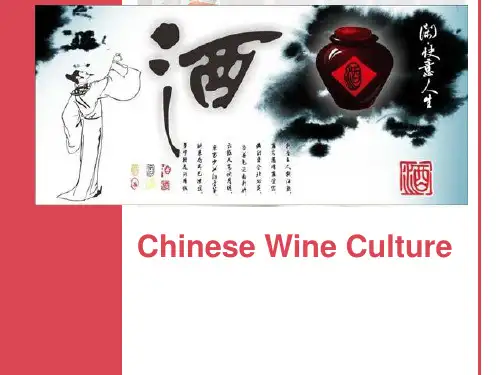
• During good times, the Chinese like to "sing and drink because life is colourful"
Today we are going to visit the wine culture.
The origin of the wine.
• The history of sprits can be dated back to shanggu period. • According to legend, the Chinese people began to make spirit with grains seven thousand years ago and even earlier with animal milk 。
Maotai is regarded as the national spirit and king of the Chinese spirits. Made in the town of Maotai, Guizhou Province, it has a history of 2,100 years.
birthday, farewell dinner, wedding, etc. Here is a typical
banquehday Wine: In China, a banquet known as "Jiu Xi" means an alcohol banquet and the life of every person, especially from birth to death, should have pauses for drinking banquets starting a month or 100 days after a baby's birth when the parents invite people in for a drink.
Famous Chinese Spirits
Oters are:
WuLiangYe Lu Zhou Lao Jiao Lang Liquor
That is all !
Thank you
中国酒文化英文介绍
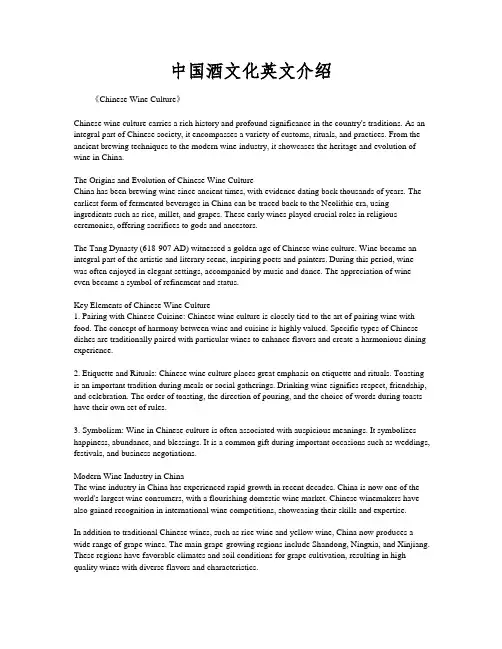
中国酒文化英文介绍《Chinese Wine Culture》Chinese wine culture carries a rich history and profound significance in the country's traditions. As an integral part of Chinese society, it encompasses a variety of customs, rituals, and practices. From the ancient brewing techniques to the modern wine industry, it showcases the heritage and evolution of wine in China.The Origins and Evolution of Chinese Wine CultureChina has been brewing wine since ancient times, with evidence dating back thousands of years. The earliest form of fermented beverages in China can be traced back to the Neolithic era, using ingredients such as rice, millet, and grapes. These early wines played crucial roles in religious ceremonies, offering sacrifices to gods and ancestors.The Tang Dynasty (618-907 AD) witnessed a golden age of Chinese wine culture. Wine became an integral part of the artistic and literary scene, inspiring poets and painters. During this period, wine was often enjoyed in elegant settings, accompanied by music and dance. The appreciation of wine even became a symbol of refinement and status.Key Elements of Chinese Wine Culture1. Pairing with Chinese Cuisine: Chinese wine culture is closely tied to the art of pairing wine with food. The concept of harmony between wine and cuisine is highly valued. Specific types of Chinese dishes are traditionally paired with particular wines to enhance flavors and create a harmonious dining experience.2. Etiquette and Rituals: Chinese wine culture places great emphasis on etiquette and rituals. Toasting is an important tradition during meals or social gatherings. Drinking wine signifies respect, friendship, and celebration. The order of toasting, the direction of pouring, and the choice of words during toasts have their own set of rules.3. Symbolism: Wine in Chinese culture is often associated with auspicious meanings. It symbolizes happiness, abundance, and blessings. It is a common gift during important occasions such as weddings, festivals, and business negotiations.Modern Wine Industry in ChinaThe wine industry in China has experienced rapid growth in recent decades. China is now one of the world's largest wine consumers, with a flourishing domestic wine market. Chinese winemakers have also gained recognition in international wine competitions, showcasing their skills and expertise.In addition to traditional Chinese wines, such as rice wine and yellow wine, China now produces a wide range of grape wines. The main grape-growing regions include Shandong, Ningxia, and Xinjiang. These regions have favorable climates and soil conditions for grape cultivation, resulting in high-quality wines with diverse flavors and characteristics.ConclusionThe book《Chinese Wine Culture》 unveils the fascinating history, customs, and rituals behind China's wine culture. From ancient rituals to modern winemaking, it invites readers to explore the rich heritage and diverse flavors of Chinese wines. With its unique traditions and profound symbolism, Chinese wine culture continues to thrive and captivate both domestic and international audiences.。
中国酒文化_英文 共22页
《短歌行》
--曹操
对酒当歌,人生几何?譬如朝露,去日苦多。 慨当以慷,忧思难忘。何以解忧?唯有杜康。 青青子衿,悠悠我心。但为君故,沈吟至今。 呦呦鹿鸣,食野之苹。我有嘉宾,鼓瑟吹笙。 明明如月,何时可掇?忧从中来,不可断绝。 越陌度阡,枉用相存。契阔谈咽,心念旧恩。 月明星稀,乌鹊南飞。绕树三匝,何枝可依。
Several kinds of wine
white wine
medicated wine
山不厌高,海不厌深,周公吐哺,天பைடு நூலகம்归心。
Legends of Origin of Brewing Alcoholic Beverages
Dukang makes wine
Monkey makes wine
2、Classification of wine
There are varieties of methods to classify wine in china. Generally speaking, the most popular classification methods of Chinese wine are wine brewing process, alcohol concentration, and business practices. For instance, Chinese wine can be divided into three basic categories according to the technique involved in brewing process. The three types are distilled spirits, fermented wine, and liqueur. Besides, on the basis of commercial practices, the Chinese wine can be classified into white wine, yellow rice wine, fruit wine, grape wine and beer.
中国酒文化英文版介绍

Baijiu(“white liquor" )
• Baijiu, which includes spirits, is made from sorghum高粱, corn, barley or wheat, most of which are easy to ferment. Colorless and transparent(透 明的), Liquors of this type typically contain more than 30% alcohol in volume since they have undergone distillation. Some white liquors contain over 50% alcohol. The alcohol strength varies between 55 and 65 percent. A small quantity can make one tipsy(醉人的) in a moment. Of the most famous of baijiu are Guizhou Maotai, Wuliangye, Shanxi Fenjiu and Luzhou Daqu.
• These wine are traditionally pasteurized (巴氏消毒), aged(熟化), and filtered (过滤) before their final bottling for sale to consumers. • The alcohol content is mild, at around 15%. Huangjiu can also be distilled(蒸馏) to produce baijiu(white liquors) and it is used as the base of “yaojiu” (medicated liquors ). It is also an excellent condiment(佐料,调味品)for cooking. Among these liquors the Shaoxing Rice Wine is the most famous.
《中国酒文化英文》课件
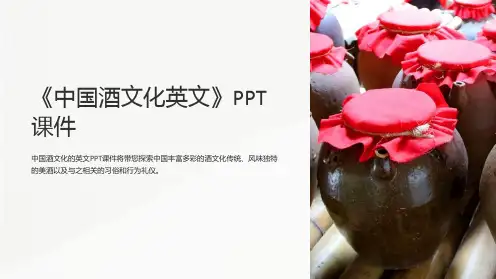
Traditional Wines
Explore the unique characteristics of Chinese rice, wheat, and sorghum wines.
Medicinal Brews
Uncover the secret of Chinese herbal infusions and their health benefits.
Cultural Symbol
Explore how alcohol is deeply intertwined with Chinese social, religious, and festive traditions.
Emotional Bonding
Learn how alcohol fosters connections and strengthens relationships in Chinese society.
Social Lubricant
Understand the role of alcohol in facilitating business negotiations and networking.
Classification of Chinese Alcohols
Spirituous Liquors
Modern Craft Beer
Get insights into the art of brewing Chinese craft beers.
Famous Chinese Alcohols
1
Moutai
Discover the history, flavor profile,
Maotai
2
and cultural significance of China's most famous baijiu.
中西方酒文化对比(PPT31页)
中国古代的饮酒游戏
投壶
投壶是古代士大夫宴饮时做的一种投掷 游戏。 春秋战国时期开始流行,汉唐 时期极盛,宋代以后,逐渐衰落下去, 仅断续地在士大夫中进行。
流觞曲水
所谓“流觞曲水”,是选择一 风雅静僻所在,文人墨客按秩 序安坐于潺潺流水边,一人放 一盛满酒的杯子从上流顺流而 下,酒杯停在某人面前就取而 饮之,再乘微醉情怀,作出诗 来。
许多中国人认为, 酒是一种供人使用的工具, 中国人虽然十分热爱它、经常使用它,但很少 注重酒本身,缺少对美酒进行科学而系统的理 性分析和品评、鉴别,更在意的是使用它以后 产生的美妙作用,一下:ppt宝藏意心山的在
蕴而水那于
丰寓之样“
富 的 饮 酒 趣 事 。
,
之 酒 也 ” 因 此 留
,
间 也 ” “ 山 水 之
,
“ 醉 翁 之 意 不 在
,
味 外 之 味 ” 就 像
下乐酒欧
了 很 多
,
得 之
,
在 乎
阳 修 说
Is "taste" of flavor outside, like ouyang xiu said, "in the wine inebriate of weng, care between landscape", "landscape, the wine of the heart and combine", thus leaving a lot of rich connotation of drinking.
许多中国人认为, 酒是 一种供人使用的工具,中 国人虽然十分热爱它、 经常使用它,但很少注重 酒本身,缺少对美酒进行 科学而系统的理性分析 和品评、鉴别,更在意的 是使用它以后产生的美 妙作用,在于“味外之 味”,就像欧阳修说的那 样,“醉翁之意不在酒, 在乎山水之间也”,“山 水之乐,得之心而寓之酒 也”,因此留下了很多意 蕴丰富的饮酒趣事。
中国酒文化英文介绍Chinese wine culture introduction
Wuliangye (五粮液) Jiugui (酒鬼)
果酒Fruit Wine
☺Fruit wine was made from fruits and berries through direct fermentation, with an alcohol content of about 15%. Its flavor varies, hinging on the different fruits used as raw materials, and it retains the aroma of the fruits from which it was made. Fruit wine has a higher nutritional value. Grape wine is a typical kind of fruit wine.
白酒 White Liquor
☺ White liquor, traditional Chinese distilled liquor, also known literally as “stewed wine” or “white dry”, is one of the world’s six most famous distilled wines (white liquor, brandy, whiskey, vodka and rum).
☺It’s a kind of integrated wine, and it can only be bought in Chinese herbal medicine stores.
啤酒Beer
☺Using barley as the raw material and hops as the flavor, beer is brewed to be a low alcohol wine, with the content of alcohol generally between 2% -5%. Beer has a unique bitterness and aroma, tasting pure and refreshing. Poured into a cup, it will form a large amount of foam泡沫.
【精品推荐】中国酒文化介绍英文版精品ppt课件【ppt版可编辑】
Chinese Wine CultureWine has a long history of thousands of years in china and plays an important role in the Chinese daily life. Chinese people had known how to brew wine thousands of years ago. As a special form of culture,Wine has occupied a special position in traditional Chinese culture. Chinese people have deep feelings for wine. In China, the wine has already permeated many fields of the society, just like salt, it almost become the Chinese indispensable necessity.ContentsThe origin of Chinese wineClassification of wineThe usage of Chinese wineThe stories about wineConclusion1、The origin of Chinese wineThere are many different legends about the origin of the wine in China. According to the historical records, Chinese wine history can be traced back to the Shang Dynasty, and it is said that is Du Kang, an emperor of Xia Dynasty in ancient China, who invented the wine thousands of years ago. Du Kang made great contributions to the kaoliang wine brewing methods and he was honored as the wine originator and JiuSheng by Chinese.《短歌行》--曹操对酒当歌,人生几何?譬如朝露,去日苦多。
中国酒文化 英语
中国酒文化英语The Allure of Chinese Alcohol CultureChina, a land of rich history and profound cultural heritage, has long been celebrated for its diverse and captivating alcohol culture. From the ancient dynasties to the modern era, the art of crafting and consuming alcoholic beverages has been woven into the fabric of Chinese society, reflecting the country's unique traditions, values, and way of life.At the heart of Chinese alcohol culture lies the revered spirit known as baijiu. This clear, fragrant liquor has been a staple in Chinese households and social gatherings for centuries, with each region and province boasting its own distinct style and flavor profile. The production of baijiu is a meticulous process, often involving intricate fermentation techniques and the use of traditional clay pots or wooden barrels. The result is a complex and nuanced beverage that can range from the delicate and floral to the bold and pungent, catering to a wide array of palates.Beyond baijiu, the Chinese alcohol landscape is equally diverse, encompassing a vast array of rice wines, fruit-based wines, and evenbeer. Each of these beverages holds its own significance and cultural significance. Rice wines, for instance, have been revered for their medicinal properties and are often used in traditional Chinese medicine. Meanwhile, the production of fruit-based wines, such as those made from grapes, plums, or even lychees, reflects the country's agricultural diversity and the ingenuity of its people.The consumption of alcohol in China is not merely a means of indulgence but a deeply rooted social ritual. Sharing a glass of baijiu or rice wine is often a symbol of camaraderie, respect, and the forging of meaningful connections. In traditional Chinese banquets and celebrations, the pouring and sharing of alcohol is a ceremonial act, with specific etiquette and customs that have been passed down through generations.The significance of alcohol in Chinese culture extends beyond the realms of taste and tradition. It is also deeply intertwined with the country's rich artistic heritage. The appreciation of fine baijiu or wine has long been celebrated in Chinese poetry, literature, and visual arts. Calligraphic labels adorning bottles of premium liquor are not merely decorative but often convey profound messages or historical references.Furthermore, the production of Chinese alcoholic beverages has evolved alongside the country's technological advancements. Whilehonoring traditional methods, modern distilleries and wineries have embraced innovative techniques and equipment to enhance the quality and consistency of their products. This fusion of ancient wisdom and modern innovation has contributed to the growing global recognition and appreciation of Chinese alcohol culture.As China continues to assert its presence on the world stage, its alcohol culture has also gained increasing international attention. Baijiu, in particular, has been making strides in the global market, with more and more consumers outside of China discovering the unique flavors and complexities of this centuries-old spirit. This cultural exchange has not only broadened the horizons of international drinkers but also fostered a deeper understanding and appreciation of Chinese traditions.In conclusion, the alcohol culture of China is a multifaceted and captivating aspect of the country's rich heritage. From the intricate production processes to the deeply rooted social rituals, the allure of Chinese alcohol transcends the mere act of consumption. It is a testament to the ingenuity, creativity, and enduring legacy of the Chinese people, a cultural tapestry that continues to captivate and inspire people around the world.。
中国酒文化PPT课件
点击此处输入标题 此处添加详细文本描述,建议与标题相关并符 合整体语言风格
点击此处输入标题 此处添加详细文本描述,建议与标题相关并符 合整体语言风格,
此处添加详细文本描述,建议与标题相关并符合整体语言风格,语言描述尽量简洁生 动。此处添加详细文本描述,建议与标题相关并符合整体语言风格
输入小标题 输入小标题 输入小标题
编辑标题
您的内容打在这里,或者 通过复制您的文本后,在 此框中选择粘贴,并选择
只保留文字。
编辑标题
您的内容打在这里,或者 通过复制您的文本后,在 此框中选择粘贴,并选择
只保留文字。
编辑标题
您的内容打在这里,或者 通过复制您的文本后,在 此框中选择粘贴,并选择
只保留文字。
小标题
1
语言尽可能精炼,可根据
里您的内容打在这里
输入小标题
02
关键词
您的内容打在这里,您的内容打在这
里您的内容打在这里
输入小标题
您的内容打在这里,您的 内容打在这里您的内容打 在这里
01 输入小标题
您的内容打在这里,您的内容打在 这里您的内容打在这里
02 输入小标题
您的内容打在这里,您的内容打在 这里您的内容打在这里
03 输入小标题
酿酒工艺 经典传承
叁
中国白酒文化及其产业的发展
introduction to chinese wine culture introduction to chinese wine culture introduction wine culture introduction to chinese wine culture
酿酒工艺 经典传承
壹
中国白酒文化及其产业的发展
中国酒文化(English version)
White sprit, which includes all
spirits, is made from sorghum, corn, barley or wheat, which are easy to ferment. Colorless and transparent, it usually contains over 50% alcohol. A small quantity can make one tipsy in a moment. White sprit including Luzhouflavor, Maotai-flavor, Fen-flavor, rice flavor, etc.
Thank You!
Some people drink to forget, others to remember Most people drink to have a good time. There are good reasons to drink, such as to celebrate and socialize, and sparkling wine is good for that. There are bad reasons to drink, such as to depress, compensate, or to escape. For good or for bad, wine is a mix of science, marketing and culture makes it.
Yellow rice wine is
brewed from grain and predates all the other liquors, with a history of several thousand years. The alcohol Content is mild, at around 15%. It is also an excellent condiment for cooking.