
外研版(三起)-英语-六年级下册--外研版三起Module 7 Unit 2教材同步讲解
Unit 2:She couldn't see or hear.(第二单元:她看不到也听不到。
)(教材41~43页)1.Listen and chant.听一听并跟着唱。
(教材第41页)课文英汉互译Helen couldn't see.海伦看不见。
But she could read但她可以阅读。
Helen couldn't hear.海伦听不见。
But she could talk.但她可以说话。
重难点精析could的用法Helen couldn’t see.But could read.海伦看不见。
但她可以阅读。
【点拨】.could用来表示过去的能力、可能性或允许。
例如:I could run faster then.那时我能跑得更快。
could还可与表示感知的动词,如see,hear,smell,taste,feel,understand等连用,表示特定的能力。
例如:He said he could see me next week.他说他下周能见我。
【知识拓展】(1)could意为“允许”时,表示委婉地提出问题或陈述看法。
例如:-Could I use your bike?我可以用你的自行车吗?-Yes,you can.是的,你可以。
(2) could还可表示过去的可能或许可。
例如:Father said I could swim in the river.爸爸说我可以在河里游泳。
【即学即用】连词成句borrow,pen,l,could,your(?)答案速查Could I borrow your pen?2.Listen and read.听一听并读一读。
(教材第41页)课文英汉互译Helen Keller was born① in the US in 1880.As② a baby,she became③ blind and deaf.She couldn't see or hear.海伦·凯勒于1880年出生在美国。
作为一个婴儿,她变得又盲又聋。
她看不到也听不到。
Helen had a teacher. She drew letters in Helen's hand and taught her to spell.海伦有一个老师。
她在海伦的手上画字母并教她拼写。
Later Helen learnt to read,write and speak She wrote a book about herself④ and travelled all over⑤ the world.后来海伦学会了阅读、写作和说话。
她写了一本关于她自己的书并且到世界各地游览。
Helen lived⑥ to be eighty seven.⑦for blind people,and also for you and me.海伦活到了87岁。
她是盲人的榜样,也是你和我的榜样。
新词速记①born/bɔːn/v.(动词)出生,诞生反义词:unborn未出生的短语:born writer天生的作家born of出生于例句:He is a born leader.他天生是个领袖。
He was born of a peasant family.他生于一个农民家庭。
②as/æz; əz/prep.(介词)作为短语:as usual像往常一样;照例as much也;同样多的例句:She was respected as a teacher.作为一名教师,她受到尊敬。
As a child,he lived in Japan.他小时候住在日本。
③ became /bi'ke m/v.(动词)(become的过去式)变成短语:become warm变得暖和become interested in对……感兴趣例句:She became ill.她生病了。
She became tired and went to bed.她很疲惫,去睡觉了。
④herself/hɜː'self/ pron.(代词)她自己短语:by herself由她自己dress herself她自己穿衣服例句:She cared only for herself.她只关心她自己。
She herself told me the news. 这个消息是她亲自告诉我的。
⑤all over到处,遍及,处处例句:I've looked for it all over the shop.整个商店我都找过了。
⑥live /liv/v.(动词)活着反义词:dead死的短语:live a dog's life过非人的生活long live万岁例句:There lived an old man in that small hut.在那间小屋里住过一位老人。
He lived a lonely life.他一生孤独。
⑦model/'mɒdl/n.(名词)模范,榜样短语:follow the model学习榜样例句:He's a model student.他是个模范学生。
【即学即用】1. Both of them were at home.A. bornB. bornsC. been born2. She behaves a lady.A. andB. asC. for3.In college, good at maths.A. becomesB. am becomingC. became4. The little girl wrote the letter all byA. himselfB. herselfC.itself5. I looked for it the house.A. all overB. overC. all there6. -Where do you ?-I in a small town.A. live,liveB. live,am livingC. living,live7. They are the couple.A. modelB. mapleC. mobile答案速查 1. A 2. B 3. C 4. B 5. A 6. A 7. A重难点精析一、be born的用法1.Helen Keller was born in the US in 1880.海伦·凯勒于1880年出生在美国。
【点拨】表示出生要用be born,且动词be通常只用was或were,其后可跟形容词、名词或介词。
be born+形容词/名词。
例如:She was born happy.她生来就很幸福。
He was born French.他生为法国人。
born on/in表示“出生的时间/地点”。
例如:Karl Marx was born on May 5,in Trier.卡尔·马克思5月5日生于特里尔。
Li Ping was born in 1988.李平生于一九八八年。
be born with表示“天赋;命运”。
例如:He was born with a good memory.他生来记忆就好。
【即学即用】He in a working family.A.is bornB.was bornC.born二、a的用法2.As baby,she became blind and deaf.作为一个婴儿,她变得又盲又聋。
【点拨】as作为介词,作“充当,作为”讲。
例如:As a writer,he was famous.作为作家,他是很有名的。
as作副词时,意为“同样地”,as(not)…as…和……(不)一样。
例如:Mary is as tall as her mother.玛莉和她的母亲一样高。
as作介词时,意为“如,像”。
例如:They got united as one man.他们团结得像一个人一样。
as作连词时,意为“随着……”,常连接主句和状语从句。
例如:He shouted aloud as he ran along.他一边往前跑,一边高声呼喊。
I was scared as he opened the door.他一开门,我吓了一跳。
【文化背景】海伦·凯勒简介海伦·凯勒是美国盲聋女作家和残障教育家。
1880年6月27日,海伦·凯勒出生于亚拉巴马州北部一个叫塔斯喀姆比亚的城镇。
她在19个月的时候被猩红热夺去了视力和听力,不久,她又丧失了语言表达能力,是她的导师安妮·沙利文( Anne Sullivan)教她学会了读书和说话,使她可以和其他人沟通。
海伦·凯勒以优异的成绩毕业于美国哈佛大学拉德克利夫女子学院,成为掌握英、法、德、拉丁、希腊五种语言的著名作家和教育家。
她走遍了世界各地,为盲人学校募集资金,把自己的一生献给了盲人福利事业和教育事业。
海伦·凯勒的主要作品有《假如给我三天光明》、《我的老师》、《我的生活》等。
她那不屈不挠的奋斗精神,她那带有传奇色彩的一生,永远载人了史册。
正如著名作家马克·吐温所言:“19世纪出现了两个了不起的人物,一个是拿破仑,一个就是海伦·凯勒。
”【即学即用】We talked about such subjects the weatherA. likeB. forC. as答案速查1.B 2.C课文英汉互译3.Read and write.读一读并写一写。
(教材第42页)She couldn't 她不能。
She learnt to 她学会了She could also 她还能。
She is a for blind people. 她是盲人的。
答案see,read,write,role model4.Listen and say ,the sing.听一听并说一说。
然后唱一唱。
(教材第42页)课文英汉互译LOOK UP AT THE SPACESHIP 看天上的宇宙飞船Look up at the spaceship,the spaceship,the spaceship. 看天上的宇宙飞船,宇宙飞船,宇宙飞船。
Look up at the spaceship flying in the sky. 看宇宙飞船飞人天空。
Shenzhou went into space.神舟进入了太空。
It made a loud sound它发出了好大的声音。
It went to a new place and travelled round and round.它去了一个新的地方并且一圈一圈地飞行。
Module7(教案)外研版(三起)英语六年级下册
教案:外研版(三起)英语六年级下册Module 7一、教学目标1. 知识目标(1)能够听懂、会说、会读本模块中的关键词和句型。
(2)能够运用所学知识描述过去发生的事情,并能用一般过去时进行叙述。
(3)了解西方的节日文化,提高跨文化交际能力。
2. 能力目标(1)通过听力练习,提高学生获取信息的能力。
(2)通过小组合作,提高学生的口语表达能力和团队协作能力。
(3)培养学生运用英语进行写作的能力。
3. 情感目标(1)激发学生学习英语的兴趣,增强自信心。
(2)培养学生尊重不同文化,拓宽视野。
二、教学内容1. 单词:key, hole, longer, office, outside, park, remember, school, shorter, teacher, vacation2. 句型:(1)What did you do last vacation?(2)I remember visiting the Great Wall with my family.(3)How tall are you now? I'm taller than I was last year.3. 语法:一般过去时4. 功能句:What did you do yesterday? I stayed at home yesterday.三、教学重点与难点1. 重点:单词的准确拼读和意义,句型的运用。
2. 难点:一般过去时的运用,描述过去发生的事情。
四、教具与学具准备1. 教具:多媒体课件、录音机、磁带。
2. 学具:课本、练习册、单词卡片。
五、教学过程1. 热身(5分钟)(1)教师与学生用Hello, good morning等问候语进行互动。
(2)引导学生回顾上一模块学过的内容,为新课的学习做好铺垫。
2. 引入(10分钟)(1)教师通过提问方式引导学生思考过去的事情,如:"Whatdid you do last week?"。
2019-2020学年外研版(三起)英语六年级下册Module7Unit2
2019-2020学年外研版(三起)英语六年级下册Module 7 Unit2 She couldn’t see or hear. 练习卷学校:___________姓名:___________班级:___________考号:___________一、汉译英:整句1.汉译英。
1. 出生于________________________2. 去世界旅行________________________3. 学说话________________________4. 写书________________________5. 一个模范________________________6. 去农场________________________二、按要求填空2.He ________(be)born in 1980.3.Helen _________(can)talk.4.As a baby, she ________(become)blind and deaf.5.His father _________(teach)him Chinese last year.6.Helen ________(write)a book about herself.三、单选题7.________ a small boy, he became blind and deaf. ()A.Because B.As C.But8.He ________ a book about himself. ()A.wrote B.write C.writes9.Helen is _________ for us.A.role B.model C.a role model 10.Helen Keller was born _____ the U.S. _______ 1880. ()A.in; at B.on; in C.in; in11.We planned _________ a baseball game. ()12.He can’t hear everything. He is _________. ()A.deaf B.blind C.sad 13.Helen couldn’t see _________ hear. ()A.and B.but C.or 14.Helen’s teacher taught her _________. ()A.spell B.spells C.to spell 15.Helen lived _________ eighty-seven. ()A.to B.be C.to be 16.Where did you ______? ()A.go B.went C.going四、句子匹配17.从方框中选择正确的答语。
2024六年级英语下册ReviewModuleUnit2基础默写课件外研版三起
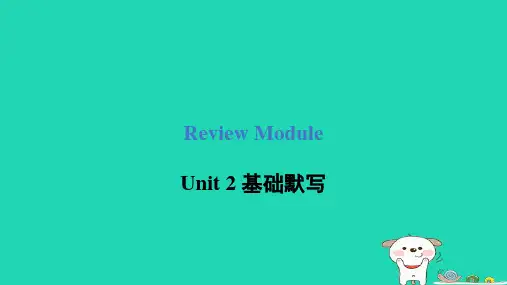
4. 他正在睡觉,但是婴儿开始哭了。 __H__e_i_s_s_l_ee_p_i_n_g_,_b_u_t__th_e__b_a_b_y_s_t_a_r_ts__to__c_r_y_. ____
5. — 九点钟他们打算做什么? _—___W__h_a_t_a_r_e_t_h_e_y__g_o_in_g__to__d_o_a_t__n_in_e__o_'c_l_o_c_k_?__ — 他们打算去游泳。 _—__T__h_e_y_'r_e_g_o_i_n_g__to__s_w_i_m_.___________________
三、句子过关。( 汉译英) 1. 他们正在踢足球,但是开始下雨了。 _T_h_e_y_'_r_e_p_l_a_y_in_g__f_o_o_tb_a_l_l,_b__u_t_it__st_a_r_t_s _to__r_a_in__. ____ 2. 她正在做饭,但是电话响了起来。 _S_h_e__is_c_o_o_k_i_n_g_,_b_u_t_t_h_e__p_h_o_n_e_s_t_a_r_ts__to__r_in_g_.______ 3. 她在拉二胡,但狗开始叫了起来。 _S_h_e__is_p_l_a_y_i_n_g_t_h_e_e_r_h_u_,_b_u_t__th_e__d_o_g_s_t_a_r_ts__to__b_a_r_k_.
2. 拉二胡
play the erhu
3. wear a T-shirt 穿一件T恤衫
4. on holiday
在度假
5. have breakfast 吃早餐
6. ride our bikes 骑我们的自行车 7. have a picnic 去野餐 8. take a ride on a big ship 乘坐一艘大船 9. have a rest 休息一会儿
六年级英语下册 Module 7 Unit 2 练习题及答案 外研版
外研版(一起)六年级英语下册 Module 7 Unit 2 练习题【模拟试题】一、阅读理解。
阅读下面三篇短文,根据短文内容,从第1-11小题所给的A、B、C、D四个选项中,选择最佳选项。
ATHE SCHOOL NEWS June 8th, 2006 Students in Junior One had a great time on the school trip on Children’s Day. They went to Blue Water Aquarium by bus. The teachers were very happy because the students cleaned the buses after the trip.Sixteen visitors from America arrived at our school on June 3rd, Saturday. And they have visited a few places of interest in Beijing.Here’s good news for football fans! The FIFA World Cup 2006 will be held in Germany from June 9th to July 9th. Many football matches on TV are waiting for you.Th ere’ll be a concert in our school on June 30th. Some students will show their talents by singing, dancing and playing the plano at the music hall.1. Junior One students ___ on the Children’s Day.A. visited BeijingB. watched a matchC. took s tripD. gave a talent show2. Sixteen visitors from ___ arrived at our school.A. ChinaB. AmericaC. EnglandD. Germany3. On June ____, there’ll be a concert in our school.A. 1stB. 3rdC. 9thD. 30thBOn a Friday night in New York, a poor young man called Jay stood near the subway station, playing this violin. The music was so great that many people slowed down and put some money into his hat.The next day, Jay came again. He tool out a large piece of paper and laid it on the ground. Then he began playing. It seemed more pleasant to listen to. Before long, many people came, looking at the paper. It said, “Last night, a gentleman named George Sang put animportant thing into my hat. Please came to claim (认领)it soon.”Seeing this, people wondered what it could be. After about half an hour, a middle-aged man rushed through the crowd to the young man and said, “I’m the George. I knew you’d surely come here!”Then George explained the whole story. He bought a lottery ticket a few days ago. Yesterday he found that he won a prize of $500,000. He was very excited. On his way home, he felt the music was so wonderful that he took out $100 and put it on the hat. However, the lottery ticket with his name on was also thrown in.Jay was a student at an arts school in Paris. He had booked the flight and would fly that morning. However, when he happened to find the ticket holder had won the lottery, he cancelled (取消)the flight and came back to the subway station.Later someone asked Jay, “Why didn’t you take the lottery t icket for yourself?” He said, “Although I don’t have much money, I live happily; but if I lose honesty, I won’t be happy forever.”4. On a Friday night in ___, Jay played his violin near the subway station.A. New YorkB. ParisC. Hong KongD. London5. Jay went back because he wanted to ____.A. his violinB. a piece of paperC. 100 dollarsD. a lottery ticket6. Jay went back because he wanted to ____.A. return the lottery ticketB. make more moneyC. go to the arts schoolD. perform for people7. The best title of the text could be “ ____”.A. A poor Young MusicianB. The Price of Love and HonestyC. A Story of the Subway StationD. The Importance of Being HonestCAs we know, it is not easy to build a satellite. Building a traditional normally takes years. The costs can be as high as $250 million or more. Most members of the design reams have worked in the field for a long time. They hold advanced degrees in math, science, or engineering.But things are changing. High costs, unusual educational requirements and long start-up times are no longer an obstacle to space exploration. The scientists at Stanford University have developed a new type of tiny inexpensive earth-orbiting satellites that go from ideas to launch (发射)in a year.So far, college student have built and launched several cube-shaped satellites, or CubeSats. At least 15 more are ready to go. Those already in orbit (轨道)take pictures, collect information and send it back to the earth, just as regular satellites do.But you might not even have to wait until you get to college to start designing and building your own satellite. A new program called KatySat aims to get teenagers to take part. Once kids understand what satellites can do, says Ben Yuan, an engineer at Lockheed Martin in Menlo Park, Calif, the kinds of applications they’ll come up with may be countless.“We’d like to put this technology(技术)in your hands,” he tells kids. “We’re going to teach you how to operate a satellite. Then we want to turn it over to you as a sandbox for you to play in. We want you to take the technology into new directions thatwe haven’t thought of yet.”Education isn’t the only g oal of CubeSats. Because these tiny, technology-filled boxes are relatively inexpensive to build and can be put together quickly, they’re perfect for testing new technologies that might one day be used on major space tasks.Nowadays, college and high school students are getting a chance to learn what it takes to explore in space. Someday- perhaps a lot sooner than you imagine- you might get to design, build and launch your own satellite. If you do, you’re sure to have fun. And you might also get crazy about science for life.8. Compared with the traditional ones, the new satellites ____.A. need long start-up timesB. are low-cost and small-sizedC. are very hard to operateD. collect more information in orbit9. What does the underlined word “obstacle” probably mean?A. An aim to achieve in the near future.B. An imagination that kids usually have.C. Something dangerous to terrify people.D. Something difficult that stands in the way.10. According to the passage, which of the following is true?A. CubeSats could possibly cause pollution in space.B. A few kids will send applications for the project.C. Scientists designed CubeSats for kids to play with.D. Students can’t design satellites without college educ ation.11. What’s the purpose of the author writing the passage?A. To show that high technology brings a big change in kid’s life.B. To show that kids lead the space research into a new direction.C. To tell us that satellite technology can also be learned by kids.D. To tell us that kids must study hard to learn satellite technology.二、任务型阅读。
三年级下册英语教案Module 7 Unit 2 It's warm today∣外研版(三起)
《Module7 Unit 2 It’swarm today、》教案【教学目标】1、知识与技能(1)能听,说,认读单词:能听、说、认读本课的重点单词:snow,rain, sunny,win dy, very、(2)能看明白和听明白天气预报并用英文表达天气情况、(3)学生能正确书写两个字母(Oo;Pp;Qq)的大小写形式、2、过程与方法在活动中教学,让学生在做中学,学中玩、3。
情感态度和价值观积极参与各种课堂学习活动,培养学生的英语兴趣,使其在英语学习、交流和合作中体会到快乐。
【教学重点】会用一般现在时描述天气;正确运用It’s warm today, butit’sraining、等语句来描述天气。
【教学难点】能正确描述天气以及在不同天气下的活动。
【教学方法】任务型教学法、情景教学法、交际法、【课前准备】单词卡片,多媒体PPT。
【课时安排】1个课时【教学过程】一、Warming up and Revision1、Greetings、老师用简单和学生打招呼。
2、Listen and say。
Then sing、听并说句子,然后学唱歌曲。
3、Let’s sing again。
跟随视频唱一唱歌曲。
4。
Let's say。
播放四个季节的图片并仿照例句说一说各个季节的天气特点,复习上节的词汇和句型。
5。
Free talk。
全班按学习小组就这几个问题进行讨论:What's your favouriteseason?Why(为什么)?然后引出本课新话题:What’s the weather like today?二、Presentation1。
Let’s learn、打开幻灯片6-9页,来学习本课新单词:snow, rain, sunny, windy,very。
2、Let'splay、做游戏“Missing game”:检测单词的掌握情况。
3、Listen, point andsay、(1)看图片及问题I sthe weatherin Harbin in winter the same as tha tinSanya?(2)看课文,听录音,同时模仿语音语调。
外研版(三起)-英语-六年级下册--外研版三起Module7Unit2教材同步讲解
外研版(三起)-英语-六年级下册--外研版三起Module7Unit2教材同步讲解Unit 2:She couldn't see or hear.(第⼆单元:她看不到也听不到。
)(教材41~43页)1.Listen and chant.听⼀听并跟着唱。
(教材第41页)课⽂英汉互译Helen couldn't see.海伦看不见。
But she could read但她可以阅读。
Helen couldn't hear.海伦听不见。
But she could talk.但她可以说话。
重难点精析could的⽤法Helen couldn’t see.But could read.海伦看不见。
但她可以阅读。
【点拨】.could⽤来表⽰过去的能⼒、可能性或允许。
例如:I could run faster then.那时我能跑得更快。
could还可与表⽰感知的动词,如see,hear,smell,taste,feel,understand等连⽤,表⽰特定的能⼒。
例如:He said he could see me next week.他说他下周能见我。
【知识拓展】(1)could意为“允许”时,表⽰委婉地提出问题或陈述看法。
例如:-Could I use your bike?我可以⽤你的⾃⾏车吗?-Yes,you can.是的,你可以。
(2) could还可表⽰过去的可能或许可。
例如:Father said I could swim in the river.爸爸说我可以在河⾥游泳。
【即学即⽤】连词成句borrow,pen,l,could,your(?)答案速查Could I borrow your pen?2.Listen and read.听⼀听并读⼀读。
(教材第41页)课⽂英汉互译Helen Keller was born① in the US in 1880.As② a baby,she became③ blind and deaf.She couldn't see or hear.海伦·凯勒于1880年出⽣在美国。
Module 7 Unit 2 Pandas love bamboo(教案)外研版(三起)英语六年级
Module 7 Unit 2 Pandas Love Bamboo 教案知识目标1.了解大熊猫是中国的国宝之一,以及它们与竹子的关系。
2.学习描述大熊猫的外貌和特点。
3.学会使用Pandas模块对数据进行处理和分析。
4.提高英语口语表达和阅读能力。
能力目标1.能够听懂关于大熊猫的基本知识,并用英语简单表述。
2.能够使用Pandas模块对数据进行基本操作和分析。
教学重点1.Padas模块的使用。
2.大熊猫的外貌和特点的描述。
教学难点1.如何使用Pandas模块对数据进行高级操作和分析。
2.如何用英语描述大熊猫的外貌和特点。
教学准备1.Padas模块的安装和配置。
2.大熊猫的图片和视频资料。
3.课件和实验数据。
教学过程Step 1: Warm-up1.Greet students and introduce the topic of the lesson.2.Ask students if they have heard of pandas before.3.Show pictures or videos of pandas and ask students to describe what they see.Step 2: Introduction1.Introduce the giant panda: the national treasure of China and its relationship with bamboo.2.Play videos or show pictures of pandas eating bamboo to reinforce the point.3.Explain the importance of pandas and their preservation.Step 3: Describing Pandas1.Ask students to describe pandas’ appearance using adjectives such as black and white, round, and furry.2.Ask students to describe pandas’ body parts such as their ears, eyes, nose, mouth, and paws.3.Provide vocabulary related to pandas, such as。
外研版三起英语六年级下册Module7 Unit2Shecouldn't see or hear课件
海伦笔直坐在一座旧的石墙上, 正在读放在膝头上一本盲文书。
Let's learn the text. (课文学习)
1.Listen and chant.(41页)
Helen couldn’t see. 海伦看不见。 But she could read. 但是她能阅读。 Helen couldn’t hear. 海伦听不见。 But she could talk. 但是她能说话。
Helen had a teacher. She drew letters in Helen's hand and taught her to spell.
drew (draw的过去式)画 taught(teach的过去式)教 teach sb. to do sth. 教某人做某事
海伦有一位老师。她在海伦的手上画字母, 并教她拼写。
Module 7 Unit 2
She couldn't see or hear.
1880年6月27日—1968年6月1日
Learn more about Helen Keller 海伦·凯勒
了解海伦.凯勒
She is a very famous lady. She is from America. She couldn’t see or hear. But she could learn and work. She wrote ight”.
What can you learn from Helen Keller?
Where there is a will , there is a way. 有志者,事竟成。 Never give up. 永不放弃。
Keep your face to the sunshine, and you cannot see the shadow. 永远面对阳光,阴影自然会落在你后面。
六年级下册英语教学设计-Module 7 Unit2 She couldn't see or hea
六年级下册英语教学设计-Module 7 Unit2 She couldn’t seeor hear外研版(三起)一、教学目标•知识目标:掌握、熟练运用can/can’t、could/couldn’t 表示能力、能力丧失的用法。
•能力目标:能够听、说、读、写句型She couldn’t see or hear. 以及相关单词、短语。
•情感态度目标:通过本单元的学习,引导学生了解盲人、聋人生活的不易,培养学生尊重、关心他人的情感态度。
二、教学重难点•教学重点:能够听、说、读、写句型 She couldn’t see or hear. 以及相关单词、短语。
•教学难点:运用can/can’t、could/couldn’t 表达想要说的意思。
三、教学步骤步骤一:导入1.在教室里播放一段三分钟的盲人和聋人的生活视频,并让学生围绕此话题进行简短的讨论,让学生了解他们的生活状况,引导学生尊重这些特殊人群。
2.引入本节课的学习主题:She couldn’t see or hear,使学生了解今天学习的内容。
步骤二:学习新知1.播放语音,让学生跟读此句:She couldn’t see or hear. 并注意强调couldn’t 的发音。
2.介绍新单词与短语 deaf、blind、help、run、fast 等,并且运用生动的图片进行讲解,让学生理解新单词的意思。
3.给学生阅读所涉及的故事,让学生读懂故事内容。
4.分组讨论,让学生自主套用故事情节中的短语并互相交流。
步骤三:合作活动1.组织学生分组进行合作活动,让学生反复练习She couldn’t see or hear 的用法,让学生学会在真实的情景中使用这些句型。
2.活动内容:组成 A 和 B 两组,A 组描述一种情景,B 组通过听 A 组的描述来画出情景中的内容,如 A 组描述:There was a tree and a bird, the bird was flying and the tree was big. B 组听后画出他们描述的情景。
外研版(三起)-英语-六年级下册-外研版六年级下册 Module 7 Unit 2教案
外研版六年级下册Module7 Unit 2教案教学内容分析本单元主要讲述了杨利伟的个人情况,用一般过去时描述。
通过文中图片的讨论引入话题。
第二课同样是对第一课的加强和回顾。
教学目标1通过听录音能使学生对应图片能写出相应的单词。
2学会运用一般过去时。
教学重、难点1能够让学生读懂这篇文章,并能填写所缺的单词。
2听录音试着让同学们能够复述课文。
学具准备单词卡片录音机图片教学设计思路1利用上节课所学过的知识的复习导入本课。
2让同学们听录音来填写单词。
3用小组合作,探究的方式了解本课的主要内容。
教学环节Warm upGreetingsAsk and answer questions.What does Yang liwei do now?Who was china’s first man in space?How many did he spend in space/PresentationLook at the text and tell the students informations.Listen to the tape and read each paragraph.PracticeAsk and answerWhat is it?Who is he?What does he do?SummaryToday we learned many sentences.So, make sure every body understand it and read fluently. 习题设计1 write each words five times2 retell the text板书设计Module7Unit2 He spent about twenty-one hours in space. Where did you go?I went to---Did you go to ---?Yes, I did.。