
七年级英语上Unit6完整课件
and fish ______ dinner.
A. fry , for B. fries, for
C. fries, at A. vegetable
C. milks
D . fries, in B. meats
D. healthy food
5. We need lots of ________ every day.
food /fu:d/ n. 食物 =of course sure /ʃuə/ adv. 当然;肯定;一定 =what about doing sth. How about...? (提出建议 )......怎么样? vegetable /'vedʒtəbl/ n. 蔬菜 Pl.=vegetables fruit /fru:t/ n. 水果 反义词:wrong left左边 right /rait/ adj. 正确的;适当的 then /ðen/ adv. 那么 carrot /'kærət/ n. 胡萝卜 rice /rais/ n. 大米;米饭 chicken /'tʃikin/ n. 鸡肉 so /səu/ conj. (引出评论或问题)那么
词尾加法 改 y为 i 再 加-es
词尾读音方法 例词 -ies读[iz] families dictionaries
加-s
有生命的 事物加-es 无生命的 事物加-s
-s读[z]
-es读[z] -s读[z]
boys keys tomatoes potatoes photos radios
不可数名词
3. Will you come and see us next week? week: n.星期,周 The school shop is open on weekdays but not on weekends. weekdays: ―工作日” weekend:“周末,休息日” .
(1) good 是形容词,常置于名词之前,表示 “好 的”。 (2) well用作副词,常置于动词之后,表示 程度 “好;满意地”;用作形容词指“身 体好”。如:
2. It’s time to have ______.(a dinner/ dinner) 三餐前通常不加冠词; have breakfast/lunch/supper/dinner meal 指一顿饭时,前面可以加冠词。 ;膳食、饮食,泛指各餐 We all have three meals a day. supper:较为重要的一餐,但不如dinner 丰盛。 dinner: 正餐(或中午、或晚上)
6. What kind of fruit do you like? Well, I like ________. A. the strawberries C. strawberries B. strawberry D. the strawberrys
7. _________ like French fries.
A. He and I
C. He and me
B. I and he
D. I and him
8. ______ Song Yang like broccoli? Sorry, I ________ know. A. Does, do C. Does, don't B. Do, doesn’t D. Does, don't
1. deer(复数)
2. mouse(复数)
deer mice
3. photo(复数)
4. thief(复数)
photos
thieves factories keys women children
5. factory(复数)
6. key(复数) 7. woman(复数) 8. child(复数)
Unit 6
Unit 6 words =burger eat burger: hamburger /'hæmbə:gə/ n. 汉堡包 Pl-tomatoes tomato /tə'ma:təu/ n. 西红柿 ice-cream /ais'kri:m/ n.Pl-ice 冰激凌 creams salad /'sæləd/ n. 沙拉 strawberry /'strɔ:bəri/Pl-strawberries n. 草莓 pear /peə/ n. 梨 同音词pair双,副 bread /bred/ n. 面包 birthday /'bə:θdai/ n. 生日 Have dinner/breakfast/lunch/supper dinner /'dinə/ n. (中午或晚上吃的)正餐 weekend;周末 week /wi:k/ n. 周;星期 at weekends;在周末 think about 思考;思索
Biblioteka 1.一个西红柿 2. 两个汉堡 3. 三个冰激凌 4. 一些牛排 5. 两片面包 6. 一磅牛肉 7.一盘子鸡肉 8. 一条面包 9. 两瓶牛奶 10. 三块巧克力
1.a /one tomato 2. two burgers 3. three ice creams 4. some steak 5. two pieces of bread 6. a pound of beef 7.a plate of chicken 8. a loaf of bread 9. two bottles of milk 10. three bars of chocolate
(1)定义:是指不能计数的名词。
(2)不可数名词前不可以用a , an限定。
(3)不可数名词前不可以用one, two, three…
限定。
(4)不可数名词没有复数形式。
fruit: ―水果总称” –不可数 fruits:“不同品种的水果” –可数
fruit I eat a lot of ________every day. Apples,bananas and oranges are my favorite __________ fruits 可数 不可数 glass: 玻璃杯 玻璃 glasses:眼镜 3 4 room: 房间 空间 2 time: 次数 时间 1 fish: 鱼 鱼肉
可数名词和不可数名词 可数名词
(1)定义:是可以计数的名词
(2)可数名词前可以用a, an限定,表示一个„„
(3)可数名词前可以用one, two, three…限定。
(4)可数名词有复数形式。
可数名词复数形式的构成(1)
名词特点
一般情况
词尾加法 词尾读音方法
加-s
1.-s在清辅音后读[s] 2. -s在浊辅音后读[z] 3. -s在元音后读[z] 4. 以音素[ s, z, ]结尾 的, 读[iz]
6. I don’t want to be fat. 我不想变胖。
want 用作动词,意为“要;想要”,
其常见 用法如下:
want sth. 想要某物 want to do sth. 想要去做某事 want sb. to do sth. 想要某人去做某事
例词
desks apples trees oranges boxes watches knives wives
以-s, -x, -sh, 加-es -ch 结尾的
-es读[iz]
以f 或 fe 结 改f或fe为 -ves读[vz] 尾的 v再加-es
Wife—wives Knife-knives 妻子持刀去宰狼 Wolf-wolves
9. The doctor said to me : “Eat and sleep _____. You can grow quickly”
A. a lot of
C. a lots
B. lots of
D. a lot
good/ well well 1. Peter eats very _______ at school. well 2. The boy can swim very ________. good for health 3. Games are ________
breakfast /'brekfəst/ n. 早餐;早饭 Have dinner/breakfast/lunch/supper lunch /lʌntʃ/ n. 午餐 star /sta:/ n. 明星;星星 eat /i:t/ v. 吃 Adj.good well /wel/ adv. 好;令人满意地 habit /'hæ bit/ n. 习惯 Keep healthy保持健康 healthy /'helθi/ adj. 健康的 n. health.健康 really /'ri:əli/ adv. 真正地 question /'kwestʃən/ n. 问题 want sb. to do sth.想让某人做某事 want /wɔnt/ v. 需要;想要 be /bi:/ v. 变成
Thief-thieves 小偷吓得发了慌 Shelf-shelves 躲在架后保己命 self-selves Life-lives Half-halves 半片树叶遮目光 Leaf-leaves
可数名词复数形式的构成(2)
名词特点
以辅音字母 加y结尾的 以元音字母 加y结尾的 以o 结尾的
C. go and watching D. go and to watch 3. Where __ your brother usually ___ lunch? A. do; have C. does; have B. are; having D. is; having
合集下载
【课件】Unit+6+Section+A+1a-1e+课件人教版(2024)七年级英语上册
Listen to the first conversation and tickPeter's activities this morning.
□ take a shower ☑get dressed ☑brush his teeth □ have breakfast at home
Check: Peter gets dressed this morning.
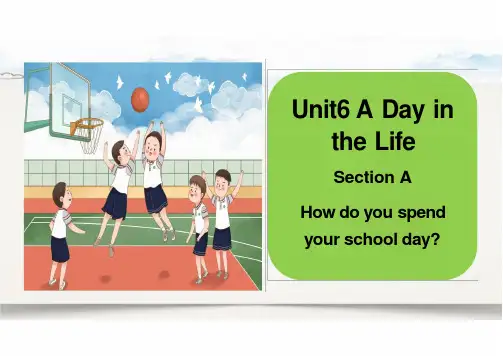
Unit6 A Day in the Life
Section A
How do you spend your school day?
学习目标
通过本课时学习,我能够: 1.通过情境体验,在看、听、说的活动中获取、梳理对话中母子之间、朋友之间
关于生活日常所涉及到相关日常活动及时间;能够运用目标语言"What time...?When...?" 谈论生活日常,并能正确认读时间。(学习理解) 2.分角色表演对话,感受Peter和妈妈的相处之道。描述Peter和Han Lin的生活日 常。(应用实践) 3.通过结对练习,能够谈论自己的生活日常,并创造性的表达自我,关注时间管 理。(迁移创新)
Can you say time in English?
It'sa clock.
逆读法
分钟数≤30分 分钟+ past+ 小 时
“x 点 过x 分钟”
five past four ten past six
a quarter
fifteen past seven
half
II
thirty past
nine
have breakfa st
go to school
Listen and try to spell out the words.
Unit6TravellingaroundAsiareading课件牛津深圳版英语七年级上册
A guide to Shanghai In Shanghai, East meets West, and tradition meets modernity. When you visit the city, you can explore famous places and see China's past and present. Here are three of Shanghai's best tourist spots. Xintiandi Xintiandi is famous for its shikumen buildings from the 19th century. These buildings are a mix of traditional Chinese and Western styles.Today, the area is a very popular tourist spot, with lots of restaurants and shops. You can also visit the Site of the First National Congress of the Communist Party of China (CPC) in Xintiandi,and there is a large museum there. You can learn a lot about the history of the CPC if you go inside. The Bund The Bund is where old meets new. Look west, and you will see many old Western-style buildings. Look east across the Huangpu River, and you will see skyscrapers. At night, these tall buildings light up the sky. Yu Garden Yu Garden, or Yuyuan, is in the centre of the old city. This garden is over400 years old. If you enjoy history and culture, you will love this place.Inside, there are many beautiful traditional buildings. You can also buy local food and gifts there. Other information: Site of the First National Congress of the CPC: open from Tuesday to Sunday, 9:00-17:00; free. Yu Garden: open from Tuesday to Sunday, 9:00-16:30; adults ¥30, students and seniors ¥15.
七年级英语上册 Unit 6 Do you like bananas(第5课时)Section B(2a-3b)课件 (新版)人教新目标版

二、根据句意及汉语提示写单词。
6.Dale's brother _w_a_n__ts_(想要) an apple. 7.My son has good eating _h_a_b_i_t_s (习惯). 8.Fruit and vegetables are __h_e_a_lt_h_y_(健康的) food. 9.You can ask me some __q_u_e_s_ti_o_n_s_(问题). 10.The picture is __r_e_a_ll_y__(真正地) nice.
Unit 6 Do you like bananas?
第五课时 Section B(2a~3b)
1.Sports star eats well.体育明星吃得好。 (1)sports star体育明星。 (2)eats是eat的第三人称单数形式。在一般现在时中,当主语是 第三人称单数,就用动词的第三人称单数形式。 (3)well adv.好,主要用于修饰动词。 2.ask sb. about sth.向某人询问某事 3.her eating habits她的饮食习惯 此处eating作定语。eg: I have good eating habits.我有好的饮食习惯。
4.healthy 形容词,意为“健康的”,其名词形式为health,其反义词为 unhealthy。 5.I don't want to be fat.我不想长胖。 want“要,想要”,常用结构有:want sth.“想要某物”;want to do sth.“想做某事”,want sb. to do sth.“想要某人做某事”。 6.What do you like for breakfast?你早餐喜欢什么? (1)for 介词,意为“为了,给”,在句型“have…for breakfast/lunch/dinner”中表示“某人吃什么。” (2)breakfast前面不能用冠词,一日三餐前一般不加冠词。
新目标英语七年级上册unit6Period1公开课课件
02
实施
03
04
安排5-10分钟时间,让学生 提问。
教师解答学生的疑问,并引导 其他学生参与讨论。
Teacher's Q&A session
目的: 教师解答学生疑惑,提供个性化指导。 教师收集学生的问题,挑选有代表性的进行解答。
实施
对于共性问题,教师可组织小组讨论或邀请学生分享经 验。
Classroom interactive games
Try to understand the cultural background and context of the text.
Practice listening, speaking, writing and translation to
improve English proficiency.
深入解析语法规则
通过讲解、演示和练习,使学生深入理解Unit6涉及的语法知识点,如现在进行时、一般将来时等,并能在实际语境中运用。
Text Analysis
培养阅读理解能力
通过对Unit6的课文进行深入分析,引导学生理解文章的主题、结构和语言特点,同时提高学生的阅 读速度和理解能力。
03 teaching method
培养批判性思维
学生在讨论中学会倾听、思考、表 达自己的观点,培养批判性思维能 力。
增强沟通技巧
小组讨论让学生学会与人沟通、协 商、达成共识,提高沟通技巧。
04 Teaching interaction
Student questioning session
01
目的: 鼓励学生主动提问,促 进知识内化。
Reading and Understanding: A Trip to New York City
人教版七年级上册英语Unit6 Do you like bananas 单元课件 (共57张PPT)

tomatoes oranges strawberries
pears
hamburgers bananas
Game: Who has the best eyes? 谁的眼睛最亮?
1a Match the words with the things in the
picture.
1. hamburgers d 2. tomatoes i
3b
Number these sentences [1 - 4] to make a conversation.
?
Make your own conversations in pairs.
so: 英语口语中常用的语气词,相当于汉 语中的“于是,那么,这样一来”,其承 上启下的作用。
Practice the conversation above. Give answers that are true for you.
Apple round ,apple red.
苹果圆,
苹果红
Apple juicy ,apple sweet.
苹果多汁, 苹果甜
Apple apple I love you.
苹果苹果 我爱你
Apple sweet I love to eat.
苹果甜甜
我爱吃
What’s the song about?这首歌关于什么?
A: I like …. Do you like…? B: No, I don’t. C: Let’s have… D: Sounds good. (No, I don’t like it.)
Unit 6 Do you like bananas
Section B 1a:
1
Unit 6 Section A Grammar Focus-3c 课件 人教版英语七年级上册

Grammar Focus
Do you like salad?
Do they like pears? Does she like tomatoes? I like oranges. We like rice. He likes ice-cream.
Yes, I do./No, I don't.
Yes, they do./No, they don't. Yes, she does./No, she doesn't. I don't like bananas. We don't like hamburgers. He doesn't like vegetables.
Complete the chart!
Food
Likes Doesn’t like
Ⅰ. 用所给单词的适当形式填空。
1. I like __t_o_m__a_to_e_s___(tomato) very much. 2. Nick ____l_ik_e_s_____(like) hamburgers and salad. 3. Let’s ___t_h_i_n_k_____(think) about the birthday dinner. 4. Ms. Smith has ten _s_t_r_a_w_b_e_r_r_ie_s_(strawberry)? 5. Hamburgers? That ___s_o_u_n_d_s____(sound) good. 6. My brother __d_o_e_s_n_’t_l_i_k_e_(not like) eggs. 7. His cousins ___d_o_n_’t__li_k_e__(not like) ice-cream.
七年级英语第一学期Unit6词汇课件 PPT课件 译林牛津版
•
46、在浩瀚的宇宙里,每天都只是一瞬,活在今天,忘掉昨天。
•
47、小事成就大事,细节成就完美。
•
48、凡真心尝试助人者,没有不帮到自己的。
•
49、人往往会这样,顺风顺水,人的智力就会下降一些;如果突遇挫折,智力就会应激增长。
•
50、想像力比知识更重要。不是无知,而是对无知的无知,才是知的死亡。
•
51、对于最有能力的领航人风浪总是格外的汹涌。
•
1、再长的路一步一步得走也能走到终点,再近的距离不迈开第一步永远也不会到达。
•
2、从善如登,从恶如崩。
•
3、现在决定未来,知识改变命运。
•
4、当你能梦的时候就不要放弃梦。
•
5、龙吟八洲行壮志,凤舞九天挥鸿图。
•
6、天下大事,必作于细;天下难事,必作于易。
•
7、当你把高尔夫球打不进时,球洞只是陷阱;打进时,它就是成功。
•
32、肯承认错误则错已改了一半。
•
33、快乐不是因为拥有的多而是计较的少。
•
34、好方法事半功倍,好习惯受益终身。
•
35、生命可以不轰轰烈烈,但应掷地有声。
•
36、每临大事,心必静心,静则神明,豁然冰释。
•
37、别人认识你是你的面容和躯体,人们定义你是你的头脑和心灵。
•
38、当一个人真正觉悟的一刻,他放弃追寻外在世界的财富,而开始追寻他内心世界的真正财富。
19、就算生活让你再蛋疼,也要笑着学会忍。
•
20、当你能飞的时候就不要放弃飞。
•
21、所有欺骗中,自欺是最为严重的。
•
22、糊涂一点就会快乐一点。有的人有的事,想得太多会疼,想不通会头疼,想通了会心痛。
新人教版七年级上英语Unit6公开课课件
四、句型转换
Tom has a banana.
变否定句: Tom ________ doesn't ________ have a banana. 变一般疑问句并作否定回答:
_____ Tom _______ Does have a banana?
___ , he _________ No doesn't.
— No. He _______ doesn’t like ______. pears
三、 根据图片提示完成句子。
3. — Let’s _____ have salad.
— Oh, no. I ______ don’t ______ like salad.
三、 根据图片提示完成句子。
4. — Let’s _____ have _________ ice-cream and ___________. hamburgers
Do you like____? Yes, …/ No, …
Sounds good. / Oh, Let’s have ____. no, I don’t like____.
tomatoes
oranges
strawberries
pears
bananas
bread hamburgers
salad
Yong Chuan No. 7 Middle School Xu Faxiang
Revision
volleyball tennis ball
basketball
soccer ball
pong-pong bat baseball bat ping-pong ball — Do you have a basketball? — Yes, I do./ No, I don't. — Does he have a basketball? —Yes, he does./ No, he doesn't.
译林牛津版七年级英语上 unit 6 公开课教学课件
like eggs. What about you? D: I like eggs.
It is good for our health.
be good for 表示“能……有好处(益处)”, 此
短语的反义词是 be bad for (对……有害处)。 e.g.: Running is good for your health. 跑步对你身体有好处。 Watching TV too much is bad for your eyes. 电视看得太多对你的眼睛有害。
Homework
1. Recite Hobo and Eddie’s dialogue, act it out with your partner.
2. Copy the phrases twice each. 3. Prepare for the next lesson.
ing 形式,相当于 do well in .
e.g.: Mike is good at swimming. 迈克擅长于游泳。 I am good at English. 我擅长英语。 My father does well in drawing horses. 我父亲擅长于画马。
Exercises
1. I didn’t eat breakfast this morning, I am h_u_n_g_r_y___ now.
2. He eats a bo_w__l__ of rice every meal. 3. He’s a football player. He needs lots of
Listen to the comic strip again and do the true or false questions.
It is good for our health.
be good for 表示“能……有好处(益处)”, 此
短语的反义词是 be bad for (对……有害处)。 e.g.: Running is good for your health. 跑步对你身体有好处。 Watching TV too much is bad for your eyes. 电视看得太多对你的眼睛有害。
Homework
1. Recite Hobo and Eddie’s dialogue, act it out with your partner.
2. Copy the phrases twice each. 3. Prepare for the next lesson.
ing 形式,相当于 do well in .
e.g.: Mike is good at swimming. 迈克擅长于游泳。 I am good at English. 我擅长英语。 My father does well in drawing horses. 我父亲擅长于画马。
Exercises
1. I didn’t eat breakfast this morning, I am h_u_n_g_r_y___ now.
2. He eats a bo_w__l__ of rice every meal. 3. He’s a football player. He needs lots of
Listen to the comic strip again and do the true or false questions.
七年级英语上册第六单元Unit6 ppt课件
a tomato
five tomatoes
七年级英语上册第六单元Unit6
french fries= potato chips 薯条
七年级英语上册第六单元Unit6
an orange
two oranges
七年级英语上册第六单元Unit6
a strawberry(草莓) many strawberries
Countable and uncountable nouns
chicken
ice cream salad
七年级英语上册第六单元Unit6
可数名词和不可数名词
既可数又不可数名词
定义:在某些情况下能计数,在某些情况下 不能计数的名词。
e.g. (1)a chicken 一只鸡 chicken 鸡肉
vegetables
tomatoes
carrots broccoli七年级英语上册第六单元Unit6
bananas
apples strawberries
fruits
oranges
pears
七年级英语上册第六单元Unit6
Let’s know other(其他的)food(食物)
French fries
第三人称单数
一般疑问句
She has….. She doesn’t have….. Does she have….? Yes, she does./ No, she doesn’t.
七年级英语上册第六单元Unit6
第三人称复数
They have….. 肯定句 They don’t have…..否定句 Do they have….? Yes, they do./ No, they don’t. 一般疑问句