
精通版三年级英语下册Lesson 14
人教精通版英语三年级下册全册教案
人教精通版小学三年级英语下册全册教案Lesson1-36人教新版三年级英语备课教学设计【教学内容】人民教育出版社新加坡版义务教育课程标准实验教科书三年级英语上下册【教材分析】1、课程结构:每册书共6个单元,每单元6课,每课为2页。
每单元前5课围绕一个特定话题展开,帮助学生系统地学习会话和词汇。
第6课为复习课,用来复习本单元所有的词汇和对话,并把一些文化内容融合在故事中,在复习语言的基础上向学生介绍一些简单的中西方文化。
每册书6个单元共36课。
此外在第3单元和第6单元之后各有一个复习单元,每个复习单元为6页。
2、教材特点:本教材以“继承-发展-创新”为宗旨,以话题为纲,以交际功能为主线,融合语言结构,逐步引导学生运用英语完成有实际目的的任务。
【学情分析】三年级学生的年龄在九到十岁左右,生性活泼好动,喜欢直观形象思维,对游戏、竞赛、画画特别感兴趣。
学生学英语不久,有可能说的不好,有的还不敢说,课堂上要以表扬为主,注重培养学习英语的兴趣,鼓励他们大胆说、积极做、努力唱!该年组学生有着极强的求知欲强和表现欲。
根据学生的心理特点我课上多以表扬为主,注重对学生英语学习兴趣的培养,鼓励他们大胆说、积极做、努力唱!让学生们在玩玩、做做、说说、唱唱中学习英语。
但这个年级的学生毕竟接触正规英语教材的时间不是很长,在学习方法和学习策略上还有很大差距,尤其在答题技巧和技能方面还缺少锻炼。
【教学目标】1、能听懂、会说60(上册30+下册30)组会话,并能进行简单的交流。
2、能听、说、认读26个字母和133(上册70+下册63)个单词并能简单地应用。
3、能听、做37(上册16+下册21)个游戏。
4、能听、做、表演20(上册10+下册10)个TPR活动。
5、能学会16(上册8+下册8)个小制作。
6、能唱23(上册14+下册9)首歌曲。
7、能听、说、唱14(上册8+下册6)首歌谣。
8、能完成16(上册8+下册8)个自我评价活动。
三年级下册英语教案-Unit3《Thisismyfather》(Lesson14)人教精通版
三年级下册英语教案Unit 3《This is my father》(Lesson 14)人教精通版一、教学目标1. 知识与技能目标:学生能够正确理解和运用句型"This is my father",并能介绍自己的家庭成员。
2. 过程与方法目标:通过图片、游戏等多种形式,让学生在真实情境中运用所学句型,提高学生的英语口语表达能力。
3. 情感态度与价值观目标:培养学生热爱家庭、尊重父母的情感,增进家庭成员间的亲情。
二、教学内容1. 词汇:father, mother, brother, sister, grandpa, grandma2. 句型:This is my father. This is my mother.三、教学重点与难点1. 教学重点:句型"This is my father. This is my mother."的运用。
2. 教学难点:家庭成员词汇的记忆与运用。
四、教具与学具准备1. 教具:多媒体课件、家庭成员图片、单词卡片。
2. 学具:学生自备家庭成员照片。
五、教学过程1. 热身活动:播放英语歌曲,营造英语学习氛围,激发学生学习兴趣。
2. 新课导入:展示家庭成员图片,引导学生学习新词汇。
3. 课堂互动:分组进行角色扮演,让学生在真实情境中运用所学句型介绍家庭成员。
4. 巩固练习:设计游戏环节,帮助学生巩固所学词汇和句型。
六、板书设计1. Unit 3 This is my father2. 词汇:father, mother, brother, sister, grandpa, grandma3. 句型:This is my father. This is my mother.七、作业设计1. 听力作业:听录音,跟读单词和句型。
2. 口语作业:用所学句型介绍自己的家庭成员。
3. 书面作业:完成练习册相关练习。
八、课后反思1. 教师要关注学生在课堂上的参与度,及时调整教学方法,提高学生的学习兴趣。
三年级下册英语【教学设计】-Lesson13-人教精通版

三年级下册英语教学设计-Lesson13-人教精通版教学目标1.学生能够听懂并会说以下词汇:ill, doctor, nurse, hospital, clinic, medicine, rest。
2.学生能够通过学习句型“Are you ill?”和“Yes, I am./No, I’m not.”来描述自己或他人是否生病。
3.学生能够通过学习句型“What’s the matter with you?”和“I have a headache/stomachache/cold.”来描述自己的病情。
4.学生能够通过学习句型“Take some medicine and rest.”来给别人提建议。
5.学生能够通过学习句型“Go to the hospital/clinic.”来告诉别人去哪里看病。
6.学生能够通过学习对话来提高听力和口语能力。
教学重点1.词汇:ill, doctor, nurse, hospital, clinic, medicine, rest。
2.句型:“Are you ill?”和“Yes, I am./No, I’m not.”,“What’sthe matter with you?”和“I have a headache/stomachache/cold.”,“Take some medicine and rest.”,“Go to the hospital/clinic.”。
教学难点1.学生能否较为准确地使用句型和词汇。
2.如何帮助学生提高听力和口语能力。
教学过程1. 翻译和背诵句子1.Are you ill? 你生病了吗?2.Yes, I am. 是的,我生病了。
3.No, I’m not. 不,我没有生病。
4.What’s the matter with you? 你怎么了?5.I have a headache/stomachache/cold. 我头疼/肚子疼/感冒了。
(完整word版)人教精通版小学英语3-6年级单词词汇表
三年级上册单词Unit1Cat [kæt]猫monkey['mʌŋki]猴子dog[dɒg]狗duck [dʌk] 鸭子panda['pændə] 熊猫bear[beə]熊pig[pig]猪rabbit['ræbit]兔子bird[bɜːd]鸟mouse[maʊs]老鼠Unit2book[bʊk]书bag[bæg]书包pen[pen]钢笔pencil['pens(ə)l; -sil]铅笔pencil-box['penslbɔks]铅笔盒ruler['ruːlə]尺eraser[i'reizə]橡皮sharpener['ʃɑːpənə]卷笔刀glue[gluː]胶marker['mɑːkə]马克笔Unit3nose[nəʊz]鼻子eye[ai]眼睛face[feis]脸mouth[maʊθ]口,嘴head[hed]头ear[iə]耳朵neck[nek]脖子arm[ɑːm]手臂hand[hænd]手leg[leg]腿knee[niː]膝盖foot[fʊt]脚Unit4doll[dɒl]洋娃娃ball[bɔːl]球kite[kait]风筝balloon[bə'luːn]气球car[kɑː]汽车bus[bʌs]公共汽车bike[baik]自行车taxi['tæksi]出租汽车train[trein]火车ship[ʃip]船plane[plein]飞机boat[bəʊt]小船Unit5red[red]红色的blue[bluː]蓝色的yellow['jeləʊ]黄色的green[griːn]绿色的purple['pɜːp(ə)l]紫色的brown[braʊn]棕色的white[wait]白色的black[blæk]黑色的pink[piŋk]粉红的orange['ɒrin(d)ʒ]橙色的grey[grei]灰色的Unit6hamburger['hæmbɜːgə]汉堡包hot dog[hɒt][dɒg]热狗Coke[kəʊk]可乐cake[keik]蛋糕egg[eg]蛋orange['ɒrin(d)ʒ]橙;桔子pear[peə]梨子apple['æp(ə)l]苹果banana[bə'nɑːnə]香蕉milk[milk]牛奶juice[dʒuːs]果汁water['wɔːtə]水rice[rais]米饭noodles['nu:dlz]面条chicken['tʃikən]鸡肉人教精通版小学英语三年级下册unit1共10个单词chair[tʃer]n.椅子Chinese book[,tʃaɪ'ni:z bʊk]语文书classroom['klɑ:sru:m]n.教室crayon['kreɪən]n.蜡笔;蜡笔画desk[desk]n.书桌,写字台English book['ɪŋglɪʃbʊk]英语书marker['mɑ:kər]n.书签;记分员;标识物;作school[sku:l]n.学校storybook['stɔ:ribuk]n.故事书;小说water bottle['wɔ:tə(r)'bɔtl]水瓶,水壶unit2共12个单词eight[eɪt]num.八eleven[ɪ'levən]num.十一five[faɪv]num.五four[fɔ:]num.四nine[naɪn]num.九one[wʌn]pron.一seven['sevən]num.七six[sɪks]num.六ten[ten]num.十three[θri: ]num.三twelve[twelv]num.十二two[tu:]num.二unit3共10个单词aunt[ɑ:nt]n.伯母;舅母;婶;姑;姨brother['brʌðə]n.兄;弟daughter['dɔ:tə]n.女儿father['fɑ:ðə]n.父亲grandfather['ɡrænd,fɑ:ðə]n.爷爷;外公grandmother['ɡræn,mʌðə]n.奶奶;外婆mother['mʌðə]n.母亲sister['sɪstə]n.姐;妹son[sʌn]n.儿子;后代uncle['ʌŋkəl]n.叔;伯;舅;姑夫;姨父unit4共10个单词bread[bred]n.面包candy['kændi]n.糖果coffee['kɔfi]n.咖啡doughnut['dəunʌt]n.[计]圆环图;油炸圈饼fruit[fru:t]n.水果;果实grapes[greips]n.葡萄(grape的复数)honey['hʌnɪ]n.蜂蜜ice cream['ais'kri:m]n.冰淇淋jam[dʒæm]n.果酱;阻塞mango['mæŋɡəu]n.芒果unit5共10个单词elephant['elɪfənt]n.象kangaroo[,kæŋgə'ru:]n.袋鼠,大袋鼠lion['laɪən]n.狮子mosquito[məs'ki:təu]n.蚊子,蚊虫nest[nest]n.巢;窝owl[aul]n.[动]猫头鹰;枭;惯于晚parrot['pærət]n.鹦鹉quail[kweil]vi.感到恐惧;畏缩,胆怯rooster['ru:stə]n.公鸡tiger['taɪɡə]n.老虎unit6共11个单词box[bɒks]n.盒子,箱子coat[kəʊt]n.外套skirt[skɜ:t]n.女裙sweater['swetə]n.厚运动衫,毛衣T-shirt['ti:ʃɜ:t]n.T恤衫;短袖无领汗衫uniform['ju:nifɔ:m]n.制服vest[vest]n.背心,内衣watch[wɒtʃ]vt.观看,注视;当心,注意yacht[jɔt]vi.乘游艇,驾游艇zebra['zi:brə]n.斑马zip[zip]n.拉链四年级上课本英语单词Unit11、China['tʃaɪnə]中国2、America[ə'merikə]美国3、England['iŋɡlənd]英国4、Singapore[,siŋɡə'pɔ:]新加坡5、Canada['kænədə]加拿大6、good[gʊd]好的7、friend[frend]朋友8、brother['brʌðə]兄弟9、sister['sɪstə]姐妹10、boy[bɒɪ]男孩11、girl[gɜːl]女孩12、teacher['tiːtʃə]教师13、farmer['fɑːmə]农民14、postman['pəʊs(t)mən]邮递员15、doctor['dɒktə]医生16、nurse[nɜːs]护士17、driver['draɪvə]司机,驾驶员Unit21、class[klɑːs]班级2、grade[greɪd]年级3、one[wʌn]一4、two[tuː]二5、three[θriː]三6、four[fɔː]四7、thirteen[θɜː'tiːn;'θɜːtiːn]十三8、fourteen[fɔː'tiːn;'fɔːtiːn]十四9、five[faɪv]五10、six[sɪks]六11、fifteen[fɪf'tiːn;'fɪftiːn]十五12、sixteen[sɪks'tiːn;'sɪkstiːn]十六13、seven['sev(ə)n]七14、eight[eɪt]八15、seventeen[sev(ə)n'tiːn]十七16、eighteen[eɪ'tiːn;'eɪtiːn]十八17、nine[naɪn]九18、ten[ten]十19、nineteen[naɪn'tiːn;'naɪntiːn]十九20、twenty['twentɪ]二十Unit31、pineapple['paɪnæp(ə)l]菠萝2、lemon['lemən]柠檬3、apple['æp(ə)l]苹果4、pear[peə]梨5、watermelon西瓜6、kiwi fruit['kiːwiː; -wɪ][fruːt]猕猴桃7、orange['ɒrɪn(d)ʒ]橙子,橘子8、banana[bə'nɑːnə]香蕉9、potato[pə'teɪtəʊ]土豆,马铃薯10、tomato[tə'mɑːtəʊ]西红柿11、carrot['kærət]胡萝卜12、cucumber['kjuːkʌmbə]黄瓜13、eggplant['egplɑːnt]茄子14、green pepper[griːn]['pepə]青椒Unit41、fine[faɪn](天气)晴朗的2、nice[naɪs]好的,令人愉快的3、warm[wɔːm]温暖的4、cool[kuːl]凉爽的5、hot[hɒt]炎热的6、cold[kəʊld]寒冷的7、sunny['sʌnɪ]晴朗的8、cloudy['klaʊdɪ]多云的,阴天的9、windy['wɪndɪ]有风的,多风的10、rainy['reɪnɪ]下雨的,多雨的11、snowy['snəʊɪ]下雪的,多雪的Unit51、cap[kæp](无边的)帽子2、hat[hæt](有边的)帽子3、T-shirt[tiː][ʃɜːt]T恤衫4、dress[dres]女服,连衣裙5、blouse['blaʊz]女衬衫6、jacket['dʒækɪt]短上衣,夹克衫7、raincoat['reɪnkəʊt]雨衣8、sweater['swetə]毛线衫,毛衣9、skirt[skɜːt]短裙10、shirt[ʃɜːt]衬衫11、shorts[ʃɔːts]短裤12、jeans[dʒinz]牛仔裤13、socks[sɔks]短袜14、shoes[ʃuːz]鞋子Unit61、big[bɪg]大的2、small[smɔːl]小的3、long[lɒŋ]长的4、tall[tɔːl]高的5、short[ʃɔːt]短的,矮的6、fat[fæt]胖的,肥的7、strong[strɒŋ]强壮的8、thin[θɪn]瘦的9、new[njuː]新的10、old[əʊld]旧的,老的11、happy['hæpɪ]幸福的,快乐的四年级下英语单词第一单元home[həʊm]家bedroom['bedruːm]卧室bed[bed]床desk[desk]客桌chair[tʃeə]椅子living room['lɪvɪŋru:m]起居室TV['ti:'vi:]电视sofa['səʊfə]沙发armchair[ɑːm'tʃeə]单人沙发;扶手椅ball[bɔːl]球kite[kaɪt]风筝kitchen['kɪtʃɪn]厨房fridge[frɪdʒ]冰箱table['teɪbl]桌子study['stʌdɪ]书房computer[kəm'pjuːtə]电脑picture['pɪktʃə]图片;照片bathroom['bɑːθruːm]浴室DVD player DVD['pleɪə]播放器clock[klɒk]时钟第二单元twenty-one['twenti'wʌn]二十一twenty-two['twenti'tu:]二十二twenty-three['twenti'θri:]二十三twenty-four[,twɛnti'fɔr]二十四twenty-five[,twɛntɪ'faɪv]二十五twenty-six[[,twɛntɪ'sɪks]二十六twenty-seven[,twɛntɪ'sev(ə)n]二十七twenty-eight[,twɛntɪ'eɪt]二十八twenty-nine[,twɛntɪ'naɪn]二十九eleven[ɪ'lev(ə)n]十一tweleve[twelv]十二thirty['θɜːtɪ]三十forty['fɔːtɪ]四十boy[bɔɪ]男孩girl[gɜːl]女孩fifty['fɪftɪ]五十sixty['sɪkstɪ]六十teacher['tiːtʃə]教师school[skuːl]学校seventy['sev(ə)ntɪ]七十eighty['eɪtɪ]八十bag[bæg]书包book[bʊk]书ninety['naɪntɪ]九十one hundred[wʌn'hʌndrəd]一百pen[pen]钢笔pencil['pens(ə)l]铅笔第三单元maths[mæθs]数学PE[ˌpiˈi:]体育Chinese[,tʃai'ni:z]中文English['ɪŋɡlɪʃ]英语music['mjuːzɪk]音乐art[ɑːt]美术subject['sʌbdʒekt]科目;学科science['saɪəns]科学lesson['les(ə)n]课drama['drɑːmə]戏剧listen['lɪs(ə)n]听do[duː]做speak[spiːk]说listen and do['lɪs(ə)nənd duː]听听做做play and act[pleɪəndækt]说说唱唱sing[sɪŋ]唱歌play[pleɪ]玩act[ækt]表演第四单元day[deɪ]天week[wiːk]周Sunday['sʌndeɪ]星期日Monday['mʌndeɪ]星期一Tuesday['tjuːzdeɪ]星期二Wednesday['wenzdeɪ]星期三Thursday['θɜːzdeɪ]星期四Friday['fraidi]星期五Saturday['sætədɪ]星期六today[tə'deɪ]今天weekend[wiːk'end]周末park[pɑːk]公园theme park[θiːm pɑːk]主题公园;游乐园第五单元picnic['pɪknɪk]野餐sausage['sɒsɪdʒ]香肠bread[bred]面包cake[keɪk]蛋糕lunch[lʌn(t)ʃ]午餐pork[pɔːk]猪肉beef[biːf]牛肉rice[raɪs]米饭chicken['tʃɪkɪn鸡肉sing[sɪŋ]唱歌dance[dɑːns]跳舞paint[peɪnt](用颜料)绘画draw[drɔː]画画read[riːd]读watch[wɒtʃ]看play[pleɪ]玩read a book[riːdəbʊk]看书watch TV[wɒtʃ]看电视play computer games[pleɪkəm'pjuːtə'ɡeɪmz]玩电脑游戏game[geɪm]游戏do[duː]做go[gəʊ]去shop[ʃɒp]购物go shopping[gəʊ'ʃɒpɪŋ]去购物swim[swɪm]游泳go swimming[gəʊ'swɪmɪŋ]去游泳fish[fɪʃ]鱼;钓鱼go fishing[gəʊ'fɪʃɪŋ]去钓鱼第六单元zoo[zuː]动物园farm[fɑːm]农场giraffe[dʒə'rɑ:f]长颈鹿camel['kæm(ə)l]骆驼monkey['mʌŋkɪ]猴子panda['pændə]熊猫bear[beə]熊seal[siːl]海豹dolphin['dɒlfɪn]海豚hippo['hɪpəʊ]河马tiger['taɪgə]老虎cat[kæt]猫dog[dɒg]狗horse[hɔːs]马cow[kaʊ]母牛;奶牛sheep[ʃiːp]绵羊goat[gəʊt]山羊duck[dʌk]鸭pig[pɪg]猪五年级英语(精通版)上册单词表Unit1Britain英国Australia澳大利亚New Zealand新西兰hello喂,嗨hi喂,嗨I我am是I’m=I amFrance法国Germany德国Russia俄罗斯where哪里are是you你,你们from从city城市road道路street街道what什么is是your你的你们的name名字what’s=what isUnit2Clever聪明的quiet安静的pretty漂亮的,美丽的her她的his他的eye眼睛nose鼻子hair头发smart聪明的cute可爱的lovely可爱的active活泼的,好动的how old多大年龄he他she她beautiful漂亮的;美丽的that那,那个handsome英俊的man男人;男士woman女人;女士Unit3Write作业singer歌手歌唱家dancer舞蹈者,舞蹈演员this这,这个family家庭,家族father父亲mother母亲Love爱worker工人actor演员actress女演员a一个an一个parent(s)父母亲policeman警察policewoman女警察reporter记者who谁uncle叔(伯舅姑姨)夫police警察;警方aunt婶(伯舅姑姨)母Unit4Cinema电影院bank银行hotel宾馆work工作study学习CCTV中国中央电视台hospital医院shopping mall购物中心in在...里面On在...上面at在shop商店restaurant饭馆company公司library图书馆grandfather(grandpa)(外)祖父grandmother(grandma)(外)祖母driver司机Unit5Schoolbag书包activity book活动手册dictionary词典put放置ruler尺子crayon蜡笔yes是的fish鱼hen母鸡goose鹅animal动物cow奶牛horse马elephant大象no不not不,不是isn’t=is not sun cap太阳帽camera照相机it它time时间whose谁的umbrella雨伞fan扇子Unit6Coconut椰子grapefruit西柚葡萄柚hami melon哈密瓜fruit水果juice果汁milk牛奶water水watermelon西瓜cherry樱桃strawberry草莓star fruit杨桃peach桃food食品noodle(s)面条longan龙眼lychee荔枝these这些those那些they他们thank谢谢they’re=they are英语复习资料五年级上:Unit1单词:国家单词:Britain英国Australia澳大利亚New Zealand新西兰France法国Germany德国Russia俄罗斯China中国Canada加拿大America美国Singapore新加坡四会句子:三会句子:I’m Bob.I’m eleven.I come from Britain.Where are you from?Where do you come from?I’m from China.I come from New Zealand.What’s your name?Where do you live?My name is Carl.I live on Shanghai Street.Unit2描述人的形容词:clever聪明的quiet安静的pretty漂亮的smart聪明的cute可爱的lovely可爱的active活泼的beautiful漂亮的handsome英俊的身体部位单词:Eye眼睛nose鼻子hair头发ear耳朵arm胳膊foot脚face脸mouth嘴leg腿hand手四会句子:三会句子:What’s his name?He’s clever.His name is Peter.She’s pretty.What’s her name?How old is he?Her name is ZhouPei.He is eleven.He’s smart.How old are you?How old is she?I’m ten.She is twelve.She is cute.She’s beautiful.Who’s that man?He is my uncle.He is handsome.Who’s that woman?She is my aunt.Unit3职业单词:Writer作家singer歌手dancer舞蹈家worker工人actor演员actress女演员policeman警察policewoman女警察reporter记者police警察driver司机家庭成员单词:Father爸爸mother妈妈uncle叔叔aunt阿姨sister姐妹brother兄弟grandfather爷爷grandmother奶奶cousin表兄弟、姐妹四会句子:三会句子:This is my father.He is a writer.This is my mother.She is a dancer.He is an actor.What does your father do?She is a worker.What does your mother do?Who’s he?What’s his job?He’s my uncle.He’s a policeman.Who’s she?What’s her job?She’s my aunt.She’s a policewoman.Unit4地点介词:In在...里on在...上at在地点词语:Cinema电影院bank银行hotel宾馆hospital医院shopping mall购物中心restaurant饭馆company公司library图书馆四会句子:三会句子:Where do you work?Where do you study?I work in a cinema.I study at Sunny School.He works in Beijing Hospital.Where does your father work?She works at CCTV.Where does your mother work?My grandfather is a taxi driver.My mother is a teacher in a school.My father is a manager in a big company. Unit5动物单词:Fish鱼hen母鸡goose鹅cow母牛horse马elephant大象学习用品单词:Schoolbag书包ruler尺子crayon蜡笔dictionary字典activity book活动手册生活用品单词:Sun cap太阳帽camera照相机umbrella雨伞fan扇子四会句子:三会句子:Is this your schoolbag?Is this your ruler?Yes,it is.No,it isn’t.Is that your elephant?Is that your fish?No,it isn’t.Yes,it isn’t.Whose umbrella is this?It’s Peter’s umbrella.Unit6水果单词:Coconut椰子grapefruit西柚hami melon哈密瓜watermelon西瓜cherry樱桃strawberry草莓star fruit杨桃peach桃子longan龙眼、桂圆grape葡萄饮料:Milk牛奶water水juice果汁orange橙汁食物:Noodle面条Hamburger汉堡bread面包chicken鸡肉hot dog热狗rice米饭四会句子:三会句子:What’s this?It’s a pear.Can I have one?What’s that?It’s a watermelon.Yes,I’ll buy one for you.Is this a cherry?Yes,it is.Is that a peach?No,it isn’t.What are these?They are grapes.What are those?They are apples.五年级下:Unit1学校功能室:Meeting room会议室science lab科学实验室language lab语言试验室art club美术俱乐部music club音乐俱乐部学科单词:Science lesson科学课English lesson英语课music音乐课art美术PE体育math数学Chinese语文动词短语:Borrow book借书have a meeting开会paint a picture绘画play the piano弹钢琴四会句子:Welcome to our school.欢迎来我们学校。
人教精通版英语三年级下册 Unit 3 素质评价

Unit 3 This is my father.单元知识必备清单重点词汇father(dad)爸爸mother(mum)妈妈brother 哥哥;弟弟sister 姐姐;妹妹daughter 女儿son 儿子uncle 叔叔;伯伯aunt 姑姑;婶婶grandfather(grandpa)祖父;外祖父grandmother(grandma)祖母;外祖母重点短语my father 我的爸爸my brother 我的弟弟your photo 你的照片my son 我的儿子my daughter 我的女儿help each other 互相帮助my grandfather 我的祖父that man 那个男人that woman 那个女人my uncle 我的叔叔my aunt 我的姑姑go home 回家introduce your family 介绍你的家人glue photos on it 把照片粘在上面重点句型解读:此句用于介绍自己的家庭成员,其中的This is 意为“这是”。
句型结构:This is my + 称呼(mother/brother. . . ).解读:show 意为“展示”,show 后面的人称代词要用宾格形式。
句型结构:Show + 人称代词的宾格+ 名词(词组).解读:问句是由who 引导的用于询问这/ 那位是谁的特殊疑问句,其中this 用来指代离说话人较近的人,that 指代离说话人较远的人。
句型结构:—Who is this/that? —This/That is + 形容词性物主代词+ 称呼.一、根据图片提示,选择合适的单词补全句子。
( )1. This is my ___________.( )2. This is my ___________. 二、单项选择。
( )1. This ___________ Miss Liu.A. isB. amC. are ( )2. Pleased ___________ meet you.A. tooB. toC. two( )3. I love ___________ mother.A. IB. meC. my三、看图,选择与图片内容相符的句子。
精通版三年级英语下册Lesson 14课件
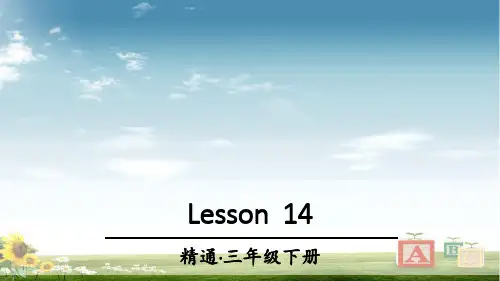
Hello, Kate! How old are you?
I’m nine.
Just learn
brother 哥哥,弟弟
sister 姐姐,妹妹
Let’s do
Show me your photo.
Show me your father’s photo.
Show me your mother’s photo.
Show me your sister’s photo.
Show me your brother’s photo.
Show me your family photo.
Language points
2. Show me your father’s photo.向我出示你爸爸的照片。 这个句子中father’s是名词所有格形式。在名词后加 ’s
Lesson 14
精通·三年级下册
Байду номын сангаас
New words
brother 哥哥,弟弟
sister 姐姐,妹妹
New words
Just talk
Hello, Sam! How old are you?
Hi, Yang Ming. This is my brother, Sam.
I’m six.
Language points
1. This is my brother, Sam.这是我的弟弟,萨姆。 这是一个用来介绍他人的句型。其句型结构为:
This is +my+名词+人名. 例句:This is my teacher, Miss Zhou.
这是我的老师,周老师。
Play roles
Hi, Peter. This is my sister, Kate.
泰安市第一小学三年级英语上册Unit3LookatmynoseLesson14学案人教精通版三起
Unit 3 Look at my nose.Lesson 14【学习目标】1.学习如何用“How are you?”、“Fine, thank you.”相互问候。
2.学习认读face、mouth,能够听懂、会说,能在句子中应用。
3.学会用礼貌用语和别人打招呼。
4.学会正确的评价观。
【学习重难点】1.熟练使用“How are you?”、“Fine, thank you.”句型进行交流。
2.掌握两个单词face、mouth。
【学习过程】一、Warm-up英语国家见面问候语与中国不同,中国人习惯说“你去哪里了?”等等,而英国人士则习惯问身体、天气等等。
- How are you?- ____________________.二、Presentation1.注意发音:fine中的n不要吞音。
Thank的th不要发成[s]。
2.以小组为单位,进行组内对话操练。
3.学习face、mouth的音、形、意。
4.听录音,跟读并指读Just talk和Just learn部分的学习内容。
三、Practice1.按指令画画“Draw a face/ nose/ mouth...”,注意眼睛的复数形式。
2.听力画画接力赛:根据指令画出人体的器官,比一比谁画得迅速、准确、富有创造性。
1Unit 4 Where is my car?UNIT THREE I WAS BORN ON MAY 23RDLesson 10习题一、抄写下列单词born MayJune fourteenthfifteenth二、英汉互译born________五月_______第十四_________第十五________三、补全对话A When were you born?B:九月一号四、看图选词(1)____________ (2)___________(3)____________A. fourteenthB. fifteenthC. born五、翻译下列句子1. When were you born?___________________________________________________2. I was born on May 1ST.___________________________________________________ 3.你奶奶什么时候出生?___________________________________________________ 4.我奶奶六月15出生。
小学三年级英语三年级下册精通版单词加汉文
小学三年级英语三年级下册精通版单词加汉文unit 9 my school(lesson49~lesson54)重点单词:library, computer room, washroom, clinic,office, music room, first, second, third, floor, gym, art room, science room,between, boy, girl, teacher, student, this, our重点句型及语法:1 -where is binbin?-heis in the library.-whereis the library?-it’son the first floor.andyis in the library on the first/second/third floor.2 -do you have a gym/computerroom/washroom/clinic/office/music room/art room/science room in your school?-yes,we do/no, we don’t.-whereis it?-it’son the……floor, it’s between……and……3 this is our school, we have (a /an art room/)……, it’s on thefirst/……,it’s nice/beautiful. ilove/like my school.4 -helen, do you have a gym?-yes,i have./no, i don’t.5 we are canadian students/children. we have……students/teachers in ourclass. we have 40 minutes for lunch/breakfast/supper.i’min no.2 school, class one, grade three.6 -amy is looking at her test paper. she has a badmark. here you are,amy,i found your paper.-oh,no!amy is in the……,she puts her paper in the garbage.unit 10 myclasses(lesson55~lesson60)重点单词及词组:chinese, english, math, pe, hard, easy,fun, boring, interesting, monday, tuesday, wednesday, thursday, friday,favourite, why, my, friend, i’m=i am, good morning, good afternoon, meet, too, goodbye,turn on, turn off重点句型及语法:1 -tom, do you likechinese/english/math/pe/music/art/science/computers?-yes, i do. it’s interesting/easy/fun 确实提问-no, i don’t. it’s boring/hard (for me). 否定回答2 -what classes do you have on monday/tuesday/……?-i have chinese/……3 bill has pe on monday. he likes math.he doesn’t like english.lily has math on tuesday. she likesmusic. she doesn’t like math.4 -what’s your favourite class?/what class do youlike?-math./i like music.-why?-it’s fun.5 -when do you havemath/english/chinese/pe/computers/art/science class?-monday.6 -i have english class on monday. 确实式-i don’t have english class on monday. 否定式unit 11 after schoolactivities(lesson61~lesson66)重点单词及词组:after school,activity, club time, play the drum, sing songs, draw pictures, play chess, doart projects, play soccer, go for a hike, have a good time, be going to, dance,turn right, bend down, dance to the music, sunday, saturday.重点句型和语法:1 -what do theydo on monday?-they play thedru2 -what areyou going to do after school?-i am goingto play the drum/sing songs/draw pictures/play chess/do art projects/playsoccer/ dance/ride my bike/fly my kite. (i)-that’s soundsinteresting, i am going to……,too.3 -what is lilygoing to do after school?-sheis going to……lily/yaoyao/jhon/andy/binbin/billis going to…… (he,she,it)4weare going to…… (we)yaoyao andbinbin are going to…… (they)5 -are you going to……? (you)-yes, are you going to play?-oh, yes, that sounds like more fun,just a minute.重点句型及语法:unit 12 revision(lesson67~lesson72)重点句型:1 -what are you going to……/what is lily going to……-we are going to……/ i am going to……/he(she) is going to……2 we have……/i have……3 -when do you have music class?-monday4 -do you like……?-yes, i do./ no,i don’t. (单数)-yes, we do./no,we don’t.5 -where is lily?-she is in the library on the first floor.unit 13 my home(lesson73~lesson78)重点单词及词组:living room, dining room, kitchen, bedroom, study,bathroom, balcony, garage, armchair, telephone, own, desk, teddy bear, closet.重点句型及语法:1 -where is the cat?-it’s on the balcony. / it’s in the dining roo2-where is the tiger’s roo m?-it’s in the forest.3-what’s in the forest?-there is a tiger./ there are twocats4 -is there a bathroom/livingroom/kitchen/bedroom/study/balcony/garage in your home?-yes, there is. 肯定回答-n, there isn’t. 驳斥提问5 -what room is it?-it’s the kitchen/dining room/bedroom/study/bathroo6 cookie is a naughty cat. cookie goes to thebathroom,falls into the bathtub,knocks over the garage can, runs into thecloset.unit 14 my family(lesson79~lesson84)重点单词及词组:family, people, grandfather, grandmother, uncle, aunt,father, mother, brother, sister, cousin, cook, waiter, dentist, nurse, manager,taxi-driver, policeman重点句型及语法:1 there are ……people in my family. they are……2 -what’s yourfather’s/mother’s/grandfather’s/uncle’s/aunt;s/brother’s/sister’sjob?-he/sheis a doctor/cook/waiter/dentist/nurse/manager/taxi-driver/policeman3 i’m ……,i’m ……years old, i’m from china/canada/…….there are……people in my family, ……and me. 形容词性的物主代词4 -can you swim/jump/……?-yes,i can 肯定回答-no,i can’t 驳斥提问5 -are you my mother?-yes,i a 确实提问-no,i am not. 否定回答6 -do you know my mom?-yes.i do. 肯定回答-no,i don’t 驳斥提问7 -what’s ……like?unit15 family activities(lesson 85~lesson90)重点单词及词组:feed the fish, wash clothes, water the flowers, cookthe chicken, clean the kitchen, watch tv, listen to music, walk the dog,grandparents. on the phone重点句型及语法:1 -what are they doing? 主语就是第三人称复数-theyare coo king the fish/……2-what is lily’s /tom’s (she/he)mom doing? 主语就是第三人称单数-he/sheis cleaning the floor.3-what am i doing? 主语就是第一人称-youare doing……现在展开时unit 16 revision(lesson91~lesson96)重点句型及语法:1 my father’s/mother’s/…… is my……2 -what’s it? -it’s a ……3-where is it? -it’s on/in……the……4 -who is she? -she is lily.5 -what’s she doing? -she is cooking.6 -what’s in tom’s room/the kitchen……? -there is/are……7 -what’s sb’s job? -he/she is a ……下卷语法汇总一、be 动词(与人称代词的搭配)1、基本形式:am、are、is(1)am第一人称i+am (特别注意:“i”无论何时都必须大写,不管坐落于句首还是句中)例:i am a girl. i am twenty. i am lily.(2) are第二人称you+are; 一人称复数we+are; 三人称复数they+are其他复数名词+are (特别注意:第二人称单复数同形,都为you)例:you are my good friend. we are in the same class.they are on the road. the books are on the desk.(3) is第三人称he(男) +is ; she(女)+is; it(不是人)+is;其他单数名词+is 例:heshe is a good student. it is a white cat.a dog is on that street.2、肯定、否定、疑问(等于号后是简写)确实否定——be动词后加not通常疑点:be动词安远至主语前一般疑问否定通常疑点提问确实和驳斥提问i am…=i’m ….i am not…=i'm not ...am i…?am not i…?yes,i’no,i’m not.you are…= you’re…you are not…=you aren’t…are you…?are not you. ..? =aren’t you…?yes,you are.no,you aren’tsheheit is…=sheheit issheheit is not… =sheheit isn’t…is sheheit…?is not sheheit…? =isn’t sheheit…? yes,sheheit is.no,shehe it isn’t.we are=we’rewe are not…=we aren’t…are we…?are not we…?=aren’t we…?yes,we are.no,we aren’t.they are=they’rethey are not…=they aren’tare they…?are not they…?=aren’t they…?yes,they are.no,they aren’t.基准:i am(not) from london.my eyes are(not) small.my hair is(not) long.am i a chinese? 回答:肯定:yes, you are. 否定:no, you aren’t. is the cat fat? 提问:确实:yes, it is. 驳斥:no, it isn’t.注意:在一般疑问回答中,肯定回答除i’m不可简写,否定回答均可简写。
完整版精通版小学三年级英语下册
三年级下册
? school [sku?l]学校
? classroom [‘klɑ?sru?m教]室
?
textbook [‘teks(t)b?k]
课本,教科书
?
storybook [‘st??r?b?k]
故事书,小说
?
Chinese book [,t?ai‘ni:z]
语文书
? eg.This is a dress. ? This is a nice dress. ? This is my cat. ? …… ? This is my mother. ? This is my father. ? That's my uncle. ? That 's my aunt.
? He is my grandpa. ? He 's my grandpa. ? She is my grandma. ? She's my grandma. ? She 's my sister. ? He 's my brother.
Lesson14
? Hello,Sam! ? How old are you? ? Hi,Yang Ming. ? This is my brother,Sam. ? I'm six.
Lesson15
? Hi,Miss Wu. ? This is my son. ? Hello,what's your name? ? My name 's Gao Wei. ? How old are you? ? I'm eight.
Lesson6
? Hello,Monkey! Nice to see you again. ? Hi ,Cat. ? Hi ! I have a new bag. ? Look! I have a new textbook. ? Can I see it. Here you are. ? Let's go to school .Oh!What's in my bag. ? A story book,a Chinese book ,an English
(湘少版)三年级英语下册《unit 14》教案设计
(湘少版) 三年级英语下册《unit 14》教案设计一、教学目标1.学生能够熟练地掌握本单元的词汇和句型。
2.学生能够具有初步的英语听说读写能力,能够通过日常语境进行简单交流。
3.学生能够了解英语语言文化,培养跨文化交际的能力。
二、教学重点1.学习本单元的词汇:bike, scooter, go shopping, sports day。
2.学习本单元的句型:What can you do? I can ride a bike. Can you ridea scooter? Yes, I can.三、教学难点1.学生能够通过简单的英语语境进行日常交流。
2.学生能够理解英语语言文化的部分内容。
四、教学过程设计1. Warmer (5 minutes)老师与学生打招呼,问学生最近的情况,激发学生对本节课的兴趣。
2. Lead-in (10 minutes)老师出示一个骑自行车的视频,通过教师的渐进引导,让学生了解这个运动。
老师读出词汇 bike 和 ride a bike 并让学生重复。
3. Presentation (15 minutes)老师播放一个骑滑板车的视频,让学生了解滑板车这种交通工具。
老师读出词汇 scooter 和 ride a scooter 并让学生重复。
4. Practice (20 minutes)教师设计图片和问题,放到幻灯上,然后让学生用英语完成问题的回答,加深学生对所学知识的体验。
问题如下:•What can you do?•Can you ride a bike?•Can you ride a scooter?学生在回答问题的过程中,老师给与简单的指导和激励,帮助学生提高英语表达的能力。
5. Production (15 minutes)教师设计一些游戏和活动,让学生有机会应用所学知识和技能,在语言和交际能力中得到提高。
例如:学生可以在小组内模拟交通规则,骑车骑滑板车。