
最新英语常用及物动词
最常见及物动词
afford,allow,blame,bring,contain,deny,enjoy,examine,excuse,fetch,fix,get ,greet,have,hit,inform,let,like,love,make,mean,need,omit,owe,prefer,prov e,put,remind,select,wrap.
1.Abandon
2 .Absorb
3.abuse
4.accelerate
5.achieve
6.acquire
7.address
8.admire
9.adopt
10.affect
11.allocate
12.alter
13.analyse
14.appreciate
15.attain
16.attract
17.ban
19.boost
20.break
21.cancel
22.catch
23.cause
24.celebrate
25.challenge
26. change
27. collect
28. combat
29.concentrate
30.conduct
31.confirm
32.confront
33.consume
34.control
35.convey
36. crate
37. curb
38. cut
39. damage
41.delay
42.deliver
43.demonstrate
44.deny
45.deserve
46. destroy
47.determine
48.develop
49. discuss
50.dismiss
51.display
52.disregard
53.disrupt
54.distract
55.distribute
56.earn
57.ease
58.eliminate
59.emphasise
60.employ
61.encounter
62.enforce
63.enhance
64.enrich
65.establish
66.examine
67.exercise
68.exhibit
69. expand
70. exploit
71.explore
72.express
73.extend
74.uate
75.facilitate
76. follow
77.form
78. forge
79. foster
80.fulfil
81.gain
82. gather
83.generate
84.guarantee
85. hamper
86.handle
87.harness
88.hold
89. ignore
90. imitate
91.impair
92.implement
93.impose
94.improve
95.increase
96. initiate
97.integrate
y
99.limit 100.lose 101.maintain 102.make 103.match 104. meet 105. merit
106.nurture 107.obey 108.obtain 109. offer 110.offset 111.oppose 112.overcome 113.overlook 114.perform 115.place 116.play 117.pose 118.possess 119.predict 120.preserve 121.prohibit 122.promote 123.protect 124.provide 125.provoke 126.pursue 127.raise
128.reach 129.receive 130.recognise 131.reduce 132.reform 133.reject 134.relieve 135.remove 136.repair 137.repeat 138. replace 139. resist 140.resolve 141.respect 142.restore 143.retain 144.reverse 145.review 146.satisfy 147.set 148.share 149.shift
150.solve
151.spend
152.spoil
153.stiumulate
154.strengthen
155.supply
156.support
157.suppress
158.suspend
159.sustain
160.take
161.teach
162.transfer
163.transform
164.trigger
165.understand
166.undergo
167.undertake
168.utilise
169.win
170.withdraw
人教版高中语文课文中的文学文化常识
必修1
《烛之武退秦师》
1.《左传》是我国第一部叙事详尽的编年体史书,相传是春秋末年鲁国史官左丘明所作。
全称《春秋左氏传》,别称《左氏春秋》,和《公羊传》《谷梁传》合称“春秋三传”。
2.春秋时期有公、侯、伯、子、男五等爵位。
春秋初期,周天子分封天下,一般就是功劳大的,分得土地多,爵位就高,就可以分封为公爵,比如晋文公、秦穆公、齐桓公等。
3.子:古代对男子的尊称。
4.寡人:诸侯谦称,寡德之人。
5.执事:办事的官吏,也用于对对方的敬称。
6.大夫:官职等级名。
夏商周时,官分卿、大夫、士三级,大夫又分上、中、下三等。
后来成为对有官位者的通称。
《荆轲刺秦王》
1.《战国策》是中国古代的一部历史学名著。
它是一部国别体史书,又称《国策》。
由西汉刘向所整理编写,共33篇,分为十二策。
《国语》是第一部国别体史书。
2.卿:古代对人的敬称。
如燕人称荆轲为荆卿。
3.竖子:对人的蔑称。
除此之外还有“童仆”和“小孩”的意思。
4.祖:临行祭路神,引申为饯行和送别。
5.古代音乐分宫、商、角、徵、羽、变宫、变徵七音。
变徵是徵的变调,音调悲凉;羽,声调激愤。
6.中庶子:管理国君的车马之类的官。
7.郎中:宫廷的侍卫。
民间又称医生。
8.箕踞:坐在地上,两腿张开,形象像箕,是一种轻慢傲视对方的姿态。
《鸿门宴》
1.《史记》是我国第一部纪传体通史,上起传说中的黄帝,下到汉武帝。
分本纪、世家、列传、书、表五类,共130篇,50余万字。
本纪记帝王,世家述诸侯,列传叙人臣,书记礼、乐、音律、历法、天文、封禅、水利等,表记各个时期的简单大事记。
鲁迅评价该书为“史家之绝唱,无韵之《离骚》”
2.关中:函谷关以西,今陕西一带。
3.山东:崤山以东,即函谷关以东的地区。
4.季父:叔父。
古代兄弟或姊妹间长幼排序为伯、仲、叔、季。
5.河:特指黄河。
江,特指长江。
6.亚父:对对方的敬称,意为仅次于父亲。
7.参乘:亦作“骖乘”,古代乘车,站在车右担任警卫的人。
8.窃:私下,常用作表示个人意见的谦词。
9.竖子:骂人的话,相当于“小子”。
(与《荆轲刺秦王》的“竖子”结合起来理解)
《优美的汉字》(了解一下即可)
汉字的形体经历了由甲骨文、金文、大篆、小篆、隶书、草书、行书、楷书。
四年级下册十七课的英语动词

四年级下册十七课的英语动词
1、英语日常中常用的动词举例:study、play、do,read、learn,drive、write、clean、slean、sleep、speak、talk、wait、fly、stay、write、sit。
stand、lie、keep等。
动词一般就是用来表示动作或状态的词汇。
在英语中,动词按作用和功能主要分为两大类,一类是谓语动词、另一类是非谓语动词。
2、keep。
keep是一个常用英语单词,既可以做及物动词也可以做不及物动词。
用作及物动词,保留、保存、保持、留下;履行(诺言)遵守;赡养,养活,饲养;经营,管理;保守(秘密),记(日记、帐)。
用作不及物动词,保持、继续(处于某种状态)(keep为连系动词);(食物)保持良好状态。
3、lie。
v。
躺;位于;处于……。
状态;存在,内含
n。
谎言,谎话;状态,位置;栖息处,隐藏处;停止的位。
4、stand。
n。
立脚点;站立。
台,座。
售货处;摊。
看台,观众席。
主张,立场;态度。
中止,停顿抵抗,抵御。
vi。
坐落,位于。
维持原状;保持效力。
停着。
vt。
竖放。
忍耐;忍受;经得起,受得起。
vt。
&vi;站立,(使)直立,站着。
常用及物动词及其搭配

1.Abandon + attempt, career, child, convention, effort, homestead, hope, Tradition,Idea, pet, policy, principle, proposal, rationality, search, vehicle, wife2 .Absorb + culture, idea, information3.abuse+alcohol, authority, drug, power, substance4.accelerate+change, development, growth, pace, rate, speed, trend5.achieve+aim, effect, feat, goal, growth, objective, purpose, success, target6.acquire +information, knowledge, opportunity, skill, status7.address +issue, matter, problem, question, subject8.admire+courage, quality, skill, view, work9.adopt+attitude, idea, measure, method, plan, policy, practice, rule, technique10.affect + behaviour, decision, life, outcome, performance, quality11.allocate +expenditure, fund, money, seat, time, work12.alter+behaviour, fact, life, perception, policy, relationship13.analyse +behaviour, impact, performance, problem, result14.appreciate+ beauty, effort, point, support, value, work15.attain +degree, goal, objective, position, status, target16.attract + attention, audience, criticism, effort, interest, investment, support17.ban +advertising, book, drug, practice, weapon18.bear+ burden, cost, fruit, grudge, hallmark, resemblance, responsibility, similarity19.boost + confidence, economy, image, income, moral, performance, profit, value20.break +contract, deadlock, habit, law, promise, record, rule, silence, tradition21.cancel +agreement, appointment, booking, holiday, meeting, trip, visit22.catch +attention, breath, bus, cold, disease, eye, fire, flight, glimpse, plane, train23.cause+accident, change, concern, damage, difficulty, harm, loss, pain, problem, trouble24.celebrate+ achievement, anniversary, birthday, centenary, day, event, festival, holiday, occasion, success, victory, wedding, year25.challenge +authority, claim, decision, idea, notion, view26. change+ attitude, behaviour, direction, face, habit, mind, situation, subject27. collect + data, evidence, information, rent, tax, thought28. combat + crime, crisis, disease, drug, inflation, problem, tragedy, terrorism, violence,29.concentrate+ effort, attention, energy, mind, power30.conduct + analysis, business, debate, examination, experiment, inquiry, interview, investigation, meeting, negotiation, orchestra, research, study, survey, test, trial31.confirm +appointment, booking, existence, view32.confront+ challenge, difficulty, fact, issue, problem, reality, situation33.consume+alcohol, energy, passion, time34.control +behaviour, money, population, power, supply, temper35.convey +idea, image, information, language, meaning, message, view36. crate + atmosphere, environment, image, impression, opportunity37. curb+ attempt, effort, emission, growth38. cut + budget, cost, hair, loss, pay, price, price, rate, supply, tax39. damage +brain, career, creditability, economy, environment, health, image, relationship, reputation40. debate + issue, matter, merit, policy, proposal, subject41.delay +action, arrival, decision, departure, development, flight, onset42.deliver+goods, lecture, message, performance, service, speech43.demonstrate+ ability, commitment, importance, need, power, skill44.deny +access, chance, claim, existence, involvement, opportunity, request, right45.deserve +chance, consideration, mention, place, praise, punishment, respect, support, win46. destroy + ability, bond, building, ecosystem, forest, hope, industry, life, prospect47.determine +amount, extent, nature, outcome, policy, price, rate, value48.develop + habit, idea, knowledge, plan, policy, skill, taste, technology49. discuss +idea, issue, matter, possibility, problem, situation, subject, topic50.dismiss+ appeal, application, argument, charge, claim, employee, idea, notion, possibility, reason, suggestion51.display + collection, information, skill, talent52.disregard +advice, pain, statement, suffering, warning53.disrupt + activity, attempt, life, meeting, operation, peace, plan, process, service54.distract + attention, mind, thought55.distribute + goods, information, material, power, product56.earn + credit, degree, income, salary, wage, money, livelihood, place, praise, profit, reputation, respect, return57.ease + burden, crisis, difficulty, fear, grip, mind, pain, plight, pressure, problem, restriction, shortage, strain, tension, worry58.eliminate + discrimination, gap, habit, need, pest, possibility, problem, risk, use59.emphasise +contribution, fact, importance, importance, point, role60.employ + method, people, staff, strategy, system, tactic, technique, worker61.encounter +difficulty, opposition, problem, resistance, situation62.enforce + ban, control, law, limit, requirement, rule, standard63.enhance +ability, appearance, chance, environment, image, performance, prestige, quality, relationship, role,skill, status, value64.enrich + experience, performance, relationship, life65.establish + business, creditability, link, network, relationship, reputation, rule66.examine + effect, evidence, implication, issue, nature, policy, problem, progress67.exercise + authority, care, choice, control, discretion, influence, judgement, option, power, responsibility, restraint, right, skill68.exhibit + behaviour, characteristic, degree, level, pattern, property, range, sign, symptom, tendency, variety, work69. expand + activity, base, business, capacity, horizon, operation, range, scope70. exploit + advantage, loophole, market, opportunity, position, possibility, potential, power, situation, technology, weakness71.explore + area, detail, idea, issue, nature, opportunity, option, possibility, potential,relationship, world72.express +anger, appreciaton, belief,concern,disappointment, doubt, emotion, fear, gratitude, interest, opinion, preference, regret, satisfaction, support, sympathy, thanks, thought, view, wish73.extend + credit, hand, invitation, lead, life, period, plan, system74.uate + evidence, impact, option, performance, policy, position, quality, work75.facilitate + change, communication, development, exchange, flow, learning, transfer76. follow + advice, example, footstep, guideline, instruction, lead, path, pattern, procedure, route, rule, track77.form + basis, company, government, partnership, relationship, society78. forge + bond, career, friendship, identity, link, partnership, relationship, signature,79. foster + attitude, competition, culture, development, discrimination, relationship, spirit80.fulfil + aim, ambition, criteria, demand, desire, dream, expectation, need, obligation, potential, requirement, responsibility, role, task81.gain + acceptance, access, advantage, approval, attention, benefit, confidence, control, currency, degree, experience, ground, impression, independence, information, insight, knowledge, momentum, opportunity, popularity, power, qualification, recognition, reputation, respect, support, understanding82. gather + crowd, evidence, information, momentum, pace, people83.generate + cash, demand, electricity, energy, growth, heat, income, interest, job, power, profit, revenue, support84.guarantee+ cash, demand, electricity, energy, growth, heat, income, interest, job,power, profit, revenue, support85. hamper +ability, effort, plan, search, development86.handle + affair, business, crisis, issue, matter, problem, situation87.harness + energy, investment, power, revolution, technology88.hold + belief, breath, election, exhibition, hope, meeting, position, post, seat, view89. ignore + advice, evidence, fact, issue, need, problem, protest, question, sign, warming90. imitate + accent, attitude, custom, sound, style, voice91.impair + ability, efficiency, function, health, performance92.implement + ban, change, contract, decision, law, plan, policy, practice, principle, recommendation, reform, strategy, tax93.impose + ban, burden, constraint, control, deadline, duty, fine, law, limit, punishment, requirement, restraint, restriction, rule, sentence, tax94.improve + appearance, chance, education, efficiency, effort, environment, facility, health, image, life, performance, productivity, quality, safety, service, situation, skill, standard, system95.increase + amount, capacity, chance, demand, productivity, profit, rate, risk, sale, share, tax96. initiate + action, campaign, change, contact, debate, development, discussion, investigation, policy, programme, reform, request, research, review, study, talk97.integrate + approach, policy, service, technologyy + base, emphasis, figure, foundation, groundwork, hand, stress99.limit + ability, access, choice, growth, unemployment, use100.lose + altitude, appetite, balance, chance, confidence, grip, hearing, home, hope, interest, job, memory, mind, money, opportunity, sense, sight, speed, temper, voice101.maintain + balance, contact, control, environment, interest, momentum, position, quality, relationship, standard, status, tradition102.make + arrangement, attempt, call, change, choice, comment, contribution, decision, difference, distinction, effort,mistake, money, noise, progress, speech, statement, trip103.match + description, expectation, need, pace, performance104. meet + challenge, criteria, deadline, demand, friend, goal, need, objective, obligation, requirement, standard, target105. merit + attention, consideration, mention106.nurture + child, hatred, ideal, relationship, talent107.obey + command, instruction, law, obligation, order, parent, rule108.obtain +advice, benefit, consent, degree, detail, evidence, information, permission, result, service, solution109. offer+ advice, benefit, assistance, chance, choice, discount, explanation, help, job, money, opportunity, resistance, service, support110.offset+advantage, benefit, cost, decline, demand, effect, gain, growth, impact, increase, loss, problem, profit, reduction, revenue, sale, tax111.oppose + change, idea, law, move, plan, policy, proposal, view112.overcome+ barrier, challenge, crisis, difficulty, fear, hurdle, limitation, obstacle, odds, opposition, prejudice, problem, resistance, shyness113.overlook+achievement, fact, factor, importance, link, need, point, premise, self-esteem114.perform + ceremony, dance, duty, experiment, function, job, operation, play, procedure, rite, ritual, role, service, task, test, work115.place+ advertisement, bet, blame, burden, emphasis, importance, limit, order, restriction, strain, trust, value116.play+ card, football, game, golf, match, music, part, piano, role, toy117.pose + challenge, danger, dilemma,hazard,problem,question, risk, threat118.possess+ ability, characteristic, knowledge, power, quality, skill, strength, wealth119.predict + behaviour, change, future, growth, market, outcome, result, success120.preserve+balance, character, effort, environment, family, heritage, identity, independence, integrity, life, tradition, unity, value121.prohibit + act, activity, discrimination, drinking, gambling, smoking, substance, abuse, use122.promote + change, development, education, effort, growth, health, idea, policy, welfare123.protect + children, copyright, environment, law, privacy, property, public, right, species124.provide +answer, assistance,basis, care, clue, detail, evidence, example, explanation, help, incentive, information, insight, opportunity, protection, service, support125.provoke + action, anger, backlash, controversy, criticism, debate, discussion, interest, opposition, outcry, protest, reaction, response, thought, violence, war126.pursue + aim, argument, career, end, goal, idea, interest, issue, matter, objective, question127.raise + awareness, child, concern, doubt, family, flag, fund, hand, head, hope, issue, matter, money, possibility, price, problem, question, rate, standard, subject, tax, voice128.reach + adolescence, age, agreement, compromise, conclusion, consensus, decision, end, final , goal, level, limit, peak, point, stage, standard, target129.receive+approval, attention, benefit, call, education, gift, information, invitation, letter, message, payment, publicity, reply, support, treatment130.recognise+ benefit, fact,flaw, importance, need, problem, right, role, value, voice131.reduce + budget, chance, cost, debt, demand, effort, emission, need, pollution, risk, tax, tension, value132.reform + character, economy, law, plan, regulation, system133.reject +appeal, application, argument, bid, claim, idea, notion, offer, plan, proposal, request, suggestion, view134.relieve + anxiety, boredom, burden, duty, monotony, pain, poverty, pressure, problem, responsibility, stress, symptom, tedium, tension135.remove+ barrier, obstacle, restriction, rule, stain136.repair + belief, car, damage, dwelling, injury, make-up137.repeat+ behaviour, habit, history, mistake, pattern, procedure, question, success,138. replace +battery, car, staff, system, tyre139. resist + change, idea, impulse, pressure, temptation, urge, will140.resolve + ambiguity, conflict, contradiction, crisis, difference, difficulty, dilemma, dispute, issue, matter, problem, question, situation, tension141.respect + decision, law, privacy, view, wish142.restore +balance, building, confidence, control, faith, glory, health, life, order, peace, position, power,pride, reputation, sight143.retain + atmosphere, character, control, dignity, employee, grip, identity, independence, interest, position, post, power,right, status, title144.reverse + change, decision, decline, direction, order, policy, role, situation, trend145.review + decision, evidence, option, policy, progress, situation, study, work146.satisfy + appetite, condition, criteria, curiosity, customer, demand, desire, hunger, need, requirement, taste, test147.set + agenda, date, example, fire, goal, limit, objective, pace, precedent, price, record, scene, sight, stage, standard, target, task, tone148.share + belief, blame, concern, experience, house, idea, information, interest, life, responsibility, room, sense, view149.shift + attention, balance, blame, burden, demand, emphasis, focus, gear, ground, position, power, responsibility150.solve + crime, crisis, difficulty, issue, problem, puzzle, question, riddle151.spend + afternoon, amount, day, evening, fortune, hour, life, money, month, morning, night, time, week, weekend, year152.spoil + appetite, chance, child, choice, day, fun, view153.stiumulate + ability, activity, brain, demand, development, economy, growth, hormone, industry, interest, investment, research154.strengthen + ability, argument, bond, commitment, control, effort, family, force, law, link, muscle, position, power, presence, relationship, role, squad, tie155.supply + electricity, energy, equipment, food, gas, goods, information, material, power, product, service, water156.support + claim, effort, family, hypothesis, idea, plan, proposal, view157.suppress +anger, attempt, drug, effort, emotion, evidence, rebellion, smile, truth, uprising, urge158.suspend + action, decision, duty, flight, licence, operation, order, payment, sentence159.sustain + ability, conscience, damage, effort, growth, interest, level, life, population160.take + action, approach, breath, chance, job, lead, opportunity, photograph, responsibility, risk, role, step, turn, view161.teach + child, class, course, language, lesson, skill, student, subject, technique162.transfer +benefit, data, fund, information, ownership, responsibility163.transform + city, country, economy, face, image, landscape, life, opinion, situation,164.trigger + action, change, debate, event, problem, reaction, response, war165.understand + idea, meaning, nature, need, problem, process, reason166.undergo + change, course, development, examination, experience, operation, period, procedure, process, revolution, surgery, test, training, transformation, treatment, trail167.undertake + action, analysis, development, duty, exercise, initiative, investigation, operation, programme, project, research, responsibility, study, survey, task, training168.utilise + assistance,power, resource, service, talent, time169.win + battle, championship, competition, contest, contract, heart, majority, match, prize, race, scholarship, support, title, tournament170.withdraw + candidacy, cash, decision, money, service, support。
常见英语动词包括及物动词-不及物动词-固定搭配
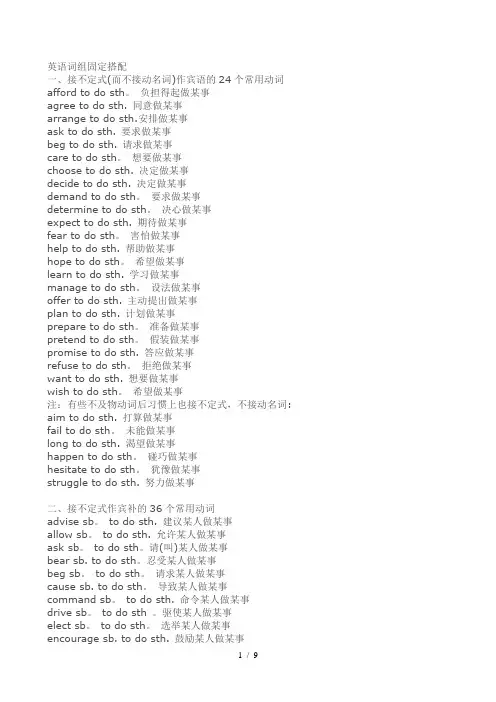
英语词组固定搭配一、接不定式(而不接动名词)作宾语的24个常用动词afford to do sth。
负担得起做某事agree to do sth. 同意做某事arrange to do sth.安排做某事ask to do sth. 要求做某事beg to do sth. 请求做某事care to do sth。
想要做某事choose to do sth. 决定做某事decide to do sth. 决定做某事demand to do sth。
要求做某事determine to do sth。
决心做某事expect to do sth. 期待做某事fear to do sth。
害怕做某事help to do sth. 帮助做某事hope to do sth。
希望做某事learn to do sth. 学习做某事manage to do sth。
设法做某事offer to do sth. 主动提出做某事plan to do sth. 计划做某事prepare to do sth。
准备做某事pretend to do sth。
假装做某事promise to do sth. 答应做某事refuse to do sth。
拒绝做某事want to do sth. 想要做某事wish to do sth。
希望做某事注:有些不及物动词后习惯上也接不定式,不接动名词: aim to do sth. 打算做某事fail to do sth。
未能做某事long to do sth. 渴望做某事happen to do sth。
碰巧做某事hesitate to do sth。
犹豫做某事struggle to do sth. 努力做某事二、接不定式作宾补的36个常用动词advise sb。
to do sth. 建议某人做某事allow sb。
to do sth. 允许某人做某事ask sb。
to do sth。
请(叫)某人做某事bear sb. to do sth。
常考的英语及物动词
常考的英语及物动词English is a language full of interesting and diverse verbs, and in this article, we will explore some of the most commonly tested English transitive verbs. Transitive verbs are verbs that require a direct object to complete their meaning. They are an essential part of English grammar and are often tested in exams to assess a student's understanding of the language.One of the most commonly tested transitive verbs in English is "to read." When we use the verb "to read," we always need to specify what is being read. For example, "She read a book" or "He reads the newspaper." The direct object in these sentences is the book and the newspaper, respectively.Another frequently tested transitive verb is "to write." Just like "to read," "to write" requires a direct object to complete its meaning. For instance, "She wrote a letter" or "He writes emails." In these sentences, the direct objects are the letter and emails.The verb "to eat" is also a commonly tested transitive verb. When we use the verb "to eat," we always need to specify what is being eaten. For example, "She ate an apple" or "He eats breakfast." The direct objects in these sentences are the apple and breakfast.Moving on, the verb "to watch" is another frequently tested transitive verb in English. When we use the verb "to watch," we always need to specify what is being watched. For instance, "She watched a movie" or "He watches TV." The direct objects in these sentences are the movie and TV.The verb "to play" is also a commonly tested transitive verb. When we use the verb "to play," we always need to specify what is being played. For example, "She played the piano" or "He plays video games." The direct objects in these sentences are the piano and video games.In addition, the verb "to teach" is another frequently tested transitive verb in English. When we use the verb "to teach," we always need to specify whom or what is beingtaught. For instance, "She teaches students" or "He teaches math." The direct objects in these sentences are students and math.Lastly, the verb "to buy" is also a commonly tested transitive verb. When we use the verb "to buy," we always need to specify what is being bought. For example, "She bought a new dress" or "He buys groceries." The direct objects in these sentences are the new dress and groceries.In conclusion, understanding and mastering transitive verbs is essential for proficiency in English. By familiarizing yourself with commonly tested transitive verbs like "to read," "to write," "to eat," "to watch," "to play," "to teach," and "to buy," you can improve your language skills and excel in exams. So, keep practicing and expanding your vocabulary to become a fluent English speaker.。
初中英语及物和不及物动词
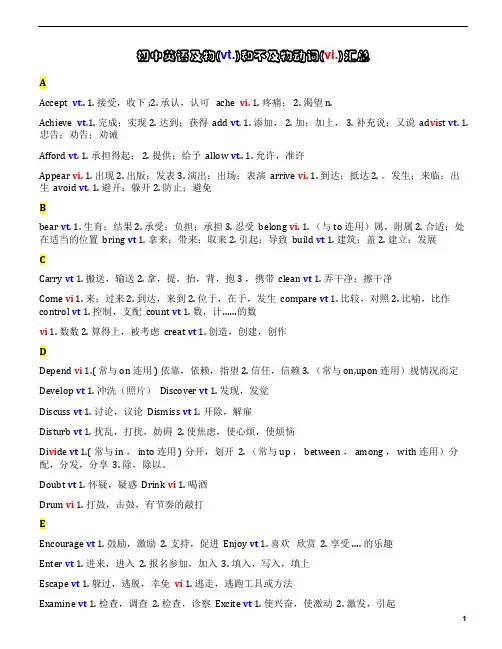
初中英语及物(vt.)和不及物动词(vi.)汇总AAccept vt.. 1. 接受,收下 ;2. 承认,认可 ache vi. 1. 疼痛; 2. 渴望 n.Achieve vt.1. 完成;实现 2. 达到;获得 add vt. 1. 添加, 2. 加;加上, 3. 补充说;又说 ad vi st vt. 1. 忠告;劝告;劝诫Afford vt. 1. 承担得起; 2. 提供;给予 allow vt.. 1. 允许,准许Appear vi. 1. 出现 2. 出版;发表 3. 演出;出场;表演 arrive vi. 1. 到达;抵达 2, 。
发生;来临;出生 avoid vt. 1. 避开;躲开 2. 防止;避免Bbear vt. 1. 生育;结果 2. 承受;负担;承担 3. 忍受 belong vi. 1. (与 to 连用)属,附属 2. 合适;处在适当的位置 bring vt 1. 拿来;带来;取来 2. 引起;导致 build vt 1. 建筑;盖 2. 建立;发展CCarry vt 1. 搬送,输送 2. 拿,提,抬,背,抱 3 ,携带 clean vt 1. 弄干净;擦干净Come vi 1. 来;过来 2. 到达,来到 2. 位于,在于,发生 compare vt 1. 比较,对照 2. 比喻,比作control vt 1. 控制,支配 count vt 1. 数,计……的数vi 1. 数数 2. 算得上,被考虑 creat vt 1. 创造,创建,创作DDepend vi 1.( 常与 on 连用 ) 依靠,依赖,指望 2. 信任,信赖 3. (常与 on,upon 连用)视情况而定Develop vt 1. 冲洗(照片) Discover vt 1. 发现,发觉Discuss vt 1. 讨论,议论 Dismiss vt 1. 开除,解雇Disturb vt 1. 扰乱,打扰,妨碍 2. 使焦虑,使心烦,使烦恼Di vi de vt 1.( 常与 in , into 连用 ) 分开,划开 2. (常与 up , between , among , with 连用)分配,分发,分享 3. 除,除以。
英语系动词详细用法汇总

英语系动词详细用法汇总
英语中的动词有很多种用法,下面是一些常见的动词用法汇总:
1. 及物动词:动作作用于一个宾语,例如:eat(吃)、drink (喝)、write(写)等。
2. 不及物动词:动作不作用于一个宾语,例如:run(跑)、sleep (睡觉)、cry(哭)等。
3. 双宾语动词:有两个宾语的动词,一个是直接宾语,一个是间接
宾语,例如:give(给)。
4. 及物动词+介词:及物动词后面跟一个介词短语作为宾语,例如:look at(看)、listen to(听)等。
5. 不定式动词:以to+动词原形构成,表示目的、意图或目标,例如:want to go(想去)、try to do(尝试做)等。
6. 动词 + -ing形式:表示正在进行的动作,例如:I am reading (我正在读书)。
7. 动词 + 分词形式:表示被动语态,例如:The book is written by him(这本书是他写的)。
8. 动词 + 副词/介词短语:表示动作的方式、时间、地点等,例如:run quickly(快速跑)、go to school(去学校)等。
9. 动词 + 名词:表示动作的对象或结果,例如:drink water(喝水)、play football(踢足球)等。
10. 动词的时态变化:包括一般现在时(present simple)、一般过去时(past simple)、现在进行时(present continuous)、过去进行时(past continuous)等。
英语动词及物不及物区别技巧(一)
英语动词及物不及物区别技巧(一)英语动词及物不及物区别技巧什么是及物动词和不及物动词在英语中,动词可以分为及物动词和不及物动词。
及物动词指需要一个宾语来完整表达意思的动词,而不及物动词则不需要宾语。
如何区分及物动词和不及物动词1.看动词意思是否需要宾语及物动词需要宾语来完整表达意思,比如”eat”,就必须搭配宾语,如”eat an apple”。
而不及物动词则不需要宾语,比如“run”,可以单独使用,没有宾语。
2.看动词是否可以加介词搭配宾语有些动词需要介词来搭配宾语,比如”think of”,“take care of”,这些动词就是及物动词。
而不及物动词则不需要介词来搭配宾语。
3.看动词是否可以变被动语态及物动词可以变成被动语态,而不及物动词则不可以。
比如”eat”是及物动词,可以变成”be eaten”,而”run”是不及物动词,不能变成被动语态。
常见的及物动词和不及物动词以下是一些常见的及物动词和不及物动词:及物动词•eat•drink•write•hate•love•see•think•take不及物动词•run•jump•sleep•laugh•cry•sit•stand总结英语中,及物动词和不及物动词的区别在于是否需要宾语来完整表达意思。
用以上的方法可以帮助我们更好地理解及物动词和不及物动词。
补充说明1.有些动词既可以作及物动词,也可以作不及物动词,例如”work”:在”work”作及物动词的时候,它后面必须跟宾语,如”work hard”;当”work”作不及物动词的时候,它可以单独使用,比如”he works”。
2.对于非常规用法或者是不常见的词语,需要结合具体的情境来判断动词的属性。
3.了解及物动词和不及物动词的区别对于英语的学习以及日常生活中的交流都非常重要。
结语学习英语语法是英语学习的重要一环,切实掌握及物动词和不及物动词的区别,可以更好地帮助我们理解英语语言的结构和grammatical rules。
常见英语动词包括及物动词不及物动词的固定搭配
英语词组固定搭配一、接不定式(而不接动名词)作宾语的24个常用动词afford to do sth. 负担得起做某事agree to do sth. 同意做某事arrange to do sth.安排做某事ask to do sth. 要求做某事beg to do sth. 请求做某事care to do sth. 想要做某事choose to do sth. 决定做某事decide to do sth. 决定做某事demand to do sth. 要求做某事determine to do sth. 决心做某事expect to do sth. 期待做某事fear to do sth. 害怕做某事help to do sth. 帮助做某事hope to do sth. 希望做某事learn to do sth. 学习做某事manage to do sth. 设法做某事offer to do sth. 主动提出做某事plan to do sth. 计划做某事prepare to do sth. 准备做某事pretend to do sth. 假装做某事promise to do sth. 答应做某事refuse to do sth. 拒绝做某事want to do sth. 想要做某事wish to do sth. 希望做某事注:有些不及物动词后习惯上也接不定式,不接动名词:aim to do sth. 打算做某事fail to do sth. 未能做某事long to do sth. 渴望做某事happen to do sth. 碰巧做某事hesitate to do sth. 犹豫做某事struggle to do sth. 努力做某事二、接不定式作宾补的36个常用动词advise sb. to do sth. 建议某人做某事allow sb. to do sth. 允许某人做某事ask sb. to do sth.请(叫)某人做某事bear sb. to do sth.忍受某人做某事beg sb. to do sth. 请求某人做某事cause sb. to do sth. 导致某人做某事command sb. to do sth. 命令某人做某事drive sb. to do sth .驱使某人做某事elect sb. to do sth. 选举某人做某事encourage sb. to do sth. 鼓励某人做某事expect sb. to do sth. 期望某人做某事forbid sb. to do sth. 禁止某人做某事force sb. to do sth. 强迫某人做某事get sb. to do sth. 使(要)某人做某事hate sb. to do sth. 讨厌某人做某事help sb. to do sth. 帮助某人做某事intend sb. to do sth. 打算要某人做某事invite sb. to do sth. 邀请某人做某事leave sb. to do sth. 留下某人做某事like sb. to do sth. 喜欢某人做某事mean sb. to do sth. 打算要某人做某事need sb. to do sth. 需要某人做某事oblige sb. to do sth. 迫使某人做某事order sb. to do sth. 命令某人做某事permit sb. to do sth. 允许某人做某事persuade sb. to do sth. 说服某人做某事prefer sb. to do sth. 宁愿某人做某事request sb. to do sth. 要求某人做某事remind sb. to do sth. 提醒某人做某事teach sb. to do sth .教某人做某事tell sb. to do sth. 告诉某人做某事train sb. to do sth. 训练某人做某事trouble sb. to do sth. 麻烦某人做某事want sb. to do sth. 想要某人做某事warn sb. to do sth. 警告某人做某事wish sb. to do sth. 希望某人做某事注:不要受汉语意思的影响而误用以下动词句型:要表示以上意思,可换用其他表达:汉语的“原谅某人做某事”,英语可说成excuse [forgive] sb. for doing sth.。
英语及物动词的用法
英语及物动词的用法在英语学习中,动词是至关重要的一部分,而及物动词又是动词中的一个重要类别。
掌握及物动词的用法对于准确、流畅地表达英语意义起着关键作用。
首先,我们要明白什么是及物动词。
及物动词是指后面需要接宾语才能完整表达意思的动词。
比如说,“eat”(吃)这个词,如果只是说“eat”,我们不知道吃的是什么,只有说“eat an apple”(吃一个苹果),“eat some bread”(吃一些面包),意思才完整,这里的“an apple”和“some bread”就是宾语。
及物动词的宾语可以是名词、代词、动名词、不定式或者从句。
例如,“I love you”(我爱你。
)这里的“you”是代词作宾语;“She enjoys reading”(她喜欢阅读。
)“reading”是动名词作宾语;“He wants to go home”(他想回家。
)“to go home”是不定式作宾语;“I know what you mean”(我知道你的意思。
)“what you mean”是宾语从句。
及物动词在句子中的时态和语态变化也需要我们关注。
在一般现在时中,如果主语是第三人称单数,动词要加“s”或“es”,例如“He plays football every day”(他每天踢足球。
)在一般过去时中,动词通常要变成过去式,比如“I ate a hamburger yesterday”(我昨天吃了一个汉堡。
)在被动语态中,及物动词要与“be”动词和过去分词一起使用,以表示动作的承受者,例如“The book was written by him”(这本书是他写的。
)另外,有些及物动词可以接双宾语,即直接宾语和间接宾语。
直接宾语指的是动作的直接对象,间接宾语则表示动作是为谁做的或者对谁做的。
比如“Give me the book”(把书给我。
)“me”是间接宾语,“the book”是直接宾语。
常见的接双宾语的动词有“give”(给)、“send”(送)、“show”(展示)等。
高中及物动词不及物动词汇总
初中英语动词AAccept vt.. 1. 接受,收下 ;2.承认,认可Achieve vt.1. 完成;实现 2.达到;获得补充说;又说Afford vt. 1.承担得起; 2.提供;给予Appear vi. 1. 出现 2.出版;发表 3.演出;出场;表演来临;出生acheaddadvistallowarriveavoidvi. 1. 疼痛; 2.渴望 n.vt. 1.添加, 2.加;加上, 3.vt. 1. 忠告;劝告;劝诫vt.. 1. 允许,准许vi. 1. 到达;抵达2,。
发生;vt. 1.避开;躲开 2.防止;避免Bbear vt. 1.生育;结果属 2.合适;处在适当的位置引起;导致2.承受;负担;承担 3.忍受belongbringbuildvi. 1.(与 to 连用)属,附vt 1.拿来;带来;取来 2.vt 1.建筑;盖 2.建立;发展CCarry vt 1. 搬送,输送 2.拿,提,抬,背,抱3,携带clean vt 1. 弄干净;擦干净Come vi 1. 来;过来 2.到达,来到 2.位于,在于,发生compare vt 1. 比较,对照 2.比喻,比作control vt 1. 控制,支配count vt 1.数,计⋯⋯的数Vi 1. 数数 2.算得上,被考虑creat vt 1. 创造,创建,创作DDepend vi 1.(常与 on 连用 )依靠,依赖,指望 2.信任,信赖 3.(常与 on,upon 连用)视情况而定Develop vt 1. 冲洗(照片)Discover vt 1.发现,发觉Discuss vt 1. 讨论,议论Dismiss vt 1.开除,解雇Disturb vt 1. 扰乱,打扰,妨碍 2.使焦虑,使心烦,使烦恼Divide vt 1.( 常与 in, into 连用 )分开,划开 2.(常与 up, between, among, with连用)分配,分发,分享 3.除,除以。