
人教版英语八年级下Units1-2复习课件(共40张PPT)
►so...that... 【典例在线】
He is so young that he can't look after himself.他太小了无法照顾自己。 【拓展精析】
so...that...表示“如此……以至于……”,常引导结果状语从句。其中so 是副词,常用来修饰形容词或副词。
【活学活用】
►used to do sth.,be used to doing sth.,be used to do sth. 【典例在线】
He used to play basketball after school.他过去常常在放学后打篮球。 The teacher is used to going to bed late.那位老师习惯于晚睡。 This computer is used to control all the machines.这台电脑是用来控制所有机器 的。 【拓展精析】 used to do sth.表示“过去常常做某事”,指过去经常性的动作或存在的状态, 现在已不再那样,侧重与现在的比较;to后用动词原形。其否定句为:usedn't to或didn't use to;其疑问句为Used+主语+to do...?或Did+主语+use to do...?
30.call up 打电话给(某人);征召 31.used to 曾经……;过去…… 32.care for 照顾 33.try out 参加……选拔;试用 34.fix up 修理 35.hand sth. out 分发某物 36.at the age of 在……岁时 37.be excited about 对……感到兴奋
be great fun! A.Pretend B.Promise C.Mention D.Imagine
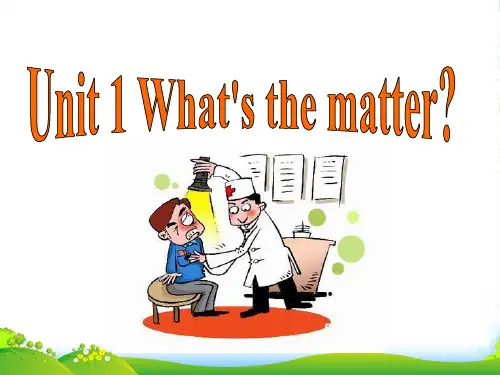
►—What's the matter?你怎么了? —I have a cold.我感冒了。 【典例在线】
—What's the matter with him?他哪里不舒服? —He has a headache.他头痛。 —What's wrong with you?你怎么了? —There is nothing wrong with me.我没什么事。 —Is there anything wrong with your bike?你的自行有什么问题吗? —Yes.It doesn't work.是的,它坏了。
1.have a cold 患感冒 2.lie down 躺下 3.take one's temperature 量体温 4.have a fever 发烧 5.take breaks 休息 6.get off 下车 7.go to a doctor 看医生 8.to one's surprise 使……惊讶的 9.right away 立刻;马上 10.fall down 摔倒
【拓展精析】 What's the matter (with sb.)?相当于What's wrong (with sb.)?常用于询问病情或 是遇到了何种麻烦,意为“你怎么啦?/你哪儿不舒服?/出什么事了?” 表示这一意义的其他常用口语表达还有: What's wrong?怎么了? What's up?出什么事了? What's the trouble?有什么麻烦吗? What happened?发生了什么事? Is there anything wrong?有什么不对劲吗? well在这里为形容词,意为“身体好”,相当于fine/healthy/fit。 【活学活用】 1)—Hi,John!__B__? —It's Lucy,my dog.Her leg is hurt. A.How are you B.What's the matter C.Who's that D.What's Lucy like
►death,die,dead,dying 【典例在线】
It was a matter of life and death to them.对他们来说这是生死攸关的事情。 His father died ten years ago.他的爸爸十年前死了。 The poor man has been dead for five years.那个可怜的男子已经死了五年了。 The doctor tried to save the dying boy.这个医生尽力去抢救这个生命垂危的孩子 。 【拓展精析】 death作名词,意为“死;死亡”。 die作不及物动词,强调“死”的动作,它是一个终止性动词,一般和过去时 连用,不能和延续性的时间状语连用。
3)His dog died two years ago. 4)The police were surprised at his death. 5)The poor dog had no food.It was dying.
►exciting,excited 【典例在线】
I was very excited when I heard the exciting news.当我听到这个令人兴奋的消息 时,我激动极了。 【拓展精析】 exciting意为“令人感到兴奋的”,主语通常是物或事件。 excited意为“激动的;兴奋的”,主语通常是人,常用于短语be excited about 中,意为“对……感到兴奋的”。 注意:类似此用法的词还有surprising/surprised,interesting/interested等。
dead是形容词,意思是“死的”,强调“死”的状态,一般作表语和定语。 表示“死了多长时间”,用“have/has been dead+for+时间段”或“died+时 间段+ago”。 dying是die的现在分词形式,也可作形容词,意思是“快死的”,可作表语和 定语。 【活学活用】
2)The dog has been dead for about two months.
21.clean up 打扫干净 22.cheer up 使变得高兴起来 23.give out 分发;散发 24.come up with 想出;提出 25.give away 赠送;捐赠 26.put off 推迟 27.make a difference 影响;有作用 28.set up建立;设立 29.take after 相像
6.You could help to clean up the city parks.你可以帮助打扫城市公园。 7.We can't put off making a plan.我们不能推迟制订计划。 8.She could read by herself at the age of four.她在四岁时就能够独自看 书了。 9.I want to learn more about how to care for animals.我想了解更多关于 怎样去照顾动物的信息。 10.Volunteering here is a dream come true for me.在这里当志愿者对我 来说是梦想成真。 11.You helped to make it possible for me to have Lucky.有了你的帮助, 我才有可能拥有“幸运儿”。
8.decide(v.)→decision(n.)决定 9.death(n.)→die(v.)死→dead(adj.)死的 10.feeling(n.)→feel(v.)感觉到 11.break(n.&v.)→broken(adj.)破损的 12.difficulty(n.)→difficult(adj.)困难的→easy(adj.反义词)容易的 13.excited(adj.)→exciting(adj.)令人兴奋的 14.kind(n.&adj.)→kindness(n.)仁慈;善良 15.understand(v.)→understanding(adj.)善解人意的 16.train(v.)→training(n.)训练;培训
be used to doing sth.表示“习惯于做某事”,指某动作过去不常做而现在已习 惯做了,强调目前的情况;to为介词,后接名词或动名词。 be used to do sth.表示“被用来做某事”,为被动语态。 【活学活用】
1)He __A__ go out with his parents but now he ________ staying at home alone. A.used to;is used to B.is used to;used to C.use to;is used to D.is used to;is used to
人教版英语八年级下 Units1-2复习
1.foot(n.)→feet(复数)脚;足 2.lie(v.)→lay(过去式)→lying(现在分词)躺 3.tooth(n.)→teeth(复数)→toothache(n.)牙痛→ dentist(n.)牙医 4.her(pron.)→herself(反身代词)她自己 5.our(pron.)→ourselves(反身代词)我们自己 6.knife(n.)→knives(复数)刀 7.importance(n.)→important(adj.)重要的→ unimportant(反义词)不重要的
11.get into trouble 陷入麻烦 12.be used to 习惯于…… 13.run out of 用光;用尽 14.take risks/a risk 冒险 15.hot tea with honey 加蜂蜜的热茶 16.be in control of 掌管;管理 17.be interested in 对……感兴趣 18.cut off 切除 19.get out of 离开;从……出来 20.give up 放弃
C.too;to D.enough;to
►imagine 【典例在线】 Can you imagine life on the moon?你能想象在月球上的生活吗? Don't imagine yourself to be always correct.不要以为自己总是对的。 I can't imagine what he looks like.我想象不出他长什么样子。 【拓展精析】 imagine动词,意为“想象;设想”,其后可接名词、代词、动名词或从 句。 【活学活用】 2)—Dear,what about going to beaches for vacation? —Great!__D__ we're lying on the beach in the sun,enjoying music.It must
合集下载
人教版八年级英语下册Unit 1全单元教学课件(共115张PPT)
Can you name the parts of the body
matter n. 问题;事情
sore
adj. 疼痛的;酸痛的
have a cold 感冒
stomachache n. 胃痛;腹痛 (stomach)
have a stomachache 胃痛
foot
n. 脚;足
neck n. 脖子
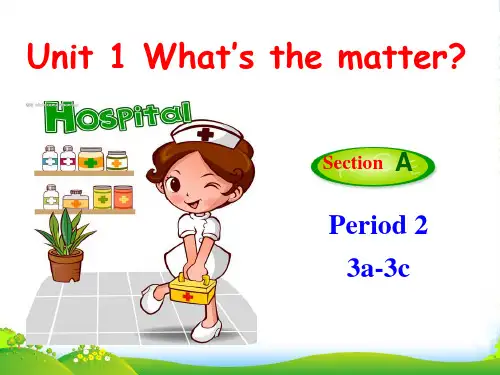
Girl: I _h_a_v_e__a_t_o_o_t_h_a_c_h_e.
Conversation 5 Betty: What’s the matter, Judy?
Ann: She _h__a_s_a__so_r_e__t_h_r_o_a_t.
1c Look at the picture. What are the students’ problems? Make conversations.
2c Make conversations using the information in 2a and
2b.
A: What’s the matter? B: My head feels very hot. A: Maybe you have a fever. B: What should I do? A: You should take your temperature.
break
n. 间歇;休息
hurt (hurt) v. (使)疼痛;受伤
1a Look at the picture. Write the correct
letter [a-m ] for each part of the body.
_h_ arm __e_ back __g_ ear
___ eiye ___ fboot
matter n. 问题;事情
sore
adj. 疼痛的;酸痛的
have a cold 感冒
stomachache n. 胃痛;腹痛 (stomach)
have a stomachache 胃痛
foot
n. 脚;足
neck n. 脖子
Girl: I _h_a_v_e__a_t_o_o_t_h_a_c_h_e.
Conversation 5 Betty: What’s the matter, Judy?
Ann: She _h__a_s_a__so_r_e__t_h_r_o_a_t.
1c Look at the picture. What are the students’ problems? Make conversations.
2c Make conversations using the information in 2a and
2b.
A: What’s the matter? B: My head feels very hot. A: Maybe you have a fever. B: What should I do? A: You should take your temperature.
break
n. 间歇;休息
hurt (hurt) v. (使)疼痛;受伤
1a Look at the picture. Write the correct
letter [a-m ] for each part of the body.
_h_ arm __e_ back __g_ ear
___ eiye ___ fboot
人教版英语八年级下册 Unit 2课件 (共54张PPT)
Grammar Focus I Highlight phrasal verbs(短语动词).
I’d like to help homeless people. You could ask hospitals to let you visit the kids and cheer them up. She decided to try out for a volunteer after-school reading program. I’m making some signs to put up around the school.
4a. Fill in the blanks with the phrasal verbs in the box.
call up, come up with, put off, cheer up, put up, hand out, give out
3. Our class is trying to come up with some ideas to cheer up
run out of take after fix up give father old clothes
I take after my father.
1b. Match the phrasal verbs with the nouns. Then make sentences with the phrases..
11
1d. Listen again. Circle T for true or F for false.
1. Jimmy fixes up broken bicycle parts, like wheels. T F
2. Jimmy sells bikes. repairs/gives away
人教版八年级下 Unit 1 Section A 复习课件(PPT29张)
表示不适 be/feel+形容词
be/feel tired be/feel sick be/feel dizzy(晕头转向) head feels hot
表示伤害 hurt/cut/break+ 身体具体部位 hurt my leg cut her finger break his arm
get+V-ed形式 get hurt get cut in the hand get hit by a ball
Go along this road, and you can get to my school.
2. 看见某人正在做某事_s_e_e__s_b_. _d_o_in_g__…__
I saw a girl playing by the river.
3. 在路边__o_n__th__e_s_i_d_e_o_f_t_h_e__road
=Have you got a(n) + 疾病名称? 6. Did you catch/get…?
有关疾病、伤害及救治的表达法
表示患病 have/get a(n)+疾病名称(have更常见)
e.g. have a cold have a fever have a cough
get a stomachache get a toothache have a sore back have a sore back 某些搭配中也使用catch,如catch a cold等。
情态动词should的用法。
1) You should drink more hot tea. 2) He shouldn’t eat junk food. 3) Should she see a dentist? should 是情态动词,意为“应该,应当”
人教版八年级英语下册Unit 1 What’s the matter Period 2课件(43张)
see sb. do sth. 看见某人做过某事 e.g. I often see him draw a picture.
1) 我看见他时他正在河边玩。 I saw him p_l_a_y_in_g__ by the river.
2) 我看见过他在河边玩。 I saw him __p_la_y_ by the river.
3. He only thought about saving a life.
你能看出“without thinking”、“about saving a life” 的共同点吗? 共同点:介词 + doing
介词 + 名词 宾格代词 doing
用适当的形式填空。 1) I am fine. What about _h_e_r_ (she)? 2) Thanks for _te_l_li_n_g_ (tell) me the story? 3) It is a sunny day. How about _g_o_in_g_ (go)
A:You should _li_e__d_o_w__n_a__n_d__r_e_st.
B: That’s a good idea.
Pairwork
Advice: What should they do? A:What’s the matter with you ?
B:I have a toothache.
阅读指导
1. 先认真阅读每个题目的意思,弄清要求我们 寻找什么信息。
2. 带着问题,再来读短文。在短文中认真寻找 我们所需的信息,在有相关内容的地方,应 多读几次,认真理解,以找到想要找的信息。
3. 最后 ,再通读一遍,检查一下所找的答案是 否正确。
八年级英语下册 Unit 1-2复习课件 (新版)人教新目标版
募集; 征集 瞎的; 失明的 变化; 改变 兴趣; 关注 使感兴趣; 使关注
【联想串记】不可不知 feet
1. foot (n. )
→____(复数)脚; 足
2. climb (v. )
climber →_______(n.
)登山者;
攀登者
3. knife (n. )
→_k_n_i_v_es_(复数)刀
have a _f_ev_e_r_
get _o_ff_ give _u_p_ put _o_f_f
care _fo_r_
9. 赠送; 捐赠
give _a_w_a_y_
10. 修理; 装饰
fix _u_p_
11. 建立; 设立
_s_e_t up
12. make a difference
_影__响__;_有__作__用__
胃; 腹部 放松; 休息 间歇; 休息 (使)疼痛; 受伤 乘客; 旅客 问题; 苦恼
7. _h_i_t (v. ) 8. _s_it_u_a_t_io_n_(n. ) 9. _v_o_l_u_n_te_e_r_(v. )
(n. ) 10. _n_o_t_ic_e_(n. )
(v. ) 11. _lo_n__el_y_(adj. ) 12. _se_v_e_r_a_l(pron. )
【核心词汇】 1. trouble n. 问题; 苦恼 【填一填 思维激活】 ①不要嘲笑处于困境中的人。 Don’t laugh at the people__________ __________. ②We have some trouble ____________________(work) out the problem. 答案: ①in trouble ②working
初中英语 人教版八年级下册期末复习 Unit1(共17张PPT)

get out 从..出来,泄露
get down 写下,记 下2020/6/8
=reach,arrive at/in get to 到达
get 短语
get on 上车
get off 下车
get into 陷入、开始参 与
8
v. 死亡
die
v.单三
dies
adj. 死亡的
dead
2020/6/8
n。死 亡
第三 人称
he/she/it他/她/它 they他们
himself/herself/itself themselves
2020/6/8
3
疾病 类短语
2020/6/8
have a +疾 病
have a fever
have a +身 体部位-ache
I have a headache
have a +sore身体部 位
期末复习
Unit 1
课时一
2
1
2. What`s the trouble(with sb)?
1. What`s the matter(with sb)?
2020/6/8
某人怎么了?
2
第一 人称
I我
our 我们
第二 人称
you 你 you你们
反身代词
myself ourselves
yourself yourselves
立刻
10
enjoy oneself
dress oneself
2020/6/8
help oneself to
hurt /cut oneself
teach oneself
by oneself
get down 写下,记 下2020/6/8
=reach,arrive at/in get to 到达
get 短语
get on 上车
get off 下车
get into 陷入、开始参 与
8
v. 死亡
die
v.单三
dies
adj. 死亡的
dead
2020/6/8
n。死 亡
第三 人称
he/she/it他/她/它 they他们
himself/herself/itself themselves
2020/6/8
3
疾病 类短语
2020/6/8
have a +疾 病
have a fever
have a +身 体部位-ache
I have a headache
have a +sore身体部 位
期末复习
Unit 1
课时一
2
1
2. What`s the trouble(with sb)?
1. What`s the matter(with sb)?
2020/6/8
某人怎么了?
2
第一 人称
I我
our 我们
第二 人称
you 你 you你们
反身代词
myself ourselves
yourself yourselves
立刻
10
enjoy oneself
dress oneself
2020/6/8
help oneself to
hurt /cut oneself
teach oneself
by oneself
Unit 1-Unit 2人教版八年级英语课堂教辅PPT
Get the meaning and use proper words.
1. The a_m__o_u_n_t_ of information in the encyclopaedia is huge. 2. Hua Luogeng didn’t go to school, he taught himself i_n_s_t_e_a_d__. 3. Mr. Brown r_e_a_li_z_e_d_ the problems and called for help at once. 4. Chinese Zodiac (生肖) p_e_rh__a_p_s_ decides what you are like, but we are not sure.
The Chinese zodiac animals is assigned in order, including the rat, ox, tiger, rabbit, dragon, snake, horse, sheep, monkey, rooster, dog and pig.
The Chinese Zodiac is about human relationship and respect for the nature. And people are said to have different characteristics (性格) of the animal which symbolizes (象 征) the year they were born in. For example,
Grammar Revision 语法运用
The Chinese Zodiac is also known as Sheng Xiao. According to the ancient books, it has come into use in early Qin Dynasty. People used to name years with 12 animals.
八年级下册英语unit1-2复习课件
Collaboration
Groups of words that are often used together, such as "in front of," "on the other hand," etc
Idioms
A fixed phrase whose meaning cannot be inferred from a single word, such as "hit the sack" or "fed up."
Vocabulary application scenarios
Everyday life
Professional settings
Words used in common situations, such as shopping, school, home, etc
Terminology used in specific occupations or industries, such as law, medicine, technology, etc
The review should also include a review of the key points and main ideas of each text, as well as an analysis of the structure and organization of the text
Key expressions in the text
It is recommended to provide students with a list of key expressions and resources they need to memorize and use them correctly in their daily communication and writing
Groups of words that are often used together, such as "in front of," "on the other hand," etc
Idioms
A fixed phrase whose meaning cannot be inferred from a single word, such as "hit the sack" or "fed up."
Vocabulary application scenarios
Everyday life
Professional settings
Words used in common situations, such as shopping, school, home, etc
Terminology used in specific occupations or industries, such as law, medicine, technology, etc
The review should also include a review of the key points and main ideas of each text, as well as an analysis of the structure and organization of the text
Key expressions in the text
It is recommended to provide students with a list of key expressions and resources they need to memorize and use them correctly in their daily communication and writing
【新】人教版八年级英语下册Unit2 全单元课件(共142张ppt).ppt
A: I’d like to work outside. B: You could help clean up the city parks.
What other ways we could help people?
Just think and fill in the blanks
according to the following pictures.
Section A
Section A
Do you often help others?
What other ways we could help people?
They are hungry and homeless.
help stop hunger
There are many other ways you
_______________________________________________
__Y_o_u__c_o_u__ld__h__e_lp__t_h_e__p_a__s_s_e_n_g_e_r_s__w__it_h___th__e_ir__l_u_g_gage. __Y__o_u__c_o_u_l_d__h_e_l_p__p_l_a_n_t__t_r_e_e_s_a_n__d__g_r_a_s_s__to_______ __b_e_a__u_t_if_y__y_o_u__r_h__o_m__e_t_o_w__n_.____________________ ___Y_o_u__c_o_u__ld__h__e_lp__t_h__e_o_l_d__p_e_o__p_l_e_c_r_o__ss__t_h_e__s_t_r_e_et. __Y__o_u__c_o_u_l_d__h_e_l_p__t_h_e__o_ld__p__e_o_p_l_e__c_le_a__n__u_p__t_h_e_i_r_houses. ___Y_o_u__c_o_u__ld__h__e_lp__t_h__e_p__o_li_c_e__c_a_t_c_h__t_h_e__th__ie_v__e_s_. _
What other ways we could help people?
Just think and fill in the blanks
according to the following pictures.
Section A
Section A
Do you often help others?
What other ways we could help people?
They are hungry and homeless.
help stop hunger
There are many other ways you
_______________________________________________
__Y_o_u__c_o_u__ld__h__e_lp__t_h_e__p_a__s_s_e_n_g_e_r_s__w__it_h___th__e_ir__l_u_g_gage. __Y__o_u__c_o_u_l_d__h_e_l_p__p_l_a_n_t__t_r_e_e_s_a_n__d__g_r_a_s_s__to_______ __b_e_a__u_t_if_y__y_o_u__r_h__o_m__e_t_o_w__n_.____________________ ___Y_o_u__c_o_u__ld__h__e_lp__t_h__e_o_l_d__p_e_o__p_l_e_c_r_o__ss__t_h_e__s_t_r_e_et. __Y__o_u__c_o_u_l_d__h_e_l_p__t_h_e__o_ld__p__e_o_p_l_e__c_le_a__n__u_p__t_h_e_i_r_houses. ___Y_o_u__c_o_u__ld__h__e_lp__t_h__e_p__o_li_c_e__c_a_t_c_h__t_h_e__th__ie_v__e_s_. _