
牛津英语模块 3 Unit 1 Welcome to the unit
Discussion
2. Some people can not remember something until they have seen it . Others only need to hear something once or twice before they can remember it . Which sense helps you learn best? How does it help you?
In most cases, the saying is true. However,
sometimes our senses will cheat us. To see the
world clearly, we should also be armed with
scientific knowledge and think twice before action.
Fill in the table
We do
see hear
with
eyes
the sense
sight
hearing taste tongue/taste buds taste smell smell nose touch/feel hands/feet/skin touch
ears
Read the short passage quickly and then answer the questions quickly.
2. Do you know how blind people can read?
They can read by touching raised dots which represent numbers and letters. This system is called.
Braille.
3. How do the deaf communicate with each other?
like you don’t need money;
Study
like tomorrow is the day for final exams.
Homework
1. Preview the reading part, do Exercise C1 and C2. 2. Preview the reading strategy.
senses
sight, hearing, taste, smell and touch. Let’s talk about the importance of each sense. e.g. We see the world with our eyes. Without the sense of sight, we would live in total darkness. We ____ with __________. Without _________, we would___________________.
What do they have in common?
They all made great achievements even if they lost some of their senses.
To be a person with passion
Live
like tomorrow is the end of the world; love like you’ve never been hurt; Work
1. What would happen if you lost one or two of your senses?
Sometimes sense affect one another; sometimes when one of the sense fails, other senses become stronger.
Move or not?
Which blue circle is bigger, a or b? Are the eyes of the same height?
How many people can you see in the picture?
After seeing these pictures, what do you think of the saying to see is to believe?
They use body language or sign lang pictures and answer the question below each picture.
1. What can you see in this picture? 2. How would you judge the length of the two lines? 3. How can you prove that the two lines are straight? 4. Can the symbols be read in only one way? 5. Why are people misled by their own eyes.
牛津高中英语
(模块三 · 高一下学期)
Unit
1
Welcome to the unit
Unit 1
课件描述:
本课件就五种感觉在学生生活和学 习中的重要性为话题,设计情景让学生 参与到听和说的活动中来,提供相关图 片和讨论话题。学生通过讨论不仅练习 了听说技能,而且激活了内容图式,为 Reading的教学做好了铺垫。
Fill in the blanks with words that have something to do with “senses”.
noticed that there was a dark When he got there, he _________ hole. He ________ into it, but could ________ looked see nothing. listened hear He ________ with his ears, he could _______ nothing, either. He _________ sensed it for a long time. He _______ watched something strange. He ___________ the side of the hole. felt/touched felt It ______ hot. Suddenly some noises were ________ from the hole. It ________ sounded like someone was cooking heard inside.
The world of our
senses
Brainstorming
• With what can we see and hear? • How can we know whether a dish is delicious? • How can we know that a flower has a pleasant smell? • What do we do when we want to know whether the water in the basin is hot or cold?
Discussion
3. Do you know of any people who have made great achievements even if they have lost the ability to use one of their senses? What did they achieve?
Unit 1 Welcome to the unit 课时练习 牛津译林版英语七年级上册(含答案)
Unit 1 This is me!Comic strip & Welcome to the unit一、根据句意及首字母提示写出单词1. I don’t know you. Can you tell me your n________, boys?2. We are m________of our country.3. Jim l________playing football.4. Sunday is the f________day of a week.5. Does Daniel like r________books?6. These aren’t our________(电子狗).7. I say “Good________(上午)” to my teachers every day.8. Does Simon like________(看) books?二、用所给词的适当形式填空1. How many________(class) do you have every day?2. My friend Jim and I________(be not) in the same class.3. ________English teacher is Miss Li. She is very nice to________(we).4. Do you know________(that)________(boy) under the tree? They’re playing card games.5. Everyone________(like)________(listen) to music.6. What’s________(be) name, please?7. Are you________(I) Maths teacher?8. I’d like________(be) your penfriend.9. Sandy and I________(be) twelve.10. Please tell me how________(read) this book.三、句型转换1. I am Amy.(改为一般疑问句)________ ________Amy?2. My name is Simon.(对画线部分提问)________ ________ ________name?3. They are my classmates.(改为单数句)________ ________my________.4. I am at school now.(改为否定句)I________ ________at school now.5. She is Helen.(改为同义句)________ ________ ________Helen.6. Nice to meet you.(改为同义句)I________ ________to________you.7. Hello, I am Kitty.(改为同义句)Hello, ________ ________is Kitty.8. I am your English teacher.(改为一般疑问句)________you________English teacher?9. He likes e-dogs.(改为否定句)He________ ________e-dogs.10. Are you my Chinese teacher?(作肯定回答)Yes, ________ ________.四、单项选择( ) 1. -What’s your name?-________.A. SimonB. Yes, I amC. Your name is TimD. No, I’m Jill ( ) 2. -________! I’m Millie.-Good afternoon! I’m Helen.A. Good morningB. GoodbyeC. Good afternoonD. Good night( ) 3. -John, you must go to bed now.-OK, Mum. ________.A. Good morningB. Good eveningC. Good nightD. Good afternoon( ) 4. -Can you________my dog for three days?-Yes, of course.A. look afterB. look forC. look likeD. look at ( ) 5. -What’s________job?-He is an office worker.A. your fatherB. your father’sC. your sisterD. your sister’s五、翻译句子或短语1. 朝闻天下_______________2. 她的主人_______________3. 喜欢我们的英语老师______________4. 第一节语文课____________________5. 如何照顾基蒂____________________6. 一只电子狗______________________7. 很高兴见到你____________________8. 他们的名字______________________9. 你的姐姐叫什么名字?_________________________10. 请告诉我怎样照料电子狗。
牛津译林版高中英语选择性必修第一册 Unit3 Welcome to the unit教案

Book 1 Unit 3 The art of paintingWelcome to the unit一、教学目标By the end of the section, students will be able to:1. know some popular types of painting;2. describe the four paintings in the textbook;3. introduce one or two world-famous painters and their masterpieces.二、教学重难点1. To tell different types of painting;2. To talk about world-famous paintings and their painters.三、教学过程步骤教学活动设计意图互动时间/模式Lead-inStep 1 The teacher has students brainstorm information related to the types of painting.通过头脑风暴活动,激发学生的学习兴趣,导入话题;引导学生通过类型、使用的工具或材料和用途来谈论绘画,并联系自身经历,为单元学习做好准备。
5’Individual WorkClass WorkStep 2 The teacher draws students’ attention to the art of painting by presenting more paintings and letsstudents focus on the following question.How many types of painting do you know about?通过头脑风暴,激活学生已有的背景语言知识,自然过渡到单元学习内容。
5’Group WorkFree talk。
牛津英语模块一U1_Welcome to the unit

5. believe in unexplained things
• believe in 信任;信仰 believe相信某人 的话 • We usually believe him , but this doesn’t mean we always believe in him.
6. can’t tell? tell … from … 区分 tell apart 区分,分清 tell sb (not) to do /tell sb that …告诉 Nobody can tell the future.断定;知道
Group discussion
A. If you saw a UFO or a monster some day, what would you do? Why? B. Is it necessary to explore the unexplained tales?
Language points
The most beautiful thing one can
experience is mysteries. They are truly the basis of all arts and sciences.Albert E Nhomakorabeanstein
What can you see in the video?
3. Translate the following sentences into English: • 1. 他们看起来完全一样,你怎么认得出谁 是谁啊? • 2. 那个粗心大意的司机把汽车撞在一棵大 树上。 • 3. 他上周偶然碰见了他大学时的老师。
Stonehenge Prehistoric monument on Salisbury Plain, southern England, consisting of two concentric circles (同心圆) of large standing stones, the heaviest of them weighing probably about 45 tons, one of the most famous prehistoric sites in the world, added to the UNESCO's list of World Heritage Sites in 1986, built between 2800 and 1500 BC , thought to have been an astronomical calendar (天文历) or a temple to the sun.
高一英语牛津版必修3 Unit1 The world of our senses 重点词汇讲解及配套练习
U1 重点词汇讲解Welcome to the unit1.the world of our sensessense:n.(1)感官,感觉She has a good sense of smell. 她有良好的嗅觉。
(2)(对某物的)感觉I had the sense that he was lying. 我有种感觉,他在说谎。
【拓展】common sense 常识a sense of achievement 成就感 a sense of humor 幽默感make sense 有意义,讲的通His argument doesn’t make sense. 他的论点没有意义。
make sense of 理解,了解Can you make sense of the difficult article? 你能理解这篇较难的文章吗?v. 感觉到sense sth. / thatsense danger感觉到危险I sensed that he was lying. 我感觉到他在说谎。
Reading1.The truth is that the fog is too thick for the bus to run that far.truth: n. 真实,事实to tell you the truth 说实话true: adj. 正确的,真正的Finally my dream has come true. 最终我的梦想实现了truly: adv. 真实地,真正地2.As Polly observed the passengers on the train, she sensed that she was being watched by a tallman in a dark coat.observe: vt.(1) 观察observe sth./sb.; observe thatThe teacher observed that some students were asleep. 老师发现一些学生睡着了。
牛津译林版高中英语必修三Unit1The world of our senses Section A Welcome to the unit

高中英语学习材料(灿若寒星*制作整理)Unit 1 The world of our senses Section A Welcome to the unit & ReadingI.单词拼写(根据汉语提示,写出空白处各单词的正确形式)1. The gate is too (狭窄的) for a car.2. Let me go shares with you in the taxi(车费).3. Much to my (宽慰), the car was notdamaged.4. She (抓紧) the rope and pulledherself up.5. I won’t agree to drive there; there’s(无处) to park.6. If you walked lightly, your (脚步声)will not be heard.7. The weather (预报) said it would bea dry sunny day tomorrow.8. I would be (感激的) if you could keepthis a secret.9. The electricity went out and the building was in(黑暗).10. We were (忧虑的) about Mary’ssafety, when she was doing the rescue work in Japan.II.根据文章内容填空1. a foggy afternoon, wondering2.the buses would still be running, I left work earlier than usual. Once out in the street, I hurried toward my usual bus stop, only to be told the bus could not run 3. far as King Street that day. I had to 4. the underground to Green Park station, where there was no one in sight. As I walked5. the narrow street, I heard footsteps6. , but when I glanced around, I found the footsteps gone. Suddenly I was frightened by a man’s rough hand brushing my cheek. He said sorry to me and moved away. Then I heard the footsteps again. I felt7. frightened that I couldn’tmove at all. Luckily, it was a blind man 8.offered to help me, and with his help I got to my living place, 86 King Street.III.单项填空1. (2012·长沙高一检测)She it for along time—so long, that she fell asleep.A. glanced atB. glared atC. stared atD. observed at2. (2012·深圳高一检测)Now we are leaving thebusiness district and the harbour.A. approachB. approach toC. approachingD. approaching to3. (2011·广州高一检测)—I wonder if she will showup at the concert.—She will. She is only too to watch the famous director.A. anxiousB. proudC. interestedD. satisfied4. I promise that I’ll find him, he is.A. howeverB. wheneverC. whereverD. no matter5. Dogs are clever animals and they can be trainedto houses.A. look forB. watchC. watch outD. watch out for6. Once , the cultural palace will be opento the public.A. completedB. being completedC. completingD. to be completedD. was encouraged7.(2012·天水高一检测)To our , Jane’sillness proved not to be as serious as expected before.A. judgementB. reliefC. opinionD. hope8. At the railway station, the mother waved good-byeto her daughter until the train was . A. out of sight B. out of reachC. out of orderD. out of love9. My little sister was found on thebicycle, trying to balance it.A. sitB. to sitC. sittingD. sat10. Tom’s keys to his house were to be found, so he had to go to John’s place for the night.A. nowhereB. everywhereC. somewhereD. anywhere11. We are about the instructionson the bottle.A. confusing; confusingB. confused; confusedC. confusing; confusedD. confused; confusing12. Dogs have a very good of smell andare often used to search for survivors in an earthquake.A. senseB. viewC. meansD. idea13. After going far, we did not want toturn back.A. enoughB. muchC. suchD. that14. Polly wanted to run, but fear held her .A. quietB. calmC. stillD. peaceful15. I thought the work would be very difficult. Thetruth is it is very easy.A. thatB. whatC. whyD. when16. There was a look on his face when hemet the problem.A. confusing; confusingB. confused; confusedC. confusing; confusedD. confused; confusing17. The patients were over a period ofseveral weeks.A. watchedB. noticedC. observedD. stared at18. We must the rules, otherwise we shallget punished.A. breakB. watchC. observeD. fall19. After a quick at the patient the doctorrang for an ambulance.A. glanceB. lookC. glareD. stare20. , the problem seemed very easy.A. On first glanceB. At first glanceC. With first glanceD. Upon first glance21. (2012·忻州高一检测)Snow shows theof the winter; it’s getting colder and colder.A. disadvantageB. approachC. headlineD. achievement22. Can you the light switch from whereyou’re sitting?A. reachB. returnC. lookD. receive23. (2011·四川高考)Always remember to put suchdangerous things as knives out of children’s .A. touchB. sightC. reachD. distance24. for the dog. You’d better it.A. Look out; get away withB. Watch out; get away fromC. Block out; get close toD. Be careful; get out of25. The general manager suggests those foundin the office should be fired immediately.A. smokeB. to smokeC. smokingD. smokedIV.阅读理解For many years, no one could communicate with people who had been born without hearing. These deaf people were not able to use a spoken language.But, beginning in the 1700s, the deaf were taught a special language. Using this language, they could share thoughts and ideas with others. The language they used was a language without sound. It was a sign language.How did this sign language work? The deaf were taught to make certain movements using their hands, faces and bodies. These movements stood for things and ideas. People might move their forefingers across their lips. This meant “You are not telling the truth.”They might tap their chins with three fingers. This meant “M y uncle”.The deaf were also taught to use a finger alphabet (字母表). They used their fingers to make the letters of the alphabet. In this way, they spelled out words. Some deaf people could spell out words at a speed of 130 words per minute.Sign language and finger spelling are not used as much as they once were. Today, the deaf are taught to understand others by watching their lips. They are also taught how to speak.1. In the 1700s, the deaf were taught .A. to speakB. a sign languageC. to watch othersD. spoken language2. Sign language is .A. not used as much today as it once wasB. used as much today as it once wasC. no longer used in the schoolsD. never used as much as today3. The deaf “talked” to other people.A. by shouting and singingB. by moving their hands, faces and bodiesC. without using any lettersD. without using any languages4. The story as a whole is about .A. learning to spellB. teaching the deaf to speakC. how the deaf communicateD. understanding Indian sign languageV.任务型阅读请认真阅读下列短文,并根据所读内容在文章后图表中的空格里填入最恰当的单词。
牛津译林版模块三unit1-Welcome-to-the-unit
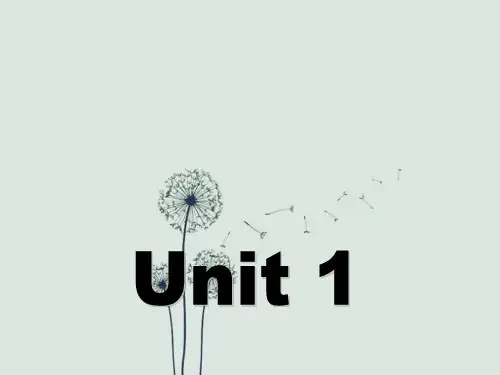
What do they have in common?
张海迪
Beethoven
They all made great achievements even if they lost some of their senses.
Fill in the blanks with words relative to senses. When he got there, he _n_o_t_ic_e_d_ that there was a dark hole. He _lo_o_k_e_d_ into it, but could ___s_e_e_ nothing. He _li_s_te_n_e_d_with his ears, he could ___h_e_a_r_ nothing, either.
If your nose is blocked from a cold, you may find the food is tasteless.
The senses of taste and smell are intimately linked to one another. Often the loss of one will result in the loss of the other.
2. Some people cannot remember something until they have seen it. Other people only need to hear something once or twice before they can remember it. Which sense helps you learn best? How does it help you?
译林版牛津初中英语七年级上册Unit3Welcome to our school课堂教学案
译林版牛津初中英语七年级上册Unit3Welcome to our school课堂教学案译林版牛津英语七年级上册Unit 3 Period 1Comic Strip & Welcome to the Unit 课堂教学案一.Learning ahead of time ( 自主先学)哪一个______________ 最好______________ 所以______________ 生物______________ 地理________________ 历史______________日期________________ 会议_____________ 大门______________二.Cooperative learning (合作助学)1.学校开放日______________________ 2. 家长会______________________3.在学校门口_________________________4. 你最喜欢哪门学科?____________________5.What’s the date today? ______________________6.What time is it? ______________________三.Extensive learning (拓展导学)1.问日期:What’s the date today? =What date is it today? 回答It’s …2.问时间:What time is it? = What’s the time? 回答It’s …3.问星期几:What day is it today? It’s …4. the Open Day 开放日,接待日5.the parents' meeting 家长会6.watch two of our lessons 观摩我们的两堂课的教学四.Enhancing learning through testing (检测促学)(一)很据句意和汉语提示写出单词。
译林牛津版九年级上册英语Unit 3 单元词句梳理
Unit 3 Teenage problemsPeriod 1 Comic strip & Welcome to the unit必背单词1. mark n. 分数2. mad adj. 发疯的; 生气的3. eination) 考试,测试4. perhaps adv. 或许,可能必背短语5. get fat 变胖6. get enough sleep 得到充足的睡眠7. drive me mad 把我弄疯了8. close friends 亲密的朋友9. get low marks in eanage your time better 合理地安排你的时间必背句子11. Why not eat less and eore? 为什么不少吃多运动呢?12. They don’t have time for me. 他们没有时间陪我。
Period 2 Reading必背单词1. deal vi. 处理2. choice n. 选择→ choose v. 选择3. but conj. & prep. 除……外;只有→ but conj. 但是;然而4. awake adj. 醒着的→ wake v. 唤醒;醒来5. hardly adv. 几乎不→ hard adj. 坚硬的;艰难的adv. 努力地;艰难地6. imagine vt.& vi. 想象, 设想7. doubt vt. 怀疑8. worth adj. 值得; 值……钱9. suggestion n. 建议→ sugge st v. 建议;提议10. cause n. 原因11. strict adj. 严格的, 严厉的12. schoolwork n. 课业13. valuable adj. 宝贵的;贵重的→value n. 价值14. friendship n. 友谊15. list n. 清单必背短语16. deal with 处理,对付17. stay up late 熬夜到很晚18. stay awake 保持清醒19. have spare time for my hobbies 有空闲时间花在我的业余爱好上20. be worth doing sth. 值得做某事21. dream of a long holiday 梦想有个长假期22. offer me some suggestions 给我提供一些建议23. become the cause of my problem 成为我的问题的原因24. worry about the time 担心时间25. get into trouble 陷入困境26. play outside 在外面玩27. be strict with sb. 对某人要求严格28. develop our hobbies 培养我们的业余爱好29. stay out 待在户外;( 晚上) 不回家30. valuable advice 宝贵的建议31. make a list of 列一份清单32. work out 算出; 解决33. according to 根据必背句子34. I do not know how I should deal with it.我不知道应该如何解决它。
牛津译林版英语必修一Unit3Welcometotheunit教案
牛津高中英语教学设计单元:Unit 3 Looking good, feeling good板块:Welcome to the unitThoughts on the design:本节课是以练习口语为主的语言实践课。
通过图片和开放性问题让学生针对生活现状谈论关于如何显得美丽和保持健康。
充分培养学生运用语言交际的能力和自主学习能力,调动他们学习英语的积极性和创造性。
进行分组自由讨论,让学生发表自己的见解,引发学生通过同伴合作讨论穿着、饮食和锻炼等问题,引起学生对问题的探究,培养学生观察问题的能力,从而引出本单元的话题——气色好,感觉好。
Teaching aims:After learning this part, the students will be able to describe people’s current situations and express their own opinions by comparing the importance of beauty and health. Their oral English will be improved by talking about the pictures.Teaching procedures:Step 1 Lead-in1.Let the students enjoy some pictures about some beauties and some handsome young men. Then activate students'imagination by asking the following questions:● Are these movie stars good-looking? Are they very famous?● Are the young men very handsome? Where can you find them?● Do you want to be as beautiful and attractive as them?2. Ask the students to say something about an unpleasant picture and answer this question:● Do they look good and feel good? Why?3.Ask the students to answer the following two questions concerning themselves:● Do you think appearance plays an important part in your life?● Which do you think is more important, looking good or feeling good?[Explanation]通过一些图片引出本课要谈论的话题,注意调动学生的兴趣,激发其想象力,尽可能鼓励他们使用英语,培养良好的口语能力。
牛津译林版英语八上Unit1《Friends》(welcometotheunit)说课稿
牛津译林版英语八上Unit 1《Friends》(welcome to the unit)说课稿一. 教材分析《Friends》是牛津译林版英语八上Unit 1的内容,本节课的主要话题是关于朋友和朋友关系的描述。
通过本节课的学习,学生能够掌握描述朋友外貌、性格和爱好等方面的词汇和句型,提高他们的英语听说读写能力。
教材内容丰富,贴近学生生活,能够激发学生的学习兴趣。
二. 学情分析根据我对学生的了解,他们已经掌握了基本的英语语法和词汇,具备一定的听说读写能力。
但部分学生在口语表达方面还存在困难,尤其是在描述人物特征和兴趣爱好方面。
因此,在教学过程中,我需要关注这部分学生的需求,给予他们更多的指导和鼓励。
三. 说教学目标1.知识目标:学生能够掌握描述朋友外貌、性格和爱好等方面的词汇和句型,如tall, short, friendly, outgoing, interested in等。
2.能力目标:学生能够运用所学词汇和句型进行口语交流,描述自己的朋友。
3.情感目标:通过本节课的学习,学生能够懂得珍惜友谊,关爱朋友。
四. 说教学重难点1.教学重点:学生能够熟练运用描述朋友外貌、性格和爱好等方面的词汇和句型进行口语交流。
2.教学难点:学生能够在实际情景中正确运用所学词汇和句型,描述自己的朋友。
五. 说教学方法与手段1.交际法:通过模拟真实情景,让学生在实际交流中运用所学知识,提高他们的口语表达能力。
2.任务型教学法:通过完成各种任务,让学生在实践中掌握描述朋友的方法。
3.小组合作学习:通过小组讨论、分享,激发学生的学习兴趣,提高他们的合作能力。
六. 说教学过程1.导入:通过展示一组图片,让学生猜测图片中的人物是谁,引出本节课的话题。
2.新课导入:介绍本节课的主要内容,让学生掌握描述朋友外貌、性格和爱好等方面的词汇和句型。
3.课堂活动:让学生分成小组,用所学词汇和句型描述自己的朋友,然后进行分享和讨论。
4.实践环节:让学生模拟真实情景,运用所学知识进行角色扮演,提高他们的口语表达能力。