
人教版新目标英语八年级上册unit1课件
Listen and read the wordsUnit 1How often do you exercise ?Section APeriod 1 (1a-2c)What do they usually do on weekends ?a, shoppingb, readingC, exercisingd, watching TVe, skateboarding1a Look at the picture.•What do you usually do on weekends ?Do you often do sports ?Do you often do your homework ?Do you often watch TV ?Do you often play computer games ?a boylike exercise very muchalways 总是Aalso a boylike ually /often通常Ba girldoesn’t mind exercise .Sometimes有时Calso a girldoesn’t like exercise.hardly ever几乎不Da boyfat; doesn’t like exercise at all. never从不E1bListen and fill in the blanks:always(100%)go shoppingusually
exercise
often
go skateboardingsometimeswatch TVhardly everwatch TV
never(0%)go shopping1b listeningReporter:What do you usually do on
weekends?Boy 1: I usually exercise.Girl 1: I always go shopping.Boy 2:Eeeeew…I never go shopping.
I can’t stand shopping. TapescriptGirl 2: I often go skateboarding.Boy 2: And I sometimes watch TV.Reporter:How about you?Girl 3: I hardly ever watch TV. I
love
reading.Reporter:Oh, why is that?Girl 3: Oh, I don't know. I guess
I just likebooks.The question:What do you usually do on weekends ?The answers:①I alwaysdo my homework on weekends.②I usually / oftenwatch TV.③I sometimeslisten to music.④I hardly everplay computer games.⑤I neverplay soccer.1c•once 一次•twice 两次•three times 三次•four times 四次数字+times一两次once or twice两三次two or three times2a•一周一次once a week•一年一次once a year•一天两次twice a day•两周一次once two weeks2aListen to the tape. How often does Cheng do different things. Number the activities you hear[1-5]a, 3Go to the moviesb, 1watch TVC, 5shopd, 4exercisee, 2 read 2a ActivitiesHow oftena.go to the movies every dayb.watch TV once a weekc.shop twice a weekd.exercise three times a week
e.read once a monthtwice a mouth2bReporter:So, Cheng, how often do
you
watch TV?Cheng : Hmmmm…about twice a
week, I guess.Reporter: Uh-huh…And how often do
you read.TapescriptCheng:Oh, I read every day at
school!Reporter:How often do you go to the
movies?Cheng:Uhh ... let’s see ... maybe
once a month?Reporter:How often do you exercise?Cheng:Oh,I exercise about three
times a week.Reporter:How often do you shop?Cheng:Shop?I shop about ... about
twice a month.The question:How often do you watch TV?The answers:Twice a week.2cGrammar FocusWhat do you usually do on weekends ?always /usually /often /sometimes /hardly ever /neverHow oftendo you watch TV?every day /once a week /twice a monthPeriod
2(3-4)What do you usually do on weekends ?I usually play soccer .What do they do on weekends ?They often go to the movies.What does he do on weekends ?He sometimes watches TV.How often do you shop ?I shop once a month.How often does Cheng watch TV ?He watches TV twice a week.What DO Students Do at Green High School?助动词“做,干”the result of…的结果如:the result of the English test 英语测试的结果as a result (of)因此由于31.2.Explanation:As for 至于,关于谈及后接名词或代词。即可置于句前,也可置于句中,常用逗号与其句子隔开。如:1.As for the story, you’d better not
believe it.2. I drink milk every day. As for vegetables, I try to eat more.3.•What can you do to improve your
English ?•How often do you do the things ?•Who you think is the best English student ? 4The answers :A: How often do you read English books?B : I read English books about twice a week.A: How often do you see English movies ?B: I see English movies about once a month.A: How often do you listen English songs ?B: I listen English songs once a week.homework1. The words of page 1-32. Activities 1b and 2a(2b)3. Grammar Focus Section BPeriod 3 (1a-2c)What do you like ?•junk food•fruit•sleep•milk •vegetables•coffee1aDo you know ?milk junk food vegetables coffee fruit eggs soup noodles hamburgercola milk vegetables
fruit eggs
soup noodlesjunk food coffeehamburgercola1bA: How often do you drink milk, Liu Fang ?B:I drink milk every day.A: Do you like it?B: No. But my mother wants me to drink. She says it’s good for my health.1. She saysit’s good formy health.
她说它对我的健康有益。此句为宾语从句, says后面跟的从句的时态必须和主句中谓语动词时态保持一致,都用一般现在时。be good for 对…有好处ExplanationVegetables are good forour health.
蔬菜对我们的健康有益。Junk foodare not good forour health.
垃圾食品对我们的健康有害。•be bad for 对…有坏处•扩展:1,be good at = sb do well in
如:She is good at playing piano.= She does well in playing piano.2,be kind to / be good to 对…好如:She is very good to us.3,be good with 和,,,相处的很好如;Are you good with children?•2. want to do sth. 想做某事情want sb to do sth. 想要某人做某事want sth. 想要..如:I want to cry.I want to drink water.She wants you to go with her.He wants a bag .2alisteningIs Bill healthy ?Yes. No . I don’t know.Is Katrina healthy ?Yes . No . I don’t know.2blisteningHow oftenKatrinaBillexerciseevery dayhardly evereat vegetablesevery daysometimeseat fruitevery dayneverHow many hours
人教版英语八年级上册Unit1复习题

Common Progress Please Criticize
金戈铁骑制作 初二英语组
重点短语:
1.相当多,不少_____________ 2.去度假______________ 3.为考试而学习______________
4.照相____________ 5.去购物___________ 6.记日记_____________ 7.当然__________
8.去夏令营_____________ 9.呆在家里_______________10.参观博物馆_______________
11.和某人出去__________________ 12.大多数时间________________ 13.到达__________
14.给…的感觉;感觉到____________15. 因为____________ 16.在过去____________
17. 到处,上来下去____________ 18. 玩得高兴______________ 19. 发现___________
20.步行____________ 21.走上去______________22.出来,上升____________
重点句子:
1. 你假期去哪度假了?___________________________________
2. 我去登山了。__________________________________
3. 你和什么人一起去的吗?___________________________________
4. 这里没有人。每个人都去度假了。__________________________________
5. 你买了什么特殊的东西吗?____________________________________________
6. 我多数时间都呆在家里阅读和放松了。_____________________________________
(完整版)人教版新目标英语八年级上unit1知识点
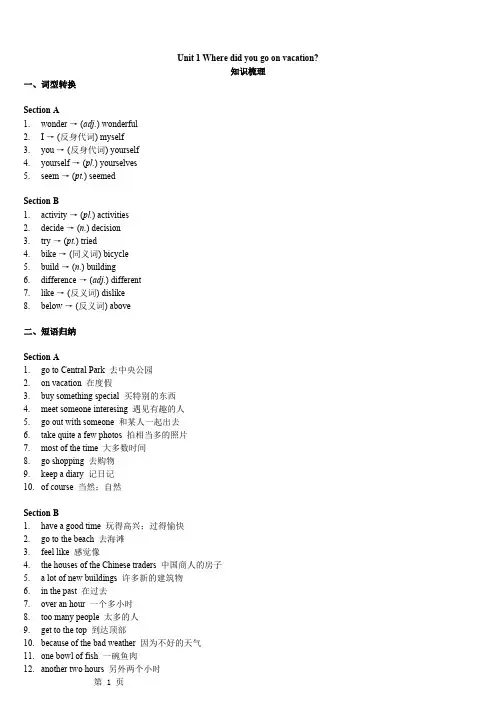
第 1 页Unit 1 Where did you go on vacation?
知识梳理
一、词型转换
Section A
1.wonder → (adj.) wonderful
2.I → (反身代词) myself
3.you → (反身代词) yourself
4.yourself → (pl.) yourselves
5.seem → (pt.) seemed
Section B
1.activity → (pl.) activities
2.decide → (n.) decision
3.try → (pt.) tried
4.bike → (同义词) bicycle
5.build → (n.) building
6.difference → (adj.) different
7.like → (反义词) dislike
8.below → (反义词) above
二、短语归纳
Section A
1.go to Central Park 去中央公园
2.on vacation 在度假
3.buy something special 买特别的东西
4.meet someone interesing 遇见有趣的人
5.go out with someone 和某人一起出去
6.take quite a few photos 拍相当多的照片
7.most of the time 大多数时间
8.go shopping 去购物
9.keep a diary 记日记
10.of course 当然;自然
Section B
1.have a good time 玩得高兴;过得愉快
2.go to the beach 去海滩
3.feel like 感觉像
4.the houses of the Chinese traders 中国商人的房子
5.a lot of new buildings 许多新的建筑物
6.in the past 在过去
7.over an hour 一个多小时
人教版新目标八年级英语(上)unit1第三课时教案
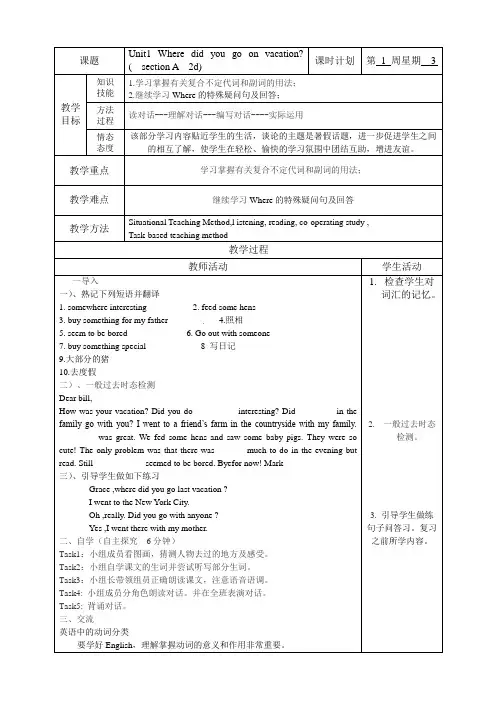
课题 Unit1 Where did you go on vacation?
( section A 2d) 课时计划 第 1 周星期 3
教学目标 知识
技能 1.学习掌握有关复合不定代词和副词的用法;
2.继续学习Where的特殊疑问句及回答;
方法
过程 读对话---理解对话---编写对话----实际运用
情态
态度 该部分学习内容贴近学生的生活,谈论的主题是暑假话题,进一步促进学生之间的相互了解,使学生在轻松、愉快的学习氛围中团结互助,增进友谊。
教学重点 学习掌握有关复合不定代词和副词的用法;
教学难点 继续学习Where的特殊疑问句及回答
教学方法 Situational Teaching Method,l istening, reading, co-operating study ,
Task-based teaching method
教学过程
教师活动 学生活动
一导入
一)、熟记下列短语并翻译
1. somewhere interesting __________2. feed some hens __________
3. buy something for my father___________ 4.照相__________
5. seem to be bored __________ 6. Go out with someone___________
7. buy something special __________ 8 写日记__________
9.大部分的猪_______________________
10.去度假____________________
二)、一般过去时态检测
Dear bill,
How was your vacation? Did you do _________ interesting? Did ________ in the
【人教版】新目标八年级英语上册:Unit 1 单元教学设计
【人教版】新目标八年级英语上册:Unit 1 单元教学设计
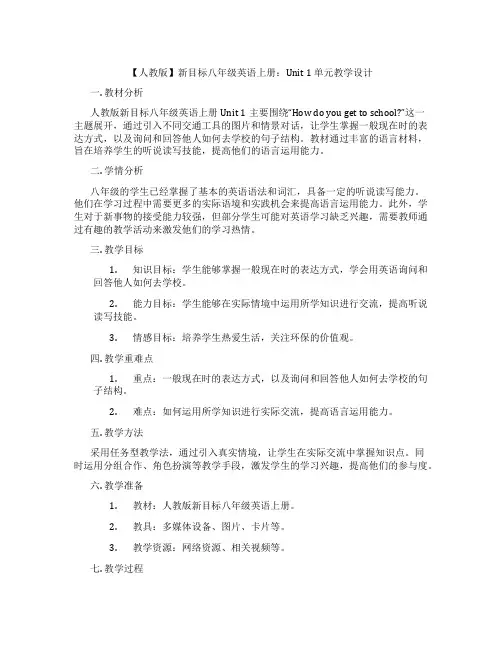
一. 教材分析
人教版新目标八年级英语上册Unit 1主要围绕“How do you get to school?”这一主题展开,通过引入不同交通工具的图片和情景对话,让学生掌握一般现在时的表达方式,以及询问和回答他人如何去学校的句子结构。教材通过丰富的语言材料,旨在培养学生的听说读写技能,提高他们的语言运用能力。
二. 学情分析
八年级的学生已经掌握了基本的英语语法和词汇,具备一定的听说读写能力。他们在学习过程中需要更多的实际语境和实践机会来提高语言运用能力。此外,学生对于新事物的接受能力较强,但部分学生可能对英语学习缺乏兴趣,需要教师通过有趣的教学活动来激发他们的学习热情。
三. 教学目标
1. 知识目标:学生能够掌握一般现在时的表达方式,学会用英语询问和回答他人如何去学校。
2. 能力目标:学生能够在实际情境中运用所学知识进行交流,提高听说读写技能。
3. 情感目标:培养学生热爱生活,关注环保的价值观。
四. 教学重难点
1. 重点:一般现在时的表达方式,以及询问和回答他人如何去学校的句子结构。
2. 难点:如何运用所学知识进行实际交流,提高语言运用能力。
五. 教学方法
采用任务型教学法,通过引入真实情境,让学生在实际交流中掌握知识点。同时运用分组合作、角色扮演等教学手段,激发学生的学习兴趣,提高他们的参与度。
六. 教学准备
1. 教材:人教版新目标八年级英语上册。
2. 教具:多媒体设备、图片、卡片等。
3. 教学资源:网络资源、相关视频等。
七. 教学过程 1. 导入(5分钟)
利用多媒体展示不同交通工具的图片,引导学生谈论自己如何去学校。教师通过提问学生,激发他们的学习兴趣。
2. 呈现(10分钟)
教师通过展示教材中的情景对话,让学生听懂并理解对话内容。随后,引导学生跟读对话,纠正发音。
3. 操练(10分钟)
将学生分成小组,让他们模拟对话情景,进行角色扮演。教师巡回指导,纠正错误,并给予鼓励。
(人教版)2020八年级英语上册 Unit 1 Where did you go on vacation讲义+习题 (新版)人教新目标版
※ 精 品 ※ 试 卷 ※
※ 推 荐 ※ 下 载 ※ Unit1. Where did you go on vacation
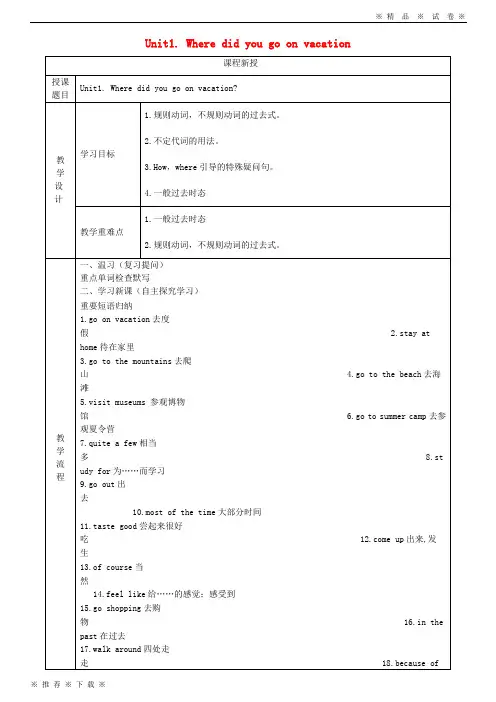
课程新授
授课题目 Unit1. Where did you go on vacation?
教
学
设
计 学习目标 1.规则动词,不规则动词的过去式。
2.不定代词的用法。
3.How,where引导的特殊疑问句。
4.一般过去时态
教学重难点 1.一般过去时态
2.规则动词,不规则动词的过去式。
教
学
流
程
一、温习(复习提问)
重点单词检查默写
二、学习新课(自主探究学习)
重要短语归纳
1.go on vacation去度假 2.stay at
home待在家里
3.go to the mountains去爬山 4.go to the beach去海滩
5.visit museums 参观博物馆 6.go to summer camp去参观夏令营
7.quite a few相当多 8.study for为……而学习
9.go out出去
10.most of the time大部分时间
11.taste good尝起来很好吃 e up出来,发生
13.of course当然
14.feel like给……的感觉;感受到
人教新目标版英语八上Unit1《Wheredidyougoonvacation》精美说课稿

人教新目标版英语八上Unit 1《Where did you go on vacation》精美说课稿
一. 教材分析
《Where did you go on vacation》是人教新目标版英语八上Unit 1的内容。本节课主要讨论过去发生的事情,通过询问对方度假的地点来展开对话。教材内容丰富,插图生动,激发学生的学习兴趣。本节课的主要目的是让学生掌握一般过去时的疑问句和回答,并能够运用所学知识进行实际对话。
二. 学情分析
八年级的学生已经掌握了基本的英语语法知识,对于一般过去时有一定的了解。但在实际运用中,部分学生可能会出现语法错误。此外,学生的词汇量有限,可能会影响他们对文本的理解。因此,在教学过程中,需要关注学生的个体差异,因材施教,帮助学生更好地掌握知识。
三. 说教学目标
1. 知识目标:学生能够掌握一般过去时的疑问句和回答,正确运用动词过去式进行对话。
2. 能力目标:学生能够听懂、说出一般过去时的疑问句和回答,提高英语口语表达能力。
3. 情感目标:通过讨论度假经历,培养学生热爱生活、分享快乐的感情。
四. 说教学重难点
1. 重点:学生能够掌握一般过去时的疑问句和回答。
2. 难点:学生能够正确运用动词过去式进行实际对话。
五. 说教学方法与手段
1. 情景教学法:通过设置度假场景,让学生在真实情境中学习一般过去时的疑问句和回答。
2. 任务型教学法:学生分组进行角色扮演,完成对话任务,提高口语表达能力。
3. 信息技术辅助教学:利用多媒体课件、网络资源等,丰富教学手段,提高学生的学习兴趣。
六. 说教学过程
1. 导入:教师通过提问“Where did you go on vacation?”引导学生思考并回答,激发学生的学习兴趣。 2. 新课呈现:教师展示教材插图,介绍一般过去时的疑问句和回答。
3. 课堂活动:学生分组进行角色扮演,完成对话任务,教师巡回指导。
4. 巩固练习:学生进行小组竞赛,看哪个小组能够在最短时间内完成一般过去时的疑问句和回答。
人教版新目标八年级英语上册第一单元知识详解
人教版新目标八年级英语上册第一单元知识详解
Detailed Solution for Unit 1
How often do you exercise?
【重要词汇】
◆ ever 曾经
◆ once 一次
◆ twice 两次
◆ internet 互联网
◆ program. 节目单, (电脑)程序
◆ result 结果, 成果
◆ song 歌曲
◆ junk 垃圾, 破烂物,废弃的旧物
◆ milk 牛奶
◆ interviewer 采访者
◆ habit 习惯,习性
◆ difference 不同,差异,区别
◆ grade 分数,成绩,年级
◆ although 虽然,即使,纵然
◆ unhealthy 不健康的, 不益健康的
◆ skateboarding 溜滑板运动
【重要词组】
◆ how often 多久一次
◆ as for 至于,关于 ◆ junk food 垃圾食品
◆ eating habit 饮食习惯
◆ of course 当然
◆ look after 照顾,照看
◆ start with 以……开始
◆ make a difference 使得结果不同,有重要性
◆ go shopping 去购物
◆ have a party 聚会
◆ go to the movie 去看电影
◆ once a week 每周一次
◆ hardly ever 很少
◆ twice a week 每周两次
◆ three times a week 每周三次
人教新目标八年级英语上册(习题):Unit 1 第一课时
Unit 1 Where did you go on vacation?
第一课时 Section A(1a~2d)
, 01 基础过关
Ⅰ.根据句意及汉语提示填写单词。
1.Most(大多数) of the students in my class are from
the countryside.
2.I can't find my math book anywhere(在任何地方).
3.There were a few(很少) trees on the mountain two
years ago.
4.Don't tell anyone(任何人) that you saw me here.
5.They saw a wonderful(精彩的) movie in the
cinema last night.
Ⅱ.用括号内所给单词的适当形式填空。
6.Last week we went to two famous beaches(beach).
7.Today is Mike's birthday.I want to buy him a
special(specially) present.
8.His parents work in the central(center) city of
France.
9.Listening to some music can help you
relax(relaxing).
10.His mother watches TV every evening,but she
didn't_watch(not watch) TV last night.
Ⅲ.汉译英。
11.上周六里克没有参加夏令营。(summer camp)
Rick_didn't_go_to_summer_camp_last_Saturday.
12.我们大部分时间在图书馆里读书。(most of)
八年级英语上unit1说课稿
1 / 3 新目标英语八年级上Unit 1 How often do you exercise
Section A( 1a ---1c)
尊敬的各位评委老师,大家早上好!
今天我说课的内容是人教版新目标英语八年级上册Unit 1 How often do you
exercise?第一课时(1a---1c),我将从以下五个方面完成我今天的说课内容。
一、教材分析:
教材的地位与作用:
本单元以“课余时间的活动”为话题展开教学活动。引导学生学会恰当地使用频率副词和短语以及描述课余时间的活动安排和基本饮食结构。本单元是刚从七年级升到八年级的学生学习的第一个单元也是第一节课,所以我对教材进行了一些处理适当降低了难度,通过复习七年级学习过的动词短语来引入对目标语言的学习,通过听力训练,各种方式的口语交际活动等,使学生积极参与,合作,从而培养学生的综合语言运用能力。
依据课程标准以及对教材的理解,我确定本课的目标如下:
A:知识:恰当使用always usually often 等频率副词
掌握句型:What do you usually do on weekends? I often go to the movies.
What does she do on weekends ? She often goes to the movies.
B:能力:学习描述课余时间的活动安排,初步培养学生的语言综合运用能力。
C:情感:培养学生的逻辑表述能力,激发学生的积极思维,并使学生互相了解,增进友谊,加强人际交往,以形成良好的人际关系。
根据教学大纲的要求,及本课在教材中的地位及作用。我确定以下重点、难点:
教学重点:核心句型: What do you usually do on weekends?
I often go to the movies.
教学难点:第三人称单数谓语动词在此核心句型中的运用。
人教版新目标英语八年级上册 课本教材电子课本
- 1 -
人教版新目标英语八年级上册 课本教材电子课本
Unit 1 Where did you go on vacation?(原七下U10)
Unit 2 How often do you exercise?(原八上U1)
Unit 3 I’m more outgoing than my sister.(原八上U6)
Unit 4 What’s the best movie theater?(原八上Unit 12 What’s the best radio station?)
Unit 5 Do you want to watch a game show?(原七上Unit 9 Do you want to go to a movie?和原七下Unit 11 What
do you think of game shows?)
Unit 6 I’m going to study computer science.(原八上Unit 10 I’m going to be a basketball player.)
Unit 7 Will people have robots?(原八下U7)
Unit 8 How do you make a banana milk shake?(原八上U7)
Unit 9 Can you come to my party?(原八上Unit 5)
Unit 10 If you go to the party, you’ll have a great time.(原八下U5) - 2 - - 3 - - 4 - - 5 - - 6 - - 7 - - 8 - - 9 - - 10 - - 11 - - 12 - - 13 - - 14 - - 15 - - 16 - - 17 - - 18 - - 19 - - 20 - - 21 - - 22 - - 23 - - 24 - - 25 - - 26 - - 27 -