
八年级英语下册Unit 1 Past and present (1)
Period 4GrammarⅠ.写出下列动词的过去式及过去分词1.study____________ ____________2.plan____________ ____________3.put ____________ ____________4.write ____________ ____________5.choose ____________ ____________6.do ____________ ____________7.teach ____________ ____________8.work ____________ ____________9.change ____________ ____________10.know ____________ ____________Ⅱ.用所给动词的适当形式填空1.So far, Jack ________(travel) to more than 30 Western countries.2.Her mother is a good teacher. She ________(teach) in this school for ten years.3.—________ you ________(receive) any letters from him recently?—Not yet.4.We ________(plant) thousands of trees over the past few years.5.I ________ never ________(speak) to a foreigner.6.Tom ________(be) in Paris since eight years ago.7.So far, Millie ________ already ________(read) twenty English books.8.I ________(learn) English since I ________(be) in Grade Three.9.Who's Jack? We ________ never ________(hear) of that man before.10.They ________(leave) the farm just now.Ⅲ.根据汉语意思完成句子,每空词数不限1.“你最近听说过这部电影吗?”“不,我没有。
”—__________________ the film __________________?—No, I haven't.2.布朗老师已经教了我们很多关于英格兰的历史。
Mrs Brown __________________ us a lot about the history of England.3.他们已经15年没有见过面了。
They __________________________ 15 years.4.自从上周一以来,那个老人已经修了十多辆自行车。
The old man __________________ over ten bicycles __________________.5.“你曾经计划去香港迪士尼乐园吗?”“不,从来没有。
”—Have you __________________ go to Disneyland in Hong Kong?—No, never.Ⅳ.单项填空()1.—Have you finished your homework ________?—Yes, I've ________ finished it.A.yet; alreadyB.already; yetC.ever; neverD.still; just ()2.2018·河北I ________ an invitation to the concert. I can't wait to go.A. receiveB. will receiveC.was receivingD. have received()3.I ________ the book club last week and I ________ two books already.A.join; readB.joined; readC.joined; have readD.joined; has read()4.2018·广东It is said that the number of forest parks in Guangdong ________ to more than 1,000 so far.A. increaseB. increasedC.has increasedD. will increased()5.2018·咸宁—High-speed trains, Mobile payment, Sharing bikes and Online shopping are called “four new great inventions” of modern China.—They ________ our daily lives more convenient.A. have madeB. had madeC.have been madeD. made()6.—________ he ________ a new bike for his son?—No, not yet.A.Has; buyB.Did; buyC.Has; boughtD.Will; buy()7.—Look! How clean the classroom is!—Yes. I'm sure someone ________ it up.A.cleansB.is cleaningC.will cleanD.has cleaned()8.—________ have you been in Dalian?—I have been in the city for over 15 years.A.How longB.How oftenC.How soonD.How far()9.2018·北京—Lucy, is your uncle a teacher?—Yes, he is. He ________ History for nearly 20 years.A.teachesB. has taughtC.is teachingD. will teach()10.The foreigner likes the small village very much. So far he ________ there for a long time.A.had livedB.livedC.livesD.has livedⅤ.任务型阅读Dear Sandy,How are you? This week we did a project on the history of London.My grandfather says that London in the 1950s was a terrible place to live because the air here was so bad. There were many factories and they caused a lot of smoke. The smoke caused heavy bl ack fog in the sky. The people of London called it “smog”.Sometimes the smog was so thick that people could not see anything at all. Taxis and buses could not go anywhere as it was too dangerous to drive. The smog was also harmful to people's health, and some people found that it was difficult to breathe(呼吸).In 1965, the government made new laws about the pollution, and the air got much cleaner. Today it is clean and we never see smog in London.Since the 1950s, people from all over the world have come to live in London. My grandfather says that this is one of the best changes—now he can eat food from India, China, Italy and Germany in his neighbourhood.I like living in London today, and I am happy to have friends from all over the world.Write back soon.Yours,Jessica根据短文内容,完成表格。
每空一词。
教师详解详析Ⅰ.1.studied; studied 2.planned; planned3.put; put4.wrote; written5.chose; chosen6.did; done7.taught; taught8.worked; worked9.changed; changed10.knew; knownⅡ.1.has travelled 2.has taught3.Have; received4.have planted5.have; spoken6.has been7.has; read8.have learned/learnt; was9.have; heard10.leftⅢ.1.Have you heard of; recently2.has taught3.haven't seen each other for4.has repaired; since last Monday5.ever planned toⅣ.1.A2.D考查动词时态。
江苏新教材牛津英语八年级下 Unit1 Past and present Welcome to the unit

Listen and answer
1. Does Hobo think Eddie has changed? Why? Yes. Because he used to share food with him.
Listen and answer
2. What was in the bowl an hour ago? Hobo’s food .
2. 技能目标: 1)了解北京不同时代的交通工具。 2)谈论自己、家人和朋友过去和现在使用的 不同交通工具。 3)初步认识现在完成时。 3. 情感目标:通过交通方式的变化,了解并 体会北京的巨大变化。
Lead-in
Happy New Year, boys and girls! We’re glad to be back at school again. You are one year older and you’re taller. All of you have changed.
Unit 1 Past and present Welcome to the unit
1.知识目标: 学习词汇:past , present, just 学习词组: used to do sth, Share sth with sb, go to school, by bike, take a bus 学习句子: You used to share food with me! It took a long time to wait for the next one.
Homework 1. Recite the sentences of the comic pictures. 2. 翻译下列词组 1)在碗中 2)过去常常 3)和……一起分享 4)家乡 5)在不同的时代 6)在过去的二十年中 7)北京的变化 8)一项历史项目
牛津译林版八年级下册Unit 1 Past and Present课件1
Picture show
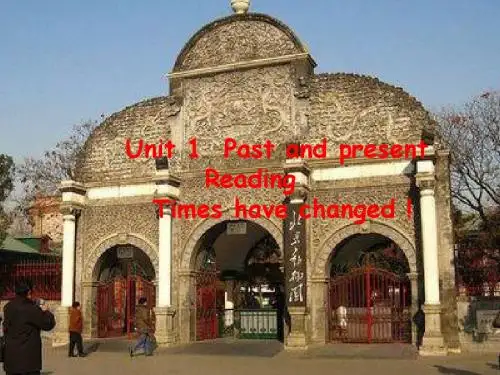
Let’s enjoy pictures of Beijing first. Witness great changes of Beijing!
market stall
Exercises
事实上
结婚 搬出 变了许多 中国象棋 市场售货摊 在过去
翻译下列短语
in fact get married move out of change a lot Chinese chess market stall in the past
Exercises
变成
翻译下列短语
turn into play cards Reduce pollution Chinese medicine shop from time to time
4. Nanjing has _________ changed a lot since 2000.
5. My cousin is no longer a student. He has __________ become an office worker now.
Thank you!
Deep reading
Read the dialogue again and answer the following questions about Sunshine Town
1.What’s the reason of the pollution?
2.Does Mr. Dong feel a bit lonely? Why? 1.There were once a steel factory near the Sunshine River. 2.Yes. Because his old friends have moved away.
八年级英语下册 Unit 1 Past and present重点语法和句型 牛津版
Unit 1 Past and present一. 教学内容:Unit 1 Past and presentwords, phrases and sentences二. 教学目标:掌握Unit 1的词汇及词性变化和课文中的重点词组、句型的结构和用法Unit 1 Past and present(一)基础词汇过去,往事 past目前,现在 present(n. 现在,通常与过去、将来相对应。
The past, the present and the future . 过去、现在和将来。
at present. 此刻、现在: I’m afraid I can’t help you just at present. ----- I’m too busy. 很抱歉,我现在帮不了你,----- 实在太忙了。
adj. 现在的。
the present day当今、现今。
Most young people enjoy listening to popular music the present day. )刚刚 just(just, adv. 刚才。
常用于完成时态,在美式英语中用于一般过去时。
)I have just seen John. 我刚才见到约翰了。
I just saw him. (a moment ago). ( U. S)我(几分钟前)看到他的。
( U. S)自……以来 since(since. 后面通常接点时间来表示一段时间。
例如:since 1984 自从1984年一直到现在。
since 3 days ago. 自从三天前一直到现在,也可以说成for 3 days 通常用how long 提问。
How long has your uncle lived here? Since 1980. )南方的 southern到……时 till已婚的 married(marry. vt. vi marry sb. 与某人结婚;嫁或娶某人。
牛津译林版英语八下Unit 1《Past and Present》(Task)教学设计
牛津译林版英语八下Unit 1《Past and Present》(Task)教学设计一. 教材分析牛津译林版英语八下Unit 1《Past and Present》主要介绍了人们的生活在过去和现在是如何变化的。
通过对比过去和现在的生活,让学生学会使用过去时和现在时描述事物的变化。
本课时的Task部分主要让学生学会如何根据自己的需求选择合适的住房。
本节课的主要话题是房屋租赁和购买,学生需要掌握相关的词汇和句型,以及学会如何进行房屋租赁和购买的对话。
二. 学情分析学生在学习本节课之前,已经掌握了如何描述过去和现在的生活的语法知识,同时也具备了一定的房屋租赁和购买的相关词汇。
但是,学生对于如何在实际场景中运用这些知识和词汇进行对话还存在一定的困难。
因此,在教学过程中,教师需要帮助学生将这些知识和词汇应用到实际场景中,提高学生的实际语言运用能力。
三. 教学目标1.知识目标:–学生能够掌握并运用相关的词汇和句型描述房屋租赁和购买的情况。
–学生能够通过对比过去和现在的生活,学会使用过去时和现在时描述事物的变化。
2.能力目标:–学生能够在实际场景中运用所学的知识和词汇进行对话。
–学生能够提高自己的听、说、读、写的能力。
3.情感目标:–学生能够通过学习本节课,增强对英语学习的兴趣。
–学生能够学会如何根据自己的需求选择合适的住房。
四. 教学重难点•学生能够掌握并运用相关的词汇和句型描述房屋租赁和购买的情况。
•学生能够通过对比过去和现在的生活,学会使用过去时和现在时描述事物的变化。
•学生能够在实际场景中运用所学的知识和词汇进行对话。
•学生能够学会如何根据自己的需求选择合适的住房。
五. 教学方法1.情境教学法:通过设定真实的房屋租赁和购买的场景,让学生在实际情境中学习并运用所学的知识和词汇。
2.任务型教学法:通过完成具体的任务,让学生学会如何根据自己的需求选择合适的住房。
3.交际法:通过小组讨论和角色扮演等方式,让学生在课堂上进行真实的交际,提高学生的听、说、读、写的能力。
(完整)苏教版英语8B-unit1-past-and-present知识点梳理(2),推荐文档
8B unit1 past and present标题解析:Past and present(1)past 做名词,表示“过去,往昔”in the past 在过去,从前=years agoPast 做形容词,表示”过去的“,in the past few years在过去的几年当中Past 做副词,表示”经过,过去“,walk past the house, drive past the post office 走过...;驶过...Past 做介词,表示”超过,在...之后“,ten past seven, 7点10分辨析:past/passpast做介词,跟动词连用,如run past, walk past, hurry past, drive past...不能单独使用表示经过Pass做动词,直接跟宾语,如pass the house, pass the supermarket; 此外,pass当动词表示“递给”pass me the salt 例题:When I walked the playground, I saw a lot of boys there.A.Past; play footballB.Passed; playing footballC.Past; playing footballD.Passed; play football(2)Present 做名词,表示“现在”,at present现在=nowPresent 做名词,表示“礼物”,buy sb. a present=buy a present for sb.Present 做形容词,表示“现在的,目前的”,the present condition 目前的状态the present day当代的例题:汉译英他们经常谈论过去,现在和将来。
请访问我们的网站,来购买特别的礼物。
一.词汇拓展1.marry v. →married (adj.) 已婚的2. communicate v. →communication (n.)3. north n. →northern (adj.)4. wife n. →wives(复数)5. interview v. →interviewer (n.) 采访者6.recent adj. →recently (adv.)7.exact adj. →exactly (adv.)8.pollute v. →pollution(n.)二.重点短语1.和某人分享某物2.对某人好3.不同时期的交通工具4.阳光镇的变化5.非常了解这个地方不太了解那个地方6.从那时起自从2005年以来自从去年以来自从三个星期前以来7.搬家搬到南京搬走搬出搬进一座新公寓搬到两个街区以外8.在…南部9.结婚10.变化很大变成change n.改变(可数)找零,零钱(不可数)11.在过去在现在12.这些年以来13.把…变成翻到14.打牌下中国象棋15.简单快捷16.花费时间做某事17.水污染噪音污染减少污染18.过去经常做某事19.像以前一样经常地20.把…扔进21.一个很严重的问题22.采取行动做某事23.在某种程度上顺便问一下在去…的路上挡路24.开阔的空间/ 户外活动场所25.不时地,偶尔26. 一处自然景点地方27.从…借…借给某人…/把…借给…28.在使用中29.带…去…30.独自地31.居住环境32.清新的空气33.和他的父母一起出国37.保持联系38.近期照片recent 在近几年中39. 通过email交流40.使交流简单41. 在镇中心三.重点句子1.-Eddie,have you seen my food ? ----Yes. I’ve just eaten it.Just 表示“刚刚”,表示刚刚发生的事情,用于现在完成时态。
译林版英语八年级下册第一单元现在完成时讲解及练习
译林版英语八年级下册第一单元现在完成时讲解及练习8B Unit 1Past and Present(第一课时)Grammar I )研究目的】初步认识和了解现在完成时的构成和用法。
课前准备】一、查字典,写出下列单词的意思,并且熟记他们。
(★★★)1、already _____________2、yet ________________3、just ___________________4、ever _________________5、never _____________6、before _________________7、since three years ago _______________8、for three years ______________二、写出下列动词的过去式和过去分词,同时也要熟记。
1、teach_______ ________2、bring _______ ________3、get _______ ________t4、know _______ ________5、grow_______ ________6、find_______ ________7、hold _______ ________8、show_______ ________9、keep_______ ________10、leave_______ ________11、lose_______ ________12、run_______ ________13、swim_______ ________14、drive_______ ________ 15、begin_______ ________三、尝试着阅读下面的知识链接,看看是否可以理解。
知识链接】现在完成时的“完成用法”和“未完成用法”一、现在完成时的结构:助动词have / has +动词的过去分词( Past Participle )其中have / has为助动词,因而它的否定和疑问句形式全部由have / has进行变化。
牛津译林版英语八下Unit 1《Past and Present》(Task)说课稿
牛津译林版英语八下Unit 1《Past and Present》(Task)说课稿一. 教材分析《Past and Present》是牛津译林版英语八年级下册Unit 1的一篇文章,主要描述了伦敦过去和现在的变化。
文章通过对比介绍了伦敦的历史、文化、建筑和环境等方面的变化,让学生了解伦敦的发展和英国的历史文化。
文章内容丰富,语言简练,贴近学生的生活实际,有利于激发学生的学习兴趣。
二. 学情分析八年级的学生已经掌握了基本的英语语法和词汇,具备一定的阅读理解能力。
但他们在阅读长篇阅读材料时,可能会遇到生词、长难句等障碍,影响阅读理解。
因此,在教学过程中,教师需要帮助学生扫除这些障碍,提高他们的阅读理解能力。
同时,学生对伦敦和英国的历史文化可能了解不多,教师需要在教学中补充相关知识,帮助学生更好地理解文章内容。
三. 说教学目标1.知识目标:让学生掌握文章中的重点词汇和短语,如“historical site”、“monument”、“architectural style”等;了解伦敦的历史、文化、建筑和环境等方面的变化。
2.能力目标:提高学生的阅读理解能力,能够快速准确地获取文章中的信息;培养学生的听说能力和合作能力。
3.情感目标:激发学生对英国历史文化的兴趣,培养他们的跨文化交际意识。
四. 说教学重难点1.重点:文章中的重点词汇和短语,以及伦敦的历史、文化、建筑和环境等方面的变化。
2.难点:理解文章中的长难句,以及作者的观点和态度。
五. 说教学方法与手段1.任务驱动法:通过设置各种任务,让学生在完成任务的过程中学习和掌握知识。
2.情境教学法:创设真实的语境,让学生在语境中学习英语,提高他们的实际运用能力。
3.合作学习法:引导学生分组讨论,培养他们的团队合作意识和沟通能力。
4.多媒体教学法:利用多媒体课件、图片、视频等资源,丰富教学内容,提高学生的学习兴趣。
六. 说教学过程1.导入:展示伦敦的图片,引导学生谈论自己对伦敦的了解,激发学生的学习兴趣。
译林版英语八年级下册单词表
Unit 1 Past and present1.past/pɑ:st/n.过去2.present/ˈpreznt/n.现在,目前3.just/dʒʌst/adv.刚才ed to /juːzd tuː/(用于过去持续或经常发生的事)曾经5.since /sɪns/conj.自…以来6.ever/'evə(r)/adv.曾经7.northern/'nɔ:ðən/adj.北方的,北部的8.married/'mærɪd/adj.已婚的,结婚的9.wife/waɪf/n.妻子10.block/blɔk/n.街区11.since/sɪns/prep.自…以来12.over/'əʊvə(r)/prep.在…期间13.turn ... into .../tɜːn/. . . /ˈɪntʊ/. . . 把…变成…14.pollution/pəˈlu:ʃn/n.污染;污染物15.factory/'fæktrɪ/n.工厂16.waste/weɪst/n.废料;废品17.realize /ˈriːəlaɪz/ vt.&vi.意识到;现实realise/ˈrɪəlaɪz/ vt.&vi.意识到;现实18.improve/ɪm'pru:v/vt.&vi.改善,改进19.situation/ˌsɪtʃuˈeɪʃn/n.形式,情况20.in some ways /ɪn sʌm weɪz/在某种程度上21.however/haʊˈevə(r)/adv.然而22.impossible/ɪmˈpɒsəbl/adj.不可能的23.before/bɪˈfɔ:(r)/adv.以前,过去,已经24.lonely/'ləʊnlɪ/adj.孤独的,寂寞的25.from time to time /frɒm taɪm tuː taɪm/不时,有时,偶尔26.anyway/ˈeniweɪ/adv.尽管,即使这样27.husband/'hʌzbənd/n.丈夫28.interview/'ɪntəvju:/n.采访;会见29.all one’s life /ɔːl wʌn es laɪf/一生30.yet/jet/adv.还,仍31.recently/ˈri:sntli/adv.近来,最近32.past/pɑ:st/adj.过去的33.environment/ɪn'vaɪrənmənt/n.环境34.transport/'trænspɔ:t/n.交通车辆,运输工具35.condition/kənˈdɪʃn/n.环境,条件,状况36.return/rɪ'tɜ:n/vi.返回st/lɑ:st/adv.最近,上一次,最后38.abroad/əˈbrɔ:d/adv.在(到)国外去39.primary/'praɪmərɪ/adj.小学教育的;初级的40.keep in touch /kiːp ɪn tʌtʃ/保持联系municate/kə'mju:nɪkeɪt/vt.&vi.交流,交际munication/kəˌmju:nɪ'keɪʃn/n.交际,交流43.exactly/ɪgˈzæktli/adv.(答语)正是,没错44.be/get used to /biː get juːzd tuː/习惯于,适应于45.narrow/'nærəʊ/adj.狭窄的46.open space /ˈəʊp(ə)n speɪs/开阔的空地Unit 2 Travelling1.travelling/ˈtrævəlɪŋ/n.旅行=traveling/ˈtrævlɪŋ/n.旅行2.hey/heɪ/excl.嘿,喂3.miss/mɪs/vt.想念,思念4.fantastic/fænˈtæstɪk/adj.极好的,美妙的5.indoor/ˈɪndɔ:(r)/adj.(在)室内的6.roller coaster/ˈrəuləˈkəʊstə/*过山车,环滑车7.speed/spi:d/n.速度8.ride/raɪd/n.乘坐(游乐设施)9.cartoon/kɑ:'tu:n/n.卡通片,动画片10.character/'kærəktə(r)/n.人物11.such/sʌtʃ/det.&pron.这样的(人或物)12.such as /sʌtʃ æz/例如13.parade/pə'reɪd/n.(庆祝)游行14.magic/'mædʒɪk/n.魔法15.pie/paɪ/n.派,馅饼16.feel/fi:l/vt.感觉到,意识到17.couple/'kʌpl/n.两人,两件事物;几个人,几件事物18.a couple of /əˈkʌp(ə)l ɒv/一对,几个,几件19.at the end of /æt ðə end ɒv/在…末尾20.castle/'kɑ:sl/n.城堡21.sand/sænd/n.沙;沙滩23.over/'əʊvə(r)/adv.结束24.marry/'mærɪ/vt.&vi.结婚,嫁,娶25.dead/ded/adj.死的26.beauty/'bju:tɪ/n.美丽;美人27.seaside/'si:saɪd/adj.海边的28.theme park/θi:m pɑ:k/*主题公园29.sailing/ˈseɪlɪŋ/n.帆船运动,航行30.except/ɪk'sept/prep.除了…之外31.view/vju/n.景色,风景32.mountain/'maʊntən/n.高山33.business/ˈbɪznəs/n.公事;商业;生意34.on business /ɒn ˈbɪznəs/出差35.direct/də'rekt/adj.直达的,直接的36.flight/flaɪt/n.航班;航行37.point/pɔɪnt/n.要点38.detail/di:teɪl/n.细节39.delicious/dɪˈlɪʃəs/adj.美味的,可口的40.seafood/'si:fu:d/n.海鲜41.airport/'eəpɔ:t/n.机场42.relative/ˈrelətɪv/n.亲戚Unit 3 Online tours1.online/ɒnˈlaɪn/adj.联网的,在线的2.programme/ˈprəʊgræm/n.〈英〉节目;计划,方案3.program/ˈprəʊgræm/n.〈美〉节目;计划,方案4.remote control/rɪ'məʊt kən'trəʊl/n.遥控器5.ah/ɑ:/excl.(表示惊奇,高兴等)啊6.channel/'tʃænl/n.频道7.keyboard/ˈki:bɔ:d/n.键盘8.unit/'ju:nɪt/n.机件;单位9.main unit/meɪn ˈjuːnɪt/(电脑)主机10.mouse/maʊs/n.鼠标(复mice/mouses)11.screen/skri:n/n.显示屏,屏幕12.word processing/wə:d prəʊˈsesɪŋ/n.文字处理13.receive/rɪ'si:v/vt.收到,接到14.guide/ɡaɪd/n.导游,向导15.icon/'aɪkɒn/n.图标16.click/klɪk/vt.&vi.点击/'eiʃə/n.亚洲18.Africa/'æfrɪkə/n.非洲19.Europe/ˈjʊərəp/n.欧洲20.America/ə'merɪkə/n.美洲21.world-famous/wɜ:ld 'feɪməs/adj.世界著名的,举世闻名的22.trade/treɪd/n.贸易23.southern/'sʌðən/adj.南方的,南部的24.international/ˌɪntə'næʃnəl/adj.国际的25.gather/ˈgæðə(r)/vt.&vi.聚集,集合26.huge/hju:dʒ/adj.巨大的27.darkness/'dɑ:knəs/n.黑暗28.island/'aɪlənd/n.岛屿29.several/ˈsevrəl/det.几个,数个wn/lɔ:n/n.草坪31.relax/rɪ'læks/vi.放松,休息32.hard/ˈhɑ:d/adj.辛苦的,艰难的33.musical/ˈmju:zikəl/n.音乐剧34.so much for sth /səʊ mʌtʃ fɔːsth/(表示就某事讲完了)关于…就讲这么多,…到此为止35.bottom/'bɔtəm/n.底,底部36.pick/pɪk/vt.挑选37.play/pleɪ/n.戏剧,剧本38.website/'websaɪt/n.网站39.dream/dri:m/vt.&vi.做梦,梦想40.dream of/ about /driːm ɒv əˈbaʊt/梦想,想像41.passport/'pɑ:spɔ:t/n.护照42.coast/kəʊst/n.海岸43.sail/seɪl/n.帆44.Australian/ɒˈstreɪliən/adj.澳大利亚(人)的45.opposite/ˈɔpəzit/n.对立的人(或物)46.mind/maɪnd/vt.&vi.介意47.print/prɪnt/vt.&vi.打印;印刷48.pleasure/'pleʒə(r)/n.高兴,乐意49.my pleasure /maɪˈpleʒə/不客气,很乐意效劳50.book/bʊk/vt.&vi.预订,订(房间,车票等)51.England/'ɪŋɡlənd/n.(英国)英格兰52.queen/kwi:n/n.女王53.ruler/ˈru:lə(r)/n.统治者;管理者54.pound/paund/n.英镑55.be made up of /biː meɪd ʌp ɒv/由…组成56.European/ˌjʊərəˈpi:ən/adj.欧洲的57.dollar/'dɒlə(r)/n.美元Unit 4 A good read1.read/ri:d/n.读物2.cooking/ˈkʊkɪŋ/n.烹饪,烹调3.novel/'nɒvl/n.小说4.Germany/'dʒɜ:mənɪ/n.德国5.knowledge/ˈnɒlɪdʒ/n.知识6.spare/speə(r)/adj.空闲的,空余的7.French/frentʃ/adj.法国(人)的8.writer/raɪtə(r)/n.作者,作家9.ugly/'ʌɡlɪ/adj.丑陋的10.touch/tʌtʃ/vt.感动,触动11.against/əˈgenst/prep.紧靠,碰,撞12.be tired out /biː taɪəd aʊt/筋疲力尽13.tie/taɪ/vt.捆,绑14.over/'əʊvə(r)/prep.从一边到另一边15.stomach/'stʌmək/n.腹部;胃16.until/ənˈtɪl/conj.直到……为止17.finger/'fɪŋɡə(r)/n.手指18.tiny/'taɪnɪ/adj.极小的19.fall over /fɔːl ˈəʊvə/摔倒20.continue/kən'tɪnju:/vt.&vi.继续21.either/ˈaɪðə(r)/adv.也22.manage/'mænɪdʒ/vt.&vi.设法完成;管理23.lift/lɪft/vt.举起,抬高;提高24.army/'ɑ:mɪ/n.大批,大群25.must/mʌst/v.应该,必须;一定26.unable/ʌnˈeɪbl/adj.不能的,不会的27.shoulder/ˈʃəʊldə(r)/n.肩膀28.hand/hænd/vi.交;递,给29.hand in /hænd ɪn/上交,递交30.and so on /ænd səʊɒn/……等等31.review/rɪ'vju:/n.评论32.return/rɪ'tɜ:n/vt.归还33.on time /ɒn taɪm/准时34.renew/rɪ'nju:/vt.续借;重新开始,更新35.series/ˈsɪəri:z/n.一系列;系列节目36.publishing house/ˈpʌblɪʃɪŋ haʊs/n.出版社37.refuse/rɪ'fju:z/vt.&vi.拒绝,回绝38.publish/'pʌblɪʃ/vt.出版39.so far /səʊ fɑː/到目前为止40.success/sək'ses/n.成功41.translate/træns'leɪt/vt.&vi.翻译42.sales/seɪlz/n.销售量(复)43.copy/'kɒpɪ/n.一本(份,册);副本44.Canadian/kə'neɪdiən/adj.加拿大(人)的45.at a time /æt ə taɪm/每次,依次46.online/ˌɒnˈlaɪn/adv.在线,联网47.sail/seɪl/vt.&vi.航行48.hidden/'hɪdn/adj.隐藏的49.confidence/'kɒnfɪdəns/n.信心50.experience/ɪk'spɪərɪəns/n.经历,经验51.advice/ədˈvaɪs/n.建议,忠告,劝告52.librarian/laɪ'breərɪən/n.图书管理员53.habit/'hæbɪt/n.习惯54.classical/ˈklæsɪkl/adj.古典的55.opposite/ˈɔpəzɪt;ˈɔpəsɪt/prep.在…对面,与…相反56.open up /ˈəʊp(ə)n ʌp/开启,开创,开辟Unit 5 Good manners1.manners/'mænəz/n.*礼貌,礼仪;规矩2.eh/eɪ/excl.*嗯,什么,啊3.cut in(on sb/sth)/kʌt ɪn ɒn/ sb/sth打断[谈话],插嘴4.politely/pə'laɪtlɪ/adv.礼貌的5.litter/'lɪtə(r)/n.垃圾,杂物6.tap/tæp/n.*水龙头;旋塞7.run/rʌn/vi.流动8.pick/pik/vt.采,摘9.obey/ə'beɪ/vt.*遵守,顺从10.queue/kju:/vi.*排队等候11.turn/tɜ:n/n.轮流,(轮流的)顺序12.proper/'prɒpə(r)/adj.符合习俗的;正确的13.greet/ɡri:t/vt*问候,打招呼14.shake sb's hand/ʃeɪk/ sb's/hænd/ 与某人握手15.kiss/kɪs/n.亲吻16.close/kləʊz/adj.亲密的,严密的17.conversation/ˌkɒnvəˈseɪʃn/n.(非正式的)交谈18.avoid/ə'vɔɪd/vt.避免19.subject/'sʌbdʒɪkt/n.话题;主题20.behave/bɪ'heɪv/vi.&vt.*表现21.public/'pʌblɪk/n.民众,群体22.in public/ɪn ˈpʌblɪk/ 公开地,在别人面前23.push/pʊʃ/vi.&vt.推,挤24.push in/pʊʃɪn/ <英>插队,加塞25.cut in/kʌt ɪn/ <美>插队,加塞26.bump/bʌmp/vi.*撞,碰27.in one's way/ɪn wʌnz weɪ/ 挡住某人的去路28.touch/tʌtʃ/vt.触摸,碰29.excuse/ɪk'skju:s/vt.原谅,宽恕30.excuse me/ɪk'skju:s/miː/劳驾31.till/tɪl/conj.到…时,直到…为止32.as well (as)/æz wel æz/ 也,还有33.loudly/laʊdlɪ/adv.大声的34.as/əz;æz/conj.正如,如同35.saying/ˈseɪɪŋ/n.*谚语,格言36.Roman/ˈrəʊmən/m*罗马人37.by accident/baɪˈæksɪdənt/ 偶然,意外地38.discussion/dɪˈskʌʃn/n.讨论39.express/ɪk'spres/vt.表达40.public/'pʌblɪk/adj.公共的,公开的41.explain/ɪk'spleɪn/vt.解释42.keep sb from sth保护,使免受43.warn/wɔ:n/vi.&vt.警告,告诫44.parking/'pɑ:kɪŋ/n.停车45.litter/'lɪtə(r)/vi.&vt.乱丢杂物46.successful/səkˈsesfl/adj.成功的47.sometime/ˈsʌmtaɪm/adv.在某时48.soon after/suːn ˈɑːftə/ 不久以后49.risk/rɪsk/vt.冒险的50.worm/wɜ:m/n.*软体虫,蠕虫51.pain/peɪn/n.痛,疼痛52.gain/ɡeɪn/n.*收货53.indeed/ɪnˈdi:d/adv.*真正的54.practice/'præktɪs/n.练习;训练;实践55.candle/'kændl/n.蜡烛56.purpose/'pɜ:pəs/n.目的57.content/'kɒntent/n.*内容;目录58.conclusion/kənˈklu:ʒn/n.*总结,归纳59.guest/ɡest/n.客人,宾客60.host/həʊst/n.*主人;主持61.above all/əˈbʌv ɔːl/ 首要的是62.impolite/ˌɪmpəˈlaɪt/adj.*不礼貌的Unit 6 Sunshine for all1.train/treɪn/vi.&vt.接受训练;培训2.the Olympic (Games)/ðəəˈlɪmpɪk (ˈɡeɪmz)/n.奥林匹克运动会3.support/səˈpɔ:t/n.支持4.meaningful/'mi:nɪŋfl/adj.*有意义的5.blind/blaɪnd/adj.瞎的6.deaf/def/adj.聋的7.disabled/dɪs'eɪbld/adj.*残疾的8.elderly/ˈeldəli/adj.年老的9.homeless/ˈhəʊmləs/adj.*无家可归的10.volunteer/ˌvɒlən'tɪə(r)/vi.&vt.*志愿做,义务做11.expect/ɪk'spekt/vi.&vt.期待,指望;预料12.adult/'ædʌlt/n.*成年人13.intellectual/ˌɪntəˈlektʃuəl/adj.*智力的14.disability/ˌdɪsə'bɪlətɪ/n.*缺陷,障碍15.chance/tʃɑ:ns/n.机会16.event/ɪˈvent/n.(运动)比赛项目;大事17.similar/ˈsɪmələ(r)/adj.同样的,类似的18.give up/gɪv ʌp/ 放弃18.necessary/'nesəsərɪ/adj.必须的,必要的19.training/ˈtreɪnɪŋ/n.培训,训练20.task/tɑ:sk/n.任务,工作21.athlete/ˈæθli:t/n.*运动员22.coach/kəʊtʃ/n.教练23.gold/ˈɡəuld(ə)n/n.黄金;金牌24.silver/'sɪlvə(r)/n.银;银牌25.confident/ˈkɒnfɪdənt/adj.*自信的26.background/ˈbækgraʊnd/n.背景27.closely/'kləʊslɪ/adv.密切的28.achieve/ə'tʃi:v/vt.实现,达到29.prize/praɪz/n.奖赏,奖品30.donate/dəʊ'neɪt/vt.*捐献31.charity/'tʃærətɪ/n.*慈善;慈善机构anization/ˌɔ:gənaɪˈzeɪʃn/n.*机构,组织33.one-to-one/wʌn tə wʌn/adv.*一对一地=one-on-one /wʌn ɒn wʌn/<美>一对一地34.blood/blʌd/n.血35.south-west/sauθ west/n,adj.&adv西南方36.north-west/nɔ:θ west/n,adj.&adv西北方37.project/prəˈdʒekt/n.项目,工程;课题42.introduction/ˌɪntrəˈdʌkʃn/n.引言;介绍38.disease/dɪˈzi:z/n.*疾病39.operation/ˌɒpəˈreɪʃn/n.*手术41.give a helping hand/gɪv əˈhelpɪŋ hænd/ 帮助,伸出援助之手40.survivor/səˈvaɪvə(r)/n.*幸存者41.Unit 7 International charities1.especially/ɪˈspeʃəli/adv.特别,尤其2.basic/'beɪsɪk/adj.基础的,基本的cation/ˌedʒuˈkeɪʃn/n教育4.equal/'i:kwəl/adj.平等的5.right/raɪt/n权利6.spread/spred/n扩散;分散;展开7.interview/'ɪntəvju:/n采访者8.blindness/'blaɪndnəs/n失明9.mostly/ˈməʊstli/adv.主要的,大部分的10.case/keɪs/n*病例;案例11.cure/kjʊə(r)/vt.治愈12.medical/ˈmedɪkl/adj.医学的,医疗的13.treatment/ˈtri:tmənt/n*治疗14.patient/'peɪʃnt/n病人15.afford/ə'fɔ:d/vt.买得起;能做16.go to hospital/gəʊtuː ˈhɒspɪt(ə)l/ 去看病17.on board /ɒn bɔːd/ 在飞机(船,火车)上18.operate/'ɒpəreɪt/vi.*做束手19.proud/praʊd/adj.自豪的,骄傲的20.reader/'ri:də(r)/n读者21.medicine/ˈmedsn/n医学;药22.develop/dɪˈveləp/vi.&vt.发展;加强23.treat/tri:t/vt.治疗;处理24.carry on/ˈkærɪɒn/ 继续开展,继续下去25.leaflet/'li:flət/n*传单;散页印刷品26.hand out /hænd aʊt/ 分发,提出27.hold/həʊld/vt.举行28.set/set/vi.&vt.创建,建立29.set up/set ʌp/ 建起,设立30.including/ɪnˈklu:dɪŋ/prep.包括,包含31.war/wɔ:(r)/n战争anize/'ɔ:ɡənaɪz/vt.*组织anise/'ɔ:ɡənaɪz/vt.*组织34.pale/peɪl/adj.苍白的35.matter/'mætə(r)/n.事情,问题36.check/tʃek/n.检查37.secretary/'sekrətrɪ/n.秘书38.make up one's mind/meɪk ʌp wʌnz maɪnd/ 决定39.India/'ɪndɪə/n.印度40.officer/'ɒfɪsə(r)/n.官员Unit 8 A green world1.dig/dɪɡ/vi.&vt.挖(洞,沟等)2.serious/ˈsɪəriəs/adj.认真的,严肃的3.breadfruit/ˈbredfru:t/n.面包果4.reduce/rɪ'dju:s/vi.&vt.减少,降低5.turn off/tɜːn ɒf/ 关上(开关)6.recycle/ˌri:'saɪkl/vt.*回收利用,循环利用7.wise/waɪz/adj.明智的,充满智慧的8.plastic/'plæstɪk/n.*塑料9.separate/'sepəreɪt/vi.&vt.分开,隔开10.recycling/ˌri:'saɪklɪŋ/n.回收利用,循环利用11.allow/ə'laʊ/vt.允许12.cut down/kʌt daʊn/ 砍倒13.punish/'pʌnɪʃ/vt.处罚,惩罚14.fine/faɪn/vt.罚款15.limit/'lɪmɪt/vt.*限制16.depend/dɪ'pend/vi.依靠,依赖,指望17.depend on/upon /dɪˈpend ɒn/\/əˈpɒn/依靠,取决于18.rich/rɪtʃ/adj.丰富的;富有的19.resource/riˈsɔ:s/n*资源20.wisely/waɪzlɪ/adv.明智地,充满智慧地21.run out/rʌn aʊt/ 用完,耗尽22.produce/prə'dju:s/vt.导致,产生23.difference/'dɪfrəns/n.差异,不同(之处)24.make a difference (to sb/sth)/meɪk ə/ˈdɪf(ə)r(ə)ns tuː/ sb/sth(对……)有影响,起作用25.poster/ˈpəʊstə/ n.海报26.display/dɪˈspleɪ/vi.&vt.*展示;陈列27.pollute/pə'lu:t/vt.污染28.harm/hɑ:m/vt.*伤害;损害29.living/'lɪvɪŋ/adj.活着的,活着30.survey/'sɜ:veɪ/n.调查31.empty/'emptɪ/adj.空的32.dust/dʌst/n.*灰尘,尘土33.harmful/ˈhɑ:mfəl/adj.有害的34.soil/sɔɪl/n.*土壤35.in place/ɪn pleɪs/ 在正确位置36.coal/kəʊl/n.煤37.oil/ɔɪl/n.石油;原油;食用油38.gas/ɡæs/n.气体;煤气39.form/fɔ:m/vi.&vt.形成40.carelessly/'keələslɪ/adv.满不在乎的,粗心的41.reuse/ˌri:'ju:z/vt.再利用42.simple/'sɪmpl/adj.简单的43.step/step/n.步骤;措施44.power/'paʊə(r)/n.电力;力量。
八年级英语下册Unit1Pastandpresent语法解析牛津版
Unit 1 Past and present一.教课内容:Unit 1 Past and present Grammar二.教课目的:掌握 Unit1 的语法 : Present perfect tense此刻达成时的用法(一)基本观点1、定义此刻达成时用来表示从前已发生或达成的动作或状态,但它的影响此刻还存在;也可表示连续到此刻的动作或状态。
2、组成: have (has) +过去分词。
规则变化的过去分词与过去式的变化同样,在动词词尾加 ed; 不规则变化的过去分词见不规则动词表,需要同学们记忆。
3、句型:现以 see the film为例将此刻达成时的一定句,否认句和疑问句列表以下:一定句: I/You/We/They have seen the film.He/She /It has seen the film.否认句: I/You/We/They have not/ haven’t seen the film.He/ She/It has not/hasn’t seen the film.疑问句: Have I/you/they seen the film? Yes, you/ we/I/they have. No, you/we/I/they haven ’t.Has he/she/it seen the film? Yes, he/ she/ it has. No, he/ she/ it hasn’t.(二)用法:此刻达成时既波及过去,又联系此刻。
用法一:表示过去发生或已经达成的某一动作对此刻造成的影响或结果。
常与just(刚刚), already (已经), never (素来没有),ever (以前), before (从前), yet (仍旧),once(一次), twice (两次), many times (好多次), how many times (多少次), so far (迄今为止), during the past(last)three years(近来三年来)等连用。
牛津译林版 8B八年级下册 Unit1 Past and present 知识点梳理
八年级下册Unit1 Past and present知识点梳理【重点单词】past [pɑːst]过去present ['preznt] 现在,目前just [dʒʌst] 刚才used to (过去持续或常发生)曾经since [sɪns] 自…以来ever ['evə] 曾经,永远,这以前northern ['nɔːðən] 北方的,北部的married [ˈmærɪd] 已婚的,结婚的wife [waɪf] (妻子block [blɒk] 街区since [sɪns] 自…以来over ['əʊvə] 在…期间turn ... Into ... 把…变成…pollution [pəˈluːʃ(ə)n] 污染;污染物factory ['fæktəri] 工厂waste [weɪst] 废料;废品realize ['rɪəlaɪz] 意识到;实现improve [ɪm'pruːv]改进,改善situation [sɪtjʊˈeɪʃ(ə)n] 形势,情况in some ways 在某种程度上however [haʊ'evə] 然而impossible [ɪmˈpɒsəbl] 不可能的before [bɪ'fɔː]以前,过去,已经lonely ['ləʊnli] 孤独的,寂寞的from time to time [frɒm//taɪm//tuː//taɪm] 不时,有时,偶尔anyway [ˈenɪweɪ] 尽管,即使这样husband ['hʌzbənd] 丈夫interview [ˈɪntəvjuː]采访;会见all one's life 一生yet [jet] 还,仍recently ['riːsntli]近来,最近past [pɑːst]过去environment [ɪn'vaɪrənmənt] 环境transport [trænsˈpɔːt]交通车辆,运输工具condition [kənˈdɪʃ(ə)n] 环境,条件,状况return [rɪ'tɜːn]返回last [lɑːst]最近,上一次;最后abroad [ə'brɔːd]到(在)国外primary [ˈpraɪməri] 小学教育的;初级的keep in touch 保持联系communicate [kəˈmjuːnɪkeɪt] 交流,交际communication [kəmjuːnɪˈkeɪʃ(ə)n] 交流,交际exactly [ɪg'zæktli] (答语)正是,没错be/get used to 习惯于,适应于narrow [ˈnærəʊ] 狭窄的open space 开阔的空地【重点词组】1.in the bowl an hour ago一个小时之前在碗里的ed to do sth.过去常常做某事be used to doing sth. 习惯于做某事be used to do sth. 被用来做某事3.do a history project on the changes in Beijing over the years做个有关这些年北京的变化的历史调查4.write a report on the changes in your home town 写一个有关你家乡的变化的报道5.know about the different forms of transport 对不同形式的交通工具很了解6.talk about transport at different times 讨论不同时期的交通工具7.take turns to do sth.=do sth. by turns 轮流做某事8.go to school by bike = ride a bike to school 骑自行车去学校9.wait for the next one 等下一辆车10.go to school by bus= take a bus to school= go to school on the bus乘公交车去学校11.interview sb. to get some information 为了得到些信息采访某人12.know sunshine town very well 对阳光镇很了解13.be born 出生14.move house 搬家15.in the northern part of town 在这个镇的西部16.get married to sb.= marry sb.= be married to sb.和某人结婚17.marry sb. to sb. 把某人嫁给某人18.move two blocks away搬到两个街区以外19.live in this area 住在这个地区20.since then 自从那以后since I was born/ since last Saturday/since three days ago21.over the years 这些年over the past century 在过去的几个世纪22.in the town centre= in the centre of the town 在镇中心23.turn/change/put sth. into 把某物变成某物24.a steel factory 一个钢铁厂25.put the waste into the river 把垃圾倒入河里put down 记下put away 收好put on 穿上put off 推迟、延期26.take action to improve the situation采取行动改善这种情况27.in some ways 在某些方面on the way (to ) 在……的路上by the way 顺便说no way 没门in any way 无论如何28.most of my old friends大部分我的老朋友29.move away 搬走/move to(into) another town30.see each other as often as before像以前一样经常看到对方31.play cards and Chinese chess 打牌和下棋32.feel a bit lonely 感到有点孤单33.from time to time = at times = sometimes 有时34.because of being alone 因为独自一人35.a group of buildings with streets on all sides街道两边全是高楼on both sides/ on each side36.interview sb.= have an interview with sb. 采访某人37.all his life 整个他的一生38.in the past 在过去at present 现在39.make some notes 做些笔记40.waste sth. on sth./ sb.浪费某物在某物/某人上41.repair over ten bicycles= repair more than ten bicycles修理超过10辆自行车42.teach sb. a lot about the history of China教我很多有关中国的历史43.talk about a film about the history of Beijing讨论一个有关北京历史的影片44.learn more about Beijing’s past and present对北京的过去和现在了解更多45.hear about/of 听说hear from sb.= receive/ get one’s letter=receive/get a letter of sb.收到某人来信46.living conditions 居住条件47.return sth. to sb. 把某物归还给某人48.go abroad 去国外at home or abroad 在国内外49.at primary school 在小学50.keep in touch with each other 互相保持联系51.make communication much easier使得联系更容易Communicate with sb.和某人保持联系52.take place发生(有目的有计划的)、举行happen发生(偶然发生)53.green hills all around到处都是绿山54.a river runs through the centre of town一条小河穿过镇中心55.get used to the changes of life习惯了生活的变化56.on one’s own = by oneself = alone独自57.throw rubbish 扔垃圾58.in some large open spaces在一些大的开阔的地方59.move into new flats搬到新公寓去60.in their free time在他们业余时间61.travel around the town在镇里转转62.have their own cars= have cars of their own有他们自己的汽车e the new words to talk about my hometown用些新词来讨论我的家乡e facts to support my opinions用事实来支持我的观点【重点句型】1.There were always too many people on the bus, and it took a long time to wait for the next one.公共汽车上总是有太多的人,并且要花费很长时间等待下一趟。