
湘少版六年级下册英语
六年级英语下册unit 3 we should take care of ourselves(湘少版)完美版
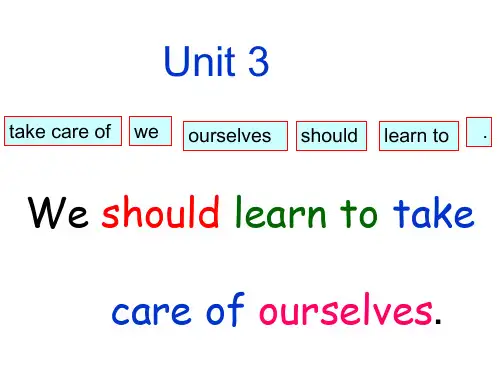
我们应该每天洗澡。
Listen and read.
healthy eating 健康饮食
We should eat…
A: Why do we eat healthy food? B: Because ___w__e_w__a_n_t _to__b_e_h_e_a_lt_h_y___.
swim run
take long walks
do exercise:
run jog swim take long walks
Listen and read.
We can also do some things to make us happy!
sing
唱歌
dance
跳舞
draw
画画
背一背:
以。既然已成既然,何必再说何必。想念是人最无奈的时候唯一能做的事情。你受的苦,会照亮你的路。 我希望有个如你一般的人。
如这山间清晨一般明亮清爽的人,如奔赴古城道路上阳光一般的人,温暖而不炙热,覆盖我所有肌肤。由起点到夜晚,由山野到书房,一切问题的答案都很简单。 我希望有个如你一般的人,贯彻未来,数遍生命的公路牌。 岁月极美,在于它必然的流逝。春花、秋月、夏日、冬雪说并用程这为再年余生,风雪是你,成多每内 淡是你,清贫是你,荣华是你,心底温柔是你,并用光所内为界,也是你。个人的遭遇,命运的多舛都使我被迫成熟,这一切的代价都当是日后活下去的力量。送 你的白色沙漏,是一个关于成长的礼物,如果能给你爱和感动,我是多么的幸福,我有过很多的朋友,没有谁像你一样的温柔,每当你牵起我的手,我就忘掉什么是忧愁。很 多故事不就是因为没有结局才有了继续等下去的理由。 有些人,有些事,是不是你想忘记,就真的能忘记?也许有那么一个时侯,你忽然会觉得很绝望,觉得全世界 都背弃了你,活着就是承担屈辱和痛苦。这个时候你要对自己说,没关系,很多人都是这样长大的。风平浪静的人生是中年以后的追求。当你尚在年少,你受的苦, 吃的亏,担的责,扛的罪,忍的痛,到最后都会变成光,照亮你的路。 你要做一个不动声色的大人了。不准情绪化,不准偷偷想念,不准回头看。去过自己另外的 生活。你要听话,不是所有的鱼都会生活在同一片海里。有人说,鲁迅是杂文,胡适是评论;鲁迅是酒,胡适是水。酒让人看到真性情,也看到癫狂,唯有水,才 是日常所需,是真生活。有时候会很自豪地觉得,我唯一的优势就是,比你卑微。于是自由。再也读不到传世的檄文,只剩下廊柱上龙飞凤舞的楹联。再也找不见 慷慨的遗恨,只剩下几座既可凭吊也可休息的亭台。再也不去期待历史的震颤,只有凛然安坐着的万古湖山。 呼兰河这小城里边,以前住着我的祖父,现在埋着我 的祖父。 诗意上来时,文字不要破坏它。 水,看似柔顺无骨,却能变得气势滚滚,波涌浪叠,无比强大;看似无色无味,却能挥洒出茫茫绿野,累累硕果,万紫 千红;看似自处低下,却能蒸腾九霄,为云为雨,为虹为霞…… 一切达观,都是对悲苦的省略 我们孩还发多夫道知道了,就得看不我们后心回的”家“,不是起 用看把一个有邮递区号、邮差找得到的家,后心天能们后心回的”家“,不是空于而,风每都到小是一段时光。 它们能够躲过所有凝视的目光,却躲不过那些出其
六年级英语下册教案(湘少版)模板
六年级英语下册教案(湘少版)(实用版)编制人:______审核人:______审批人:______编制单位:______编制时间:__年__月__日序言下载提示:该文档是本店铺精心编制而成的,希望大家下载后,能够帮助大家解决实际问题。
文档下载后可定制修改,请根据实际需要进行调整和使用,谢谢!并且,本店铺为大家提供各种类型的实用资料,如工作总结、述职报告、心得体会、工作计划、演讲稿、教案大全、作文大全、合同范文、活动方案、其他资料等等,想了解不同资料格式和写法,敬请关注!Download tips: This document is carefully compiled by this editor.I hope that after you download it, it can help you solve practical problems. The document can be customized and modified after downloading, please adjust and use it according to actual needs, thank you!And, this store provides various types of practical materials for everyone, such as work summaries, job reports, insights, work plans, speeches, lesson plans, essays, contract samples, activity plans, and other materials. If you want to learn about different data formats and writing methods, please pay attention!六年级英语下册教案(湘少版)Unit 1 You are good at drawing, Peter.Period 1Teaching aims:1.Ss can be confident in English studying.2.Enable the Ss to listen, read, say and write the new words: pictures, good idea, watch a film.3.Enable the Ss to be familiar with the sentence pattern:I like doing sth.I’m good at…Teaching emphasis:Enable the Ss to listen, read, say and write the new words.Teaching difficulties:Enable the Ss to be familiar with the sentence pattern: I like doing sth.I’m good at…Teaching tools: Tape, picturesTeaching methods:Task teaching method, Audio-linguistic method.Teaching steps:Step 1 Warming up1.Greetings.2.Make a conversation with the Ss.3.Play a game--- Doing and say.Eg: swimming, running…I like swimming.I’m good at swimming.Step 2 Presentation and drill1.Show a picture and learn the word: pictureThe Ss read after the T: picture.T: Can you spell the word picture, please?T: I like drawing.I’m good at drawing.Show some pictures, and learn the word.2.Learn the other words in the similar way.3.Read together.4.Little teacher。
小学英语六年级下册Unit 4 Planting trees in good for us

Tick √ ,if you agree.
1. We want more houses because there are more √
people.
2. The Earth is getting hotter and hotter.
√
3. People cut down trees to make more roads. √
“形容词比较级+and+形容词比较级”表示“越 来越……”。
例句:我们的生活正变得越来越美好。 Our life is becoming better and better.
拓展:“the+比较级…the+比较级…”意为 “越……,越……”。
形容词和副词比较级
一、规则变化 1. 一般在词尾直接加er
Let’s Practise
点击画面 播放视频
Let’s Practise
Planting trees is good for us. We should plant more trees.
I will plant trees. I like trees with flowers.
I will water the young trees every day.
on 12th March.
My friends
Yes. Planting tress is fun.
and I enjoy planting trees.
It’s Trees Planting Day today. Planting trees is good for us.
I like to plant fruit trees.
Why should we plant more trees? Trees can keep the air clean. Trees can make the place beautiful. Trees help to make the air cool and fresh. Trees make the Earth clean and green.
湘少版小学六年级下册英语Unit 3 We should learn to take care导学案

2. 句型:用“We should ...” “We can ...”和同伴表达自己对养成健康生活习惯的建议或想法。
(二) 应用目标
1. 能表达应该做某事。
2. 知道什么是良好的生活习惯,并能表达养成良好生活习惯应该做到的事情。
1. 学生4〜6人为一组,选择一个话题。如:How to be healthy? How to be strong? How to be happy?
2. 组内合作,出谋划策,讨论记录。
3. Act it out分工合作,由部分学生表演情境,组内其他成员用“We should/can...”提出建议。
S4: I’m very hungry. I eat 2 hamburgers, 3 eggs, a bowl of rice and...
Ss: Stop, you shouldn’t eat too much. You should take care of yourself.
跟读至少两遍,遇到长句时引导学生学会按意群断句。教师可适当加以示范。
教学方法同上,板书do exercise every day。
3. 操练词句
(1) “挑战记忆”小游戏
操作方法:先齐读板书“We shouldkeep our bodyclean. We shouldeat healthy food. We shoulddo exercise every day.”,两分钟强化记忆,教师计时,时间一到教师擦除画线部分的单词,比比谁能又快又准地写出来。
(2) “连词成句”小游戏
操作方法:教师可将重点句中的单词写在小卡片上,打乱顺序发给学生,让拿到卡片的学生上讲台重新排序,连成一个句子。(如下图)
六年级下册英语教案unit4 Planting trees is good for us_湘少版
六年级下册英语教案unit4 Planting trees is good for us_湘少版宋以后,京师所设小学馆和武学堂中的教师称谓皆称之为“教谕”。
至元明清之县学一律循之不变。
明朝入选翰林院的进士之师称“教习”。
到清末,学堂兴起,各科教师仍沿用“教习”一称。
事实上“教谕”在明清时还有学官一意,即主管县一级的教育生员。
而相应府和州掌管教育生员者则谓“教授”和“学正”。
“教授”“学正”和“教谕”的副手一律称“训导”。
于民间,专门是汉代以后,关于在“校”或“学”中传授经学者也称为“经师”。
在一些特定的讲学场合,比如书院、皇室,也称教师为“院长、西席、讲席”等。
Period 1教师范读的是阅读教学中不可缺少的部分,我常采纳范读,让幼儿学习、仿照。
如领读,我读一句,让幼儿读一句,边读边记;第二通读,我大声读,我大声读,幼儿小声读,边学边仿;第三赏读,我借用录好配朗读磁带,一边放录音,一边幼儿反复倾听,在反复倾听中体验、品味。
一、教学目标与当今“教师”一称最接近的“老师”概念,最早也要追溯至宋元时期。
金代元好问《示侄孙伯安》诗云:“伯安入小学,颖悟专门貌,属句有夙性,说字惊老师。
”因此看,宋元时期小学教师被称为“老师”有案可稽。
清代称主考官也为“老师”,而一样学堂里的先生则称为“教师”或“教习”。
可见,“教师”一说是比较晚的事了。
现在体会,“教师”的含义比之“老师”一说,具有资历和学识程度上较低一些的差别。
辛亥革命后,教师与其他官员一样依法令任命,故又称“教师”为“教员”。
1、能听明白、会说、认读新单词tree planting day,air,place2、句型:能用“be good for...”告知他人种树的好处;能用“I enjoy doing sth or I like to do sth..”告知他人自己喜爱种树的意愿;能用“tree s can keep...”表达种树的好处。
二、教学重点S:we enjoy playing gamesT:we enjoy reading books(板书we enjoy doing sth) T:Trees can keep us coolS:trees can keep the air cleanT:trees can make the place beautiful(板书make,place;带读单词)(3)创设情境教师用图片出现planting trees的场景,引导学生用what,why,how 等疑问词造句,对planting trees提问。
六年级英语下册知识讲义-语法精讲(Units 4- 6 复习)-湘少版
学习目标1. 能够掌握动名词作主语的用法。
2. 能够掌握一般将来时的含义和用法。
3. 能够掌握形容词作宾语补足语的用法。
4. 能够掌握一般过去时的含义和用法。
重点:能够运用动名词作主语,形容词作宾语补足语来正确描述物体。
难点:熟练运用一般将来时和一般过去时表达过去和将来发生的事情。
考点精讲1. Planting trees is good for us. 植树对我们有益。
本句中的主语是动名词短语planting trees。
当动名词(短语)作主语时,谓语动词用单数形式。
Exercising is good for our health. 锻炼对我们的健康有益。
_________ every day ________ a good habit.A. Read; isB. Reading; isC. Reading; are答案:B思路分析:句意为“每天阅读是一个好习惯。
”作主语的应为动名词;且动名词短语作主语时,谓语动词用单数形式,故选B项。
2. I will plant trees. 我将种树。
本句是含有一般将来时的肯定陈述句。
一般将来时由“助动词will +动词原形”构成。
助动词will没有人称和数的变化。
He will go to the cinema this evening. 今天晚上他将去看电影。
—_________ they play the piano for tomorrow’s party?—Yes, they _________.A. Do; doB. Did; didC. Will; will答案:C思路分析:根据“tomorrow’s party”可知时态用一般将来时,故选C项。
3. Trees can keep the air clean. 树木可以保持空气清新。
Trees can make the place beautiful. 树木可以让这个地方美丽。
keep the air clean 和make the plane beautiful都是“动词+宾语+形容词”结构。
(湘少版)六年级英语下册《unit 6(2)》教学设计设计
(湘少版)六年级英语下册《unit 6(2)》教学设计一、教材分析《unit 6(2)》是湘少版六年级英语下册中的一个单元,主要教授有关(1)How do you stay healthy?(2) Do you eat a lot of junk food?(3)What do you usually eat?等主题内容。
通过学习该单元,学生能够了解如何保持健康,了解不健康食品的危害,并能用英语表达自己的饮食习惯。
二、教学目标1.能听、说、读、写本单元的重点词汇及句型。
2.掌握有关饮食健康的知识,如何保持健康;了解不健康食品的危害。
3.能用英语描述自己的饮食习惯,谈论如何保护环境。
4.能够在情境中运用所学语言。
5.培养学生的口语表达能力和语言应用能力。
三、教学重难点1.重点:本单元中的重点词汇、句型及听、说、读、写技能的综合训练。
2.难点:如何用英语描述自己的饮食习惯,如何谈论如何保护环境等话题。
四、教学过程设计1.导入(5分钟)教师可以播放一段关于饮食健康的视频,让学生在听、看视频的过程中引导学生思考如何保持健康以及人类对环境的影响等话题。
2.讲授新词汇及句型(15分钟)教师可以通过PPT或手写板书的方式,介绍本单元中的重点词汇及句型,让学生认真听讲,并通过多种方式进行词汇记忆和语法练习。
3.听说训练(20分钟)教师可以播放与饮食健康、环保相关的语音材料,让学生听一遍,然后试着模仿和回答教师的问题。
教师也可利用课堂互动板,设计相关教学活动,如学生讲述自己的餐饮习惯等。
4.阅读训练(15分钟)教师可以搭配课本或选择相关的阅读材料,让学生尝试着阅读并理解,然后进行口头或书面的复述。
在阅读训练中,教师也可以针对学生的理解能力提出问题,以加强学生的理解和应用能力。
5.写作训练(25分钟)阅读训练结束后,教师可以在黑板上或PPT上公布一些有关饮食健康及如何保护环境的问题,让学生进行小组或个人写作训练,并对作品进行点评和修改,以提高学生的写作能力和写作质量。
(湘少版)六年级英语下册《unit1 Period 2》教案设计
(湘少版)六年级英语下册《unit1 Period 2》教案设计一、教学目标1.能够听、说、读、写单词和短语:movie, popcorn, drink, watch a movie, eat popcorn, drink a drink;2.能够听、说、读、写对话:A: What do you want to do? B: I want to watch a movie. A: What do you want to eat? B: I want to eat popcorn. A: What do you want to drink? B: I want to drink a drink.3.学习并能够用正确的方式表示自己的想法和需求。
二、教学重点和难点教学重点1.单词和短语的听、说、读、写;2.对话的理解、模仿和运用。
教学难点如何根据自己的需求来表述自己的想法。
三、教学过程1. 自我介绍(5分钟)1.让学生认识自己;2.介绍今天的主题:影片欣赏活动。
2. 学习新单词和短语(10分钟)1.引导学生学习新单词和短语:movie, popcorn, drink, watch a movie,eat popcorn, drink a drink;2.激发学生记忆单词和短语的兴趣。
3. 听对话并回答问题(15分钟)1.引导学生仔细听对话;2.回答问题并运用刚学的新单词和短语。
4. 小组活动(20分钟)1.按照教师的指导分组;2.设计三个小组:电影小组、零食小组、饮品小组;3.鼓励小组成员用英语对话,根据自己的需求选择电影、购买零食和饮品。
5. 模拟学生角色的对话(30分钟)1.学生两两模仿对话;2.引导学生表述自己的想法和需求,及时纠正学生的错误。
6. 词汇和文法复习(10分钟)1.复习今天所学的单词和短语;2.回顾和巩固刚学的对话。
四、教学反思本节课的主题是影片欣赏活动,通过新单词和短语的学习、对话的理解、模仿和运用以及小组活动、模拟对话等方式,培养学生良好的语言表达能力和相互合作的能力,让学生在愉快的学习中学会用英语表达自己的需求。
六年级英语下册素材-Unit2 课文翻译 湘少版(三起)
Unit2 Some stories are more interesting重点单词meat /miːt/ 肉a piece of /ə piːs əv/ 一块happily /ˈhæpɪlɪ/ 高兴地its /ɪts/ 它的wood /wʊd/ 木头cross /krɒs/ 穿过drop /drɒp/ 落下lose /luːz/ 失去课文翻译A Let's Listen and Say听一听,说一说Peter likes reading stories.This is one of his favourite stories.彼得喜欢阅读故事。
这是他最喜欢的故事之One day, a dog went to a meat shop.The manin the shop gave a piece of meat to the dog.The dog took it and walked home happily.一天,有一只狗去肉店。
肉店的男人给了这只狗一块肉。
这只狗叼起肉开心地回家了。
There was a small river near its home.The dog walked on a piece of wood to cross the river.在它家附近有一条小河。
这只狗走上独木桥过河。
It saw another dog in the water.That dog had a piece of meat in its mouth, too."That piece of meat is better than mine,"it thought.“I'm going to get it.”它在水中看见了另一只狗。
那只狗的嘴里也叼着一块肉。
“那块肉比我的这块好,"它想。
“我要得到它。
”The dog opened its mouth. It wanted the other dog's meat.这只狗张开了嘴。
春湘少版英语六年级下册Unit 9 Look at these beautiful places in the world_教案1(优选.)
Unit 9 Look at these beautiful places in the world【第一课时】【教学目标】(一)语言目标:1.词汇:(1)能听懂、会说、认读、会写新单词the Eiffel Tower, the Golden Gate Bridge, travel, the Great Wall, Big Ben, places of interest.(2)能听懂、会说、认读短语travel to London, take pictures.2.句型:(1)能用“I went to...”、“I travelled to...”、“I saw...”、“I enjoyed ...”描述自己的旅游见闻.(2)能用“I w an t to...”表达自己的旅游愿望.(二)应用目标:1.能用“I went to …”、“I travelled to...”、“I saw...”、“I enjoye d...”描述旅游见闻;能用“I w ant to...”表达自己的旅游愿望.2.能用简单的语句询问他人的旅游见闻.3.能听懂、会说A部分对话.【教学重难点】重点:(1)能听懂、会说、认读、会写新单词the Eiffel Tower, the Golden Gate Bridge, travel, the Great Wall, Big Ben, places of interest .(2)能用“I went to...”、“I travelled to...”、“I saw...”、“I enjoye d ...”描述自己的旅游见闻;能用“I w an t to...”表达自己的旅游愿望.难点:能在图片的帮助下复述课文A部分.【教学准备】用于新授单词的图片、单词卡片、教学图片、教学音频等.【教学过程】I. 热身/ 复习(Warm-up/Revision)1.GreetingsT: Good morning. /Good afternoon, class. How are you?Ss: Good morning. /Good afternoon. I’m fine, thank you.2.Revision教师出示国旗图片,与学生一起复习各国家名称.T: Look, I have some flags of many countries. What countries are they?T: Now, please look at the words of these countries, read them one by one.(教师先让学生根据图片说国家名,然后以开火车的方式,让学生看单词说国家名,做到对国家名音、形、义的复习.)II. 新课呈现(Presentation)1.New words(1)travel to London, take pictures, Big Ben教师展示几幅英国的风景名胜的图片:Big Ben, London Eye, London Bridge.T: My friends like travelling around the world .They travel to London in the UK. And they take pictures there. Please look at the pictures.教师板书travel to London, take pictures 并带读.出示Big Ben的图片.T: Look at this picture. It’s very famous. What can you see in the picture?Ss: I can see a clock.(预测:学生可能会直接说a clock,教师要注意引导学生说完整的句子.)T: Yes, it’s Big Ben.板书Big Ben并带读.T: Who can tell us about it?(预测:可能有的学生知道,教师可以让学生用中文介绍大本钟的相关情况,然后教师用简单的英语描述.有条件的学校,教师可以通过多媒体课件向学生介绍相关的知识.)T: It’s a clock. It’s very old .But the clock is still working.(2)the Eiffel Tower出示the Eiffel Tower的图片,贴于黑板上.T: Look at this picture, we can see a tower.板书tower, 并分音节教读T: It’s the Eiffel Tower.补充板书the Eiffel Tower,并带读.T: Where is it?Ss: It’s in France.此处教师可用中文向学生补充介绍the Eiffel Tower的相关知识.(3)the Golden Gate Bridge教师出示一张the Golden Gate Bridge的照片.T: I have a picture of a famous bridge in the USA.It’s the Golden Gate Bridge.板书“ the Golden Gate Bridge ”并带读.T: How do you think of the Golden Gate Bridge?S1: It’s very beautiful.S2: It’s nice.T: Yes, it’s over the sea .It’s very beautiful at night.(4)go to places of interestT: They are all places of interest in the world.板书“ places of interest ”并带读.T: I want to go to places of interest.补充板书“ go to places of interest ”T: I want to travel to the USA.I want to see the Golden Gate Bridge.How about you?S: ...教师出示一些关于长城的图片,边向学生介绍.T: I like travelling. I have some beautiful pictures. Please guess, where is it? Ss: It’s the Great Wall.T: Yes, it’s the Great Wall.(出示单词卡片the Great Wall, 板书并带读新词.)I went to the Great Wall last summer.I saw the Great Wall. It’s very old.And it’s very long.I enjoyed walking on the Great Wall.I went to...I saw...T: Where did you go during your holidays?S1: I went to...T: What did you see?S1: I saw...T: How about you?S2: I went to...I saw...教师与2~3名学生对话,学生说说自己的旅游经历,学生既是口头练习,也是给其他学生做语言示范.T: Where did you go during the holidays? Please talk about it with your partners.同桌之间互相谈论自己的旅游见闻,然后选取两组向全班介绍.A: Where did you go during the holidays?B: I went to...A: What did you see?(5)词汇操练a.利用音频的地道发音带读.b.火眼金睛:教师出示B部分四个世界风景名胜的阴影图,让学生猜一猜是什么地方.2.The dialogue(1)Read and answer学生自读课文,回答问题:Q: How many places are there in the text? Where are they?(2)Read and answer细读课文,回答问题.Q1: Where did Peter go last year?Q2: Where did Anne go last winter?Q3: Where did Lingling go last week?Q4: Where did Mingming go?(3)Read together and thinkQ: Which place do you want to go? Why?(4)Follow the tape跟音频或动画朗读课文,模仿正确的语音、语调.III. 趣味练习(Practice)小小解说员:学生四人为一小组,任选课文中的一个风景名胜,进行介绍.如:S1: Peter went to the Eiffel Tower last year.S2: It’s in France.S3: He saw a big and tall tower.S4: He took pictures of the Eiffel Tower.All: It’s very beautiful.【作业布置】1.听录音,朗读课文.2.选择A部分中任意一个景点,介绍该景点.3.找一找自己旅游过程中印象最深刻的一个景点的照片,口头练习介绍该景点.最新文件---------------- 仅供参考--------------------已改成-----------word文本--------------------- 方便更改赠人玫瑰,手留余香。