
2018年普通高等学校招生全国统一考试(江苏卷)英语
第1页,共19页
2018年普通高等学校招生全国统一考试(江苏卷)英语
题号 I II III IV V VI 总分
得分
一、听力-单选题(本大题共20小题,共20.0分)
1. 听下面对话。对话后有一个小题,从题中所给的A、B、C三个选项中选出最佳选项。听完对话后,你都有10秒钟的时间来回答有关小题和阅读下一小题。对话仅读一遍。
What will James do tomorrow?
A. Watch a TV program. B. Give a talk.
C. Write a report.
2. 听下面对话。对话后有一个小题,从题中所给的A、B、C三个选项中选出最佳选项。听完对话后,你都有10秒钟的时间来回答有关小题和阅读下一小题。对话仅读一遍。
What can we say about the woman?
A. She's generous. B. She's curious. C. She's helpful.
3. 听下面对话。对话后有一个小题,从题中所给的A、B、C三个选项中选出最佳选项。听完对话后,你都有10秒钟的时间来回答有关小题和阅读下一小题。对话仅读一遍。
When does the train leave?
A. At 6:30. B. At 8:30. C. At 10:30.
4. 听下面对话。对话后有一个小题,从题中所给的A、B、C三个选项中选出最佳选项。听完对话后,你都有10秒钟的时间来回答有关小题和阅读下一小题。对话仅读一遍。
How does the woman go to work?
A. By car. B. On foot. C. By bike.
5. 听下面对话。对话后有一个小题,从题中所给的A、B、C三个选项中选出最佳选项。听完对话后,你都有10秒钟的时间来回答有关小题和阅读下一小题。对话仅读一遍。
What is the probable relationship between the speakers?
A. Classmates. B. Teacher and student.
C. Doctor and patient.
听材料,回答下列各题.
6. What does the woman regret?
A. Giving up her research. B. Dropping out of college.
C. Changing her major.
7. What is the woman interested in studying now?
A. Ecology. B. Education. C. Chemistry. 第2页,共19页 听材料,回答下列各题.
8. What is the man?
A. A hotel manager. B. A tour guide. C. A taxi driver.
9. What is the man doing for the woman?
A. Looking for some local foods.
B. Showing her around the seaside.
C. Offering information about a hotel.
听材料,回答下列各题.
10. Where does the conversation probably take place?
A. In an office. B. At home. C. At a restaurant.
11. What will the speakers do tomorrow evening?
A. Go to a concert. B. Visit a friend. C. Work extra hours.
12. Who is Alice going to call?
A. Mike. B. Joan. C. Catherine.
听材料,回答下列各题.
13. Why does the woman meet the man?
A. To look at an apartment. B. To deliver some furniture.
C. To have a meal together.
14. What does the woman like about the carpet?
A. Its color. B. Its design. C. Its quality.
15. What does the man say about the kitchen?
A. It's a good size. B. It's newly painted.
C. It's adequately equipped.
16. What will the woman probably do next?
A. Go downtown. B. Talk with her friend.
C. Make payment.
听材料,回答下列各题.
17. Who is the speaker probably talking to?
A. Movie fans. B. News reporters. C. College
students.
18. When did the speaker take English classes?
A. Before he left his hometown. B. After he came to America.
C. When he was 15 years old.
19. How does the speaker feel about his teacher?
A. He's proud. B. He's sympathetic. C. He's
grateful.
20. What does the speaker mainly talk about?
A. How education shaped his life.
B. How his language skills improved.
C. How he managed his business well.
二、单选题(本大题共15小题,共15.0分)
21. By boat is the only way to get here, which is _______ we arrived.()
A. where B. when C. why D. how
22. Kids shouldn't have access to violent films because they might _______ the things they
see.()
A. indicate B. investigate C. imitate D. innovate
23. Self-driving is an area _______ China and the rest of the world are on the same starting
line. 第3页,共19页 A. that B. where C. which D. when
24. It's strange that he _______ have taken the books without the owner's permission.
A. would B. should C. could D. might
25. Developing the Yangtze River Economic Belt is a systematic project which _______ a
clear road map and timetable.()
A. calls for B. calls on C. calls off D. calls up
26. Around 13,500 new jobs were created during the period, _______ the expected number of
12,000 held by market analysts.
A. having exceeded B. to exceed
C. exceeded D. exceeding
27. There is a good social life in the village, and I wish I _______ a second chance to become
more involved.()
A. had B. will have
C. would have had D. have had
28. ﹣You know what? I've got a New Year concert ticket.
﹣Oh, _______ You're kidding.( )
A. so what? B. go ahead. C. come on. D. what for?
29. _______ you can sleep well, you will lose the ability to focus, plan and stay motivated
after one or two nights.
A. Once B. Unless C. If D. When
30. I was sent to the village last month to see how the development plan ________ in the past
two years.
A. had been carried out B. would be carried out
C. is being carried out D. has been carried put
31. Hopefully in 2025 we will no longer be e-mailing each other, for we _______ more
convenient electronic communication tools by then.
A. have developed B. had developed
C. will have developed D. developed
32. Try to understand what's actually happening instead of acting on the _______ you've
made.()
A. assignment B. association C. acquisition D. assumption
33. China's soft power grows _______ the increasing appreciation and understanding of
2018高考全国II卷 英语试卷答案及解析

附件:
页脚内容
2018高考全国Ⅱ卷英语试卷答案及解析
2018年普通高等学校招生全国统一考试
英语
本试卷分第卷(选择题)和第卷(非选择题)两部分。考试结束后,将本试卷和答题卡一并交回。
第I卷
注意事项:
答第卷前,考生务必将自己的姓名、准考证号写在本试卷和答题卡相应位置上。
选出每小题答案后,用铅笔把答题卡上对应题目的答案标号涂黑。如需改动,用橡皮擦干净后,再选涂其他答案标号,不能答在本试卷上,否则无效。
第一部分阅读理解(共两节,满分分)
第一节(共小题;每小题分,满分分)
阅读下列短文,从每题所给的四个选项(、、和)中,选出最佳选项,并在答题卡上将该项涂黑。
❖
❖❖附件:
页脚内容
❖
❖ ❖❖❖
2018年高考英语全国1卷试题及答案

英语试题第1页(共13页)绝密★启用前2018年普通高等学校招生全国统一考试英 语注意事项:1.答卷前,考生务必将自己的姓名、准考证号填写在答题卡上。2.回答选择题时,选出每小题答案后,用铅笔把答题卡上对应题目的答案标号涂黑。如需改动,用橡皮擦干净后,再选涂其他答案标号。回答非选择题时,将答案写在答题卡上,写在本试卷上无效。3.考试结束后,将本试卷和答题卡一并交回。第一部分 听力(共两节,满分30分)做题时,先将答案标在试卷上。录音内容结束后,你将有两分钟的时间将试卷上的答案转涂到答题卡上。第一节 (共5小题;每小题1.5分,满分7.5分)听下面5段对话。每段对话后有一个小题,从题中所给的A、B、C三个选项中选出最佳选项。听完每段对话后,你都有10秒钟的时间来回答有关小题和阅读下一小题。每段对话仅读一遍。例:How much is the shirt?A. £19.15.B. £9.18.C. £9.15.答案是C。1. What will James do tomorrow?A. Watch a TV program.B. Give a talk.C. Write a report.2. What can we say about the woman?A. She’s generous.B. She’s curious.C. She’s helpful.3. When does the train leave?A. At 6:30.B. At 8:30.C. At 10:30.4. How does the woman go to work?A. By car.B. On foot.C. By bike.5. What is the probable relationship between the speakers?A. Classmates.B. Teacher and student.C. Doctor and patient.英语试题第2页(共13页)第二节 (共15小题;每小题1.5分,满分22.5分)听下面5段对话或独白。每段对话或独白后有几个小题,从题中所给的A、B、C三个选项中选出最佳选项。听每段对话或独白前,你将有时间阅读各个小题,每小题5秒钟;听完后,各小题将给出5秒钟的作答时间。每段对话或独白读两遍。听第6段材料,回答第6、7题。6. What does the woman regret?A. Giving up her research.B. Dropping out of college.C. Changing her major.7. What is the woman interested in studying now?A. Ecology.B. Education.C. Chemistry.听第7段材料,回答第8、9题。8. What is the man?A. A hotel manager.B. A tour guide.C. A taxi driver.9. What is the man doing for the woman?A. Looking for some local foods.B. Showing her around the seaside.C. Offering information about a hotel.听第8段材料,回答第10至12题。10. Where does the conversation probably take place?A. In an office.B. At home.C. At a restaurant.11. What will the speakers do tomorrow evening?A. Go to a concert.B. Visit a friend.C. Work extra hours.12. Who is Alice going to call?A. Mike.B. Joan.C. Catherine.听第9段材料,回答第13至16题。13. Why does the woman meet the man?A. To look at an apartment.B. To deliver some furniture. C. To have a meal together.英语试题第3页(共13页)14. What does the woman like about the carpet?A. Its color.B. Its design.C. Its quality.15. What does the man say about the kitchen? A. It’s a good size.B. It’s newly painted.C. It’s adequately equipped.16. What will the woman probably do next?A. Go downtown.B. Talk with her friend.C. Make payment.听第10段材料,回答第17至20题。17. Who is the speaker probably talking to?A. Movie fans.B. News reporters.C. College students.18. When did the speaker take English classes?A. Before he left his hometown.B. After he came to America.C. When he was 15 years old.19. How does the speaker feel about his teacher?A. He’s proud.B. He’s sympathetic.C. He’s grateful.20. What does the speaker mainly talk about?A. How education shaped his life. B. How his language skills improved.C. How he managed his business well.第二部分 阅读理解(共两节,满分40分)第一节 (共15小题;每小题2分,满分30分)阅读下列短文,从每题所给的A、B、C和D四个选项中,选出最佳选项。AWashington, D.C. Bicycle ToursCherry Blossom Bike Tour in Washington, D.C.Duration: 3 hoursThis small group bike tour is a fantastic way to see the world-famous cherry trees with beautiful flowers of Washington, D.C. Your guide will provide a history lesson about the trees and the famous monuments where they blossom. Reserve your spot before availability – and the cherry blossoms – disappear!英语试题第4页(共13页)Washington Capital Monuments Bicycle TourDuration: 3 hours (4 miles)Join a guided bike tour and view some of the most popular monuments in Washington, D.C. Explore the monuments and memorials on the National Mall as your guide shares unique facts and history at each stop. Guided tour includes bike, helmet, cookies and bottled water.Capital City Bike Tour in Washington, D.C. Duration: 3 hoursMorning or Afternoon, this bike tour is the perfect tour for D.C. newcomers and locals looking to experience Washington, D.C. in a healthy way with minimum effort. Knowledgeable guides will entertain you with the most interesting stories about Presidents, Congress, memorials, and parks. Comfortable bikes and a smooth tour route (路线) make cycling between the sites fun and relaxing.Washington Capital Sites at Night Bicycle TourDuration: 3 hours (7 miles)Join a small group bike tour for an evening of exploration in the heart of Washington, D.C. Get up close to the monuments and memorials as you bike the sites of Capitol Hill and the National Mall. Frequent stops are made for photo taking as your guide offers unique facts and history. Tour includes bike, helmet, and bottled water. All riders are equipped with reflective vests and safety lights.21. Which tour do you need to book in advance?A. Cherry Blossom Bike Tour in Washington, D.C.B. Washington Capital Monuments Bicycle Tour.C. Capital City Bike Tour in Washington, D.C.D. Washington Capital Sites at Night Bicycle Tour.22. What will you do on the Capital City Bike Tour?A. Meet famous people.B. Go to a national park.C. Visit well-known museums.D. Enjoy interesting stories.23. Which of the following does the bicycle tour at night provide?A. City maps.B. Cameras.C. Meals.D. Safety lights.
2020年普通高等学校招生全国统一考试 江苏卷 (答案)
《3年高考2年模拟》专有电子资源
1 / 14
2020年普通高等学校招生全国统一考试 江苏卷
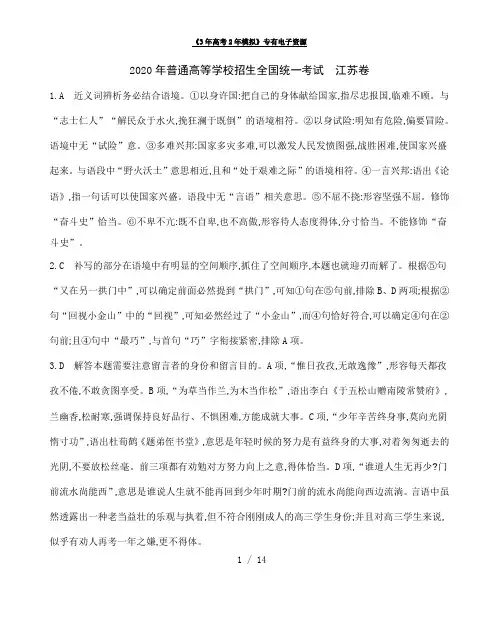
1.A 近义词辨析务必结合语境。①以身许国:把自己的身体献给国家,指尽忠报国,临难不顾。与“志士仁人”“解民众于水火,挽狂澜于既倒”的语境相符。②以身试险:明知有危险,偏要冒险。语境中无“试险”意。③多难兴邦:国家多灾多难,可以激发人民发愤图强,战胜困难,使国家兴盛起来。与语段中“野火沃土”意思相近,且和“处于艰难之际”的语境相符。④一言兴邦:语出《论语》,指一句话可以使国家兴盛。语段中无“言语”相关意思。⑤不屈不挠:形容坚强不屈。修饰“奋斗史”恰当。⑥不卑不亢:既不自卑,也不高傲,形容待人态度得体,分寸恰当。不能修饰“奋斗史”。
2.C 补写的部分在语境中有明显的空间顺序,抓住了空间顺序,本题也就迎刃而解了。根据⑤句“又在另一拱门中”,可以确定前面必然提到“拱门”,可知①句在⑤句前,排除B、D两项;根据②句“回视小金山”中的“回视”,可知必然经过了“小金山”,而④句恰好符合,可以确定④句在②句前;且④句中“最巧”,与首句“巧”字衔接紧密,排除A项。
3.D 解答本题需要注意留言者的身份和留言目的。A项,“惟日孜孜,无敢逸豫”,形容每天都孜孜不倦,不敢贪图享受。B项,“为草当作兰,为木当作松”,语出李白《于五松山赠南陵常赞府》,兰幽香,松耐寒,强调保持良好品行、不惧困难,方能成就大事。C项,“少年辛苦终身事,莫向光阴惰寸功”,语出杜荀鹤《题弟侄书堂》,意思是年轻时候的努力是有益终身的大事,对着匆匆逝去的光阴,不要放松丝毫。前三项都有劝勉对方努力向上之意,得体恰当。D项,“谁道人生无再少?门前流水尚能西”,意思是谁说人生就不能再回到少年时期?门前的流水尚能向西边流淌。言语中虽然透露出一种老当益壮的乐观与执着,但不符合刚刚成人的高三学生身份;并且对高三学生来说,似乎有劝人再考一年之嫌,更不得体。 《3年高考2年模拟》专有电子资源
2018年全国普通高等学校招生统一考试英语(新课标III卷)(解析版)详细答案
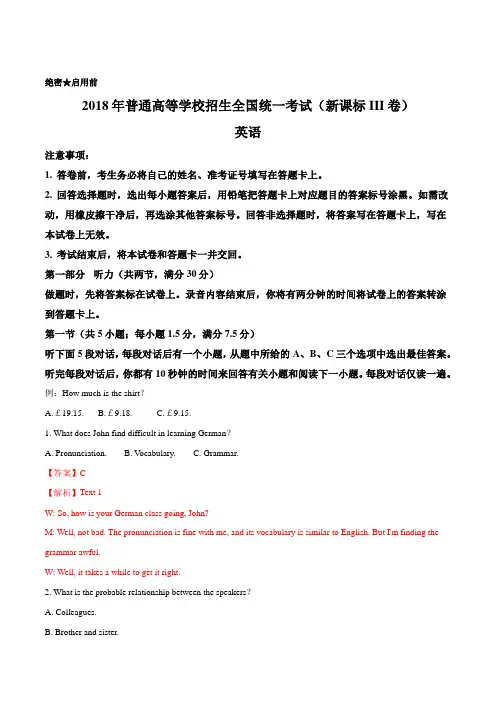
绝密★启用前
2018年普通高等学校招生全国统一考试(新课标III卷)
英语
注意事项:
1. 答卷前,考生务必将自己的姓名、准考证号填写在答题卡上。
2. 回答选择题时,选出每小题答案后,用铅笔把答题卡上对应题目的答案标号涂黑。如需改动,用橡皮擦干净后,再选涂其他答案标号。回答非选择题时,将答案写在答题卡上,写在本试卷上无效。
3. 考试结束后,将本试卷和答题卡一并交回。
第一部分 听力(共两节,满分30分)
做题时,先将答案标在试卷上。录音内容结束后,你将有两分钟的时间将试卷上的答案转涂到答题卡上。
第一节(共5小题;每小题1.5分,满分7.5分)
听下面5段对话,每段对话后有一个小题,从题中所给的A、B、C三个选项中选出最佳答案。听完每段对话后,你都有10秒钟的时间来回答有关小题和阅读下一小题。每段对话仅读一遍。
例:How much is the shirt?
A.£19.15. B.£9.18. C.£9.15.
1. What does John find difficult in learning German?
A. Pronunciation. B. Vocabulary. C. Grammar.
【答案】C
【解析】Text 1
W: So, how is your German class going, John?
M: Well, not bad. The pronunciation is fine with me, and its vocabulary is similar to English. But I'm finding the
grammar awful.
W: Well, it takes a while to get it right.
2. What is the probable relationship between the speakers?
2018年全国卷1英语含答案
- -
-
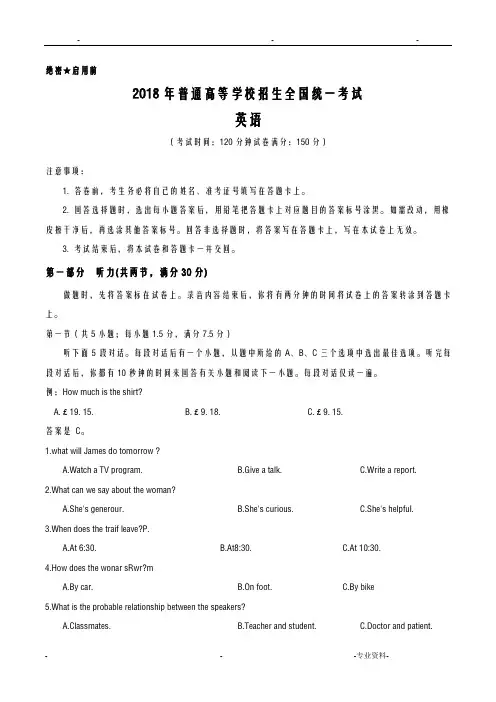
- - -专业资料- 绝密★启用前
2018年普通高等学校招生全国统一考试
英语
(考试时间:120分钟试卷满分:150分)
注意事项:
1. 答卷前,考生务必将自己的姓名、准考证号填写在答题卡上。
2. 回答选择题时,选出每小题答案后,用铅笔把答题卡上对应题目的答案标号涂黑。如需改动,用橡皮擦干净后,再选涂其他答案标号。回答非选择题时,将答案写在答题卡上,写在本试卷上无效。
3. 考试结束后,将本试卷和答题卡一并交回。
第一部分 听力(共两节,满分30分)
做题时,先将答案标在试卷上。录音内容结束后,你将有两分钟的时间将试卷上的答案转涂到答题卡上。
第一节(共5小题;每小题1.5分,满分7.5分)
听下面5段对话。每段对话后有一个小题,从题中所给的A、B、C三个选项中选出最佳选项。听完每段对话后,你都有10秒钟的时间来回答有关小题和阅读下一小题。每段对话仅读一遍。
例:How much is the shirt?
A. £ 19. 15. B. £ 9. 18. C. £ 9. 15.
答案是 C。
1.what will James do tomorrow ?
A.Watch a TV program. B.Give a talk. C.Write a report.
2.What can we say about the woman?
A.She's generour. B.She's curious. C.She's helpful.
2018年高考英语全国卷1-答案
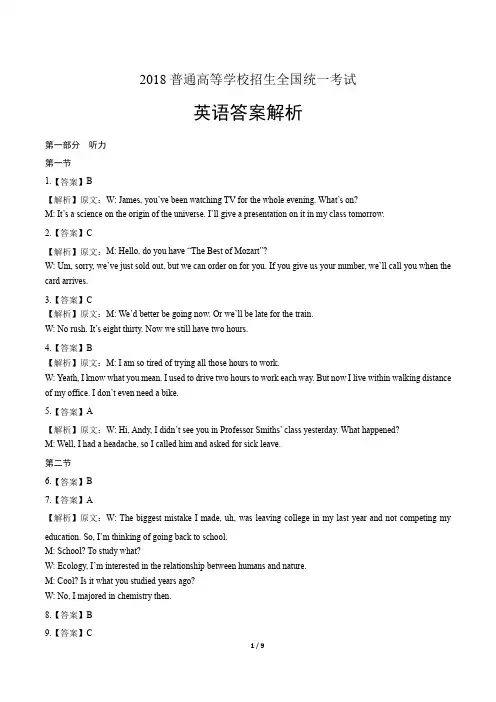
1 / 9 2018普通高等学校招生全国统一考试 英语答案解析 第一部分 听力 第一节 1.【答案】B 【解析】原文:W: James, you’ve been watching TV for the whole evening. What’s on? M: It’s a science on the origin of the universe. I’ll give a presentation on it in my class tomorrow. 2.【答案】C 【解析】原文:M: Hello, do you have “The Best of Mozart”? W: Um, sorry, we’ve just sold out, but we can order on for you. If you give us your number, we’ll call you when the card arrives. 3.【答案】C 【解析】原文:M: We’d better be going now. Or we’ll be late for the train. W: No rush. It’s eight thirty. Now we still have two hours. 4.【答案】B 【解析】原文:M: I am so tired of trying all those hours to work. W: Yeath, I know what you mean. I used to drive two hours to work each way. But now I live within walking distance of my office. I don’t even need a bike. 5.【答案】A 【解析】原文:W: Hi, Andy, I didn’t see you in Professor Smiths’ class yesterday. What happened? M: Well, I had a headache, so I called him and asked for sick leave. 第二节 6.【答案】B 7.【答案】A 【解析】原文:W: The biggest mistake I made, uh, was leaving college in my last year and not competing my education. So, I’m thinking of going back to school. M: School? To study what? W: Ecology, I’m interested in the relationship between humans and nature. M: Cool? Is it what you studied years ago? W: No, I majored in chemistry then. 8.【答案】B 9.【答案】C
2018年普通高等学校招生全国统一考试英语全国卷1及答案解析
1
2018年普通高等学校招生全国统一考试英语(全国卷1)及答案解析
英语
第一部分听力 (共两节,满分30分
做题时,先将答案标在试卷上。录音内容结束后,你将有两分钟的时间将试卷上的答案转涂到答题卡上。
第一节(共5小题;每小题1.5分,满分7.5分)
听下面5段对话,每段对话后有一个小题,从题中所给的A、B、C三个选项中选出最佳选项。听完每段对话后,你都有10秒钟的时间来回答有关小题和阅读下一小题。每段对话仅读一遍。
例: How much is the shirt?
A. £19.15. B. £ 9.18. C. £ 9.15.
答案是C。
1. What will James do tomorrow?
A. Watch a TV program. B. Give a
talk. C. Write a report.
2. What can we say about the woman?
A. She’s generous. B. She’s curious. C. She’s
helpful.
3. When does the train leave?
A. At 6:30. B. At 8:30. C. At
2018年高考全国卷1英语试题及答案
1
2018年普通高等学校招生全国统一考试
英 语
注意事项:
1。 答卷前,考生务必将自己的姓名、准考证号填写在答题卡上.
2。 回答选择题时,选出每小题答案后,用铅笔把答题卡上对应题目的答案标号涂黑。如需改动,用橡皮擦干净后,再选涂其他答案标号。回答非选择题时,将答案写在答题卡上,写在本试卷上无效。
3. 考试结束后,将本试卷和答题卡一并交回.
第一部分 听力(共两节,满分30分)
做题时,先将答案标在试卷上。录音内容结束后,你将有两分钟的时间将试卷上的答案转涂到答题卡上。
第一节 (共5小题;每小题1.5分,满分7.5分)
听下面5段对话.每段对话后有一个小题,从题中所给的A、B、C三个选项中选出最佳选项。听完每段对话后,你都有10秒钟的时间来回答有关小题和阅读下一小题.每段对话仅读一遍。
例:How much is the shirt?
A. £ 19. 15。 B. £ 9。 18。 C。 £ 9。 15.
答案是 C。
1.what will James do tomorrow ?
A。Watch a TV program. B。Give a talk。 C。Write a
report.
2。What can we say about the woman?
A。She’s generour。 B。She’s curious。 C.She's helpful。
3.When does the traif leave?
A.At 6:30。 B。At8:30。 C。At 10:30。
4。How does the wonar sRwr?m
A。By car. B。On foot。 C。By bike
5.What is the probable relationship between the speakers?
2018高考英语全国1卷试题和答案解析[清晰版]
WORD格式整理
专业知识分享 绝密★启用前
2018年普通高等学校招生全国统一考试
英 语
注意事项:
1.答卷前,考生务必将自己的姓名、准考证号填写在答题卡上。
2.回答选择题时,选出每小题答案后,用铅笔把答题卡上对应题目的答案标号涂黑。如需改动,用橡皮擦干净后,再选涂其他答案标号。回答非选择题时,将答案写在答题卡上,写在本试卷上无效。
3.考试结束后,将本试卷和答题卡一并交回。
第一部分 听力(共两节,满分30分)
做题时,先将答案标在试卷上。录音内容结束后,你将有两分钟的时间将试卷上的答案转涂到答题卡上。
第一节 (共5小题;每小题1.5分,满分7.5分)
听下面5段对话。每段对话后有一个小题,从题中所给的A、B、C三个选项中选出最佳选项。听完每段对话后,你都有10秒钟的时间来回答有关小题和阅读下一小题。每段对话仅读一遍。
例:How much is the shirt?
A. £19.15. B. £9.18. C. £9.15.
答案是C。
1. What will James do tomorrow?
A. Watch a TV program. B. Give a talk. C. Write a report.
2. What can we say about the woman?
A. She’s generous. B. She’s curious. C. She’s helpful.
3. When does the train leave?
A. At 6:30. B. At 8:30. C. At 10:30.
4. How does the woman go to work?
A. By car. B. On foot. C. By bike.
2018年高考英语(全国I卷)试题及参考答案(word版)
英语试题第1页(共14页)
2018年普通高等学校招生全国统一考试
英 语
注意事项:
1.答卷前,考生务必将自己的姓名、准考证号填写在答题卡上。
2.回答选择题时,选出每小题答案后,用铅笔把答题卡上对应题目的答案标号涂黑。如需改动,用橡皮擦干净后,再选涂其他答案标号。回答非选择题时,将答案写在答题卡上,写在本试卷上无效。
3.考试结束后,将本试卷和答题卡一并交回。
第一部分 听力(共两节,满分30分)
做题时,先将答案标在试卷上。录音内容结束后,你将有两分钟的时间将试卷上的答案转涂到答题卡上。
第一节 (共5小题;每小题1.5分,满分7.5分)
听下面5段对话。每段对话后有一个小题,从题中所给的A、B、C三个选项中选出最佳选项。听完每段对话后,你都有10秒钟的时间来回答有关小题和阅读下一小题。每段对话仅读一遍。
例:How much is the shirt?
A. £19.15. B. £9.18. C. £9.15.
答案是C。
1. What will James do tomorrow?
A. Watch a TV program. B. Give a talk. C. Write a report.
2. What can we say about the woman?
A. She’s generous. B. She’s curious. C. She’s helpful.
3. When does the train leave?
A. At 6:30. B. At 8:30. C. At 10:30.
4. How does the woman go to work?
A. By car. B. On foot. C. By bike.
5. What is the probable relationship between the speakers?
A. Classmates. B. Teacher and student. C. Doctor and patient.