
九年级英语unit7,Section B 1a-1e课件
school rules:
rules in the classroom / library / on the playground
How often do you do these things?
get to class late
study with friends
finish a test early
Where can this meeting be held?
5.这道题解起来很容易,是吗? This problem can be worked out very easily, can't it?
What can you do at school?
What can’t you do at school?
A: Do you ever get to class late?
B: Yes, I sometimes get to class late.
A: Do you ever study with your friends?
B: ...
1c Listen and circle the things in 1a that Peter talks about. Do you ever…
However, in most Asian societies, it is not common for teenagers to move out. Chinese parents believe that it is better for children to live with parents who can take care of them. But the young should then look after their parents as they get older. That is why many Chinese adults continue to live with their parents.
3. Students need strict rules. (改为一般疑问 句并作肯定回答) --- _______ students _______ Do need strict rules? they _______ do --- Yes, _______ .
4. He was late for class this morning. (改为
a. take the test. b. pass the test. c. fail a math test. d. take the test later. e. get to class late.
Listen again and answer questions.
1. Is Peter worried about his math test?
Listen again and answer questions.
1. Is Peter worried about his math test? Yes, he is. 2. Did Peter get to school late? Why? Yes, he did. Because he missed the bus. 3. Is he allowed to be late for class? No, he isn’t.
Dad: Well, Peter, the school has to have rules, you know. Peter: I know. But they should let me take the test later. It’s not fair if they don’t even give me a chance! Dad: Well, you might still be allowed. Maybe you could talk to the teacher after school. Peter: Yeah. Maybe if I explain what happened, she’ll understand.
parts.
c 1. Peter is going to … ___ e 2. He isn’t allowed to … ___ 3. Peter wasn’t allowed to … a ___ b 4. He could … ___ 5. He should be allowed d to … ___
Should students be allowed to surf the Internet?
Should students be allowed to have part-time jobs?
短语匹配 (Ⅰ) 1. get to class late 2. finish a test early 3. take the test 4. 考试及格 5. 考试不及格 6. 对……严格
1e Read the statements. Then discuss
them with your group.
1. Peter should be allowed to take the test later. 2. Students need strict rules. 3. Parents should not be too strict with teenagers.
4. Was he allowed to take the test after he got to class late? No, he wasn’t. 5. What did Peter think about the rule? He thought it was not fair. 6. How did he feel about his test?
About Parents
Do you always have a talk with your parents? What do you usually talk about?
What are you allowed to do?
What aren’t you allowed to do?
Should students be allowed to study with friends?
2. Did Peter get to school late? Why?
3. Is he allowed to be late for class?
4. Was he allowed to take the test after he got to class late?
5. What did Peter think about the rule? 6. How did he feel about his test?
同义句) got to class _______ late this morning. He _______ 5. should, be too strict with, not, parents, children (连词成句) Parents should not be too strict with children.
Section B 1a — 1e
Section A 4b
Should teenagers be asked to move out when they start working? In many Western countries, teenagers are allowed to move out at eighteen. Their parents believe that they should be educated to take care of themselves from a young age. This way, when they start working they can manage their own lives.
He felt he could pass that test.
Section B 1c & 1d Dad: What’s the matter, Peter? Peter: I think I’m going to fail a math test, Dad. Dad: You are? Why? Peter: Well, I missed the bus and I had to walk to school. Dad: So? Peter: I’m not allowed to get to class late, and there was a big test today. Dad: And you weren’t allowed to take the test? Peter: That’s right. But I know I could pass that test.
1. get to class late? 2. study with friends? 3. finish a test early? __________ __________ __________
4. worry about failing a test? __________
1d Listen again. Match these sentence
用被动语态将下列各句译成英语。
1.这本书应该译成多国文字。 This book should be translated into many foreign languages. 2.这辆小汽车启动(start)不了。 This car can't be started.
3. --- 这封信必须立即寄出吗? --- 是的, 应立 即寄出。(不, 不应立即寄出。) —Must this letter be posted at once? —Yes, it must. (No, it needn't.) 4.这次会议可在哪儿举行?
Unit 7 Section B (1a~1e) 课件(共36张PPT) 人教版七年级英语上册

2.——你妈妈的T恤衫多少钱? ——七美元。 —How much is your mother ' s T-shirt?
—It ' s seven dollars.
1a Listen and repeat.
ten
eleven
twelve
thir teen
Revision
1.翻译下列句子. (1)——这顶帽子多少钱?
——它五美金。 —How much is the hat? —It is five dollars. (2)——这双袜子多少钱? ——它们三美元。 —How much are the socks? —They're three dollars.
four teen
fif teen
six teen
seven teen
eigh teen
nine teen
twen ty
twenty-one
twenty-two
twenty-three
twenty-four
twenty-five
twenty-six
twenty-seven
twenty-eight thir ty
2.Can you count them in English?
01234
zero one two three four
56789
five six seven eight nine
11 eleven
14 fourteen
17 seventeen
Presentation
12 twelve
15 fifteen
基数词
人教版英语九年级全册Unit7SectionB(1a—1e)说课稿
作业的目的是帮助学生巩固所学知识,提高语言实际运用能力,培养自主学习习惯,同时为下一节课的学习做好铺垫。
五、板书设计与教学反思
(一)板书设计
我的板书设计将遵循清晰、简洁、有助于学生把握知识结构的原则。板书的布局分为三个部分:
1.左侧:列出本节课的主要词汇和Βιβλιοθήκη 语,以树状图的形式呈现,突出重点;
1.自我评价:让学生回顾本节课所学内容,对自己的学习成果进行评价。
2.同伴互评:组织学生相互评价,提出对方的优点和需要改进的地方。
3.教师反馈:针对学生的表现,给予肯定和鼓励,同时指出存在的问题,提供改进建议。
(五)作业布置
课后作业布置如下:
1.复习本节课所学词汇、时态和情态动词,完成课后练习。
2.完成本节课的课后写作任务,以巩固所学知识。
(3)在实际情境中,运用所学知识进行问题的描述和建议的提出。
二、学情分析导
(一)学生特点
本节课面向的是九年级的学生,这个年龄段的学生正处于青春期,他们的身体和心理都在发生显著的变化。他们在认知水平上已经具备了较强的逻辑思维能力和抽象思维能力,能够理解并探讨一些较为复杂的问题。在学习兴趣上,他们对与自身生活密切相关的话题更感兴趣,尤其是关于成长、人际交往等方面的问题。
三、教学方法与手段
(一)教学策略
我将采用以下主要教学方法:
1.任务型教学法:通过设计各种真实、有意义的任务,引导学生运用所学知识解决问题,提高他们的语言实际运用能力。理论依据是交际语言教学法,强调语言学习应注重实际交流。
2.合作学习法:组织学生进行小组合作,鼓励他们相互讨论、交流,共同完成学习任务。这一方法基于社会建构主义理论,认为学习是在社会互动中建构知识的过程。
2014新目标九年级Unit7 section B1精美课件(共22张PPT)

1d Listen again. Match these sentence parts.
I don’t agree. He should talk to the teacher after school.
Le gets first prize in the listening contest. 2. The police got the thief. 3. I’ll get you something to eat. 4. Can you get the machine running? 5. Could you get me Hong Kong, please. 6. We can get 18 channels on TV. 7. Don’t get me wrong. 8. I got him to stay for the night. 9. We must get the ten o’clock plane.
请试着用英语解释划线的单词。 1) Where did you get that skirt? buy eat 2) Go and get your breakfast. 3) I got a lot from the story. learned 4) Get John a drink. bring 6) Li Ming doesn’t study hard, so he often gets low marks in test. receives ask 7) You should get your friends to help you. 8) Dad has gone to Hong Kong. He got there last night. arrived
初中英语九年级Unit7SectionB1a-1e说课稿
初中英语九年级 Unit 7 Section B 1a-1e 说课稿一. 教材分析本次说课的教材是《新目标》初中英语九年级Unit 7 Section B 1a-1e。
本节课的主要内容是关于描述过去发生的事情。
通过本节课的学习,学生能够掌握一般过去时的用法,并能够运用所学知识进行情景交际。
教材内容丰富,贴近生活,有利于激发学生的学习兴趣。
二. 学情分析九年级的学生已经掌握了基本的英语语法知识,具备一定的听说读写能力。
但一部分学生在实际运用英语进行交流时,仍存在一定的困难。
因此,在教学过程中,需要关注学生的个体差异,因材施教,提高他们的语言运用能力。
三. 说教学目标1.知识目标:学生能够掌握一般过去时的构成和用法,理解课文内容,并能运用所学知识进行情景交际。
2.能力目标:通过听力、口语、阅读和写作活动,提高学生的英语综合运用能力。
3.情感目标:培养学生的团队合作意识,激发他们对英语学习的兴趣。
四. 说教学重难点1.教学重点:一般过去时的构成和用法,以及如何运用一般过去时进行情景交际。
2.教学难点:一般过去时的句子结构,以及如何准确地运用一般过去时描述过去发生的事情。
五. 说教学方法与手段1.教学方法:采用任务型教学法,让学生在完成任务的过程中,自然地学习和掌握一般过去时的用法。
2.教学手段:利用多媒体课件、图片、卡片等辅助教学,提高学生的学习兴趣和参与度。
六. 说教学过程1.导入:通过展示一组照片,引导学生谈论过去的事情,自然引入一般过去时的学习。
2.呈现:教师通过PPT展示一般过去时的句子结构,让学生初步感知一般过去时的用法。
3.操练:学生分组进行角色扮演,运用一般过去时描述过去发生的事情。
4.巩固:学生完成一组练习题,检测对一般过去时的掌握程度。
5.拓展:学生分组讨论,用一般过去时编写一个小故事。
6.总结:教师对本节课的内容进行总结,强调一般过去时的用法。
七. 说板书设计板书设计如下:构成:主语 + 动词过去式 + 其他用法:描述过去发生的事情八. 说教学评价1.课堂参与度:观察学生在课堂上的积极性、主动性。
人教目标九年级全一册英语:Unit 7 Section B(1a—1e) 课件(共17张PPT)
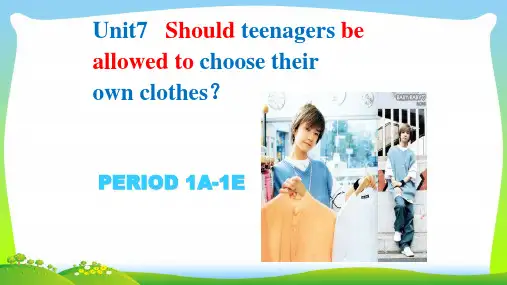
A:Do you ever get to class late? B:Yes, I sometimes get to class late.
1c Listen and circle the things in 1a that Peter
talks about.
—I__a_g_r_e_e__ . They should come to school on time.
Ⅱ. 完成句子 1. 应该允许孩子与朋友一起学习。
Children__s_h_o_u_ld____ __b__e___ a_l_l_o_w_e_d____ to study with friends. 2. 老师告诉我们上课不能迟到。 The teacher tells us not to___g_e_t__ ___t_o___ __c_la_s_s___ __l_a_te___ . 3. 怀特先生总是对自己的两个孩子要求很严格。 Mr. White ____is____ always__s_t_ri_c_t_ ___w_it_h_____ his two children.
13、He who seize the right moment, is the right man.谁把握机遇,谁就心想事成。2021/7/282021/7/282021/7/282021/7/287/28/2021
• 14、谁要是自己还没有发展培养和教育好,他就不能发展培养和教育别人。2021年7月28日星期三2021/7/282021/7/282021/7/28
1. Peter should be allowed to take the test later.
2. Students need strict rules. 3. Parents should not be too
人教目标九年级英语Unit7(全单元课件) (共69张PPT)
1.你的头发太长了。你最好去把头发理了。 Your hair is too long .You’ d better go and
g__e_t_/_h_a__v_e__y_o__u_r__h. air cut
我的自行车坏了。我想修理它。 2. My bike is broken . I want to ___________.
your safety. Anna: But Gaby’s getting her ears pierced at the shopping center and I want to watch. Mom: Sixteen-year-olds shouldn’t be allowed to get their ears pierced either. They’re
确保
这是一个否定前移的主从复合句。I/ we think 后面 的宾语从句如果是否定含义,则须将否定词前移 到主句上,即I/we don’t think … , 表示“我(们) 认为…不… ”. 类似于think 这一用法的动词还有:
believe…. 1.我认为他不对。I_d_o__n_’t__th_i_n_k__h_e__is__r_ig_h__t_..
Do you agree or disagree?
Students should not be allowed to take mobile phones to school.
1.be allowed to do sth. 被允许做某事 2.allow sb. to do sth. 允许某人做某事 3.allow doing sth. 允许做某事 Eg: Little kids aren’t allowed to play with fire火.
九年级英语Unit7SectionB(1a-1e)说课稿
Unit7 Teenagers should be allowed to choosetheir own clothes.说课稿Section B(1a-1e)宁阳二十中邹丽霞各位评委、各位老师大家下午好!今天我说课的题目是:九年级英语(上)Unit7Teenagers should be allowed to choose their own clothes.Section B(1a-1e).现在我将从以下几个方面来说一下我的教学设计:一.设计理念和设计思路新课标强调语言的应用,注重能力的培养。
所以本节课我采用任务型教学为主,并融入演示法、情景教学法,激发学生的学习积极性,让学生积极动口,动手,动脑,激活英语课堂,让学生真正成为课堂的主体。
二.说教材教材分析:本单元是九年级上第七单元,以谈论规则为中心话题,重点语法结构为should + be allowed to , 学习如何运用这一语法结构来谈论在生活中的被允许做某事以及不被允许做某事此中心话题的谈论是学生比较感兴趣的内容,所以学生有学习的积极性。
本课的教学内容与学生的实际生活密切相关,易于引发学生的学习兴趣,为之后的学习内容做好铺垫,起层上起下的作用。
三.教学对象分析1) 知识基础:在七年级中已经有一个单元介绍了大量的校规、家规单词对本单元的学习奠定了基础。
2) 思维能力:学生有较强的记忆力和模仿能力,但还有待培养知识的扩展运用能力。
3) 认知心理:学生有较强的求知欲和表现欲,但对于还存在自信不足或羞于表现的学生还要多加激励。
通过以上对教材及学生的分析,特制定以下教学目标四.说教学目标知识技能目标:1.掌握本课的重点短语。
2.能运用频度副词和情态动词的被动语态谈论校规。
过程与方法:听说练习情感态度目标:遵守规则,当一个快乐而又有礼貌的青少年。
教学重难点:1.掌握本课的重点短语。
2.能运用频度副词和情态动词的被动语态谈论校规。
五.说教法:本节课我采用三环节教学法,在教学中遵循教为主导、学为主题、练为主线,并且根据本节课的话题来自生活,所以我将做到以下几点:(1)充分利用学生已有的知识和生活经验,创设生活化的真实情境引导学生在为用而学,在用中学,学了就用。
新目标英语九年级Unit7全单元课件
A, to fix B, fixed C , fixing D, fix
6,agree with sb 同意某人的观点或意见 7,agree on sth 就···取得一致意见 8,agree to do sth 同意做某事 I agreed __o_n___ this plan that you made .
3. 他们不够认真。 They aren’t__________ __________ . 4. 他应该停止戴那个愚蠢的耳环。 He should__________ __________ that silly earring. 5. 他好像没有很多的朋友。 He doesn’t seem__________ __________ many friends. 答案: 3. serious enough 4. stop wearing 5. to have
Teenagers should not be allowed to smoke.
She has a part- time job as a waitress.
Teenagers should not be allowed to have a Part-time job .
Teenagers aren’t allowed to drink wine or beer .
Teenagers should be allowed to choose their own clothes .
Do you agree or disagree?
Students should be allowed to do homework with friends.
Teenagers should not be allowed to fight .
人教英语九年级全册Unit7section A 1a—2d(共23张)-课件
Do your parents allow you to exercise? Yes, they do.
We are allowed to exercise.
We should be allowed to exercise.
Do your parents allow you to smoke? No, they don’t.
My family has some rules. Look at these pictures and tell me what they are.
I am not allowed to…… play computer games watch TV listen to music make my room a mess
I don’t think teenagers should be allowed to go to the Internet bar.
Students are not allowed to have part-time jobs.
I don’t think students should be allowed to have part-time jobs.
Students are not allowed to smoke.
Students shouldn’t be allowed to smoke.
Do your parents allow you to drive? No, they don’t.
Students are not allowed to drive.
Students are allowed to study with friends.
I think students should be allowed to study with friends.
人教版英语九年级全册Unit7SectionB(1a—1e)优秀教学案例
3.学生能够在实际语境中,恰当运用一般过去时态,提高自信心,增强语言表达的勇气。
4.学生通过学习英语,拓宽国际视野,增强跨文化交际意识,培养尊重不同文化的价值观。
在教学过程中,教师应关注学生的个体差异,给予每个学生充分的关注和指导,确保他们在原有基础上得到提高。同时,注重培养学生的综合素质,使他们能够在知识与技能、过程与方法、情感态度与价值观等方面全面发展。
在教学设计上,本案例旨在通过生动的情景设置、丰富的教学活动,激发学生的学习兴趣,让他们在真实语境中感知、实践和巩固过去时态。同时,注重培养学生的团队协作能力和自主学习能力,使他们能够在小组讨论和个体实践中,更好地掌握英语语言知识。
针对九年级学生的知识水平和学习需求,本案例将教学目标定为:1.能够准确运用一般过去时描述过去发生的日常活动;2.提高听、说、读、写综合语言运用能力;3.培养团队协作和自主学习能力。
三、教学策略
(一)情景创设
1.教师通过多媒体展示过去时的相关图片,如参观农场、去市场购物等,引导学生感知过去时态的运用。
2.利用实物、道具等,创设真实情境,让学生在实际操作中,体会一般过去时态的用法。
3.设计角色扮演活动,让学生扮演不同角色,进行过去时的对话,增强对过去时态的感知。
4.教师创设问题情境,引导学生运用过去时态进行思考和回答,如“你上周做了什么?”等。
五、案例亮点
1.情境创设丰富多样:本案例通过多媒体展示、实物道具、角色扮演等多种方式,创设了生动直观的教学情境,让学生在真实语境中感知、实践和巩固一般过去时态,提高学生的语言运用能力。
2.问题导向激发思考:教师在教学过程中提出具有启发性的问题,引导学生思考和探索一般过去时态的构成、用法和动词变化规则,激发学生的探究兴趣,培养学生的自主学习能力。