
英语课件 Module3 unit1Where did you go
外研版九年级英语下册内文课件:Module3Unit1(共30张PPT)
常考短语
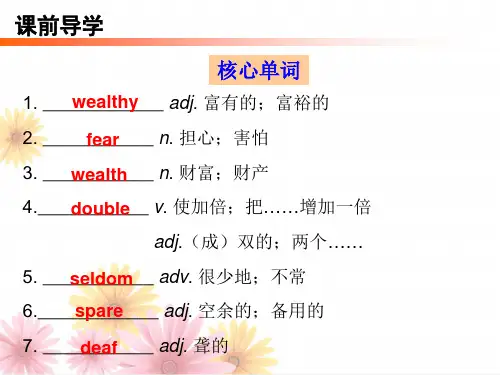
1. _____in__t_h_e_p_a_s_t___ 在过去 2. ____o_f__co__u_rs_e_____ 当然 3. _____d_e_a_l _w_i_th_____ 应付;处理 4. _____u_s_e_d__to______ 过去 5. _____t_h_e_n_u_m__b_e_r_o_f__.._. ______ ……的数量 6. ____s_p_a_r_e_t_im__e____ 业余时间;闲暇 7. _____r_e_m_e_m__b_e_r_t_o_d_o______ 记得要做…… 8. _____s_p_e_a_k__u_p____ 大点声说
4 seldom的用法 【教材例句】People seldom say they have enough spare time. 人们很少说他们有充足的业余时间。(教材第 18页) 【用法】seldom是频度副词,用在系动词或助动词之后, 实义动词之前,意为“很少地;不常”,相当于hardly。 【举例】John seldom gets together with his friends.约 翰很少与朋友聚在一起。
13、He who seize the right moment, is the right man.谁把握机遇,谁就心想事成。2021/9/82021/9/82021/9/82021/9/89/8/2021 •14、谁要是自己还没有发展培养和教育好,他就不能发展培养和教育别人。2021年9月8日星期三2021/9/82021/9/82021/9/8 •15、一年之计,莫如树谷;十年之计,莫如树木;终身之计,莫如树人。2021年9月2021/9/82021/9/82021/9/89/8/2021 •16、教学的目的是培养学生自己学习,自己研究,用自己的头脑来想,用自己的眼睛看,用自己的手来做这种精神。2021/9/82021/9/8September 8, 2021 •17、儿童是中心,教育的措施便围绕他们而组织起来。2021/9/82021/9/82021/9/82021/9/8
外研版五年级上册英语教案Module 3Unit 1
外研版五年级上册英语教案Module3Unit1 Where did you go?教学目标:1.掌握动词过去式的变化。
2.会运用句型:Where did you go?What did you do? How did you go?教学重点:重点单词和句子。
教学难点:运用动词的过去时态描述过去的活动。
教学准备:Word cards、Reading book 、Work books教学过程:Step 1: Warm up1. Greeting.2. Review the past tense.Step 2: Presentation1. Ask the Ss : Where did you go at the weekend?What did you do?How did you go?Let some Ss answer it in English.1 / 32. Then tell the Ss Lingling went to London and she visited lots of places. Do you want to know where did she go? Please listen to the reading pen carefully and answer the follow questions:(1) What did she do at the weekend?(2) Where did she go?(3) How did she go to these places?3. Work in pairs. Then let some Ss answer it.4. Listen again and check the answer and circle the new words. And use the word cards teach the new words.5. Let the Ss listen carefully and read after it.Step 3: Practice1. Let the Ss read the text by themselves.2. Role play: Let some Ss act the text out.Step4: SummaryWhat did you learn in this class?Step5: Homework1. Read the text smoothly.2. Recite the new words and important sentences.板书设计:Unit1 Where did you go?weekend、place、museum What did you do at the weekend?how、best、took、trip Where did you go?along、river、hour 、How did you go to these places?2 / 33 / 3。
【优质】小学英语外研版五年级上册M3U1优质公开课教案(1)
Module3 unit1 Where did you go?授课时间:一、教学目标:知识点:掌握这几个句型:What did you do at the weekend? Where did you go ?能力培养点:培养学生应用句子的能力。
思想教育点:培养学生热爱大自然的思想感情。
二、教学重点:能用简单的语句描述过去发生的事情。
教学难点:同上以及动词过去式的用法。
三、教学用具: some pictures、tape、recorder、card四、教学过程一、Warmer:1.Play the tape and do the actions .2. Ask: How many days are there in a week ?Answer: Seven days .What do you usually do at the weekend?二、Leading in.T: "I had a busy wonderful weekend .Sing the song after the tape and do actions .Listen and talk .Do you want know what I did at the weekend ?"" Where are Daming and Amy ?""Where did they go?"" They visited other places in London."三、Learning.Step1:Look, listen and learn.1. Play a game ."What did you do yesterday?"Step2: Ask and answer" When did you ...?""What did you ...?"Get Ss work in pairs.Step3: Look and match1. Tell the Ss to choo-se a verb in the past simple tense and write it on a piece of paper.Answer:They went to the park .Look at the pictures.S1: I went to the park.S2: ...and played football.S3: ...and...and watched TV.S4: ...and...and...and... I saw some boats.Examples:A:What did you do last weekend?B: I went to a museum.A: When did you go there ?B: I went there on Sunday.Choose and write it on a piece of paper . Step4:Listen and repeat.训练发音教后反思:。
外研版五年级上册M3U1 Where did you go教学设计讲课教案
Module 3 Unit 1 Where did you go?教学设计一、教学目标:1、知识与能力目标:(1)能听、说、认读本课的重点单词:the British Museum, the London Eye, weekend, place, how,best,took,trip,along,river,hour,twenty,minute;(2)能正确使用动词过去式;(3)能利用What did you do? Where did you go? 询问别人过去做的事情。
2、过程与方法:通过活动体验,在交流中学会谈论上周末从事的活动,谈论不久前发生的事情,发展综合语言运用能力。
提高学生跨文化交际意识。
3、情感与态度目标:培养学生学习的兴趣,鼓励学生积极合作,引导学生了解西方的名胜古迹。
二、教学重点:1、使学生能听说,认读单词the British Museum, theLondon Eye,weekend,place, how,best,took,trip,alon g,river,hour,twenty,minute;2、能准确理解并熟练运用What did you do at the weekend? Where did you go? Where/How/When/What did…?三、教学难点:掌握本课的新单词及利用动词过去式的变化进行描述。
四、教学方法:任务型教学法学法:合作交流法五、教学过程:Step 1. 课前展示,热身激趣1. Greetings T: Good morning, boys and girls.Ss: Good morning, Ms Li.T: How are you?Ss: Fine, thanks.2. Sing a song: 《Where did you go?》3. 复习动词的过去式:教师以连线的方式考察学生对动词过去式的掌握情况。
go send likemeet visit sent liked met visited met (设计意图:利用歌谣开始本课教学,可以创设轻松的学习氛围,消除学生的紧张情绪,由歌曲《Where did you go?》引出本课的重点句型,激发学生的兴趣。
五年级上册英语教案-Unit1.Where did you go 外研版

外研版五年级上册Module 3 Weekend ActivitiesUnit1.Where did you go?汇报课教师:黄仲玉学习内容: Module 3 Unit 1 Where did you go ?一、学习目标1.知识目标:①学生能听、说、认读本课的重点单词:the British Museum, the London Eye, Big Ben,weekend,place,how,best,took,trip,along,river,hour,twenty,minute;②能正确使用动词过去式;③用What did you do? Where did you go? How did you go?询问别人过去做的事;④综合以上认识,从而培养学生的阅读兴趣,引导学生掌握阅读技巧,灵活学会阅读课文→理解课文→解决问题的方法。
2.能力目标:①正确描述和询问过去发生的事情;②培养阅读兴趣和掌握阅读技巧。
3.情感目标:培养学生学习的兴趣,鼓励学生积极合作,引导学生了解中西方的名胜古迹。
二、重难点及突破措施1.教学重点:①学生能听说读写词汇the British Museum,the London Eye,weekend,place,how,best,took,trip,along,river,hour,twenty,minute;②能准确理解并熟练运用What did you do at the weekend? Where did you go? How did you go there? Where/How/When/What did…?③通过fast reading→careful reading→extended reading训练,引导学生举一反三,从而培养及提高阅读能力,拓展阅读范围,通过“读”去“悟”从而增长自己的见识。
2.教学难点:①学生掌握本课的新单词及利用动词过去式的变化进行描述,使用动词过去式,询问过去发生的事情;②纠正学生的阅读误区、拓展学生的阅读范围和提高学生的阅读能力。
Module 3(复习课件)五年级英语上册(外研版三起)

__W__h_e_n__d_i_d_y_o__u_c_o_m__e__b_a_c_k___________________?
选择。
( A) 1.They____ to the zoo by bus.
A. went B. பைடு நூலகம்oes C. going
C. you C. car C. what C. of C. trip
Let’s spell
字母o在单词中可发[o]音:dog box 字母组合ar 和字母 a在单词中可发[a:]音:arm class 字母组合 oral在单词中可发[o:]音:morning walk 字母组合 oo 在单词中可发[u]音:book football 字母组合 ou、oo 在单词中可发[u;]音:soup food
3. They went to Badaling.(对画线部分提问)
__W__h_e_r_e__d_id__t_h_e_y__g_o_______________________________?
按要求完成下列句子
4.I visited Big Ben at the weekend.(对划线部分提问)
A. at
B. in
C. do
(C ) 5. -Who ___ this picture? -Daming did.
A. takes
B. will take C. took
(B )6.—Where did you ______?
A. do
B. go
C. go to
(B)7. I went _____in the sea.
Phrases
Module3Unit1Wheredidyougo?单元整体(教学设计)外研版英语五年级上册
Module 3单元整体教学设计3.横向知识关联:Module 3第一单元主要学习用“Where did you go? How did you go to these places? What did you do at the weekend?” 询问他人去过什么地方、怎样去的、在那里做了什么事情。
第二单元主要学习用描述他人在过去做了什么事情,及字母和字母组合a ,o ,ar ,r ,al ,oo ,的发音。
两课都需要重点学习和不断强化的是: 1. 能够对过去去了哪里进行问答。
2. 能对过去怎样去了什么地方进行问答。
3. 能对过去做了什么事情进行问答。
4. 能对过去发生的事情和情况进行简单的阐述和表达。
4.单元探究设计:Yes, it was great! Did you go to Hangzhou? Yes. We went there by train.Unit 1主题 语境授课 内容第3模块整体教学设计Unit 2Travelling学情分析1.年龄特征:五年的学生已学过两年多的英语,具备了一定的听、说、读、写英语的能力。
大多数学生已能听懂有关熟悉话题的语段和简短的故事。
能与教师或同学就熟悉的话题交换信息。
能读懂短篇故事,但由于各种因素的影响,学生发展参差不齐。
有少数学生因为基础不够好,学习很吃力,有的上课不专心,注意力不集中,这给教学带来不少困难。
总的来说,大部分学生对于英语还是保持着比较高的热情。
2.知识储备:本模块在前面学过过去时的一般疑问句、陈述句、由what, how many, how much引导的特殊疑问句的基础上继续学习一般过去时的特殊疑问句,并作相应的回答。
教学内容主要围绕着去了哪里、怎样去的、做了什么事情而展开。
3.能力水平:学生之前的学习内容多限于对话形式。
五年级开始接触语篇,学生阅读能力较低,大部分学生还不懂得文本阅读的方法,针对孩子已有的年龄特点和已有知识经验,充分利用微视频、多媒体等直观教具进行教学,激发学生学习积极性,并通过指导性语言指导孩子学会寻本课时以通过对话,大明询问Amy,Sam and Lingling 在英国周末的活动为情景,主要学习运用句型“Where did+主语+go(+其他)?”及答语“主语+went(to)+地点”询问并回答去了哪里。
外研版五年级上册英语Module 3 Unit 1 Where did you go 授课课件
短语:takeabus乘公共汽车 一词多义: take花费(时间、金钱等)
trip/trɪp/n. 旅行,旅程 短语: takeatrip去旅行
haveagoodtrip旅途愉快 along/ə'lɒŋ/prep. 沿着 形近词: long长的
1熟记本节课所学的句型、短语和单词,必须会 听、说、读、写。
2将Listen, readandactout的对话朗读流利。
短语: goalongtheroad沿着这条路走
加法记忆法: a+long(长的)=along沿着
river/'rɪvə/n. 河,江 发音: 字母i在单词中发/ɪ/,相同发音的单词有list,
finish,city。 例句: Therearelotsofboatsontheriver.
河面上有许多小船。 短语: theChangjiangRiver长江
点拨:B、C项为具体建筑物,A项指统称的地方。
() B(2) A. hourB. twentyC. minute () C(3) A. howB. whatC. river () A(4) A. takeB. tripC. weekend () B(5) A. goB. tookC. like
四、按要求完成句子。
例句: Howareyou? 你好吗? 形近词: now现在
短语: howmany多少howmuch多少howold多大
联想记忆法: what什么,where哪儿,why为什么, when什么时候
魔法记忆: 现在(now)把n与h交换会怎样(how)?
bybus乘公共汽车 用法: “by+交通工具” 表示出行方式。
where did you go课堂实录、反思
module 3 unit 1 Where did you go?1.Teaching content:外研版book 5 module 3 unit 1 Where did you go?2.Teaching type:New lesson3.Teaching Aims:a.Knowledge Aims(1) Read and use the new words:weekend,place,British,museum,how,best,took,trip,along,riv er,hour, twenty, minute(2) Students can understand and read “Where did you go? What did you do?”b. Ability AimsStudents can ask and answer the things they did in the past.c. Emotion AimsTraining the students’ communication abilities and expend the horizons of the students.4.Teaching Focus and Difficult Points:(1). Students can understand the dialogue deeply.(2). Students can master the new words and sentences in dialogue.New word:weekend,place,British,museum,how,best,took,trip,along,riv er,hour, twenty, minuteKey sentences: Where did you go last Sunday?What did you do last Sunday?”5.Teaching procedures:step1:warm up.Greetings, say hello to everyone.T: Good morning, boys and girls.S: Good morning, Ms zhang.T: Sing a song: How many apples do you want?Step 2: Presentation and Cooperation一、Leading inT: Look, this is Lingling, Lingling went to London last weekend. Now she is sharing her trip with John. Let’s go and see.(运用百度图片出示玲玲及伦敦一些著名建筑物图片,引发学生本节课学习英语的兴趣,提出问题“Where did Lingling go? What did Lingling do?”自然过渡到本课重点句型“Where did you go? What did you do ? ”)1. Play the tape.2. Listen and repeat.二、New words and sentences.(出示图片,将本课的新单词都放在情景中进行教学,把新单词学习和句子内容联系起来。
(三起)外研版五年级英语上册 M3Unit1
Yes, she did.
1. Where did you go last Sunday? I went to…
(the park, supermarket, zoo…) 2. What did you do ?
I…
(read books ,watched TV, played football, visited…)
1. Last summer, my brother _C__ the London Eye.
A. see
B. seeing
C. saw
Hale Waihona Puke 2. —__B__ did you go to the zoo.
—We went there by bus.
A.When
B. How
C. Where
3. —_A__ did you do at the weekend?
best 最
But she liked the bus ride best!
但是她最喜欢搭公车!
river 河, 江
Then we took a boat trip along the river. 然后我们乘船沿河旅行。 take 的过去式 took
along 沿着 trip 旅行,旅程
It took us one hour and twenty minutes. 我们用了一个小时二十分钟。
Let’s act
Act it out fluently Act it out with emotions有感情地表演 Act it out fluently with movement有感情地带动作表演