
精通版可用人教新版四年级英语下册第六单元电子教案
T:(Show some horses)
What are these in English?
S: They are horses.
T: Ask Ssto spell the word,teaching the word, Ss spell andWriting in the air.
2,T show somephotos of animalsand please some Ss say theseanimals’name.
Step2: Presentation
1,T showa photo of horse
T: Whatanimal?
Ss :Horse
T:What’s this in English?
3 Listen to the tape two times and read after tape.
4,Pair work.
5,Act out.
Step 3:Practice
1,Play a game:
Some students act as animals.Others guess what animals they are.
3、Ss can clearly master the sentence:What are those in English? They’re sheep.
Affection Aims
Ss can be more confident during the study of English and get great fun of study.
3、Ss can clearly master the sentence :Whatare these in English? They’re…
Affection Aims
Ss can be more confident during the study of English and get great fun of study.
2,write the word:horse and cow
Blackboard design:
Lesson34
horse and cow
(pictures)
What are these in English?
They are cows.
municat-ional
2.Direct Teaching Method
Teacher
Picture cards. Tape. Recorder.stickers
Lessontime
One period
Teaching Steps
差异分析
教学策略
Step 1 :Warming-up/Revision
1, Look at the picture cards andsay.
Unit6 Would you like to takeching aims and demands
Knowledge Aims
1、Ss can know and read the new word:a goat, goats, a sheep, sheep.
2、Ss can spell and write the word :duck, sheepandpig.
Unit6 Would you like to take a trip?
Lesson34
Teaching aims and demands
Knowledge Aims
1、Ss can know and read the new word:horse, cow.
2、Ss can spell and write the word :horse, cow.
教学难点
Ss can write the word :horse, cow.
句型“Whatare these in English? They’re…”的运用。
课前准备
Students
Before the students in the teaching content related to learning experience is less, but in order to guarantee the students' learning interest and enthusiasm, let students full engagement inquiry activity, no organizations of any form of preparation before activities.
2,T showa photo of a cow.
T:What’s this in English?
Ss:It’s a cow.
T:(Show some cows)
What are these in English?
S: They are cows.
T: Ask Ssto spell the word,teaching the word, Ss spell andWriting in the air.
挑战性目标
(预设)
1To promote the Ss interest。
2To foster the dialogue confidence.
教学重点
Ss can write the word :duck, sheepandpig.
挑战性目标
(预设)
1To promote the Ss interest。
2To foster the dialogue confidence.
教学重点
Ss can write the word :horse, cow.
句型“Whatare these in English? They’re…”的运用。
3.Listening and speaking
4.TPR
5.Situation-al Teaching Method.
municat-ional
2.Direct Teaching Method
3.Listening and speaking
4.TPR
5.Situation-al Teaching Method.
四年级下册英语说课稿- Lesson6 人教精通版

四年级下册英语说课稿- Lesson6 人教精通版一、教学目标1.知识目标:能够听懂、理解并正确使用本课所学的单词和句子,如tea, coffee, milk, water, please have some…等。
2.技能目标:学会用正确的语音、语调和表情表达出所学内容。
3.情感目标:了解英语文化,增强跨文化交流能力。
二、教学重难点1.教学重点:本课时的重点是单词和句型的教学,包括大容量词汇和常见交际用语。
2.教学难点:语音发音准确度,交流准确度。
三、教学准备1.教具:录音机、PPT、黑板和粉笔等。
2.课件:课件要涵盖教学内容,有气氛自然生动的图片。
四、教学过程第一步:导入新知识1.教师通过PPT呈现一系列饮品图片,问学生有谁知道这些是什么饮品。
2.学生积极回答并且自己友好的表达出自己的意见。
第二步:新授单词1.教师通过黑板,将本课所学单词逐一列出来,并用语音发音教授。
2.学生跟随老师,大声说出单词。
第三步:练习1.教师引导学生朗读本课所学的短句。
然后,让学生进行小组朗诵。
2.学生表演交流,教师引导学生进行对话。
第四步:巩固1.教师进行练习、巩固。
要求学生在课堂上进行互动交流,随机组织学生进行交流。
2.教师梳理学生的表现情况,并进行课堂评价、反思和总结。
第五步:作业布置1.教师进行课堂布置,要求学生进行一定数量的听、说、读和写的练习。
2.学生回家完成作业,并将成果反馈给教师。
五、教学心得1.教师应该注重交流,让学生在课堂上有机会互动交流,讲英语不仅仅定义为一个听和读的过程,要让学生进行口语练习比如打交道和讨论。
2.教师应该注重互动评估,在课堂上及时批评和反省,让学生能够在早期找到自己的优势和不足,更好地形成英语口语能力。
3.教师应该具有丰富的英语语境,更好地解释语言艺术和英语语境,培养学生对英语文化的了解和认知。
四年级下册英语教案-Unit 6 Would you like to take a trip Lesson 32 |人教精通版
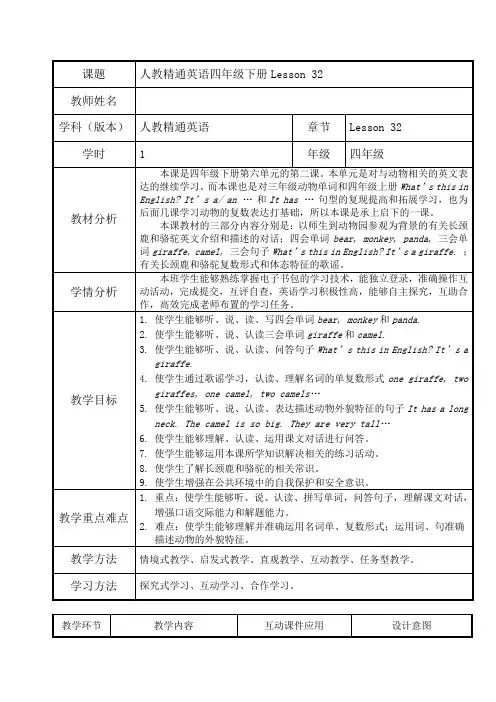
人教精通英语四年级下册Lesson 32
教师姓名
学科(版本)人教精通英语章节源自Lesson 32学时
1
年级
四年级
教材分析
本课是四年级下册第六单元的第二课。本单元是对与动物相关的英文表达的继续学习。而本课也是对三年级动物单词和四年级上册What’s this in English? It’s a/ an…和It has…句型的复现提高和拓展学习,也为后面几课学习动物的复数表达打基础,所以本课是承上启下的一课。
2.由一对一互动拼图游戏导入对panda相关词句的拼写和认读。
3.通过吉吉去看功夫熊猫,拼读单词panda,进行对话问答,并由此总结本课所学重难点知识。
1.直观课件
2.直观课件
3.直观课件
4.直观课件
1.直观课件
2.直观课件
3.直观课件
4.互动课件
5.直观课件
1.直观课件
2.互动课件
互动课件
1.直观课件
1.互动课件
2.互动课件
1.延续情境,进行德育渗透,导入一对一互动练习,练习单词。
2.一对一互动练习检查学生对句子的理解和掌握。
Step 4
Homework and knowledge
1.根据本课所学,请学生完成相关听说读写的作业。
2.发送一对一互动任务,请学生课下自学骆驼相关知识。
1.直观课件
2.互动课件
1.在口语交际的铺垫下,创设情境,出示动物园的图片,并渗透新句型Come along, boys and girls.
2.继续创设情境,通过猜测三张图片上的人物,导入与本课所授内容相关的角色:熊大、熊二和吉吉国王。
3.通过提问吉吉国王和熊大熊二的图片,认读、问答、拼写三会句子What’s this in English? It’s a ...和四会单词monkey, bear,并及时板书,重点强调单数句的语法表达's a...
人教精通版英语4下六单元教案
分析
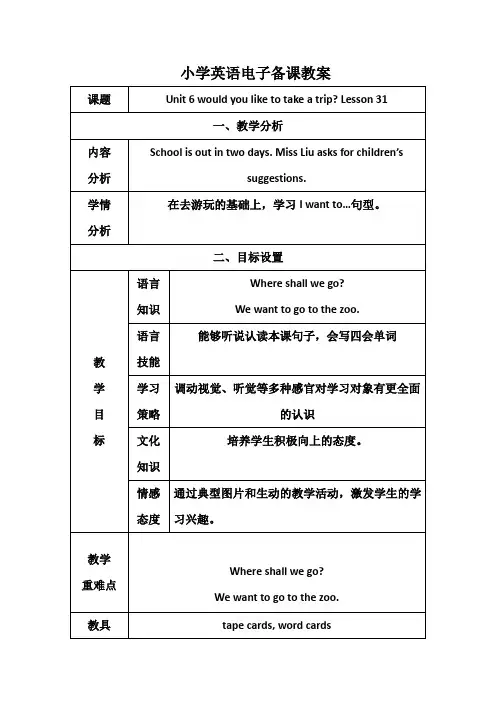
在去游玩的基础上,学习描述动物的语句。
二、目标设置
教
学
目
标
语言
知识
What’s this in English?
It’s a giraffe.
语言
技能
能够听说认读本课句子,会写四会单词
学习
策略
调动视觉、听觉等多种感官对学习对象有更全面的认识
文化
知识
培养学生积极向上的态度。
情感
态度
通过典型图片和生动的教学活动,激发学生的学习兴趣。
-production-Summary&Homework流程)
教学
过程
教师活动预设
学生活动预设
设计意图
时间
Step 1
Preparation
Step 2
Presentation
给予学生表现给予适当的评价。
1)教师拿出本课的生词卡片:farm, zoo展示图片并示范朗读单词.让学生猜出单词意思。
教授where shall we go?句型,及其答语we want to go to the zoo.
小学英语电子备课教案
课题
Unit 6 would you like to take a trip? Lesson 32
一、教学分析
内容
分析
The children see the animals in the zoo. The giraffe is so tall. The camel is so big.
教学
重难点
生词giraffe, camel
教具
tape cards, word cards
板书
设计
Unit 6 lesson 32
人教版四年级英语下册六单元教案
人教版四年级英语下册六单元教案人教版四年级英语下册六单元教案篇1一、教学目标:1.知识目标:掌握本课重点概念: jeans2.能力目标:使同学能够熟练地运用“What are you wearing? I’m wearing ……”3.情感目标:感知英语的实用性,增强学习英语的兴趣。
二、教学重难点:1.重要概念trip2.同学能够熟练地运用“What are you wearing? I’m wearing ……”三、教具、学具:1.衣服的图片.2.录音机和磁带3.单词卡片四、教学过程1.Greeting2. 复习a. Ask and answer用以复习clothes:T: What are you wearing?S: I’m wearing ……b.做Spell It 游戏用以复习同学已经掌握的关于clothes词汇.3.教授重要概念:待复习一系列关于衣服的词汇后,出示jeans的图片并教授.T: Look! What is Jenny wearing? Let’s listen to the radio and think about this question.(part 2)Listen to part 2 once then discuss this question.Listen to part 2 again and students try to follow it.4.Practiceivide the class into small groups and ask the students to take turns describing what they are wearing to each other.they cansay:This is a……I have a ……I’m wearing……5.Read after the tape.6. 完成第1题7. 作业: a. 完成剩余局部.b. 对话练习.板书设计:Lesson19: What Are You Wearing?What are you wearing?I’m wearing ……jeans人教版四年级英语下册六单元教案篇2一. 教学目标:1.复习1-100的数字。
四年级下册英语教案-Lesson6人教精通版

四年级下册英语教案 Lesson 6 人教精通版教学目标1. 知识与技能:学生能够理解并运用本课所学的单词和句型,如“library”, “borrow”, “return”等,进行简单的图书馆场景对话。
2. 过程与方法:通过小组合作和角色扮演,培养学生运用英语进行实际交流的能力。
3. 情感态度与价值观:培养学生对英语学习的兴趣,增强合作意识,理解图书馆的借阅规则。
教学内容1. 单词:library, book, magazine, borrow, return, read。
2. 句型: Can I borrow this book? Yes, you can. Whereis the library? It's on the first floor.教学重点与难点重点:单词的正确发音和句型的实际应用。
难点:理解并正确使用“borrow”和“return”这两个动词。
教具与学具准备教具:多媒体课件,图书馆场景图片,单词卡片。
学具:学生自带英语课本,笔记本,彩色笔。
教学过程1. 课堂导入:通过展示图书馆的图片,引导学生猜测今天的话题。
2. 新知识学习:教授新单词和句型,通过游戏和练习加强记忆。
3. 小组活动:学生分组进行角色扮演,模拟图书馆借阅场景。
板书设计中心:课题名称“Lesson 6”。
左侧:单词列表和图片。
右侧:句型示例和关键语法点。
作业设计1. 书面作业:完成练习册中与本课相关的练习题。
2. 口头作业:与家长进行角色扮演,模拟图书馆借阅场景。
课后反思教学方法:观察学生在小组活动中的参与度和交流情况,调整教学策略。
学习效果:通过作业和下节课的复习,评估学生对新知识的掌握程度。
改进措施:根据学生的反馈和学习效果,调整教学计划和方法。
此教案旨在为四年级下册英语课程提供一个全面且结构清晰的教学框架,确保教学内容丰富、教学方法有效,同时注重学生的实际应用能力和情感态度的培养。
教学过程详细说明1. 课堂导入:图片展示:通过展示不同类型的图书馆图片,如学校图书馆、公共图书馆等,激发学生的好奇心和兴趣。
四年级下册英语教学设计- Lesson6 人教精通版

四年级下册英语教学设计- Lesson6 人教精通版教学目标1.学生能够熟练掌握本课所涉及的人称代词。
2.学生能够掌握如何正确运用人称代词替换和引用前文中的人物名称。
3.学生能够初步理解基本的句型结构,从而能够运用人称代词构建简单的句子。
4.学生能够通过学习这一课程,提高自己的英语听说能力,增强自信。
教学内容1.本课的主要内容是人称代词,包括第一人称,第二人称和第三人称。
2.这一课程涵盖了一些常用的词汇和短语,如 my name is,his name is,her name is 等。
教学步骤第一步:导入新知识1.教师先通过图片和音频引入本课程的相关人物,并反复强调人称代词的概念。
2.让学生跟读人称代词的发音及其替换句子,如 I am Amy/She is Amy/He is Peter。
以此加强学生的认知度和语感。
第二步:语言模仿1.教师可以播放一些带有人称代词的短篇英语故事,让学生通过模仿的形式学习如何正确运用人称代词。
2.学生可分组进行模仿练习,并通过口头交流的方式展示练习成果。
第三步:拓展知识1.让学生通过小组讨论的方式,了解其他与人称代词相关的语言内容,如名词性物主代词和动词to be,在不同的句型中的用法。
2.教师可通过展示一些例句,以及提供一些口语训练的练习,帮助学生更好地理解新知识。
第四步:知识巩固1.让学生听老师朗读故事,通过理解故事的情节,来强化知识点的记忆和应用。
2.学生可通过口头表达或书面练习完成相关的作业。
教学小结通过这一节课的学习,学生已经了解了人称代词的概念,并且能够基本掌握如何替换和运用人称代词。
后续学习将会进一步加强英语听说的能力,并且开启更为丰富的课程内容的学习之路,为今后的英语学习打下坚实的基础。
四年级下册英语教案- Lesson6 人教精通版
Lesson 6 Teaching Plan of Grade 4 English - People’sEducation Press EditionTeaching Objectives1.Understand and memorize the new vocabulary words: baker, postman, reporter, farmer, lawyer, artist, businessman, and teacher.2.Understand the professions and job responsibilities of different people.3.Be able to use the simple present tense to describe daily routines of different people.Teaching ContentVocabulary1.baker2.postman3.reporter4.farmerwyer6.artist7.businessman8.teacherSentence patterns1.She is a baker. She bakes bread.2.He is a postman. He delivers the mail.3.She is a reporter. She writes news.4.He is a farmer. He grows crops.5.She is a lawyer. She helps people.6.He is an artist. He paints pictures.7.He is a businessman. He makes deals.8.She is a teacher. She teaches students.Teaching ProceduresStep 1: Warm-up (10 minutes)1.Greet the students and ask them about their favorite professions.2.Introduce the topic of today’s class: professions.3.Show pictures of different professions and ask the students to identify them.Step 2: Vocabulary (20 minutes)1.Introduce the new vocabulary words to the students.2.Pronounce each word and ask the students to repeat.3.Show pictures of different professions and ask the students to match them with the correct word.4.Repeat the words and their meanings with the students several times.Step 3: Sentence Patterns (30 minutes)e one of the vocabulary words to form a sentence pattern(e.g. She is a baker. She bakes bread.)2.Ask the students to repeat the sentence several times.3.Play a game where the students have to match a sentence pattern with the correct profession.4.Show pictures of different professions and ask the students to describe the daily routines of the person in the picture using the sentence patterns they learned.Step 4: Speaking Practice (30 minutes)1.Divide the students into pairs.2.Ask them to interview each other about their dream professions using the sentence patterns they learned.3.Encourage the students to use as much new vocabulary and sentence patterns as possible.Step 5: Homework (10 minutes)1.Assign the students to write a short essay about their dream profession using the vocabulary and sentence patterns they learned in class.2.Collect the homework at the beginning of the next class.ConclusionBy the end of this lesson, students should be able to understand the vocabulary related to professions, comprehend the responsibilities of different people in various occupations, and be able to use the simple present tense to describe somebody’s daily routine. As a teacher, it is essential to make the learning process interactive and engaging, so the students are likely to learn and retain the material better.。
人教版小学英语四年级下Unit-6-Lesson-6全英文教学设计--
人教版小学英语四年级下Unit 6 Lesson 6全英文教学设计_学习方法网---------------------------------------全英教案人教版小学英语四年级下Unit 6 Lesson 6教学设计1. Teaching aims Let the students to master : family, parents, uncle, aunt, baby, come, who, basketball player, people, member, only, puppy, gee, look, young brother, sister, father, mother, driver, doctor, farmer, nurse 2. Teaching aids A projector ,a tape recorde, some pictures and photos 3. Teaching steps 1)Greetings Say “Hello” to everybody, talk something about the weather and the date.Then sing a song named “ An apple a day makes a doctor away”.2)Revision Do the exercise on page 76. Ask them to do it in groups and make some coments. Do the exercise “Let’s check” listening to the tape. Then check them in pairs. Do the exercise “Let’s find out” to see how many words can they find in the letters. Tell the main idea of the story in English and ask the students to read it by themselves. Ask them to circle the difficult words and expressions. Choose one or 2 students to come to the front to tell others the meaning of the story. Then the teacher correct him/her. Read the exercise “Good to know” and say sth about it. 3)Sing a song Learn a new song named “My father is a doctor”by listening to the tape. 4. Homework Let them to remember the new words in this unit and recite the texts in this unit. 5. Teaching notes感谢阅读,欢迎大家下载使用!。
人教精通版英语四年级下册教案Unit6单元教案
人教精通版英语四年级下册教案Unit6单元教案Unit 6 Would you like to take a trip?(Lesson 31)Unit 6 Would you like to take a trip?(Lesson 32)Unit 6 Would you like to take a trip?(Lesson 33)Unit 6 Would you like to take a trip?(Lesson 34)(1)教师呈现出教材Let’s play中小朋友们根据四种动物腿部猜一猜活动的场景,在和学生示范基础上,开展两人一组的活动,熟练运用What arc these in English? They’re cats.等进行问答。
(2)教师将动物身体部位图(鸭嘴、猪鼻、象鼻、兔耳……)发给每个小组,要求学生四人一组在规定的时间内展开问答竞赛,并进行过程展示(看哪组问答的内容多,猜测的动物准)如:T: Look at the animal bodies. Can you ask and answer with them? Four children a group, two minutes. Ready? Go!S1: What are these in English?(分别指着兔耳、象鼻、猪鼻、鸭脚询问。
)S2: They’re rabbits. What are these in English?S3: They’re elephants. What are these in English?S4: They’re pigs. What are these in English?S1: They’re ducks.[来源学科网]三、趣味操练(Practice)1. 火眼金睛,巩固语言。
教师将一幅农场场景图贴在黑板上,组织学生将他们得到的农场小动物图贴在农场里,并使用What are these in English? They’re … How many ... are there on the farm? There are …进行问答。
人教版四年级下册英语第六单元教案完整版
第六单元教学计划一、单元教学内容本单元围绕购物展开教学,主要学习询问衣物价格并作简略评价,同时简单描述衣物的大小、颜色款式。
这些内容都和平时的购物息息相关,学生非常熟悉,所以教师教起来要密切结合学生的生活实际,并引导学生联系生活对所学英文进行运用。
关于服装的名称、颜色、大小等学生已经学过。
这一单元主要谈论服装的价格和评价。
可以和第三单元描述天气及第五单元谈论衣服两个话题很好的结合起来,教师在教学中可以从学生已学过的知识入手,在复习的过程中引入本单元的新知识,使学生能把学过的语言结合起来进行运用。
在教学Can I help you?等购物交际句型时,教师可创设交际情境,在交际活动中融入新的句型,使交际更贴近生活,更真实。
教师应当设计多种交际活动,让孩子在交际的过程中,真正掌握语言。
二、单元教学目标(一)知识与技能1.掌握A、B部分Read and write的单词和句子。
2.听、说、认读A、B部分Let’s learn和Let’s talk中的单词和句子。
3.理解Let’s do、Let’s chant等部分的内容。
(二)过程与方法1.引导学生通过图片或实物展示等方式,掌握本单元的教学内容,并能在实际情境中运用。
2.充分运用英文歌、儿歌、绕口令、顺口溜、谜语等,给予小学生语言感染的机会。
开展各种活动,鼓励学生交际。
(三)情感态度价值观目标强调语言的运用,注重能力的培养,突出了兴趣的激发,重视双向交流,融合学科内容,重视灵活扩展,实现整体设计。
三、单元教学重点单元教学重点:学习有关衣服和鞋子的大小、评论价格、颜色和款式。
四、单元教学难点A、B部分的Let’s talk和B部分的Let’s learn。
可以采用情境教学和实物教学相结合的方式突破难点,有条件的可以制作多媒体课件辅助教学。
五、单元教学准备(一)教师准备教学过程中所需要的图片、声音、课件,以及本单元的单词卡。
(二)准备一些衣服的照片或图片。