
人教book1unit3 Reading
5. What difficulties did Wang Kun and Wang Wei find about their journey? The journey would begin at an altitude
of more than 5, 000 meters, where it is
A diagram(图表) of the text
1. prepare to take a bike trip
2.Wang Wei organized the trip.
3. Information about the MeKong River
Read the text in details.
Paragraph 1: Dream
Reading
Journey down the Mekong Part 1 The dream and the plan
Read the whole passage quickly and decide which is the main idea of the passage. _______ A
Wang Wei’s and Wang Kun’s attitude to the trip: Wang Wei believes…
1. They must _____ _______ where start ___ in Qinghai the river begins in order to see all of the Mekong. prepare much. 2. They don’t need to _______
like that myself one day.
2. Explain the following sentences in your own
words.
1. She gave me a determined look- the kind
that said that she would not change her
The Changjiang River –长江
This is the famous river in Guangdong Province.
The Pearl River
This river begins in Qinghai Province and flows through several countries.
hard to breathe and very cold.
6. What do you think about Wang Kun and Wang Wei?
Wang Kun’s character: enthusiastic, critical, sensible Wang Wei’s character: imaginative, organized, eager, persistent, stubborn, risk-taking
4. What can you see when you travel along the Mekong? You can see glacier, rapids, hills, valleys, waterfalls and plains. waterfall glacier delta valley rapids plain
A. The dream of Wang Kun and Wang Wei and their preparation for the bike trip. B. Their dream and the journey down the Mekong. C. Their plan to travel down the Mekong and the attitudes of two people. D. The proper trip down the Mekong.
Answer the questions. 1.What was Wang Kun and Wang Wei’s idea of a good trip?
Their idea was to take a great bike trip.
2. Who planned the trip to the Mekong?mes a ________ waterfall and enters ____ wide ______. valleys
After, It travels slowly through low valleys to _____________. __________ plains (平原)
The Mekong River
The Nile River
The great rivers in the world Names of river Lancang River Seine [sein]塞纳河 Nile Kongo 刚果河 Amazon 亚马逊河 Mississippi Thames [temz]泰晤士河 Location(位置) England Egypt Central Africa the US France China Brazil
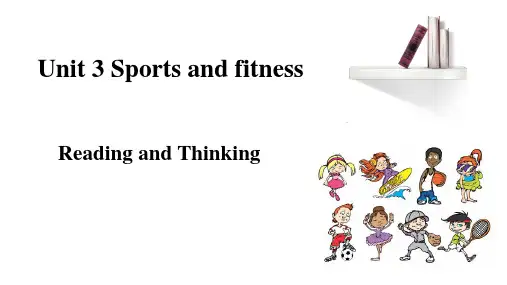
Unit 3
Travel journal
Reading
Can you guess what the names of these rivers are?
This river is called our mother river.
The Yellow River – 黄河
This river is the longest one in China.
The Mekong River
Can you list the countries that the Mekong flows through?
The countries the Mekong River flows through:
China, Myanmar, Laos, Thailand, Cambodia, Vietnam
China
Myanmar Laos
Thailand
Cambodia Vietnam
South China Sea
Can you tell the differences between the Mekong River and the Lancang River? The Chinese part of the river is called the Lancang River and after flowing in other countries the river is called the Mekong River.
Who
and
What
Wang Kun and ___ his _____ sister Wang Wei are dreaming about _____________________. taking a great bike trip
Where and How
They have the idea to ____ _____ cycle along the Mekong River from ______ where it
3. It makes wide bends or meanders through low valleys to the plains where rice grows. The Mekong river flows slowly and gently through the valleys and reaches the
Brain Storming
travel along a river to make electricity
How do people who live beside a river make use of it?
to irrigate (灌溉) their fields go swimming
Lan Cang River
Useful words and phrases
1. 梦想做某事 dream of/about doing sth 2. 骑自行车旅游 take a bike trip 3.说服……做…… persuade sb to do care about 4.关心,介意 5.改变主意 change one’s mind 6.下定决心 make up one’s mind 7.屈服,让步 give in 8.使某人对„„感兴趣 get sb interested in
Listen to the tape and get the main idea of each paragraph : Para. 1 Wang Kun and Wang Wei’s dream. Para. 2 Wang Wei is stubborn. Para. 3 Preparing for their trip.
delta
三角洲
At last, the river _____ delta enters the South China Sea.
New words about geography: altitude glacier rapids valley waterfall plain delta 海拔高度 冰河 急流 (山 )谷 瀑布 平原 三角洲
Wang Wei.
3. Where is the source of the Mekong River and which sea does it enter?
The source of the river is in Qinghai Province and it enters the South China Sea.
Wang Kun believes… 1. It is too cold ____ _____ and _____ high to start in Qinghai. 2. That _____ using ___ an _____ atlas is very important.
新课标人教版必修一Book1 unit3 reading

Step5 Retelling
• Wang Kun and Wang Wei are brothers and sisters. They have dreamed of taking (take) a great bike trip. It was Wang Wei who first had the idea to cycle along the Mekong River. Theywould ride (ride) bicycle along the Mekong River, whose __ __ source is in Qinghai province. As it enters Southeast Asia, it travels slowly through hills and low valleys and plains where rice grows. In spite of the difficulties, Wang Kun and Wang determined Wei were _____ ____ (determine) to begin their journey at an altitude of more than 5,000 meters in Qinghai province.
Learning goals
1. To practice reading ability, learn to use some reading
skills such as guessing, key sentences, skimming and so on; 2. To enjoy the fun of travel and enjoy the beautiful sceneries in the world. 3. To learn about some useful words and expressions in the text.
【课件】Unit 3 Reading and Thinking 课件-人教版高中英语必修第一册
He is _s_tr_o_n_g__(strong) enough the carry the heavy box to the second floor. It means he has enough _s_t_re_n_g_t_h___(strong) to do this work.
two key phrases: impressive skills mental strength
V-O-L-L-E-Y-B-A-L-L
Where is the text probably taken from? A. A tour brochure B. A story book C. A sports magazine D. A science report
活着的传奇 为……树立好榜样 给……带来荣耀和荣誉 分解 世界冠军 站着不动 精神力量 找到赢的办法 输掉一场比赛
Language focus
1. This helps you relate what you read to what you already know and understand the new text. relate v. 联系
His mental strength.
(3)What is the secret to his success according to Jordan?
Learning from the failures.
(4)What did Michael Jordan do when they lost games?
honour n.荣誉;尊敬;荣幸
人教课标版高中英语必修一 Unit3 Reading for information 教案-新版
Unit3 Reading for information 教学设计Unit 3 Travel journal (BookⅠ)第一部分单元总览1. 教材解读本单元的中心话题是旅游(Travel),通过旅游日记的方式描述了“王坤”等人沿着湄公河自上而下的自行车旅行见闻。
一共六则日记(一、二、六为阅读材料,三、四、五则为听力材料),从开始为旅行做计划,直到圆满完成他们的旅行梦想。
具体涉及旅游所需的准备工作、选择安排旅游时间、景点、路线、交通工具以及沿途的一些见闻等。
通过本单元的听读学习与练习,不但使学生们学到了围绕旅游这一中心话题展开的语言技能和语言知识,而且了解了湄公河流域的文化背景和知识,使学生对旅游产生兴趣,增强对祖国大好河山的热爱,进而培养学生的跨国文化知识,同时也可启迪学生保护环境,爱护大自然,继承传统文化的意识。
同时,在学习现在进行时表示将来和听读旅行日记的同时,涵盖了课程标准24个话题项目中的个人情况Personal information、家庭、朋友与周围的人中的relatives and other people、兴趣与爱好Interests and hobbies中的hobbies、人际关系Interpersonal relationships 中的making plans、计划与愿望Plans and intentions、旅游与交通Travel and transport中的methods of transportation, travel and describing a journey、自然nature、历史和地理History and geography以及68个功能意念项目中的告别Farewells、祝愿Expressing wishes、偏爱和选择Preference、意愿和打算Intentions and plans等项目,让学生在话题情景中学习、巩固和运用谈论未来计划、祝愿与告别的表达,并在语境中理解掌握现在进行时表示将来的用法。
人教课标版必修一英语Unit3_Reading_名师教学设计(一)
Unit 3 Reading 名师教学设计(一)Book1Unit3 Travel journal 教案Reading: Journey down the MekongTeaching Aims:1. Know what should be included in a travel plan.2. Know the six elements of narration and can use them to find the key information in the reading passage.3. Be able to analyze the personalities of Wang Wei and Wang Kun based on the information in the passage.Teaching Important Points:1. What are the six elements in narration and how to use them to read a passage?2. How to use the information to judge what kind person he is.Teaching Difficult Points:1. How to help the students to use the six element of narration to understand the story.2. How to help the student to analyze the personalities of Wang Wei and Wang Kun3. How to give their speech by using their own words.Teaching steps:Step 1 Lead-in:T: Hi, boys and girls. As famous saying goes, Travel broadens the mind And Travel enhance romance and adventure. From them, we can draw the conclusion that travel is popular among people.Since travel is so important, then let’s talk about travel in this lesson.At first, let me introduce a young man to you. This guy has made a travel plan and cameraed it down.Now let’s enjoy the Video and find out the things mentioned in itT: Ok, what have you heard in the video?Ss: . …T: Are characters mentioned in it? Yes. What about destination? Yes. And transport? Yes. Bud get? Do you know what is budget? Budget is money that you are planning tospend on sth. And route? Yes. preparations? Of course it’s mentioned. What about weather? Have you heard anything about weather?No. what about date? Yes, it’s mentioned.You know what? The information here can always be found in the style of narration. And we can just conclude them by using some interrogatives what, when, where, why, how and who. And also we call them the six basic elements in narration.Step 2 Pre-reading:T: maybe you are a little tired at this moment. Now, let’s enjoy some pictures. Please figure out what you can see in these pictures.__________: in picture 1lcan see some icebergs. (what does it look like?)it looks like a frozen river. (yes, very good. We call it glacier)__________: Picture2: I can see some water in picture 2. (what’s it like?)it looks white. (when can water be white?)I think maybe it’s because the water flows very quickly. (yes, wonderful. And we call this kind of water rapid)_________: Picture 3: this picture is very beautiful. I think it’s a waterfall. I guess maybe when water flows down from a high altitude will form a waterfall._________: Picture 4: there is a river in this picture. And it flows like a snake. I will call this kind of river meander or wide bend._________: Picture 5: this is a large area of place, I think we can call it field and I see a lot of grains. (yes, we call it plain. )_________: Picture 6: I see some rivers and the sea. I guess this is the place where the rivers and sea meet. (yes, it’s delta. )T: excellent. Have you found anything in common among these pictures?Ss: yes. They are all about water and river.T: yes. You have done a wonderful job.Do you know where these pictures are taken?Ss: no.T: You can just guess.Ss: the Yangtze River or yellow river?T: no,it’s taken along the Mekong River. There is a map of the Mekong please havequick look at it and find out what are the main places that the Mekong River flows through?Ss: they are Qinghai and Yunnan province in china, south western of Asia and the south china sea.Step 3: reading(Par. 3):1. Scanning:T: as we can see, the scenes along rivers are so beautiful that there must be a lot of people want to tour around it. I happened to hear that some people have made a travel plan. Please scan the passageand find out who are going to take the trip, where they are going and how they will travel.Ss: wang wei, wang kun and their cousin are going to take the trip. They are going to the Mekong River. And they will travel by bike.T: can you combine all the information in a single sentences?Ss: yes, let’s try. Wangwei, wangkun and their cousins are planning to travel along the Mekong by bike.T: yes,wonderful.2. Careful reading(Para 3):A. Just now, I knew that the Mekong River flows three main places, so I am eager to know what we can see along the Mekong river. I need you to read the passage and find out the answer and you can try to think about it byThe main places it flows throughThe things we can seeThe changes of the riverB. And you can try to understand the passage by finish the following table:_________: Place1: _________the river begins________(place)________ _________(the state of the river)________→(how it flows). ____________._________: Place: _________the river become________ passes through becomes __________enters_________ the Southwest Asia__________ its place ________makes _________through _________plains where _________grows.___________: Place 3: left China & high attitude the river becomes enters___________: Place4: the river_________ enters__________.C. Draw a route-map to put all of the information in it. Students can be teams to work together.D. Since there are five places mentioned in this part, five students from different group will be asked to present their finds.3. Careful Reading B(Par. 1):A. Till now, we have known the beautiful scenes along the Mekong River. It seems that the river is a bit long and travels through three main different parts. I’m wondering who will have the idea of traveling along so long a river, and how they come up with the idea. Please find them out in the passage. The following questions may help you.a. Who planned the trip?b. How do they come up with the idea? Where can you find it?c. What did they do to pursue their dream? Try to figure it out by pay attention to: when did who do what? When who what4. Careful Reading C(Para. 2):1. What are the personalities of Wang Wei and WangKun?Please read the passage and find it out. Here I’ve given you some adjectives as reference. You can choose them to describe WangWei and Wang Kun or you can use other words by yourselves.At first who’d like to share your ideas with us?I think Wangweis: and Wangkunis:2. Give your supporting details from the passage by using your own words. You can answer thesequestions like this:I think Wang Wei is because from paragraph I find the sentence(s)saying thatwhich proves that she is. It is to me, so I think she is.Everyone can just choose one aspect and discuss with the ones who has the same opinion with him/her. After that, one student in each group will give a short speech topresent your ideas for your group. Anyone who is against the others can present your own ideas but need to explain your reason.________: I think wang wei is imaginative because. . .________: I think wang wei is stubborn and persistent for I find in the passage that. . ________: I think wang wei is organized because. .________: I think wang wei is risk-taking because. .________: I think wang kun is enthusiastic. .________: I think wang kun is critical.________: I think wang kun is sensible. .Step 5: ReviewIn this lesson, we read a story about wang wei and wang kun made a travel plan to cycling along the Mekong River. in this passage we know how they pursue their dream and what kind of persons wang wei and wang kun are. Of course we also get a generally idea of what we can see along the Mekong River. But don’t forget the six basic elements in narration when you need to tell a single story or several related stories. What’s more, the things we should consider when making a travel plan.Step4: Homework:。
高一上学期英语人教版必修一Unit 3 Reading for Writing
【归纳】
1) do A rather than do B = rather than do B, sb. does A某人不做B却做A 2) A rather than B 是A而不是B
3) would rather do A than do B = would do A rather than do B宁可做A而不做B
我宁愿等待而不愿立刻就去。
Homework:
1. 2.
THANKS
similarities
differences
like; so; too; still; similarly; similar to; the same (…as…) in common (with); both…and… ...
instead; than; however/but/though; different from; rather than instead of; the difference is… ...
Stress How can you plan your work and make sure that you also have time to rest and relax?
Self-confidence What can you do to become more confident and feel better about yourself?
2. Rather than cutting out the foods I enjoyed, I added healthy foods to my meals. rather than instead of sb/sth 而不是 eg His son enjoys playing football rather than playing basketball.
人教版高一英语必修第一册 Unit 3 写作Reading for Writing 课件
【扩展】水果有关的习语
apples and oranges
பைடு நூலகம்
截然不同
sour grapes
例: 1. 与其说他是一个海员,不如说他是个探险者。 _H_e__is_a_n__e_x_p_lo_r_e_r _ra_t_h_e_r_t_h_a_n_a__sa_i_lo_r_. __________
2. 在教室开会,不是在大厅里。 _W_e__w_il_l _h_a_v_e_t_h_e_m__e_e_ti_n_g_in__th_e______ _c_la_s_s_ro_o_m__r_a_th_e_r__th_a_n__in_t_h_e_g_r_e_a_t_h_a_ll.
She is Kayla.
She has some fitness problems.
4
Read what Kayla wrote and answer the questions.
1. What problem did Kayla have Sinhethweaspwasotrr?ied about her weight and
think about __fi_tn_e_s_s_ _ra_t_h_e_r _th_a_n__w_e_i_g_h_t _.
__m_a_d_e__a_li_s_t _o_f _th_i_n_g_s _I_li_k_e_d_a_b_o_u_t_m__y_s_e_lf_.
6
2. Underline the words and phrases used in the text to show similarities and differences.
Unit 3 Reading and Thinking 教案-高中英语人教版(2019)必修第一册
A Teaching Plan for Living Legends Book 1 Unit 3 Sports and FitnessLiving legends & Lang Ping, Michael Jordan Great sports people alivetoday.It is about living legends of sports.Step 2: While-readingActivity 1: Skimming (1 mins)QI: How do you understand the word "legend”?A. A story from ancient times about people and events, that may or may be true;A very famous person, especially in a particular field, who is admired by other people.Q2: How do you understand the “Living Legends of Sports”?“They must be athletes w ho are masters in their sports and also set good examples for others.”Just like Lang Ping and Jordan, they are living legends of sports. First of all, let's know more about Lang Ping.Activity 2: Scanning (6 mins) Scan and answer the questions.Paragraph 1 in body part.QI: What identities(身份)of Lang Ping are mentioned in the passage?Q2: How was Lang Ping's determination tested in the 2015 World Cup?The team that Lang Ping had built was falling apart. One of the best players had been injured, and the team captain had to leave because of heart problems. Losing two important players was a big challenge, but Lang Ping did not lose heart.Q3: After Lang Ping overcame the difficulties, what's the result?In 2015, they were world champions.In 2016, Lang Ping led her volleyball team to Olympic gold in Brazil.Q4: What kind of quality(品质)does Lang Ping possess?sense of national glory/patriotic(爱国的)team spirit determinedset good examples respectable professional • •••••Paragraph 2 in body part.QI: What does the first sentence in the paragraph introducing Michael Jordan mean? It means when Michael Jordan jumped in the air it felt like time had slowed down, because his amazing skills were almost like magic.Q2: Why does the writer mention “the final seconds of a game”?Because in basketball this is an important time where one team could win with a few points at the last moment.Try to summarize the main qualities of a living legends.Activity 2: ExpressingTalk about a model using what you have learnt in class as much as possible. Step 4: HomeworkChoose another living legend and write a composition for “Living Legends”. Try to imitate the structure and language of text.Try to use proper figures of speech and examples.。
Unit 3 Reading for Writing 课件-高中英语人教版(2019)必修第一册
Thank you!
15
13
Summary & homework
Task1: Polish your draft and write a complete passage about your changes. (around 100 words) Task2: Decorate your wellness page with pictures.
√
improvements?
Does the writer use expressions to
√
show similarities and differences?
Does the writer use expressions of
√
time to link sentences or paragraphs.
4
Read for structure
Task 1: Skim the text and use one word to conclude the main idea
of each paragraph
In what order is this passage organized?
Problemsolving pattern
12
Post-writing Peer assessment
Writing checklist
Yes No
Does the writer state his/her problem √
clearly?
Does the writer describe his or her
√
changes?
Does the writer tell about his/her
2019人教版高中英语必修一Unit3 Reading for Writing教学设计
Unit 3 Reading for Writing 教学设计●课时内容Write to a page in a wellness book主题语境:人与社会主题群:文学、艺术与体育子主题:体育与健康语篇类型:健康手册文本分析:本节课是Kayla为班级健康手册写的一篇个人对于健身和健康观点的文章。
她首先介绍了以前为了追求像电视上苗条女孩的身材,尝试通过不良饮食改变自己的身材。
然而在读了一篇文章之后,她改变了自己的观点,决定通过健身使自己更健康。
她不再和演员模特比较,而是开始欣赏自己,对自己身材乐观,从而使生活变得更加快乐和健康。
总之,所选材料和单元主题语境紧密结合,有助于对主题意义的探究,也有助于体育与健康素养的培养。
●课时目标1.通过阅读健康手册,获取Kayla对健康和健身的观点以及她的过去和现在的做法等信息。
2识别文章的组织结构和语言特征。
3.能够使用恰当的语言和合理的结构为班级健康手册写一篇文章,表达自己的观点。
●重点难点重点:获取文本信息、文本结构和语言特点。
难点:用恰当的语言表达自己对健康的观点。
●教学准备教师准备:健身、饮食与健康的一些网上资料,以便学生阅读。
学生准备:1.反思自己对于健身和健康关系的观点。
2.预习新词汇和课文。
教学过程Step I 学习理解活动一:获取与梳理(SB,P42,Part1)1. Predict.Ask students to look at the picture and the title and try to predict what the text is mainly about.2. Questions Ask students to read the text and answer the following questions:(1) What problem did Kayla have in the past?(2) What does the sentence“I almost went bananas” mean?(3) What made her change her thinking?Suggested answers:(1) Kayla used to try to look like the slim girls on TV and worry about her weight.(2) It means that she always ate bananas.(3) It was an article that she read which suggested to ask“Am I fit?” instead of asking“Am I fat?”【设计意图】通过阅读健康手册,学生获取Kayla对健康和健身的观点以及她的过去和现在的做法等信息,为写作提供范例。
新教材人教版高中英语必修一 Unit 3 Reading for Writing课件
更喜欢做A而不做B 5) would rather sb. did/had done sth.
宁愿某人做某事
第十二页,共二十九页。
【点拨】 rather than连接的并列成分可以是名词、代词、 形容词、介词(短语)、动词-ing形式、分词、不 定式、动词等, 谓语动词应与rather than前面的 名词或代词在人称和数上保持一致。 后接不定式时, 不定式可以带to, 也可以不带to。 但rather than位于句首时, 则只能接不带to的不
eg It is important to have healthy diet. People who are on a diet mustn’t have chocolate. No sugar in my coffee, please, I’m dietinRather than cutting out the foods I enjoyed, I added healthy foods to my meals. rather than instead of sb/sth 而不是 eg His son enjoys playing football rather than playing basketball.
The past
The present
worried about _m_y__w_e_ig_h_t__ think about and tried _ev_e_r_y__n_e_w_d_i_e_t _ _F_it_n_e_ss_r_a_th_e_r
n. 饮食 than weight
compared myself with vi.节食 … _ac_t_r_e_ss_e_s_a_n_d__m_o_d__el_s_