
新版pep小学英语,六年级上册,unit1, how can I get there
It’s next to the __________. post office
Excuse me, where is the post office?
bus stop It’s near the bus stop.
Excuse me, where is ...? It's near/next to/in front of /behind the...
Let’s guess
Where is the________? hospital
It’s next to the __________.
It’s next to
near bookstore the _________.
Let’s guess
Where is the________? bookstore It’s next to the __________.
七、Read and choose。 我会选。 A.next B I’m new here B. Thank you. C. Excuse me. D. Go straight.
Amy: Excuse me. Where is the post office? Mike: I’m sorry. You can ask the policeman. Amy: Thank you all the same. Amy: _____ Can you tell me the way to the post office? Policeman: . You can see the KFC. Amy: And then ? Policeman: It’s _____to it . Amy: Oh, I see. Policeman: You’re welcome.
This is my left hand and this is my right hand.
turn left
turn right
go straight
crossing
turn left turn right go straight crossing
hospital
park
三、Read and Choose. 读一读,选一选 ( )1. The bookstore is _____the left. A. on B. in C. at D. to ( )2. _____, is a post office near here? A. Excuse me B. sorry C. Excuse D. No ( )3.I want _____ go to the park. A. to B. of C. by D. for ( )4. The cinema is next _____ the hospital. A. to B. of C. in D. on
( post office ) .
2.movies, popcorn, watch, 3D
( cinema ). 3.doctor, nurse, patient
( hospital ).
4.dinosaur, robot, shows ( science museum ). 5.buy ,read, books ( bookstore).
bookstore science museum
cinema
hospital
post office
பைடு நூலகம்
Wu Yifan: Where is the cinema? Robin: It’s next to the bookstore.
方位词
in , on ,under in front of ,behind, near, next to
bookstore
cinema
post office
hospital
science museum
science museum hospital post office cinema
bookstore
science museum
post office
cinema
bookstore
A puzzle 1.letter, postcard, send
新人教版PEP小学六年级上册英语第一单元Unit 1 How can I get there 教学反思
新人教版PEP小学六年级上册英语第一单元Unit 1 How can I get there 教学
反思
●教学反思
第一单元的教学内容不是很难。
单词主要有:post office, hospital, bookstore, science museum, cinema; turn left, turn right, go straight, crossing。
句型主要有:Where is the ...? It’s next to/ near the ... How can I get there? Turn left/ right at the ...
单词部分比较简单,通过TPR教学方式,学生已基本掌握。
A部分的句型通过大量的对话练习也掌握得八九不离十。
难点在于B部分句型的实际应用。
在简单的句子对话时,学生能够说个大概,但是让他们大幅地描述路线时,他们有点迷糊。
考虑到这部分比较抽象,我用白板做了张地图,在课堂上先让学生在白板上一起找路线,而后大家分节分点地进行描述。
通过这样的实际操作及形象的比划,学生对路线描述的恐惧减少了,后来发现,渐渐有些学生会自主
地用生活中的场景进行描述了。
这一进步确实让人欣慰。
总结第一单元的学习,学生的兴趣还是比较浓厚的,大部分学生上课能积极回答问题;但可能六年级的学生有些接近青春期,上学期很积极的学生变得有些沉寂了。
后面的阶段除了提高教学水平外,还要加强对这部分学生的关注。
新版PEP小学英语六年级上册1-6单元知识点总结
六年级PEP上册知识总结Unit1 How can I get there?词汇places:(地点) library 图书馆 post office 邮局 hospital 医院 cinema 电影院bookstore 书店 science museum科学博物馆 supermarket 超市 school 学校crossing 十字路口 turn left 左转 turn right 右转 go straight 直行描述某地点所处位置的短语: near 在…..附近 next to 与…..相邻 beside 在…..旁边in front of 在……前面 behind 在…..后面 between 在…..之间 get there 到那儿句型1.Where is the cinema, please? 请问电影院在哪儿?----It’s next to the hospital. 在医院的旁边。
---It’s far from here. 离这儿很远.2. How can I/we get there? 我怎样到那儿?------- Turn left at the bookstore. 到书店左转。
3. How can I get to the hospital? 我该怎样到达医院呢?-----Take the No.57 bus. / -----By the No. 57 bus.乘坐第57路公汽。
4.You can take the No.32 bus. / You can go by the No.32 bus. 你可乘坐312路公交车去那儿.Unit 2 Ways to go to school词汇foot (脚)-- on foot(步行) by ( 乘坐) bike ( 自行车) bus (公共汽车) train (火车) plane ( 飞机) ship (轮船) taxi 出租车 subway ( 地铁) ferry 轮渡 sled 雪橇句型交通规则(traffic rules )Slow down and stop at a yellow light 黄灯面前要减速并停下来。
新版PEP小学英语六年级上册1-6单元知识点总结

六年级PEP上册知识总结Unit1 How can I get there?library 图书馆post office 邮局hospital 医院turn left 左转places: cinema 电影院(地点) bookstore 书店go straight 直行science museum科学博物馆crossing 十字路口 turn right 右转supermarket 超市school 学校一、描述某地点所处位置的短语near 在…..附近 next to 与…..相邻beside 在…..旁边 in front of 在……前面behind 在…..后面 between 在…..之间二、问路1.Where is the cinema, please? 请问电影院在哪儿?next to the hospital. 在医院的旁边。
in front of the school. 在学校的前面.behind the park 在公园的后面It’s near the zoo. 在动物园的附近.far from here. 离这儿很远.2. Excuse me, is there a cinema near here 请问这附近有电影院吗?Yes, there is. /No,there isn’t. 有./没有。
3. How can I/we get there? 我怎样到那儿?Turn left at the bookstore. 到书店左转4. How can I get to the hospital? 我该怎样到达医院呢?Take the No.57 bus. 乘坐第57路公汽。
By the No. 57 bus.注意:到那儿 get there到某地 get to Canada/Australia/Beijing/ Shanghai/Wuhanget to the hospital/zoo/bookstore二、指引路1. You can take the No.32 bus. 你可乘坐312路公交车去那儿.注意:You can go by the No.32 bus. 与上句意思一样,只是说法不同。
人教PEP版英语六年级上册Unit 1《How can i get there》说课稿
人教PEP版英语六年级上册Unit 1《How can I get there》说课稿一. 教材分析《人教PEP版英语六年级上册Unit 1 How can I get there》是一篇关于日常交际用语的课文。
本节课主要介绍了如何询问和描述路线和方向。
通过本节课的学习,学生能够掌握日常生活中常用的交通方式,如“walk”, “bus”, “bike”等,并能够运用所学知识询问和描述到达某地的路线。
教材内容贴近学生生活实际,有利于激发学生学习兴趣,提高学生英语应用能力。
二. 学情分析六年级的学生已经具备了一定的英语基础,对日常交际用语有一定的了解。
但是,学生在实际运用英语进行交际时,还存在一定的困难。
因此,在教学过程中,教师需要关注学生的个体差异,充分调动学生的积极性,引导他们积极参与课堂活动,提高他们的英语交际能力。
三. 说教学目标1.知识目标:学生能够掌握日常生活中常用的交通方式,如“walk”,“bus”, “bike”等,并能够运用所学知识询问和描述到达某地的路线。
2.能力目标:学生能够听懂、说出生日的日常交际用语,提高英语交际能力。
3.情感目标:通过本节课的学习,学生能够增强自信心,更加热爱英语学习。
四. 说教学重难点1.重点:学生能够掌握日常生活中常用的交通方式,并能够运用所学知识询问和描述到达某地的路线。
2.难点:学生能够在实际情景中灵活运用所学知识进行交际。
五. 说教学方法与手段1.情景教学法:通过设置真实的生活场景,让学生在实际情景中学习、运用英语。
2.交际法:引导学生积极参与课堂交际活动,提高他们的英语交际能力。
3.任务型教学法:通过完成具体任务,让学生在实践中掌握英语知识。
4.多媒体教学手段:运用多媒体课件、视频等资源,丰富教学内容,提高学生的学习兴趣。
六. 说教学过程1.热身(5分钟):教师与学生进行简单的英语对话,营造轻松愉快的课堂氛围。
2.引入(10分钟):教师通过展示一幅地图,引导学生谈论自己熟悉的路线和方向,为新课的学习做好铺垫。
人教PEP版小学英语六年级上册Unit 1 How can I get there?教学反思
Unit 1 How can I get there? 教学反思本课单词比较简单,其中science museum一次读音有些难,可以多加练习。
在学习单词的基础上要让学生能用Where is the …?It’s next to the bookstore.等类似的句子询问和回答建筑物的具体位置,之前方位词学了不少,都可以用上去,还可以补充“between,opposite”等等方位词,丰富学生的语言和词汇量。
本课的重点句型Where is...?学生以前就已经初步接触过。
教师通过运用学生已学的词汇进行说唱热身,从复习教室里的椅、门、电视等,让学生初步感知方位的相对性,并鼓励学生积极运用所学句型进行问答,激活旧知,做到学以致用。
小学生虽然识记迅速,但记得快忘得也快,因此呈现新知后,教师应及时帮助学生巩固知识。
新知学完后,教师不能急于让学生表达,而是要留有一定的时间让学生自由练习,在学生听懂会说的基础上再让学生进行表达交流。
教师用游戏来巩固句型,不仅能激发和保持学生的学习兴趣,同时还能让学生在课堂活动中得到放松,进入小学高年级阶段,教师可逐渐让学生接触技巧性的规律,加强学生的规律意识,同时帮助学生更好地巩固升华所学知识。
PEP小学英语六年级上册重点单词和句型练习一、重点单词Unit 1:by ( ) foot( ) bike( ) bus( ) train( ) how( )go to school() traffic()traffic light()traffic rule()stop()wait() get to()Unit 2library( ) post office( ) hospital( ) cinema( ) turn( ) bookstore( ) where( ) please( )next to( ) right ( ) left( ) straight( )then ( )Unit 3next week( ) this morning( ) this afternoon( )this evening ( ) comic book( ) post card( )newspaper( ) buy( )Unit 4hobby( ) ride a bike--riding a bike( ) dive--diving( )play the violin—playing the violin( ) make kites—making kites( ) collect stamps—collecting stamps( ) live –lives( ) teach--teaches( ) go--goes( ) watch--watches( ) read--reads( ) does doesn’t=does notUnit 5singer( ) writer( ) actor( ) actress( ) artist( ) TV reporter( ) engineer( ) accountant( ) policeman( ) salesperson( ) cleaner( ) where() work()Unit 6rain( ) cloud ( ) sun( ) stream( ) come from( ) seed( ) soil( ) sprout ( ) plant( )should ( ) then( )Unit 1: ▁▁(经,乘) ▁▁(脚) ▁▁(自行车) ▁▁(公共汽车) ▁▁(火车)▁▁(怎样) ▁▁▁▁(上学)▁▁▁▁(交通)▁▁▁▁▁▁(交通灯)▁▁▁▁▁▁(交通规则)▁▁(停,停车站)▁▁(等待)▁▁▁▁(到达)Unit 2 ▁▁▁▁(图书馆) ▁▁▁▁(邮局) ▁▁▁▁(医院) ▁▁▁▁(电影院)▁▁(转弯) ▁▁▁▁(书店) ▁▁▁(在哪里,到哪里) ▁▁▁(请)▁▁▁(与…相邻) ▁▁▁ (右边) ▁▁(左边) ▁▁▁(成直线地) ▁▁▁(然后)Unit 3 ▁▁▁▁▁(下周) ▁▁▁▁▁(今天上午) ▁▁▁▁▁(今天下午)▁▁▁▁ (今天晚上) ▁▁▁▁(漫画书) ▁▁▁▁(明信片) ▁▁▁▁ (报纸) ▁▁▁(购买)Unit 4▁▁▁(爱好) ▁▁▁▁▁--▁▁▁▁▁▁(骑自行车) ▁▁▁--▁▁▁(跳水) ▁▁▁▁▁▁—▁▁▁▁▁▁▁(拉小提琴) ▁▁▁▁▁—▁▁▁▁▁▁▁(制作风筝) ▁▁▁▁▁▁—▁▁▁▁▁▁(集邮) ▁▁▁–▁▁▁(居住)▁▁▁▁--▁▁▁▁(教) ▁▁--▁▁▁(去) ▁▁▁--▁▁▁(看)▁▁--▁▁▁(读,看) does doesn’t=▁▁▁▁Unit 5▁▁▁▁(歌唱家,歌手) ▁▁▁▁(作家) ▁▁▁▁(男演员) ▁▁▁▁(女演员) ▁▁▁▁(画家) ▁▁▁▁(电视台记者) ▁▁▁▁(工程师) ▁▁▁(会计) ▁▁▁▁(男警察) ▁▁▁▁▁▁(销售员) ▁▁▁(工作)▁▁▁▁(清洁工) ▁▁▁▁(在哪里,到哪里)Unit 6▁▁▁(雨) ▁▁▁ (云) ▁▁▁(太阳) ▁▁▁▁(河,溪) ▁▁▁▁(来自,从…来) ▁▁▁(种子) ▁▁▁(土壤) ▁▁▁ (苗,芽) ▁▁▁(植物,种植) ▁▁▁(应该) ▁▁▁▁(然后)二、单词分类1)交通方式:by bus, by train, by subway, by ship, by plane, by car, on foot2)文具书籍:dictionary, newspaper, comic book, post card3)职业:singer, writer, TV reporter, actor, actress, engineer, accountant, salesperson, policeman, policewoman,artist, cleaner4)V-ing形式:riding a bike, collecting stamps, diving, making kites, playing the violin5)第三人称单数形式:lives,teaches, watches, goes, does, doesn’t6)公共场所:library,post office, cinema, hospital, science museum, bookstore7)方位:east, west, south, north, turn left, turn right, go straight8)交通灯; red light, yellow light, green light9)自然:sun, cloud, rain, vapour, stream六年级上册四会句子1.你是怎样去上学的?▁▁▁▁▁▁▁▁2.通常我走路去上学。
【精品】新版pep英语六年级上册unit_1_how_can_i_get_there教案(六课时)
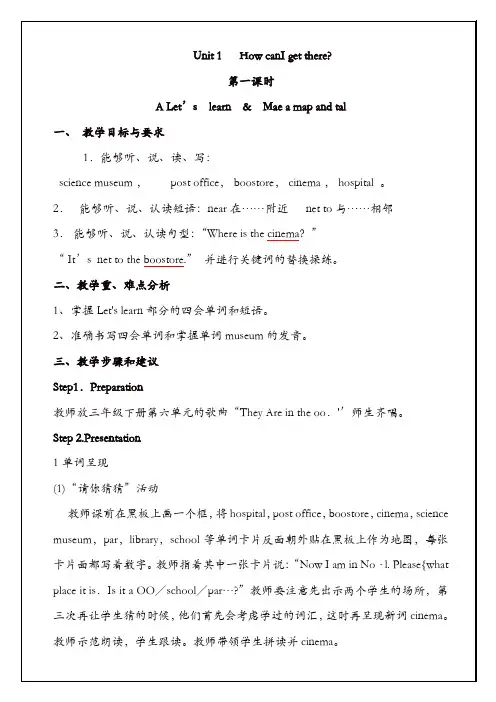
教师请学生先在方框里填上单词或短语,再根据所填写的地图进行描述,如:The post office is near the museum.The cinema is net to the post office.”等。
Step3 .Practice
1、听音贴图。
2、看图快读单词。
Step5.Progress
1、做配套相应的练习。
2、Summary:what have you learned today ?
3、Homewor学生背诵并抄写本课时的四会单词
板书设计:Unit 1 How can I get there?
B Let’s learn & Be a tour guide
Unit 1 How canI get there?
第一课时
A Let’s learn & Mae a map and tal
一、教学目标与要求
1.能够听、说、读、写:
science museum,post office,boostore,cinema,hospital。
2.能够听、说、认读短语:near在……附近net to与……相邻
Is there a…?
Where is it ?
It’s near \net to\ behind…
Step5.Progress
4、做配套相应的练习。
5、Summary:what have you learned today ?
3、Homewor学生熟读对话并背诵重点句型。
板书设计:Unit 1 How can I get there?
2.Let's try
教师放Let's try时部分的录音,学生做出正确的选择。Wu Yifan and Robin are looing at some robots. Listen and tic.
新人教版PEP小学英语六年级上册各单元知识点总结
人教版(P E P)小学英语六年级上册单元知识点Unit1 How can I get there一、主要单词:museum博物馆bookstore书店cinema电影院turn 转弯left向左right向右hospital医院post office 邮局science科学straight笔直地crossing十字路口二、习惯语搭配:post office邮局science museum科学博物馆pet hospital宠物医院Italian restaurant意大利餐馆Beihai Park北海公园Palace Museum故宫博物院go straight直走turn right/left右/左转next to挨着in front of...在...前面near the park在公园附近on Dongfang Street在东方大街上~三、惯用表达式:Excuse me 打扰一下Follow me, please!请跟着我!四、公式化句型:1、问路的句型及其答语:问句:Where is the + 地点···在哪儿·2、询问怎么到某地的句型及其答语:问句:How can +主语+ get (to)+地点···怎么到···同义句型:Can you tell me the way to +地点Where is + 地点Which is the way to +地点五、例句:Where is the cinema, please 请问电影院在哪里It’s next to the hospital. 它与医院相邻。
Turn left at the cinema, then go straight. It’s on the left. 在电影院向左转,然后直行。
它在左边。
:Turn left at the bank。
(PEP)六年级上册小学英语《Unit 1 How can I get there C》教学设计_17
多了解相关London的情况,介绍一处你最喜欢的地方
板书
Unit1HowcanIgetthere?
PartCStoryTime
T:WhereistheLondonEye?
Ss:It’snexttothefilmmuseumneartheThames.
FishandChipsshop
判断对错,排序,复述故事等,加深学生对故事的理解,调动思维,促动综合语言使用水平,达到学以致用的目的。
让学生思考迷路时还能够借助哪些方法找到目的地,目的在于培养学生用英语思维的的水平,拓宽学生的生活知识面。
评学
Step4Post--reading
1.听音模仿,初读故事
播放故事视频,让学生跟读故事录音,模仿语音语调,
WhereistheFishandChipsshop?
What’sintheshop?
2.整体表现,初步感知
多媒体表现问题WhereistheFishandChips?让学生带着问题听故事后回答;之后引导学生自己提出问题:WhereistheLondonEye?然后让学生自主阅读故事,在语篇中划出该问题的答案,检测学生对语篇的理解水准。对话如下:
Zoomhurtshisteeth.
Zoomissogreedy(贪吃的)。
b.readandorder
打乱顺序的故事图片,让学生排序
c.retellthestory复述故事
d.actthestory拿出教具,道具,让学生表演故事
4.梳理归纳,反思悟学
教师提出问题:Doyouknowanyotherwaystofindaplace?并借助多媒体归纳总结,使学生明白迷路时要主动寻求协助,并尝试用不同的方法来解决;之后,组织学生谈谈这节课的收获,并布置如下家庭作业:
PEP六年级英语上册各单元作文
PEP六年级英语上册各单元作文unit 1 How can I get there?1、Lily 和她的朋友们要求一家意大利餐馆吃比萨饼。
请你根据提示写出他们行走的的路线。
提示:他们现在在电影院前面,直走,到书店右转。
他们到达了邮局的后面,然后他们左转就到达餐馆了。
Lily and her friends want to eat some pizza in an Italian restaurant. They are in front of the cinema now. They go straight, and turn right at the bookstore. Now they are behind(在后面) the post office. Then, turn left and get to(到达)the restaurant.2、描述一下你上学的路线I live near my school. I often go to school on foot. Go straight the street for five minutes, then turn left at the post office. After one minute,you can see my school. It’s on the right.我的家离学校很近。
我经常步行去上学。
这条街直走五分钟,然后再邮局左转。
一分钟后,可以看到我的学校。
学校就在右手边。
unit 2 Ways to go to school作为一名学生,谈谈你在日常生活中是怎样遵守交通规则的。
I am a student. I usually go to school on foot. We must pay attention to (注意)the traffic lights. Slow down and stop at the yellow light. Stop and wait at a red light. Go at a green light.我是一名学生。
人教PEP英语六年上册unit1How can I get there知识点归纳及复习要点(附练习)
Turn left at the bookstore. Then turn right at the hospital. 到书店左转。然后到医院右转。 句中的“turn”意为“转弯”,表示改变方向。turn left 意为“向左转”,turn right 意为 “向右转”。当表示到某地向左转/向右转时,可以用以下句型: 句型结构; Turn left/right at+地点。 Eg:Turn left at the station.到车站左转。 【知识考点六】 Now we are in front of Tian' anmen. 现在我们在天安门前面。 当我们想表达“在……前面”的时候,需要用到短语“ in front of”。这个介词短语 后面可以接名词或代词。如果后面接人称代词,则要用人称代词的宾格形式。 Eg:The boy is in front of me. 这个男孩儿在我前面。 【知识考点七】 He can help the boys find the Italian restaurant. 他能帮助男孩儿们找到意大利餐馆。 这是表达帮助某人做某事的句子。“"help”是动词,意为“帮助”。 句型结构: 主语+help(s) +某人+动词原形+其他. I often help my friend learn English. 我经常帮助我的朋友学英语。 hep 的其他用法: ①”help+某人”意为“帮助某人”