
【仁爱版】七年级上英语Unit3-Topic2.SectionC
A Photo of Kangkang’s Family
Who are they on the sofa?
My grandparents, my cousin and I.
信阳市平桥区新星学校
You have a big family.
My father and my mother
It’s here.
信阳市平桥区新星学校
grandparents
father
( mother )
( uncle )
aunt
信阳市平桥区新星学校
Kangkang (son)
( cousin )
This is a photo of Kangkang's ________. family The young man in a green T-shirt is his uncle _______. The young woman in yellow is his _____. aunt They have a daughter and she is in pink. She is Kangkang’s _______. cousin The young woman in red and the parents The young man in black are his ________. old man and the old woman are Kangkang’s grandparents . Kangkang has a big family. ____________
信阳市平桥区新星学校
( 2 )
( 1 )
Take one of your family photos to school and describe it to your partner. (age/look/clothes/job/workplace)
信阳市平桥区新星学校
用以下关键词写一篇介绍你的家庭的短文。
信阳市平桥区新星学校
My Family Tree
grandfather (grandpa)
照 片
grandmother (grandma)
father (dad)
照 片 照 片
mother (mom)
照
n
daughter
片
信阳市平桥区新星学校
信阳市平桥区新星学校
a photo of, in a green T-shirt, in yellow/red/black, a big family, a doctor/teacher…, in a hospital/ in a school …
My name is…,come from, years old,
in Class-, Grade-, a happy family,
live in, My father/mother/grandparents is/are…, works/work…, love
信阳市平桥区新星学校
1. Family members: mother, father, parents, aunt, uncle, brother, daughter, son … 2. Useful expression: This is a photo of my family.
信阳市平桥区新星学校
ow
ear
oy
dr tr
ow ure
dr
信阳市平桥区新星学校
Read aloud and match the sentences with the pictures. 1.The big boy has a brown toy. 2.The driver hears the bear eating a pear.
信阳市平桥区新星学校
Look! This is a photo of my family.
Who’s the young woman in yellow?
She’s my aunt.
A Photo of Kangkang’s Family
信阳市平桥区新星学校
Right. That’s my mother .
信阳市平桥区新星学校
Is the young woman in red your mother?
A Photo of Kangkang’s Family
信阳市平桥区新星学校
Is the young man in a green T-shirt your uncle?
Yes, he’s my uncle, my father’s brother.
信阳市平桥区新星学校
This is a photo of my family. The young man in a green T-shirt is my …He is a … He works in …The young woman in yellow is my …She is a … She works in … I have a big family. I love my family.
Unit1 Topic3 Section C教案 仁爱版七年级上册英语
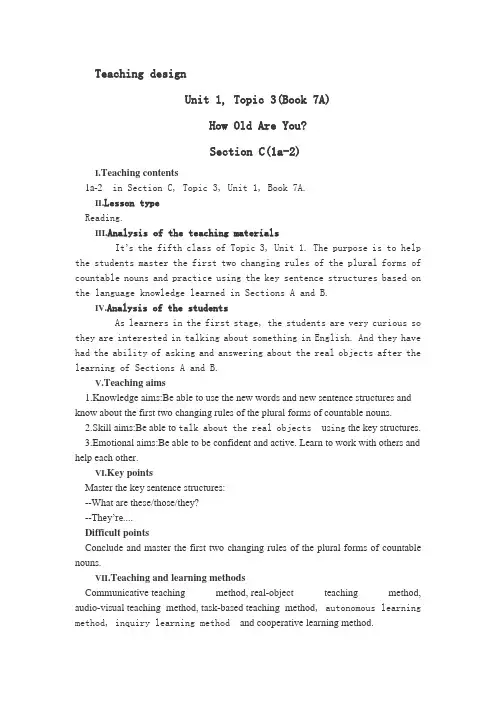
Teaching designUnit 1, Topic 3(Book 7A)How Old Are You?Section C(1a-2)I.Teaching contents1a-2in Section C, Topic 3, Unit 1, Book 7A.II.Lesson typeReading.III.Analysis of the teaching materialsIt’s the fifth class of Topic 3, Unit 1. The purpose is to help the students master the first two changing rules of the plural forms of countable nouns and practice using the key sentence structures based on the language knowledge learned in Sections A and B.IV.Analysis of the studentsAs learners in the first stage, the students are very curious so they are interested in talking about something in English. And they have had the ability of asking and answering about the real objects after the learning of Sections A and B.V.Teaching aims1.Knowledge aims:Be able to use the new words and new sentence structures and know about the first two changing rules of the plural forms of countable nouns.2.Skill aims:Be able to talk about the real objects us ing the key structures.3.Emotional aims:Be able to be confident and active. Learn to work with others and help each other.VI.Key pointsMaster the key sentence structures:--What are these/those/they?--They’re....Difficult pointsConclude and master the first two changing rules of the plural forms of countable nouns.VII.Teaching and learning methodsCommunicative teaching method, real-object teaching method, audio-visual teaching method, task-based teaching method, autonomous learning method, inquiry learning method and cooperative learning method.VIII.Teaching strategies1.Warming up before the class can help students get ready for the class quickly and easily and presenting the objectives of this class can help the students learn with purpose.2.Learn new words using the old sentence patterns and learn new structures using the old words so that the students can master the new knowledge more quickly and easily.3.When learning new words, present the correct phonetic symbols in order to help the students pronounce correctly.4.Chanting while remembering words can not only help students memorize quickly but also make the class atmosphere lively.5.Different levels of reading can help students understand the use of the key structures better and improve their oral English level.6.Discussing, t alking and explaining in groups can not only help students practice their oral English but also inspire their potential in learning.7.The emotional teaching throughout the whole class which tells students to help each other can help the students know that they can not only master the English knowledge but also have the ability of being a useful man when learning English.8.Encouraging students in time by oral praise or a small object in time in class can be useful to the English beginner.9.End the class by a summary so that students can realize what they have mastered and consolidate the memory of numerals.10.Deal with the teaching material s suitably so as to make the teaching and learning clear.IX.Teaching procedures1.Warming up1)Greeting s.2)Sing The Apple Song together with the video in order to get the students to get ready for the class and make the atmosphere more lively.2.Lead-in1)Tell the students there are many apples in the video in order to lead to review the sentence pattern--What’s this/that? --It’s a/an...2)Show the objectives of this class to help the students know what they will do in this class so that they can learn with purpose. Then divide them into groups and announce the class rules--(A red paper apple will be given as a prize after finishing a task. The group which gets the most apples will be the winner.) in order to inspire them to compete or cooperate with their partners so that the class can be more efficient.At the same time, guide the students to help others when necessary and learn the new sentence--Let me help you.3.Pre-reading1)Review the sentence pattern“ --What’s this/that? --It’s a/an...”by showing some pictures in the ppt.2)Learn the new words while reviewing the sentence structures, presenting the phonetic symbols; Learn the new sentence structures“--What are these/those/they?--They are...”with the help of some more pictures or some real objects after mastering more words.The purpose is to help the students get the skill of English language step by step. At the same time, write down the key sentence structures and key words on the blackboard.3)Discuss in groups and c onclude the changing rules of the plural forms of countable nouns after observing the words written on the blackboard.Then share their opinions with other students in groups.4)Chant and remember in groups.4.While-reading1)Autonomous learningAsk the students to r ead 1a quickly to find out the plural forms of countable nouns.Then r ead 1a carefully to put the dialogues into a correct order.2)Cooperative learningDiscuss in groups to check the answers.Then r ead 1a in roles for acting it out.5.Post-reading1)Autonomous learningFinish 1b alone.2)Inquiry learningDiscuss in groups to check the answers. Ask the group leader of each group to explain in detail when someone meets problems.3)Cooperative learningMake up new conversations according to 1a, 1b and 2 by choosing two of the pictures in groups.Then share their conversations in the front.4)Summary and self-check.Sum up the key points learnt in this lesson and help the students to make a self-check in order to know their mastering situation.Then count the red paper apples in each group by practicing the sentence pattern “--What are these/those/they? --They are...”to find out the winner and encourage the students to help each other in their daily. At the same time,present “HELP EACH OTHER, DO BETTER”on the screen to achieve the e motional aims.X.Blackboard design:Unit 1, Topic 3(Book 7A)How Old Are You?Section C(1a-2)XI.Self reflectionTeaching activities are colorful, effective and useful. The students must be active and interested during the whole class and I think the effect must be good.。
仁爱英语七年级上unit3知识点

仁爱英语七年级上unit3知识点Unit3是初中英语学习中的重要阶段,其中包含了许多重要的词汇和语法知识。
在本文中,我们将为大家详细介绍Unit3中的知识点。
一、词汇1. Colors:red,blue,green,yellow,purple,orange,brown,pink2. Clothes:T-shirt,skirt,pants,dress,shirt,sweater,hat,shoes,socks3. School supplies:pen,pencil,ruler,book,notebook,bag,eraser,scissors4. Food and drinks:water,milk,juice,coffee,tea,bread,rice,cake,egg,hamburger,pizza,hot dog5. Family members:father,mother,sister,brother,grandfather,grandmother,uncle,aunt,cousin6. Numbers:one,two,three,four,five,six,seven,eight,nine,ten,eleven,twelve,thirteen,fourteen,fifteen,sixteen,seventeen,eighteen,nineteen,twenty二、语法1. 介词介词是英语中非常重要的语法部分,Unit3中包含了多个常用的介词,如in,on,at,with,to等。
这些介词的正确使用能够帮助我们更加准确地表达自己的意思。
例如:She is sitting on the chair.He is going to the store.The book is in the bag.2. 形容词和副词形容词和副词也是英语语法中的重要部分。
在Unit3中我们学会了很多形容词和副词,如big,small,happy,sad,fast,slow 等等。
七年级英语仁爱版上册Unit3_Topic2_SectionD_教学设计

Unit3 Topic2 SectionD 教学设计I. Material analysis本课是话题二的最后一个课时,主要活动是Grammar和Functions。
引导学生复习构词法、实义动词一般现在时的特殊疑问句及其回答,以及通过对话、听力训练、阅读训练、综合探究等活动复习和巩固Sections A~C学习的打招呼、询问职业、家庭成员、工作场所等信息的表达方式。
另外,学生将在学完本话题后,学会自行总结和归纳构词法的规律以及实义动词一般现在时的特殊疑问句及其回答,学会在实际的句子中发现语法错误并改正错误,同时还将锻炼他们听并判断、听再填空、读前猜测、读后总结的能力,提高他们用所学的词汇、句型、功能、话题进行综合探究活动的能力。
此外,在project的综合探究活动中,借助全家福,让学生以实践体验等方式来综合运用本话题所学知识,学会用英语做事情。
II. Teaching aims1. Knowledge aims能根据已学语音、音标及发音规则,正确朗读下列词汇并在实际的对话操练中加以应用:cute, play, its, love能根据本话题已学知识,自行总结和归纳构词法、实义动词一般现在时的特殊疑问句及其回答:teach—teach er, act—act or在教师的帮助与指引下,通过对话操练、听力训练、阅读训练、综合探究等活动复习和巩固有关打招呼、询问职业、家庭成员、工作场所等信息的表达方式,如:(1)—Glad to meet you.—Glad to meet you, too.(2)—What does your father do?—He is a doctor.(3)—Where does he work?—He works in a hospital.(4)—Who is the man in yellow?—He is my uncle.2. Skill aims能听懂有关询问职业、家庭成员等简单对话或叙述并完成相应的任务;能根据图文就职业、工作场所、家庭成员等基本情况的话题进行交流;能够在图片的帮助下进行阅读,理解大意、细节等,并按要求进行语言活动;能根据提示书面介绍自己或同伴的家庭成员的工作情况。
Unit3Topic1SectionC课件2022-2023学年仁爱版英语七年级上册
(3)so表示因果,承接关系,意为“因此,所以”。 He comes from America, so his English is very good.
2a Listen, read and learn. A: Jan简e,,d你o y喜ou欢li中ke文C吗hin?ese? B: Ye是s,的I l,ik我e i非t v常er喜y m欢u它ch。. A: What那ab你ou呢t ?y山ou姆, S?am? B: 不No,, I我d一on点't l也ik不e i喜t a欢t a它ll.。
□Jane and Sally are very nice.
□√ We often help each other.
□Jane can speak Chinese very well.
1b Read 1a and circle True or False.
1. Jane, Sally and I are in the same class.
so还可当副词,意为“如此,这么” Its hands is so small.它的手如此小。 She is so beautif
(1)and意为“和;又;并”,表示并列关系,用来连接语法作用相同的 词、短语或句子。如: I'm from Beijing and she is from Shanghai.我来自北京,她来自上海。
他来自美国,所以他英语很好。
Language points
用and,but,so填空 1.I like English __a_n_d___ Chinese. 2.I want to buy a pair of new shoes _b__u_t_ I don’t have enough money. (足够的钱). 3.I often help my classmates ___so__ they think I’m a good student. 4.I’m a Chinese __a_n_d_ she is an American. 5.He likes English very much __b_u_t_ his English is not very good. 6.She likes English a lot __s_o___ she studies hard(努力学习) every day.
Unit 2 Topic 3 Section C-七年级英语上册课件(仁爱版)
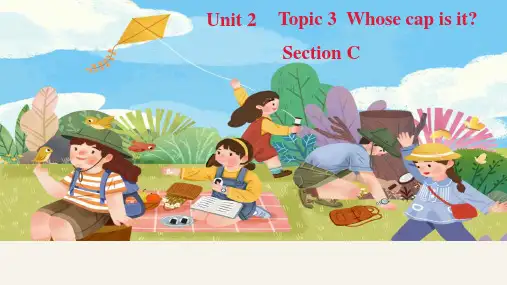
You can begin like this: I have two new classmates. They are Tom and Dick…
3
Work in groups. Mix your things together and find out the owners. You may use the following expressions.
1b Read 1a again and complete the table.
Person
Clothes Color
T-shirt Pants Shoes
Kangkang
red white blue
Kangkang’s classmate
purple
blue brown
Color the pictures.
Read, underline the children’s clothes and circle the colors.
I’m Kangkang. I have a new classmate. He is from Japan. He has black hair and black eyes. We look the same, but we are in different clothes. He is in a purple T-shirt and my T-shirt is red. His pants are blue and mine are white. My shoes are blue and his are brown. Guess! Who is he?
A: Is this/Are these ...? B: Yes. It’s/They are ... /
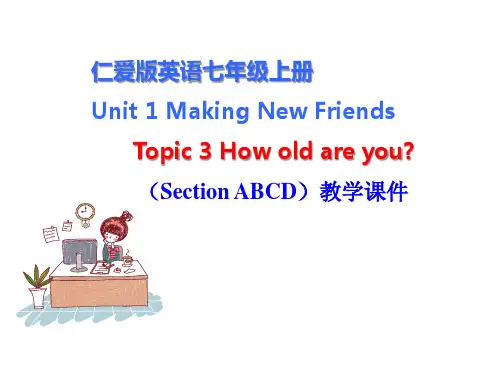
仁爱版英语七年级上册Unit 1 Topic 3 How old are you (Section ABCD)教学课件
QQ number
What’s your QQ number?
one
eleven
你 two
twelve
发 three
thirteen
现 four + teen = fourteen
规 five
fifteen
律 six + teen = sixteen
了 seven + te say.
Excuse me, what’s this in English?
(视频P19-1a)
map
eraser
It’s an eraser.
pen pencil desk
A: What’s this in English? B: It’s a pen. A: How do you spell it? B: P-E-N, pen. A: Thank you. B: That’s OK.
(录音P18-3)
Hello, Maria! What grade are you in?
I’m in _G__ra_d_e_ _S_e_v_e_n_.
Are you in Grade Seven, too?
Yes, I am.
Who’s that?
That’s Nancy.
How old is she? What class is she in?
A: What’s that in English? B: It’s a toy. A: Can you spell it, please? B: Yes. T-O-Y, toy. A: Thanks. B: You’re welcome.
It’s __a__b_o_o_k_.
What’s that in English?
(完整)仁爱版初中英语七年级上册单词表
Unit 1Topic 1 Nice to meet you!good 好的morning 早晨,上午welcome 欢迎to 向,朝,到,往China 中国thank 谢谢you 你,你们hello 喂;你好I 我am 是I’m=I am 我是are 是yes 是no 不;不是not 不;没oh 哦;啊nice 令人愉快的,好的,漂亮的meet 见面,会面,遇见too 也,还,太,过分,很,非常hi 喂;你好Miss 女士,小姐this 这;这个is 是Mr. =mister 先生see 看见,看到,明白my 我的mom 妈妈teacher 老师how 多少,怎样do 做,干,行动fine 美好的,(身体)好的goodbye 再见,再会bye 再见afternoon 下午,午后and 和,及,又,并OK 好,对,不错,可以later 以后,后来Topic 2 Where are you from? excuse 原谅me 我excuse me 劳驾,请原谅what 什么,到什么程度your 你的name 名字where 哪里from 从,从……起be from 来自Canada 加拿大England 英格兰the 这(那)个,这(那)些the U.S.A=the United States of America 美国she 她he 他isn’t=is notJapan 日本we 我们who 谁they 他(她,它)们aren’t = are not△Cuba 古巴zero 零one 一,一个two 二three 三four 四five 五six 六seven 七eight 八nine 九ten 十telephone 打电话number 号码;数,数字;数量it 它Topic 3 What class are you in?eleven 十一twelve 十二thirteen 十三fourteen 十四fifteen 十五sixteen 十六seventeen 十七eighteen 十八nineteen 十九twenty 二十year 年old ……岁的,老的,旧的year(s) old ……岁How old...? ……多少岁?class 班级;课;同一个班的学生in 在……里(内,上),用……(表达)grade 年级that 那;那个English 英语(的),英国(人)的in English用英语(表达)an 一(个,件……)eraser 黑板擦,橡皮spell 拼写a 一(个,件)map 地图can 可能;能够;可以please 请pencil 铅笔apple 苹果double 两倍的toy 玩具;玩物△wow 呀;哇(表示赞叹或惊奇)desk 书桌,办公桌pen 钢笔ruler 尺子,直尺book 书orange 橙子,橘子;橙色的;橘黄色的car 矫车,小汽车egg 蛋;卵blackboard 黑板these 这些those 那些schoolbag 书包cake 蛋糕;糕点,饼bus 公共汽车box 盒子,箱子now 现在school 学校Beijing Ren’ai International School北京仁爱国际学校her 她的(形容词性物主代词)phone 电话his 他的(形容词性物主代词)same 同样的,同一的but 但是,然而,尽管如此friend 朋友junior 初级的,年少的high 高的,高度的ID number 身份证号码junior high school 初中Unit 2Topic 1 I have a small nose.guess 猜have 有;吃,喝small 小的;少的nose 鼻子has 有big 大的eye 眼睛know 知道;了解,认识;懂得right 对,正确的;右边的head 头;头脑(像);才智;首脑face 脸hair 头发ear 耳朵mouth 嘴neck 颈,脖子round 圆的;球形的long 长的,远的wide 宽阔的girl 女孩boy 男孩short 短的;矮的favorite 特别喜欢的(人或物)movie (尤美)电影star 星星,明星Chinese 中国人,汉语;中国的,中国人的does (动词do的第三人称单数现在式) doesn’t = does notagain 再,又look 看,瞧;观看;看起来arm 胳膊,臂;支架hand 手leg 腿;腿脚;支柱foot 脚come 来come from 出生(于),来自student 学生sister 姐姐,妹妹different 不同的knife 小刀don’t = do notTopic 2 What does she look like?both 两者,双方black 黑色(的)△blond 金黄色的,浅色的blue 蓝色color 颜色pink 粉红色red 红色(的)purple 紫色brown 棕色(的),褐色(的)white 白色gray 灰色green 绿色yellow 黄色here 在这里;这里;向这里give 给;递给;付出;给予give … to … 把……给……letter 信,字母sorry 对不起,抱歉的like 像,相似;喜欢look like... 看起来像……tall 高的will 会I’ll=I will 我会young 年轻的snowman 雪人T-shirt T恤(衫)shoe 鞋cap 便帽,军帽coat 外套;大衣;涂层skirt (女式)短裙△pants 长裤,裤子dress 女服,连衣裙,(统指)服装,童装;穿at 在look at 看着photo 照片,相片strong 强壮的;坚固的;影响力大的cool 凉爽的,凉的,酷的Topic 3 Whose jacket is this?mine 我的(名词性物主代词)whose 谁的then 那么(通常用于句首或句尾);那时;当时;然后bike 自行车cat 猫hers 她的(名词性物主代词)banana 香蕉its 它的our 我们的(形容词性物主代词)ours 我们的their 他/她/它们的theirs 他们(她们;它们)的(名词性物主代词)yours 你的;你们的(名词性物主代词)baby 婴儿;幼畜bag 书包;提袋;袋子shirt 衬衫(尤指男式)jacket 夹克衫,短上衣think 想,认为;考虑new 新的;新鲜的classmate 同班同学clothes 衣服find 找到;发现;感到man 成年男人;人;人类help 帮助,帮忙us 我们(宾格)him 他(宾格)Unit 3Topic 1 Do you have a pen pal?could (can的过去式)可以,(表示许可或请求)可以……,行tell 告诉,讲述sure 确信,肯定,的确,一定,当然△pen pal 笔友speak 讲,说some 一些;若干;有些;某一poor 不好的,差的;贫穷的;可怜的with 关于;有;带有;和;以;用help sb. with sth. 帮助某人做某事problem 问题,难题after 在……之后;在……后面after class 课后live 居住say 说,讲want 想,想要visit 访问,参观,拜访great 伟大的;好极了;美妙的the Great Wall 长城many 许多的lot 许多,好些a lot 很,非常;许多all 所有;全部;全体;一切not … at all 一点也不;根本不so 因此,所以;这么,那么,这样,如此often 经常,常常study 学习,研究;书房each other 互相,彼此little 小的;一点儿,稍许a little 一点点them 他(她,它)们(宾格)very 非常,很much 非常,更加,很very much 非常,很pet 宠物home 家at home 在家dog 狗any (用于否定句、疑问句等)一些;什么;任何的of (表示所属、数量、其中)……的Topic 2 What does your mother do?kid (口语)小孩子;开玩笑glad 高兴的,乐意的seat 座位have a seat 就座,坐下mother 母亲father 父亲doctor 医生,大夫;博士parent 父亲(或母亲)office 办公室worker 工人;工作者driver 司机,驾驶员farmer 农民cook 炊事员,厨师;烹调,煮,烧nurse 护士;保育员work 工作;(机器、器官等)运转hospital 医院on 在……上farm 农场on a farm 在农场drive 驾驶,开(车);驱赶family 家庭(包括父母和子女);家族woman 妇女;女人aunt 姨母,舅母,姑母,伯母,婶母uncle 叔,伯,舅,姨父,姑父brother 兄,弟sofa 长沙发grandparent 祖父(母),外祖父(母)cousin 堂(表)姐妹,堂(表)兄弟daughter 女儿tree 树family tree 家谱son 儿子happy 快乐的,幸福的,高兴的teach 教,教授only 仅仅,只有△cute 有吸引力的,逗人喜爱的,机灵的look after 照看,照顾Topic 3 What would you like to drink?yourself 你自己help oneself (to) 请随便吃点/喝点(……)would (will 的过去式)将会,打算,想要fish 鱼chicken 鸡,鸡肉about 关于,对于;大约What about… ……怎么样?……好不好?rice 米饭,稻米all right 行了,好吧,不用客气drink 喝;饮料juice 果汁;饮料milk 牛奶for 对……来说;为了;向……;往……;适合……;因为……;对于……idea 主意,想法,意见good idea 好主意water 水vegetable 蔬菜bread 面包hamburger 汉堡包usually 通常地,一般地breakfast 早餐lunch 午餐,午饭supper 晚餐,晚饭;夜宵food 食物,食品may 可以;也许,可能take 拿;拿走;乘坐;花费;服用;携带order 订货单;订购,(点)一份菜take one’s order 记下顾客点的饭菜sir 先生something 某事(物);某东西glass (玻璃)杯a glass of 一杯wait 等,等候moment 片刻,瞬间wait a moment 等一会儿eat 吃out 不在里面,在(到)外面eat out 下馆子,出去吃饭dinner 正餐,宴会have dinner 吃饭let 让why 为什么Why not...? 为什么不……?dear 亲爱的kind 和蔼的;友好的;善良的such as 例如,诸如……之类的be 在;是Unit 4Topic 1 What can I do for you?madam 夫人,女士buy 买over 穿过;翻倒;遍布;结束there 在那里,往那里over there 在那边try 试(做),设法,努力try on 试穿How much...? ……多少(钱)?seventy 七十thirty 三十forty 四十fifty 五十sixty 六十eighty 八十ninety 九十hundred 百just 仅仅;刚刚,刚才;只是pair 一对,一双,一条think of 认为,看法;想起How about…? ……怎么样?……好不好?△mm 嗯well 好吧,那么,哎呀think about 考虑(是否去做)shop 购物,买东西do some shopping 购物,买东西need 需要;必须kilo =kilogram 千克salt 盐How many…? 多少……?bottle 瓶子heavy 重的worry 烦恼;担扰;困扰;着急fat 肥胖的mouse 鼠,耗子△meow 猫叫声rabbit 兔;家兔ant 蚂蚁△er (思索该说什么话时发出的声音)哦,嗯Topic 2 Would you like to go for a picnic?free 空闲的,自由的be free 空闲,有空Sunday 星期日up 向上;起来;在上方;在……以上go 去;走;驶;通到;到达West Hill 西山picnic 野餐love 爱;喜爱call 打电话给……;称呼;叫,喊;呼唤forget 忘记,忘掉bring 拿来,带来,取来guitar 六弦琴,吉他tomorrow (在)明天go fishing 去钓鱼sing 唱,唱歌song 歌,歌曲,歌谣can’t (can的否定形式)have to 不得不fun 有趣的事;娱乐,玩笑fly 放(风筝、飞机模型等)kite 风筝fly a kite 放风筝afraid 担心的;害怕的time 时间,钟点,时期,次,回carry 携带,搬运,运送△bow-wow 狗汪汪叫声speak to 向……说,和……说话ask 请求;要求;邀请;询问back 往后;回(原处)call … back 给……回电话evening 傍晚,晚上have a picnic 野餐go shopping 去购物Topic 3 We want to go to the zoo.zoo 动物园panda 熊猫monkey 猴子lion 狮子tiger 老虎elephant 象,大象o’clock ……点钟past (超)过,经过quarter 一刻钟,四分之一half 半,一半show 演出;展示,展览(会)clever 聪明的;伶俐的animal 动物It’s time to... 是……的时间,到……的时候了go home 回家next 下一个的;最近的next time 下次get 买;得到;成为;具有;到达get up 起床have breakfast 吃早饭way 路,道路;方式,手段on one’s way home 在某人回家的路上wrong 错误的,不正确的meat (猪、牛、羊等的)肉。
仁爱版七年级英语单词词汇表(全)
仁爱版七年级英语单词词汇表Unit 1Topic 1 Welcome to China!good adj. 好的,良好的morning n. 早晨;上午welcome interj.欢迎n.&v. 欢迎adj. 受欢迎的to prep. 到,对,向;给;在……之前动词不定式符号,无词义。
例如:to findChina n. 中国thank v. 谢谢,感谢,谢意n. (只用复数)谢谢,感谢,谢意you pron.你;你们hello interj. 喂;你好(表示打招呼、问候或唤起注意)I pron.我am v.(be动词,单数形式,主语是I时用)是I’m(缩写形式) = I am我是are v.(be动词,复数形式)是yes adv.是,好,同意;什么(用于表示疑问、征询等,常读“升调”);是吗no adv.不;不是adj. 没有,无not adv.不;没oh interj.哦;啊nice adj.令人愉快的;好的,漂亮的meet v.相识,结识;遇见,见到too adv.也,还;又;太,过分;很,非常hi interj.喂;你好(表示打招呼、问候或唤起注意)Miss n.(用于对女教师的称呼);女士;小姐(对未婚女性的称呼)this pron.&adj.这;这个is v.(be动词,单数形式,第三人称单数现在式)是Mr.(缩写形式) = mister n.先生(用于男子姓氏或姓名前)see v.看见,看到;明白,领会;拜会my pron.我的(形容词性物主代词)mom n.妈妈teacher n.老师,教师,教员how adv.怎样,如何;多少;多么do aux.(助动词)构成否定句、疑问句的助动词,无词义v.做;干;行动afternoon n.下午;午后fine adj.(身体)健康的;美好的;晴朗的goodbye interj.再见,再会bye interj. 再见evening n.傍晚,晚上and conj.和;又;而OK adj.&adv.(口语)好,对,不错later adv.以后;后来adj. 晚些的,迟些的Topic 2 Where are you from ?excuse v.原谅;宽恕me pron.我(宾格)excuse me劳驾,请原谅(尤其是引起陌生人的注意)what pron.什么;怎么样your pron.你的;你们的(形容词性物主代词)name n.名字,姓名,名称where adv.在哪里;往哪里from prep.来自;从;从……起be from来自Canada n. 加拿大the art.(定冠词)这(那)个;这(那)些the U.S.A. = the United States of America n. 美国;美利坚合众国she pron.她he pron.他isn’t(缩写形式) = is notJapan n.日本we pron.我们England n. 英格兰who pron.谁they pron.他/她/它们;人们aren’t(缩写形式) = are notthen adv.那么(通常用于句首或句尾);那时;当时;然后Cuba n. 古巴zero num.&n.零one num.一pron.(用来代替单数的人或物)一(个,只……)two num.二three num.三four num.四five num.五six num.六seven num.七eight num.八nine num.九ten num.十telephone n.电话(机)v. 打电话number n.号码;数,数字;数量it pron.它Topic 3 What class are you in ?eleven num.十一twelve num.十二thirteen num. 十三fourteen num.十四fifteen num.十五sixteen num. 十六seventeen num.十七eighteen num.十八nineteen num.十九twenty num.二十year n.年old adj.……岁的;老的;旧的year(s) old……岁How old…?……多少岁?class n.班级;课;同一个班的学生in prep.在……里(内;上);用……prep.穿着,戴着adv.在家;在内,向内grade n. 年级age n.年龄;时代that pron.& adj.那;那个English n.英语adj. 英国的;英国人的;英语的in English用英语(表达)an(不定冠词,后接以元音开头的名词) art.一(个;件……)eraser(rubber)n. 橡皮擦;黑板擦a(不定冠词,后接以辅音开头的名词)art.一(个;件……)map n. 地图spell v. 拼写can v.(情态动词)可能;能够;可以please interj.请v. 使人高兴,使人满意pencil n.铅笔double adj.双的;两倍的n. 两个;双toy n.玩具;玩物wow interj. 呀;哇(表示赞叹或惊奇)desk n.书桌,写字台p en n. 钢笔,笔ruler n. 尺子,直尺book n. 书;本子car n. 小汽车,轿车orange n.橘子,橙子;橘汁;橘色adj. 橙色的,橘色的egg n.蛋;卵blackboard n.黑板these pron.& adj. 这些those pron.& adj.那些schoolbag n.书包cake n.蛋糕;糕点;饼bus n.公共汽车box n.盒子;箱子now adv.现在school n.学校Beijing Ren’ai International School北京仁爱国际学校her pron. 她的(形容词性物主代词)pron.她(宾格)v. 打电话his pron. 他的(形容词性物主代词)pron.他的(名词性物主代词)same adj.同样的,同一的n. 同样的事but conj.但是,可是friend n.朋友ID number 身份证号码junior adj. 初级的;年少的high adj.高的;高度的junior high school初中(美国等国家12至14岁的孩子上的学校)Unit 2Topic 1 I have a small nose . guess v.猜have v.有;吃,喝has v.有(have的第三人称单数现在式)small adj.小的;少的nose n.鼻子big adj.大的eye n.眼睛know v. 知道;了解,认识;懂得right adj.对的,正确的;右边的n. 右边;权利head n.头;头脑(像);才智;首脑face n.脸v.面向,面对hair n.头发ear n.耳朵mouth [复数形式(pl.):mouths]n. 嘴neck n. 颈,脖子round adj.圆的;球形的long adj.长的;远的wide adj.宽的,宽阔的girl n.女孩boy n.男孩short adj.短的;矮的favorite adj.最喜爱的n.特别喜欢的人(或物)movie n.(尤美)电影star n. 明星;星星,恒星Chinese adj.中国的;中国人的;汉语的n. 汉语;中国人does v.(动词do的第三人称单数现在式)doesn’t = does notagain adv.再,又,再一次look v.看,瞧;观看;看起来n.(pl.)相貌;样子arm n.胳膊;臂;支架hand n.手v.递,给;交付,交上leg n. 腿;腿脚;支柱foot[复数形式(pl.):feet] n. 脚,足;英尺come v. 来,来到come from出生(于);来自student n.学生sister n.姐;妹different adj.不同的,有差异的knife[复数形式(pl.):knives] n.小刀;匕首;刀片don’t(缩写形式) = do notTopic 2 What does she look like ?both pron.两者,双方black adj.黑色的n.黑色blond adj.金黄色的;浅色的blue adj.蓝色的n.蓝色color(也写作:colour)n.颜色v.给……着色,涂色pink n.粉色adj. 粉红色的red adj.红色的n.红色purple adj.紫色的n.紫色brown adj.棕色的;褐色的n.棕色;褐色white adj.白色的n.白色gray adj.灰色的,灰白色的n.灰色green adj.绿色的,青的n.绿色yellow adj.黄色的n.黄色here adv.在这里;这里;向这里give v. 给;递给;付出;给予give…to…把……给……letter n.信;字母sorry adj.对不起,抱歉;难过的like prep.像;跟……一样n. 喜欢,喜爱look like 看起来像tall adj. 高的will v.(情态动词)将,会(表示将来);愿意,要I’ll(缩写形式) = I will我会young adj.年轻的man[复数形式(pl.):men] n.成年男人;人;人类woman[复数形式(pl.):women] n.妇女;女人snowman[复数形式(pl.):snowmen] n.雪人T-shirt n. T恤(衫)shoe n.鞋cap n.(无檐的或仅在前面有檐的)帽子coat n.外套,大衣;涂层skirt n. (女式)短裙pants(也作trousers)(只有复数形式)n.(pl.)长裤;连衣裙dress n.女服;连衣裙v. 穿衣,穿着at prep.在;在(几点钟);在(某处)look at看着photo n.照片strong adj.强壮的;坚固的;影响力大的cool adj.酷;凉爽的,凉的Topic 3 Whose jacket is this ?mine(名词性物主代词)pron.我的whose pron.谁的bike n.自行车cat n.猫hers(名词性物主代词)pron.她的our(形容词性物主代词)pron.我们的ours(名词性物主代词)pron.我们的banana n.香蕉their(形容词性物主代词)pron.他/她/它们的theirs(名词性物主代词)pron.他/她/它们的yours(名词性物主代词)pron.你的;你们的baby n. 婴儿;幼畜bag n.书包;提袋;袋子shirt n.衬衫(尤指男式)jacket n.夹克衫,短上衣think v.想,认为;考虑new adj.新的;新鲜的classmate n.同班同学clothes n.(复数pl.)衣服find v.找到;发现;感到help v.帮助,帮忙n.帮助,帮忙us(宾格)pron.我们him(宾格)pron. 他Unit 3Topic 1 Do you like English ?could v.(情态动词)(表示许可或请求)可以……;行(can的过去式),可以tell v.告诉;讲述;吩咐sure adv.当然,(口语)的确,一定adj.确信的,肯定的pen pal = penfriend n.笔友speak v.讲,说;谈话;发言some adj.一些,若干;有些;某一pron.若干,一些poor adj.不好的,差的;贫穷的;可怜的with prep.关于;有;带有;和;以;用help sb. with sth.帮助某人做某事problem n.问题,难题pet n.宠物often adv. 经常,常常want v.想,想要;需要live v.居住;生活;活着say v.说,讲visit v.参观;访问;拜访n.参观;访问;拜访great adj.伟大的;好极了;美妙的wall n.墙the Great Wall长城many adj.许多的pron.许多人(或物)lot n.许多,好些a lot很,非常;许多all pron.所有;全部,全体;一切not … at all(注意:not与at all是分开的)一点也不,根本不so conj.因此,所以adv.如此,这么;非常;同样study v.学习;研究n.书房each other互相,彼此little adv. 一点儿;稍许adj. 小的a little 一点点them(宾格)pron. 他/她/它们very adv.非常,很much adv.非常,更加,很very much非常,很home n.家adv.到家;回家at home在家its(形容词性物主代词)pron. 它的(名词性物主代词)pron.它的dog n.狗any adj.(用于否定句、疑问句等)一些;什么;任何的pron.(无论)哪一个,哪些of prep.(表示所属、数量、其中)……的Topic 2 What does your mother do ?kid n.(口语)小孩子v.开玩笑glad adj.高兴的;乐意的seat n.座位,座have a seat 就座,坐下mother n.母亲father n.父亲doctor n.医生,大夫;博士parent n.父亲(或母亲)office n.办公室worker n.工人;工作者driver n.司机,驾驶员farmer n.农民cook n.炊事员,厨师v.烹调,煮,烧;做饭nurse n.护士;保育员work v. 工作;(机器、器官等)运转n.工作,劳动hospital n.医院on prep.在……上;关于farm n. 农场;农庄on a farm在农场drive v.驾驶,开(车);驱赶family n.家庭(包括父母和子女);家族aunt n.婶母;伯母;姨母;舅母;姑母uncle n.叔;伯;舅;姨父;姑父brother n.兄,弟sofa n.长沙发grandparent n.祖父(母);外祖父(母)cousin n.堂(表)姐妹;堂(表)兄弟daughter n.女儿tree n.树family tree家谱son n.儿子happy adj.快乐的,幸福的;高兴的teach v.教书,教only adv.仅仅,只有cute adj.逗人喜爱的;机灵的;有吸引力的after prep. 在……之后;在……后面conj.在……以后look after照看,照顾Topic 3 What would you like to drink ?yourself[复数形式(pl.):yourselves] pron.你自己help oneself(to)请随便吃点/喝点(……)would v.(情态动词)打算,想要;(will的过去式)将会fish n.鱼肉;鱼v.钓鱼;捕鱼chicken n.鸡肉;鸡about prep.关于,对于adv.大约;到处,四处What about…?……怎么样?……好不好?rice n.米饭;稻米all right行了,好吧drink v.喝n.饮料juice n.果汁;果汁饮料milk n.牛奶for prep.对……来说;为了;向……,往……;适合……;因为……;对于……idea n.主意,想法,意见good idea好主意water n.水vegetable n.蔬菜bread n.面包hamburger n.汉堡包usually adv.通常地,一般地breakfast n.早餐,早饭lunch n.午餐,午饭supper n.晚餐,晚饭;夜宵food n.食物,食品may v.(情态动词)可以;也许,可能take v.拿;拿走;乘坐;花费;服用;携带order n.菜单;订货单;顺序v.订购;点菜take one’s order记下顾客点的饭菜sir n.先生something pron.某事(物);某东西glass n.(玻璃)杯a glass of一杯wait v.等,等候moment n.片刻;瞬间wait a moment等一会儿let v.让well interj.嗯;好吧,那么;哎呀adj.好的;健康的adv.好;令人满意eat v.吃out adv.不在里面,在(到)外面eat out下馆子,出去吃饭dinner n.正餐,宴会have dinner吃饭why adv.为什么Why not…?(提出建议)为什么不……?Here you are . 给你。
仁爱版七年级上册英语笔记 Unit3 Topic3-Unit4 Topic1知识点总结
U 3 T3—U4 T11.1)would like = wantwould like没有人称和数的变化I would like an egg.=I want an egg.He would like an egg.= He wants an egg.(would like不能加s)2)would like to do = want to doa. He would like to drink some water.(drink)=He wants to drink some water.b. She would like (visit) the Great Wall.=She the Great Wall.3)I would like=I’d like He would like=He’d like4)a. I’d like an egg.(一般疑问句) Would you like an egg?Yes,please./ No,thanks.b. He’d like a hamburger.he a hamburger?. / .5)Would you like some chicken?(用some 加强语气,表示强调)6)I’d like an egg.What would you like?He’d like some fish.he ?2.1)you—yourself(反身代词)2)yoursel f---yoursel ves(pl.)3.help yourself/yourselves to +n.:随便吃……a. Help yourself (you) to some chicken, Tom.b. Help yourselves (you) to some chicken, kids.4.1)可数名词[C]:有单数和复数的形式.2)不可数名词[UC]:一般没有复数的形式.3)常见的不可数名词有:milk,rice,fish(鱼肉),chicken(鸡肉),(apple/orange) juice,water,bread5.fish:1)作为“鱼” , 是可数名词.fish—fish(pl.)2)作为“鱼肉”, 是不可数名词.some fish6.chicken:1)作为“鸡” , 是可数名词.a chicken2)作为“鸡肉”, 是不可数名词.some chicken7.some + n.(pl.),some+ [UC]some eggssome fish/chicken/milk/apple juice/rice8.---Help yourselves.---Thank you.9.---Would you like…? ---Yes, please. /No, thanks.10.What/How about +sb(宾格)/sth?What about him/her/some milk?11.All right.行,好吧(表示对别人的建议表示赞同)---I’d like some rice and chicken.---All right.k for me.13.Me,too.14.表示建议:---What about …? ---Good idea.15.an ideaa good ideaHomework:1.I’d like a hamburger.(一般疑问句) a hamburger?(肯否回答) ./ .2.She’d like some orange juice.she ?3. , boys and girls.(随便吃些鸡肉吧)4.She likes it very much.(否)She it .5..(我想喝些牛奶).6.他们怎么样??Unit 3 T 3 Section B—D1.1)usually:70-80%,often:50-60%2)usually,often放在be之后,行为动词之前.I usually have breakfast at home.2.have…for breakfast/lunch/supper/dinner1)He usually has an egg and some milk for breakfast.2)We usually have some rice and chicken for supper.3.一日三餐前不加a/an/the,后不加s.What do you usually have for/ breakfast?4.1)He usually has some bread for lunch.What does he usually have for lunch?2)We usually have some juice and fish for dinner.usuallyfor dinner?5.have:1)有2)吃,喝:have milk/bread6.[UC]前面不加a/an/the,后不加s.He has / milk and/ bread for breakfast.7.What/How about +sb(宾格)/sth?8.with带着/有,(表示伴随关系)have chicken/fish with vegetables9.some rice10.three meals(餐):breakfast,lunch,supper/dinner11.food:[UC],食物的总称,作主语,谓语用单数.My favorite food is (be) chicken and fish.12.Chinese /English food13.wait(v.)—waiter(指人)(男服务员)---waitress(女服务员)14.take one’s orderMay I take your order?15.something to drink/eat1)修饰词如不定式(to do) ,形容词修饰something时,放在something之后.2)something:某事(肯定句)anything:任何事(否/疑问)nothing:没有什么事(表否定意思的陈述句)3)Would you like +something?Would you likesomething to eat ?16.[UC]表示数量的表达法:1)a glass of apple juice/watera bag of rice /milk2)a glass of apple juice---two/some glasses of apple juice3) a bag of milk---five bags of milk17.wait/just a moment18.Let me see.让我想一想.I see. 我明白了.19.1)Would you like some vegetables?2)some vegetables/rice20.something to drink21.banana juice----Section C1.eat out2.eat---eating(现在分词)3.would like to doWould you like to have (have) dinner with me?4.have / breakfast/lunch/supper/dinner5.with sb(宾格)6.Would you like to have lunch with him?7.Yes, I’d like/love to.(to不能省略)8.1)May/can I help you?=What can I do for you?2)情态动词may/can/could+动原May I help (help) you?9.sir—madam(对应词)10.What would you liketo eat (eat)?11.Why not+动原? =Why don’t you +动原?Why not study (study) with me? = Why don’t you study with me?12.表示建议:1)What about…? 2)Why not…?肯定回答:Good idea.13.Here you are.14.---Would you like sth to drink?---Yes,please./No,thanks.Section D1.in+地点: in China2.many+n(pl.)many friends3.1)all,bothall指三者或三者以上“都”both指两者“都”2)all,both放在be之后,行为动词之前They are all students.We all like school.4.be kind to sbThe teacher is kind to us.5.have dinner with them6.such as +若干例子7.Sichuan food8.be glad to do sthObama is glad to visit (visit) the Great Wall.9.1)here,there是介词,前不加介词.2)be here/thereI’m glad to be (be) here.10.let sb do sthLet me (I) see (see).Homework:1.他晚饭通常吃什么?he usually?2.你可以点菜了吗??3.Tom,为什么不随便吃些汉堡包呢,?,Tom?4.你想喝些什么东西吗?来两杯香蕉汁.Would you like?.5.She’s glad (be) there.6.I’d like (work) with you.7.Would you like something(say)?8.Why not (tell) him about it.= him about it.9.他对我很友善.He .10.I usually have some rice for lunch.usually for lunch?1.---Do you like…?---Yes, I like …very much/a lot/a little.(No, I don’t like …at all.)Section D1.at / homeHe has a dog at home.2.it’s, its(它是)(它的)a cat. name’s Mimi.3.Tommy =Tom4.Zhou Lan likes it a lot.= Zhou Lan likes it very much.(否)Zhou Lan doesn’t like it at all.5.some,anyShe has some pets.(否)She doesn’t have any pets.(疑问)Does she have any pets?6.1)人称代词:主格---宾格I—me,you-you,he-him,she-her,it-itwe-us,they-them2)形物代—名物代my-mine,your-yours,his-his,her-hers,its-its,our-ours,their-theirsThis is a girl. name is Lily. is twelve. We like .(Her,She,her)Unit 4 T1 Section A1.What can I do for you?=Can/May I help you?2.madam---sir(对应词)3.want to do = would like to do1)She wants to have milk and bread.=She would like to have milk and bread.2)Would you like a glass of apple juice?=Do you want a glass of apple juice?3)Would she like some vegetables?=Does she want any vegetables?4.clothes:衣服的总称,复数名词,作主语时,谓语用复数形式。
仁爱版七年级上册英语unit3知识点
仁爱版七年级上册英语unit3知识点仁爱版七年级上册英语Unit 3知识点
Unit 3主要涵盖了一些日常生活中常用的时间、日期、天气以
及习惯用语等知识点。
下面我们来看一下这些知识点的具体内容:
一、时间和日期
1. 表示时间:
(1)具体时间的表达法
如:8:40 eight forty
(2)特定时间的表达法
如:7:00 seven o’clock
2. 表示日期:
(1)日期的表达法:
如:September 9th
(2)缩略词的使用:
如:Sept.9th
二、天气
1. 询问天气:
What’s the weather like today?
2. 回答天气:
It’s sunny/cloudy/rainy/windy.
三、习惯用语
1. 在学校
(1)上课: Have a class
(2)接受——做功课: Do homework
2. 家庭生活
(1)洗衣服: Do the laundry
(2)做饭: Cook
以上就是Unit 3的主要知识点,大家可以结合教材内容及时练习,加强自己的语言应用能力。
完成Unit 3的学习后,同学们不仅能够掌握基本日常用语,而且能够运用所学知识进行日常生活中的交流。