
四年级英语新版Module 8 Unit 1 They sang beautifully公开课课件
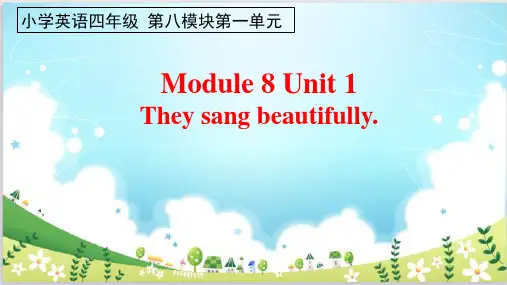
They sang beautifully.
Amy went to school by bike.
Ms Smart walked to sce food.
Daming listened to music. Sam sang songs.
Tom ate an apple.
And we walked in the park. We listened to music.
We sang and danced.
We helped teacher too.
Oh, you had a busy day!
have a busy day 度过忙碌的一天
看图,说句子。
We went there by bus.
Module 8 Unit 1
They sang beautifully. 他们唱的很优美。
原形
/t/
过去式
/d/
原形 过去式
play played row rowed listen listened phone phoned
laugh watch wash talk walk look cook help jump dance stop skip hop
Choose.
1. We (see/saw) some birds yesterday. 2. Amy (goes/went) to school everyday. And she (goes/went) by bus yesterday. 3.They (have/had )a good time yesterday. 4. We (listened/ listen) to music and danced. And we (sing/ sang) songs. 5.I (drinks/ drank ) (drinks/ drank ) yesterday.
• Yes,it was. • No, it wasn’t.
Mum , we saw some children. They played games.
saw(看见) ----- see的过去式
And they sang songs too.
sang(歌唱) ----- sing的过去式
Dad , we had a picnic last Sunday.
see------saw 看见
过去式
What did you do last Sunday? We sang beautifully.
sing过去式sang 唱歌
What did you do last Sunday? I ate some food.
eat-------ate吃
过去式
喝 drink
take-------took 拍摄
过去式
原形
过去式 had 有,度过 went去 saw看 sang唱歌 drank喝,饮 gave给 ate吃 took拍摄 made制作
have/has go see sing drink give eat take make
2015-2-28
Was it fun?有趣的
She ate some food.
They played games.
They sang songs.
We drank some drinks.
Match. I drank
games.
He played She went there We had
by train. a busy day! some drinks.
饮料 drink
drink some dinks 喝一些饮料
What did you do last Sunday?
We drank some drinks.
过去式
drink------drank 喝,饮
What did you do last Sunday? I took some pictures.
They sang beautifully.
ate(吃) ----- eat的过去式
We ate some food and drank some drinks.
drank(喝) ----- drink的过去式
We played games.
Oh, you had a good time.
have a good time 玩得很开心
last 最近过去的
Was it fun?
fun 有趣的事
We went there by bus.
there 在那儿,去那儿 by bus 乘公共汽车
Yes, it was.
went(去..) ----- go的过去式
beautifully 漂亮地,优美地
And we saw some birds.
Match. Was it faun?
Yes, I did. they sang beautifully in the park. Yes, it was.
They walked We saw some Birds
Did you dance?
写出下列单词的过去式。
see ( saw ) go ( went ) sing ( sang ) drink ( drank ) do ( did ) eat ( ate ) have ( had ) listen ( listened ) walk ( walked ) are ( were )
过去式
was 是 were 是 wasn’t不是 weren’t不是 did 助动词 didn’t 没有
What did you do last Sunday? 你上星期天做了什么?
What did you do last Sunday? We had a picnic last Sunday.
have-------had 有,度过
had a picnic
过去式
How did you go there?你们怎么去那儿? We went there by bus. go----went 去
2015-2-28
What did you do last Sunday?
We saw some birds.
laughed watched washed talked walked looked cooked helped jumped danced stopped skipped hopped
原形
• • • • • • is/am are isn’t aren’t do/does don’t/doesn’t
四年级下册英语教案Module8Unit1Theysangbeautifully.外研版(三起)
Module 8 Unit1 They sang beautifully.教学内容NSE四年级下册Module 8 Unit1 They sang beautifully.一.教材分析本单元为M8的第一单元,主要呈现本模块索要学习的语言内容。
本单元在前面初次学习了V.的规则变化过去式后,学习几个需要特殊记忆的不规则V.的过去式,并激发学生灵活运用过去时态描述发生过的事情。
二.学情分析本节课的授课对象为四年级的学生,他们活泼好动,乐于参与活动,能积极主动的思考,在一年的英语学习后,他们对英语学习已经较熟悉,并且有一定的学习基础,也形成了自己的学习方法,本课应以基础知识为主,抓好中心词。
三.教学目标1.知识目标:1)使100%的学生初步理解新单词:sang, beautifully, saw, game,last, went, there, ate, drank, drink, time, busy.2)使95%的学生能够听,说,认读并运用单词:sang, saw, went,ate, drank.2.技能目标:使90%的学生能运用一般过去时谈论过去的行为。
3.情感目标:1)激发学生学习英语的兴趣。
2)培养学生保护环境的意识。
四.教学重难点1.教学重点:1)不规则动词的过去式:sang, saw, went, ate, drank.2)能熟练运用新单词描述过去发生的行为。
2.教学难点1)单词ate, drank 的发音.2)能够灵活运用新单词描述已经发生过的行为。
五.教学方法故事教学法,任务型教学法,TPR六.教具Word card, PPT, Stickers, 交互式白板七.教学过程Step ⅠWarm up1.Greetings2.Sing the song “They ABC song.”Then, teacher show the title, teach thewords: sang, beautifully.Step ⅡLead inDo and guessT: Now, let’s play a game. I do the actions and you guess. 老师做出唱歌的动作S1:sing.T: Yes, sing, sing , sing, sing songs.并出示卡片,让学生跟读。
新版Module8__Unit1__they_sang_beautifully
听一听,选一选: A:What did you do last Sunday?
B: We (have/had ) a picnic last Sunday. We (goes/went) there by bus. I(see/saw) some birds. I (listened/ listen) to music I (sing/ sang) songs. We (walk/walked) in the park.
B . beautifully
5.We went there ___ bus,and we___to music.
A.by ; listened B. on ; listen
Practise (选词填空:went , walked , ate , listened)
Amy went to school by bike. Ms Smartwalked to school.
读一读,连一连:
Was it fun?
They walked
We saw some birds
We listened
to the music.
they sang beautifully
in the park.
Yes, it was.
读一读选一选:
1. We and
last week.
A. sang, danced B. sing, dance
Lingling atesome food.
ary: Chant (男女生各上来一个代表玩石头剪刀布,获胜方和你们团队读黑体单词, ) 另一方和你们团队读红体单词。
Go go went ,we went there. Sing sing sang , we sang beautifully. Drink drink drank ,we drank milk. See see saw ,we saw birds. Eat eat ate ,we ate food. Help help helped , we helped mother.
外研四下英语 M8U1 They sang beautifully
饮料 玩游戏
haeat
They had a busy day!
saw
They had a good time!
Amy went to school by bike. Ms Smart walked to school. Lingling ate some food.
Daming listened to music. Sam sang beautifully. Tom ate an apple.
动词过去式的不规则变化
sing
see
go
sang
saw
went
eat
drink
ate
drank
Homework:
1.熟练朗读课文活动一活动二。 2.掌握本节课所学动词过去式。 3.用所学单词,用一般过去式描述已做过的 事。
Activity1 活动1
see
sing
Activity2 活动2
Listen and find “had saw went sang ate drank”
have
上周日
去野餐
一般过去时
Yes,it was. No,it wasn't.
去那儿
go
see
sing
优美地,动听地
eat
drink
小学英语四年级 第八模块第一单元
Module 8 Unit 1
They sang beautifully.
学习目标
1.会、听、说、读、写重点单词和短语: sang,beautifully,saw,game,last,fun,went,there,ate,drank,drink,t ime,have a good time,busy.并在语境中正确运用这些单词。 2.能够熟练掌握以下动词的过去式: sing-sang drink-drank see-saw go-went eat-ate 3.能熟练运用句型:主语+动词的过去式+其他。来描述自 己或他人过去做过的事。
Module8Unit1Theysangbeautifully

Module 8 Unit 1 They sang beautifully.(教学设计)外研版(三起)英语四年级下册教学目标:1. 能够听懂、会说、会读本课的生词和重点句子。
2. 能够运用所学知识进行简单的日常交流。
3. 培养学生的团队合作意识和积极参与精神。
教学内容:1. 生词:beautifully, song, sing, music, teacher, students, class, animal, insect, plant, fruit。
2. 重点句子:They sang beautifully.We have a music class.What did you do?I sang a song.He played the guitar.She danced beautifully.教学重点与难点:1. 重点:能够听懂、会说、会读本课的生词和重点句子。
2. 难点:正确运用动词过去式,如:sang, played, danced。
教具与学具准备:1. 教具:PPT、录音机、磁带、单词卡片、图片。
2. 学具:课本、练习本、文具。
教学过程:Step 1: 热身(5分钟)1. 教师与学生进行简单的对话,询问学生上周的活动。
2. 学生用“I sang a song.”、“He played the guitar.”、“She danced beautifully.”等句子进行回答。
Step 2: 引入(10分钟)1. 教师播放 Module 8 Unit 1 的录音,让学生听懂并跟读。
2. 教师出示生词卡片,引导学生进行认读和朗读。
Step 3: 新课呈现(10分钟)1. 教师通过图片和实物展示,引导学生学习生词和句子。
2. 学生跟读并模仿,教师给予指导和纠正。
Step 4: 课堂活动(10分钟)1. 学生分成小组,进行角色扮演,运用所学句子进行对话。
2. 教师巡回指导,给予鼓励和评价。
Step 5: 巩固练习(5分钟)1. 教师出示练习题,学生独立完成。
四年级下册英语教案-Module8Unit1Theysangbeautiful.∣外研版(三起)
四年级下册英语教案 Module8 Unit 1 They sang beautifully.∣外研版(三起)教学内容本单元的主题是“过去的事情”,围绕过去发生的活动展开。
教学内容主要包括一般过去时的运用,如:“They sang beautifully.”,以及与之相关的词汇和表达方式,如:dance, play football, do homework等。
通过本单元的学习,学生能够描述过去发生的事情,并能够运用一般过去时进行简单的交流。
教学目标1. 知识与技能:学生能够理解并运用一般过去时描述过去发生的事情。
2. 过程与方法:通过听、说、读、写等多种教学活动,提高学生的英语交流能力。
3. 情感态度价值观:培养学生对英语学习的兴趣,增强其跨文化交流的意识。
教学难点1. 时态理解:一般过去时的构成及用法是本单元的教学难点。
2. 词汇记忆:与过去活动相关的词汇的记忆和应用。
教具学具准备1. 多媒体设备:用于播放教材音频和视频。
2. 图片卡片:展示与教学内容相关的活动图片。
3. 练习册:用于课堂练习和课后作业。
教学过程1. 导入:通过播放一首英文歌曲,引导学生进入英语学习状态。
2. 新课内容展示:利用多媒体展示教材内容,讲解一般过去时的用法。
3. 互动练习:通过小组讨论和角色扮演,让学生练习描述过去的事情。
4. 巩固练习:完成练习册上的相关练习,巩固所学知识。
板书设计中心:单元“Module8 Unit 1 They sang beautifully.”左侧:列出重要词汇和短语。
右侧:展示一般过去时的基本结构和例句。
作业设计1. 书面作业:完成练习册上的相关练习。
2. 口头作业:向家人描述一次过去的活动。
课后反思本节课通过多媒体教学和互动练习,有效地帮助学生理解和掌握了一般过去时的用法。
但在教学过程中,也发现部分学生在时态理解上存在困难,需要在今后的教学中进一步加强针对性的辅导。
课后作业的完成情况将作为评估学生学习效果的重要依据。
Module8Unit1Theysangbeautifully(教案)-英语四年级下册
外研版四年级下册英语Module 8《Unit 1 They sang beautifully.》教案一、教材分析:本单元主要以描述过去的经历为主题,通过故事、图片和活动引导学生学习与过去事件相关的词汇、短语和句型。
教材中包含了一些常见的动词过去式,并通过多种方式进行巩固和运用。
二、教学目标:1. 熟练掌握本模块的重点单词、短语:sang (sing) beautifully, saw (see), game, went (go), drank (drink), time, busy, tell, great, delicious, made (make), poster。
2. 掌握句型:We played games. We went there by bus. They sang beautifully. We ate some food and drank some drinks. I took some pictures and I made a poster。
3. 能运用不规则的动词过去式描述过去发生的事情。
4. 通过学习本模块内容培养学生热爱生活的情感。
三、教学重难点教学重点:1. 掌握本模块重点单词和句型。
2. 掌握一般过去时态的用法。
教学难点:灵活运用模块重点单词和句型描述过去的经历,培养学生的综合语言运用能力。
四、学情分析:学生已经学习了基本的英语词汇和句型,对一般现在时态有一定的了解。
他们对动画、故事和图片等多媒体形式的教学资源感兴趣,喜欢通过多样化的活动来加深对知识的理解。
但在灵活运用过去时态和不规则动词过去式方面可能存在一定的困惑。
五、教学过程Step 1: Warmup (5 minutes)1. Greet the students and review the previous lesson briefly by asking questions related to the previous lesson's topic. For example, "Who can tell me one action word we learned last time?" Allow a few students to respond and provide positive reinforcement.2. Show pictures of different activities (e.g., singing, playing games, eating, etc.) and ask students to identify the actions in the pictures. Encourage them to use the present tense to describe the activities. For example, hold up a picture of children playing soccer and ask, "What are they doing in this picture?" Allow multiple students to respond and provide feedback on their answers.Step 2: Presentation (10 minutes)1. Introduce the new vocabulary words: sang, beautifully, saw, game, went, drank, time. Show flashcards or real objectsto illustrate the meanings of these words. For example, hold up a picture of someone singing and say, "Look at this picture. The person is singing. We can say they 'sang' beautifully." Repeat the process for the other vocabulary words.2. Play an audio or video clip of a song or a performance where people are singing. Ask students to listen and identify the action of singing. Then introduce the word "sang" and its meaning. For example, ask, "What did they do in the video? They sang!" Provide positive reinforcement for correct answers.3. Show a picture of a beautiful scene or performance and ask students to describe it using the word "beautifully." For example, show a picture of a ballet dancer and ask, "How did they perform? They danced beautifully! Can you use the word 'beautifully' in a sentence?" Encourage students to volunteer and provide feedback on their sentences.4. Present the past tense forms of the verbs: sang, saw, went, drank, made. Write these words on the board and explain that they describe actions that happened in the past. Give examples of sentences using these past tense verbs. For example, write on the board, "Yesterday, I sang a song. We went to the park last week." Read the sentences aloud, emphasizing the past tense verbs and their meanings.Step 3: Practice (15 minutes)1. Divide the class into small groups and give each groupa set of picture cards representing different activities (e.g., playing games, going somewhere, eating, taking pictures, making a poster).2. In their groups, students take turns picking a picture card and using the past tense to describe what they did in the past. Encourage them to use the target vocabulary and sentence structures. For example, a student picks a card with a picture of friends playing soccer and says, "I played games with my friends. We had a great time!" Encourage other group members to ask followup questions using the past tense. Provide assistance and feedback as needed.3. Circulate among the groups, listen to their conversations, and provide assistance as needed. Encourage students to use plete sentences and ask followup questions to extend their speaking. For example, if a student says, "I went to the park," ask, "Who did you go with? What did you do there?" Encourage other group members to contribute to the conversation.Step 4: Consolidation (10 minutes)1. Play a memory game with the past tense verbs. Write theverbs on the board and cover them. Remove one cover at a time, and students take turns trying to remember the past tense form and use it in a sentence. For example, reveal the word "drink" and a student says, "Drink, drank. I drank some juice yesterday." Provide positive reinforcement for correct answers and help students if they struggle.2. Have a class discussion about the students' favorite activities they did in the past. Encourage them to use the target vocabulary and sentence structures. For example, ask, "What games did you play? Where did you go? What did you eat?" Allow multiple students to share their experiences and ask followup questions to encourage further discussion. Provide positive feedback and praise their use of the target language.Step 5: Application (10 minutes)1. Assign a task for students to plete individually or in pairs. For example, ask them to write a short paragraph or draw a picture describing a past event using the target vocabulary and sentence structures. Provide sentence starters or prompts if necessary. For example, provide a sentence starter like "Last weekend, I..." or a prompt like "Draw a picture of something you did in the past."2. Circulate among the students, providing feedback andguidance as they work on the task. Encourage them to use a variety of past tense verbs and descriptive language. Provide positive reinforcement for their efforts and offer suggestions for improvement if needed.Step 6: Wrapup (5 minutes)1. Recap the key vocabulary, sentence structures, and grammar points covered in the lesson. Ask students to repeat the past tense verbs and their meanings. For example, say, "Let's review the past tense verbs we learned today. Repeat after me: sang, saw, went, drank, made." Encourage the students to say the words aloud and provide positive reinforcement.2. Ask a few students to share their paragraphs or pictures with the class. Provide positive feedback and praise their use of the target language. For example, say, "Who would like to share their paragraph or show their picture? That's wonderful!I love how you used the past tense verbs and described the event." Give specific pliments to highlight their achievements.3. End the lesson with a closing remark, such as, "Great job today, everyone! You did an excellent job learning and using the past tense. Keep practicing and using these new words and structures in your everyday conversations. See you next time!"六、板书设计:Unit 1: They sang beautifully.Vocabulary: sang(beautifully), saw (see), game, went (go), drank (drink), time, busy, tell, great, delicious, made (make), posterSentence Structures:We played games.We went there by bus.They sang beautifully.We ate some food and drank some drinks.I took some pictures and I made a poster.七、教学反思:本节课通过多样化的教学活动,引导学生学习和巩固了本模块的重点单词、短语和句型,并运用了一般过去时态描述过去的经历。
四年级下册英语教案-Module8-Unit1Theysangbeautifully|外研社(三起)
四年级下册英语教案Module8Unit 1 They sang beautifully|外研社(三起)教学内容本单元的主题是“他们唱得很好听”,主要围绕音乐和乐器展开。
教学内容包括学习描述音乐和乐器表演的形容词,如“beautifully”、“wonderfully”等,以及相关的动词和名词。
学生将通过听、说、读、写等多种方式来学习这些词汇和句型,并能够在实际情境中运用它们。
教学目标1. 知识目标:学生能够理解并运用描述音乐和乐器表演的形容词和句型。
2. 技能目标:学生能够通过听力和阅读理解相关内容,提高英语听说能力。
3. 情感目标:培养学生对音乐的欣赏能力和合作精神。
教学难点1. 词汇记忆:形容词和名词的正确使用和记忆。
2. 句型构造:构造描述音乐和乐器表演的句子。
3. 实际应用:在实际情境中正确运用所学知识。
教具学具准备1. 多媒体设备:用于播放音乐和视频。
2. 单词卡片:用于展示和复习新词汇。
3. 乐器模型:用于直观展示和教学。
教学过程1. 导入:通过播放一段音乐,引导学生进入主题。
2. 新授:教授新词汇和句型,通过图片和实物展示来加深理解。
3. 练习:通过小组活动和角色扮演,让学生练习使用新词汇和句型。
4. 巩固:通过游戏和竞赛,巩固所学知识。
板书设计1. Module8Unit 1 They sang beautifully2. 新词汇:beautifully, wonderfully, sing, dance, play, music, instrument3. 句型:They sang/danced/play beautifully/wonderfully.作业设计1. 书面作业:完成练习册的相关练习。
2. 口头作业:与家长或同学用英语交流所学内容。
课后反思本节课通过多种教学手段,如音乐、图片、实物等,激发了学生的学习兴趣。
通过小组活动和角色扮演,学生能够更好地理解和运用所学知识。
四年级下册英语教案-Module8Unit1Theysangbeautiful|外研社(三起)
四年级下册英语教案Module8 Unit 1 They sang beautifully|外研社(三起)教学内容本节课我们将学习外研社(三起)四年级下册英语Module8 Unit 1 They sang beautifully。
本课主要围绕过去式展开,通过描述过去的活动,让学生掌握动词过去式的用法。
教学内容包括词汇学习、句型练习以及听力理解。
教学目标1. 知识与技能:学生能够听懂、会说、会读本节课的生词和重点句子。
2. 过程与方法:通过小组合作、游戏等互动方式,提高学生的英语听说能力。
3. 情感态度价值观:培养学生对英语学习的兴趣,提高他们的跨文化交际意识。
教学难点1. 动词过去式的构成和用法。
2. 描述过去活动的句型:They + 过去式 + 其他。
教具学具准备1. 多媒体教学设备:用于播放课件、视频和音频。
2. 教学卡片:用于展示本节课的生词和句型。
3. 学生练习册:用于课堂练习和课后作业。
教学过程1. 导入:通过歌曲或游戏等方式,激发学生的学习兴趣,引入本节课的主题。
2. 新课内容展示:利用多媒体教学设备,展示本节课的生词、句型和语法。
3. 小组合作:学生分组进行讨论和练习,巩固所学知识。
4. 听力练习:播放与本节课内容相关的听力材料,提高学生的听力理解能力。
板书设计1. 课程Module8 Unit 1 They sang beautifully2. 重点词汇:sing, dance, play, draw等动词过去式。
3. 重点句型:They + 过去式 + 其他。
作业设计1. 完成练习册上的相关练习。
2. 背诵本节课的生词和重点句子。
3. 运用所学知识,描述自己过去的一次活动。
课后反思1. 教师应关注学生在课堂上的参与程度,及时调整教学方法,提高教学效果。
2. 针对学生的学习情况,教师应给予个别辅导,帮助学生克服学习困难。
3. 教师应鼓励学生积极参与课堂活动,提高他们的英语实际运用能力。
外研版四年级英语下册Module 8 Unit 1 They sang beautifu
Look and say
What did you do yesterday?
I went to a restaurant.
What did you do yesterday?
I went to the library.
One Monday, two friends are talking.
谢谢观赏
You made my day!
我们,还在路上……
Homework
Practice the dialogue with your classmates.
Thank you
•不习惯读书进修的人,常会自满于现状,觉得再没有什么事情需要学习,于是他们不进则退。经验丰富的人读书用两只眼睛,一只眼睛看到纸面上的话,另 一眼睛看到纸的背面。2022年4月5日星期二2022/4/52022/4/52022/4/5 •书籍是屹立在时间的汪洋大海中的灯塔。2022年4月2022/4/52022/4/52022/4/54/5/2022 •正确的略读可使人用很少的时间接触大量的文献,并挑选出有意义的部分。2022/4/52022/4/5April 5, 2022 •书籍是屹立在时间erday?
Yes, I saw Liming in the park.
Free talk:
Talk with your partners about the things you did last weekends.
一般过去时 Let’s practise.
外研版(三起)(2012)小学英语四年级下册Module 8 Unit 1 They sang beautifully.Module 8 Unit 1 They s
精品PPT
3. Amy ___D__ some food and _____some water last Saturday.
A. eats;drinks
B. ate;drink
C. ate;drank
点拨:因为句中有表示过去的时间状语 last saturday, 而且 and 连接的是两个并列动作,所以两个 动词都要用过去式,故选C。
例句: They went to the zoo and saw some monkeys.
他们去了动物园并且看见了一些猴子。
形近词: say
短语: see a film 看电影
see a doctor 看医生
精品PPT
知识点 2 game / ɡeɪm/ n.(名词)游戏 例句: They are playing games in the park. 他们正在公园里做游戏。
形近词: name 名字 gate 大门 短语: play games 做游戏
一词多义: game n.(名词)比赛
精品PPT
知识点 3 sang /sæŋ/ v.(动词)(sing 的过去式)唱歌 例句: Sam sang English songs in the classroom.
萨姆在教室里唱英文歌。 联想记忆法: song n.(名词) 歌曲 短语: sing a song/sing songs 唱歌
(优美地,动听地)
精品PPT
知识点 7 drink /drɪŋk/ n.(名词)饮料 例句: We were thirsty and we drank some drinks. 我们口渴,我们喝了一些饮料