
华为_MT1-T00Mate_移动版培训手册
常用操作及设置-GPS设置
➢ 使用GPS卫星:此定位服务需使用卫星才可使用,而且对天气及周围环境要求较高;
➢ 使用无线网络:此定位服务需使用无线网络来获取GPS辅助资料,此过程可能会产生额外的网络费用;
➢ AGPS辅助:此定位服务随GPS卫星定位打开而自动开启,需协同基站辅助定位,此过程可能会产生额外
终端卖点
终端卖点
终端卖点
终端卖点
终端卖点
自有业务适配表
支持 不支持
支持 不支持
支持 不支持
飞信 √
手机阅读 √
手机电视 (CMMB)
X 彩云通讯
录 √
手机视频 √
掌上营业 厅(江苏)
√
139邮箱 √
手机营业 厅
√
音乐随声 听 √
随E行 √
手机导航 √
号簿管家 √
移动MM √
游戏大厅 √
冲浪浏览 器
模版制定人 郭斌 郭斌 郭斌 郭斌
手机版本
名称
信息内容
截图
撰写机类型
工程机
Android版本
4.1.2
系统版本号
Emotion系统 1.5
基带版本
DM_BASE_12A_W12.19_P3.06lsc8800g_sp88 03gl03-28-2013 02:42:10
内核版本 3.0.8-00734-gca0a26bandroid@localhost#1
➢ 设置—移动网络—启用数据流量,关闭网络彩信可以正常接收,但仍建议接收彩信时开启。
常用操作及设置-上网&彩信&状态
➢ 设置—启用数据流量—接入点名称—菜单键—重置为默认设置。如果需要设置,可以选择 “新建APN”,输入以下参数,设置完成后点选对应接入点名称即可。
可直接新建或重 置设置
常用操作及设置-上网&彩信&状态
(其余配置为默认值);
中国移动彩信设置:
名称:中国移动彩信(此项可任意输入);
APN:cmwap MMSC:; 彩信代理:10.0.0.172; 彩信端口:80; APN类型:mms;
(其余配置为默认值);
常用操作及设置-邮件
➢ 使用之前需要确保CMNET接入点或者wifi可用,以139邮箱设置为例,全部应用程序—邮件—邮件地址 (完整的邮箱地址),密码(邮箱密码)--下一步—下一步-下一步-用户名称(随便填写,只要网络连接 正常,其他选项一般系统会帮您自动识别填写,无需做任何更改;如果未能识别,可手工填写POP服务 器:、端口:110;SMTP服务器:、端口:25-账户名称(随便填写)--结束设置。
点击配置密码
常用操作及设置-蓝牙
➢ 设置—点击蓝牙—开启蓝牙。
常用操作及设置-软件安装与卸载
➢ 由于Mate安卓系统,支持APK格式文件,安装程序之前,可将事先下载好的APK格式文件放入内存中,所有
程序-文件管理—找到安装包存放的位置,点击文件名即可安装;如卸载文件进入:设置—管理应用程序—已
下载—选中应用—卸载;常见的安装分为:手机直接联网下载安装,通过手机第三方软件或PC端套件安装,
√
飞聊 √
灵犀
移动微博 手机动漫
√
√
√
常用操作及设置-电话
➢ 华为Mate拨号界面。无法进行视频通话。
拨号界面
输入号码,点击 “更多” 后的界面
点击“设置”,进 入通话设置界面
常用操作及设置-多方通话
➢ 华为Mate支持多方通话及通话录音。
拨通电话按右下角更多按钮, 可进行设置多方通话功能
点击更多按钮后出现“添 加”及“录音”选项
MT1-T00(Mate 移动版)培训手册
培训手册模版管理
序号 1 2 3 4
修改内容 优化外观接口/卖点说明、增加黑名单、软件安装卸载等基础功
能操作介绍
增加手机版本介绍,多方通话介绍
增加通话录音介绍
优化硬件参数、增加蓝牙、安卓调试模式、存储、恢复出厂等8 个模块
制定时间 2013-02 2013-03 2013-04 2013-06
化成NTFS格式)
硬件参数
硬件参数
特色
6.1英寸极致巨屏
• 6.1英寸全贴合IPS材质1280×720 HD高清大屏
最全视频播放
• 史上最全视频解码,支持几乎所有视频格式硬解码
进退自如,挑战速度快感
• 搭载目前华为手机中最快的K3V2四核1.5GHz处理器
左右逢源,单手轻松掌控
• 创新的单手操作模式,可以自由选择左右手输入模式
➢ Mate 的CMWAP、CMNET、彩信接入点设置如下。
正在联网时会有箭 头图标指示
中国移动WAP设置: 名称:cmwap(此项可任意输入); APN:cmwap; 代理:10.0.0.172; 端口:80; APN类型:default,wap; (其余配置为默认值); 中国移动互联网: 名称:cmnet(此项可任意输入); APN:cmnet; APN类型:default,internet;
版本号
MT1-T00V100R001C01B102
外观赏析-整体
外观赏析-细节
100W前置摄像头
超清800W后置摄像头
音量键、电源
3.5mm音频接口,卡槽及 底部的USB接口、麦克风
主菜单三个虚拟按键
外观赏析-卡槽
SIM卡槽 (Micro Sim卡)
外接存储卡,最大支持
64GB (注:64G卡需要使用 Windows或者Mate手机格式
添加号码后,选择“合 并通话”,即可进行多 方通话
常用操作及设置-联系人导入/导出
➢ 联系人—更多按钮—管理联系人—从sim卡中复制联系人/通过蓝牙导入/从存储设备导入,选择要导入的 联系人。
常用操作及设置-信息
➢ Mate发送信息时可插入图片
短信中心设置
可以添加附件
常用操作及设置-上网&彩信&状态
的数据流量费用; ➢ 备注:打开GPS定位功能会增加终端电量损耗。
GPS运行状态图标
常用操作及设置-WiFi使用
➢ 设置—点击WLAN—打开WLAN,会自动搜寻WiFi网络,输入正确密码后即可使用。
点击即可连接
常用操作及设置-热点使用
➢ 设置—更多—移动网络共享与便携式热点—便携式WLAN热点。
一句话销售话术
“华为 MT1-T00(Mate 移动 版)” 6.1英寸全贴合IPS高 清大屏,双GPS、双摄像头 、双Wifi、双mic; 四核 1.5GHz极速CPU,1080P 高清视频播放, 畅快淋漓 的视觉盛宴。整机采用弯曲 弧度设计工艺,最薄处仅 6.5毫米,更有4050mAh超大 容量电池。多项领先科技, 畅享不一样的精彩,诚邀尊 享。
【精品文档】华为操作指导书word版本 (10页)

本文部分内容来自网络整理,本司不为其真实性负责,如有异议或侵权请及时联系,本司将立即删除!== 本文为word格式,下载后可方便编辑和修改! ==华为操作指导书篇一:LTE华为后台操作指导书RNC机房操作指导总结一. TD-LTE组网简介整个TD-LTE系统由3部分组成,核心网(EPC),接入网(eNodeB),用户设备(UE).EPC又分为三部分:MME 负责信令处理部分,S-GW 负责本地网络用户数据处理部分 P-GW 负责用户数据包与其他网络的处理。
接入网也称E-UTRAN,由eNodeB构成。
eNodeB与EPC之间的接口称为S1接口,eNodeB之间的接口称为X2接口,eNodeB与UE之间的接口称为Uu接口。
二. LTE网管客户端安装1、 LTE网管系统目前有两套,一套为M201X系统,另一套为新版OMC920系统,两套系统主要功能基本相同,但后者将TDS系统统一整合进来;2、 LTE网管的安装:系统的安装:M201X网管系统的安装,首先在IE地址栏中,输入IP地址http://10.211.176.80/cau/,然后下载安装,OMC920网管系统,则要输入IP地址http://10.212.96.45/cau/,然后下载安装;3、 OMC920系统网管安装成功后,需要将附件hosts文件复制到C:\WINDOWS\system32\drivers\etc目录下,替换系统自带的hosts文件,否则登录时会出现异常,M201X系统没有此类问题;后面操作因M201X与OMC920类似,故仅以OMC920网管系统为例说明;三. LTE网管客户端登录登陆网管OMC920客户端。
打开客户端后,显示的是“用户登陆”,需要填写,用户名,密码,当多个OMC920客户端登陆时,需点击服务器下拉菜单,增加网元信息。
成功登录后进入OMC920网管系统首页,内容包括各类维护操作的菜单栏、工具栏和一些快捷工具图示等;OMC维护系统包括MML命令、结果查询、监控和维护等主要功能,后面对这些具体功能进行详细介绍;四. LTE常用的操作4.1 eNodeB MML常用命令在网络规划和优化工作中,对单个eNodeB进行远端操作维护的情况较少,一般都可以在M201X下对eNodeB进行相关的操作。
设备调测手册华为培训

设备调测手册华为培训1. 简介本手册旨在帮助华为设备调试员工进行设备调试工作。
通过本手册,您将学习到设备调试的基本原理、调试流程、常见问题及解决方法等内容。
2. 设备调试原理设备调试是一项关键的工作,它主要通过连接设备和相关工具,对设备进行配置、测试和验证,以确保设备能够正常工作。
在进行设备调试时,需要掌握以下原理:2.1 连接原理设备调试需要通过连接设备和调试工具来进行。
常用的连接方式包括串口连接、网口连接和USB连接等。
不同的设备和调试工具使用不同的连接方式,需要根据具体情况进行配置和连接。
2.2 配置原理在进行设备调试之前,需要对设备的配置进行了解和设置。
配置内容包括设备的IP地址、子网掩码、网关、DNS等。
通过正确的配置,可以使设备能够连接到网络,进行联网测试和验证。
2.3 测试原理设备调试的一个重要环节是测试,通过对设备进行各种测试,可以验证设备的功能和性能。
常见的测试内容包括网络连接测试、数据传输测试、性能测试等。
通过测试,可以及时发现设备存在的问题,并进行相应的调整和修复。
3. 设备调试流程设备调试的流程可以分为以下几个步骤:1.准备工作:收集设备和调试工具的相关信息,包括设备型号、调试工具型号、调试软件版本等。
2.连接设备:根据设备和调试工具的连接方式,进行相应的连接操作。
确保设备和调试工具之间的连接正常稳定。
3.配置设备:通过调试工具对设备的配置进行设置。
根据实际情况,设置设备的IP地址、子网掩码、网关、DNS等参数。
4.进行测试:按照设备调试计划进行各项测试工作。
包括网络连接测试、数据传输测试、性能测试等。
记录测试结果并进行分析。
5.问题解决:出现问题时,根据问题的描述和测试结果,进行问题定位和分析。
采取相应的解决方法,修复设备问题。
6.测试验证:在问题解决之后,进行再次测试验证。
确保设备问题已被解决,设备能够正常工作。
4. 常见问题及解决方法在设备调试过程中,常常会遇到一些问题。
华为TD-LTE后台基础知识培训

目录1概述 (2)1.1主要内容 (2)1.2机房行为规范和注意事项 (2)2eNodeb操作维护部分 (3)2.1eNodeB MML常用命令 (3)2.2eNodeB的小区状态查询 (3)2.3功率查询与修改 (4)2.4eNodeB 邻区增删操作 (5)2.4.1增加系统内同频eNodeB邻区 (5)2.4.2查询系统内同频eNodeB邻区 (5)2.4.3删除系统内同频eNodeB邻区 (6)2.4.4增加系统内异频eNodeB邻区 (7)2.4.5增加异系统间eNodeB邻区 (8)2.5eNodeB的告警信息查询 (10)3话统指标操作 (11)3.1话统指标的定义 (11)3.2话统指标的提取 (13)4LTE KPI介绍及优化 (15)4.1接入性指标: (15)4.1.1无线接通率: (15)4.1.2RRC连接建立成功率: (16)4.1.3E-RAB建立成功率: (18)4.2移动性指标: (19)4.2.1切换成功率: (19)4.3保持性指标 (23)4.3.1无线掉线率: (23)1 概述1.1 主要内容本文是针对网规网优人员,在LTE网络优化时,在机房进行相关的配合工作。
对涉及到的OMC、eNodeB相关的操作进行了说明.并根据网规人员操作的重要顺序对章节进行了编排.本文分为以下几部分,每部分对最常用的功能做了详细的介绍.1) 机房行为规范介绍了网规网优人员在机房工作时,需要遵守机房的相关规定和注意事项.2) eNodeB操作维护部分介绍了对于单个eNodeB的模拟负载加载和去加载、eNodeB的MML命令等、eNodeB的告警信息的查询以及告警数据的提取。
3) 话统指标操作及简单分析介绍了话统指标的定义和话统指标的提取方法和操作步骤以及简单分析。
1.2 机房行为规范和注意事项网规网优人员在机房工作时,需要遵守机房的相关规定,注意事项如下:1) 在机房工作时,上下班时间以及进出机房,遵守机房的相关管理规定;2) 一般不得在机房内饮食、饮水,水杯一般不能带到机房;3) 在机房操作时,不同的操作维护客户端,可能使用不同的用户名和密码,一般由机房管理人员进行管理和分配,使用时需要遵守机房的相关的管理规定;4) 在机房操作时,除了网规网优必须的操作外,切记不能随便操作相关的设备,例如复位单板,修改系统的参数等;5) 机房人员有责任保证操作平台的可用性.例如保证磁盘空间大小足够用,跟踪的数据文件要及时发送给网优人员,并及时删除客户端上的跟踪数据文件,否则客户端上将有很多的数据文件,占用磁盘空间;6) 由于机房操作平台安全性要求非常高,一般不得用任何存储介质在操作平台上直接拷贝文件。
手机测试培训操作指南
易兴通电子有限公司手机测试培训操作指南一、手机软件与升级管理二、手机RF(BT/FT/CIT)系统测试操作指南三、手机包装测试操作指引四、条码标签打印操作介绍五、生产&出货IMEI/MEID 号管理规定手机软件与升级管理1. 软件管理:1.1:软件管理是指对公司各机型的软件更新进行记录,及时将最新软件导入生产中及将旧软件进行归档以便日后查阅.1.2:软件接收:文控室负责(或测试工程师)接收提取客户提供各类软件及相关技术文档,同步发给相应部门。
并复制到公司指定服务器上保存并注明。
1.3:软件ECN 发行:工程文员或文控室收到客户软件,在项目经理或测试工程师指导下把相关软件ECN 电子档、纸档或邮件方式发行到各部门,同时将软件发行,各部按ECN 操作执行。
1.4:软件对照表更新:测试工程师收到文控发行软件,根据客户类型将客户软件对照表转换更新易兴通内部软件对照表发布相关使用部门,文控负责将最新软件对照表打印受控发行到各产线MMI 工位、品质检验人员、升级测试房,并将旧软件对照表收回存档。
1.5:软件执行:测试工程将收到的软件复制到下载PC 上,将下载软件平台工具调试好,准备量产下载。
1.6:软件功能确认:由工程师抽5PCS 对下载好软件机器进行功能全检,如功能都OK 软件将正式实行,工程、质量共同确认升级下载首件,如发现软件有Bug 将反馈给相关负责部门,直到问题有解决方案为此,否则不能正式上线。
2. 软件升级管理:升级硬件&软件准备:PC 加多口USB 接口、下载线、下载夹具、各机型升级工具、软件、操作说明注意事项。
2.1:软件归档量产操作:软件确认正确及功能确认OK 后将记录在‘软件对照表’中,记录软件的机型;版次;软件发行日期等信息,如特殊操作(易丰客户软硬三大件匹配关系应用,相关使用部门严格按照软件对照表匹配发料;易丰条码打印要求出货SN 号设计软件硬件代码,备料单严格按照实际软硬件匹配关系备料。
国干华为设备培训资料
华为机密,未经许可不得扩散
文档密级:内部公开
OptiX设备的操作注意事项
二、电气安全注意事项
1、在设备维护前必须按 照本节的要求做好防静电 措施,避免对设备造成损 坏。
华为机密,未经许可不得扩散
文档密级:内部公开
OptiX设备的操作注意事项
二、电气安全注意事项
2、单板电气安全注意事项单板在不使用时要保 存在防静电袋内,拿取单板前时要戴好防静电 手腕,并保证防静电手腕良好接地。注意单板 的防潮处理。
OptiX设备运行环境
一、外部检查注意事项:
a、电源检查:
保证OptiX设备正常工作的直流电压:-48V 允许的电压波动范围是:-48V+20%(-38.4V~ -57.6V)
b、确保设备良好接地:
设备采用联合接地,接地电阻应良好(要求小于1欧 姆),否则会被雷击打坏设备。
华为机密,未经许可不得扩散
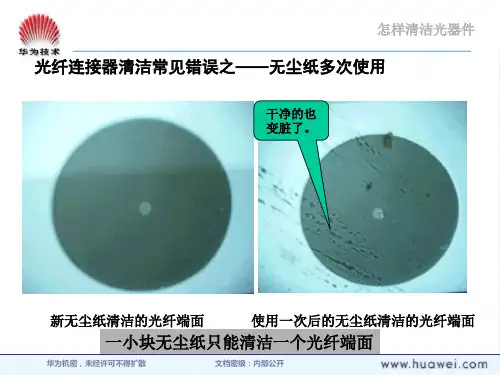
2、光接口板光纤接口和尾纤接头的清洗。
华为机密,未经许可不得扩散
文档密级:内部公开
OptiX设备的操作注意事项
3、光接口板环回操作注意事项
用尾纤对光口进行硬件环回测试时一定要加衰耗器,以防 接收光功率太强导致收光模块饱和,甚至光功率太强损坏 接收光模块。
4、更换光接口板时的注意事项
在更换线路板时,要注意在插拔线路板前,应先拔掉线路 板上的光纤,然后再拔线路板。不要带纤插、拔板。
OptiX设备运行环境
散热措施:
1、定期清洗风扇盒防尘网。条件较好的机房每月清洗一次, 机房温 度、防尘度不好的机房每两周清洗一次。
2、子架上散热孔不应有杂物。(如2M线缆,尾纤等) 3、日常检查单板是否发烫,子架通风口风量是否大。 4、机柜内温度也可在网管上监视,在PMU(电源监控板)上可
HUAWEI华为 Mate 10 Pro 快速入门 说明书

使用非授权第三方软件升级手机的固件和系 统,可能存在手机无法使用或者泄漏您个人信 息等安全风险。
建议您使用在线升级或者将 手 机 送 至 您 附 近 的华为授权服务中心升级。
手机升级后,您所有的个人信息可能会被移除, 请在升级前备份个人信息。
Android™ 是谷歌公司的商标。
The N-Mark is a trademark or registered trademark of NFC Forum, Inc. in the United States and in other countries.
3 插卡指导
• 请使用标准nano-SIM卡,并且沿机身水 平 方 向 插 拔 卡 托 。不 标 准 的 卡 片 和 不 正 确 的插卡方向可能导致卡托和手机的损坏。
• 使用顶针需注意安全,防止戳伤手指或损 伤手机。
• 请将顶针放置在儿童接触不到的地方,防 止儿童无意中吞食或戳伤自己。
• 请勿在开机状态下插拔nano-SIM卡。
如 日 照 、取 暖 器 、微 波 炉 、烤 箱 或 热 水 器 等 。电 池 过 热 可 能 引起爆炸。
•
入 耳 蜗 等)保 持 至 少 1 5 厘 米 的 距 离 。 在 受 控 实 验 室 条 件 下 经 测 试,本 设 备 可 抗 溅 、抗 水 、抗
• 设备充电时,电源插座应安装在设备附近并应易于触及。 尘,其效果在 GB 4208-2008 标准下达到 IP67 级别。
查询产品有害物质限制使用标志及含量信息、CMIIT ID 和 CCC标志, 请点击:设置 > 系统 > 认证标志
隐私保护
9 电磁辐射比吸收率(SAR)
为了解我们如何保护您的个人信息,请访问
MT系列用户手册说明书
3.3.4 GPRS 通讯此功能仅适用于GPRS 机型。
配置完成后,请至 注册并扫描本手册背面右下方“小固云窗”二维码下载APP。
注意:1.机器使用接近一年,如果数据不再更新,则可能是流量费用完,请及时联系本公司续费。
2.安装后请查看信号强度(屏幕显示栏),如果信号强度低于40%请更换逆变器安装位置,确保信号强度高于40%。
4 操作说明具体操作请参考《完整版用户手册》。
(完整版用户手册下载方法本手册结尾)4.1 提示与免责声明“中国标准”安规:逆变器正常工作电压范围:0.85Un-1.2Un,逆变器正常工作频率范围:47.5-50.5Hz,逆变器的启机/重连频率范围:49.5~50.2Hz;“中国标准较高压”安规:逆变器正常工作电压范围:0.5Un-1.2Un;“中国标准最高压”逆变器正常工作电压范围:0.5Un-1.27Un;“中国电站”逆变器正常工作电压范围:0.9Un-1.1Un。
若显示屏显示“电网电压偏高”或者发电时绿灯每间隔5秒灭1秒,则表示并网电压偏高。
若并网点电压接近或高于264Vac,在征得当地电力运营商许可后,根据并网点的电压情况,选择“中国标准较高压”或“中国标准最高压”。
注:电网电压过高可能影响到并网侧家用电器的正常使用和使用寿命,因选择“中国标准较高压”或“中国标准最高压”并网导致的相关影响和后果与我司无关。
4.2 WIFI 模块重启和恢复出厂设置有LCD 屏机型在基本设置菜单中选择通信设置,按 键进入,选择WIFI 复位,长按 键3s,会重启逆变器的WIFI 模块,当逆变器无法连接到路由器或者监控服务器时可尝试此功能。
在基本设置菜单中选择通信语言设置,按 键进入,选择WIFI 重置,长按 键3s,会将逆变器的WIFI 模块恢复为出厂设置,当无法连接到WIFI 模块时可使用此功能,一旦WIFI 模块恢复为出厂设置,则必须再次正确配置WIFI 模块,注意:该功能仅适用于WIFI 机型。
华为技术培训教程
包括虚拟化技术、分布式计算技术、自动化管理技术、网络安全技术 等,是构建云计算基础架构和实现服务模式的核心技术。
大数据处理与分析方法
大数据处理流程
包括数据采集、清洗、存储、处理、分析和可视化等步骤,是大 数据处理的基本流程。
大数据分析方法
包括统计分析、机器学习、深度学习等方法,可以对大数据进行挖 掘和分析,发现数据中的规律和趋势。
边缘计算原理及应用场景
01
边缘计算原理
将计算任务和数据存储在离数据源更近的边缘设备上,以减少网络传输
延迟和带宽占用。
02
应用场景
智能制造、智慧城市、智能交通、智能家居等
03
边缘计算平台华为IEF(I Nhomakorabeatelligent EdgeFabric)边缘计算平台,提供边缘应用管理
、数据分析、安全保障等功能。
1 2 3
Wi-Fi技术
基于IEEE 802.11标准,实现无线局域网内的数 据传输,具有传输速率高、覆盖范围广等优点。
4G/5G移动通信技术
基于蜂窝移动通信网络,提供高速、低延时的无 线数据传输服务,支持移动终端的互联网接入和 多媒体通信。
蓝牙技术
一种短距离无线通信技术,可实现设备间的数据 传输和语音通信,广泛应用于手机、耳机等设备 的互联。
云计算技术
SDN/NFV技术
华为SDN/NFV解决方案实现网络功 能虚拟化和软件定义网络,提高网络 灵活性和效率。
华为云计算平台提供弹性伸缩、按需 付费的云服务,降低企业IT成本。
华为技术发展历程
01
02
03
起步阶段
华为成立初期,专注于通 信设备的研发和生产,逐 步在市场中站稳脚跟。
华为移动产品展厅培训范本
内部资料,注意保密华为移动产品展厅培训教材展厅技术部编辑华为技术华为技术有限公司2005前言本课程通过对华为移动产品发展历程、产品结构、功能、性能、产品卖点、典型应用实例、与竞争对手的比较以及产品发展趋势的讲解,辅以学员自己的讲解演练和展厅讲解实习,使学员不仅掌握华为移动产品主要特点、技术优势、典型应用等知识,而且掌握基本的宣讲技能和技巧。
学完本课程后,学员能够达到:●了解华为移动产品研发、市场应用情况●掌握华为移动产品基本结构、功能和特性●掌握我司移动产品机会点和推广策略●掌握基本宣讲技巧●能够对一般专业性的市场客人和各类非市场客人进行公司产品讲解,为今后的市场营销工作打下良好基础。
目录第一章 WCDMA第一节华为WCDMA概述1.1 Huawei WCDMA introductionHuawei has been investing heavily in 3G and currently there are over 4000 engineers engaged in the R&D of 3G system with global 3G R&D institutes in Shenzhen, Shanghai and Beijing of China and Sweden, India and the United States. Huawei has already successfully deployed its commercial UMTS total solution. In fact, more and more operators are now placing their 3G confidence in Huawei.Huawei is one of the few vendors that have achieved commercial applications (10 commercial networks and over 30 trial networks). Commercial contracts include those with Sunday in Hong Kong, Etisalat in UAE, Emtel in Mauritius, TM in Malaysia and Telfort in the Netherlands.Hong Kong is one of the world's most competitive mobile markets. With high performance, mature product and quick response to customer’s requirement, Huawei was selected by SUNDAY from five global equipment vendors (others are Siemens, Alcatel, Nortel and ZTE).Etisalat, one of the world’s top 500 companies, provides telecommunication services to the United Arab Emirates and is one of the leading service providers in the Middle East Region. On Dec. 24, 2003, Huawei helped Etisalat launch UMTS services in UAE, enabling Etisalat to become the first company in the Middle East and the Arab World to introduce UMTS network.Telekom Malaysia(TM) is the biggest telecom operator in Malaysia and holds a very high position in the telecom market of Asia Pacific. In September of 2004, after strict trial network test and competition among Ericsson, Nokia, Siemens, Alcatel, and Huawei, Huawei won the commercial contract from TM to cover the booming area of Malaysia. In this commercial network, Huawei RAN inter-works with Nokia CN, and proved its excellent interoperability.In Dec.8, 2004, Telfort, Netherlands selected Huawei as their partner on 3G and takes Huawei as the sole UMTS supplier. Huawei will help Telfort to build a nationwide and high-quality UMTS network in Netherlands with a coverage of the whole country including all the main cities like Amsterdam, Rotterdam, Hague, etc. Huawei will deliver a turnkey solution, giving Telfort full UMTS capabilities, interworking with its existing GSM and EDGE platforms and readiness for HSDPA. With Huawei innovative distributed UMTS solutions, Telfort can achieve 30% Opex and Capex saving. Just like the CEO of Telfort said “Huawei's technological and innovative skills are really impressive…We are confident that Huawei will help us to develop innovative and cost effective data solutions for our customers and look forward to a prosperous relationship with them."Here are some key points of this case:1. Huawei will provide an end-to-end solution based on R4 architecture for Telfort.2. Network covers 99% population of the Netherlands3. Replace the existing GSM/GPRS core network with a unified 2G/3G core network4. Distributed Coverage Solution can greatly reduce OPEX and CAPEX, with 30%TCO (Total Cost of Ownership) Saving5. Huawei will deliver a turnkey project1.2 Activities in UMTS industrya) Doing trails and tests with Vodafone, Telefonica, NTT DoCoMo, China Mobile, ChinaTelecom, China NetCom;b) Complete Inter-Operability Test (IOT) with the mainstream equipment vendors:Ericsson, Nokia, Motorola, Nortel, Siemens-NEC, Alcatel;c) Complete IOT for single/dual –mode handsets: Nokia 6650, Motorola A830, NECPeony, NEC C606, Sony-Ericsson Z1010, Qualcomm TM5200/6200, SANYO, LG ;d) Major founder for the Common Public Radio Interface, which is aiming to define apublicly available specification for the key internal interface of radio base stations.e) Establishing 3G open Lab for the development and testing of 3G services withSP/CP, researching WIN-WIN business models and cultivating the 3G value chain;f) Huawei respects IPR. Huawei is one of the few vendors who can design 3G coreASIC. We have our own intellectual properties for 3G and have signed IPR cross-license agreement with Ericsson and Nokia.g) In the MTNet test, which is organized by the Chinese Ministry of Information Industry,Huawei has passed all the 326 mandatory test items and 70 of the total 75 optional test items. Huawei has been ranked No. 1 in both 2 phases of the MTNet test.h)Huawei has also been investing heavily on 3G handsets and is planning to launch aseries of them especially the low-cost 3G handsets.1.3 Major events of Huawei UMTSa) 1995, started R&D on CDMA / UMTS technologyb) Aug. 2001, deployed China’s first UMTS pilot network in Shanghaic) Sep. 2002, dialed the world’s first UMTS intelligent call on CAMEL 3d) Jun. 2003, one of the major founders for CPRIe) Jun. 2003, complete long-distance IP video call based on R4f) Sep. 2003, joint force with Infineon to offer UMTS mobile phone platformg) Dec. 2003, sole supplier of commercial UMTS system for Etisalat (UAE)h) Dec. 2003, sole supplier of commercial UMTS system for Sunday (Hong Kong)i) Aug. 2004, complete world’s first and largest softswitch based R4 network for ChinaMobilej) Sep. 2004, RAN supplier of commercial UMTS system for TM (Malaysia)k) Dec. 2004, sole supplier of commercial UMTS system for Telfort (Netherlands)第一节展台展板讲解词2.1 Poster1: Long-term AccumulationThis poster is self-explaining.2.2 Poster2: Telfort ProjectIn Dec.8, 2004, Telfort, Netherlands selected Huawei as their partner on 3G and takes Huawei as the sole UMTS supplier. Huawei will help Telfort to build a nationwide and high-quality UMTS network in Netherlands with a coverage of the whole country including all the main cities like Amsterdam, Rotterdam, Hague, etc. Huawei will deliver a turnkey solution, giving Telfort full UMTS capabilities, interworking with its existing GSM and EDGE platforms and readiness for HSDPA. With Huawei innovative distributed UMTS solutions, Telfort can achieve 30% Opex and Capex saving. Just like the CEO of Telfort said “Huawei's technological and innovative skills are really impressive…We are confident that Huawei will help us to develop innovative and cost effective data solutions for our customers and look forward to a prosperous relationship with them."Here are some key points of this case:1. Huawei will provide an end-to-end solution based on R4 architecture for Telfort.2. Network covers 99% population of the Netherlands3. Replace the existing GSM/GPRS core network with a unified 2G/3G core network4. Distributed Coverage Solution can greatly reduce OPEX and CAPEX, with 30%TCO (Total Cost of Ownership) Saving5. Huawei will deliver a turnkey project2.3 Poster3: 4 commercial networksa) Introduction of Sunday projectHuawei provides SUNDAY entire end-to-end UMTS solution needed for the 3G launch, including UMTS radio access network, core network, 3G mobile intelligent network, data service platform and applications. The core network adopts soft switch architecture which supports 3GPP R99/R4, GSM/GPRS and TD-SCDMA standard.The 3G network will offer video mailbox, video phone, video conference, Portal, PTT, MMS, IN/CAMEL/MNP and WLAN integration, etc. services. Huawei may also supply SUNDAY with commercial UMTS mobile phones later.b) Introduction of Etisalat projectHuawei provides total UMTS solution with capacity of 160,000 subscribers (phase 1), based on 3GPP R4 architecture, including CN and RAN equipment. Coverage area: Whole country including Abu Dhabi, Dubai, Sharjah, Ajman, etc.Services: Video phone, video conference, live TV on mobile phone, high-speed mobile Internet access and rich data services, etc.With Huawei’s solution, Etisalat GSM customers can migrate to 3G service without the need to change their existing numbers or SIM cards. This is also the world’s first commercial network which supports 2G/3G roaming.c) Introduction of TM projectTelekom Malaysia(TM) is the biggest telecom operator in Malaysia and holds a very high position in the telecom market of Asia Pacific. In September of 2004, after strict trial network test and competition among Ericsson, Nokia, Siemens, Alcatel, and Huawei, Huawei won the commercial contract from TM to cover the booming area of Malaysia. In this commercial network, Huawei RAN inter-works with Nokia CN, and proved its excellent interoperability.2.4 Poster4: Introduction of China Mobile T-ProjectHere is the giant network structure for China Mobile. We are building the TMSC network for China Mobile. The project adopted Huawei’s advanced MSC: softswitch MSC, thus demonstrating the reliability of Huawei softswitch MSC. The position of TMSC1 is very important and they deal with all the long distance traffic between provinces. Based on softswitch MSC, CMCC can save much transmission cost in long-distance calls. The project includes 8 pairs of MSC servers and 32 dual homing MGWs, totally 40,000 E1 ports, building in 31 branch offices of CMCC. The project was completed in August, 2004. It survived the peak of the Chinese Lunar New Year in early 2005 and proved to be of best quality and reliability.2.5 Poster5: Introduction of abundant 2G/3G interworking experienceHuawei has rich 2G/3G interworking experience in commercial networks. Huawei provides the first commercial network which supports 2G/3G roaming for Etisalat, UAE.2.6 Poster6: UTRAN with high performanceThis poster is self-explaining, and may also refers to Key Message: 1.1 UTRAN for Better Coverage and Higher Performance.第一节演示业务介绍3.1 Video on demand (VOD)By using 3G handset as the wireless modem, enjoy the VOD service through UMTS network. The streaming data of high-resolution film is transported from 3G handset to laptop PC via USB port, and displayed on the screen of PC.The downlink speed reaches 384Kbps; the VOD will be one of the most excited services of 3G.3.2 Video Phone(VP)By using 2 UMTS handsets with camera to realized the video Call service,allowing customers to see each other on the screen when speaking to them.VP is circuit-switched based 64K service, will be one of the leading 3G service.3.3 UMTS Video conference interworking with NGN (VC)Customers using a 3G handset dial service access number to join video conference meeting of NGN to realize interworking with NGN VC.VC is one kind of 64Kbps service based on circuit - switched domain, can be used to provide mobile office and online monitor service.3.4 Media Streaming ServiceThe UMTS handset connects to the internet directly, plays the streaming data online such as music,movie, etc. Media streaming service is also one of most attractive service. 3.5 Web-surfing via Bluetooth PDA combined with UMTS handsetUsing PDA with Bluetooth function combines with UMTS handset to realize high speed wireless data service, such web surfing, streaming media playing.Bluetooth PDA supplements the limitation of 3G handset data processing capability; realizes personal mobile internet, mobile office, etc., services.3.6 CMB (Cell Multimedia Broadcast) also called simplified MBMSHuawei is the first vendor to provide the end-to-end multimedia broadcast service over UMTS system in the industry. At the same data usage, services based on CMB, which is a simplified MBMS (Multiple Broadcast Multimedia Service), can be only priced at less than 5% of the present charge for media streaming services. CMB supports media streaming (live video, live TV, commercial video chips, etc.) and downloading services. This innovative service doesn’t require any hardware change, only software upgrade is needed.3.7 Uplink 384kbps ServicesBesides 14.4Mbps downlink rate that Huawei HSDPA solution can provide, Huawei also introduces enhanced solution to support 384k in both downlink and uplink, which can support symmetrical services such as high quality video phone, video conference and high speed for upload applications with large traffic, such as ftp and P2P file sharing.第二节展台设备介绍4.1 UTRAN for Better Coverage and Higher Performancea) Huawei delivers complete set of NodeB family, meeting different needs of operators.These include the 12-TRX/6-TRX indoor macro NodeB, the 6-TRX outdoor macro NodeB, the all-in-one Mini NodeB, and the distributed NodeB (Baseband Processing Unit (BBU) and the Remote Radio Unit (RRU));b) Distributed NodeB, which can greatly reduce OPEX and CAPEX, Separatetraditional macro Node B into two parts: BBU and RRU connecting via optical fiber.The interface between RRU and BBU is open, according to CPRI, Huawei is one of the founders of CPRI. For details, please refer to 1.6.c) For the initial deployment of 3G network, the coverage is most concerned byoperators. With Huawei’s optimal coverage solution, the coverage of UMTS can be as good as that of GSM 900MHz system. These technologies include: power combining with TX diversity, high RX sensitivity of -125dBm, RRU and Tower Mounted Amplifier, 4-way RX diversity, AMR Control and DCCC RRM algorithms, etc.d) The efficiency of traditional LPA is 9%, based on FF technology. Huawei developednew PA technology, DP(Digital Pre-Distortion) plus HPA, which enhance the power efficiency to 18%.e) Huawei has also developed enhanced RTT algorithms that can ensure bothcoverage and capacity in the future. These include the Smart Antenna, the Multi-User Detection, etc.f) The bearer capability of Huawei NodeB is very remarkable. It can simultaneouslysupport up to 8 connections of 384Kbps on the downlink and 7 connections of 384Kbps on the uplink within one single sector-carrier.g) Huawei HSDPA can support 15 codes and full rates up to 14.4Mbps, relies on self-designed ASIC chip.4.2 RAN equipments introductiona) BTS3812E: new Indoor Macro NodeB➢ Smallest NodeB to support 12 CELLs in the industry with height of 1.4 meters and width of 0.6 meters➢ Support flexible configuration mode, such as O1, O2, O3, O4, S3×1, S3×2, S3×3, S3×4, S6×1, S6×2➢ Support flexible diversity mode, such as 2 Rx Diversity, 4 Rx Diversity, 2 Tx Diversity, etc➢ Support Remote Electric Tilt (RET) antenna➢ Support High Speed Downlink Packet Access(HSDPA)➢ High Power efficiency: type1: 18% (DPD: Digital PreDistortion);type2: 28% (DPD+Doherty)b) BTS3812A: new outdoor Macro NodeB➢ Compact design with height of 1.7 meters and width of 0.9 meters➢ Support flexible configuration mode, such as O1, O2, O3, O4, S3×1, S3×2, S3×3, S3×4, S6×1, S6×2➢ complies with the IP55 of International Protection Standard➢ Can work normally under the temperature -40 ︒C ~ +50 ︒C (with heat exchanger)➢ Support flexible diversity mode, such as 2 Rx Diversity, 4 Rx Diversity, 2 Tx Diversity, etca) BTS3802C: All-in-One Mini NodeB➢ All-whether, all-in-one design➢ No equipment room needed, less auxiliary facilities➢ Small size and light weight, easy installation➢ T1, E1, STM-1 transmission, support CES and Fractional ATM➢ Support 128 voice channelsb) RRU3801C: Remote Radio Unit➢ Optical fiber transmission, flexible networking➢ Share base-band and clock modules with host NodeB➢ Adaptable to outdoor environmentc) BBU3806: baseband processing unit➢ Distributed NodeB system with RRU➢ Size: 19’inch box,1U➢ Ambient Temp : -5~+50 °C➢ Single box support 3*1 up to 384voice channels/DL, 256 voice channels /UL, Four box support 3*4 up to 1536 voice channels /DL, 1024 voice channels /ULd) BSC6800: Radio Network Controller➢ Based on commercial ATM/IP platform➢ Modular design, smooth expansion and upgrade➢ 40,000 equivalent voice channels, 1,000,000 equivalent voice subscribers➢ Max. 40K Erl/960M/1600 NodeBs/ 4800 cells➢ Powerful service bearing capability, support 8 kinds of AMR voice➢ Support transport sharing between 2G and 3G4.3 Advanced CS Core Networka) Huawei’s Circuit-Switched Core Network is based on the soft-switching architecture,which is the very pith of the next generation network (NGN). It realizes the separation of carrier and control, featuring smooth evolution, convenient O&M, flexible roll-out and control of services.b) Huawei R4 Core Network supports simultaneous access of both UTRAN and GSMBSS, and also has backward compatibility with 3GPP Rel99. So we call it a unified core network solution.c) The MSC Server and MGW feature large capacity, high density and high-scalability.They both have compact configuration of one single rack, supporting 50,000 subscribers to the minimum. Due to the modular design, they can be expanded all the way to their full capacity, i.e. 1.8 million subscribers with 3 racks.d) The Video Inter-working Gateway (VIG) is a very important network element for therealization of mobile video services. It functions as the interpreter for signaling between systems based on different video standards, e.g. H.323 and H.324M, enabling the inter-connection of video services between UMTS and other telecom systems, e.g. NGN, broadband, Internet.a) Huawei adopts enhanced technologies to improve the quality of voice service,including TFO/TrFO, AMR Control, Comfortable Noise Generation, and Loss Packet Compensation.b) Huawei’s CS CN products have been widely deployed in the commercial network ofChina, Thailand and U.A.E. At the same time, Huawei NGN products, which are based on same platform as Huawei UMTS CS CN, have been deployed in Brunei Telecom. China Telecom, China Satellite Telecom. British Telecom, etc.4.4 CN CS equipments introductiona) UMG8900: Media Gateway⏹Unified media gateway for both mobile and fixed system⏹Smooth evolution to R5/R6, reusing existing hardware⏹Support dual homing features, network-level reliability ensured⏹Support E1/T1, SDH/ATM/POS 155M, FE/GE⏹Support H.324M, multiparty session, etcb) MSoftX3000: MSC Server⏹Abundant services: CAMEL 3, LCS, lawful interception, USSD callback, H.324M⏹Large capacity and high density, 1.8 million subs with 3 racks⏹Support dual homing networking, embedded SG functions⏹Support both layered and non-layered network architecture⏹Support simultaneous access of GSM BSS and UTRAN4.5 Versatile PS Core Networka) Huawei PS Core Network supports the simultaneous access of both UTRAN andGPRS BSS. It can support R99/R4/R5 and smooth evolution to R6 is also guaranteed.b) The GGSN embeds the SSP function and can support Pre-Paid Service (PPS).Huawei has provided the GGSN equipment for AIS of Thailand, enabling its prepaid subscribers to enjoy the attractive data services bringing by GPRS.c) The GGSN has the content-detection functionality. As a result, content-basedcharging can be supported by Huawei PS CN. This function gives operator the freedom of choosing different billing strategy and business modes.d) Due to the content-detection capability, another function which is called OnlyOneAPN can be provided. With this function, the end-users do not need to re-select APN by hand when they are changing to other services. The network will do the routing for the end-user. Re-selection of APN will be invisible by end-users. This function brings more convenience to both the end-users and the operators.e) Huawei’s PS CN has been deployed in 24 countries, 35 operators commercialexperiences, in Asia, Africa, Europe, South America.f) Huawei SGSN/GGSN/CG global application serves more than 12,000,000subscribers PS services and occupies more 47% market share in China Mobile.4.6 CN PS equipments introductiona) SGSN9810: Serving GPRS Support Node●Support both UMTS and GPRS●Capacity up to 1.6 million subs, and 800,000 PDP context simultaneously.●Guaranteed QoS: Diffserv QoS, MPLS, etc.●Support E1/T1, ATM STM-1/STM-4, POS STM-1/STM-4, FE/GE●Special functions: CAMEL 3, LCS, Lawful Interception, GTP HardwareForwarding, 2M Signaling, IPSec, etc.a) GGSN9811: Gateway GPRS Support Node●Support both UMTS and GPRS●handle 1,000,000 PDP context (Single sub-rack), 5,000,000 PDP context(Multiple sub-racks) simultaneously●Excellent quality of service based on Internet differentiated service classes.●Support packet security filtering/ACL mechanism●Support ATM STM-1/STM-4, POS STM-1/STM-4, FE/GE4.7 Experienced Radio Network PlanningHuawei has more than 300 professional UMTS Radio network planning (RNP) engineers locating in over 30 technical support centers worldwide. More than 75% of them hold master or higher degrees. Expertise database, simulation model database and case database of network planning & optimization have been set up to facilitate the RNP.Huawei holds more than 150 3G RNP patents and embodies the belief of RNP into ASIC design. Self-designed software has been developed to field test and network planning & optimization. Huawei has the experience of network planning & optimization in hundreds of 3G projects worldwide, including the commercial 3G network radio network planning in UAE , Hong Kong, Malaysia and NetherlandsHuawei RNP team cooperates with professional international RNP companies(such as WFI and Aircom), invites foreign experts from Europe, USA and Korea to join RNP team and provides professional 3G RNP service globally.About IPRHuawei respects IPR. Huawei is one of the few vendors who can also produce 3G core ASIC. We have our own intellectual properties for 3G and have signed IPR cross-license agreement with Ericsson and Nokia.Till today, Huawei has applied for more than 800 patents Covering UMTS key technologies.About CPRIIn May 2003, Ericsson, Huawei, NEC, Nortel Networks and Siemens created an industry cooperation, CPRI (Common Public Radio Interface).CPRI defines the interface between RE (Radio equipment) and REC (radio equipment control) which is a key internal interface in the radio base station. The aim of CPRI is to define a publicly available specification for the key internal interface of radio base stations.As a founder of CPRI, Huawei’s RRU is fully complied with CPRI 1.1 specification, which means operators can have the benefits of cost-effective and high quality from the whole CPRI industry.第二章 CDMA2000第一节展板介绍1.1Global Applications of Huawei CDMA2000Huawei CDMA2000 has been widely applied worldwide in over 50 countries, in Europe, Eastern Europe, CIS region, middle Asia, Asia & pacific, Africa, Middle East, Latin Americaand north America., such as U.S.A., Mexico, Brazil, Portugal, Romania, Russia, Belarus, Turkmenistan, Kirgizstan, Uzbekistan, Georgia, Azerbaijan, Kazakstan, Ukraine, Thailand, Indonesia, India, Pakistan, Vietnam, Brunei, Yemen, Saudi Arab, Egypt, Algeria, Nigeria, Ethiopia, …. The t otal capacity is c.a. 20 million subscribers. Especially, Huawei is the leading vendor of CDMA450 application with 66% market share worldwide, and 43% market share of CDMA-WLL, 5 commercial EV-DO networks and over 15 DO trial networks.In 2004, American operator (NTCH-CA) selected Huawei as the supplier of her CDMA network. And in the 1st phase, Huawei deployed 2 local networks in California and Arizona in 1900MHz, including SMS & MMS equipments. This is the first time that Chinese telecom vendor supplies CDMA system in United States of America. As we know, CDMA technology is originated from U.S.A. and applied in the first instance, they know CDMA very well, so they understand exactly the keys of CDMA. Huawei passed all the tests via series of excellent features and functions, and then got the first CDMA contract in United States of America.On the project of IUSACELL CDMA2000 network in Mexico, the capacity is 200,000 subscribers to cove 2 areas, section 1 and section 8, there are pairs of sates in each section.In section 1 the system is totally new CDMA2000 system, while in section 8 the system mainly comes from Huawei, the small part is from Motorola. In section 8 the system is at 800MHz frequency, while in section 1 the system is 1900MHz frequency, and the networks are 1X + EV-DO mixed configuration in both section. In phase I, the system is deployed with traditional MSC, and in second phase the SoftSwitch will be deployed. This is a turn-key project including infrastructure, transmission equipments, civil engineering, etc.Huawei provided the first CDMA network in Western Europe, it’s the nationwide CDMA450 network in Portugal, which is 1X + DO mixed network to offer 1X and DO services.CAT is a state-owned telecom operator in Thailand, the existing CDMA system was IS-95 technology provided by Lucent and NEC. The technology is outdated and the revenue was uneasy. So CAT carried out this bidding of CDMA2000 system over the whole country. In this bidding, 5 vendors took part in the bid works, in the phase of technology-evaluate, ZTE and Samsung were washed out. At the end, Huawei is the only vendor for CAT CDMA2000 network. In this network, Huawei will supply 1600 BTS to cover 51 provinces of total 76 provinces in 2 years, including 2.23 million subscribers. And all the BTS is 1X + EV-DO configuration.India is the hottest CDMA market in the world now, the population in India is over 1 billion. And it’s the No.1 CDMA market, so the competition in India is very active. In 2003, through a long time active competition, Huawei got the CDMA contract from MTNL, the capacity is 800,000 subscribers, coverage of Delhi and Mumbai, including OTAF and lawful interception equipments. These two cities are the top 2 biggest cities in India with large areas, dense population and dense buildings. The requirements from operator are very strict and various, Huawei passed all the test items in very short time.Huawei provided IN, CDMA infrastructure and terminals to PTCL in Pakistan. Five local CDMA networks will be distributed in 5 big cities - Islamabad, Lahore, Multan, Quetta and Peshawar, including 1 WIN/SMSC, 1 PDSN, 5 MSC/HLR, 5 BSC, 127 BTS, 305 TRX, BSS capacity is 213K subscribers, NSS capacity is 291k subscribers. Subscriber’s traffic is 0.05Erl/subscriber. In the second phase of PTCL CDMA network, Huawei got 90% NSS capacity, (SoftSwitch + WIN), NSS capacity is 1275K subscribers (including 400K capacity of CDMA450, 875K capacity of CDMA1900), in 9 areas, total contract is over USD80M. Huawei is the biggest supplier.As you know, roaming is very important for the interconnection of networks. In Belarus, the first International roaming of CDMA450 was carry out on Huawei-built BelCel network and another operator Delta Telecom in St. Petersburg Russia.Huawei deployed its CDMA1900 network for Starcomms in Lagos Nigeria. Lagos is one of the most populated cities in the world. Huawei has provided S444 configured single cabinet BTS to provide dense coverage.In Tibet, CDMA450 network is supplied by Huawei. As we know, the terrain is so crude and hard in Tibet, and very harsh climate there. The nomadic people live in very spread regions. Huawei CDMA450 showed excellent features of coverage and service quality. The system provides telephone service in rural area to offer the nomad a link with the whole socity. In some of the places, before they have CDMA450 system, the people had to walk 6 hours to reach the nearest telephone. The CDMA450 system provides not only telephone services but also great changes of everyday life to Tibetans.1.2 End-to-end solution of Huawei CDMA2000Huawei provides CDMA2000 End-to-End solutions including network infrastructure, service platform, user terminals (inc. handsets and terminals) and after-sales service. The solution may be mobile network or Wireless Local Loop (WLL) system. The total network is divided into radio access network, core switch network, and core packet network, service supporting layer, and operation & maintenance center.Huawei offers series of handsets and fixed wireless terminals in different bands and different types to meet the requirements form different customers.Huawei presents complete BTS family to different coverage requirements, and powerful BSC for 1X+DO network. Huawei radio access network can work in different frequency-bands of 450MHz/ 800MHz/ 1900MHz/ 2100MHz, in Huawei CDMA2000, 1X + DO mixed configuration is available, that means, in the same BTS, 1X + DO is supported at the same time, the same BSC supports 1X + DO, and the same OMC supports 1 X + DO.Matured and advanced SoftSwitch is adopted in Huawei CDMA system to replace traditional MSC to perform switching function, including call handling and control, routing,。
版权所有 C 华为技术有限公司 2009。 保留一切权利。
,进入“全部通话”。找到 ,拨打电话。
z 在电话簿中,找到所需号码,按
,拨打电话。
z 在收件箱中,找到所需短信,按
,பைடு நூலகம்打电话。
10 接听电话
电话呼入时,按
、
(应答)或 ,接听来电;
按
(静音),停止振铃,再按一次
(挂断)挂断来
电;按
,直接挂断来电。若启用任意键应答功能,按任意
键接听来电(
和
除外)。
11 复制SIM/PIM卡电话本
选择屏幕底部左侧文字对应的菜单或操作。
z 待机状态下,进入“号码百事通”。 z 选择屏幕底部右侧文字对应的菜单或操作。 z 待机状态下,
按 ,进入“联系人”;按 ,进入“信息”;
按 ,进入“日程表”;按 ,进入“闹钟”。
z 菜单模式下,按 ,选择菜单或列表选项。
z 通话状态下,按 或 或 ,减小音量。
1 写信息 2 收件箱 3 发件箱 4 草稿箱 5 语音信箱 6 常用短语 7 短消息设置 8 全部删除
电话簿
1 查找 2 新建 3 群组 4 快速拨号 5 全部复制 6 全部删除 7 本机号码 8 存储状况
通 话记录 1 未接电话 2 已接电话 3 已拨电话 4 通话时长 5 全部删除
应用程序
1 闹钟 2 日程表 3 计算器 4 贪吃蛇
8 使用菜单
1. 待机状态下,按
(菜单)。
2. 按
,选择功能表中的菜单。
3. 按
(选择)或
,进入所选菜单。
4. 进入子菜单。进入子菜单有如下两种方法:
z按
,选择子菜单;按
(选择)或
,进入所
选子菜单。
z 根据子菜单项对应的数字,按相应的数字键进入子菜单。