
人教版新目标九年级英语Unit1Section A 1
2c
Make conversations using the information in 2a and 2b.
Have you ever studied with a group? Yes, I have. I’ve learned a lot that way.
Let’s talk about the best ways to learn English.
___ d. by listening to tapes
___ e. by asking the teacher for help.
…
1b Listen. How do these students study
for a test? Write letters from 1a above.
___ b 1. Meiping
He studies English by asking the teacher for help.
1c
Make conversations about how you study for a test.
I study by working with a group.
How do you study for a test?
1. I study by working with a group. 我通过小组活动来学习。 by作为介词,用法很多。请仔细观察 下面的例句,分析by的用法,然后补 全结论部分所缺的内容。
【例句】 1. Come and sit by us. 2. Peter goes to work by bus every day. 3. Tony will come back by 10:00 pm. 4. English is spoken by lots of people. 5. My brother studies history by working with a group.
I study English by asking the teacher for help.
n. 课本 I study English by reading the textbook.
I study English by working with a group.
I study English by listening to tapes.
Yes, it helps to improve my writing skills and know a lot about America.
Do you have conversations with friends in English? Of course, we can talk about plenty of things like school, pets, movies, and our parents.
___ e 2. Peter
___ d 3. Tony
How does she study English?
Her English is very good. Do you know how she studies English? She studies English by…
How do they study English?
1a Check the ways you study English.
Then add other ways you sometimes study.
___ a. by working with friends.
___ b. by making word cards.
___ c. by reading the textbook.
loud 大声地; 喧闹地。指说话声和笑声, 常与talk/ speak/ laugh/ sing等词连用, 常用比较级。 e.g. We can’t hear you. Please speak louder. 我们听不到你的声音, 请再大声点。 loudly 高声地; 喧闹地。可以和loud互 换,含有“吵闹”的意思, 不悦耳。
【结论】 1. by可表示位置,(1) “__________” 在……旁边 ,如句1。 也有“从……旁边(经过)”之意。 2. by可表示交通、传递等的方式,如句2。 3. by可表示时间,“到(某时)之前; 不迟于”, 如句3。 4. by可用于构成(2) 被动语态 ________,“被, 由”, 如句4。 by+v.-ing形式 5. by可表示方式或手段,(3) “____________” 结构在句中作方式状语,“通过……方式 (方法)”或“借助……手段”,如句5。
Jack: But I don’t understand many of the words. I have to use a dictionary. Annie: Try to guess a word’s meaning by reading the sentences before and after it. You probably understand more than you think. n. 句子 Jack: That sounds difficult! adj. 耐心的;n. 病人 Annie: Well, be patient. It takes time. You can become better by reading something you enjoy every day. The more you read, the faster you’ll be.
Do you learn English by watching movies?
Yes, it’s a very interesting way.
No, it’s too hard to understand spoken English.
What about writing letters to a pen pal in America?
How do you study English? Do you study English by the following ways? I studyห้องสมุดไป่ตู้English by working with friends.
I study English by making word cards.
n. 发音
Listen again. Match each answer 2b below with a question above. a. Yes, I have. I’ve learned a lot that way. b. Oh, yes. It really improves my speaking skills. c. I do that sometimes. I think it helps. d. No. It’s too hard to understand spoken English. Keys: 1. ____ d 2. ____ b 4. ____ c 5. ____ a
They study English by …
They study English by watching English movies.
How do they study English?
They study English by working with friends. They study English by practising with foreigners.
【运用】
根据提示,用含有by的短语完成句子。 1. Annie went to Beijing ________ by train (乘火车) yesterday. selling 2. His grandfather made a living by ________ fruits (靠卖水果) in the past. _____
2d Role-play the conversation.
Jack: Annie, I’m a little nervous. I have to finish reading a book and give a report next Monday. Annie: That doesn’t sound too bad. Jack: But I’m a very slow reader. Annie: Just read quickly to get the main ideas at first. Don’t read word by word. Read word groups.
What about/ How about…?
后跟名词, 代词或v.-ing。用于征求意见。 e.g. What about a cup of tea? 喝杯茶怎么样? How about you? 你呢? What /How about going to the zoo this afternoon? 今天下午去动物园怎么样?
How do you study for a test?
I study by…
Listen and check the 2a questions you hear. 1 ____ Does anyone learn English by watching videos? 2 ____ Do you have conversations with friends in English? n. 交谈; 谈话 3 ____ What about listening to tapes? 4 ____ What about reading aloud to adv. 大声地 ; practice pronunciation? 出声地 5 ____ Have you ever studied with a group?
morning.
人教版九年级英语Unit1SectionA(1a1c)教学设计
(一)教学重难点
1.重点:本章节的重点在于掌握日常活动相关的动词短语,如get up, go to school等,以及运用一般现在时描述习惯性动作和日常作息。
难点:学生对于一般现在时态在具体语境中的运用,尤其是在表达时间状语从句时,容易混淆时态。
2.重点:提高学生的听力水平,使他们能够理解并获取与日常活动相关的信息。
2.学会表达日常作息时间,并能用英语描述自己及他人的一天生活。
3.了解并运用一般现在时描述习惯性动作和日常作息。
4.提高听力技能,能听懂并获取与日常活动相关的信息。
5.提高口语表达能力,能用英语流畅地谈论日常作息和活动。
(二)过程与方法
在教学过程中,教师将采用以下方法引导学生学习:
1.采用任务型教学法,设计丰富多样的课堂活动,如小组讨论、角色扮演等,让学生在实际语境中运用所学知识。
a.教师呈现一个学生的日常作息时间表,引导学生用一般现在时描述这个学生的活动。
b.教师通过对比、分析,讲解一般现在时态的构成和用法。
c.学生跟随教师一起总结一般现在时的肯定句、否定句、疑问句结构。
3.教学目的:使学生掌握日常活动动词短语和一般现在时态,并能用于描述自己的日常作息。
4.教学方法:讲解法、示例法、板书法。
五、作业布置
为了巩固本章节的学习内容,确保学生对日常活动动词短语和一般现在时态的掌握,特布置以下作业:
1.听力练习:完成课本练习册中与本节课相关的听力练习,提高学生对日常活动词汇的听力理解能力。
2.口语练习:与家长或朋友用英语进行对话,互相描述自己的日常作息,并录制视频,下节课与同学分享。
要求:尽量使用本节课所学的动词短语和一般现在时态,注意语法和发音。
人教版九年级英语Unit1SectionA(1a2d)教学设计
4.通过这个导入环节,学生能够对本节课的主题产生兴趣,同时为学习新知识做好情感上的准备。
(二)讲授新知
1.首先,我会呈现本节课的核心词汇和短语,如"proud", "achieve", "success", "dream", "set goals"等,并解释它们的意思,让学生跟读、模仿。
1.利用多媒体展示一组成功人士的照片,如马云、乔布斯等,并提问:“Do you know these people? What do they have in common?”
2.学生回答后,我总结:“Yes, they are all successful people. They have achieved their goals through hard work and perseverance. Today, we are going to learn about setting goals and achieving success.”
-利用图片、实物等直观教具,帮助学生形象记忆词汇。
-设计填空、造句等练习,让学生在实际语境中运用词汇和语法。
-通过角色扮演等活动,让学生在实践中学会正确使用目标语言。
2.对于听力理解的训练,我计划:
-使用多样化的听力材料,如对话、短文、视频等,提高学生的听力兴趣。
-设计梯度性的听力任务,从简单到复杂,帮助学生逐步提高听力技巧。
5.课堂反馈:请学生针对本节课的教学内容、教学方法和课堂氛围等方面,撰写至少三条反馈意见,以便教师了解学生的学习需求,不断优化教学。
Unit1 SectionA(1a-1c)教学反思 人教版九年级英语全册
初中英语人教版九年级全一册Unit1 How can we become good learners?SectionA(1a-1c)教学反思1、教材分析初中英语课程标准对本节课的学习要求:掌握本单元出现的单词、短语和句型;学会讨论各种学习方法和策略,并找出适合自己的学习方法。
本单元是九年制义务课程标准实验教科书《新目标英语》九年级全一册第一单元。
本单元的核心话题是用介词by谈如何学好英语,要求学生掌握by的用法,因此“How do you study English? I study by...”等是教学重点。
本单元是本教材的第一单元,围绕如何学好英语谈话展开。
着重引导学生养成良好的学习方法,为以后的英语学习打下基础。
2、学情分析有基础:本课的教学对象是初三学生,经过初一和初二对英语课本的学习,多数学生具备了一定的英语学习能力,大部分的同学已经能够自主阅读教材内容并尝试仿写教材句子。
有兴趣:本单元取材与学生日常生活息息相关,学生有强烈的代入感,学习兴趣浓厚。
有必要:当前,初三学生正处于初中和高中过渡的关键阶段,中考标准对当前初三学生的英语能力提出了一定要求。
除了考试的要求,以后的英语学习也提出了明确要求。
掌握本单元内容是以后的英语学习的基础。
第三,学好本单元内容有利于学生树立正确的学习观,养成良好的学习习惯。
有难度:学生对于本单元涉及内容的汉语表达有一定了解,但是对与本单元内容相关的英语表达认识不足。
3、整体设计思路教师依据学科特点,根据课程标准,结合学生的学情,对教材内容进行划分本节课学习如何学英语的几种方法和一个句型“How do you study English?”“I study English by+v-ing回答。
在此过程中,注重引导学生培养正确的学习观,找到适合自己的学习方法,提高自己的学习效率和学习能力。
4、教学过程分析(1)导入部分通过师生自由对话引出学习主题,让学生很快掌握本节课所要学习的内容是什么,很自然的进入到如何学英语How do you study English?这个主题。
英语人教新目标九年级全一册Unit 1 Section A (1a-2d)改
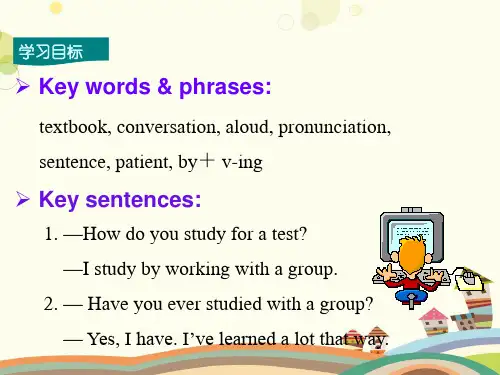
4. _c_ What about reading aloud to practice
pronunciation?
5. _a_ Have you ever studied with a group?
注意:never, ever一般置于助动词have/has 之后,过去分词之前。
现在完成时与一般过去时都和过去发 生的事情有关,但是现在完成时强调这 一动作与现在的关系,如对现在产生的 结果、影响等,而一般过去时只表示过 去的事实,不表示和现在的关系。
e.g. I have just been to London. I went there last month. 我刚去过伦敦,是上个月去的。 I have been to the science museum many times. I went there on our last summer vacation. 我已经去了科学博物馆很多次。 去年暑假我还去了呢。
Jack: Annie, I’m a little nervous. I have to finish reading a book and give a report next Monday.
Annie: That doesn’t sound too bad. Jack: But I’m a very slow reader. Annie: Just read quickly to get the main ideas.
by + v.-ing
常常表示手段、方式或方法,可以用来回答how引导的特殊疑问句。
九年级英语全册 Unit 1 How can we become good learners Section A(1a-2b)课件 (新版)人教新目标版
Section A 1a—2b
He’s a good Englis Nhomakorabea learner.
He studies English by reading aloud.
/
/
They study English by working with friends.
A: Have you ever studied with a group? B: I’ve learned a lot that way.
Questions
Answers
1._____ Do you learn English by watching videos?
2.____ Do you have conversations with friends in English? 3.____ What about listening to tapes?
What question is the teacher asking?
Questions
Answers
1._____ Do you learn English by watching videos?
2.____ Do you have conversations with friends in English? 3.____ What about listening to tapes?
4._____ What about reading aloud to practice pronunciation? 5.______ Have you ever studied with a group?
_____ _____ _____ _____ _____
人教版新目标九年级英语Unit1单元教案

Unit 1How can we become good learners?Section A (1a-2d)1.重点单词:textbook,conversation,aloud,pronunciation,sentence2.重点短语:make word cards,work with friends,ask the teacher for help,listen to tapes,speaking skills,word by word,be patient3.重点句式:How can we become good learners?—How do you study for a test?—I study by working with a group.What about reading aloud to practice pronunciation?It's too hard to understand spoken English.—Have you ever studied with a group?—Yes,I have.I've learned a lot that way.Try to guess a word's meaning by reading the sentences before and after it.You can become better by reading something you enjoy every day.The more you read,the faster you'll be.1.重点短语和句型2.How对方式进行提问及用by+doing回答How对方式进行提问及用by+doing 回答一、预习课本P1-2新单词并背诵,完成下面的汉译英。
1.课本____________ 2.交谈____________3.大声地____________ 4.发音(n.)____________5.句子____________ 6.有耐心的____________二、认真预习1a-2d找出下列短语和句型。
人教版英语九年级全册Unit1SectionA1a2c教学设计
2.教学目标:
-帮助学生巩固所学知识,形成长期记忆。
-培养学生的自我反思能力,激发他们继续学习的动力。
五、作业布置
为了巩固本章节的学习内容,确保学生对一般过去时态和目标词汇的掌握,以及听力技巧的提升,特布置以下作业:
1.语言实践作业:
-鼓励学生进行自我评估,设定个人学习目标,促进自主学习。
6.评价与反馈:
-采用形成性评价,关注学生的学习过程,及时给予反馈;
-鼓励学生参与评价,培养其自我反思和同伴评价的能力。
四、教学内容与过程
(一)导入新课
1.教学活动设计:
-利用多媒体展示一组成功人士的图片,如运动员、科学家、艺术家等,并配以他们各自的成就简介。
-如何引导学生通过合作学习,提高课堂参与度和互动性;
-如何运用有效的教学策略,帮助学生克服语言表达的障碍;
-如何设计多样化的课堂活动,以适应不同学生的学习风格和能力水平。
3.情感态度与价值观方面的重难点:
-培养学生积极向上的情感态度,学会真诚地祝贺和鼓励他人;
-增强学生的自我认知,使其认识到努力和付出对于个人成就的重要性;
在教学过程中,教师要关注学生的个体差异,给予每个学生充分的关注和指导,使他们在原有基础上得到提高。同时,注重激发学生的学习兴趣,使其在愉快的氛围中学习英语,提高综合语言运用能力。
二、学情分析
九年级的学生已经具备了一定的英语基础,他们在之前的课程中学习了基本的语法知识、词汇和日常会话。然而,在运用英语进行深层次的表达和听力理解方面,学生之间仍存在较大差异。在本章节的学习中,大部分学生能理解一般过去时态的概念,但在实际运用中仍需加强。此外,他们对如何恰当地表达祝贺和鼓励他人的情感表达还较为生疏。
人教版英语九年级全一册教案:Unit1SectionA(4a-4c)
Unit1 SectionA(4a-4c)教案【教材版本与册数】新目标人教版九年级全一册【单元名称】Unit 1 How can we become good learners?【课时】Section A (4a-4c)(第3课时)【课型】Grammar (语法课)【本课时教学设计】教材版本:新目标册数:第5册年级:九年级单元:Unit 1 课型(课时):Section A Section SA Grammar Focus语法教材分析【本单元话题】围绕学习本身,讲述了学习的障碍及对应的解决方法,对学生有重要意义。
【本单元重点掌握目标】用“by + 动词-ing形式”结构来表达方式方法。
【教材内容拆分分析】4a对本单元by doing形式结构的再次直接呈现,在内容上六个小问题分别对应语言学习中的听说读写四项技能以及词汇、语法两大基本语言知识;4b将学习的内容从Section A单一的英语学习拓展到了对其他学科学习方法上;4c要求学生总结自己的英语学习方法,同时调查,了解同伴的学习方法,旨在帮助学生相互交流、借鉴彼此的学习方法。
【综合技能】1 / 142 / 14附:教学活动设计3 / 14/physics/chemistry?Do you learn history and geographyby________?学习兴趣DE LC5 2 获Step2Pre-Task(5 mins)Step 3While-TFind the new words and phrases重复,重做________物理__________化学___________记忆,记住________练习做某事_____________做笔记______句子模式_____________Answers:重复,重做----repeat物理___physics化学---chemistry记忆,记住---memorize练习做某事---practice doing sth做笔记---- take notes句子模式----sentence patterns为本节课语法任务的完成扫除障碍。
英语人教新目标九年级全册Unit1 Section A 1a–2d PPT课件
3. __ What about listening to tapes? 4. __ What about reading aloud to practice pronunciation? 5. __ Have you ever studied with a group?
by speaking English with friends
How do you study English?
by reading English newspapers and magazines
1a Check (√ ) the ways you study English. Then add
an English club
They are talking about how to learn English / the best ways to learn English.
2a. Listen and check ( ) the questions you hear.
Questions 1. __ Does anyone learn English by watching videos?
A How to study for a test B Where to travel C How to make friends
1b Listen: How do these students study for a test?
Write letters from 1a above.
a. by working with friends.
He won’t like apples next year. Will he like apples next year? Yes , he will. No, he won’t.
人教新目标英语九年级全册 Unit 1 Section A (1a~2d) 复习练习题 含答案
Unit 1 Section A (1a~2d)一、根据句意及汉语或首字母提示完成单词1. Lily had a short ________(谈话)with her teacher.2. The girl is shy and she is afraid to have a(n) ________(交谈) with boys.3. Miss Lin asks us to read English ________(出声地). She says it's a great way to learn English.4. —How can I improve my p________?—You can listen to tapes and repeat(跟读) out every day.5. You should be p ________enough to look after such a baby.二、用括号内所给单词的适当形式填空。
1. We study by ________(watch) English-language videos.2. My brother wants to improve his ________(speak)skills.3. It will ________(probable)rain. Please take your raincoat with you.4. Bill,please take these English ________(textbook)to your teacher.5. Can you finish ________(read)these books before 10 o'clock?三、从方框中选择适当的介词填空to, by, with, for, in1. Why don't you talk about the film ________ your friends in English?2. We don't study English only ________ a test.3. You should listen ________ your teacher carefully.4. Is the newspaper ________ English?5. He studies English ________ watching TV.四、按要求完成下列句子,每空一词。