
人教版九年级英语unit 10 Section B 1a-1d
课前预习
What other table manners do you know in different countries?
Practice
1a How much do you know about table manners around the world? Take the following quiz. Circle T for true or F for false after each sentence.
课前预习
In the United States, you are not supposed to eat with your hands.
课前预习
In Japan, you are not supposed to eat or drink while walking down the street.
课前预习
What are the table manners in China?
课前预习
Table Manners
You are supposed to pick up your bowl of rice.
You’re not supposed to eat with youYou’re supposed to shake hands.
Section B(1a-1d)
课前预习
What are you supposed to do when you are invited to a party? For example, time, coat, present, greetings and so on.
2
1
3
Listening
1c Listen again. Match these sentence parts. ____ c 1. You’re not supposed to … a 2. It’s impolite ____ to … ____ b 3. You shouldn’t … a. stick your chopsticks into your food. b. point at anyone with your chopsticks. c. start eating first if there are older people at the table.
Describe the three pictures in 1b.
There is a bowl of rice on the table. Someone sticks a pair of chopsticks into the food.
There are three people in the picture. The young man eats first. The old man seems unhappy.
Table Manners
You are not supposed to stick your chopsticks into the food.
The youngest person is not supposed to start eating first.
课前预习
Table Manners
There are many table manners around the world, but different countries have different customs.
There are two children in the picture. They are talking. The girl is pointing at the boy with her chopsticks.
Listening
1b Listen and number the pictures in the order Yang Ming talk about them.
Practice
1d Talk about the table manners in your hometown.
A: We’re supposed to …
B: Yes, and it’s impolite to …
课前预习
In Japan, you are supposed to make noise while eating noodles. It shows that you like the food.
课前预习
In Korea, even the youngest person isn’t supposed to start eating first.
Mind your manners! 1. In India, you’re supposed to eat with T F your hands.
2. In China, you’re not supposed to stick your chopsticks into the food. 3. In Korea, the youngest person is expected to start eating first. 4. In France, you’re supposed to put your bread on the table. 5. In China, it’s impolite to use your chopsticks to hit an empty bowl. T F T F T F T F
秋九年级人教版英语上册课件:Unit 10 Section B 1a-1d(共19张PPT)

States, it doesn’t matter.
Yang Ming: Yeah, I know. It’s also
1. You’re not supposed to start eating first if there are older people at the table.
2. You shouldn’t point at anyone with your chopsticks. 3. It’s impolite to stick your chopsticks into your food. 4. It’s impolite to use your chopsticks to hit an empty
dinner table. Children are not allowed to
1d Talk about other table manners in your country.
A: We are supposed to… B: Yes, and it’s impolite to…
Talk about Chinese table manners in group of four and write down your opinions.
Steve: Oh, OK.
Yang Ming: Oh, and there’s one more
ttahlkinwgheynoyouu’nreeeeadtintgodkinnneorw. You’re not
Unit 10 Section B(1a-1d)九年级全册英语教学课件(人教版)
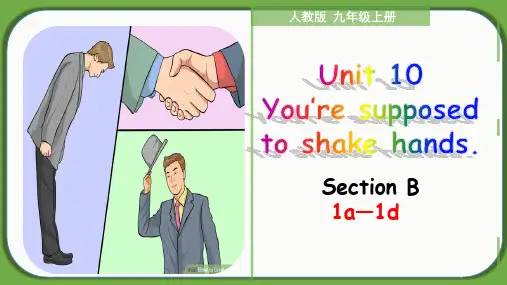
In Japan
You're (not) supposed to...
point at anyone with your chopsticks
start eating first if there are older people at the table
返回
What should we notice in a Western meal?
Chinese Table Manners
It’s rude to stick the chopsticks into the bowl. We’re not supposed to talk aloud at the table.
In China, it’s impolite to
use your chopsticks to hit an empty bow.
• make noise while eating 吃饭时发出声音
• stick the chopsticks into the food 把筷子插在食物里
• point at someone with the chopsticks 用筷子指着某人
• eat while walking down the street 在路上边走边吃
Section B 1a—1d
Let's enjoy a video.
How much do you know about table manners around the world? There are many table manners around the world. But different countries have different customs.
初中英语九年级 Unit 10 Section B (1a-1d)说课稿
初中英语九年级 Unit 10 Section B (1a-1d)说课稿一. 教材分析本文选自人教版初中英语九年级Unit 10 Section B (1a-1d)。
本节课主要讨论了关于环保的话题。
通过本节课的学习,学生能够掌握如何描述一种现象以及提出相应的建议。
文章内容贴近学生生活,有助于激发学生的学习兴趣,提高他们的环保意识。
二. 学情分析九年级的学生已经具备了一定的英语基础,能够听懂并运用一些基本的英语句型。
但是,对于一些复杂的句子结构和词汇,他们可能还需要进一步的引导和帮助。
此外,学生的学习兴趣和动机对于英语学习来说非常重要,因此在教学过程中,我将注重激发学生的学习兴趣,提高他们的环保意识。
三. 说教学目标1.知识目标:学生能够掌握有关环保的词汇和表达方式,如pollute、protect等;能够理解并运用目标句型描述一种现象并提出相应的建议。
2.能力目标:学生能够听懂、说出一篇关于环保的短文,提高他们的英语口语表达能力。
3.情感目标:通过本节课的学习,学生能够提高环保意识,树立环保观念。
四. 说教学重难点1.重点:学生能够掌握有关环保的词汇和表达方式,能够理解并运用目标句型描述一种现象并提出相应的建议。
2.难点:学生能够听懂、说出一篇关于环保的短文,提高他们的英语口语表达能力。
五. 说教学方法与手段1.交际式教学法:通过小组讨论、角色扮演等方式,让学生在实际语境中练习英语,提高他们的口语表达能力。
2.情境教学法:创设生活情境,让学生在真实的环境中学习英语,提高他们的学习兴趣。
3.任务型教学法:通过完成具体任务,让学生在实践中学习英语,提高他们的学习动机。
六. 说教学过程1.导入:通过展示一些环保的图片,引导学生谈论环保话题,激发他们的学习兴趣。
2.新课呈现:让学生听一篇关于环保的短文,并回答相关问题,帮助他们理解短文内容。
3.操练环节:学生分组进行角色扮演,模拟生活中的一些环保场景,练习英语口语。
人教版英语九年级全册Unit10SectionB1a1d说课稿
在教学过程中,我预见到可能出现的问题包括学生的参与度不高、对生词和语法点的理解不深刻、以及写作能力的差异。为应对这些问题,我会采用多样化的教学方法,如小组讨论、角色扮演和写作工作坊,以增加学生的参与度。对于生词和语法点的理解,我会通过例句和练习来加强巩固。针对写作能力差异,我会提供个性化的指导和支持。
1.利用多媒体展示一张充满奇幻色彩的童话故事图片,如城堡、公主、骑士等元素,引导学生观察并描述图片内容。
2.提出一个引人入胜的问题,如:“你们知道哪些童话故事?最喜欢的角色是谁?”让学生自由发言,分享自己的故事经历。
3.简要介绍本节课将要学习的故事《Once upon a time》,并告诉学生我们将一起探索这个奇妙的故事世界。通过这种方式,我能够快速吸引学生的注意力,激发他们对新课的兴趣。
2.角色扮演:学生分组,每组选择故事中的一个角色,进行角色扮演,以巩固对故事内容的理解。
3.故事续写:学生根据故事结尾的提示,尝试续写故事,锻炼他们的想象力和写作能力。
4.课堂讨论:组织学生就故事中的主题思想进行讨论,鼓励他们表达自己的观点。
(四)总结反馈
在总结反馈阶段,我会采取以下方式引导学生自我评价,并提供有效的反馈和建议:
人教版英语九年级全册Unit10SectionB1a1d说课稿
一、教材分析
(一)内容概述
本节课选自人教版英语九年级全册Unit10 Section B 1a-1d,主题为“Once upon a time”。本节课在课程体系中属于阅读与写作环节,旨在通过阅读一篇童话故事,帮助学生提高阅读理解能力,并激发学生的想象力和创作力。主要知识点包括:
课后,我将通过学生的作业、课堂表现和反馈来评估教学效果。具体的反思和改进措施包括:根据学生的反馈调整教学进度和方法,对理解困难的部分进行额外的讲解和练习,以及定期检查学生的学习成果,以确保教学目标的实现。
初中英语九年级 Unit 10 Section B (1a-1d)教学设计
初中英语九年级 Unit 10 Section B (1a-1d)教学设计一. 教材分析本课选自人教版英语九年级Unit 10 Section B (1a-1d)。
本节课主要讨论了关于保护环境的重要性以及人们应该采取的行动。
通过本节课的学习,学生能够更好地了解环境问题的严重性,提高他们的环保意识,培养他们保护环境的责任感。
二. 学情分析九年级的学生已经具备了一定的英语基础,能够理解和运用一些基本的英语句型和词汇。
但是,对于一些抽象的概念,如环保,可能还需要进一步的解释和引导。
此外,学生的学习兴趣和动机对于英语学习来说非常重要,因此,在教学过程中,需要充分激发学生的学习兴趣,提高他们的学习积极性。
三. 教学目标1.知识目标:学生能够掌握本节课的重点词汇和句型,如“protect theenvironment”,“take action”等,并能够运用它们进行简单的英语交流。
2.能力目标:通过本节课的学习,学生能够提高自己的英语听说读写能力,尤其是听力和口语表达能力。
3.情感目标:学生能够增强环保意识,认识到保护环境的重要性,并愿意为环保事业做出自己的贡献。
四. 教学重难点1.重点:本节课的重点是让学生掌握与环保相关的词汇和句型,并能够运用它们进行英语交流。
2.难点:对于一些抽象的概念,如环保,可能需要进一步的解释和引导,帮助学生更好地理解和运用。
五. 教学方法1.任务型教学法:通过设置一些实际的任务,让学生在完成任务的过程中学习和运用英语。
2.情境教学法:通过创设一些与环保相关的情境,让学生在真实的语境中学习和运用英语。
3.小组合作学习:通过小组合作的形式,让学生相互交流和合作,提高他们的学习效果。
六. 教学准备1.教学材料:教材、多媒体课件、录音机、磁带等。
2.教学环境:教室、黑板、投影仪等。
七. 教学过程1.导入(5分钟)通过一些与环境相关的问题,如“你们认为环保重要吗?为什么?”等,引导学生思考环保的重要性,激发他们的学习兴趣。
人教版英语九年级全一册教案:Unit10SectionB(1a-1d)(word版)

【教材版本与册数】 新目标人教版九年级下册UnitlOSectionB (1a-1d)教案Unit10You ’ resupposedto shakehands.【课时】SectionB(la-ld)第4课时) 【课型】Listeningandspeakingf 说课)【本课时话题】餐桌礼仪 【本课时重点掌握目标】1、能够通过听,学习与餐桌礼仪有关的词汇及表达;2、能够运用SectionA 的目标语言(be supposedt 碟论习俗和应该怎么做【本课时教材内容分析】教材分析 个任务,任务一:学习和理解更多有关习俗的短语;任务二:丰富和延伸SectionA 的语言表达。
活动1a 让学生阅读不同本课时在国家的餐桌礼仪描述,根据已有的知识进行判断,为下面的听说活动做铺垫。
活动1b-1c 通过文本的听力训练完成相应的 任务, 1d 部分进一步巩固有关餐桌礼仪的句型和对话。
【通过本课时的学习学生需掌握哪些综合技能】 通过本课时的学习,学生通过听力,能够理解更多关于习俗的短语,丰 富习俗的语言表达。
语言创编能够提高学生 展, 主要 介绍不同国家的餐 桌礼仪。
1a-1d 部分包含两SectionA的基础上 对礼仪习 俗有所拓【本课时教学设计】Step3While-listening (14 min) 1. Steve is going to China to stu (Hys friend 馅ngMing is telling him about the table manners inChinaJsten and numberthe picturesin the order youhearthem.(p77.2b)Answer: 2 1 32. Listen again. Match these sentence)arts._1. Y)u're not supposed to ...2. It's impolite to..._3. Y)u shouldn t ...A. stick your chopsticksinto your food.B. point at anyonewith your chopsticks.C. start eatingfirst if there are older people at thetable.Check the answersC A B3. Listen again and fill in the blanks.A. you're not supposed to start eatinfirstB. Children are not allowedto speak听力任务从易到难,分为排序、匹配、选择填空。
最新人教版九年级上册英语课件Unit 10 Section B(1a-1d)
Exercises
一、用所给词的正确形式填空
1. It’s i_m__p_o_li_te__(polite) to speak loudly in public.
expected to start eating first. T F
4. In France, you’re supposed to put
your bread on the table.
TF
5. In China, it’s impolite to use your
chopsticks to hit an empty bowl. T F
In Japan 1. It’s polite to make noise while eating noodles, it
means the food is very delicious. 2. You’re supposed to pick up the bowl.
In China 1. You’re not supposed to stick your chopsticks into the food 2. It’s impolite to use your chopsticks to hit an empty bowl.
country. A: We are supposed to… B: Yes, and it’s impolite to…
Talk about Chinese table manners in group of four and write down your opinions.
人教版英语九年级全册Unit10SectionB1a1d说课稿
四、教学过程设计
(一)导入新课
为了快速吸引学生的注意力和兴趣,我采用以下方式进行新课导入:
1.情境创设:播放一段关于地球环境现状的视频,让学生直观地感受到环保问题的紧迫性,引发他们对本节课主题的兴趣。
2.问题引导:提出与环保相关的问题,如:“What is the most serious environmental problem in your city?” “What can we do to protect the Earth?”让学生思考并展开讨论。
2.教学难点
(1)正确运用一般将来时描述环境问题的解决方案。
(2)在小组讨论中,运用所学知识分析并解决现实生活中的环保问题。
(3)培养学生的环保意识和团队合作精神,激发学习兴趣。
二、学情分析导
(一)学生特点
本节课面向的是九年级学生,他们的年龄大约在15至16岁之间。这个年龄段的学生正处于青春期,精力充沛,好奇心强,具备一定的独立思考能力和批判性思维。在认知水平上,他们已经掌握了英语的基础知识,能够进行简单的听、说、读、写活动。此外,他们对社会热点问题有一定的关注,学习兴趣主要集中在与生活实际相关的主题上。
2.设计富有挑战性的任务,引导学生主动探究、合作交流,提高他们的学习积极性。
3.利用多媒体教学手段,如视频、图片等,生动形象地展示环保问题,引发学生的思考。
4.开展小组竞赛活动,激发学生的竞争意识和团队合作精神。
5.及时给予学生鼓励和反馈,增强他们的自信心,提高学习动力。
三、教学方法与手段
(一)教学策略
3.教师评价:教师针对学生的课堂表现、作业完成情况等,给予针对性的评价和建议。
人教版英语九年级全册Unit10 SectionB(1a-1d)优质课教案
Unit10 SectionB〔1a-1d〕优质课教案石河子第十九中学鲜静一、Teaching Aims:1. Language Goals:1) Words: greet, relaxed, value, drop by, capital, after all, noon, get mad, make an effort2) Sentences:A: What are you supposed to do when you meet someone for the first time?B: You are supposed to shake hands.S1: What are the other Chinese table manners?S2: We are supposed to eat after the old people.S3: We are not supposed to put elbows on the table.S4: We are not supposed to talk aloud at the dinner table.2. Ability Goals:Use “be supposed to do〞to make sentences.3. Moral Goals:Help students know the different customs in different countries. We should know when in Rome, do as the Romans do.二、Teaching important & difficult points1. Teaching important points: Words and sentences2. Teaching difficult points:Use “be supposed to do〞to make sentences to express the different customs in different countries.三、Teaching Aids PPT, pictures四、Teaching MethodsCommunicative teaching method; Listening, speaking, reading, writing methods.五、Teaching ProceduresⅠ. Lead-in1. Watch a short movieT: Hello, everyone! We know different countries have different customs. But how do we display impeccable manners? Let’s see a movie about how to behave good manners. How do you feelafter watching the movie?2. After watching movie, Ss try to answer the questions.Ⅱ. Presentation1. See teaching objectsTo learn the table manners around the world.To read, listen and speak how you are supposed to behave at dinner tables in China.2. Students look at pictures and say different customs in different countries by using “be supposed to do〞to make sentences.3. Ask students to turn to P77 to finish 1a and check the answers.4. Ask students about Chinese table manners:After seeing the pictures and say Chinese table manners.Summarize Chinese table manners.Ⅲ. Listening1. T: Steve is going to China to study. His friend Yang Ming is telling him about table manners in China. Now listen and number the pictures in the order you hear them.2. Play the recording twice. Students number the pictures and match sentences parts.3. Play the recording again. Check the answers with the Ss.Ⅳ. Group workAsk student to make conversations.E.g.S1: What are the other Chinese table manners?S2: We are supposed to eat after the old people.S3: We are not supposed to put elbows on the table.S4: We are not supposed to talk aloud at the dinner table.Give students two minutes to make their conversations and perform their conversations.Ⅴ. Writing1. Ask students to summarize the phrases about Chinese table manners.2. Let some Ss read the information about writing and ask them to use sentence.3. Ss try to write a composition about Chinese table manners by using information in the chart. (Give students five minutes to write their compositions)4. Invite some students to read their compositions and check if there are mistakes. Ⅵ. SummaryAsk students to summarize the key phrases.Ⅶ. Homework:1. Find the differences about the table manners between France and China.2. Write a composition about Chinese table manners.。
Unit10SectionB1a-1d课件人教版英语九年级全册
A. pick up it
B. picking up it
C. pick it up
D. look for it
代词放中间,名词放两边
用词的适当形式填空 to kiss
1.You are not supposed _____________(kiss) when you meet each other. 2.He feels ______r_e_l_a_x_e_d_(relax) when he is working on the beach. 3.The ring in the shop is very _____v_a_l_u_a_b_le__(value). 4.Don't get mad when the children make ___m__is_t_a_k_e_s___(mistake),You
We are not supposed to _______________
We are supposed to eat with _____in China, but in India____
It is ______ to hit an empty bowl in China
3a
How much do you know about table manners around the world? Take the following quiz. Circle T for true or F for false after each sentence.
3a 1. In India, you’re supposed to eat with your hands.
TF 2. In China, you’re not supposed to stick your chopsticks into