
外研版2012新版七年级上Starter M2 Unit 1
外研版七年级上册词汇表(音标、打印)
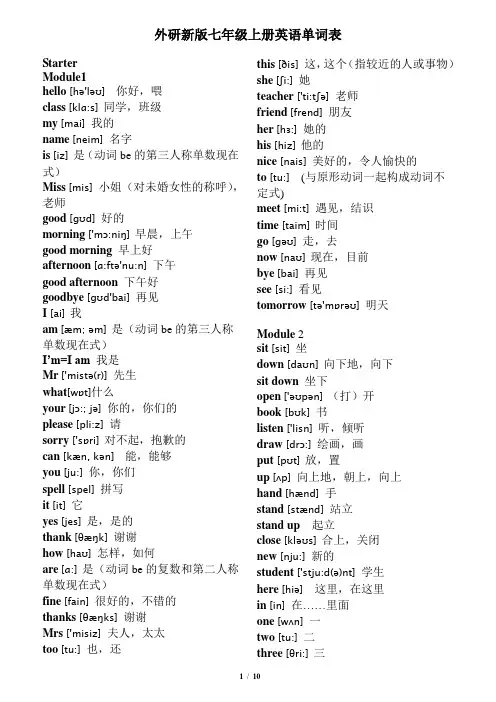
外研新版七年级上册英语单词表StarterModule1hello [hə'ləʊ] 你好,喂class [klɑ:s] 同学,班级my [mai]我的name [neim]名字is [iz] 是(动词be的第三人称单数现在式)Miss [mis]小姐(对未婚女性的称呼),老师good [gʊd]好的morning ['mɔ:niŋ] 早晨,上午good morning 早上好afternoon [ɑ:ftə'nu:n]下午good afternoon 下午好goodbye [gʊd'bai]再见I [ai] 我am [æm; əm] 是(动词be的第三人称单数现在式)I’m=I am 我是Mr ['mistə(r)]先生what[wɒt]什么your [jɔ:; jə]你的,你们的please [pli:z]请sorry ['sɒri] 对不起,抱歉的can [kæn, kən] 能,能够you [ju:]你,你们spell [spel]拼写it [it]它yes [jes] 是,是的thank [θæŋk]谢谢how [haʊ]怎样,如何are [ɑ:] 是(动词be的复数和第二人称单数现在式)fine [fain]很好的,不错的thanks[θæŋks]谢谢Mrs ['misiz]夫人,太太too [tu:]也,还this [ðis]这,这个(指较近的人或事物)she [ʃi:]她teacher ['ti:tʃə]老师friend [frend]朋友her [hɜ:]她的his [hiz] 他的nice [nais]美好的,令人愉快的to [tu:](与原形动词一起构成动词不定式)meet [mi:t]遇见,结识time [taim] 时间go [gəʊ]走,去now [naʊ] 现在,目前bye [bai]再见see [si:]看见tomorrow [tə'mɒrəʊ]明天Module 2sit [sit]坐down [daʊn] 向下地,向下sit down 坐下open ['əʊpən] (打)开book [bʊk]书listen ['lisn]听,倾听draw [drɔ:]绘画,画put [pʊt] 放,置up [ʌp]向上地,朝上,向上hand [hænd]手stand [stænd]站立stand up 起立close [kləʊs] 合上,关闭new [nju:]新的student ['stju:d(ə)nt]学生here [hiə]这里,在这里in [in]在……里面one [wʌn]一two [tu:]二three[θri:] 三four [fɔ:] 四five [faiv]五six [siks] 六seven ['sevən] 七eight [eit] 八nine [nain] 九ten [ten] 十telephone ['telifəʊn] 电话number ['nʌmbə]号码old [əʊld]……年龄的,…..岁的how old 多大,几岁twelve [twelv]十二eleven [i'lev(ə)n]十一thirteen[,θɜ:'ti:n]十三fourteen [,fɔ:'ti:n]十四fifteen [,fifti:n] 十五sixteen [,siks'ti:n] 十六seventeen [,sevən'ti:n]十七eighteen [,ei'ti:n]十八nineteen [,nain'ti:n]十九twenty ['twenti]二十boy [bɔi]男孩girl [gɜ:l]女孩desk [desk] 桌子chair [tʃeə]椅子bag [bæg]包,书包Module 3in [in]使用(使用某种语言)English ['iŋgl iʃ]英语,来自英格兰的in English 用英语a [ə; ei]一(个,件……)write [rait]写on [ɒn]在…..上the [ðə; ði:](指已经谈到或正在谈的事物)blackboard ['blæk,bɔ:d] 黑板OK [,əʊ'kei]行,好(用于表示同意,赞成或理解)pen [pen]笔,钢笔no [nəʊ] 不,不是,没有(用于表示否定的回答)pencil ['pens(ə)l; -sil]铅笔do [du:](用于构成疑问句和否定句)bird [bɜ:d] 鸟cat [kæt]猫dog [ dɒg]狗flower ['flaʊə] 花help [help] 帮助me [mi:](宾格)我of [ɒv; əv]…..的course [kɔ:s] 当然of course 是的,当然classroom ['klɑ:sru:m] 教室know [nəʊ] 知道,懂得say [sei] 说,讲that [ðæt]那,那个(指较远的人或事物)again [ə'gen; ə'gein] 再(次),又(一次)welcome ['welkəm]受欢迎的,欢迎(迎接某人到某地的时的用语)You’re welcome 不用谢,别客气black [blæk] 黑色的blue [blu:]蓝色的green [gri:n]绿色的yellow ['jeləʊ] 黄色的red [red] 红色的brown [braʊn] 棕色的orange ['ɒrin(d)ʒ] 橘黄色的,柑橘,橙colour ['kʌlə] 颜色and [ænd] 和,与Module 4day [dei]一天today [tə'dei]今天Monday ['mʌndei]星期一Tuesday ['tju:zdei; -di]星期二Wednesday ['wenzdei; -di] 星期三Thursday['θɜ:zdei; -di]星期四Friday ['fraidei; -di] 星期五Saturday ['sætədei; -di]星期六Sunday ['sʌndei; -di]星期天birthday ['bɜ:θde i]生日favourite ['feiv(ə)rit]最喜爱的spring [spriŋ] 春天summer ['sʌmə]夏天autumn ['ɔ:təm]秋天winter ['wintə]冬天warm [wɔ:m] 暖和的,温暖的hot [hɒt]热的cool[ku:l] 凉快的cold [kəʊld]冷的weather ['weðə]天气like [laik] 如同,像London ['lʌndən]伦敦basketball ['bɑ:skit,bɔ:l]篮球football ['fʊtbɔ:l]足球swimming ['swimiŋ]游泳table tennis ['teibl ,tenis]乒乓球sport [spɔ:t] 运动let [let] 让,使us [ʌs] (宾格)我们let’s = let us 让我们play [plei]参加(体育运动或球赛),玩耍after ['ɑ:ftə] 在…….后school [sku:l]学校idea [ai'diə]想法,主意Module 1Chinese [,tʃai'ni:z] n.中国人;汉语adj.中国的;中国人的from [frɒm; frəm]prep从……来,来自where [weə] adv 在哪里,去哪里year [jɜ:, jiə] n.年龄;年about [ə'baʊt] prep大约What about 怎么样Ms [miz] 女士America [ə'merikə]美国;美洲not [nɒt] 不,不是,没有England ['iŋglənd]英格兰hi [hai] 嘿、喂American [ə'merikən] n.美国人;美洲人adj.美国的;美国人的;美洲的our [aʊə] pron.我们的grade [greid] n.年级he [hi:] pron.他China ['tʃainə]中国everyone ['evriwʌn] pron. 大家;每人capital ['kæpit(ə)l] n.首都;省会but [bʌt; bət] conj.但是,然而very ['veri] adv.很;非常big [big] adj.大的city ['siti] n.城市small [smɔ:l] adj.小的first [fɜ:st] adj.第一(位)的,首要的adv.先;首先first name 名字last [lɑ:st] adj 最后的;最末的last name 姓all [ɔ:l] pron 每个;全体Module 2aunt [ɑ:nt, ænt] n. 姨母;伯母;婶母;舅母;姑母brother ['brʌðə]n兄弟cousin ['kʌzən]n.堂兄弟;表兄弟;堂姐妹;表姐妹daughter ['dɔ:tə] n.女儿family ['fæmili; -m(ə)l-] n.家,家庭father ['fɑ:ðə] n.父亲爸爸grandfather ['g rænd,fɑ:ðə]n.(外)祖父grandmother ['g rænd,mʌðə]n.(外)祖母grandparents ['g rænd,peərənt]n(外)祖父母mother ['mʌðə]n.母亲,妈妈parent ['peərənt]n.母亲,父亲sister ['sistə]n. 姐;妹son [sʌn] n.儿子uncle ['ʌŋkl] n.叔叔;伯伯;舅舅;姑父;姨夫photo ['fəʊtəʊ]n.照片;相片these [ði:z] pron. 这些they [ðei] pron. 他们,她们吗,它们mum [mʌm] n. 妈妈left [left] n左边左侧adj. 左边的;左侧的on the left 在左边,在左侧dad [dæd] n 爸爸right [rait]n 右边,右侧adj. 右边的,右侧的on the right 在右边;在右侧who [hu:; hʊ] pron. 谁woman ['wʊmən] (pl. women ['wimin])n. 成年女子;妇女next [nekst] adj. 紧挨着,紧靠着adv紧接下来地,下一步next to 在……旁边,紧挨着husband ['hʌzbənd] n 丈夫front [frʌnt]n 前面;正面in front of 在……前面those [ðəʊz] pron. 这些bus [bʌs] n 公共汽车station ['steiʃ(ə)n] n,站;车站hospital ['hɒspit(ə)l] n.医院hotel [həʊ'tel]n. 饭店;宾馆police [pə'li:s] n.警察theatre ['θiətə]n 剧院actor ['æktə] n.(男)演员driver ['draivə] n.司机,驾驶员manager ['mænidʒə]n.经理nurse [nɜ:s] n. 护士policeman [pə'li:smən]n.男警察we [wi:] pron. 我们an [æn; ən]art. 一个job [dʒɒb] n. 工作at [æt; ət] prep.在……;在……里same [seim]adj. 相同的,同一的doctor ['dɒktə] n. 医生farm [fɑ:m] n.农场worker ['wɜ:kə] n.工人man [mæn]n. 男人shop [ʃɒp] n.. 商店its [its] pron. 它的their [ðeə]pron. 他们的,她们的,它们的Module 3computer [kəm'pju:tə] n. 计算机;电脑furniture ['fɜ:nitʃə] n. 家具map [mæp]n. 地图picture ['piktʃə] n. 图片;相片television ['teliviʒ(ə)n] n.电视;电视机wall [wɔ:l]n.墙thirty ['θɜ:ti] num 三十forty ['fɔ:ti] num 四十fifty ['fifti]num 五十sixty ['siksti] num 六十seventy ['sev(ə)nti] num 七十eighty ['eiti]num 八十ninety ['nainti] numreally ['riəli] num九十many ['meni] adj. 许多,很多how many 多少there [ðeə; ðə] pron.(用于引导句子的主语)lot [lɒt] n.大量;许多a lot of 大量;许多oh [əʊ] int. 唉,嗷any ['eni]adj. 任何一个;一些world [wɜ:ld]n.世界tree [tri:] n. 树(木)building ['bildiŋ]n.建筑物hall [hɔ:l]n. 大厅;会堂dining hall n. 饭厅,饭堂gate [geit]n. 大门library ['laibrəri; -bri] n.图书馆office ['ɒfis] n. 办公室playground ['pleigraʊnd]n.操场science ['saiəns]n.科学;科学课lab [læb] n.实验室behind [bi'haind]prep 在……后面between [bi'twi:n]prep 在……之间middle ['mid(ə)l] n.中间;之间near [niə]prep 靠近;接近with [wið] prep.与……在一起;和;具有(品质、特征)for [fɔ:; fə] prep 为,为了room [ru:m; rʊm]n.房间;室;屋子Module 4food [fu:d]n.. 食物drink [driŋk] n. 饮料、饮品candy ['kændi] n. 糖果fruit [fru:t] n. 水果meat [mi:t] 肉vegetable ['vedʒtəbl]n. 蔬菜apple ['æpl]n. 苹果bean [bi:n] n. 豆beef [bi:f] n. 牛肉carrot ['kærət] n. 胡萝卜chicken ['tʃikin] n.. 鸡肉chocolate ['tʃɒk(ə)lət] n.巧克力coffee ['kɒfi]n. 咖啡cola ['kəʊlə]n. 可乐juice [dʒu:s] n. 果汁milk [milk] n. 牛奶potato [pə'teitəʊ]n.马铃薯,土豆tea [ti:] n.茶tomato [tə'mɑ:təʊ] n. 西红柿,番茄water ['wɔ:tə] n.水shop [ʃɒp]v. 逛商店;购物go shopping 去买东西,去购物have [hæv] v.aux(助动词)有;吃,喝get [get] v. 得到have got 有;拥有some [sʌm; s(ə)m] adj.若干,一些;少量的一些,某些much [mʌtʃ] adj.许多的,大量的too much 太多kind [kaind] n. 种类lots of 大量;许多so [səʊ] conj. 因此;所以how about (征求意见)……好么?……行吗?has [hæz] (have的第三人称单数现在式)bad [bæd] adj.坏的;不好的healthy ['helθi] adj.健康的delicious [di'liʃəs]adj.美味的bread [bred] n. 面包fish [fiʃ] n. 鱼肉;鱼hamburger ['hæmbɜ:gə] n. 汉堡包ice cream [,ais'kri:m] n. 冰激凌noodle ['nu:d(ə)l]n. 面条rice [rais] n. 米;米饭sugar ['ʃʊgə] n. 糖children ['tʃildrən] n.(14岁以下的)小孩,儿童be good for 对……有帮助sweet [swi:t]adj. 甜的be bad for 对……有害的right [rait] adj. 正确的,对的egg [eg]n. 蛋,鸡蛋eye [ai]n. 眼睛cheese [tʃi:z]n. 奶酪tooth [tu:θ](pl. teeth[ti:θ])n. 牙齿bit [bit] n.一点;少许a bit 稍微;有点儿tired [taiəd] adj. 劳累的soup [su:p] n. 汤important [im'pɔ:t(ə)nt] adj. 重要的remember [ri'membə]v. 记住;记起well [wel] adv. 好地stay [stei] v. 保持;停留fat [fæt] adj. 肥胖的get fat 发胖or [ɔ:] conj.或者breakfast ['brekfəst] n. 早饭lunch [lʌntʃ] n. 午饭home [həʊm] n. 家;家庭dinner ['dinə] n. 晚饭;正餐banana [bə'nɑ:nə]n. 香蕉buy [bai] v. 买Module 5half [hɑ:f] 一半past [pɑ:st]晚于,过(几点)o’clock [ə'klɒk] ……点钟to [ tu:] (距整点时间)差……art [ɑ:t] 美术;艺术geography [dʒi'ɒgrəfi]地理history ['hist(ə)ri] 历史IT [,ai'ti:]信息技术maths [mæθs]数学PE [,p i:'i:]体育;体育课lesson ['lesən](一节课)then [ðen]接着,然后like [laik]喜欢;喜爱difficult['difik(ə)lt]困难的,难懂的love [lʌv]爱;热爱subject ['sʌbdʒikt]科目because [bi'kɒz]因为interesting ['intrəstiŋ]有趣的talk [tɔ:k] 谈话,说话begin [bi'gin] 开始when [wen] 什么时候,何时go to school 上学weekday ['wi:kdei]工作日get up 起床have breakfast 吃早餐house [haʊs]房子;住宅start [stɑ:t]开始work [wɜ:k]学习;工作学习工作break [breik](课间)休息have lunch 吃饭;吃晚餐go home 回家evening ['i:v(ə)niŋ]晚上watch [wɒtʃ]看,观看have dinner 吃饭;吃晚餐do [du:] 做;干homework ['həʊmwɜ:k]家庭作业bed [bed]床go to bed 上床睡觉sleep [sli:p]n.睡觉v.睡觉go to sleep 开始睡觉;入睡park [pɑ:k]公园busy ['bizi] 忙的繁忙的wash [wɒʃ] 洗;洗涤face [feis] 脸minute ['minit] 分钟Revision module Agrandma ['ɡrændmɑ:] (外)祖母grandpa ['ɡrændpɑ:] (外)祖父him [him] (宾格)他want [wɒnt]想要;需要make [meik]做、制作kitchen ['kitʃin; -tʃən]厨房farmer ['fɑ:mə] 农民week [wi:k] 星期read [ri:d]阅读;看懂story ['stɔ:ri] 故事live [liv]生活;住Module6bear[beə]熊elephant ['elif(ə)nt] 大象giraffe [dʒi'rɑ:f] 长颈鹿lion ['laiən]狮子monkey ['mʌŋk i] 猴子panda ['pændə]熊猫tiger ['taigə] 老虎zebra ['zi:brə; 'zebrə]斑马zoo [zu:] 动物园guide [gaid] 导游animal ['æniml]动物such [sʌtʃ]这样的如此的as [æz] 像…一样such as 比如come [kʌm] 来come from 来自different ['difrənt]不同的country ['kʌntri] 国家other ['ʌðə] 其他的dangerous ['deindʒərəs] 危险的ugh [ʊg] 啊,哎呀also ['ɔ:lsəʊ]也、而且plant [plɑ:nt]植物look [lʊk] 看,瞧look at 看tall [tɔ:l] 高的leave [li:v] 叶子sure [ʃʊə] 的确、当然bamboo [bæm'bu:]竹子cute [kju:t] 可爱的shall [ʃæl; ʃel] ……好吗?要不要……?them [ðem; ðəm] (宾格)他们、她们、它们which [witʃ] 哪一个over ['əʊvə] 在……的上方there [ðeə; ðə] 在那里、往那里over there 在那边、在那里funny ['fʌni] 有趣的call [kɔ:l] ……叫做;称呼……为Africa ['æfrikə)] 非洲Asia ['eiʃə] 亚洲Europe ['jʊərəp] 欧洲little ['litl] 极少量的a little 少量only ['əʊnli] 仅仅、只about [ə'baʊt] 大约,大致kilo ['ki:ləʊ] 千克、公斤people ['pi:pl] 人、人们all over the world 全世界Africa ['æfrikən] 非洲的,非洲人as well as 并且,还grass [grɑ:s, græs] 草large [lɑ:dʒ]大的、巨大的usually ['ju:ʒuəli] 通常alone [ə'ləʊn] 独自地be good at 擅长strong [strɒŋ] 强壮的、强大的;强烈的catch [kætʃ] 抓住、接住many kinds of 许多种类even ['i:vən] 甚至Module7keyboard ['ki:,bɔ:d] 键盘mouse [maʊs] 鼠标;老鼠screen [skri:n] 屏幕connect [kə'nekt] 连接turn [tɜ:n]转动turn on 打开learn [lɜ:n]学;学习document ['dɒkjʊmənt] 文件click [klik]点击use [ju:z] 使用save [seiv] 保存;储存box [bɒks] 框;盒子finally ['fainəli]最后print [print] 打印paper ['peipə]纸share [ʃeə] 共用、分享Australia [ɒs'treiliə] 澳大利亚company ['kʌmpəni]公司;剧团often ['ɒfən] 经常customer ['kʌstəmə]顾客internet ['intənet] 因特网check [tʃek]检查、查看train [trein] 火车travel ['trævl]旅行plan [plæn]n计划v计划;打算ticket ['tikit]票music ['mju:zik] 音乐movie ['mu:vi] 电影night [nait]夜晚search [sɜ:tʃ]搜寻;搜索;查找information [infə'meiʃn] 信息email ['i:meil] 电子邮件send [send]发送game [geim] 游戏sometimes ['sʌmtaimz] 有时候;不时cinema ['sinimə] 电影院clothes [kləʊðz]衣服(总称)visit ['vizit]探望;参观holiday ['hɒlidei]假日;节日Module8card [kɑ:d]卡片party ['pɑ:ti]晚会;聚会present ['preznt]礼物would [wʊd]肯,会;愿意always ['ɔ:lweiz] 总是;一直great [greit]太好了;巨大的;超乎寻常的cake [keik]蛋糕never ['nevə]从不special ['speʃl]特别的,特殊的cut [kʌt]切;剪give [giv]给,送sing[siŋ]唱,唱歌happy['hæpi] 高兴的,幸福的secret ['si:krit]秘密ha ha [hɑ:'hɑ:] 哈哈(表笑声)CD [,s i:'di:]激光唱片;光盘concert ['kɒnsət] 音乐会magazine [,mægə'zi:n]杂志scarf [skɑ:f] 围巾silk [silk] 丝绸dress [dres]连衣裙;礼服T-shirt ['ti:,ʃɜ:t] 恤衫choose [tʃu:z]选择;挑选exercise ['eksə,saiz] 锻炼;练习wear [weə] 穿;戴expensive [ik'spensiv]昂贵的shoe [ʃu:]鞋,鞋子spend [spend] 花(钱);花费money ['mʌni]钱;金钱film [film]电影song [sɒŋ]歌曲match [mætʃ](尤指体育方面的)比赛、竞赛weekend [,wi:k'end] 周末at weekends 在周末dear [diə](用于信开头某人的名字前)亲爱的hear [hiə]听见hear from 收到……的来信afraid [ə'freid]担心的害怕的I’m afraid 恐怕(用于礼貌地拒绝)can’t=cannot 不能Module9postcard ['pəʊstkɑ:d]明信片call [kɔ:l](给……)打电话lie [lai]躺;平躺sun [sʌn]太阳line [lain]行、排、列take [teik]拿、,取;花费(时间)take photos 拍照wait [weit]等待,等候wait for 等待,等候walk [wɔ:k]行走,不行trip [trip]旅行few [fju:]一些、几个、很少(的)a few 一些、几个sale [seil]卖、出卖on sale 正在出售enjoy [in'dʒɔi]享受…的乐趣喜爱anyway ['eniwei]尽管如此;无论如何back [bæk]向后;回到;返回go back 回去drive [draiv]驾驶;驾车off [ɒf] prep下(飞机、火车、公共汽车等)get off 下(飞机、火车、公共汽车等)hot dog热狗(一种中间夹香肠的三明治)leave [li:v]离开restaurant ['resətrɒnt]饭店;餐馆moment ['məʊmənt] (某事发生的)的时刻,时候place [pleis]地点thing[θiŋ] 事情、东西most [məʊst] 大部分(的);大多数(的)still [stil]仍然;依旧star [stɑ:] 明星;星;星状物run [rʌn] 跑,奔跑study ['stʌdi]学习;研究Module10lantern ['læntən] 灯笼dragon ['dræɡən]龙dance [dɑ:ns] n舞蹈v跳舞clean [kli:n] v打扫adj.清洁的;干净的sweep [swi:p]打扫;清扫floor [flɔ:] 地板cook [kʊk] 烹调;煮;烧meal [mi:l] 一餐;一顿饭speak [spi:k]说话,讲话happen ['hæpən] 发生ready ['redi]有准备的;准备好的get ready for 为…做好准备festival ['festivl] 节日quite [kwait]十分;相当at the moment 此刻,目前beautiful ['bju:təfl]漂亮的,美丽的at work 在工作away [ə'wei] 在安全的地方;在通常存放的地方put away 收起;收拾好hard [hɑ:d] adv. 努力地adj.艰难的;困难的join [dʒɔin] 参加;加入hurry ['hʌri] 赶快;匆忙hurry up 赶快Christmas ['krisməs]圣诞节February ['febrʊəri]二月January ['dʒænjʊəri] 一月before [bi'fɔ:]在…之前sweep away 扫去luck [lʌk]运气table ['teib(ə)l]桌子celebrate ['seli,breit] 庆祝traditional [trə'diʃnəl] 传统的dumpling ['dʌmpliŋ] 饺子;团子programme ['prəʊgræm]节目sweater ['swetə] 厚运动衫;毛线衣coat [kəʊt] 外套mean [mi:n] 意思是;意味着lucky ['lʌki] 幸运的merry ['meri] 愉快的;高兴的Merry Christmas 圣诞快乐tell [tel]讲;告诉Revision module Bthink[θiŋk] 想,认为。
外研社2012版英语新标准七年级上册Starter Modules 1 ~ 4(洲泉中学2012学年第一学期课时作业(二))
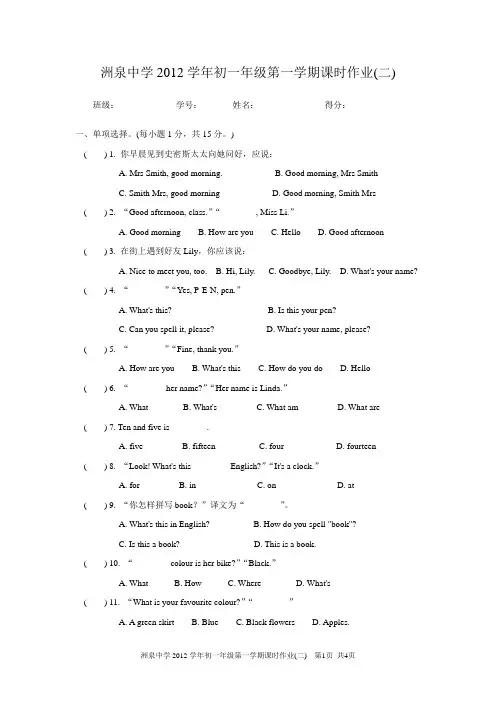
洲泉中学2012学年初一年级第一学期课时作业(二)班级:_____________学号:_______姓名:_______________得分:____________ 一、单项选择。
(每小题1分,共15分。
)( ) 1. 你早晨见到史密斯太太向她问好,应说:________A. Mrs Smith, good morning.B. Good morning, Mrs SmithC. Smith Mrs, good morningD. Good morning, Smith Mrs( ) 2. “Good afternoon, class.”“________, Miss Li.”A. Good morningB. How are youC. HelloD. Good afternoon( ) 3. 在街上遇到好友Lily,你应该说:________A. Nice to meet you, too.B. Hi, Lily.C. Goodbye, Lily.D. What's your name? ( ) 4. “________”“Y es, P-E-N, pen.”A. What's this?B. Is this your pen?C. Can you spell it, please?D. What's your name, please?( ) 5. “________”“Fine, thank you.”A. How are youB. What's thisC. How do you doD. Hello( ) 6. “________ her name?”“Her name is Linda.”A. WhatB. What'sC. What amD. What are( ) 7. Ten and five is ________.A. fiveB. fifteenC. fourD. fourteen( ) 8. “Look! What's this ________ English?”“It's a clock.”A. forB. inC. onD. at( ) 9. “你怎样拼写book?”译文为“________”。
初中英语外研版七年级上册《Starter Module 2Unit 1》课件
9. [hau] 10. [fain] 11. [nais] 12. [gəu] 13. [nau] 14. [bai] 15. [si:] 16. [tə'mɔ:rəu]
1. [sit] sit
8. [ʌp]
2. [daun] down 9. [hæ nd]
3. ['əupən] open 10. [stæ nd] 4. [buk] book 11. [kləuz] 5. ['lisn] listen 6. [drɔ:] draw
[hæ nd ]
Stand up
[stæ nd]
Close your book
[kləuz]
Let’s say and do
Sit down
Listen
Open your book
Draw
Put up your hand
Stand up
Close your book
1.Put up… 2.Open… 3.Stand…
4.Sit…
a)…your book b) …down. c)…up
d)…your hand
5 Write
1 Close your b ook
2 Liste.n 3 Open your book
4 Put your hand up 5 Sit dow.n 6 Stand u p
五、 写出下列单词的中文。 1 这 this 2 她 she 3 老师 teacher. 4 朋友 friend 5 她的 her 6 他的 his . 7 令人愉快的 nice 8 遇见meet . 9 时间 time 10 去 go 11 现在now. 12 再见 bye 13 看见 see .
外研版七年级上册预备模块Starter Module 1讲义(无答案)

Starter Module 1 My teacher and my friendsUnit 1 Good morning ,Miss Zhou.Step 1 Listen and readStep 2 Language points1. hello/hə'ləʊ/ int.你好 ,喂eg:—Hello ,Tom!你好 ,汤姆!—Hello ,Mary!你好 ,玛丽!【考点】hello的同义词是hi ,表示问候、打招呼或引起对方注意。
在打或打招呼时 ,表示“喂〞。
eg:Hello!This is Betty.喂!我是贝蒂。
2. class /klɑːs/n.班级 ,同学 ,课eg:Class One 一班; have classes 上课【考点】当意为“同学〞 ,作主语时 ,作为整体时谓语动词用单数形式 ,考虑其成员时谓语动词可用复数形式。
eg:The whole class are very bright. 全班同学都很聪明。
3. Miss/mɪs/n.小姐;老师eg:Hello, Miss Wang.你好 ,王老师。
This is ________.She is my English teacher.A.Mr Li B.Li Mr C.Miss Li D.Li MissStep 3 Match.1. Hello ,my name’s Daming. a)Goodbye ,Tom.2. Good morning ,Lingling. b)Hello ,my name's Lingling.3. Good afternoon ,Carla. c)Good morning ,Carla.4. Goodbye ,Mike. d)Good afternoon ,Mike.Step 4 WriteStep 5 ListenUnit 2 Good morning. I'm Chen Zhong.Step 1 Listen and readMr Chen:Good morning. I'm Chen Zhong.Lingling: Good morning ,Mr Chen.Mr Chen:What's your name ,please?Lingling: I'm Lingling.Mr Chen:Sorry?Lingling: I'm Lingling.Mr Chen:Can you spell it ,please?Lingling: Yes ,L-I-N-G-L-I-N-G ,Lingling.Mr Chen:Thank you ,Lingling. How are you?Lingling: Fine ,thank you. How are you?Mr Chen:Fine ,thanks ,Lingling.Step 2 Language points1. Sorry?抱歉 ,你再说一遍好吗?这里读升调 ,表示没听清而让对方再说一遍。
新外研版七年级上册英语 Starter Module 2 Unit 1 教学课件

Listen to me. Put it up. Open your book. Stand up.
第二十页,共二十页。
Functions: To learn how to prepare for an English lesson Grammar:Sit down. /Stand up. /Open your book. /Close your book. /Put up your hand. Sentences: Open the door. Close the door.
第十七页,共二十页。
当堂小练
一、单项选择
3.Let's ______C__ Miss Wang,boys and girls! A.listen B.listen up C.listen to D.listen at
4.________ the word(单词) “book”, please.
B
A.To spell B.Spell C.Spells D.Spelling
【解析】此题用词语应用法和题眼 法。listen为不及物动词,后面不 能直接跟宾语。句中的the teacher 为宾语,所以应在listen后加介词to。
第十页,共二十页。
新课讲解
Language points 4
put up
Point
put up 举起
put up 反义短语 put down eg:Put down your hands.放下手。
Listen to me. Please sit down
第二页,共二十页。
新课导入
思思 考考
How do you prepare for an English lesson?
外研版英语七年级上册教案:Starter Module1--4模块教案(12课时)
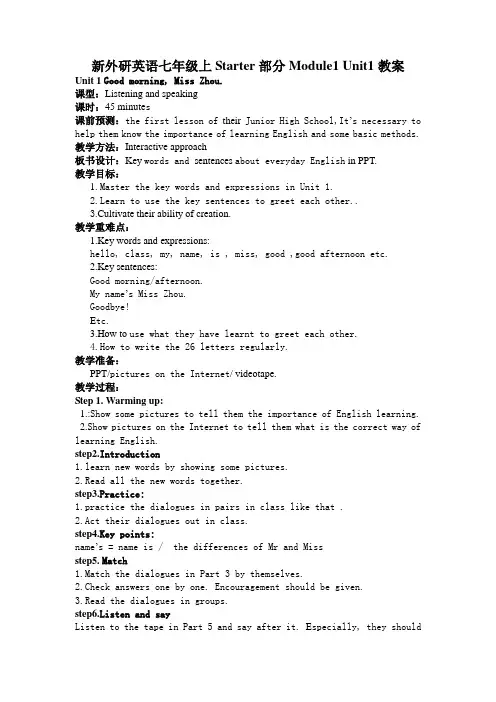
新外研英语七年级上Starter部分Module1 Unit1教案Unit 1 Good morning, Miss Zhou.课型:Listening and speaking课时:45 minute s课前预测:the first lesson of their Junior High School,It’s necessary to help them know the importance of learning English and some basic methods.教学方法:Interactive approach板书设计:Key words and sentences about everyday English in PPT.教学目标:1. Master the key words and expressions in Unit 1.2.Learn to use the key sentences to greet each other..3.Cultivate their ability of creation.教学重难点:1.Key words and expressions:hello, class, my, name, is , miss, good ,good afternoon etc.2.Key sentences:Good morning/afternoon.My name’s Miss Zhou.Goodbye!E tc.3.How to use what they have learnt to greet each other.4.How to write the 26 letters regularly.教学准备:PPT/pictures on the Internet/ videotape.教学过程:Step 1.Warming up:1.:Show some pictures to tell them the importance of English learning.2.Show pictures on the Internet to tell them what is the correct way of learning English.step2.Introduction1.learn new words by showing some pictures.2.Read all the new words together.step3.Practice:1.practice the dialogues in pairs in class like that .2.Act their dialogues out in class.step4.Key points:name’s = name is / the differences of Mr and Missstep5.Match1.Match the dialogues in Part 3 by themselves.2.Check answers one by one. Encouragement should be given.3.Read the dialogues in groups.step6.Listen and sayListen to the tape in Part 5 and say after it. E specially, they shouldpay attention to the pronounciation of the 26 letters.step7.Sing the ABC Song.1.Listen to the song at first, then imitate how to sing it for severaltimes.2.Ask some of them to sing the song in class. E ncouragement should begiven.step8.Write.1.It’s very important to tell them how to write the letters regularly,so the teacher needs to spend more time on this step. T he teacher should check their spelling carefully and correct them in time.2.The best work should be showed to others in class.3.Have a small inclusion about their work.step9.Listen1.Listen to the tape in Part 7, write the names regularly.2.Check answers and ask them to write their own names in English. step10.ExercisesDo some exercises in class to consolidate what they have learnt in this lesson. E ncouragement should be given.S tep11. Homework1.Sing ABC Song.2.Read the dialogues in Unit 1 smoothly.3.Write the 26 letters carefully in their exercise books.新外研英语七年级上starter部分Module1 Unit2教案Unit 2Good morning, I’m Chen Zhong.课型:Listening and speaking课时:45 minutes课前预测:They have learnt how to write the 26 letters regularly, in this lesson, they need to consolidate them and learn some new everyday English.教学方法:Interactive approach板书设计:Key words and sentences about greetings in PPT.教学目标:1. Master the key words and expressions in Unit2.2.Learn to use the key sentences to greet each other.3.Cultivate their ability of creation.教学重难点:1.Key words and expressions:I, you, your, spell, sorry, how, fine etc.2.Key sentences:What’s your name?I’m Lingling.Sorry?Can you spell it ,please?。
外研社七年级上册 第1课时 Starter M2 Unit 1 Unit 1 Open your book教案
2.在小组活动中,增强学生之间的交流,加深友谊。
教学重点
1.掌握sit, down, sit down, open, book, listen, draw, put, up, hand, stand, stand up, close等词汇的用法。
2.掌握本单元的英语指令语。
教学难点
(4) Close your book.
(5) Put up your hand.
(6) Listen.
(7) Draw.
特色说明
教学反思
本课时的教学由情景导入,激发学生的学习兴趣。本节课的重点在于在听说读写的过程中,教会学生掌握英语课堂指令语。
At last, T plays the recording and check the answers with the whole class.
通过课本练习题,巩固所学。
锻炼书写能力。
Step4
Groupwork
(5mins)
Listen anddo.
T:Wehave mastered all the English orders. Let’s listen and do. Then practice in pairs.
Teacher practisesthedialogue with students.
T: Good morning, class.
Ss: Good morning, Miss Zhou.
T:Please sit down.
4. Ss practice in groups.
师生互致问候,在真实的教学情境中引出课堂指令语。
…Ss work in pairs and practise the dialogue in Activity6andperform their dialogue for the whole class. Let’s see which group are the winners.
StarterModuleUnit1(2)教案-外研版七年级英语上册
教材及年级名称外研版新版七年级上册模块名称Starter Module 1My teach er and my friends教材分析本模块是《英语》(新标准)“一条龙”初中教材“预备级(Starter)”衔接小学英语和初中英语的补充教材的第一模块。
本模块围绕“老师和朋友”这一中心话题,在真实语境中呈现了“问候”,“道别”,“介绍自己和他人”等基本的日常用语和简单对话。
学生进入初中的第一节课,是教师向学生做自我介绍、教学生作自我介绍及相互问候的最佳时机。
教师应充分利用这一时机进行有效的情景教学。
学情分析 1.知识基础:部分学生小学时虽然学过一点相关的内容和知识,但缺少丰富的语言基础,对这些交际用语运用的相当不熟练,交际任务的完成有难度。
2.思维能力:有较强的记忆力和模仿能力,有待培养知识的扩展运用能力。
3.认知心理:有较强的求知欲和表现欲,但部分学生存在不自信,羞于表现等思想顾虑。
模块教学目标1.知识目标:Ss are able to use the words: hello, good morning, good afternoon, what, your, I ,am ,thank, you, nice, meet2.技能目标:U nderstand others’ greetin gs by listening.Introduce themselves and greet with others.Understand the similar dialogue of gr eetings.Write greeting words in their daily life.3.情感目标:①体会英语学习的乐趣,做到在“用中学,学中用”。
②乐于了解异国文化,加强文化差异的理解与认识。
教学重点及难点1. 学习“问候”,“道别”,“介绍自己和他人”等基本的日常用语和简单对话。
2. 复习和巩固以上日常用语中运中用到的单词。
外研七上Starter Module2 Unit1
eyes , you can' t see anything .
A. open B. close C . Look.
Practice
选择答语(填短语和序号都可以)
1、你上课提问题或回答问题前得先
___P_u_t__u_p_y_o_u_r__h_a_n_d_/D__________. A. stand up
Presentation
Listen and read.
Listen and repeat.
Sit down. Open your book. Listen.
Draw.
Put up your hand.
Stand up.
Close your book.
快速抢答
根据图片内容,快速说出图片代表的英语指令。看谁做的好。
—————————————————————————————————————————————
5.
6.
—————————————————————————————————————————————
Sit down. Stand up. —————————————————————————————————————————————
Homework 用思维导图的形式总结一下open 和close 的用法。adj(形容词)来自adjopen
过去式 过去式
close
V(动词) v
Life was like a box of chocolate,you never know what you'll get until you try.
Close your book. Listen. _________________________________________________________________________________
外研版七年级英语上册StarterModule2MyEnglishlesson教案
外研版七年级英语上册StarterModule2MyEnglishlesson教案Module 2 My English lessonUnit 1 Open your book.Ⅰ. Analysis of the textIn this text students will learn how to recognize objects in the class.Ⅱ. Arrangement of teaching in this moduleThree periods for this module, one per iod for one unit.Ⅲ. Teaching focus1. Master language of asking the name of specific objects in the class, and master the words of objects in the class.K ey vocabulary and phrases: sit, down, sit down, open, book, listen, draw, put, up, hand, stand, stand up, close What’s this in English?, What’s this?, It’s…, instruction pronoun this.2. Be skilled in oral expression of asking the name of specific objects in the class and give corresponding answers.Ⅳ. Teaching aims1. Function: recognition of objects in the class.2. Listening: St udents can understand others’ questions of asking the names of specific objects, and give corresponding answers.3. Speaking: Students can ask and answer objects’ names.4. Reading: Students can understand the similar dialogue of asking and answering obje cts’ names.5. Writing: Students can write the names of objects in the class.Ⅴ. Teaching ProceduresPart I: Lead inStep 1: Review the greeting phrases in the previous period by having the whole class play the dialogue in real situation.Step 2: Ask some students to introduce their partners to the class.Step 3: Enjoy a song: Hello and how are you?Part II: Vocabulary studyStep 1: Show some pictures of objects in the class by PPT, give students the names of the objects.Step 2: Play the recording and have them point out the words and phrases in Activity 1.Step 3: Listen and read.Good morning, class.Good morning, Miss Zhou.Please s it down.Step 4: Play the recor ding and have them point out the words and phrases in Activity 2.Sit down.Open your bookListen.Draw.Put up your hand.Stand up.Close your book.Step 5: Play the recording again and have them read after the tape.Step 6: Listen again and do.Part Ⅲ: Dialogue studyStep 1: Teacher ask the whole class the objects in the PPT’s names.Step 2: Match the expressions in Activity 3.1. Put up a) your book2. Open b) …down3. Stand c)… up4. Sit d)…your hand.Step 3: Check the answers.Keys: 1. d 2. a 3. c 4. bStep 4: Write the letters in Activity 5.Step 5: Listen and check.Step 6: Work in pairs, one student point one object in the PPT, the other answer the question.Step 7: Work in pairs and fill the blanks in Activity 6. Have some of them to perform the dialogue for the whole class.Stand up.Yes.Open your book.Yes.Step 8: Work in pairs. Say and do.Unit 2 What’s your number?Ⅰ. Analysis of the textIn this text students will learn how to express English number.Ⅱ. Arrang ement of teaching in this moduleThree periods for this module, one period for one unit.Ⅲ.Teaching focusKey vocabulary and phrases: student, new, here, in, one, two, three, four, five, six, seven, eight, nine, ten, telephone, number Ⅳ. Teaching aims1. Function: recognition of numbers.2. Listening: Students can understa nd others’ questions of asking numbers, and give corresponding answers.3. Speaking: Students can ask and answer numbers.4. Reading: Students can understand the similar dialogue of asking and answering numbers.5. Writing: Students can write numbers.Ⅴ. Teaching ProceduresPart I: Vocabulary studyStep 1: Learn English number from one to ten.Step 2: Enjoy a song: Ten little Indians.Part II: Listening practice.Step 1: Look at the pictures in Activity 1.Step 2: Listen and read.—Hello. Are you a new student here?—Yes, I am.— What class are you in?—I’m in Class 3. Mr. Chen’s class.Ste p 3: Listen and repeat.one two three four fivesix seven eight nine tenStep 4: Listen and chant.One, two, three, four, five.Once I caught a fish alive.Six, seven, eight, nine, ten,Part III: Dialogue studyStep 1: Ask the students to read the conversation silently.Step 2: Play the recording and ask the students to listen and read the conversation. Step 3: Read the conversation.Step 4: Act it out.Step 5: Language pointsWhat’s your telephone number?What’s your telephone number? 用于询问对方的电话号码,回答时用“It’s +电话号码.”结构。