
人教版八年级上册英语复习课件
+ 主语 + do sth.? 疑问词how often 是问频率(多久一次),(在这里助 动词do(does或did) 是起帮助构成 疑问的作用)与一般现在时或一 般过去时连用,回答一般是用表 示频率的副词,如:once, twice, three times…, sometimes, often, quite, often, never, every day, once a week , twice a month , three times a month , three or four times a month 等。
9. My eating habits are pretty good .
11/10/2011
13. Is her lifestyle the same as yours or different? =Is her lifestyle the same as your lifestyle or is her
11/10/2011
1. go to the movies 去看电影 2. look after = take care of 照顾
3. surf the internet 上网 4. healthy lifestyle 健康的生活方式 5. go skate boarding 去划板 6. keep healthy=stay healthy 保持健康 7. exercise=take(much)exercise=do
17. That sounds interesting. 这是“主语+系动词+表语”结构的简单句。sound(听起
来),look(看起来),smell (闻起来),taste(尝起来),feel(觉得),seem (好象),grow(变得),get (变得)等词在英语中可用作系动词,后跟形容词作 表语。如: It tastes good. 这味道好。 The music sounds very sweet. 这音乐听起来很入耳。 The smoke grew heavier and heavier. 烟雾变得越来越 浓了。
I sometimes go to the beach. ● How often do you eat vegetables? Every day. ● Most students do homework every day.
【重点词汇】 重点词汇】
● always, usually , often, sometimes , hardly , ever, never. ● how often, once , twice , three times a week , every day. ● milk, junk food, health, unhealthy, habit, exercise, most, result, try, different
sports 锻炼
20. activity survey 活动调查 21.做家庭作业 do homework 22.做家务事 do house work 23.吃更少的肉 eat less meat 24.垃圾食物 junk food 25.对什么有益 be good for 26.对什么有害 be bad for
11/10/2011
7. How many hours do you sleep every night? 8. I exercise every day , usually when I come home from school .
这里pretty相当于very 。 10. I try to eat a lot of vegetables , usually ten to eleven times a week . try to do sth.表示“ 尽力做某事 ” ,不包含是否成功的意思而try doing sth.表示“(用某一办法)试着去做某事”。 如: You’d better try doing the experiment in another way. 你最好试试用另一种方法做这个试验。 11. My healthy lifestyle helps me get good grades. help sb.(to) do sth.帮助某人做某事 12. Good food and exercise help me to study better. 这里better是well的比较级,而不是good的比较级
11/10/2011
【词语辨析】 词语辨析】
一、maybe / may be 1. The baby is crying.
27. 想做某事 want to do sth 28.想某人做某事 want sb to do sth
20. activity survey 活动调查 21.做家庭作业 do homework 22.做家务事 do house work 23.吃更少的肉 eat less meat 24.垃圾食物 junk food 25.对什么有益 be good for 26.对什么有害 be bad for
八年级英语
暑期补课教程
11/10/2011
Unit 1: How often do you exercise?
【复习目标】 复习目标】 会使用频率副词及短语; 能描述课余时间的活动安排; 会描述基本饮食结构。 【语言目标】 语言目标】
● What do you usually do on weekends?
11/10/2011 maybe, although, arm, foot, tooth, ear, eye, advice, thirsty ,forget, finish, plan .
【应掌握的词组】 应掌握的词组】
8. eating habits 饮食习惯 9. take more exercise 做更多的运动 10. the same as 与什么相同 11. be different from 不同 12. once a month 一月一次 13. twice a week 一周两次 14. make a difference to 对什么有影响 15. how often 多久一次 16. although = though 虽然 17. most of the students=most students 18. shop=go shopping=do some shopping 购物 19. as for 至于
27. 想做某事 want to do sth 28.想某人做某事 want sb to do sth
29.尽量做某事 try to do sth
29.尽量做某事 try to do sth
11/10/2011
【应掌握的句子】 应掌握的句子】
1.How often do you exercise? 你(你们)多久锻炼一次身体? How often + 助动词do(does或 1.How often do you exercise? 你(你们)多久锻炼一次身体? How often + 助动词do(does或did)
did) + 主语 + do sth.? 疑问词 how often是问频率(多久一次), (在这里助动词do(does或did) 是起帮助构成疑问的作用)与一 般现在时或一般过去时连用,回 答一般是用表示频率的副词,如: once, twice, three times…, sometimes, often, quite, often, never, every day, once a week , twice a month , three times a month , three or four times a month 等。
11/10/2011
2. “What do you usually do on weekends?” “ I usually
play soccer.” “周末你通常做什么?”“我通常踢足球。” 第一个do为助动词, 在这起帮助构成疑问的作用;而 第二个do则是实义动词。 翻译: What do you usually do on weekends? I often go to the movies. What does she usually do on weekends? She sometimes go hiking.
lifestyle different from yours? be the same as … / be different from … 14. What sports do you play ? 15. A lot of vegetables help you to keep in good health . keep in good health = keep healthy = stay healthy 16. You must try to eat less meat . try to do sth.表示“ 尽力做某事 ” ,不包含是否成功的意 思,less是little的比较级 11/10/2011
11/10/2011
5. Mom wants me to get up at 6:00 and play ping-pong
with her . want to do sth. 意思是“想要做某事”; want sb. to do sth.意思是“想要某人做某事”。如: Do you want to go to the movies with me? 你想和我一起去看电影吗? The teacher doesn't want us to eat hamburgers. 老师不想让我们吃汉堡包。 6. She says it’s good for my health. be good for...表示“对……有益(有好处)”;其反义为:be bad for...。(这里for 是介词,后跟名词、代词或动词 ing) 如:It's good for us to do more reading. 多读书对我们有 好处。 Reading in bed is bad for your eyes.在床上读书对你的眼 睛有害。
合集下载
期末总复习课件(共47张PPT) 人教版英语八年级上册.ppt
例如:He likes apples.他喜欢苹果。 ( 主语是He, likes 是动词第三人称单数形式)
一般现在时的关键词:always,(总是),often(经常), usually (通常), never从未;every day每天, every week每周, every year每年, sometimes有时候, at times时常。
A.as better as B.as good as √C.as well as
( )8.The programs on Channel 10 are ____better than Channel 5.
A.more
√B.much
C.many
( )9.He is _____than any other students in his class.
A.cold B√.colder
C.coldest
( )14.Which city is______,Bei jing,Shang hai or Liuzhou?A.bigB.bigger
√C.the biggest
模块5和6:动词不定式 (1)、(2)和双宾语。 1.动词不定式(带to的动词):to+动词原形(注:to do代表不定式) 例如:She wants to see her aunt.她想去看望她的阿姨。
( )4.I______ my homework when my mother came home.
A.am doing √B.was doing C.did ( )5.She often ______ shopping with her mother.
A√.goes B.go C.went ( )6.We_____swimming tomorrow afternoon.
一般现在时的关键词:always,(总是),often(经常), usually (通常), never从未;every day每天, every week每周, every year每年, sometimes有时候, at times时常。
A.as better as B.as good as √C.as well as
( )8.The programs on Channel 10 are ____better than Channel 5.
A.more
√B.much
C.many
( )9.He is _____than any other students in his class.
A.cold B√.colder
C.coldest
( )14.Which city is______,Bei jing,Shang hai or Liuzhou?A.bigB.bigger
√C.the biggest
模块5和6:动词不定式 (1)、(2)和双宾语。 1.动词不定式(带to的动词):to+动词原形(注:to do代表不定式) 例如:She wants to see her aunt.她想去看望她的阿姨。
( )4.I______ my homework when my mother came home.
A.am doing √B.was doing C.did ( )5.She often ______ shopping with her mother.
A√.goes B.go C.went ( )6.We_____swimming tomorrow afternoon.
Unit 8 (单元复习课件)-八年级英语上册(人教版)

二、词组归纳
11.一杯酸奶 ____o_n__e_/_a__c_u_p__o__f_y_o__g_u_r_t 12.还有一件事 _____o__n_e__m__o__re__t_h_i_n_g__ 13.牛肉面条 ____b__e_e_f__n_o_o__d_l_e_s_____ 14.做水果沙拉 _____m__a_k_e__f_r_u_i_t_s_a__la_d__ 15.把……放进……里面 _____p_u__t_.._.i_n_/_i_n_t_o_._..____ 16.传统食物 ___t_r_a_d__it_i_o_n__a_l_f_o_o__d___ 17.一片面包 ____a__p_i_e_c_e__o__f_b__re__a_d__ 18.一个特殊的日子 _____a__s_p_e_c__ia_l__d_a_y_____ 19.感恩;感谢 _____g_i_v_e__t_h_a__n_k_s______ 20.做菜 _____m__a_k_e__d__is_h__e_s_____
watermelon
7. ____________n. 西瓜
spoon
8._____________n.__v. 增加;添加 10. __f_i_n_a_l_l_y____adv. 最后;最终 11. __s_a_l_t_______n. 食盐 12___s_a_l_t_y_____adj. 咸的 13. __s_u__g_a_r_____n. 食糖 14. __c_h__e_e_s_e____n. 干酪;奶酪 15. __m__a__c_h_i_n_e__n. 机器;机械装置 16. __h__o_l_e______n. 洞;孔;坑
四、重点知识
Cut up the bananas. 切碎香蕉。
人教版八年级英语上册-全册PPT课件全集(149张)

26) more than 多于
课文要点
1、What do you usually do on weekends?
on weekens 表示“在周末”,泛指每个周末; on the weekend表示“在周末,在这个周 末”,特指某个周末。
2、help with housework
help sb. with sth. = help sb. (to) do sth
初二英语上册
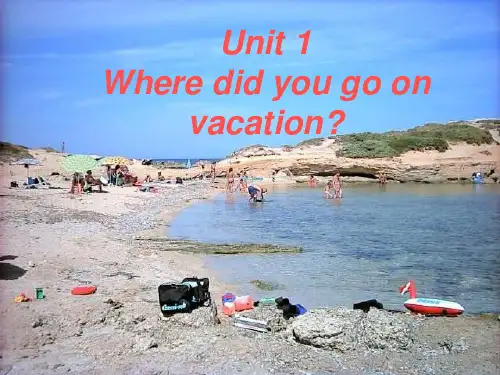
Unit 1: Where did you go on vacation?
New Words.
anyone wonderful something seem someone try different umbrella hungry dislike anywhere most everyone bored dicide wonder wait enough
修饰不可数名词,意为 “太多”,还可修饰动词 做状语
修饰形容词或副词,意为 “太”
She bought too many eggs. We have too much work to do.
You are walking much too fast.
too much, much too,用法区别看后头,much后接不可数, too后修饰形或副。Too many 要记住,后面名词必复数。
1)单数名词词尾加’s, 复数名词词尾没有s, 也要加 ’s the girl’s pen Children’s Day
2)复数名词以s结尾的只加 ’ the students’ reading room
3)如果两个名词并列,并且分别有 ’s, 则表示“分别有”; 只 有一个名词有一个’s, 则表示“共有”;
Units 3-4 复习课件(共25张PPT)人教版八年级英语上册
6.The_s_a_y_i_n_g__s_(格言) are very important to me. 7.his journey was _f_a_n__t_a_s_t_i(c 极好的)and exciting. 8.Mo Yan is the Noble_P__r_i_z_e_(奖) w__i_n__n_e_r____(获胜者) 9.He is _s_e__r_i_o_u_s_(严肃的) , he takes everything _s__e_r_i_o_u_s_l_y(认真地). 10.For us all ,Lei Feng is the _e_x_a_m___p_l_e(实例,范例) of learning.
(n.) 15.choose(v.选择) — c_h_o_ic_e_ (n.) —__c_h_o_se (过去式\过去分词) — cho_s_e_n__ 16.friendly _m__o_re_f_ri_e_n_d_ly_\f_ri_e_nd_l_ie_r(比较级) __m__o_st__fr_ie_n_d_ly_\_fr_ie_n_d_li_es_t_-(最
1.有天赋的 talented 2.魔术师 magician
3.大声地 loudly 4.安静地 quietly
5.清晰地 clearly
6.真正 truly
7.有必要的 necessary
8.舒适的 9便宜地 10.小心地 11赢 12.谚语
uncomfortable cheaply carefully
1.quiet(adj.安静的)— _q_u_i_et_ly__(adv.) 2.clear (adj. 清楚的)-__c_l_e_a_r_ly__(adv.) 3.true(adj.真的)— _t_ru_l_y_ ( adv. )4.cheap(adj.便宜的)— _c_h_e_a_p(ly adv. ) 5.careful(adj.小心的)—_c_a_re_f_u_lly ( adv. )6.beautiful(adj.漂亮的)—b_e_a_u_ti_fu(llyadv.) 7.serious(adj.严Байду номын сангаас的,认真的,严重的) — _s_e_r_io_u_s_l_y__ adv. ) 8. comfortable(adj.舒服的)— c_o_m__fo_r_ta_b_ly_( adv.)(adj. 反)— u_n_c_o_m_fortable 9.crowd(v.拥挤)_c_ro_w__d(edadj.)(adj.反) — _u_n_c_ro_wded pete(v.竞争)—_c_o_m_p_e_t_it_o(r n.竞争者)—(n.竞争)_c_o_m_p_e_t_it_io_n___ 11.win(v.获胜 ) — _w_i_n_ne_r (n.获胜者) 12.talent(n.天赋) — __ta_l_e_n_te_d___ (adj.) 13.say(v.说)— _s_a_y_in(g n.谚语)14.create(v.创造) —c_re_a_ti_v(e adj.) — _c_r_ea_t_ivity
(n.) 15.choose(v.选择) — c_h_o_ic_e_ (n.) —__c_h_o_se (过去式\过去分词) — cho_s_e_n__ 16.friendly _m__o_re_f_ri_e_n_d_ly_\f_ri_e_nd_l_ie_r(比较级) __m__o_st__fr_ie_n_d_ly_\_fr_ie_n_d_li_es_t_-(最
1.有天赋的 talented 2.魔术师 magician
3.大声地 loudly 4.安静地 quietly
5.清晰地 clearly
6.真正 truly
7.有必要的 necessary
8.舒适的 9便宜地 10.小心地 11赢 12.谚语
uncomfortable cheaply carefully
1.quiet(adj.安静的)— _q_u_i_et_ly__(adv.) 2.clear (adj. 清楚的)-__c_l_e_a_r_ly__(adv.) 3.true(adj.真的)— _t_ru_l_y_ ( adv. )4.cheap(adj.便宜的)— _c_h_e_a_p(ly adv. ) 5.careful(adj.小心的)—_c_a_re_f_u_lly ( adv. )6.beautiful(adj.漂亮的)—b_e_a_u_ti_fu(llyadv.) 7.serious(adj.严Байду номын сангаас的,认真的,严重的) — _s_e_r_io_u_s_l_y__ adv. ) 8. comfortable(adj.舒服的)— c_o_m__fo_r_ta_b_ly_( adv.)(adj. 反)— u_n_c_o_m_fortable 9.crowd(v.拥挤)_c_ro_w__d(edadj.)(adj.反) — _u_n_c_ro_wded pete(v.竞争)—_c_o_m_p_e_t_it_o(r n.竞争者)—(n.竞争)_c_o_m_p_e_t_it_io_n___ 11.win(v.获胜 ) — _w_i_n_ne_r (n.获胜者) 12.talent(n.天赋) — __ta_l_e_n_te_d___ (adj.) 13.say(v.说)— _s_a_y_in(g n.谚语)14.create(v.创造) —c_re_a_ti_v(e adj.) — _c_r_ea_t_ivity
人教版八年级上册英语第一第二单元复习课件(共51张PPT)
•
drive-drove-driven rise-rose-risen ride-rode-ridden
•
write-wrote-written give-gave-given
•
③其他
中考演练
28. The mobile phone has influenced people’s life a lot since it .(13年中考)
Something is wrong with my watch.
Everyone wants to win.
Nobody knows the boy’s name.
There is something for everyone at Green Park.
中考演练
( B)May I have a talk with you ,sir? (2011陕 西21题)
Revision
为某人买某物 当然 似乎做某事 没事可做除了… 去购物 为考试做准备 大部分的时间 我很无聊
buy sth for sb/ buy sb sth
of course seem to do nothing to do but do… go shopping study for tests most of the time
C. new something D. new anything
(A) 2 I will do____for my motherland. (15原创
A anything B. many C. much D. something
中考热点四
too many +可数名词复数 too much +不可数名词 much too +形容词或副词
期末复习课件+2023-2024学年人教版八年级英语上册

that,too.A good teacher’s class is hardly _b_o_r_in_g__(bore) .A good teacher also _c_a_re_s____(care) about his or her students.They teach students class
I won’t go to your room as soon as I finish doing my homework. 39.There are many foreign people on the Great Wall.(改为一般疑问句)
Are there many foreign people on the Great Wall? 40.The music of the program sounds very beautiful.(改为否定句)
Is the kid in great danger?
17.They are my grandparents.(对划线部分提问) Who are they?
18.Those are my dictionaries.(改为单数形式) That is my dictionary.
19.This is Cindy’s aunt.(改为复数句)
What did you see there? 10.They were tired after a long walk.(改为一般疑问句)
Were they tired after a long walk?
11.There will be less free time next term.(改为否定句) There will not be less free time next term.
I won’t go to your room as soon as I finish doing my homework. 39.There are many foreign people on the Great Wall.(改为一般疑问句)
Are there many foreign people on the Great Wall? 40.The music of the program sounds very beautiful.(改为否定句)
Is the kid in great danger?
17.They are my grandparents.(对划线部分提问) Who are they?
18.Those are my dictionaries.(改为单数形式) That is my dictionary.
19.This is Cindy’s aunt.(改为复数句)
What did you see there? 10.They were tired after a long walk.(改为一般疑问句)
Were they tired after a long walk?
11.There will be less free time next term.(改为否定句) There will not be less free time next term.
Unit1++复习课件 人教版八年级英语上册
常考句子
1.---Where did you go on vacation? ---I went to New York City. 2. ---Who did you go there with? ---I went there with my family. 3. ---Did you buy anything special? ---No, I bought nothing. 4. ---How was the food? --- Everything tasted really good. 5. ---Did you go anywhere interesting? ---Yes, I went to Guizhou with my family.
自主检测 早读
1.复习课本P1-p.8页单词 2. 复习课本142.页不规则动词表
要求:1.提问本单元重点单词并检测 2.再次记忆错误单词
Task2重点短语
要求: 1.背诵重点短语 2. 检测-- 再次背诵
1.anyone任何人 2.anywhere在任何地方 3. wonderful精彩的,绝妙的 4.few不多,很少 5.most最多,大多数 6.wonderful精彩的 7.few不多 很少 8. most最多,大多数 9.something某事
相当多
11.go shopping
购物
11. stay at home
待着家里
12. in the countryside
在乡下
13. along the way
沿途
14. another two hours=two more hours另外两小时
15. because of
因为
八年级上册英语全册课件(人教版)
Claire: Twice a week, on Wednesday and Friday. Jack: Well, how about Tuesday? Claire: Oh, I have to play tennis with my friends.
But do you want to come? Jack: Sure.
Where did you go on vacation?
went to New York City
Where did you go on vacation?
went to the beach
Where did you go on vacation?
visited my uncle
Where did you go on vacation?
全北美京著新名A世的M纪C电电影影院院线 I often go to the movies.
I often play football.
What do you usually do on weekends? I often do some reading. I often watch TV.
What do you usually do on weekends?
2a Listen. Cheng Tao is talking about how often he does these activities. Number the activities you hear <1-5>.
3
5 4 2
2b Listen again. Match the activities in 2a with how often Cheng Tao does them.
人教版八年级英语上册Units1-5单元知识复习课件
screen
big/small big /small
distance close/far close /far
sound
good/bad the /the
movie new/old new /old
seat comfortable uncomfortable
comfortable
I. 单项选择:
What do you think of...?
C. happily
D. happiest
4.—What do you think of maths, John?
—For me, maths is ______ than any other subject.
A. difficult
B. mBore difficult
C. most difficult D. the most difficult
B. How often
C. How far
D. How much
习惯用法、搭配
1. help sb. with sth 帮助某人做某事 2. How about…? =What about…? ….怎么样?/ ….好不好?3. want sb. to do sth. 想让某人做某事 4. How many + 可数名词复数+ 一般疑问句 ….有多少…..5. 主语+ find+ that 从句 …发现… 6. It’s + adj.+ to do sth. 做某事是….的7. spend time with sb. 和某人一起度过时光 8. ask sb. about sth. 向某人询问 某事9. by doing sth. 通过做某事 10. What’s your favorite…..? 你 最喜欢的……是什么?11 start doing sth. 开始做某事 12. the best way to do sth. 做某事的最好方式
新人教版八年级英语上册期末总复习课件
单词复习
famous著名的 well-known著名的 nature自然地 agree同意 normal一般的 unless除非不 certainly无疑的 serve服务 look after 照顾 invitation邀请
again再一次 angry发怒的 understanding善解人意的 careless粗心的 often多久 as far关于,至于 natural自然地 turn down拒绝 reply回复 forward发送
until直到 how often多久 how long 多长时间 how soon多久才... lendar日历 daytime白天 in half分成两半 halfway在中途 else别的,其他的
单词复习
how munch多少钱 how far多远 be good for对....好 be good at擅长...... be bad for 对.......有坏处 be good with 与....相处的好 wrong怎么了? halfway在中途 else别的,其他的
今日复习的重点
本单元的所有单词、短语、语法、长难句、课文
grow成长 meeting遇见 pollute污染 prepare准备 prepare for准备 two两个 twice两次 one一个 once一次 health健康 healthy健康的
单词复习
upset沮丧的 different不同的 unhealthy不健康的 difference差异 foot脚 feet脚步 advice建议,劝告 another其他的 happen发生 expect 期待
单词复习
mistake错误 week一周 a lot of 大量 be good for 对什么好 stress压力 get back返回 careful小心的 careless粗心的 advice建议 solve步骤 during在........期间