
外研版七年级下Module 11 unit 1 what do you like doing on holiday?
Main points and difficulties:
(1)Talking about intention and plans. (2)Going to for plans.
2012-12-10 2
I.Word study
I love holiday s.
2012-12-10
I love going to the beach.
going to the beach, visiting museums, going to the park, playing sports games, going to the city, going cycling, watching TV, playing computer games, doing my homework, going camping, going traveling…
2012-12-10
I don’t like musห้องสมุดไป่ตู้ums.
2012-12-10
I like going to the countryside.
2012-12-10
I love playing sports games.
2012-12-10
I like going to the restaurants.
2012-12-10
going to the beach, playing sports games, I like ____________________________________ playing computer games and doing my homework ___________________________________________ .
going to the park, watching TV, My partner likes ____________________________
playing computer games and doing my homework ____________________________________________. playing computer games and We both like ____________________________ doing my homework ___________________.
Module 11 Holidays
Unit 1 What do you like doing on holiday?
2012-12-10
Teaching aims:
(1)Asking about intention and plans. (2)Going to for plans:questions and answers. (3) Real-life task:Planning.
2012-12-10
II.Listen and repeat.
1.What does Mary like doing in the holidays? She loves going to the beach and swimming. 2.How about Liu Hong?
She likes visiting interesting places,like museums.
2012-12-10
VI. Tasks.
Write about your traveling dreams. Beijing, Hainan, Harbin, Hongkong, the USA, France I’m going to travel to _______________ Hainan Island. I love going to the beach and going swimming. ________________________________________ Hainan is the best place for swimming _________________________________.
2012-12-10
Thanks for listening! Goodbye!
2012-12-10
2012-12-10
B. Listen and say.
/m/
me
/n/
knee
my
ham game
night
fan rain
2012-12-10
V. Work with your partner.Make a list of all the things you like to do on holiday.
3.What about Li Jie?
He likes visiting parks.
4.What does Tan Mei doing? She likes going to the city.
2012-12-10
III.Main points:
1.What do you like doing on holiday/in the holidays? 2. I love/like +v.ing… I love/like going to the beach/visiting museums… 3. So do I. I like swimming. So do I. So ______ he/she. does 4. Me too. Nice to meet you. Me too.
2012-12-10
IV. Pronunciation.
A. Listen and say. I love going to the beach and swimming. I don’t like museums but I like going to the countryside. I like visiting parks. Me too. I like going to the city.
外研社版初中英语七年级下册Module11Unit1教案
外研社版初中英语七年级下册Module11Unit1教案Module 11 Body languageUnit 1 They touch noses!一、教学目标【知识能力目标】1) 能正确使用下列单词和词组:kiss, shake hands, smile, German, British, Japanese, Russian, hug, India, together, nod one’s head, each other...2) 能听懂有关手势语的对话。
【情感态度目标】1) 学习一些见面礼仪。
2) 了解西方国家的风土人情和习俗。
二、教学重难点【教学重点】能听懂有关在不同国家初次见面和表达问候时的手势语。
【教学难点】中西方人们见面礼仪的差别;培养学生跨文化交际意识。
三、教学过程Step 1 Leading-in1. Review the key words about human body.2. Learn the new words学习新词汇,播放词汇音频。
3. Shows some body action and ask students to guess the meaning.老师自己或请两名同学上台表演,其他同学猜测肢体语言所传达的含义。
Step 2 Match1. Ask the students to look at the pictures and say what body language they can see.2. Match the pictures with the words and expression from thebox.Step 3 Listening1. Play the tape, ask the students to listen and match the pictures with the nationality in Activity2.2. Work in pairs and check the right answers each other.Step 4 Reading1. Guide the students to listen to the conversation in Activity 3 and answer the question:What so the people in China/US/India/New Zealand do when they meet?1)In China a. shake hands, kiss or hug each other2)In the US b. shake hands, smile or nod heads3)In India c. touch nose4)In New Zealand d. put their hands together and nod their heads2. ScanningScan the language and answer the questions:1)Who will come to Linging’s school?2)What will Maori people do when they meet?3. Careful readingAsk the students to read the dialogue carefully and complete the table with the correct form of the words from the box.Step 5 Post-reading1. Let the students act out the dialogue.2. Show some pictures and things to organize the students to talk about them.3. Have the students act out their new dialogues.Step 6 listen and repeatListen to the recording and pay attention to thepronunciation.Step 7 Group workMake a conversation to talk about what you do and say when you meet.—What do you do and say when you meet your teacher in the morning?—I smile and say good morning.Step 8 Language points1. … in Russia, people usually kiss three times, left, right, left.kiss v. 吻,亲吻eg. The mother kissed the sleeping baby on his head.妈妈亲了一下这个睡着的婴儿的额头。
七年级下 unit 11 What do you think of game shows
七年级下unit 11 What do you think of game shows?重点难点突破词汇解读1. think of / think about / think over辨析:(1)think of, 固定短语,表示“提到(某人、某物、某事或某主意等),考虑,思考,对….有某种看法”,后接名词,代词、动词-ing形式。
--- What do you think of your Chinese teacher?--- I like her very much.(2) think of 表示“思考,考虑,对….有某种看法”时,可以与think about互换。
What do you think of the movie? = What do you think about the movie?(3) think of 表示“相出,想着,想起”时,不可用think about 代替。
I always think of my childhood.(4) think over意为“仔细考虑,认真考虑”,强调思考的程度比think of/about深。
相当于think about….. carefully. 其中over是副词,宾语若是名词,则可位于over之前或之后;当宾语是代词时,则必须放在over之前。
Think it over before you do it.It’s very important for you. You must think it over,实践:---- What do you _______ this book?--- I don’t like it.A. think ofB. think overC. think for2. situation用法:(1)名词,意为“形势,情景”。
The situation isn’t good for you.(2) 名词,意为“位置”。
七年级英语下册 Moudle 10 Unit 1 What did you do课件 (新版)外研版

Which country is it?
The United States of America (U.S.A. / U.S. / America/ the USA)
Now listen and number the places as you hear them.
1
6
4
2
5
3
Everyday English
Guess what? Wow ! it was great!
Listen and choose the best answers.
1. Where is Tony going on holiday? A. Go to England. B. Go to Los Angeles. C. Go to the Paris.
好莱坞,在西北洛杉矶,是电影产业的核心。所有在好莱坞 大道是青铜明星的名字的电影明星和很多明星都留下了 他们的脚印外曼氏中国剧院。环球影城是一个世界上最大 的电影制片厂。你可以参观制片厂,看看一些特效制作。 比佛利山庄是地方许多明星生活。
圣莫尼卡
Santa Monica beach
圣莫尼卡海滩
Santa Monica
1. It __to_o_k____ us a long time to find his home last Saturday.
2. We had a wonderful party last night and everybody_h_a_d__a__g_o_o_d_t_im__e__.
外研英语七年级下册Module11Unit 1(共30张PPT) (1)
Listen Carefully
Can you find out the correct countries?
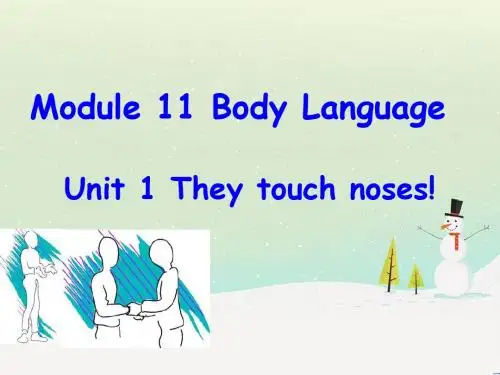
1. People in __________ usually kiss three times, left, right, left.
2. People in __________ often shake hands, smile and nod heads. 3. People in __________ often kiss and hug. 4. People in __________ put hands together and nod their heads. 5. Maori people in __________ often touch noses.
When you meet_________, please _______________.
In Nepal (尼泊尔), they kiss each other’s feet at important festivals.
In China, nodding heads means “yes”. In India, nodding heads means “no”.
Listen Carefully
Can you find out the correct countries?
1. People in ___R_u_ss_i_a___ usually kiss three times, left, right, left.
2. People in ___C_h_in_a____ often shake hands, smile and nod heads. 3. People in ___t_he__U_S___ often kiss and hug. 4. People in ___I_n_d_ia____ put hands together and nod their heads. 5. Maori people in _N_e_w__Z_e_a_la_n_d often touch noses.
外研英语七年级下册Module10Unit1Whatdidyoudo课件(共31张PPT)
• 3.We went there two years ago and enjoyed it a lot.
• a lot (副词)很,非常,修饰动词
• Eg.I like playing football a lot.
4.How long did it take to get there? 去那儿用了多长时间? take"花费",常用的句型: It takes (sb.宾格) +时间/金钱+ to do sth. “某人花费多长时间做某事”
see
saw
swim
swam
Words and expressions
/ p ə’ s ɪ f ɪ k/ Pacific adv. 那么;这么
/g e s/
guess v. 猜,猜测
/ ɪ k’ s a ɪ t ɪ d/ excited adj. 激动的,兴奋的
She went there with_____________.
She met ___________ and Mickey Mouse in Disneyland. She went to _________ and she swam in the Pacific Ocean at____________.
/waʊ/
wow int. 哇
Listen and complete the table.
When to go Betty went to Los Angeles ____________.
How to go She got there by __________.
Who to go with
What to do
洛杉矶
Why was Betty excited at Disneyland? and everybody _______________. Disneyland in LA is the first one in the world She went to _________ and she swam in the Pacific Ocean at____________. c Los Angeles Where are you going on holiday, Tony? (1)表示一般将来时: I like trip, so I like holidays. Then our friends met us and drove us to e Santa Monica
11-7Module11单元知识小结-七年级英语下册同步精品课堂(外研版)

外研版Module 11单元知识小结◆◆知识点1 国家国家的人语言China Chinese (Chinese) ChineseBritain England British Englishman Englishmen EnglishAmerica American (Americans) EnglishFrance Frenchman (Frenchmen) FrenchGermany German (Germans) GermanyJapan Japanese (Japanese) JapaneseRussia Russian (Russians ) RussianAustralia Australian (Australians) AustralianIndia Indian (Indians) Indian2 three times 一次twice 两次注意:三次以上都是基数词+times eg :three times 问次数用how many timesEg : How many times do you go to the supermarket every week ?3 each other 互相,彼此eg: help each othereach other’s 互相的,彼此的4 not …at all 一点也不eg : I don’t like English at all .not at all 没什么,不客气eg : Thank you for your help .Not at all5 be on time 准时,按时in time 及时Eg :We should get there on time .Eg: When I was hungry ,my mother sent the bread to me in time .6 low high 一般指无生命的物体的高,低eg : The building is high/low .Eg : How high is the building ?tall short 一般指有生命的事物的高,低eg : The boy is tall .Eg :How tall are your .7 close v 关闭eg : Close the door .Closed adj 关闭的eg : The door is closed .Close adj adv 靠近的、地,接近的、地eg : be close to get close to。
外研版七年级英语下册Module 11Unit 1 What did you do?教案
Unit 1 What did you do? 教案一. 学习目标知识目标:1. 掌握单词和短语:Pacific, so, guess, excited, enjoy, on holiday,drive sb. to …, how long,2. 掌握句型:How long did it take to get there? Who was with you?How long did you stay there? What did you do?Did you…?二.学习重点:一般过去时态的用法。
三.学习难点:一般过去时的句型转换。
(重点一般过去式的特殊疑问句)四.教学过程:Step1. Warming-upShow some pictures of cities in China and abroad. Ask students where they are and which country they belong to.Ask students which city they would like to go to for a holiday and why.Find the places on the map.Find some pictures of California, Hollywood, Los Angeles, Pacific Ocean, Santa Monica and Disneyland on the Internet. For example, you can find some on Google images.Ask students to work in pairs to look at the map in Activity 1 and try to find these places.Now listen and number the places as you hear them.Play the recording twice.Ask students to check in pairs. Then play the recording twice.Step2 listen and readTell students that they are going to hear a conversation about a holiday journey. Write the following questions on the board.Then students answer the questions on the board and check with their partners.Now answer the questionsAsk students to read the questions first.Tell them to read the conversation again to find the answers on their own.Check answer by having students ask and answer in open class.Learning to learnWrite the question words on the board and elicit what they mean.Ask students to make questions with them and ask each other in open class.Step 3Complete the sentences with the correct form of the words and expressions from the box.Tell students to read the sentences and complete them with the appropriate words and expressions individually.Step4Listen and notice the underlined stressed words.Play the recording and ask students to listen and check if they were correct. They can then check with their partners.Step5Woke in pairs. Talk about a special holiday. Step6Do exercises.。
初中英语外研版七年级下册《Unit 1 What did you do》课件
具)”、“把(某人)带往”和“穿( 某尺寸的衣服和鞋子)”等。
e.g.T_a_k__e_t_h_e__U_n__d_e_r_g_r_o_u_n_dto the Olympic
Sports Centre, or you can
t_a_k_e__a_b__u_s_o_r__a__ta__x_i.
Complete the sentences with the correct form of the words and expressions from the box.
1. It _to_o_k_ us a long time to find his home last Saturday.
2. We had a wonderful party last night and everybody __h_a_d_a__g_o_o_d_t_i_m_e___.
e.g. I like trip, so I like holidays. 我爱好旅行,所以我就爱好假期。
3) 介词,意为“如此,这样”。 e.g. I think so. 我认为如此。
5. We went to Disneyland, and guess what? Guess what? 用于向对方讲述一件自己 认为会让对方感到惊奇的事情之前,字 面意思是让对方猜,但通常是紧接着说 出想说的事情。
¤Guess what? 猜猜是什么? ¤Wow! 哇! ¤It was great! 太棒了!
Now answer the questions.
1. How did Betty get to Los Angeles? She flew there.
2. How did Betty get to her friends’ home? Her friends drove her.
外研版七年级英语下册 Module 11 Unit 1课件 (1)
Pre-listening-1.师友互学
Task 1 Read.
1.[baʊ ]
bow
v. 鞠躬;弯腰
2.[kɪs]
kiss
v. & n. 吻;亲吻
3.[ʃeɪk]
shake v. (shook) 摇晃
4.shake hands
握手
5.[smaɪl] smile v. & n. 微笑
6.[ˈbrɪtɪʃ] British adj. 英国的;英国人的
6.[ˈbrɪtɪʃ] British adj. 英国的;英国人的
7.[dʒɜːmən] German n. 德国人; 德语 adj. 德国的; 德国人的; 德语的
8.[ˌdʒæpəˈniːzJ] apanese n. 日本人; 日语 adj. 日本的; 日语的; 日本人的
9.[ˈrʌʃn] Russian n. 俄罗斯人; 俄语 adj. 俄罗斯的; 俄罗斯人的; 俄语的
Pre-listening-1.师友互学 Task 3 Read, spell and translate.
1.[baʊ ]
bow
v. 鞠躬;弯腰
2.[kɪs]
kiss
v. & n. 吻;亲吻
3.[ʃeɪk]
shake v. (shook) 摇晃
4.shake hands
握手
5.[smaɪl] smile v. & n. 微笑
what nod head hug each
India together Maori touch nose
int. 什么(表示惊奇) v. 点(头) n. 头;头部 v. 拥抱;紧抱 pron. 各个;每个
互相;彼此
外研版英语七年级下册Module 10 Unit 1《What did you do》ppt课件
Answer the questions.
1. How did Betty get to Los Angeles? By plane.
2. How did Betty get to her friends’ home?
By car. 3. Why was Betty excited at Disneyland? She met Snow White and Micky Mouse. 4. How long did she stay in Disneyland? For two days. 5. Where did she go swimming? In the Pacific Ocean at Santa Monica.
比一比谁的周末活动最精彩。
1.四人一组,分别介绍自己上周末的活动。 2.选出最精彩的汇报给全班同学。
课堂讲练互动
Homework
利用相片汇报自己与家人或朋友的难忘的
假期,并谈谈他们度假时的体会。
课堂讲练互动
Look before you leap.
三思而后行。
课堂讲练互动
and____ did (do) some shopping. I
spent _____(spend) two days there. I _____ took (take)many photos. I had _____(have) a great time.
课堂讲练互动
Group work : Circle Story 小组内每人说一句话,编成一 个有趣的旅游故事。 Last summer we went… Our wonderful holiday journey
课堂讲练互动
Complete the sentences with the correct form of the words and expressions from the box. have a good time on holiday spend take two years ago see