
(完整word版)译林版英语四年级下册Unit7-8单元知识点
Unit 7 What’s the matter? 知识汇总
一、语音
o / əʊ/close home no nose open old so go cold
Go home, Joe, and show Rose your nose!
二、词汇
1. have a pie 吃个派
2. some water 一些水
3. Here you are. 给你。
4. want to go to bed 想睡觉
5. be ill 生病的,不舒服的
6. drink some water 喝些水
7. tired and thirsty又累又渴8. Good night. 晚安。
9. have a cake 吃块蛋糕10. a happy girl 一位快乐的女孩
11. show Rose your nose给罗斯看你的鼻子12. take this pill 吃这片药13. Mrs. Mouse 老鼠夫人14. Mr. Fox 狐狸先生
15. go home 回家16. want to sit on the chair想要坐在椅子上
三、句型
1. What’s the matter? 怎么了?
2. Come and have a pie, Taotao. 过来吃个派,涛涛。
3. I’m not hungry, I’m thirsty. 我不饿,我渴。
4. Can I have some water? 我可以喝些水吗?
5. Are you ill? No, but I’m tired. 你病了吗?没,但我累了。
6. I want to go to bed. 我想要睡觉。
7. Good night, dear. 晚安,亲爱的。
8. Here is some water for you. 这儿有些水给你。
9. Are you cold? 你冷吗?No, I ’m not. / Yes, I am.
10. This is Mrs Fox speaking. 我是狐狸夫人。
(打电话用语)
11. Are you all right, Bobby? 波比,你还好吗?
12. Have some water, Wang Bing. 王兵,喝一些水。
13. Here’s a hot dog. 这有个热狗。
14. Here are some hot dogs. 这有些热狗。
15. If you are ill, go to/and see a doctor. 如果你生病了,去看医生吧。
Unit 8 How are you? 知识汇总
一、语音
o / ɒ/coffee, dog, hot, not, sock, box, fox
The hot dog in the box is not lunch for the fox!
三、词汇
1. speak to Miss Li 和李老师通话
2. come to school 来到学校
3. have a cold 感冒
4. take care 保重
5.have a cough and a headache 得了咳嗽并头痛
6. I’m fine. 我很好。
7. at school 在学校8. Not so good. 不太好。
9. go and see 去看看10. a bad cough 严重的咳嗽
11. See you. 再见12. have a fever 发烧
13. have a bad cold 重感冒14. have a high fever 发高烧
15. at home 在家16. not bad 还不错
17. the hot dog in the box 盒子里的热狗18. after school 放学后
三、句型
1. This is Yang Ling speaking.我是杨玲。
(电话用语)
2. May I speak to Miss Li?我可以和李老师通话吗?(电话用语)
3. I can’t come to school today. 今天我不能到学校来了。
4. I have a cold and a fever. 我感冒并发烧了。
5. I’m sorry to hear that. 听到这个消息我很难过。
6. Take care, Yang Ling. 保重,杨玲。
7. How are you now? I’m fine, thank you./Not so good. I have a cough.
你现在好吗?我很好,谢谢。
/不太好。
我咳嗽了。
8. Can you come to school tomorrow? 你明天能来学校吗?
9. See you tomorrow. 明天见。
10. Is Bobby there? No. He’s at school. 波比在吗?不在,他在学校。
11. The hot dog in the box is not lunch for the fox!
盒子里的热狗不是那只狐狸的午餐。
12. Well, go and see Doctor Wu! 那么,去看吴医生吧!
13. Can I come to see you after school? 放学后我能来看望你吗?
14. See you soon. 一会见。
牛津英语译林版8AUnit7知识梳理
8A Unit7 知识点梳理一、短语:1.喜欢打雪仗like snowball fights2. 降到零下十度drop to -10°C3. 一年里最好的季节the best season of year4. 几场阵雨a few showers5. 在每年的这段时间里during this time of year6. 在下午晚些时候in the late afternoon7. 用围巾盖住她的脸cover her face with a scarf8. 保持在零度以上stay above zero 9.到处都是雪be full of snow10.躲避……be full of snow11.收割庄稼harvest crops 12.降到零度以下drop below zero 13.覆盖整个大地cover the whole earth 14.为我做早饭make breakfast for me 15.从早到晚from morning till night 16.患重感冒catch fl bad cold17.发高烧have a high fever 18.把我带到医院去take me to the hospital 19.忙着做某事be busy doing sth 20.一年中的这个时候during this time of year 21.导致许多问题cause a lot of problems 22.有幸做某事be lucky to do sth.23.利于人们的健康be healthy for people 24.打雪仗have snowball fights25.覆盖着厚厚的白雪be covered in deep white snow26.彼此扔雪球throw snowballs at each other27.堆雪人make snowmen 28.在下雪天on snowy days29.来自北方的暴风雪a snowstorm from the North30. 在他三十多岁in his thirties31.落成堆fall into piles 32. 从早到晚from morning till night 33, 用枝条搭帐篷put up a tent with sticks 34. 变黄turn yellow35.快速上升raise quickly 36. 进行短途旅行have a short trip 37.和我们呆在一起stay with us 38. 花间嬉戏play among flowers39.放风筝的极好时间a perfect time to fly kites 40.在这个季节期间during the season二、句子:1.哪个季节是一年中最好的季节?Which is the best season of the year?2.突然到来的暴雨引发了许多问题。
译林版英语四年级下册知识总结与整理
译林版英语四年级下册知识总结与整理
四年级下册主要内容包括以下几个方面:
词汇
四年级下册词汇主要涉及动物、食物、身体部位、天气、交通工具、数字、家庭成员等方面。
需要掌握这些词汇的拼写、发音和基本用法,以便于进行听、说、读、写等基本语言实践。
语法
四年级下册语法内容主要包括一般现在时、动词的进行时、名词单数和复数、形容词比较级和最高级等方面。
需要掌握这些语法知识并能够正确地运用到实际语言交际中去。
阅读
四年级下册的阅读内容为各类短文,主要包括图表、故事、科普知识等。
需要通过阅读能够理解短文中所蕴含的信息,同时培养对语言的理解和运用能力。
写作
四年级下册写作主要包括书写、句型和话题写作。
需要能够正确使用所学词汇和语法知识,准确地表达所要表达的意思。
四年级下册英语具体考察内容和形式根据各地实际情况而有所不同,需要根据教材内容制定相应学习计划并加以实践。
通过课上学习和课下练习,逐步提高英语听、说、读、写能力,实现英语学习的良好开端。
译林版英语四年级下册《Unit7What'sthematter》教案
译林版英语四年级下册《Unit7 What’s thematter》教案教材简介《译林版英语》四年级下册第七单元学习的是“What’sthe matter”(发生了什么事)。
在这一单元中,学生将学会一些基本的英语表达方式,如描述自己或他人身体状况、寻求帮助等。
通过本单元的学习,学生能够提高自己的英语交流能力,同时也能够提高对自己和他人身体健康的关注度。
教学目标1.学会描述自己或他人身体状况的基本英语表达方式。
2.学会寻求帮助的英语表达方式。
3.让学生提高对自己和他人身体健康的关注度,向家长传达健康的观念。
教学重点学生通过学习掌握了身体部位的表达方式和学习描述身体不适的表达方式。
能够描述自己或他人的身体状况,同时也能够寻求帮助。
教学难点学生能够运用所学内容进行简单的英语交流,如询问他人身体状况并进行适当的回答。
教学方法1.听、说、读、写的综合训练,增强学生英语交流的能力。
2.情境教学,通过实际情境展现出英语表达方式的使用。
教学过程第一步:导入新课1.进行师生问答,了解学生对身体部位的英语表达是否熟练,帮助学生复习巩固教材之前的内容。
2.通过展示图片或视频,介绍一些相关的情景,如:摔到、发烧、打喷嚏等,预设情景以便后续教学让学生更好地理解和掌握所学内容。
第二步:新课教学1.学习掌握身体部位的表达方式。
如头、胃、胳膊等。
2.练习使用“What’s the matter”的句型进行身体状况的表达。
3.学习一些常用的应答句,如“I have a headache. / I feel tired.”4.细讲几个关键词的拼音和意思:stomachache(肚子疼)、headache(头疼)、toothache(牙疼)、fever(发烧)等。
第三步:示范训练1.师生互动,老师示范一些关于身体不适的情景及表达方式,鼓励学生自己思考并模仿。
2.学生自由组合进行练习,两人一组,轮流问候“How are you?”并回答。
2014译林版8BUnit7-International-charities知识点

2014译林版8BUnit7-International-chari ties知识点D___你应该意识到教育普及的重要性。
_________________________________________________ ___【拓展】spread 动词,意为“展开;传播;散布”spread out 展开,spread over 传遍He spread the map. The news was spread quickly. →prevent v. 阻止,禁止做某事prevention n. 预防,阻止,防范。
prevent sth. 我们必须阻止污染。
prevent sb.( from) doing sth. 阻止某人做某事= stop sb (from) doing sth = keep sb from doing sth当用于被动语态是,三者的from都不可省略。
我们必须阻止他玩游戏。
7..ORBIS 奥比斯Oxfam 乐施会UNICEF 联合国儿童基金会WWF 世界自然基金会【Reading】1. Dr Ma, please tell us something about blindness.→blindness 不可数名词,意为“失明”不要因为失明就放弃你的梦想。
【拓展】blindness是形容词blind + 后缀ness 构成的名词,类似的还有:kindness illness happiness richness sadness2. …mostly in poor areas, and about 80 per cent of these cases can be prevented or cured.→mostly 副词,意为“主要地;大部分地;多半地”I’m mostly at home on Sundays.He writes to his parents every week, mostly on Saturdays. 辨析:mostly 和mostmostly: 只作副词,意为“主要地;大部分;多半” These children are mostly from the city.most:①形容词,意为“最多的,最高程度的” He has the most friends.②副词,意为“最” I think Math s is the most important of all the subjects.③名词,意为“大多数,大部分” He spent most of the time in playing computer games.一言辨异:Most of the workers go to work mostly on foot. →case 可数名词,意为“病例;案例”This is a case of fever.→cure 及物动词,意为“治愈,矫正”Can you cure the sick child?【拓展】cure sb. of one’s illness “治好某人的疾病”这种特别的药治好了他的头疼。
(译林版)7B-Unit7语法知识点
(译林版)7B-Unit7语法知识点(译林版)7B-Unit7 语法知识点本文档将介绍(译林版)7B-Unit7中的语法知识点。
1. 形容词和副词的比较级和最高级形容词和副词的比较级和最高级用于对两个或多个人或事物进行比较,并表达大小、高低、快慢等概念。
比较级的构成方法:1. 一般在形容词或副词后面加上-er,如taller,faster。
2. 以字母e结尾的形容词或副词,直接加-r,如nicer,larger。
3. 以辅音字母+y结尾的形容词或副词,将y变为i,再加-er,如busier。
4. 多音节和部分双音节形容词或副词在前面加more,如more interesting,more quickly。
最高级的构成方法:1. 一般在形容词或副词前面加上the,再在后面加上-est,如the tallest,the fastest。
2. 以字母e结尾的形容词或副词,直接加-st,如the nicest,the largest。
3. 以辅音字母+y结尾的形容词或副词,将y变为i,再加-est,如the busiest。
4. 多音节和部分双音节形容词或副词在前面加the most,如the most interesting,the most quickly。
2. 一般过去时一般过去时用于表示过去发生的动作或存在的状态。
构成方法:1. 对于大多数动词,在动词原形后面加上-ed,如worked,played。
2. 以e结尾的动词,直接加-d,如lived。
3. 以辅音字母+y结尾的动词,将y变为i,再加-ed,如studied。
特殊情况:1. 以辅音字母+y结尾的动词,如果在末尾前有一个元音字母,则直接加-ed,如stayed。
2. 以辅音字母+ie结尾的动词,将ie变为y,再加-ed,如cried。
3. 一般将来时一般将来时用于表示将来发生的动作或存在的状态。
构成方法:1. 对于大多数动词,在动词原形前面加上will,如will work,will play。
(完整word版)join in四下英语重点
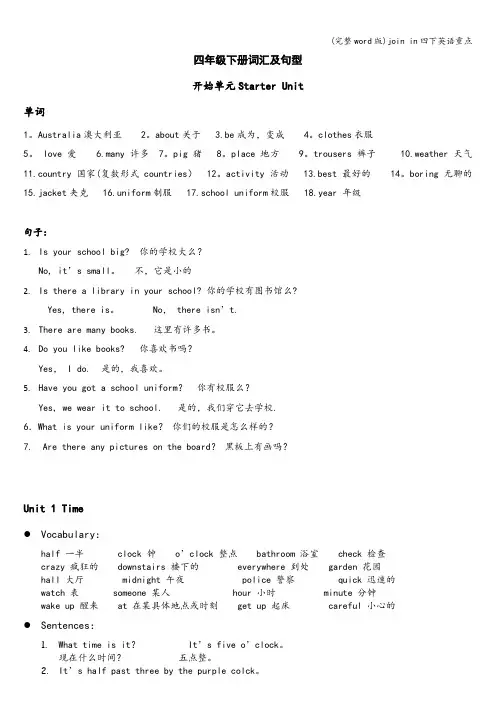
四年级下册词汇及句型开始单元Starter Unit单词1。
Australia澳大利亚 2。
about关于 3.be成为,变成 4。
clothes衣服5。
love爱 6.many许多 7。
pig猪 8。
place地方 9。
trousers裤子 10.weather天气11.country国家(复数形式countries) 12。
activity活动 13.best最好的 14。
boring无聊的15.jacket夹克 16.uniform制服 17.school uniform校服 18.year 年级句子:1.Is your school big? 你的学校大么?No, it’s small。
不,它是小的2.Is there a library in your school? 你的学校有图书馆么?Yes, there is。
No, there isn’t.3.There are many books. 这里有许多书。
4.Do you like books? 你喜欢书吗?Yes, I do. 是的,我喜欢。
5.Have you got a school uniform?你有校服么?Yes, we wear it to school. 是的,我们穿它去学校.6.What is your uniform like?你们的校服是怎么样的?7. Are there any pictures on the board?黑板上有画吗?Unit 1 Time●Vocabulary:half 一半 clock 钟 o’clock 整点 bathroom 浴室 check 检查crazy 疯狂的 downstairs 楼下的 everywhere 到处 garden 花园hall 大厅 midnight 午夜 police 警察 quick 迅速的watch 表 someone 某人 hour 小时 minute 分钟wake up 醒来 at 在某具体地点或时刻 get up 起床 careful 小心的●Sentences:1.What time is it? It’s five o’clock。
译林版四年级英语下册unit7教案
译林版四年级英语下册unit7教案一、教学内容本节课我们将学习译林版四年级英语下册Unit 7《Whose clothes are these?》的内容。
具体包括:Story time部分的课文,学习衣物类名词及对应关系,理解一般疑问句“Whose are these?”的用法及回答。
二、教学目标1. 能够听懂、准确说出Story time中的句子,并能运用到实际场景中。
2. 能够运用所学衣物类名词及关系词,进行一般疑问句“Whose are these?”的提问和回答。
3. 培养学生的合作意识和口语表达能力。
三、教学难点与重点1. 教学难点:一般疑问句“Whose are these?”的构造及回答。
2. 教学重点:衣物类名词及关系词的掌握,以及在实际场景中的应用。
四、教具与学具准备1. 教具:PPT、卡片、磁铁、衣物模型。
2. 学具:学生用书、练习册、彩笔。
五、教学过程1. 导入:通过展示一幅衣物混在一起的图片,引导学生进行观察,激发学生的学习兴趣。
2. 新课内容:学习Story time部分,讲解衣物类名词及关系词,引导学生进行一般疑问句“Whose are these?”的提问和回答。
3. 例题讲解:结合PPT,讲解例题,让学生了解如何在实际场景中运用所学知识。
4. 随堂练习:组织学生进行小组讨论,互相提问,巩固所学知识。
5. 小组活动:每组选择一幅衣物混在一起的图片,用所学知识进行提问和回答,评选出最佳小组。
六、板书设计1. 板书Unit 7 Whose clothes are these?2. 内容:衣物类名词、关系词、一般疑问句“Whose are these?”及回答。
七、作业设计1. 作业题目:根据所学内容,编写一段对话,描述衣物混在一起的场景,并用一般疑问句“Whose are these?”进行提问和回答。
2. 答案示例:A: Look at these clothes. Whose clothes are these?B: These are my clothes. The blue shirt is mine, and the red pants are yours.八、课后反思及拓展延伸1. 课后反思:本节课学生的参与度较高,但在一般疑问句的构造和回答方面,部分学生还存在一定困难,需要在课后进行巩固。
译林版小学四年级英语下册知识点复习总结
译林版小学四年级英语下册知识点复习总结Unit1Ourschoolsubjects一、四会单词school学校subject科目,学科see看到,看见Chinese语文Maths数学Art美术Music音乐Monday星期一lesson课二、四会句型Whatsubjectdoyoulike?Ilike⋯⋯三、短语welcomebackto欢迎回到⋯⋯newtimetable新的课程表whatsubjects什么学科likeChinese喜欢语文whatabout⋯⋯怎么样It’stimefor⋯该⋯⋯.的时候了gototheplaygroud去操场whatlessons什么课thismorning今天早上likeMusic喜欢音乐课thisafternoon今天下午nicetoseeyou见到你很高兴ournewtimetable我们的新的时间表/课程表It'stimefor是⋯⋯做什么的时候到了gototheplayground去操场metoo我也是newsubject新课程whatday星期几ourschoolsubject我们的课程四、发音Aa/ei/cake蛋糕grape葡萄make做skate滑冰table桌子name名字plate盘子take拿,带wake醒来baby婴儿Unit2Afterschool一、四会单词Monday星期一Tuesday星期二Wednesday星期三Thursday星期三Friday星期五Saturday星期六Sunday星期日getup起床二、四会句型1.Whatdayisittoday?It’s⋯⋯2.Whatlessonsdoyouhaveon⋯⋯?Ihave⋯⋯3.Wedon’thaveanylessons⋯4.Whendoyougetup⋯?Igetupat⋯.三、短语playtabletennis打乒乓球whatday星期几afootballmatch一场足球比赛aswimminglesson一节游泳课allright好的getup起床goodmorning早上好everyday每天atfive在五点钟whatlessons什么课onSaturday在星期六playtabletennis打乒乓球whatdayisittoday?今天星期几?comeandplaytabletennis来打乒乓球whatapity真遗憾atschool在学校afterschool放学后四、发音Aa/?/bag书包cap帽子hamburger汉堡包sandwich三明治snack快餐dad爸爸Maths数学match比赛Saturday星期六apple苹果Unit3Myday一、四会单词usually 通常常常homework家庭作业二、四会句型Whendoyougetup⋯1I getup⋯atsix/⋯三、短语gotoschool上学atsevenforty在七点四十分inthemorning在早上havelunch吃午饭intheafternoon在下午do myhomework做家庭作业havedinner吃晚饭everyday每天whattime什么时间overthere在那边abigcake一块大蛋糕likecakes喜欢蛋糕myday我的一天fourlessons四节课fivesubjects四门课程atseven在七点watchTV看电视gotobed睡觉playfootball踢足球intheevening在晚上atnight在夜里四、发音Ee/i:/me我she她green睡觉sleep睡觉three三week星期,周see看到meet遇见evening晚上Unit4Drawing inthe park一、四会单词park公园draw画flower花them他们,她们,它们boat小船river河,江lake湖,湖泊二、四会句型Whatcanyoudo?Icandraw/makeacake⋯/Goodnight.三、短语drawsomepictures画一些画goodidea好主意overthere那边someflowers一些花drawthem画它们ontheriver在河面上thisbigbox这只大盒子havealook看一看onthelake在湖面上tryagain再试一试inthepark在公园里somepictures一些图画welldone好样的,干得好canyoudraw你会画吗?intheboat在小船里drawinginthepark在公园里画画atree一棵树fivetrees五棵树onthehill在小山上seeaboat看到一条小船makeacake做一个蛋糕beforeten十点之前四、发音e/e/bed床desk课桌,书桌pen钢笔red红色的ten十friend朋友them他们pencil铅笔Wednesday星期三welcome欢迎Unit5Seasons一、四会单词season季节spring春天,春季warm温暖summer夏天hot热的,炎热的autumn秋天,秋季cool凉爽的,凉快的winter冬天,冬季cold冷的二、四会句型Itisspring/summer/autumn/winterItis⋯Igo⋯Ilike⋯三、短语inspring在春天flykites放风筝goboating去划船insummer在夏天eaticecream吃冰激凌go swimming去游泳2inautumn在秋天goclimbing去爬山makesnowmen堆雪人afineday晴朗的一天yourbag你的包lookat看⋯⋯.tooshort太短了toolong太长了sobig真大myfather’s我爸爸的sobeautiful真漂亮myhand我的手likespring喜欢春天afineday一个晴朗的日子verycold非常冷alllikethekite都喜欢这个风筝四、发音i/ai/Chinese语文kitefine晴朗的climb Unit6Whosedressisthis?havepicnics举行野餐inwinter在冬天goskating去滑冰yourjacket你的夹克衫whosebag谁的包mydress我的连衣裙yourtrousers你的裤子gototheparty去参加聚会whosegloves谁的手套whose dress谁的连衣裙canmove能移动fourseasons四个季节inautumn在秋天asunnyday一个晴朗的日子here’syourjacket这儿有你的夹克衫喜欢like喜欢time时间white白色的爬like喜欢lion狮子rice米饭一、四会单词dress连衣裙party聚会coat外衣,外套shirt(男士)衬衫sweater毛衣hand手二、四会句型1.Whose⋯isthis/that?It’smyfather’s⋯2.Whose⋯arethese/those?They’remyfather’s⋯3.Ithinkso.What’sthematter?三、短语whosedress谁的连衣裙lookatmysweater看我的毛衣trythis试试这个yourlongtrousers你的长裤trythese试试这些allright好的let’sgototheparty让我们去参加聚会lookatSuYang’sgloves看杨玲的手套sobig如此大myfather’scoat我爸爸的上mycousin’sdress我堂姐的连衣裙sobeautiful如此美丽you’rewrong你错了you’reright你对了canmove能动what’sthematter怎么了Ithinkso我认为是这样let’splay让我们玩吧beforeeatingfish在吃鱼之前listentosomeEnglish听一些英语eatmycakebythelake在湖边吃我的蛋糕readandwrite读和写四、发音i/i/English英语fish鱼him他(宾格)music音乐pig猪sixteen十六listen听picture野餐difficult困难的Unit7What’sthematter?一、四会单词bad爸爸water水ill生病tired累的,疲劳的happy快乐的,高兴的speak说话,讲话Mrs夫人,太太3二、四会句型1.What ’sthematter?Here ’ssome/a ⋯foryou. 2. Goodnight.三、短语haveapie 吃个馅饼gotobed 睡觉 allright 好的what ’sthematter 怎么了I ’mnothungry 我不饿hereyouare 给你wanttogotobed 想去睡觉MumandDad 妈妈和爸爸here ’ssomewater 这里有水gohome 回家takethispill 吃这片药havesomewater 喝一些水talkaboutfeelings 谈论感觉 四、发音O//close 关home 家go 去cold 冷的Unit8 Howareyou? I ’m ⋯Thankyou.havesomewater 喝些水 goodnight 晚安haveacake 吃块蛋糕comeandhaveapie 来吃一个馅饼havesomewater 喝一些水I ’mtired 我累了goodnight 晚安I ’mthirsty 我渴了haveacake 吃一个蛋糕showRoseyournose 给罗斯看你的鼻子here ’safan 这儿有一把扇子 here ’sahotdog 吃一个热狗no 不nose 鼻子open 打开old 老的only 仅仅boat 船 一、四会单词 may 可以 hear 听到,听见 takecare 保重 atschool 在学校 二、四会句型1. Thisis ⋯speaking. MayIspeakto ⋯,please.2. I ’msorrytohearthat.3. Howareyou? Notsogood. Ihaveacold/cough 三、短语speakto 与⋯⋯交谈 cometoschool 来学校 haveacold 感冒 takecare 保重 seeyoutomorrow 明天见 seeyou 再见atschool 在学校 havelessons 有课上课 onSunday 在星期日 howareyou 你好吗 speaktoMissLi 和李老师通话haveacoldandfever 感冒又发烧 haveaheadache 头疼haveacough 咳嗽thehotdoginthebox 在盒子里的热狗seeyouafterschool 放学后再见talkaboutsomeillness 谈论一些疾病四、发音 O / / coffee 咖啡 dog 狗hot 热 not 不是sock 袜子box 盒子 long 长的orange 橙子 sorry 对不起clock 钟4thisisYangLingspeaking 我是杨玲(电话用语)can ’tcometoschooltoday 今天不能来学校 I ’msorrytohearthat 听到这事我很难过notsogood 不太好don ’thaveanylessonsonSunday 在星期天不上课goandseeDoctorWu 去看吴医生 haveacoughandaheadache 咳嗽又头疼makeatelephonecall 打个电话。
译林版四年级下册英语教案:Unit 7 What’s the matter? 单元教案
译林版四年级下册英语教案:Unit 7 What’s the matter?教学目标1.能听、说、读、写单词和短语:matter,toothache,headache,stomachache,cold,sore throat,fever, cough;2.能听懂并简单运用日常用语,询问他人的身体状况;3.能够用What’s the matter?来问别人身体不适的原因;4.能了解并掌握洗手的重要性,养成良好的卫生习惯。
教学重难点1.询问别人身体不适的原因和反应;2.锻炼学生的口语表达能力;3.培养学生良好的个人卫生习惯。
教学过程Step 1. Warming up1.Greeting: Good morning/afternoon, class.2.Ask some general and review questions about the previous English lessons, such as:•What did we learn about colors?•What did we learn about food and drinks?•What did we learn about clothes?Step 2. Presentation1.Show students some pictures of people who may feel sick, such as someone with a headache or stomachache.2.Ask students, What’s the matter? to elicit the target language.3.Teach the students the new words and phrases: matter, toothache, headache, stomachache, cold, sore throat, fever, cough. Have the students repeat the words after the teacher.e the pictures to teach the phrases: He/She has atoothache/headache/stomachache/cold/sore throat/fever/cough.Step 3. Practice1.Role play: Divide the students into pairs. One student plays the role of someone who feels sick, and the other student plays the role of the doctor. The doctor asks What’s the matter? and the patient answers with one of the phrases they have learned.2.Class survey: Have the students survey each other about how they are feeling today. The students ask each other, How are you feeling today? and answer with one of the phrases they have learned.3.Song activity: Play the song “Head, Shoulders, Knees and Toes” and have the students sing and touch their body parts.4.Demonstrate and practice washing hands: Use a hand washing poster to demonstrate how to wash hands properly, and have the studentspractice washing their hands.Step 4. Production1.Show pictures of some situations and have the students answer the question, What’s the matter? and make suggestions about what the person should do. For example, if the picture shows someone coughing, the students can say, He/She has a cough. He/She should drink some warm water.2.Worksheets: Have the students complete worksheets about the target language, match the symptoms with the pictures, and fill in the blanks with the correct words.Step 5. Wrap up1.Recap the target language, phrases, and structures that they have learned in this lesson.2.Assign homework activities, such as reviewing the new vocabulary words and phrases and practicing them with family members.教学反思在本次课程中,我采用了多种教学方法,包括图片演示、角色扮演、问卷调查、歌曲活动和手工活动等,这些活动丰富了课堂氛围,并激发了学生参与的积极性。
译林英语四年级下册第七单元试卷(word版,含答案)
译林版三起点四年级下册Unit 7 What’s the matter?一、重点单词。
1. 渴的,口渴的___________________2. 水_____________________________3. 生病的_________________________4. 累的,疲劳的___________________5. 饿的,饥饿的____________________6. 难过的,伤心的___________________7. 快乐的,高兴的_________________8. Mrs_____________________________9. speak___________________________ 10. dear____________________________二、重点短语1.喝些水__________________________2.吃一个派_________________________3.给你____________________________4.sit still___________________________5.take this pill______________________6.want to go to bed__________________三、按要求写词。
(一)加一个字母组成一个新单词。
1.ear _____________________________2.Mr______________________________(二)减一个字母变成一个新单词。
3.hill_____________________________(三)写出对应词。
4.sad_____________________________5.mum____________________________四、重点句子。
1. 过来吃一个水果派吧,涛涛。