
巧用思维导图,创新英语课堂--以五年级下册《Module4 Travel》教学为例
108
2019年42期总第482期
基础教育研究
ENGLISH ON CAMPUS
巧用思维导图,创新英语课堂
——以五年级下册《Module4 Travel》教学为例
文/黄璐璐
【摘要】在小学英语复习课中,越来越多教师使用思维导图辅助教学,通过思维导图,帮助学生运用形象思维与抽象思维,巩固所学的知识,优化英语课堂教学。
本文以五年级下册《Module4 Travel》单元复习课为例,阐述在小学英语复习课上如何运用思维导图,让学生建立起思维脉络,促使学生更好地理解与运用知识。
【关键词】小学英语;单元复习课;思维导图
【作者简介】黄璐璐,广州市海珠区客村小学。
让学生在最短的时间内集中注意力,进入学习状态,也能充分调动学生参与学习的热情,为接下来的复习教学做好充分地准备,整个导入简洁明了,一气呵成。
二、借助导图,提升“听”能力
通过教师自编文本,学生结合思维导图,玩听力连线闯关游
戏,复习Where? How?引导的句型,为下面的制定旅游攻略作铺垫。
使用平台读取数据,教师提取信息进行反馈讲评。
T: Is Kate going to HK, too? She has booked the tickets.
Let’s listen to her trip. Where is she going? How will she go there? Where is it? Then match the transportations with the places.
S:Kate plans to visit some places in Guangzhou today. Kate will go to TV Tower by bus.
三、搭建支架,解析文本,提升“读”能力
T:You know Kate is going to Hong kong. She has a tour guide. Let’s read the travel tips from the tour guide.
T: After listening, How is Kate going to Hongkong?How long is kate going to Hongkong?What is Kate going to do?
Where is Kate going to?
四、借助“支架”,提升“写”能力
学生在写作时,如果能借助语言支架,即词汇、句型、句
法等,便可以帮助学生掌握语言的辅助性提示。
思维导图能够从词到句,从句到篇,层层递进,逐步培养学生的写作能力,完成
“支架”搭建。
学生借助“支架”,为写作做好充分的准备。
引言
2014 年广州开始提出要从整体的视角去设计整个模块的教
学,2016 年秋季学期开始在广州市 11 个区开展“广州市小学英语单元复习教学设计与实施”的课堂教学展示,这让更多的老师在日常的教学中也开始注意进行单元复习。
虽然如此,但是也有很多老师谈“复习课”,感觉“真没劲”,学生也在抱怨:“除了练习就是讲题,一直在重复。
”学生感到枯燥乏味,收效甚微。
如何把小学英语复习课上得更有趣更高效呢?思维导图起着很大的作用。
本文以教育科学出版社五年级下册《Module4 Travel》教学为例,阐述如何运用思维导图,提高复习课的教学
有效性。
一、巧用思维导图,激活头脑
教师设置问题,引导学生探索问题,激发学生探求问题的好
奇心,在一节复习课中十分重要。
思维导图中的颜色、线条、图形,有利于学生理清思路,发散思维。
T:Good morning, boys and girls. Let’s watch an vedio. After watching the vedio, tell me what can you see in it?S:We can see many beautiful places, like Beijing, New York, Sydney.
T:Yes,so many different places. And where are you going on your holiday?
S: I am going to Beijing/Xiamen…1.T:How are you going to get there?
S: I am going to get there by …/on foot.2.T: When are you going to…? S: I am going there in May/on Sunday/at…
教师在课前播放视频,揭示本单元话题Travel,激活旧知。
学生因为喜欢该话题内容,所以畅所欲言,学生回忆所学的单词。
义务教育教科书五年级英语下册

义务教育教科书五年级英语下册Module 4 TravelUnit 8 Ben's first trip to Beijing第一课时满族小学陈颂悠一、教学内容分析本课是五年级下册Module 4 Travel 话题下的Unit 8 Ben's first trip to Beijing 语篇教学的第一课时,话题围绕Ben的北京旅行方案,主要内容是运用一般将来时描述旅游方案及过程,涉及时间、景点、活动和交通方式。
Unit8是本册教材学习将来时的第4个Unit,承接Module 2 Plans和Unit7的语言知识根底,以通过教学内容Let's read,进一步重点学习运用是一般将来时及描述旅行的方式描述旅行方案及过程。
二、教学对象分析本课的话题贴近学生的生活,学生们本课内容中旅行的城市“北京”会有一定的认识,甚至局部学生可能去过北京旅游,对北京的景点、交通等有所了解,但大局部学生不知道北京著名的旅游景点如何用英语表述,这将需要通过视频介绍北京的宣传片、景点图片帮助他们进一步熟悉北京。
学生已积累了Module 2 Plans和Unit 7所涉及描述旅行方案需要到的词汇和句型,利用学生已有的语言积累和生活经验,创设教学情景和设计教学活动,滚动新旧知识,理解运用本课语言知识,习得阅读技巧与方法。
三、教学目标•语言能力目标1、能听说读以下词汇:trip, hotel, around, lake, street; on foot, by underground, takea walk, the Great Wall, the Summer Palace o2、能熟练运用be going to和will句型介绍旅行方案。
3、能正确理解课文,用正确的语音语调及停顿朗读课文。
4、能在时间轴表格的帮助下,复述Ben的北京旅行。
•思维品质目标1、引导学生逐步I绕where,, when, how, who, what, why来构建谈论旅游方案的思维导图,培养学生的逻辑思维能力。
冀教版小学英语单元思维导图 五年级 下册(四张导图)

—Do you like it? —Yes,I do.Green is my favourite colou 仁
|t's too sma|| for me,but lt's good for a baby .
—Did you have fun in Beijing? —Yes,1 had fun.
其他 much mum dad idea email computer us 短语 how much want to have fun on the right/left
2. what 引导的感叹句
感叹句是表示喜怒哀乐等感情的句子。构成 What+ (a/an) +形容词+可数名词单数(+主语+谓语) 1 感叹句要用降调,句末用感叹号 。 如
斗 —|' II takenme,p|ease.
I want to send this postcard to my mum and dad. Where do you write on a postcard? On the left. Where do you put the address ?On the right
How much is a postcard?
一张明信片多少钱?
How much are the apples?
苹果多少钱?
How's the weather in Canada? What a fun trip! I'II be happy to see you again. Say hi to your friends for me. An email is fast.
And ndoesn't need stamps .F一
英语五年级下册旅行计划思维导图模板

英语五年级下册旅行计划思维导图模板全文共6篇示例,供读者参考篇1My Super Fun Travel Plan Mind Map!Hey there, buddies! Can you believe we're already halfway through 5th grade? Time flies when you're having fun and learning tons of cool stuff, right? Speaking of fun, I've got a really exciting idea to share with you all – let's plan an awesome trip together!Now, I know what you might be thinking, "But we're just kids, how can we go on a trip by ourselves?" Don't worry, I'm not suggesting we run away from home or anything crazy like that. This is going to be a mind trip, an adventure we'll create using our imaginations and a little bit of planning.That's where mind maps come in handy. A mind map is like a big, colorful spider web of ideas, all connected to a central theme or topic. In our case, that central topic is going to be "My Epic 5th Grade Travel Plan!" Pretty catchy, huh?Let me walk you through how we can create this mind map together. First, we need to decide where we want to go. The whole world is our oyster, so let's think big! Maybe we could visit a few different countries or even continents? Or perhaps we want to explore different parts of our own country? The choice is ours!Once we've picked our destinations, we can start adding branches to our mind map for each location. On these branches, we can jot down all the cool things we want to see and do there. For example, if we decide to visit Australia, one branch could be "Sydney Opera House," and another could be "Cuddle a Koala Bear."But our mind map shouldn't just focus on the destinations themselves. We also need to think about the practicalities of our trip, like how we'll get from one place to another. Will we fly, take a train, or maybe even ride a hot air balloon? Each mode of transportation can be its own branch on the mind map.Another important aspect to consider is where we'll stay during our travels. Will we book fancy hotel rooms, or would we rather go camping and sleep under the stars? Maybe we could even try something really unique, like staying in a treehouse or an igloo! Again, these accommodation ideas can be their own branches.Now, let's not forget about the fun activities and adventures we want to have along the way. Do we want to go snorkeling in the Great Barrier Reef? Or maybe we'd rather go on a safari and spot some wild animals in their natural habitats? Zip-lining through a lush rainforest could be another thrilling option. The possibilities are endless!As you can see, our mind map is starting to look pretty awesome already, and we've barely scratched the surface. We can keep adding more and more branches for things like souvenirs we want to buy, cool festivals or events we want to attend, and even fun facts or trivia about each destination.The best part about creating this mind map together is that we can let our imaginations run wild. There are no limits to where we can go or what we can do. It's our dream trip, after all!Once our mind map is complete, we can use it as a guide to plan out every single detail of our imaginary adventure. We can research each destination, figure out the best routes to take, and even calculate how much money we'd need to save up for such an epic journey (don't worry, mom and dad, it's all just for fun!).Who knows, maybe one day we'll actually be able to turn our mind map into reality and embark on the adventure of a lifetime. But for now, let's just enjoy the process of dreaming it uptogether and creating a masterpiece of a mind map that will make all our classmates jealous.So, what do you say, friends? Are you ready to start mapping out the most amazing 5th grade travel plan ever? Grab your colored pencils, let your creativity flow, and let's make this mind map one for the books! Our epic imaginary adventure awaits!篇2Mind Map for My Dream Summer Vacation!Hey friends! Summer break is just around the corner and I've been dreaming about the perfect vacation adventure. To help me plan it all out, I decided to make a mind map. A mind map is kind of like a tree drawing with the main idea in the middle, and branches for different subtopics coming off of it. It's a great way to organize your thoughts visually.So here's how my Summer Vacation Mind Map is shaping up so far:In the very center, I wrote "My Dream Summer Vacation." I drew a big orange sun around it to make it pop!Then, stemming off from the center, I made five main branches for the most important categories:Where Should We Go?How Will We Get There?What Will We Do?What Should We Pack?How Much Will It Cost?Let me walk you through each branch with some details!Where Should We Go?For this section, I made sub-branches for different potential destinations:• Beach (Florida, California, Hawaii, etc.)• Mountains (Colorado Rockies, Appalachia ns, etc.)• City (New York, Chicago, Seattle, etc.)• National Parks (Yellowstone, Grand Canyon, Yosemite, etc.)• Theme Parks (Disney World, Universal Studios, etc.)I'd love to go to the beach and swim in the ocean, build sandcastles, and try surfing or snorkeling. But I'm also really interested in visiting some cool national parks to go hiking, see geysers and waterfalls, and learn about nature. A city trip couldbe fun too with big museums, tall skyscrapers, and awesome restaurants. Decisions, decisions!How Will We Get There?The transportation options I listed were:• Car• Plane• Train• Recreational Vehicle (RV)Our family road trips are always an adventure, but flying gets you there much faster. An RV trip could be really neat to drive from place to place and stay at campsites. And riding a train would be a fun experience I haven't done before. Lots of pros and cons to weigh for each mode of travel.What Will We Do?This branch has sub-branches for:• Outdoor Activities (hiking, swimming, skiing, etc.)• Tours (museums, historical sites, factories, etc.)• Shows/Performances (plays, concerts, sporting events, etc.)• Culinary Experiences (food tour s, cooking classes, unique restaurants, etc.)No matter where we go, I'd love to mix in some outdoor adventures, educational tours to learn about the local culture and history, catching a cool show or event, and ...my personal favorite...trying all the yummy local cuisine! Eating my way through a new city is the best way to get a true taste of the culture.What Should We Pack?Some key sub-branches for packing are:• Clothes (summer, winter, fancy, swimsuits, etc.)• Toiletries (sunscree n, bug spray, medicines, etc.)• Tech (phones, cameras, portable chargers, etc.)• Recreational Items (sports equipment, games, books, etc.)The packing list will definitely depend on where we're going and what activities we'll be doing. If it's a beach or outdoors trip, I'll need lots of summer gear like swimsuits, hiking shoes, and sunscreen. But if we go skiing, I'll need to pack heavy winter clothes. No matter what, I'll need to bring my Nintendo Switchand art supplies to stay entertained in the hotel or car. Oh, and probably a good book or two as well!How Much Will It Cost?The sub-branches for budgeting are:• Transportat ion (plane, train, gas for car, etc.)• Lodging (hotels, camping, rental homes, etc.)• Food (restaurants, groceries, snacks, etc.)• Activities (tours, event tickets, gear rentals, etc.)This is the section my parents will probably focus on the most. Plane tickets and hotel rooms can be so expensive, especially if we want a fancy resort. Driving could save money for transportation, but then we'd need to budget more for gas, food on the road, and possibly campsites. No matter what, we'll have to set a vacation budget and stick to it. Maybe I can earn some extra money to help pay for it by doing chores or odd jobs!So that's my Mind Map in progress! I still have a lot of decisions to make, but mapping it all out visually is helping me imagine the possibilities. I'll keep adding notes, ideas, and pricing estimates to each branch.Once I finalize the plan, I can present my whole mind map to Mom and Dad to convince them my dream summer vacation would be worth the effort and money. Keeping my fingers crossed they go for it! A kid can dream, right?Let me know if you have any other brilliant summer vacation ideas I can add to my mind map. With some careful planning and budgeting, maybe we can make it an unforgettable trip! Thanks for reading, friends!篇3My Big Summer Trip Mind MapHi everyone! My name is Emma and I'm in 5th grade. This summer, my family is going on a huge trip and I'm super excited! We're going to drive across the country from our home in California all the way to Florida to visit my grandparents. It's going to take us about a week to get there.To get ready for the big adventure, my teacher Ms. Martin had our class make mind maps to plan out our summer vacations.A mind map is a cool way to organize your ideas by writing the main topic in the center and then adding branches for different categories or details. It really helps you visualize everything in a fun way.Here's how I made my mind map for our cross-country road trip:In the very center, I wrote "My Epic Summer Road Trip" in big bubble letters. Then I drew branches off of that for the main parts like "Where We're Going", "What To Pack", "Things To Do", and "Road Trip Games & Activities".Under the "Where We're Going" branch, I drew smaller branches for each of the states we'll drive through - California, Nevada, Arizona, New Mexico, Texas, Louisiana, Mississippi, Alabama, and finally Florida. Next to each state, I wrote down any big cities we'll go through or fun landmarks I want to see, like the Grand Canyon in Arizona.For the "What To Pack" section, I made branches for clothes, toiletries, snacks, and entertainment. I listed t-shirts, shorts, swimsuits and other warm weather gear under clothes. Toiletries has travel shampoo, soap, toothbrush, etc. My snack ideas were trail mix, granola bars, fruit, veggies, and lemonade. And entertainment is books, comics, headphones, portable gaming device and iPad for movies.My "Things To Do" branch has sub-branches for outdoor activities, city adventures, and educational stuff. Some outdoor activities I listed were hiking, swimming, having a picnic, andlooking for wildlife. City adventures could be visiting museums, seeing famous buildings, trying local food, and going shopping. Educational ideas were learning about the history of places we'll go, studying maps, and reading facts about landmarks.Finally, the "Road Trip Games & Activities" section has car bingo, the license plate game, 20 questions, mad libs, singing road trip songs, and telling jokes or funny stories. I also put down "make up new games" because I'm sure we'll get creative and invent some fun road trip games of our own as we go!Once I had mapped out all the main ideas, I went back and added some smaller details with little lines sticking off the branches. Like under the snacks section I wrote "Pretzels" and "Lollipops". For road trip songs, I put down "Wheels on the Bus" and "Row Row Row Your Boat". You get the idea!My mind map turned out super colorful and sort of looks like a deep sea creature with all of its crazy tentacles sticking out. But that's what makes mind maps so fun - you can make them as bright and wacky as you want. Whenever I look at it, I get so psyched thinking about everything we're going to do and see.Creating the mind map really helped me organize my thoughts and got me even more excited for our amazingsummer road trip adventure. I can't wait to make more mind maps for future trips and projects. Mind mapping is the best!篇4My Amazing Travel AdventureIntroductionHi everyone! My name is [Your Name] and I am in the fifth grade. I am super excited to share my amazing travel adventure with you. In this travel plan, I will tell you all about the fantastic places I am going to visit, the fun activities I will do, and the yummy food I will try. So, let's get started!Destination: [Name of the place]I have chosen [Name of the place] as my travel destination because it is a beautiful and interesting place. There are so many things to see and do there, and I can't wait to explore!Day 1: Arrival and SightseeingOn the first day of my trip, I will arrive at [Name of the place].I will check into my hotel and then go for some sightseeing. I will visit famous landmarks like [Landmark 1] and [Landmark 2]. I will take lots of pictures to capture the memories.Day 2: Adventure Park FunDay two will be filled with adventure and excitement. I will visit an amazing adventure park called [Adventure Park Name]. I will go on thrilling roller coasters, try my hand at rock climbing, and have a blast on the water slides. It will be an unforgettable day!Day 3: Wildlife SafariOn day three, I will go on a wildlife safari at [Wildlife Park Name]. I will get to see lions, elephants, giraffes, and many other fascinating animals. I will learn about their habitats and how to protect them. It will be an educational and fun experience!Day 4: Beach DayI can't go on a trip without visiting the beach! On day four, I will spend the whole day at [Beach Name]. I will build sandcastles, play beach volleyball, and swim in the crystal-clear water. I will also have a picnic with my favorite snacks.Day 5: Local Cuisine AdventureI am a foodie, so on day five, I will explore the local cuisine. I will try traditional dishes like [Dish 1], [Dish 2], and [Dish 3]. I will visit local markets and learn about different ingredients used in their cooking. I am excited to taste new flavors!Day 6: Shopping and SouvenirsNo trip is complete without shopping for souvenirs. On day six, I will go to the famous [Shopping Market Name]. I will buy gifts for my family and friends and also get some souvenirs for myself. It will be a great way to remember my trip.ConclusionWow, what an incredible travel adventure I have planned! I am so excited to visit [Name of the place] and experience all these amazing things. I will make sure to take lots of photos and write a journal to remember every moment. I can't wait to share my stories with you when I come back. See you soon!Remember, this is just a template, and you can personalize it by adding more details or changing the destinations and activities according to your preferences. Have a fantastic trip!篇5Travel Plan Mind Map TemplateHey there, fellow adventurers! Are you as excited as I am about our upcoming class trip? I can't wait to explore new places, try different foods, and make unforgettable memories with my friends. But before we embark on this exciting journey, we needto plan everything carefully. That's why I've created a super cool mind map template to help us organize our travel plans like pros!What's a Mind Map?A mind map is a colorful and fun way to organize your thoughts and ideas. It's like a big tree with branches spreading out from the main topic, which is the tree trunk. Each branch represents a different aspect of your plan, and you can add more branches and sub-branches as needed. Mind maps are awesome because they help you see the big picture and all the details at the same time.Our Travel Plan Mind Map TemplateOkay, let's dive into our travel plan mind map template! The main topic, or the tree trunk, is our class trip. From there, we'll have four main branches:DestinationTransportationActivitiesPacking ListBranch 1: DestinationThis is where we'll gather all the information about the place we're visiting. We can include sub-branches for:Location (city, state, country)Climate and weatherFamous landmarks or attractionsLocal culture and customsFun facts or trivia about the destinationBranch 2: TransportationHow are we going to get to our destination? This branch will cover all the details about our mode of transportation, such as:Type of transportation (plane, train, bus, etc.)Travel routes and stopoversDeparture and arrival timesBaggage allowance and rulesSafety guidelinesBranch 3: ActivitiesThis is the fun part! Here, we'll plan all the awesome activities we want to do during our trip. Some sub-branches could be:Sightseeing toursCultural experiences (museums, festivals, etc.)Outdoor adventures (hiking, water sports, etc.)Shopping and dining experiencesEducational activities (workshops, classes, etc.)Branch 4: Packing ListWe don't want to forget anything important, do we? This branch will help us create a comprehensive packing list, including:Clothing (for different weather conditions and activities)Toiletries and personal care itemsElectronics and chargersTravel documents (passport, ID, etc.)Snacks and water bottlesFirst-aid kitCamera or other photography equipmentCustomizing Your Mind MapThe best part about mind maps is that you can make them as colorful, creative, and personalized as you want! You can use different colors, symbols, and drawings to represent different ideas. For example, you could draw a tiny plane for the transportation branch or a suitcase for the packing list branch.You can also add photos, cut-outs from magazines, or even stickers to make your mind map more visually appealing and fun to look at. Don't be afraid to let your imagination run wild!Collaborating with FriendsMind maps are great for teamwork too! You can work on your travel plan mind map together with your friends or classmates. Assign different branches or sub-branches to different people, and then combine your work into one big mind map.You can also share your mind map with your parents or teachers and ask for their input and suggestions. The more people contribute, the better your travel plan will be!So, what are you waiting for? Grab some colorful markers, pencils, or pens, and start creating your travel plan mind map today! I promise it'll be a blast, and it'll make our class trip even more amazing.Happy mind mapping and safe travels, explorers!篇6My Awesome Travel Plan Mind Map!Hey there, friends! It's me, your pal Alex, and I'm super excited to share my amazing travel plan mind map with you all. You know how much I love going on adventures and exploring new places, right? Well, this mind map is going to be my ultimate guide for planning the most epic summer vacation ever!First things first, let's talk about the main idea or the central topic of my mind map. Can you guess what it is? That's right, it's "My Summer Vacation Travel Plan"! I've drawn a big, colorful circle in the middle of the page, and written those words inside it. This is the starting point for all my crazy ideas and dreams.Now, let's move on to the first main branch of the mind map. It's all about the "Where" part of my travel plan. I've divided this branch into three sub-branches: "Countries," "Cities," and "Attractions." Under "Countries," I've listed a few places I really want to visit, like England, France, and Japan. Can you imagine how cool it would be to see the Big Ben in London, or the Eiffel Tower in Paris, or even the ancient temples in Kyoto? I'm getting excited just thinking about it!The next sub-branch is "Cities," where I've written down some of the most exciting urban destinations I'd love to explore. New York City, with its towering skyscrapers and bustling streets, is definitely on my list. So is Sydney, Australia, with its iconic Opera House and beautiful beaches. And let's not forget about Rome, the eternal city with its rich history and amazing architecture!Last but not least, under the "Attractions" sub-branch, I've listed some of the top tourist spots and landmarks I simply can't miss. The Pyramids of Giza in Egypt, the Great Wall of China, the Colosseum in Rome, and the Northern Lights in Iceland – these are just a few of the incredible places I dream of seeing with my own eyes.Moving on to the second main branch, we have the "How" part of my travel plan. This branch is all about the different modes of transportation I could use to get to my dream destinations. I've divided it into three sub-branches: "Air," "Land," and "Sea."Under "Air," I've written down things like "Airplane" and "Helicopter." Can you imagine how cool it would be to fly in a helicopter and get a bird's eye view of some of the world's most amazing landscapes? I definitely want to try that!The "Land" sub-branch includes options like "Train," "Bus," and "Car." I've always wanted to go on a classic road trip, just cruising down the open highway with the windows down and the music blasting. And who doesn't love the idea of riding on a sleek, high-speed train through the countryside?Last but not least, the "Sea" sub-branch is all about water transportation. I've listed "Cruise Ship" and "Boat" as potential options. Wouldn't it be amazing to set sail on a luxurious cruise ship, stopping at different exotic ports of call along the way? Or maybe even going on a private boat tour to explore hidden coves and secluded beaches? So many possibilities!Alright, let's move on to the third main branch, which is all about the "What" aspect of my travel plan. This branch is divided into two sub-branches: "Activities" and "Accommodations."Under "Activities," I've listed all sorts of fun things I'd love to do on my dream vacation. Things like "Hiking," "Snorkeling," "Museum Visits," "Trying New Foods," and "Shopping" are all on my list. I want to experience as many new and exciting things as possible!The "Accommodations" sub-branch is all about where I'll be staying during my travels. I've listed options like "Hotels," "Resorts," "Hostels," and even "Camping." Wouldn't it be cool tostay in a fancy resort with its own private beach and pool? Or maybe even go camping under the stars in the great outdoors? The possibilities are endless!Phew, that's a lot of information to take in, isn't it? But wait, there's more! The fourth main branch of my mind map is all about the "When" aspect of my travel plan. This branch is divided into two sub-branches: "Seasons" and "Duration."Under "Seasons," I've listed different times of the year that could be good for traveling, like "Summer," "Spring," "Fall," and even "Winter." Each season has its own unique charm and advantages, depending on where you're going and what you want to do.The "Duration" sub-branch is all about how long my vacation should last. I've listed options like "1 Week," "2 Weeks," "1 Month," and even "Longer." Can you imagine being able to travel for an entire month or more without having to worry about school or homework? That would be the dream!Last but not least, the fifth and final main branch of my mind map is all about the "Why" aspect of my travel plan. This branch is divided into two sub-branches: "Reasons" and "Goals."Under "Reasons," I've listed things like "Adventure," "Learning," "Relaxation," and "Family Time" as some of the motivations behind my desire to travel. I want to experience new and exciting things, learn about different cultures and ways of life, and maybe even just kick back and relax on a beautiful beach somewhere.The "Goals" sub-branch is all about what I hope to achieve or gain from my dream vacation. Things like "Making Memories," "Trying New Things," "Seeing the World," and "Personal Growth" are all on my list. I want this trip to be more than just a vacation –I want it to be a life-changing experience that helps me grow as a person and broaden my horizons.Whew, that was a lot of work, but I'm so proud of my mind map! It's like a colorful, organized roadmap to my dream summer vacation, filled with all sorts of exciting ideas and possibilities. I can't wait to start planning and making this dream a reality!So, what do you think? Are you as excited about my travel plans as I am? Let me know if you have any other amazing ideas or suggestions to add to my mind map. Who knows, maybe we can even plan a group trip together and make some unforgettable memories!Well, that's all for now, my friends. Keep dreaming big and exploring the world, one adventure at a time!Your pal,Alex。
人教版五年级下册思维导图+单元主题
第六单元 “信息的发展” 1.《综合性学习:走进信息世界》
2.《信息传递改变我们的生活》
3.《利用信息,写简单的研究报 告》
单元整体思维导图六
第七单元 “作家笔下的人” 1.《人物描写一组》
2.《刷子李》
3.《金钱的魔力》
单元整体思维导图七
第八单元 “多彩的异国风情画卷” 1.《自己的花是让别人看的》
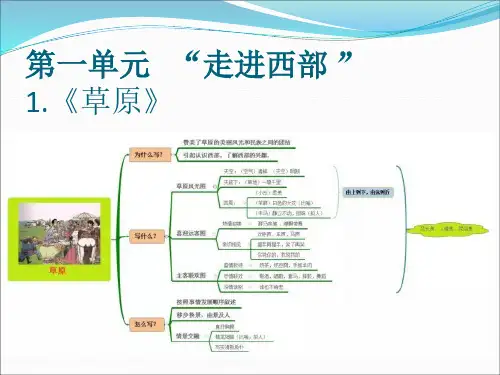
第一单元 “走进西部 ” 1.《草原》
2.《丝绸之路》
3.《白杨》
4.《把铁路修到拉萨去》
单元整体思维导图一
第二单元 “永远的童年” 1.《古诗词三首》
2.《冬阳·.《儿童诗两首》
单元整体思维导图二
第三单元 “语言的艺术” 1.《杨氏之子》
2.《晏子使楚》
3.《半截蜡烛》
4.《打电话》
单元整体思维导图三
第四单元 “爱满人间” 1.《再见了,亲人》
2.《金色的鱼钩》
3.《桥》
4.《梦想的力量》
单元整体思维导图四
第五单元 “亲近名著” 1.《将相和》
2.《草船借箭》
3.《景阳冈》
4.《猴王出世》
单元整体思维导图五
2.《威尼斯的小艇》
3.《与象共舞》
4.《彩色的非洲》
单元整体思维导图八
五年级下册英语课件-Module 4 Travel Unit 7 We will go by train Period 1_教科版(共26张PPT)
询问方式。
A. Where
B. When
e
Janet: Do you have any plans for the holiday? Ben: Yes, I will go travelling with my family. We are going to
何时去某地,其答语为 “主语+will+动词原形+时间状语”。当时间是具 体某一天时,用介词 on。
—When will you go to the zoo? 你将什么时候去动物园? —I will go to the zoo this afternoon. 我将今天下午去动物园。
单项选择。
随堂练习
in ___A_m__er_i_c_a___(美国)next month.
Let’s talk
Listen and follow the tape Read in groups
知识讲解
How will you go there? 你们打算怎样去那里?
“ How will+主语+go(to)+地点? ”用于询问某人如何去某地。how为副
课堂导入
Let's travel
by plane by train
by ship
by underground
by bus
by car
by car
by bike
on foot
单元新词
by 乘;由
I usually to school by bike. 我通常骑自行车上学。
单元新词
train 火车
课后作业
抄写、背诵单词表单词。 熟读 Let's talk 部分。
五年级下册英语文本思维导图完整ppt课件

完整版课件
2
启示
第一种人的态度非常悲观。他把所做的每一件事情都看 作是生活强加给的一份苦役,他关注的是当下的辛苦,当然 这也是确实存在的。
第二种人的态度可以称为职业主义的态度。他知道自已在 砌一堵墙,这堵墙是一个局部成品,他知道要对得起今天的 岗位,要对得起他的一份薪水、一个职务和职称,但他没有 更高的追求。
第三种人的态度可以称为理想主义的态度。他看到眼前的 每一块砖,每一滴汗,他都知道这是在通往一座圣殿和教堂。 他知道,他的每一步路都是有价值的,他的付出一定会得到 最终的成全,此时,他所做的事情绝不仅仅是一个工作,而 是关系到我们的梦想,关系到我们最终能不能建筑起一座教 堂。
完整版课件
3
Module 1
完整版课件
4
Unit 1 We lived in a small house
第一单元的课文情境是Amy叫 Linglingー起来看一 个关于中国的电视节目。在节目中,一位中国老奶奶在 接受采访。她谈到过去和现在生活的不同:人们过去住 的房子很小,食物不够,公共汽车很少,而且也没有电 视;现在人们住进了大房子,食物很丰富,公共汽车和 小汽车都很多,老奶奶每天都可以看电视。节目结束后, Amy感叹中国正在发生着很大的变化, Lingling则非常 想念祖国、想念自己的奶奶。
完整版课件
11
Unit 1 She learnt English
第一单元的课文情境是 Lingling向Sam 和Amy展示自己爷爷奶奶的照片。 Lingling 拿出一张奶奶年轻时的照片,对Sam和Amy说, 自己的奶奶从前是一名舞蹈演员,她曾在中 国许多城市演出,而且学过英语。随后, Lingling又展示了一张爷爷年轻时的照片, 告诉Sam和Amy,自己的爷爷从前是一名司机, 他虽然没有学过英语,不过现在正在学。
五年级下册英语课件Module 4 Travel Unit 7 We will go by train Period 2教科版
Listen and match
Jiamin Janet
school Shanghai
Hong Kong, China
Kate
library
Tom
Kelvin Susan
London, England
New York, America
五年级下册英语课件-Module 4 Travel Unit 7 We will go by train Period 2教科版(共12张PPT)
五年级下册英语课件Module 4 Travel Unit 7 We will go by train Period 2教科版 五年级下册英语课件Module 4 Travel Unit 7 We will go by train Period 2教科版
Let's talk
We are going to Hainan by ship.
五年级下册英语课件-Module 4 Travel Unit 7 We will go by train Period 2教科版(共12张PPT)
五年级下册英语课件-Module 4 Travel Unit 7 We will go by train Period 2教科版(共12张PPT) 五年级下册英语课件-Module 4 Travel Unit 7 We will go by train Period 2教科版(共12张PPT)
go swimming of course.
五年级下册英语课件-Module 4 Travel Unit 7 We will go by train Period 2教科版(共12张PPT)
Ask and write.
who
where
五年级下册模块四英语的思维导图及作文英语
五年级下册模块四英语的思维导图及作文英语全文共10篇示例,供读者参考篇1Title: My Mind Map and Essay about Module Four in the Fifth Grade English TextbookHi guys! Today I want to share with you my mind map and essay about Module Four in our fifth grade English textbook. This module is all about animals, their habitats, and how we can protect them. I hope you enjoy reading!First of all, let me show you my mind map. In the center of the map, I wrote "Animals." Then I drew branches for different types of animals like mammals, birds, reptiles, amphibians, and fish. Under each type of animal, I wrote down examples like dogs, cats, lions, parrots, eagles, snakes, frogs, turtles, and dolphins. I also included their habitats such as forests, oceans, deserts, and rivers.Now, let's talk about my essay. In Module Four, we learned a lot about animals and their habitats. We discovered that animals live in different places depending on what they need to survive. For example, lions live in the savanna because they need spaceto hunt for food. Penguins live in Antarctica because they need cold temperatures to swim and fish. It's amazing how animals are adapted to their environments!We also learned about the importance of protecting animals and their habitats. Humans are causing a lot of damage to the environment through pollution, deforestation, and climate change. If we don't take action now, many animals could become endangered or even extinct. That's why it's essential for us to reduce our carbon footprint, recycle, and support conservation efforts.In conclusion, Module Four has taught me so much about animals and the importance of protecting them. I'm grateful for this opportunity to learn and grow as a responsible global citizen. Let's all do our part to ensure a bright future for our furry, feathered, scaly, and finned friends. Thank you for reading my essay!篇2In Module Four of our fifth grade English textbook, we learned a lot of new things about different topics like animals, food, and hobbies. Let me share with you my mind map aboutthis module and also write a composition about my favorite topic.In Module Four, we first studied animals. There are so many interesting animals in the world, like lions, elephants, and pandas. We learned about their habitats, diets, and habits. I drew a mind map with different animals in different categories like mammals, birds, reptiles, and insects. It was fun to learn about all these amazing creatures!Next, we talked about food. Food is one of my favorite topics because I love to eat! We learned about different types of food from around the world, like pizza, sushi, and curry. I made a mind map with categories like fruits, vegetables, grains, and meats. It was cool to see all the different kinds of food that people eat in different countries.Finally, we discussed hobbies. Hobbies are activities that we do for fun in our free time. Some popular hobbies include reading, painting, dancing, and playing sports. I made another mind map with different hobbies in categories like indoor, outdoor, artistic, and physical. It was interesting to see all the different ways that people like to spend their time.Out of all these topics, my favorite is animals. I love learning about different animals and their behaviors. My favorite animal isthe panda because they are so cute and cuddly. I even wrote a short composition about pandas:Pandas are my favorite animals because they are black and white and look like big teddy bears. They live in China and eat bamboo all day long. Pandas are very lazy and love to sleep in the trees. I wish I could see a real panda one day!In conclusion, Module Four was a fun and interesting unit in our English class. I enjoyed learning about animals, food, and hobbies, and I can't wait to see what we will study next!篇3Module 4 of the English textbook for the fifth grade is all about animals. We learned so many interesting things about different animals and their habitats. Here is a mind map of what we learned:Animals:- Mammals: dogs, cats, lions- Reptiles: snakes, lizards, turtles- Birds: eagles, parrots, penguins- Insects: bees, butterflies, antsHabitats:- Forest: trees, bushes, squirrels- Ocean: fish, whales, sharks- Desert: cactus, snakes, scorpions- Arctic: polar bears, penguins, sealsWe also learned about the importance of protecting animals and their habitats. We should not harm animals or destroy their habitats because they are all part of our ecosystem.Based on what we learned, we wrote a composition about our favorite animal. Here is my composition about the lion:My Favorite Animal: The LionI love lions because they are so majestic and powerful. They are known as the "king of the jungle" and I can see why. Lions have beautiful golden fur and big mane that makes them look so regal. They are also amazing hunters and can run very fast to catch their prey.Lions live in the savannah, where they roam in prides with their family members. They are very social animals and take care of each other. I admire how they work together to protect their territory and hunt for food.I also learned that lions are in danger of extinction due to poaching and loss of habitat. It breaks my heart to think that these amazing creatures might not be around for future generations to see. That is why we need to do our part to protect them and their habitats.In conclusion, lions are my favorite animal because of their strength, beauty, and social nature. I hope that we can all come together to protect these magnificent creatures so that they can continue to roam the savannah for years to come.Overall, Module 4 of the English textbook for the fifth grade is so much fun and informative. I can't wait to learn more about animals and their habitats in the next module!篇4Module Four in the fifth grade English textbook is all about animals. We learn about different animals and their habitats, behaviors, and characteristics. In this module, we also practice writing and speaking about animals.First, we start by learning about the different types of animals, such as mammals, birds, reptiles, amphibians, and fish. We learn that mammals give birth to live young, birds have feathers and lay eggs, reptiles have scales, amphibians can liveon land and in water, and fish breathe through gills. We also learn about the characteristics of each type of animal and their habitats.Next, we study specific animals in detail. We learn about their physical appearance, diet, behavior, and habitats. For example, we learn about elephants, pandas, tigers, and whales. We also learn about endangered animals and how we can help protect them.In this module, we also practice writing and speaking about animals. We write short paragraphs describing our favorite animals and why we like them. We also practice giving presentations about different animals to our classmates.Overall, Module Four is a fun and informative unit that teaches us about the wonderful world of animals. We learn about different types of animals, their characteristics, habitats, and how we can help protect them. It is a great opportunity for us to improve our English skills while learning about the amazing creatures that share our planet.篇5Module Four: My English WritingIn Module Four of our English class, we have been learning a lot of new things about writing in English. We have learned about different types of writing, such as narratives, descriptions, explanations, and arguments. We have also learned about the importance of using correct grammar, spelling, and punctuation in our writing.One important thing we have learned is that when writing a narrative, it is important to include details that help the reader understand what is happening. We have practiced writing narratives about our own experiences, using vivid descriptions and dialogue to bring our stories to life.In addition to narratives, we have also practiced writing descriptions. We have learned how to use descriptive language to paint a picture in the reader's mind. We have practiced describing people, places, and objects in detail, using adjectives and sensory language to make our descriptions more engaging.Another type of writing we have worked on is explanation writing. We have learned how to organize our ideas in a logical way, using transition words to connect our thoughts. We have practiced explaining procedures, events, and concepts, making sure to use clear and concise language.Lastly, we have learned about writing arguments. We have practiced stating our opinions clearly and providing reasons and evidence to support our points of view. We have learned how to address counterarguments and strengthen our arguments by anticipating and responding to possible objections.Overall, Module Four has been a challenging but rewarding experience. We have learned a lot about different types of writing and how to improve our English writing skills. I am excited to continue practicing and improving my writing in the future. Writing in English may not be easy, but with practice and determination, I know that I can become a better writer.篇6Module Four in our 5th grade English textbook is all about thinking maps and writing essays. It's super cool because we get to learn how to organize our thoughts and ideas in a fun and creative way.First, we learned about different types of thinking maps like web, flow chart, and tree map. The web map helped us brainstorm ideas for our essays by writing down key words in the middle and branching out with related ideas. The flow chart helped us show the sequence of events in a story or process. Andthe tree map helped us categorize information by dividing it into different parts.After learning about thinking maps, we practiced writing essays using the ideas we generated. We first wrote an introduction where we stated our main idea or thesis. Then we wrote body paragraphs to support our main idea with reasons and examples. Finally, we wrote a conclusion to wrap up our essay and leave the reader with a memorable ending.I really enjoyed using thinking maps to organize my thoughts before writing an essay. It made the process much easier and more enjoyable. I can't wait to keep practicing and improve my writing skills even more!篇7Module Four in the fifth grade English textbook is all about talking about our favorite things and activities. We learned how to use different words to describe things we like and dislike, and how to express our opinions in English.The first part of the module focuses on vocabulary, where we learned new words related to hobbies and activities such as playing sports, painting, playing musical instruments, andcooking. We also learned how to use adjectives to describe these activities, such as "exciting," "interesting," or "boring."In the second part, we practiced forming sentences using these new words. We learned how to use the verb "to be" and adjectives to describe our favorite things and activities. For example, "I am good at playing basketball" or "I think playing the guitar is fun."The third part of the module was all about expressing opinions. We learned how to use phrases like "I think," "I feel," and "I believe" to express our thoughts on different topics. We also learned how to give reasons for our opinions, such as "I like reading because it helps me relax" or "I don't like cooking because it's messy."Overall, Module Four was a fun and interactive way to learn new vocabulary and practice expressing our thoughts and opinions in English. I can't wait to continue learning and improving my English skills in the next module!篇8Module Four of our fifth grade English textbook is all about learning new things and expanding our knowledge. In this module, we have been studying different topics like animals,plants, weather, and the environment. We have also been practicing our writing skills by writing essays and stories.One of the things we learned in this module is how to create a mind map to organize our thoughts and ideas. A mind map is a visual tool that helps us brainstorm and structure our writing. We can use it to plan out our essays or stories before we start writing. It helps us organize our thoughts and make sure our writing is clear and logical.In our English class, we have been practicing creating mind maps for different topics. For example, we made a mind map about animals, where we listed different types of animals and their characteristics. We also made a mind map about weather, where we wrote down different types of weather and how they affect us.After creating our mind maps, we used them to write essays and stories. We used the information from our mind maps to write about our favorite animal or describe a rainy day. It helped us structure our writing and make sure we included all the important details.Overall, Module Four has been a fun and educational experience. We have learned new things, practiced our writing skills, and improved our organization and structure. Creatingmind maps has been a helpful tool that we will continue to use in our future writing assignments.篇9Module Four in Grade Five is all about exploring different areas of the English language. From grammar to vocabulary to writing, there are so many fun activities to do in this module!Let's start with grammar. In this module, we learn about different tenses like present simple, past simple, and present continuous. It's important to know when to use each tense and how to form sentences correctly. We also learn about adjectives and adverbs, which help us describe things better in English.Next, let's talk about vocabulary. We get to learn new words and phrases in every lesson. It's exciting to expand our vocabulary and be able to express ourselves more clearly. We also learn about synonyms and antonyms, which help us improve our understanding of English words.Writing is another important part of Module Four. We practice writing short stories, letters, and even essays. It's a great way to practice our English skills and be creative at the same time. We learn about the structure of different types of writing and how to organize our ideas effectively.Overall, Module Four in Grade Five is a fantastic opportunity to deepen our understanding of the English language. By learning grammar, vocabulary, and writing, we become more confident in using English in our daily lives. I can't wait to see what else we will learn in the next modules to come!篇10Module Four in our fifth-grade English textbook is all about thinking maps and compositions. Let's dive in and explore the fun and exciting world of English writing!First, let's talk about thinking maps. Thinking maps are like visual organizers that help us brainstorm and organize our thoughts before writing. There are different types of thinking maps, such as circle maps, bubble maps, and flow maps. Each type of map helps us to focus on different aspects of our topic and to organize our ideas in a clear and logical way.For example, if we are writing a composition about our favorite animal, we can use a circle map to brainstorm all the things we know about that animal. Then, we can use a bubble map to think of adjectives to describe the animal, and a flow map to organize our ideas into paragraphs.Now, let's move on to writing compositions. Compositions are like stories or essays that we write to express our ideas and share our thoughts with others. When writing a composition, it's important to have a clear beginning, middle, and end. We can use descriptive language and vivid details to make our writing more interesting and engaging for the reader.In our compositions, we can also use transition words like "first", "next", "then", and "finally" to show the order of our ideas. We can also use linking words like "because", "so", and "although" to connect our ideas and make our writing flow smoothly.By using thinking maps and practicing our composition writing, we can become better English writers and express ourselves more effectively. So let's grab our pencils and notebooks, and start exploring the world of English writing together!。
五年级下册英语第四单元的思维导图和作文
五年级下册英语第四单元的思维导图和作文全文共10篇示例,供读者参考篇1Title: My Mind Map and Composition for Grade 5 Unit 4 EnglishHey everyone! Today, I'm going to share with you my mind map and composition for Grade 5 Unit 4 English. I hope you enjoy reading it!First, let me introduce my mind map for this unit. In the center, I wrote the main topic "My Dream School". Then, I drew branches for different areas like subjects, teachers, facilities, and activities. For subjects, I listed English, Math, Science, and Art. I also included branches for my favorite teachers, like Mr. Smith for Math and Miss Johnson for English. I added branches for cool facilities like a science lab and an art studio. And finally, I included branches for activities like sports, music, and drama club. This mind map helped me organize my thoughts and ideas for the composition.Now, let's move on to my composition about my dream school. In my dream school, I have the best teachers who arefriendly and supportive. They make learning fun and interesting.I also have a variety of subjects to choose from, including my favorites like English and Art. The school has amazing facilities like a library, computer lab, and even a swimming pool! I can't wait to explore all these areas and learn new things.In my dream school, I also have the opportunity to participate in different activities like sports, music, and drama club. I love playing soccer with my friends and performing in school plays. It's so much fun to be involved in these activities and meet new people.Overall, my dream school is a place where I can learn, grow, and have a great time. I hope one day my dream will come true and I can attend a school just like this. Thank you for reading my composition and I hope you enjoyed learning about my dream school!That's all for now! I had so much fun writing this composition and creating my mind map. I can't wait to share more of my work with you in the future. Bye for now!篇2Title: My Thoughts on the Fourth Unit of Fifth Grade EnglishHello everyone! Today I want to share with you all about what I have learned in the fourth unit of our fifth-grade English class. This unit is all about different types of jobs and careers, and it was really interesting to learn about all the possibilities for our future.First, we learned about different professions such as doctors, teachers, firefighters, and chefs. We discussed what each job entails and what skills are needed to be successful in that profession. It was cool to think about what we might want to be when we grow up!Next, we talked about the importance of setting goals and working hard to achieve them. We learned that no matter what we want to be when we grow up, we need to work hard in school and never give up on our dreams. It was inspiring to hear about all the successful people who followed their dreams and achieved great things.We also learned about the different ways people can work, such as full-time jobs, part-time jobs, and freelance work. It was interesting to see that there are so many different options for how we can earn a living. It got me thinking about what kind of work I might want to do when I get older.In conclusion, the fourth unit of our fifth-grade English class has been really fun and informative. I feel more prepared to think about my future and what I want to do with my life. I can't wait to see what other exciting things we will learn in the next unit!篇3Title: My Mind Map and Essay on Unit 4 of Grade 5 EnglishHello everyone! Today I want to share with you my mind map and essay on Unit 4 of our Grade 5 English book. This unit is all about animals and their habitats, and I had so much fun learning about different animals and the places where they live.Let me first show you my mind map. At the center, I put the title "Animals and Habitats", and then I drew branches for different topics like "Types of Habitats", "Polar Animals", "Desert Animals", "Rainforest Animals", and "Ocean Animals". Under each topic, I wrote down the key points and important information we learned in class. It was so helpful to have all the information organized like this!Now, let me tell you about my essay on Unit 4. I started by introducing the topic of animals and habitats, and then I talked about each type of habitat in detail. For example, I described how polar animals like polar bears and penguins are adapted toliving in cold environments, while desert animals like camels and scorpions have special adaptations to survive in hot and dry places.I also wrote about the importance of protecting animal habitats and how we can help endangered species. I included some facts and interesting details about different animals, like how rainforest animals like sloths and toucans live in the canopy layer of the forest.In conclusion, I shared my thoughts on what I learned in this unit and how it made me more aware of the importance of preserving animal habitats. I hope you enjoyed reading my essay and learning more about animals and their habitats. Thank you for listening!篇4Title: My Mind Map and Essay for Grade 5 Unit 4Hi everyone! I want to share my mind map and essay for Grade 5 Unit 4 in English class. This unit is all about different countries and cultures around the world. It's super interesting and I learned a lot from it.First, let me show you my mind map. At the center, I put "Different Countries" and then I divided it into four sections: Asia, Europe, Africa, and The Americas. Under each section, I wrote down the names of some countries and their famous landmarks. For example, under Asia, I wrote China and the Great Wall, Japan and Mount Fuji, and India and the Taj Mahal. It was so much fun to brainstorm and organize all this information.Now, let me tell you about my essay. I wrote about Japan because I think it's a really cool country. I talked about the cherry blossoms, the traditional tea ceremony, and sumo wrestling. I also mentioned how polite and respectful the Japanese people are. I even included some fun facts like how it's rude to tip in Japan and how it's common to slurp noodles. I had a blast writing this essay and sharing my knowledge with my classmates.Overall, I really enjoyed studying Grade 5 Unit 4. I learned so much about the world and I can't wait to keep exploring new countries and cultures. Thanks for reading my mind map and essay! Bye!篇5Title: My Thoughts on Unit 4 of Grade 5 EnglishHi everyone! Today I want to share my thoughts on Unit 4 of Grade 5 English with you all. This unit is all about different countries and cultures, and I had so much fun learning about them!First, let me tell you about the mind map I made for this unit. In the center, I put "Countries and Cultures" because that's the main topic. Then, I branched out into different sections like "Greetings," "Food," "Holidays," and "Traditions." I wrote down all the new words and phrases I learned in each section, and I also drew some cute little pictures to help me remember them better.One of my favorite parts of this unit was learning how to greet people in different languages. Did you know that in Japan, people bow to greet each other? And in Spain, they kiss on the cheek! I thought that was so cool. I also loved learning about the different foods people eat in different countries. I would love to try sushi from Japan, paella from Spain, and pasta from Italy. They all sound so yummy!Another interesting thing I learned about was the different holidays people celebrate around the world. In China, they celebrate the Lunar New Year with dragon dances and lantern festivals. In America, they celebrate Thanksgiving by eating a bigturkey dinner with their families. I think it's so cool how every country has its own unique traditions and customs.Overall, I had a blast learning about different countries and cultures in Unit 4. It really opened my eyes to the amazing diversity of our world. I can't wait to continue learning more about other countries and their traditions. Thanks for reading my thoughts, and I hope you enjoyed them too! Bye for now!篇6Title: My Mind Map and Essay for Grade 5 Unit 4 EnglishHey everyone! Today I want to share with you my mind map and essay for the fourth unit of Grade 5 English. This unit is all about animals and their habitats, and I had so much fun learning about them!First, let me tell you about my mind map. In the center, I wrote "Animals and Their Habitats" in big letters. Then, I drew branches going out to different sections. One section was about polar animals like polar bears and penguins. Another section was about jungle animals like tigers and monkeys. I also had sections for desert animals, farm animals, and pets. Each section had little drawings and fun facts about the animals and their homes.Now, let me tell you about my essay. I wrote about my favorite animal, the panda. Pandas are black and white bears that live in China. They eat bamboo and love to play in the snow. I also wrote about their habitat, which is the bamboo forests in the mountains. I described how they climb trees and take naps in the shade. I even included a funny story about a panda I saw at the zoo once.I had so much fun writing this essay and making my mind map. I learned a lot about different animals and where they live. I hope you enjoyed reading about it too! Thanks for listening, and stay curious about the world around you!篇7Title: My Mind Map and Essay on Unit Four of Grade Five EnglishHi everyone! Today I’m going to share with you my mind map and essay on the fourth unit of grade five English. Let’s get started!First, let me show you my mind map. In this unit, we learned about different places in a city, like the post office, the library, the hospital, and the park. I drew a big circle in the middle of the page and wrote “City” in the center. Then I drew lines comingout from the circle with the names of the places in the city. I also wrote down key words and phrases related to each place. For example, under “Library” I wrote “books, reading, quiet” and under “Park” I wrote “playground, trees, picnic.”Now, let me tell you about my essay. I started by introducing the topic of the unit and why it is important to know about different places in a city. Then I wrote a paragraph about each place, describing what you can do there and why it is a good place to visit. I used lots of adjectives to make my writing more interesting, like “beautiful, fun, and interesting.”In the conclusion, I talked about my favorite place in the city and why I like it so much. I also included a final thought about the importance of exploring your city and discovering new places.Overall, I had a lot of fun creating my mind map and writing my essay. I hope you enjoyed reading about my thoughts on unit four of grade five English. Thanks for listening!篇8Oh wow, talking about the fourth unit in our fifth grade English textbook, it's all about thinking maps and writing essays.It's kind of like a super fun adventure to explore our thoughts and put them into words!First off, let's talk about the thinking map. It's like a big colorful picture with different branches and ideas all connected together. We learned about different types of thinking maps like a circle map, tree map, flow map, and more. Each map helps us organize our thoughts in a cool and visual way.Next, we have to write an essay based on the thinking map we made. We get to choose a topic like our favorite animal, a memorable trip, or a special person in our life. Then we use the thinking map to plan out our essay with an introduction, body paragraphs, and a conclusion. We make sure to use transition words like first, next, then, and finally to connect our ideas smoothly.When we're done writing, we can share our essays with our classmates and even perform them in front of the whole class.It's so cool to see how everyone has different thoughts and ideas, but we all learn from each other.So yeah, that's the fun and creative way we learn about thinking maps and writing essays in our fifth grade English class. It's like a journey of words and ideas that we get to exploretogether. It's super awesome and I can't wait to write more essays and make more thinking maps in the future!篇9Title: My Mind Map and Essay for Grade 5 Unit 4Hi everyone! Today I want to share with you my mind map and essay for Grade 5 Unit 4 in English class. This unit is all about animals, their habitats, and how we can protect them. Let's dive in!Mind Map:In the center of my mind map, I drew a big heart to represent my love for animals. Then, I drew branches for different topics such as different habitats like forests, oceans, and grasslands. I also included animals like tigers, dolphins, and elephants. On each branch, I wrote key words and phrases to help me remember important information.Essay:Animals are amazing creatures that share our planet with us. They come in all shapes and sizes, and they live in different habitats all around the world. Some animals, like tigers, live in forests. They are beautiful and powerful, but their homes arebeing destroyed by deforestation. We must work together to protect their homes and ensure their survival.Other animals, like dolphins, live in the oceans. They are intelligent and playful, but they are facing threats like pollution and overfishing. We need to take action to keep our oceans clean and safe for these amazing creatures.Lastly, animals like elephants live in grasslands. They are gentle giants, but they are being hunted for their ivory tusks. We must stop poaching and protect these majestic animals for future generations to enjoy.In conclusion, we all have a responsibility to protect animals and their habitats. We can make a difference by learning more about animals, raising awareness, and taking action to preserve their homes. Together, we can create a better world for all living beings.I hope you enjoyed reading my mind map and essay for Grade 5 Unit 4. Let's continue to learn and care for our animal friends! Thanks for listening!篇10Title: My Thoughts on Unit 4 of Fifth Grade EnglishHi everyone! Today I want to share with you my thoughts on the fourth unit of English in the fifth grade. This unit is all about animals and the environment, and I learned a lot of interesting things from it.First, let's talk about the mind map I created for this unit. I divided it into two main parts: animals and the environment. Under the animals section, I listed different kinds of animals such as mammals, birds, reptiles, amphibians, and fish. I also included information about their habitats and what they eat. In the environment section, I wrote about different ecosystems like forests, deserts, oceans, and grasslands. I also discussed the importance of protecting the environment and how we can help.Now, let me tell you about the essay I wrote for this unit. In my essay, I talked about the impact of human activities on animals and the environment. I explained how deforestation, pollution, and climate change are harming wildlife and their habitats. I also shared some ways we can help, like recycling, conserving water, and planting trees.Overall, I really enjoyed learning about animals and the environment in this unit. I hope we can all work together to protect our planet and the amazing creatures that live on it. Thank you for listening to my thoughts!。
五年级下册 Module 4 Travel[2]
五年级下册 Module 4 Travel第六课时Amazing Travel 教学设计花都区新华街第四小学姚婉贞【教学内容分析】本节课的教学内容为改编或创编的3个故事,具体如下:文本一:Oh’s travel to Dingdong特点:此文本的语言结构与Unit 8的课文内容及结构相似,但又比课文有趣而不寻常,让学生进一步巩固本模块的语言知识。
文本二:Oh’s travel to Dingdong特点:此文本以对话的形式呈现,内容取材于电影《海底总动员》,孩子们非常感兴趣,通过故事创编,以视听的形式进行语言输入。
文本三:Haidi’s amazing travel特点:此文本是自编的一个绘本故事,以绘本的形式让学生阅读,在图视下让学生补全文本所缺的内容,一起建构文本。
以绘本的形式让学生阅读,既提高学生的兴趣,又降低其难度。
【教学目标】目标1: 学生能运用will,be going to, plan to 来表达计划。
(语言能力目标)目标2:学生能听懂及朗读与课文难度相当的语篇。
(语言能力目标)目标3:学生能阅读及理解与课文难度相当的故事,并提取相关信息,复述文本。
(语言能力及思维品格目标)目标4:学生能就时间、地点、方式、活动等谈论旅游计划。
(学习能力目标)目标5:学生能就amazing travel的主题改编或创编文本难度相当的旅游计划。
(思维品格及文化品质目标)(一)起点能力分析学生在本册Module2中已经接触Plan的话题,学生接触过以will,be going to,plan to 等句型结构来表达计划,学生对谈论计划的几个wh要素“Where? When? What?How?Who?”比较熟悉。
作为五年级下册的学生,他们有一定的词汇量,也有自己的想法,对新奇有趣的东西特别感兴趣。
本模块主题是谈论Travel,跟Plan又有较多相关的内容。
作为Travel话题的最后一个课时,本节课以Amazing Travel为主线改编和创编了学生感兴趣的文本,希望通过听、视听、阅读等形式的输入,引导学生进行语言输出,能改编或创编自己的Amazing travel,以提高学生的思维品质及英语综合能力。