
外研版八年级Module5 Unit1 Lao She Teahouse
People’s Artist
Great Master of Language
Lao She (1899-1966)
Teahouse
Sishitongtang
Luotuoxiangzi
Yueya yu yangguang
Read paragraph2. Then find out the usage of the key words. 1. send sb to sp His parents sent him to the Teacher’s School in Beijing. send sb sth/sth to sb Sun Yuyao sent me a present last week.
2. teach sb sth/sth to sb From 1924 to 1929 he taught Chinese to the English in London.
Step Six: Summary bring/ show/ tell/ sell/ give/ send/ teach/offer/lend/pass/leave/ sb sth bring/show/tell/sell/give/send/ teach/offer/lend/pass/leave/ sth to sb
动词不定式
• Grammar focus: 动词不定式做宾语: 英语中动词不定式置于谓语动词之后, 做动词的宾语,表明想要、计划或希望做 的事。
Eg: 1. I want to go to the teahouse. 2. She offered to take us there. 3. They planned to stay for some tea. 4. They decided to stay longer. 5. I hope to go there again one day . 6. My parents agreed to take us.
2. tell sb sth/sth to sb It tells us the story of Wang Lifa and his customers.
3. bring sb sth/sth to sb 4. sell sb sth/sth to sb Waiters bring tea to the customers and sell them delicious Chinese food. 5. give sb sth/sth to sb Lao She Teahouse gives a wonderful welcome to everyone (from China and from all over the world.)
Lao She Teahouse---老舍茶馆
老舍茶馆是以人民艺术家老舍先生及其名剧 命名的茶馆,始建于1988年。在老舍茶馆 里,顾客们能喝茶,品味美味的背景小吃。 如果你喜欢京剧、传统音乐或魔术,你都能 去老舍茶馆欣赏。老舍茶馆欢迎来自世界各 地的朋友。2005年4月28日,连战夫妇率 中国国民党大陆访问团曾在老舍茶馆品茶赏 戏。
2. What did Lao She do from 1924 to 1929? He taught Chinese to English people. 3. What can you enjoy at Lao She’s Teahouse today? Beijing Opera, folk music, acrobatics or magic shows.
Homework:
According to the questions to write a passage about your favorite film / book / TV play .
1.What’s the name of it? 2.Where does it take place? 3.Who is in it? 4. What’s the story? 5. What was the best part?
Read paragraph1 and 3. Then find out the usage of the key words and difficult sentences. (直接宾语:蓝色表示 间接宾 语: 绿色表示) 1. show sb sth/sth to sb The play shows the audience life (in China between 1898 and 1945.)
3. I sold my brother my car yesterday. I sold ___ __ ___ _______ yesterday. my___ car to my brother 4. 李雷向他妈妈道别去上学了。 Li Lei ____ _______ ___ his mother said goodbye to and went to school. 5. My mother asked me, “Don’t read books in bed.” My mother asked me ___ __ _____ not to read ______ in bed books
Module 5 Lao She Teahouse
Unit 2 It describes the changes of Chinese society
Read the passage quickly and match the headings with the paragraphs.
Paragraph 3. A Lao She Teahouse
Module5 Lao She’s Teahouse
Lao She (1899—1966)
Lao She’s old house
Tea House---《茶馆》
《茶馆》是老舍最著名的 巨作之一。该剧写于1957 年,整个剧本讲述了王利 发和他的北京茶馆里的顾 客们的故事,描述了中国 社会50多年的变迁。
Exercises: 1. Waiters bring tea to the customers and sell them delicious Chinese food. (同义句 转换) the________ customers tea sell Waiters bring ____ _____and _______ _______ ___ __food _____. delicious Chinese to them 2. The teacher gave me some advice.(同义 句转换) The teacher gave ____ _____ __ __. some advice to me
5.
want to do sth 想做…… offer to do sth 愿意做…… agree to do sth 同意做…… plan to do sth 计划做…… decide to do sth 决定做某事…… try to do sth 尽力做某事 ……
谓语动词 + ‘tove sth to sb lend sb sth =lend sth to sb send sb sth =send sth to sb show sb sth=show sth to sb
用介词for 的单词有, cook、buy、make、 read cook sb sth=cook sth for sb buy sb sth=buy sth for sb
What do you think people can do in Lao She Teahouse?
Lao She’s Teahouse nowadays(如今)
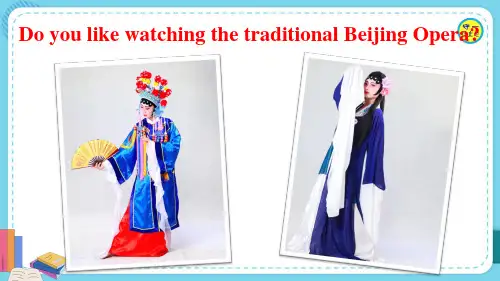
Beijing Opera Show in Lao She Teahouse
waiters bring tea to the Customers (顾客) and sell them delicious Chinese food
Paragraph 1. B The story of Teahouse Paragraph 2. C Lao She
Read again and answer the following questions:
1. Who does the play tell the story of?
The story of Wang Lifa and his customers
二、双宾语
当我们表达“给某人某物”时就出现了两个动 作的承受者,一个是人(间接宾语),一个是 物(直接宾语)。 1. Betty gave me a present. 动词+人+物 2. Betty gave a present to me. 动词+物+介词+人 to, for
常见的结构:
八年级英语上册Module5LaoSheTeahouseUnit1Iwantedtos习题新版外研版

— __C__. Let’s ask him.
A. Don’t worry
B. Pretty good
C. No idea
D完成句子,每空一词。 16. 最后,我们在茶馆待了三个小时。
___I_n____ ___t_h_e___ ___e_n_d___ , we stayed for three hours at the teahouse.
返回
五、补全对话。(有两项多余)
A: Do you like reading? B: Yes. I like reading very
much.
A . Who was the writer? B. Which character do you like
best in the story? C. How often do you read books?
B. popular
C. worried
D. busy
返回
And now more and more young people 30 _____ it. Many
children learned to sing the Beijing Opera 31 _____ they
were very young.
A: Did you read Teahouse? C. How often do you read books?
B: Yes, I did. A: 23.__F___ B: I read it two weeks ago.
D. What kind of books do you often read?
E. What is the story about? F. When did you read it?
外研版八年级英语上册Module 5 Unit 1(含音频)
Now check(√) the true sentences.
1 Tony went to Lao She Teahouse with Betty and
Lingling.
( F)
2 Betty understood the opera.
( F)
3 Lingling and Betty stayed longer than they planed.
actress difficult end main offer
excellent. They only planned to watch for an hour, but in the (4) __e_n_d___, they stayed for three hours. Betty thought it was interesting — that was the (5) __m_a_i_n__ thing!
Lingling: Yes, it’s quite difficult to understand the story! Just watch the actors and actresses, listen to the music and try to enjoy it.
3 Listen and read.
Betty: No, it was difficult to understand the words. But the actors and actresses were excellent.
Tony: How long did you stay? Betty: We only planned to watch for an hour, but
Betty wanted to see the Beijing Opera, so Lingling (1) _o_f_f_e_re_d__ to take Betty to Lao She Teahouse. The words of the opera were (2) _d_if_f_ic_u_l_t to understand, but the actors and (3)_a_c_tr_e_s_s_es_ were
初中英语外研八年级上册Module 5 Lao She Teahouse教案

Module 5 Lao She TeahouseUnit 1 I wanted to see the Beijing Opera. Teaching type:Listening and speakingTeaching methodsCommunicative approach, task-based approachTeaching goals:To understand a conversation with infinitivesTo describe one’s plans or intentions with infinitives.To develop the love of traditional Chinese culture.key points:V ocabulary: teahouse, no idea, actressStructures: I wanted to see the Beijing Opera.We only planned to watch for an hour.I hope to understand more next time.Teaching tools:Tape recorder, video, multimediaTeaching procedures:一、Greetings and lead-in1、Do you like drinking tea?-------Tea is our traditional Chinese culture. Where can we drink tea?What’s the most famous teahouse in China?Lao She Teahouse.2、Enjoy a video and know more about Lao She Teahouse.3、Enjoy a video and know more about the Beijing Opera.二、ListeningListen and underline the correct words or expressions.(Activity 2)三、listening. Activity 3.1、Predict what Betty and Lingling want to do at Lao She Teahouse.2、Listen to a conversation and choose the correct answer.3、Read the conversation aloud and choose the true sentences.4、Do a role play with Beijing Opera masks.四、Pronunciation and speaking.1、Work in groups and discuss what other traditional cultures we know.2、Talk about your plan: what do you want/plan/hope/ to learn/ do ?五. Summary and homework.。
2024-2025学年外研版初中英语八年级(上)教案Module5Unit1
Module 5Lao She TeahouseUnit 1I wanted to see the Beijing Opera.设计说明教学反思从谈论对京剧的了解和喜欢程度引入新课。
通过对话的学习和演练,提升学生的朗读能力。
通过听力训练,提升学生在交谈中捕捉细节信息的能力。
学习新单词、短语和句型,学习新语言点,增加学生的语言积累。
初步学习动词不定式作宾语和双宾语的用法。
练习重音,提升学生在英语表达中的规范性和美感度。
通过对应练习,巩固学生对单词、短语、句型和语法的掌握,提升运用能力。
教学目标通过本单元的教学,让学生达成以下目标:1.知识目标掌握本单元新单词及短语:actress,teahouse,offer,end,in the end,no idea。
2.能力目标(1)能听懂关于谈论京剧的对话。
(2)学习使用动词不定式作宾语和双宾语的用法。
3.情感目标通过听说训练,更多地了解中国的京剧艺术,增强文化自信。
重点难点重点:对话朗读,动词不定式作宾语的用法和双宾语的用法难点:动词不定式作宾语的用法和双宾语的用法,句子中单词的重读教学准备PPT课件,有关京剧的图片,活动2、3、5的录音授课时数2课时教学过程Step 1Warming up1. Play the recording of the Beijing Opera to the class.2. Ask the students how much they know about the Beijing Opera and if theylike it.T: Do you know the Beijing Opera?Ss: …T: Do you like it?Ss: …T: Can you sing the Beijing Opera?Ss: …Step 2PresentationWork in pairs. Look at the pictures and talk about them. Use the words in the box to help you. (Activity 1 on Page 34)1. Ask the students to look at the pictures.2. Tell them to read through the words and make sure they know the meaningactress dance music play sing teahouse theatre traditional3. Ask them to describe the pictures in pairs.4. Encourage some pairs to present their conversations.Step 3Listening1. Let the students listen and underline the correct words or expressions. (Activity 2 on Page 34)(1) Ask the students to read the three sentences.(2) Play the recording and ask the students to choose the correct answers.(3) Have the students check answers with their partners.(4) Check answers and read full sentences with the students.Answers: 1 wants to see 2 doesn’t know 3 difficult(5) Play the recording again. Show the tapescript if necessary.Step 4Listening and reading1. Introduce the playwright Lao She and his play Teahouse to the class.2. Play the recording and ask the students to check the true sentences. (Activity3 on P35)(1) Read through the sentences and try to understand them.(2) Listen to the recording. Then check the true sentences.(3) Elicit the answers from the class.Answers: 3√4√5√3. Listen again and try to get answers to the question.1. Who went to Lao She Teahouse last night?2. Did Betty like the Beijing Opera?3. How long did they stay there in the end?4. Does Lingling often go to see the Beijing Opera?5. What is Lao She famous for?(1) Ask the students to read through the sentences and try to understand them.(2) Listen to the recording and try to get the answers. Allow some students toread the conversation if they still can’t get the answers after listening.(3) Elicit answers in full sentences for the class.Answers:1 Lingling and Betty.2 Yes, she did.3 They stayed there for three hours.4 No, she doesn’t.5 He is famous for his play Teahouse.4. Read the conversation again and find out the following phrases. Try to5. Listen to the conversation and read it.(1) Ask the students to listen to the recording and then try to read the conversation on their own.(2) Ask or encourage some students to read the conversation. Correct their mistakes.(3) Ask some students to practice the conversation in different roles.Step 5PracticeComplete the passage with the correct form of the words in the box. (Activity 4 on Page 35)(1) Read through the words in the box.complete it with the correct form of the words in the box on their own.(3) Check answers in groups.(4) Elicit answers from the class.Answers:(1) offered (2) difficult(3) actresses (4) end (5) mainStep 6Language points1. You know,I wanted to see the Beijing Opera,so Lingling offered to take me there. 你知道,我想看京剧,因此玲玲主动提出带我去那儿。
外研版八年级英语上册 Module 5 Lao She Teahouse Unit 1
Words: actress, teahouse, offer, end Phrases: offer to in the end plan to stay for … Patterns: How was it? That’s the main thing. No idea.
1 Work in pairs. Look at the pictures and talk about them. Use the words in the box to help you.
3
Listen and read. Now check (√) the true sentences.
1.Tony went to Lao She Teahouse with Betty and Lingling. × 2. Betty understood the opera.
×
3. Lingling and Betty stayed longer √ than they planned. 4. Betty enjoyed the opera.
√
5. Betty would like to see the Beijing Opera again. √ 6. Betty knew about Lao She before she went to the house. ×
4 Complete the passage with the correct form of the words in the box.
actress difficult end main offer Betty wanted to see the Beijing Opera, so Lingling (1) offered ______ to take Betty to Lao She Teahouse.
外研版英语八年级上册Module 5《Lao She’s Teahouse》(Unit 1)教学设计
外研版英语八年级上册Module 5《Lao She’s Teahouse》(Unit 1)教学设计一. 教材分析《Lao She’s Teahouse》是人教版初中英语八年级上册Module 5的教学内容。
本节课主要介绍老舍的著作《茶馆》,通过学习这篇课文,学生可以了解到中国近代史上不同阶层的人物的生活状态,以及他们对待生活的态度。
教材内容丰富,涉及词汇、语法、阅读理解等多个方面,有利于提高学生的综合语言运用能力。
二. 学情分析初中八年级的学生已经具备了一定的英语基础,能够运用英语进行简单的交流。
但他们在阅读理解、词汇积累以及语法运用方面还存在一定的困难。
因此,在教学过程中,需要关注学生的个体差异,合理安排教学内容,调动学生的学习积极性,提高他们的阅读理解能力和语言运用能力。
三. 教学目标1.知识目标:学生能够掌握本节课的重点词汇和短语,如“drama, character, actor, actress, modern”等;学生能够理解课文内容,了解《茶馆》的故事背景和人物关系;学生能够运用所学的词汇和语法知识,进行简单的阅读理解和口语表达。
2.能力目标:学生能够提高阅读理解能力,通过阅读课文,获取和处理信息;学生能够在日常生活中运用所学的英语知识进行交流。
3.情感目标:学生能够培养对英语学习的兴趣,增强自信心;学生能够理解课文中所反映的社会现象,培养正确的人生观和价值观。
四. 教学重难点课文内容的理解;重点词汇和短语的掌握;运用所学的词汇和语法知识进行阅读理解和口语表达。
课文中长难句的理解;词汇的灵活运用;语法知识的运用。
五. 教学方法1.任务型教学法:通过设置各种任务,让学生在完成任务的过程中,运用所学知识,提高语言运用能力;2.情境教学法:创设各种情境,让学生在真实的语境中学习英语,提高学习兴趣;3.小组合作学习:鼓励学生相互合作,共同完成学习任务,培养团队精神;4.反馈与评价:及时给予学生反馈,鼓励他们积极参与学习,提高自信心。
外研版八年级上module_5_lao_she_teahouse_unit_1
Find out more information about theatres. Choose a scene and practise
it, then act out the scene in front of the
class next lesson.
actress the Beijing Opera
Teahouse
Lao She Teahouse
话剧《茶馆》 Lao She Teahouse
Lao She Teahouse ቤተ መጻሕፍቲ ባይዱowadays
Inside of Lao She Teahouse
Inside of the teahouse
Listen to the conversation and answer the questions.
Find these phrase in the dialogue
1.How was it? 2.You know… 3.Lingling offered to take me there. 4.It was difficult to understand the words. 5.Plan to do sth. 6. in the end 7.That’s the main thing.
你知道的 看京剧 计划干某事 主动提出带 我们去那儿 5. 以……著名 6. 希望做某事 7. 怎么样? 8. 不知道. 1. 2. 3. 4.
you know see some Beijing Opera plan to do sth. offer to take us there
be famous for=be known for hope to do sth. How was it? No idea. =I’ve no idea
外研版八上Module 5 Lao She Teahouse Unit1教案
Module 5 Lao She TeahouseUnit1 I wanted to see the Beijing Opera B: No, it was difficult to understand the words.Drink 过去式 drank A: Daming B : Betty二.课堂交流与探究(一)读P34页对话,写出下列短语并在文中标出。
(找出后小组核对答案)1. 想要做某事_____________ 6.see the Beijing Opera______________2. 提议做某事___________ 7. plan to do sth___________3. 最后_______________ 8. hope to do sth_____________4. 下次_____________ 9. take … to … ______________5. 不知道。
___________ 10.be famous for/as.___________(二)回答问题。
(同学们你们看懂对话了吗?做做以下练习吧!) 做完后小组核对,并找小组成员给对答案。
1. Who went to Lao She Teahouse last night?一、 课前准备口语训练。
(看看谁读的又流利又准确,加油!)要求:大声朗读2遍并翻译。
时间约为3分钟。
A : Where did you go last night, Betty? B: I went to Lao She Teahouse. A: Who is Lao She? B: He is a great writer. He ’s famous for his play Teahouse. A: What do you think of it? B: It was great. A: Who was with you? B: Lingling. A: What did you do there? B: We drank tea and watched an opera. A: Did you understand the opera?____________________________________2. Did Betty understand the opera? ___________________3. How long did they stay in the Teahouse?____________________________________4. What is Lao She famous for?_____________________(三)小组朗读对话(四)page35 activity3 &4三.当堂检测(考考自己吧!)1. Finally they worked out the problem .(替换划线部分)A. At onceB. At firstC. In the end2. Dad agreed ________ the summer holiday in Sanya.A. to spendB. spendC. spendingD. to spending3. —________ did you stay there?—I stayed there for two hours.A. How soonB. How farC. How longD. How often4. —Who cleaned the room?—________. But it wasn’t me.A. No ideaB. Good ideaC. I seeD. Go on5. —How was that new film? —________.A. It was by Zhang YimouB. It was during 1978C. It was interesting 四.课后巩固小试牛刀(翻译句子)1. I want to see the Beijing opera.____________________.2. My friends offered to help me learn English.___________________________________________3. We plan to watch for an hour, but in the end, we stayed for three hours.______________________________4.He is especially famous for his play Teahouse._____________________________________________.一.词组.展示想要做某事_____________ 看京剧______________提议做某事___________ 计划做某事___________最后_______________ . 希望做某事_____________下次____________ 带某人去某地______________不知道。
外研版英语八年级上册Module 5 Lao She Teahouse Unit 1课件
Ⅳ. 英汉互译
1. We stayed there longer than we planned. __我__们__在__那__里__待__的__时__间__比__计__划__的__长__。________________
2. Beijing Opera is interesting—that’s the main thing. __京__剧__很__有__趣__—_—__这__是__主__要__的__。______________________
Another thing that made 7. _________(we) angry was the tickets. There were so many people 8.________ (wait)at the ticket office. It took us about an hour 9. _______(get) the tickets.
3. _m_o_s_t_c_o_m__fo_r_table
Another thing that made 7. _________(we) angry was the tickets. There were so many people 8.________ (wait)at the ticket
4.____d_if_f_e_re_n_t__
( )2. Who was born first?
A. Mo Yan.
B. Lao She.
C. Guo Moruo.
D. Mao Dun.
( )3. Who travelled and studied in Japan according to the text?
A. Lu Xun.
B. Lao She.
外研版英语八年级上册Module5《LaoShe’sTeahouse》(Unit1)说课稿
外研版英语八年级上册Module 5《Lao She’s Teahouse》(Unit 1)说课稿一. 教材分析《Lao She’s Teahouse》(Unit 1)是外研版英语八年级上册Module 5的一篇阅读课文。
本节课文主要介绍了老舍的《茶馆》,通过讲述茶馆里的人物和故事,展示了老北京的历史文化。
课文内容丰富,语言生动,充满了烟火气。
本节课主要围绕茶馆里的三位角色——王利发、常四爷和秦仲义展开,通过他们的对话和独白,揭示了各自的性格特点以及他们所代表的社会阶层。
二. 学情分析八年级的学生已经具备了一定的英语基础,能够理解和运用简单的英语进行交流。
但他们在阅读长篇文章时,可能会遇到一些生词和短语的理解困难,因此需要在教学过程中加以引导和帮助。
此外,学生对于老北京的历史文化可能了解不多,需要在课前进行相关背景知识的介绍。
三. 说教学目标1.知识目标:学生能够掌握课文中的生词和短语,理解课文大意,把握人物性格特点。
2.能力目标:学生能够运用所学知识进行口语交流,提高阅读理解能力。
3.情感目标:通过学习课文,学生能够了解老北京的历史文化,增强对祖国文化的自豪感。
四. 说教学重难点1.教学重点:课文生词和短语的学习,阅读理解能力的提高。
2.教学难点:人物性格特点的把握,对老北京历史文化的理解。
五. 说教学方法与手段1.教学方法:采用任务型教学法,让学生在完成任务的过程中,提高英语运用能力。
2.教学手段:利用多媒体课件、图片等辅助教学,激发学生学习兴趣。
六. 说教学过程1.导入:教师通过展示老北京的图片,引导学生谈论自己对北京的了解,为新课的学习营造氛围。
2.读前预测:教师引导学生根据课文标题和图片,预测课文内容。
3.自主学习:学生自主阅读课文,遇到生词和短语时,可以查阅词典或与同桌讨论。
4.合作学习:学生分组讨论,分析课文人物性格特点,总结各自的代表意义。
5.课堂展示:各小组代表向全班同学展示讨论成果,其他同学可进行补充和评价。