
八年级英语Unit7Willpeoplehaverobots单元同步作文学案(新版)人教新目标版
Unit 7 Will people have robots
话题:Life in future
School Class Name Date 一、本课学习目标
1.能力目标
(1)巩固一般将来时意义、结构和语用功能;
(2)能够运用一般将来时谈论未来生活,同时完成题为“My life in 20 years”的写作任务。
2.情感目标
(1)通过对人生理想的讨论,让学生树立人生理想,并为之努力;
(2)能积极参与合作学习,学会分享互助。
二、语料箱
▲词块:
动词词块:have robots, use money, live to be, move to other planets, saving the earth, help with, look for, get a job, take a vacation 介词词块:in 20 years, on the earth, during the vacation, at the weekend, in the future, in great danger, at some point
▲句型:
1. Cities will be more polluted.
2. Will people use money in 100 years?
3. In the future, there will be less fresh water.
4. Everyone should play a part in saving the earth.
5. In 50 years, people will have less free time because there will be more things to do.
▲名言、谚语、警句:
1.Rome wasn’t built in a day. 罗马不是一天建成的。
2. Where there is a will, there is a way. 有志者,事竟成。
三、写作前任务
1.短文填空。
In 20 years, I think I'll be a newspaper reporter. I'll _______ in Shanghai, because there will be _______ jobs in that city. As a reporter, I think I will _______ lots of interesting people, so I'll have more friends. I'll have _______ pets, though, because I'll have _______ free time. And my apartment will be no good for pets because it'll be too small. So I'll probably just _______ a bird. During the week, I'll _______ smart clothes. On the weekend, I'll _______ less smart but I'll be more comfortable. In the future, people will _______ more so they'll probably have fewer vacations, but I think I'll _______ a holid ay in Hong Kong when possible. One day I'll even go to Australia.
2. 3b Com plete the chart about your life 20 years from now. You can add more item s.
What will your...be like?
3.写作策略学习
人称:________________ 时态:_______________ 体裁:_______________ 写作提纲:
beginning:___________________________________________________________ Main body: __________________________________________________________ _____________________________________________________________________ _____________________________________________________________________ _____________________________________________________________________ 四、写作任务
人们总是憧憬这美好的未来,希望生活会越来越好。
请发挥你的想象力,想象20年后,你的生活将会发生怎么样的改变。
请你从工作、家庭、业余生活、朋友等方面展开联想,以一篇题为”My life in 20 years”的文章,谈谈20年后的生活情况。
要求:1. 内容完整,语句连贯,语法准确;2. 词数70个左右。
五、写作后任务
1. Self-check
Check and correct your writing according to the form below.
2. Did you use the simple future te
3. Are there any spelling or grammatical mis takes?
2. Peer-evaluation
六、总结反思 When we write about life in the future, we must be sure that we know the following writing skills very well. Now ask yourse lf the
followin g questions.
1、要点是否齐全?
2、是否注意了人称、时态、体裁?
3、是否用到了连接词?
4、是否用到好词、好句?
5、书写是否规范、漂亮?
七、作业
1. Rewrite a better composition.
2. Exchange and enjoy your group members’ compositions.。
人教版英语八年级上册Unit 7《Will people have robots》教学设计

人教版英语八年级上册Unit 7《Will people have robots》教学设计一. 教材分析人教版英语八年级上册Unit 7 “Will people have robots” 主要围绕未来科技的发展,特别是机器人的应用进行展开。
本节课主要通过一个关于未来世界的对话,让学生掌握一般将来时的用法,以及如何谈论未来的一些预测。
教材还包括一些阅读材料和任务,旨在提高学生的阅读理解和口语表达能力。
二. 学情分析八年级的学生已经掌握了基本的英语语法和词汇,对一般现在时和一般过去时已经有了初步的了解。
但是,对于一般将来时的用法和如何准确地谈论未来的预测还需要进一步的讲解和练习。
此外,学生在阅读理解和口语表达方面还需要加强。
三. 教学目标1.学生能够理解和运用一般将来时。
2.学生能够通过阅读材料和对话,了解未来科技的发展趋势。
3.学生能够提高自己的阅读理解和口语表达能力。
四. 教学重难点1.一般将来时的用法。
2.如何准确地谈论未来的预测。
3.阅读理解和口语表达能力的提高。
五. 教学方法1.任务驱动法:通过设定一些与学生生活息息相关的情景,让学生在完成任务的过程中学习和运用语言。
2.交际法:通过模拟真实的交流场景,让学生在实际的语言环境中学习和运用语言。
3.合作学习法:通过小组讨论和合作,让学生相互学习,共同提高。
六. 教学准备1.教材和教学参考书。
2.多媒体教学设备。
3.与课程内容相关的网络资源。
七. 教学过程1.导入(5分钟)通过向学生展示一些机器人的图片,引起学生的兴趣,然后提问:“你们认为未来的人们会拥有机器人吗?”,让学生发表自己的看法。
2.呈现(10分钟)老师通过讲解和示范,向学生介绍一般将来时的用法,并举例说明如何准确地谈论未来的预测。
3.操练(10分钟)学生分组进行角色扮演,模拟真实的交流场景,运用一般将来时进行对话。
老师对学生的表现进行指导和评价。
4.巩固(10分钟)学生阅读教材中的阅读材料,理解并回答相关问题。
人教版初中英语八年级上册Unit 7 Will people have robots 教案2023
人教版初中英语八年级上册Unit 7 Will people have robots 教案2023人教版初中英语八年级上册Unit 7 Will people have robots 教案一、教学目标1. 语言知识目标:①学习掌握新词汇,如robot, artificial intelligence等;②掌握一般将来时表示将来事实的用法;③学习掌握让步状语从句的构成和用法。
2. 情感态度价值观目标:了解机器人的发展历程和应用,并探索人类与机器人的关系,引导学生正确对待未来科技的发展。
二、教学重难点1. 教学重点:掌握一般将来时的用法,并能够正确使用;熟练使用让步状语从句。
2. 教学难点:培养学生的创新思维和科学素养,让学生探索科技对未来的影响。
三、教学过程1. Warm-up:(1)自主学习单词,了解单词意思及发音;(2)老师播放robot的一些视频及图片,引导学生思考:你所见过的机器人是什么样的?你对机器人的看法是什么?(3)展示一个有趣的Youtube视频《Sophia机器人演讲 UN 人工智能峰会》2. Presentation(1)呈现一些未来的场景和事物,引导学生谈论这些事物是否存在的可能性及可能性大小。
例:By 2030, people will live on Mars. Will humans ever colonize other planets?(2)展示动画视频,呈现未来的机器人,引导学生探究机器人的发展历程,以及机器人在未来的应用与发展。
3. Practice(1)展示一段文本(如下),让学生阅读,并回答问题。
Robots are more and more popular in our daily life. In the future, we will have different types of robots to help us do all kinds of things. For example, we will have robots that can help us clean our homes, do the grocery shopping, and even cook meals. We will also have robots that can work in factories, help doctors do surgery, and take care of the sick and elderly. Some companies are even trying to build robots that can drive cars!1) What types of robots will we have in the future?2) What can robots do for us?3) Can robots drive cars?(2)阅读下面的段落,把下划线部分改为让步状语从句。
人教版八年级上册Unit7WillpeoplehaverobotsSectionB2b教学设计教案
4.教师展示与本节课相关的词汇和短语,如“robots”, “take over”, “perform”, “require”, “be necessary for”等,让学生初步了解并感知这些词汇的用法。
3.学生能够运用目标词汇和句型,描述未来机器人的功能、工作场景及对未来社会的影响。
4.学生能够理解并运用阅读策略,如预测、扫描、细读等,提高阅读理解能力。
(二)过程与方法
1.通过小组合作、讨论、分享等方式,培养学生合作学习和解决问题的能力。
2.通过阅读课文,引导学生运用预测、扫描、细读等阅读策略,提高阅读效率和理解能力。
2.教师对学生的练习成果进行现场批改和指导,帮助学生发现并改正错误。
(五)总结归纳
1.教师引导学生回顾本节课所学内容,总结一般将来时态和目标词汇的用法。
2.学生分享本节课的收获和感悟,以及在学习过程中遇到的困难和解决方法。
3.教师对学生的总结进行补充和归纳,强调重点,提醒学生加强课后复习。
4.教师布置课后作业,巩固本节课所学知识,为下一节课的学习做好准备。
提示:可以从以下几个方面展开:
a.机器人在未来的功能和应用领域。
b.机器人对人类社会的影响。
c.人们对机器人的态度和看法。
3.预习下一节课的内容,提前了解与未来科技相关的词汇和句型,为课堂学习做好准备。
4.搜集与未来科技相关的新闻或资料,下节课分享给同学们,共同探讨未来科技的发展趋势。
作业布置要求:
1.学生在完成作业时,注意语法和词汇的准确性,提高语言表达的流畅性和连贯性。
2.家长协助督促孩子完成作业,关注学习进度,鼓励孩子积极思考,发想象力。
Unit-7-Will-people-have-robots-全单元教案
U n i t-7-W i l l-p e o p l e-h a v e-r o b o t s-全单元教案(总15页)-CAL-FENGHAI.-(YICAI)-Company One1-CAL-本页仅作为文档封面,使用请直接删除Unit 7 Will people have robots?Period 1 Section A 1a-2cTeaching aims:1. Students learn to talk about future intentions.2. .The students will be able to learn the words and phrases:will , won’t , in the future, predict, prediction, paper, live to be , world peace, there will be , there won’t be …3. The students will be able to use the expressions:(1). What will the future be like(2). People will live to be 200 years old.(3). People won’t go to work in 100 years.(4). Will people use money in 100 years--- Yes, they will. ---No, they won’t.(5). There will be more free time in the future.(6) There won’t be much pollution in the future.(7)There will be more/ less/ fewer …Ability aims:1.The students can use the questions to get information to improve their listening andspeaking abilities.2.To train the students’ cooperation with their partners.Key and important difficult points:A. VocabularyB. Target language(1). What will the future be like?(2). People will live to be 200 years old.(3). People won’t go to work in 100 years.(4). Will people use money in 100 years--- Yes, they will. ---No, they won’t.(5). There will be more free time in the future.(6) There won’t be much pollution in the future.(7)There will be more/ much/less/ fewer …C.Grammar: The simple future tense.Emotional aims:To help the students to make their future plan and play a part in saving the earth!Teaching procedures:Before class: Students learn by themselves.Step 1 Warming up.1. Listen to a song.2. Show the title.Step 2 New language presentation.1. T: What will I be in 20 yearsI will be a grandmother. I won’t be a teacher in 20 years.won’t= will not (将不会)Write; I will be..I won’t be…. won’t= will not (将不会)2. Pair work.A: What will you be in 20 yearsB: I will be a/ an __________.A: How will you do thatB : I will ____________.Write : I will practice playing basketball.3. T; What will our life be like in 100 years?(1). Demonstrate; Learn and read.(2). Students learn in their group.(3). Read.Step 3 Work on 1a.1. Read the sentences.2. How will the world be different 100 years from now Read the predictions in 1a.Check A for agree or D for disagree.3. Show their answers: I agree /disagree that ____________________.Step 4 Work on 1b.1. T: Now listen to the recording and circle the predictions you hear in 1a.2. Play the recording for the Ss to listen and circle the predictions.3. Play the recording again.4. Check the answers with the Ss.5. Read .Step 5.Pair work.1. Let Ss read the first conversation in 1c after the teacher.2. Then let Ss ask and answer questions about the predictions in 1a. Then maketheir own conversation.3. Let some pairs ask and answer about their conversations.Step 6Step 2 New language presentation.T: Make more predictions.Structures :Will there be more schools Yes, there will. / Yes, there won’t.There will be more people.Step 7 Work on 2a:1. Read the sentences in 2a. Tell Ss they will listen to some sentences. Theyshould listen and circle the words in the bracket.2. Play the recording for the Ss to listen and circle the words.3. Play the recording again to check the answers.Work on 2b:1. Let Ss read the sentences below. Explain some main sentences for the Ss.Make sure they know what to do.2. Play the recording for the Ss to check the predictions they hear.3. Play the recording again to check the answers.Step 8 Game.Predict the world in the future. You can make predictions about 2 or 3 things such as the robots, the schools and so on.We will…We won’t…There will be more/ less/ fewer …Step 9 Summarize and do some exercises.板书:Unit 7 Will people have robots?Period 1 Section A 1a-2cI will be..I won’t be…. won’t= will not (将不会)A: Will people use money in 100 years?B: No, they won’t. Everything will be free.Will people live to be 200 years old?A: Yes, they will. People will live to be 200 years old.Will there be more schoolsYes, there will. / Yes, there won’t.There will be more people.Period 2 Section A 2d-3cTeaching aims:1.The students will be able to learn the words and phrases:future,pollute, environment,planet,earth,play a part,world peace, sea, sky2. The students will be able to use the expressions:(1) A: Will you live to be 200 years old B: Yes, I will. / No, I won’t.(2) Kids will study at home on computers.(3) They won’t go to school.3. The students will be able to use “more, less, fewer”.(1) There will be more cars.(2) There will be more pollution.(3) There will be less free time.(4) There will be fewer trees.Ability aims:2.The students can use the questions to get information to improve their listening andspeaking abilities.2.To train the students’ cooperation with their partners.Key and important difficult points:A. VocabularyB. Target languageD.Grammar: The simple future tense.Emotional aims:To help the students to make their future plan and play a part in saving the earth!Teaching procedures:Before class: Students learn by themselves.Step1: Warming up ----Listen to a song.Step2: Lead—in1. Show the pictures and talk about the earth.What will the earth be like in ten years?New words: pollute, environment, planet., earth, in great danger, play a part.2. What will you do for the earthI will…Step 3: Work on Section A 2d.1. Read the conversation quickly and answer two Qs.2. Listen and repeat. Then read aloud for 5 minutes to recite.3. Role--- play the conversation.4. Make their own conversations.Step 4 Grammar focus.1. Show the sentences and think, What are the rules?仔细观察例句,体会并写出画线部分的时态结构,并翻译时间状语。
八年级英语上册-Unit-7-Will-people-have-robots语法总结-同步写作指导省
short hair
r
University
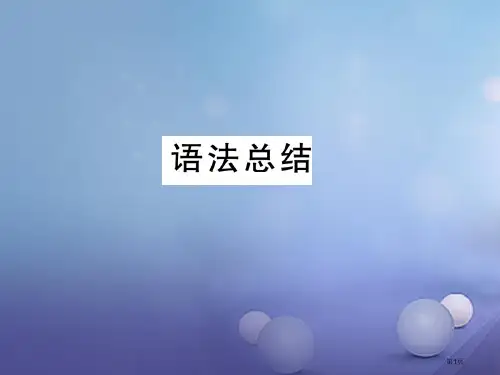
In 20 years,I__________
robots, swimming
a son,a daughter
第7页
step1审清题目 审题裁:记叙文 审时态:普通未来时 审人称:第一人称 审关键点:1.外貌改变(2分);2.工作改变:职业和工作地 点(4分);3.兴趣改变:机器人和游泳(2分); 4.家庭改变:儿子与女儿(2分)。
第11页
Good_ _morning , everyone.I__am__glad__to__tell__you__something__abou t__the__beautiful__future__of__our__school._
_I__ think__ in__ the__ near_ _future , our__school__will__be__much__more__beautiful__than__ now.Because__we__will__plant__more__trees__and__flow ers__and__water__them__every__day.I__think__it's__im portant__for__us__to__keep__the__school__clean.___ Now,we__have__too__much__homework__to__do__every__da y.We__are__very__tired.I__hope__that__teachers__will __let__us__have__less__homework,so__ we__ will__ have__ more_ _time__ to__ relax__ ourselves.
人教版八年级英语上册Unit7Willpeoplehaverobots(Period6)教学设计
一、教学目标
(一)知识与技能
1.学生能够理解并掌握一般将来时态的用法,特别是will引导的句子,表达对未来的预测和判断。
2.学生能够通过阅读课文,掌握与未来科技、机器人相关的词汇和表达方式,如have robots, do housework, take over等。
四、教学内容与过程
(一)导入新课,500字
1.教师通过多媒体展示一组关于未来科技和机器人的图片,如智能机器人、无人驾驶汽车等,引导学生关注未来科技的发展。
2.教师提出问题:“Do you think we will have robots in the future? What will they do?”让学生展开想象,激发他们对本节课话题的兴趣。
5.巩固与拓展:
-布置分层作业,针对不同学生的学习需求,设计难易程度不同的练习,巩固所学知识。
-推荐相关阅读材料,让学生在课后拓展知识,了解未来科技的发展动态。
6.评价与反馈:
-采用多元化的评价方式,如小组评价、自我评价和教师评价,关注学生在知识掌握、技能提升和情感态度等方面的全面发展。
-及时给予学生反馈,指导他们调整学习策略,提高学习效果。
2.阅读理解:提供一篇关于未来科技发展的英文文章,让学生阅读并完成相关练习。要求学生在阅读过程中关注一般将来时态的用法,并提高阅读理解能力。
3.口语练习:学生与家长或朋友一起,用英语讨论未来科技和机器人的话题,并尝试用一般将来时态表达自己的观点和预测。
4.词汇积累:收集与未来科技、机器人相关的词汇和表达方式,制作成词汇卡片,以便复习和巩固。
3.教师针对一般将来时态的疑问句、否定句进行讲解,让学生掌握其基本变化规则。
Unit,7,Will,people,have,robots教案
Unit,7,Will,people,have,robots教案篇一:八年级上册unit7 will people have robots Unit 7 will people have robots? 一.教学目标: 1. 语言知识目标: 1) 能掌握以下单词: paper prediction pollution 2) 能掌握以下句型:① I will be a/an ?? ② Will you be a/an??? Yes, I will. No, I won’t. ③ Kids won’t go to school. They will stud y at home on computers. ④People will have robots in their homes.3) 能了解以下语法:“will + 动词原形” 来表达一般将来时态,以及它的肯定、否定和一般疑问句形式。
2.能力目标:学会表达自己对未来的看法;学会谈论自己未来的打算。
3. 情感态度价值观目标:通过引导学生展望未来,及对未来生活的预测,让学生在潜移默化中反省自己的现状。
对未来的生活有一定的打算并为此付出相应的努力。
二.学生情况分析 1、因为地处农村,学生的英语学习环境、学习风气、学习兴趣以及学习积极性都不尽相同,大部分学生学习积极性不够强,因此调动学生积极性很重要 2、部分学生对于一般现在时、一般过去时和一般将来时的用法、不同时态谓语动词形式的构成等知识内容还未能全面理解和掌握,还需自己多练,也需教师加强辅导。
二、教学重难点 1. 教学重点:理解并初步掌握一般将来时态的意义和结构。
2. 教学难点:情态动词will + 动词原形来表达一般将来时态。
三、教学过程Ⅰ.Review 复习上个单元用be going to+动词原形表将来的方法由回答what are you going to be when you grow up?来复习相关的职业词汇,computer programmer, pianist, violinist, pilot, engineer, and so on. Ⅱ. Lead-in 1.由一首歌whatever will be will be 作为导入引入由will构成将来时态。
人教八上Unit7Willpeoplehaverobots(SectionB1a1e)教学设计
(一)教学重难点
1.重点:学生能够熟练运用一般将来时(will)来预测和表达未来;掌握与机器人相关的词汇和表达;能通过阅读短文获取、整理和归纳信息。
2.难点:学生在实际语境中灵活运用一般将来时(will);阅读理解能力的提升,尤其在信息提取和归纳方面。
(二)教学设想
1.情境创设:结合学生的生活经验和兴趣,创设与机器人相关的真实语境,让学生在情境中感知、体验和运用目标语言。
人教八上Unit7Willpeoplehaverobots(SectionB1a1e)教学设计
一、教学目标
(一)知识与技能
1.学生能够掌握与机器人相关的词汇,如robot, appearance, ability, intelligence, perform, invent, predict等,并能熟练运用这些词汇描述机器人的外貌、能力和智能。
2.阅读理解:完成一篇关于未来机器人发展的短文阅读,并回答相关问题。要求学生通过阅读,提高信息提取和归纳能力。
3.课后调查:分组进行课后调查,了解家人、朋友对未来机器人的看法和期待。每组整理调查结果,形成一份简要的调查报告,并在下节课上进行分享。
4.角色扮演:设计一个关于未来机器人的对话场景,与同学进行角色扮演。要求使用一般将来时(will)进行表达,锻炼学生的口语交流能力。
3.教师强调科技进步对社会生活的影响,引导学生关注科技发展,培养他们的责任感和社会责任感。
4.最后,教师布置课后作业,要求学生结合本节课所学,预测未来生活中的机器人,并用自己的语言进行描述。
五、作业布置
为了巩固本节课所学知识,提高学生的英语综合运用能力,特布置以下作业:
1.写作任务:结合本节课学习的主题“Will people have robots?”,让学生运用一般将来时(will)描述自己设想的未来机器人。要求至少包含机器人的外貌、能力和智能三个方面,字数不少于80词。
Unit7Willpeoplehaverobots?SectionB3a3c-教学设计人教版英语八年
2. Visualize(可视化) your future and realize(实现) your dream with the vision board (愿景板)and the 28day plan.
教学
年级
八年级
学期
秋季
课题
Unit 7 Will people have robots?
(Section B 3aselfcheckHow to write a future plan)
教科书
书 名:人教版教材
出版社:人民教育出版社
教学目标
Bythe end of the class, students are expected to
活动层次:感知与注意,学习与理解
效果评价:学生能够观看视频后,激活已知并完成填空。
设计意图:1.激活学生的相关背景知识,激发学生参与课堂的热情和探究主题意义的兴趣。2.引入话题为下一步 Jill的future plan这篇文章学习做准备,从selfcheck对话到3a文章学习。
Activity2:Analyze the structure of 3a and learn how to write a future plan(5minutes)
设计意图:培养学生分析文章内容,结构和语言,赏析语言。提高学生归纳梳理能力。
Activity3:3b plete the chart about your life 20 years from now and add item. Try to add details and check the article with a checklist (20minutes)
八年级英语《Will people have robots》教案
八年级英语《Will people have robots》优秀教案一、教学目标:1. 知识目标:学生能够理解并运用将来时态描述未来可能发生的事情。
学生能够掌握与相关的词汇和表达方式。
学生能够通过听力、阅读和口语活动,了解人们对于未来技术的看法。
2. 能力目标:学生能够运用英语进行简单的交流,讨论未来技术的应用和发展。
学生能够通过合作学习,提高团队合作能力和口语表达能力。
3. 情感目标:学生能够激发对科学和技术的兴趣,培养创新思维和探索精神。
学生能够培养积极乐观的态度,对未来技术的发展抱有期待。
二、教学重难点:1. 教学重点:学生能够运用将来时态描述未来可能发生的事情。
学生能够掌握与相关的词汇和表达方式。
2. 教学难点:学生能够正确运用将来时态的构成和用法。
学生能够准确理解和使用与相关的词汇和表达方式。
三、教学方法:1. 情境教学法:通过展示图片、视频等媒体资源,创设情境,激发学生的学习兴趣和想象力。
2. 交际法:通过小组讨论、角色扮演等互动活动,培养学生的口语表达能力和团队合作能力。
3. 任务型教学法:通过完成具体任务,引导学生主动探究和解决问题,提高学生的综合语言运用能力。
四、教学过程:1. 导入:教师通过展示图片或视频,引导学生谈论对的认识和了解。
教师提出问题:“你们认为未来人们会拥有吗?为什么?”激发学生的思考和讨论。
2. 课堂活动:教师引导学生进行听力活动,听取关于未来技术的描述,并回答相关问题。
教师组织学生进行阅读活动,阅读关于未来技术的文章,并讨论文章内容。
教师组织学生进行口语活动,学生分组讨论未来技术的应用和发展,并展示讨论结果。
3. 巩固练习:教师提供一些关于未来技术的图片或情景,学生用英语描述并将句子写下来。
教师组织学生进行小组竞赛,看哪个小组能够正确运用将来时态描述未来技术的应用和发展。
4. 总结与拓展:教师引导学生回顾本节课所学的知识和技能,并进行总结。
教师提出一些拓展性问题,引导学生思考未来技术对人类生活的影响和改变。