
牛津译林版英语九年级上册 Unit 3 Teenage problems Grammar 同步练习题 含答案
Unit 3 Teenage problems Grammar一、短语互译1. need silence _______________________2. share my worries with sb. _______________________3. get low marks _______________________4. have difficulty expressing oneself _______________________5. solve this problem _______________________6. 快速提高我的英语水平_______________________7. 向谁求助_____________________8. 得到回复__________________________________二、从方框中选择适当的词填空1.Excuse me. Could you tell me __________ I can get to the nearest post office.2.Our teacher told us ___________ the sun rises in the east.3.The boy is crying because he doesn’t know ____________ his parents are.4.I’m not sure __________ we’ll have the sports meeting. Maybe next wee k.5.Can you advise me ___________ to buy for my cousin’s birthday?6.I hear someone knocking at the door. Go and see _________ it is.7.Do you know ____________ film they’re talking about?8.Tom wonders ____________ Daniel once lived in England.三、单项选择1. We don’t know ___ we will go there tomorrow.A. whereB. whyC. whenD. whether2. Do you know ____?A. what time will the plane take offB. what time would the plane take offC. what time the plane will take offD. the plane will take off at what time3. The manager came up to see ____.A. who did the jobB. who did the job doC. who does the jobD. who does the job do4. Can you tell me how soon ____ back?A. will he beB. does he comeC. he will beD. did he come5. Nobody knows ____.A. who is heB. who he isC. what is heD. what does he do6. ---____ go shopping this Sunday?---That’s a good idea.A. Why don’tB. Why notC. Let’sD. How about7. _______ give up smoking.A. Shall weB. Why don’t youC. What aboutD. Perhaps you should8. Why don’t you _____ climbing with us tomorrow?A. to goB. goingC. goD. goes9. How interesting the game is! Why _____ join us?A. won’tB. noC. don’tD. not10. It’s too hot. How about______ swimming this afternoon?A. goB. to goC. goingD. goes四、句型转换,合并句子1. I’d like to know … Where is your school?2. I wonder … How far is the park from here?3. I can’t imagine … How did he find his lost dog?4. Can you explain … Why does the sun rise in the east?5. We haven’t found out … What’s wrong with Ann?五、完成对话AEmily: It's so hot today. Where can I go?David: 1.____________ go to the beach?2.________ you can go swimming there. Emily: But I don't know how to swim.David: I can teach you.BBilly: I got low marks in my Maths exam again. 3.__________ I should pay more attentionin Maths class.Denny: 4.___________ joining our study group? 5._______ study together in the library after school.Billy: That's a good idea.六、完形填空。
Henry was a pen name used by an American writer of short stories. His 1 name was William Sydney Porter. He was born in North Carolina in 1862. 2 a young boy, he lived a poor life. He did not go to school for very long , 3 he tried to teach 4 everything he needed to know. When he was about 20 years old , Henry went to Texas. He 5 different jobs there. He first worked for a newspaper, and then he had a 6 in a bank . When some money went 7 from the bank . Henry was 8 to have stolen it. Because of 9 , he was sent to prison(监狱)。
During the three years in prison , he learnt to write 10 . After he got out of prison, he went to New York and went on 11 . He wrote 12 about New York and the 13 of the poor there. People liked his stories, 14 the stories were simple, they would 15 with a sudden change at the end, to the readers’ surprise.( )1.A.first B. last C. family D. real( )2.A.Like B. As C. For D. Since( )3.A.but B. and C. or D. not( )4.A.one B. him C. himself D. someone( )5.A.looked for B. lost C. tried D. missed( )6.A.classmate B. friend C. work D. job( )7.A.away B. missing C. back D. out ( )8.A.said B. told C. talked about D. believed ( )9.A.that B. the C. those D. these ( )10.A.letters B. messages C. short stories D. music ( )11.A.studying B. learning C. reading D. writing ( )12.A.nearly B. certainly C. hardly D. mostly ( )13.A.people B. life C. person D. live ( )14.A.because B. because of C. so D. so that ( )15.A.begin B. finish C. do D. make答案:一、1. 需要安静2.与某人分享我的烦恼3.得低分4.在自我表达上有困难5.解决这个难题6. improve my English quickly7. who/whom to ask for help8. get one’s reply二、1. how2. that3. where4. when5. what6. who7. which8. if / whether三、1---10 DCACB BDCDC四、1. I’d like to know where your school is.2. I wonder how far the park is from here .3. I can’t imagine how he found his lost dog.4. Can you explain why the sun rises in the east.5. We haven’t found out what is wrong with Ann. 五、1. Why don’t you2. Perhaps3. Perhaps4. What about5. let's六、1---15 DBACC DBDAC DDBAB。
牛津译林初中九年级上册英语 Unit 3 Teenage Problems课件3

the top student be proud of … a bookworm
Name
Sue Wang
Grade
9
Hobbies
Good at English Maths Science
Not good Sport;can not run
at
fast;hates swimming
ቤተ መጻሕፍቲ ባይዱ ▪While-listening1
▪ What is her second problem?
She doesn’t have many friends Some classmates laugh at her and call her a bookworm .
While-listening 2
Advice : Just try (5) __y_o_u_r__b_e_s_t__ in PE lessons ,enjoy the (6)__e_x_e__r_c_is__e__
Sue is the _to_p__st_u_d_e_n_t in her class at Beijing SunshineSecondary School. Her favourite subjects are_E_n_g_l_is_h,__M_a_t_h_s_ and _S_c_i_en_c_e__.
She does well in exams, but she still has some problems. She is not very good at sport. She _c_a_n_n_o_t_r_u_n_f_as_t___and _h_a_te_s_s_w_im_m__in_g___. Also, her classmates call her a__bo_o_k_w__or_m_. This makes her feel bad.
Unit 3 Teenage problems知识总结 牛津译林版英语九年级上册
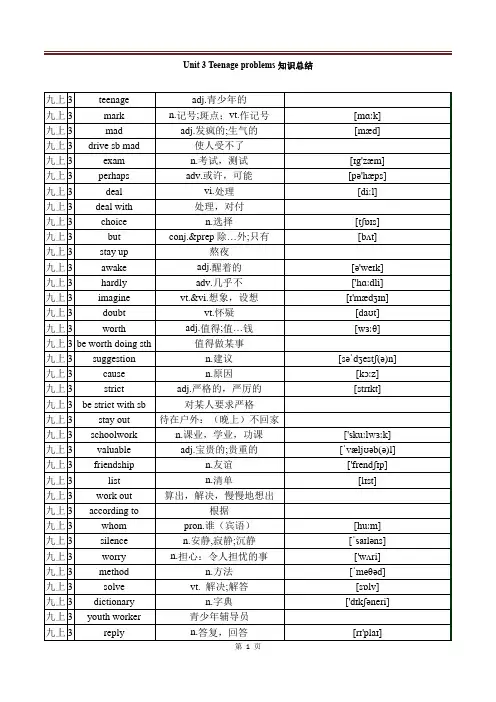
Unit 3 Teenage problems知识总结中文英文值得做某事be worth doing sth别无选择只能做have no choice but to do sth把某人逼疯drive sb. mad处理deal with熬夜stay up呆在户外/晚上不回家stay out对某人要求严格be strict with sb算出/解决work out嘲笑laugh at根据according to复习/回顾/仔细检查go over不客气don’t mention it许多与我们同龄的学生many students of our age取得更大的进步make greater progress少吃多运动eat less and exercise more感到孤独feel lonely高/低/满分low/high/full/top marks更合理安排你的时间manage your time better无法想象没有爱好的生活can’t imagine my life without hobbies毫无疑问no doubt /without doubt给我提供一些有价值的建议offer me some valuable suggestions/advice对足球痴迷be crazy about football我问题的根源the cause of my problem陷入麻烦get into trouble对我要严格be strict with me培养/发展我们的爱好develop our hobbies在我的学业和我的爱好间取得平衡achieve a balance between my schoolwork and my hobbies表达自己有困难have difficulty expressing myself解决问题的一个好方法 a good method of (for) solving the problem喜欢英语、数学和化学love English, Maths and Chemistry优等生top students写一封回信write a reply不要理会那些嘲笑你的同学pay no attention to those classmates who laugh at you 觉得运动困难find sport difficult以……而骄傲/自豪be proud of/take pride in读出声read aloud把所有单词读正确pronounce all the words correctly通过考试/考试不及格pass/fail an exam预测结果predict a result。
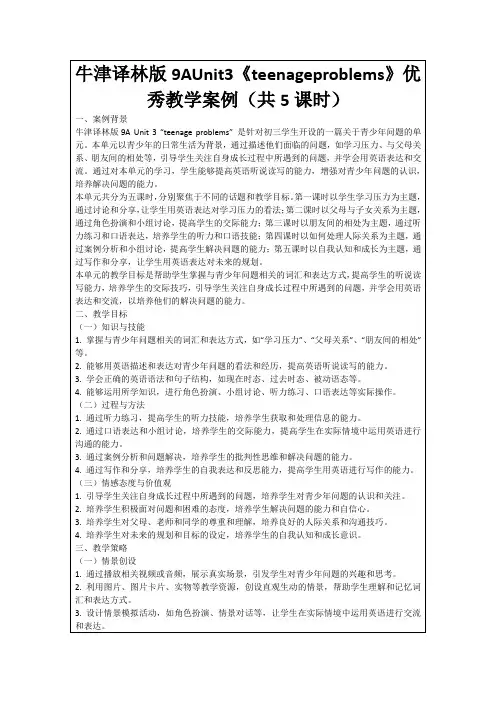
牛津译林版9AUnit3《teenageproblems》优秀教学案例(共5课时)
2.通过口语表达和小组讨论,培养学生的交际能力,提高学生在实际情境中运用英语进行沟通的能力。
3.通过案例分析和问题解决,培养学生的批判性思维和解决问题的能力。
4.通过写作和分享,培养学生的自我表达和反思能力,提高学生用英语进行写作的能力。
(三)情感态度与价值观
1.引导学生关注自身成长过程中所遇到的问题,培养学生对青少年问题的认识和关注。
五、案例亮点
1.生活化情境的创设:本案例通过引入真实的生活情境,如学习压力、父母关系等,使学生能够更好地理解和应用所学知识。这种情境创设不仅能够激发学生的兴趣,还能够提高学生的实际应用能力,使英语学习更具有现实意义。
2.学生主动探究的学习方式:本案例引导学生提出问题、寻找答案,激发学生的思考和探究欲望。通过问题导向的方式,学生能够主动参与到学习中,培养独立思考和解决问题的能力。
4.选取小组讨论的结果进行分享和讨论,丰富学生的学习经验和视野。
(四)总结归纳
1.通过提问和讨论,引导学生对所学知识进行总结和归纳,巩固学习成果。
2.利用思维导图或概念图,将所学知识点进行整合和展示,帮助学生形成知识体系。
3.强调本节课的重要内容和知识点,提醒学生注意和复习。
4.引导学生进行自我评价和反思,让学生认识到自己的学习成果和不足之处。
3.小组合作的教学策略:本案例通过设计小组讨论和合作任务,让学生在小组内进行交流和合作,共同解决问题。这种教学策略不仅能够培养学生的团队合作意识和沟通能力,还能够促进学生之间的相互学习和共同进步。
牛津译林版九年级上册Unit3《Teenageproblems》(Task)说课稿
牛津译林版九年级上册Unit 3《Teenage problems》(Task)说课稿一. 教材分析《Teenage problems》是牛津译林版九年级上册Unit 3的一篇课文,主题是关于青少年问题的。
通过描述青少年在成长过程中所面临的各种问题,如学习压力、与父母关系、朋友关系等,让学生了解并关注这一年龄段所特有的困惑和挑战。
本节课的主要目标是让学生能够理解课文内容,掌握相关的语言知识,提高阅读理解能力。
二. 学情分析九年级的学生已经具备了一定的英语基础,能够听、说、读、写一些简单的英语句子。
但他们在阅读理解方面还存在一定的困难,特别是对于一些长篇的文章。
因此,在教学过程中,我们需要关注学生的阅读理解能力,引导他们通过关键词、句子来理解文章的大意。
三. 说教学目标1.知识目标:让学生掌握课文中的关键词汇和句型,提高阅读理解能力。
2.能力目标:培养学生通过关键词、句子来理解文章大意的技巧。
3.情感目标:让学生认识到青少年时期所面临的问题,引导他们正确面对和处理这些问题。
四. 说教学重难点1.重点:课文的理解和相关的语言知识的掌握。
2.难点:对于一些长篇的文章,学生如何通过关键词、句子来理解文章的大意。
五. 说教学方法与手段1.教学方法:采用任务型教学法,让学生在完成任务的过程中,提高阅读理解能力。
2.教学手段:利用多媒体课件,为学生提供丰富的视觉、听觉材料,激发学生的学习兴趣。
六. 说教学过程1.导入:通过提问方式,引导学生谈论青少年时期所面临的问题,激发学生的学习兴趣。
2.阅读理解:学生自主阅读课文,回答相关问题,教师给予指导。
3.单词学习:学生通过课文,学习并掌握相关的词汇。
4.句型练习:学生模仿课文中的句型,进行口语练习。
5.小组讨论:学生分组讨论,分享自己面临的青少年问题,并尝试寻找解决办法。
6.总结:教师引导学生总结课文内容,加深对文章主题的理解。
7.作业布置:让学生写一篇关于自己青少年问题的文章,培养写作能力。
牛津译林版9AUnit3《teenageproblems》教学设计(共5课时)
2.短片观看后,引导学生分享自己的感受和认识,为新课学习奠定情感基础。
3.提问:“What kind of teenage problems do you think are the most common?”让学生预测本节课将讨论的青少年问题,激发学生的好奇心。
牛津译林版9AUnit3《teenageproblems》教学设计(共5课时)
一、教学目标
(一)知识与技能
1.学生能够理解并掌握本章节关于青少年问题的核心词汇和短语,如:conflict, communicate, independence, rebellion, stress, depression等,并能熟练运用这些词汇进行讨论和表达。
2.语法讲解:结合课文,讲解一般现在时、一般过去时等时态的用法,并举例说明。
3.词汇学习:通过例句、同义词、反义词等形式,帮助学生深入理解重点词汇和短语。
4.阅读策略:指导学生运用扫读、精读等策略,提高阅读理解能力。
5.课堂讲解:针对课文中的难点和重点,进行详细讲解,确保学生理解到位。
(三)学生小组讨论
4.个性化教学:针对不同学生的学习特点,实施差异化教学,提高教学效果。
5.教学评价:采用多元化的评价方式,如自我评价、同伴评价、教师评价等,全面评估学生的学习过程和成果。
6.家校合作:与家长保持沟通,了解学生在家的表现,共同关注学生的成长,形成教育合力。
四、教学内容与过程
(一)导入新课
在导入新课环节,教师将通过以下方式激发学生的学习兴趣和探究欲望:
4.教师展示与本节课相关的词汇和短语,如:conflict, communicate, independence等,让学生尝试猜测它们的意思,为新课学习做好词汇准备。
牛津译林版英语九上Unit 3《Teenage problems》(Welcome to the u

牛津译林版英语九上Unit 3《Teenage problems》(Welcome to the unit)说课稿一. 教材分析《牛津译林版英语九上Unit 3 Teenage problems》主要讨论了青少年面临的一些普遍问题,如学习压力、与父母沟通、健康饮食等。
本单元旨在帮助学生了解并关注这些问题,提高他们的英语语言运用能力。
二. 学情分析九年级的学生已经具备了一定的英语基础,能够理解和运用一些基本的英语表达。
但同时,他们面临着中考的压力,对于如何正确处理学习、生活和家庭中的问题还有一定的困扰。
因此,在教学过程中,需要关注学生的实际需求,帮助他们解决实际问题。
三. 说教学目标1.知识目标:学生能够掌握本单元的重点词汇和句型,如“teenager”、“problem”、“communicate with parents”等,并能够运用所学知识进行简单的交流。
2.能力目标:学生能够通过听力、阅读和写作等环节,提高自己的英语语言运用能力。
3.情感目标:学生能够认识到青少年面临的问题,学会正确处理这些问题,形成积极健康的人生态度。
四. 说教学重难点1.重点:本单元的重点是让学生掌握相关的词汇和句型,并能运用到实际情境中。
2.难点:如何引导学生正确处理青少年面临的问题,提高他们的心理素质和抗压能力。
五. 说教学方法与手段1.采用任务型教学法,让学生在完成任务的过程中,自然而然地学习和掌握英语知识。
2.利用多媒体教学手段,如图片、视频等,激发学生的学习兴趣,提高他们的学习积极性。
3.开展小组讨论活动,鼓励学生发表自己的观点,培养他们的合作意识和团队精神。
六. 说教学过程1.导入:通过展示一些青少年常见的问题,如学习压力、与父母沟通等,引导学生进入本课的主题。
2.呈现:教师通过图片、视频等手段,展示本课的重点词汇和句型,让学生初步感知和理解。
3.实践:学生通过听力、阅读和写作等环节,运用所学知识进行实际操作,巩固所学内容。
Unit3TeenageproblemsGrammar课件牛津译林版英语九年级上册
Unit 3 Teenage Problems
Grammar
Simon’s problems
why they are so strict with him.
how he can achieve a balance between his schoolwork and his hobbies
when they should stop
C.how many bridges are there in Wuhan D.what will I study in Wuhan University
2.He told me (that) Summer
after Spring.
A. is
B. are
C. was
D. were
Pay attention
变,如以下句子:
Which woman is your mother? what is the matter with you? What is wrong with your machine? who broke the glass? What’s happening over there? What happened?
牛津译林版英语九年级上册Unit3《Teenageproblems.》说课稿2
牛津译林版英语九年级上册 Unit 3 《Teenage problems.》说课稿2一. 教材分析《牛津译林版英语九年级上册 Unit 3 Teenage problems》是人教版初中英语教材的一个单元,主题是关于青少年问题的讨论。
本单元主要围绕青少年的日常生活中的问题展开,包括学习压力、与父母沟通、网络安全等方面。
通过本单元的学习,学生能够提高自己在现实生活中解决问题的能力,同时增强自己的英语听说读写技能。
二. 学情分析九年级的学生已经具备了一定的英语基础,能够理解和运用一些基本的英语句型和语法知识。
然而,他们在词汇量和语言表达能力方面还有待提高。
此外,由于本单元涉及到一些敏感话题,如网络安全等,学生可能对此有一定的抵触情绪,需要教师进行适当的引导。
三. 说教学目标1.知识目标:学生能够掌握本单元的核心词汇和句型,理解文章的主旨大意。
2.能力目标:学生能够运用所学的词汇和句型,进行日常交流和讨论,提高自己的口语表达能力。
3.情感目标:学生能够认识到青少年问题的严重性,提高自我保护意识,培养积极健康的生活态度。
四. 说教学重难点1.重点:学生能够掌握本单元的核心词汇和句型,理解文章的主旨大意。
2.难点:学生能够运用所学的词汇和句型,就青少年问题展开讨论,提高自己的口语表达能力。
五. 说教学方法与手段1.教学方法:采用任务型教学法,让学生在完成具体任务的过程中,提高自己的英语听说读写技能。
2.教学手段:利用多媒体课件、网络资源等,为学生提供丰富的学习资源,激发学生的学习兴趣。
六. 说教学过程1.导入:教师通过提问方式,引导学生谈论青少年问题,激发学生的学习兴趣。
2.阅读理解:学生通过阅读文章,回答相关问题,理解文章的主旨大意。
3.小组讨论:学生分成小组,就文章中的问题进行讨论,提高自己的口语表达能力。
4.写作练习:学生根据所学内容,写一篇关于青少年问题的短文。
5.课堂展示:学生展示自己的写作成果,其他学生进行评价。
牛津译林版-英语-九年级上册 课件:3单元 Teenage problems
New Words
table tennis ping-pong
New Words
free time spare time
New Words
worth adj./ Ə:/ be worth doing …
New Words
doubt v. 怀疑
with him. 6. He feels stressed and angry all the time. 7. Simon thinks hobbies are very important because they
help him relax. 8. He wishes to have his parents’ and teachers’ support.
Summary
Millie
➢She __h_a_rd_l_y_h_a_s_s_p_ar_e_t_im__e____ for her
Problems
hobbies.
➢She often _s_ta_y_s_u_p__ late to _c_om__p_le_t_e_
her exercises.
Causes (原因)
5. What is she looking forward to?
6. What does Millie think of the suggestions from Sigmund Friend?
Careful-reading
1. Does Millie have too many exercises to complete? Yes, she does.
True or False
1. Simon is crazy about football and likes
Unit3TeenageproblemsPeriod2Reading课件牛津译林版英语九年级上册
advice hobbies homework important playing spare
stay out stay up strict
valuable volleyball worth
Dear Simon,
学习掌握适合自身的运动方法和技能,养成健康 文明的行为习惯和生活方式。
Thank you for your letter. I hope I can offer you some useful (7)
However, it is not wise to spend hours playing football after school.
I agree with your parents that it is better for you to go home earl助, 同时引起收信人的关注。
Is it bad to stay out late to play football? Should I spend less
time on it? I wonder how I can achieve a balance between my
学会对学习方式,方法进行选择,以及对学习进程进行评估, 调控,做到乐学善学,合理安排时间。
advice hobbies homework important playing spare
stay out stay up strict
valuable volleyball worth
For example, play (5) _v_o_l_le_y_b_a_l_l_ if you have a lot of time, and listen to music if you only have a short time. I hope you think my advice is (6) ___w__o_r_th___ taking. Best wishes, Sigmund Friend