
新外研版七年级英语下册 Module 11 Unit 1 They touch noses导学案
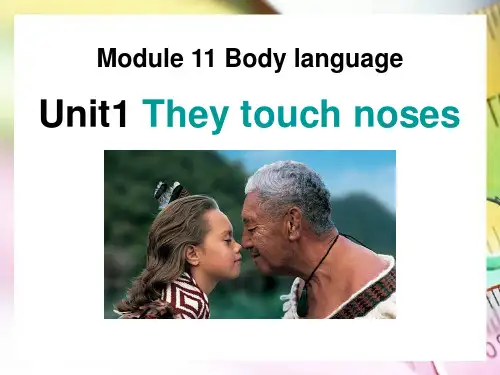
Module 11 Unit 1 They touch noses
学习目标1. Key vocabulary: bow, kiss, shake hands, smile, British,
German, Japanese, Russian, visitor, Russia,
nod, head, hug, each other, India, together,
Maori, touch, nose
2. Key structures: 祈使句。
3. 重、难点:祈使句的使用。
备注(教师
复备栏及学
生笔记)
自主学习学法指导:1. 注意发音,正确朗读生词。
2.牢记单词的拼写及词意。
3. 通过听读对话,学会自主交流预习。
1.独学:将书翻到生词表,拼读P109—110单词, 从bow到nose. 提示:请用红色笔勾画出你不会拼读的单词。
2.对学:请你找你的搭档一起解决刚才画出的那些不会的单词。
1、画出Unit 1的思维导图。
2、《优化训练》P78,自主预习
3、英语报,第33期,第三版,Unit 1,第一大题
根据句意及汉语提示,写出正确的单词。
1) It’s very cold. Tony’s ______ (鼻子) becomes red.
2) --- Where is your new friend from?
--- ______ (印度), an Asian country.
3) Don’t ______ (触摸) the dog, Tom! It’s dangerous!
4) There is always a big ______ (微笑) on my teacher’s face.
5) Mrs. Black ______ (亲吻) her son and then left home.
组长签名:
合作一、思考
1. 问候的方式有哪些?
2. 你知道吗?不同国家之间问候的体态语(body language)是不一
样的。
1) In China:
2) In the US:
3) In India :
4)In Russia :
5) In New Zealand(Maori people)
探究
3. 独立完成Activity 1.
4. 听录音,完成Activity 2.
二、超级模仿家!(Activity 3)
小组表演对话,注意模仿语音、语调,尽量背诵下来,哪组表演最流畅、最自然?
三、超级大脑!
1. 判断正(√)误(X)。
1) Russians usually kiss the visitors three times, right,
left, right.
2) Chinese often shake hands and smile when they meet
visitors.
3) Chinese always kiss the visitors.
4) Americans shake hands, and some kiss or hug each other.
5) People put their hands together and nod their heads in
India.
6) Maori people touch heads when they meet.
2. 完成表格,小组分工合作完成。
In China, people shake hands and smile
when they
meet______.
American people shake hands and sometimes
________
In ______, people put their hands _________
and nod their heads
In ________, people kiss each other three
times
Maori people ______ noses
3. Work in groups.
Talk about what you do and say when you meet your teacher / your head teacher/ your parents/ your best friend/ a visitor to your school/ your favorite film star/ an American/ an Indian.
4、根据思维导图,总结、汇报对话中各不同国家的问候方式。
课堂小结本节课你学到了什么?
达标检测优化训练P79,第二大题。
英语报,第33期,Unit 1, 第四大题
1、他们在队伍中互相帮助。
They help ______ ______in the team.
2、谈话前,李奇喜欢和朋友握手。
Li Qi likes to ______ ______ with friends before they talk.
3、那是因为你今天早晨晚起床的原因。
______ ______ you get up late this morning.
4、请把那些红苹果放在一起。
Please ______ the red apples ______.
5、他们见面时经常点头。
They often ______ ______ when they meet.
学(教)后反思本节课你有哪些收获?还有哪些困惑呢?。
外研版英语七年级下册Module 11 unit 1 They touch noses!教

点
教
学 方
Interactive approach
教具
法
教学环节及内容
PPT 个性化备课
精彩导入 激活思维 Step 1. Lead in
自主学习 发现疑难 Step 2. learn the new words 1.Follow the teacher to read the words and test the words by listening to the tape. 2. Play a game. Do as the teacher says. 教 3. Match the pictures with the words and expression from the box. 学 Step 3 Listening practice 1.Listen and answer the following questions. 流 2.How many countries are mentioned in the passage? What are they? 程 3.Listen and match the pictures with the countries(国 籍). 合作探究 魅力精讲 Step 4. Dialogue in Activity 3. 1. Ask the students to listen to the text while they follow it in their books . 2. Read through the dialogue . 3. Listen and fill in the blanks. Daming: What _______ they _______? Betty: They are saying hello. They are _________. Daming: Are they _________? Or _________? Betty: Maybe they are _________. Daming: And these people are ________________. I
外研版七年级英语下册《They touch noses》PPT课件(4篇)
n. 游客,观光者 n. 俄罗斯 int. 什么(表示惊奇) v. 点(头) n. 头,头部 v. 拥抱,紧抱 pron. 各个,每个 互相;彼此
India together
Maori touch nose
n. 印度 adv. 一起;共同 adj. 毛利人的 v. 触摸;接触 n. 鼻子
1. To learn the key words and useful expressions in the dialogue
②I will go to Shanghai sometime with my patents.
③He was tired,so he must have a rest for some time.
3.be different from(译)和...不同 be the same as(译) 和...相同
2. To know the body languages in Russia, in China, in the US and in New Zealand
Words: bow, kiss, shake, smile, visitor, nod, parents, hug, touch
Phrases: meet visitors, nod sb’s head, shake hands, touch noses
smile.
Do people shake hands in Yes,they do
the US?
What do people do in New They touch noses.
Zealand when they meet?
Body language in different countries.
外研版英语七年级下册课件:Module11Unit1Theytouch

国家
语言、人、国家的
China中国
Chinese中文,中国人,中国的
Japan日本
Japanese日语,日本人,日本的
England英国
English英语,英国人,英国的
America美国
American美国人,美国的
France法国
French法语,法国人,法国的,
Activity1 Match the pictures with the words and expression from the box.
bow 3 kiss 1 shake hands 2 smile 1/2/3
编辑ppt
5
Activity2 Listen and match the pictures with the nationality(国籍).
India, kiss, Russia together, touch, visitor
In China, people shake hands and smile
American people shake hands and sometimes (1) __k_i_s_s__
编辑ppt
when they meet (6) __v_is_it_o_r_s_
• ② How many times do people kiss in Russia? • A Once B. Twice C Three times D. Four times • ③ What do Chinese people do when they meet
visitors? • A.Kiss. B. Nod heads. C. Shake hands. D. Both B and C. • ④ Who touches noses when they meet? • A. Maori people. B Chinese people. C English
2024七年级英语下册Module11Unit1TheytouchnosesN件新版外研版

D. Russian; Russia
一
二
三
四
五
? .
六
( B )23.[2023·天津南开区月考]— when we meet a Maori friend? —Well, touch noses, I think.
A. How
B. What
C. Why
D. When
should we do
一
二
三
18. —This book cost me 800 yuan. — What ? That’s too expensive.
一
二
三
四
五
六
German, nose, touch, what, visit,hug, nod, bow, together, head 19. Would you like to enjoy the party together with me
Japanese
一
二
三
Japanese
四
五
六
Country 5. France Germany 8. America
Nationality French 7. German American
Language 6. French German 9. English
一
二
三
四
五
六
Country Canada India
Module 11 Body language Unit 1 They touch noses!
一、观察表格,根据相应类别完成表格。
Country China Russia The UK 4. Japan
Nationality Chinese 2. Russian British
Module11Unit1Theytouchnoses!教案
(一)导入新课(用时5分钟)
同学们,今天我们将要学习的是Module 11 Unit 1 "They touch noses!"这一章节。在开始之前,我想先问大家一个问题:“你们在日常生活中是否遇到过不同的问候方式?”比如,握手、拥抱或碰鼻。这个问题与我们将要学习的内容密切相关。通过这个问题,我希望能够引起大家的兴趣和好奇心,我们一同探索不同文化中问候方式的奥秘。
3.发展学生的思维品质,通过对比分析不同文化现象,培养学生独立思考、批判性思维及解决问题的能力。
4.激发学生的学习兴趣,引导他们探索世界多元文化,增强学生的全球视野和文化意识。
5.培养学生的团队协作和表达能力,通过小组讨论、展示等活动,提升学生的合作沟通能力。
三、教学难点与重点
1.教学重点
-重点一:掌握不同文化问候方式的表达。如教材中的"They touch noses." "People shake hands."等句型,要求学生能够熟练运用。
Module 11 Unit 1 They touch noses!教案
一、教学内容
Module 11 Unit 1 They touch noses!本节课我们将聚焦于教材中关于不同文化背景下人们问候方式的内容。具体教学内容包括:
1.了解不同国家和地区的问候方式,如触摸鼻子、拥抱、握手等。
2.学习并运用目标语言描述各种问候动作,如"They touch noses." "People shake hands."等。
3.成果分享:每个小组将选择一名代表来分享他们的讨论成果。这些成果将被记录在黑板上或通过投影展示给全班。
(五)总结回顾(用时5分钟)
外研版七年级英语下册Modele11 Unit1 They touch noses 课件
Let’s share some body languages ? 肢体语言
Stop! Come here. It’s ok. Great! Bye!
smile 微笑
shake hands 握手
bow 鞠躬
kiss 亲吻
Nation(国家) China
In Russia
in America Shake hands, kiss or hug
in India 印度
Put hands together and nod heads
Maori people 毛利人
New Zealand 新西兰
1.Who will come to Lingling’s school? Some Russian teachers.
有古
一人
个云
在:
路“
上读
。万
”卷
从书
古,
至行
今万
,里
学路
习。
和”
旅今
行人
都说
是:
相“
辅要
相么
You made my day!
成读 的书
两,
件要
事么
。旅
。行
,
身
体
和
灵
魂
总
要
我们,还在路上……
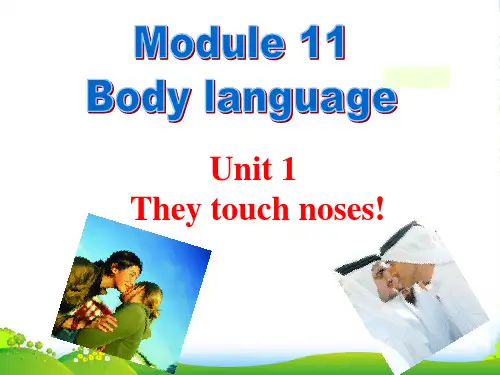
2. What will Maori people do when they meet
They touch noses.
Language points
1. … in Russia, people usually kiss three times, left, right, left. ……在俄罗斯,人们通常亲吻三次,左、 右、左。 kiss v. 吻,亲吻 The mother kissed the sleeping baby on his head. kiss n. 吻 He threw me a kiss and went away.
英语外研版七下Module11Unit1Theytouchesnoses课件
Presentation
3 Then listen and read.
Presentation
Lingling: What! No, I didn’t know that. We
Chinese often shake hands and smile when we meet visitors, and sometimes we nod our heads. But we never kiss. Only parents and children do that.
Presentation
In (2) _I_n_d_i_a_, people put when they
their hands (3) _t_o_g_et_h_e_r_ meet
and nod their heads
(6) _v_is_i_to_r_s__.
In (4) _R__u_s_si_a_, people kiss each other three times
2 Listen and match the pictures with the nationality.
British French 1 German Japanese 3 Russian 2
Presentation
Now work in pairs and check . — Are they Russian? — Yes, they are. — What are they doing? — They’re shaking hands.
some kiss or hug each other. In India people put their hands together and nod their heads. And do you know what Maori people in New Zealand do when they meet?
外研版英语七年级下册Module 11 Unit 1《They touch noses》教学设计2
外研版英语七年级下册Module 11 Unit 1《They touch noses》教学设计2一. 教材分析外研版英语七年级下册Module 11 Unit 1《They touch noses》主要讲述了在不同的国家和地区,人们见面时有不同的问候方式。
本课主要介绍了英国、法国、印度和中国的问候方式。
通过本课的学习,学生能够了解不同国家的文化差异,提高跨文化交际能力。
教材内容丰富,插图生动,有利于激发学生的学习兴趣。
二. 学情分析七年级的学生已经掌握了基本的英语语法和词汇,具备一定的听说读写能力。
但部分学生对英语学习仍存在恐惧心理,缺乏自信心。
此外,学生对外国文化了解不多,需要通过本课的学习来拓宽视野。
三. 教学目标1.知识目标:学生能够掌握表示国家名称的词汇,如Britn, France,India, China等;能够理解并运用句型“Do/Does/Did + 动词原形 + 其它?”进行提问;能够用英语描述不同国家的问候方式。
2.能力目标:学生能够听懂、会说、会读本课的生词和句型,提高口头表达能力;通过观察、讨论,提高观察力和合作能力。
3.情感目标:学生能够尊重不同国家的文化差异,提高跨文化交际能力。
四. 教学重难点1.重点:学生能够掌握表示国家名称的词汇,运用句型进行提问,描述不同国家的问候方式。
2.难点:学生能够正确运用情态动词do/does/did进行提问,并在实际情境中运用。
五. 教学方法1.情境教学法:通过创设真实、生动的情境,让学生在实际操作中学习英语,提高学生的语言运用能力。
2.交际教学法:引导学生进行小组讨论、角色扮演等交际活动,提高学生的口头表达能力。
3.任务型教学法:通过完成各种任务,让学生在实践中学习英语,提高学生的综合语言运用能力。
六. 教学准备1.教材:外研版英语七年级下册Module 11 Unit 1《They touch noses》。
2.多媒体设备:电脑、投影仪、音响等。
外研版英语七年级下册Module11Unit1《Theytouchnoses》说课稿
外研版英语七年级下册Module 11 Unit 1《They touch noses》说课稿一. 教材分析外研版英语七年级下册Module 11 Unit 1《They touch noses》主要讲述了一个关于英国人和法国人之间问候习惯不同的故事。
通过这个故事,让学生了解和掌握日常英语交际用语,提高学生的英语口语表达能力。
本节课主要学习了一些重点词汇和短语,如touch, noses, handshake, wave, nod, smile等,同时学习了祈使句和一般现在时的运用。
二. 学情分析七年级的学生已经掌握了基本的英语语法和词汇,对于日常的英语交际用语也有一定的了解。
但部分学生对于一些细节性的用法和语调还不是很清楚,需要老师在教学中进行详细的讲解和示范。
此外,学生的口语表达能力参差不齐,需要在课堂上给予不同程度的学生更多的机会进行练习。
三. 说教学目标1.知识目标:学生能够掌握本节课的重点词汇和短语,理解文章的主旨大意。
2.能力目标:学生能够运用所学的词汇和短语进行简单的日常英语交际,提高口语表达能力。
3.情感目标:培养学生对英语学习的兴趣,增强学生的自信心,培养良好的学习习惯。
四. 说教学重难点1.重点:本节课的重点是让学生掌握文章中的重点词汇和短语,以及一般现在时的运用。
2.难点:对于部分学生来说,正确运用一般现在时和掌握一些日常英语交际用语可能会比较困难。
五. 说教学方法与手段1.采用任务型教学法,通过设定各种真实的交际场景,让学生在实践中学习和运用英语。
2.运用多媒体教学手段,如PPT、视频等,增加课堂的趣味性和信息量。
3.采用分组合作学习,鼓励学生互相交流和合作,提高学生的口语表达能力。
六. 说教学过程1.导入:通过播放一段英国人和法国人之间问候的视频,引发学生的兴趣,引入本节课的主题。
2.展示:老师通过PPT展示本节课的重点词汇和短语,引导学生进行朗读和记忆。
3.讲解:老师详细讲解文章的主旨大意,解释一些难点词汇和短语,引导学生理解文章内容。
外研版七年级下册英语Module11 Unit 1 They touch noses!
◆sometimes的意思是“பைடு நூலகம்时候”,是副词。
I sometimes receive letters from him.有时候我会收到他的来信。
◆some times的意思是“几次”,表示频率。
I forgot to take my umbrella some times.我好几次都忘记带伞。
—Twice.两次了。
2.We Chinese often shake hands and smile when we meet visitors,and sometimes we nod our heads.我们中国人见到来访者的时候经常握手并微笑,有时会点头示意。
(1)shake hands的意思是“握手“,shake hands with sb.表示“与某人握手”。
1.Lingling,you know,in Russia,people usually kiss three times,left,right,left.玲玲,你知道吗,在俄罗斯,人们见面的时候通常亲吻三次,左边,右边,左边。
(1) times的意思是“次数,倍数”,表示次数,常用于三次及三次以上。
◆sometime是副词,意思是“某个时候”(可指过去或将来的某个时候)。
We’ll go on a trip sometime in August.我们会在八月找个时间去度假。(将来)
I bought the hat sometime last summer.这顶帽子是我上个夏天的某个时间买的。(过去)
4.亲吻三次_____________ 5.握手_________
6.点头_____________ 7.那是因为_____________