
人教版九年级英语全一册Unit1How_can_we_become_good_learners_全单元ppt课件
ear
mouth
say talk speak read ask answer repeat
pronunciatio vocabulary speaking
look
see reading
√
spoken English.
2c
Make conversations using the information in 2a and 2b.
DWoHheysWaaotavuhneaahbyytaoooavnuubeteollviueseattrerrnneiandging cEtoonnsgttvaalueiplsdroheisuseab?dtyitowowniptsahrtwcaahictithnicge fvriidgeenrpoodrsuso?pnin?unEcniagtlisohn??
2. aloud 与 loudly aloud 强调发出的声音能被听见,“大声地、出声地 loudly 强调声音高,喧叫,“响亮地”( 放在动词 后均可)
Don’t talk so loudly. 别那么高声说话。 He read the letter aloud to us. 他把信大声念给我们听。
A
B
adv. 大声地;出声地
There is more than one pronunciation of “garag
A
B
n. 发音;读音
What does this sentence mean?
A
n. 句子
She is very patient with young children.
A
3. pronunciation n. 发音;读音 pronounce v. 发音;读音
How do you pronounce your name? 你的名字怎么念? Your pronunciation is excellent. 你的发音好极了。
根据汉语提示用正确形式填空。 1. Do you often have any _________ t(e课xt本bo)o?k 2. I learn English by reciting ________ sentences
Homework
1. Make a survey about learning English in groups, then interview others about their experiences of learning English. Write down your report.
keeping English diaries
reading English rbeoaodkinsg、Emnaggliaszhines n&ewnsepwasppearpers
22ba
Listen angadinch. Meckat(c√h)etahcehqaunesswtioernsbeyloouwhweaitrh. a question.
___ a. by working with friends ___ b. by making word cards ___ c. by reading the textbook ___ d. by listening to tapes ___ e. by asking the teacher for help _______________________________
2. Chinese-English 交谈,谈话;大声地,出声地;句子
When finished, exchange your papers to s who does the best.
Review
How do you study for a test? I study by… by working with friends by reading the textbook by asking the teacher for help by listening to tapes
-- Have you ever studied with a group? -- Yes, I have. I’ve learned a lot that way.
Spelling Bee
Now 2 mins to test your spelling.
1. English-Chinese textbook; patient; pronunciation
and friends...
☺ get an answer instantly if you
ask a question online
☺ enjoy the latest songs & movies
…
Objectives
To talk about how to study English To learn to use by doing sth. by working with friends by reading the textbook by asking the teacher for help by listening to tapes
(句子). 3. Please read _____al(o大ud声地), I can’t
hear you. 4. Your ___p_r_o_n_u_n_c_i_a_ti(o发n 音) sounds
good. 5. Do you have _____c_o_n_v_e_r_s_at(i对on话s ) with him in Eng
1b Listen. How do these students study for a test? Wr letters from 1a above.
__b_ 1. Meiping __e_ 2. Peter __d_ 3. Tony
How do you study for a test? I study by…
Answers
√
a. Yes, I have. I’ve learned a lo
that way.
√
b. Oh, yes. It really improves m
speaking skills.
cc.. I do that sometimes. I think
√
helps.
d. No. It’s too hard to understa
OisNtmopYlwIsIeohoeoeIsIdtupaa.m,ahoksonrydtIy,kmiehn.otednoeIt’initvehnseeknithde.rmtEaghtksiaisIotmtaanstetvmioatkhgsterlen.ohil.eyehslidtl.Iaseps’htlrl.vslhpd.y.eas.t
Role-play
2d
Le12t..’RRsooslleeeppellaawyy tthhheeiccchoonngvveerrrossaauttiipoonndiinnoegfrrsoonutthposef; the class best.
Discussion
Have you ever tried those ways of learning English? Do they work? What is the most important thing in learning English? What do you think is difficult for you to study English?
Unit 1 How can we become good learners?
Section A Period One
Words Review
textbook conversation
aloud pronunciation
sentence patient
n. 教科书;课本 n. 交谈;谈话 adv. 大声地;出声地 n. 发音;读音 n. 句子 adj. 有耐心的; n. 病人
B
adj. 有耐心的
by having
by reading aloud to
conversations with
practice
friends
pronunciation
What ways do you often use in learning English?
by reading the
by watching videos
2. Preview the new words and expressions. 3. Preview the article on page 3.
Section A Period Two
Words Review
expression
discover secret
look up grammar
n. 表情;表示;表达方式 v. 发现;发觉 n. 秘密;秘诀 查阅;抬头看 n. 语法
Lead-in 1
Let’s enjoy a video.
Where can you see or hear English?
Lead-in 2
Do you use the Internet to learn English? In what ways?
☺ chat with foreigners, classmates, teachers
establish language s improve speaking s improve listening practice reading enlarge the knowled of English culture
1a Check (√) the ways you study English. Then add o ways you sometimes study.
英语书人教版九年级全一册单词表
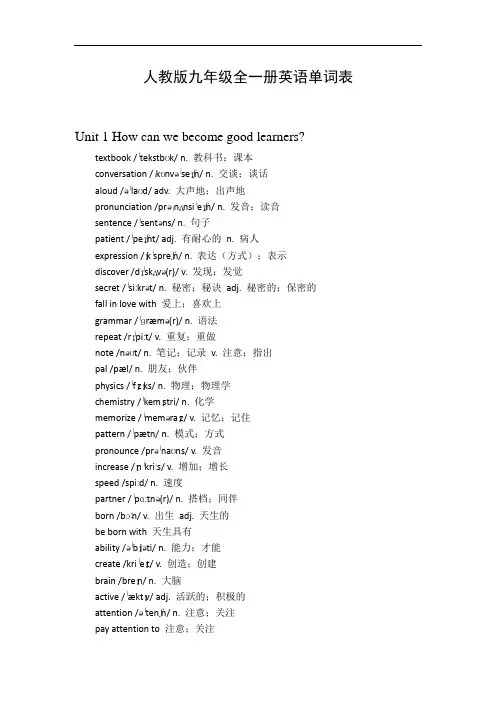
人教版九年级全一册英语单词表Unit 1 How can we become good learners?textbook /ˈtekstbʊk/ n. 教科书;课本conversation /ˌkɒnvəˈseɪʃn/ n. 交谈;谈话aloud /əˈlaʊd/ adv. 大声地;出声地pronunciation /prəˌnʌnsiˈeɪʃn/ n. 发音;读音sentence /ˈsentəns/ n. 句子patient /ˈpeɪʃnt/ adj. 有耐心的n. 病人expression /ɪkˈspreʃn/ n. 表达(方式);表示discover /dɪˈskʌvə(r)/ v. 发现;发觉secret /ˈsiːkrət/ n. 秘密;秘诀adj. 秘密的;保密的fall in love with 爱上;喜欢上grammar /ˈɡræmə(r)/ n. 语法repeat /rɪˈpiːt/ v. 重复;重做note /nəʊt/ n. 笔记;记录v. 注意;指出pal /pæl/ n. 朋友;伙伴physics /ˈfɪzɪks/ n. 物理;物理学chemistry /ˈkemɪstri/ n. 化学memorize /ˈmeməraɪz/ v. 记忆;记住pattern /ˈpætn/ n. 模式;方式pronounce /prəˈnaʊns/ v. 发音increase /ɪnˈkriːs/ v. 增加;增长speed /spiːd/ n. 速度partner /ˈpɑːtnə(r)/ n. 搭档;同伴born /bɔːn/ v. 出生adj. 天生的be born with 天生具有ability /əˈbɪləti/ n. 能力;才能create /kriˈeɪt/ v. 创造;创建brain /breɪn/ n. 大脑active /ˈæktɪv/ adj. 活跃的;积极的attention /əˈtenʃn/ n. 注意;关注pay attention to 注意;关注connect /kəˈnekt/ v.(使)连接;与……有联系connect…with 把……和……连接或联系起来overnight /ˌəʊvəˈnaɪt/ adv. 一夜之间;在夜间review /rɪˈvjuː/ v. & n. 回顾;复习knowledge /ˈnɒlɪdʒ/ n. 知识;学问wisely /ˈwaɪzli/ adv. 明智地;聪明地Unit 2 I think that mooncakes are delicious!lantern /ˈlæntən/ n. 灯笼stranger /ˈstreɪndʒə(r)/ n. 陌生人relative /ˈrelətɪv/ n. 亲属;亲戚put on 增加(体重);发胖pound /paʊnd/ n. 磅(重量单位);英镑(英国货币单位)folk /fəʊk/ adj. 民间的;民俗的goddess /ˈɡɒdes/ n. 女神whoever /huːˈevə(r)/ pron. 无论谁;不管什么人steal /stiːl/ v. 偷;窃取lay /leɪ/ v. 放置;安放;产(卵);下(蛋)lay out 摆开;布置dessert /dɪˈzɜːt/ n.(饭后)甜点;甜食garden /ˈɡɑːdn/ n. 花园;园子tradition /trəˈdɪʃn/ n. 传统admire /ədˈmaɪə(r)/ v. 欣赏;仰慕tie /taɪ/ n. 领带v. 捆;束haunted /ˈhɔːntɪd/ adj. 有鬼魂出没的;闹鬼的ghost /ɡəʊst/ n. 鬼;鬼魂trick /trɪk/ n. 花招;把戏treat /triːt/ n. 款待;招待v. 招待;请(客)spider /ˈspaɪdə(r)/ n. 蜘蛛Christmas /ˈkrɪsməs/ n. 圣诞节lie /laɪ/ v.(lay /leɪ/,lain /leɪn/)存在;平躺;处于novel /ˈnɒvl/ n.(长篇)小说eve /iːv/ n.(尤指宗教节假日的)前夕;前夜dead /ded/ adj. 死的;失去生命的business /ˈbɪznəs/ n. 生意;商业punish /ˈpʌnɪʃ/ v. 处罚;惩罚warn /wɔːn/ v. 警告;告诫present /ˈpreznt/ n. 现在;礼物adj. 现在的nobody /ˈnəʊbədi/ pron. 没有人warmth /wɔːmθ/ n. 温暖;暖和spread /spred/ v. 传播;展开n. 蔓延;传播Unit 3 Could you please tell me where the restrooms are? restroom /ˈrestruːm/ n.(美)洗手间;公共厕所stamp /stæmp/ n. 邮票;印章bookstore /ˈbʊkstɔː(r)/ n. 书店postcard /ˈpəʊstkɑːd/ n. 明信片pardon /ˈpɑːdn/ interj. 请再说一遍;抱歉,对不起washroom /ˈwɒʃruːm/ n. 洗手间;厕所bathroom /ˈbɑːθruːm/ n. 浴室;洗手间quick /kwɪk/ adj. 快的;迅速的rush /rʌʃ/ v. & n. 仓促;急促suggest /səˈdʒest/ v. 建议;提议staff /stɑːf/ n. 管理人员;职工grape /ɡreɪp/ n. 葡萄central /ˈsentrəl/ adj. 中心的;中央的nearby /ˌnɪəˈbaɪ/ adj. 附近的;邻近的adv. 在附近;附近pardon me 抱歉,对不起;什么,请再说一遍mail /meɪl/ v. 邮寄;发电子邮件n. 邮件;信件east /iːst/ adj. 东方的;东部的adv. 向东;朝东n. 东;东方fascinating /ˈfæsɪneɪtɪŋ/ adj. 迷人的;极有吸引力的inexpensive /ˌɪnɪkˈspensɪv/ adj. 不昂贵的uncrowded /ˌʌnˈkraʊdɪd/ adj. 不拥挤的;人少的convenient /kənˈviːniənt/ adj. 便利的;方便的mall /mɔːl/ n. 商场;购物中心clerk /klɑːk/ n. 职员corner /ˈkɔːnə(r)/ n. 拐角;角落politely /pəˈlaɪtli/ adv. 礼貌地;客气地request /rɪˈkwest/ n. & v. 要求;请求direction /dəˈrekʃn/ n. 方向;方位correct /kəˈrekt/ adj. 正确的;恰当的polite /pəˈlaɪt/ adj. 有礼貌的;客气的direct /dəˈrekt/ adj. 直接的;直率的speaker /ˈspiːkə(r)/ n. 讲(某种语言)的人;发言者whom /huːm/ pron. 谁;什么人impolite /ˌɪmpəˈlaɪt/ adj. 不礼貌的;粗鲁的address /əˈdres/ n. 住址;地址;通讯处underground /ˌʌndəˈɡraʊnd/ adj. 地下的n. 地铁parking lot 停车场;停车区course /kɔːs/ n. 课程;学科Unit 4 I used to be afraid of the dark.humorous /ˈhjuːmərəs/ adj. 有幽默感的;滑稽有趣的silent /ˈsaɪlənt/ adj. 不说话的;沉默的helpful /ˈhelpfl/ adj. 有用的;有帮助的from time to time 时常;有时score /skɔː(r)/ n. & v. 得分;打分background /ˈbækgraʊnd/ n. 背景interview /ˈɪntəvjuː/ v. 采访;面试n. 面试;访谈Asian /ˈeɪʃn/ adj. 亚洲的;亚洲人的n. 亚洲人deal with 应对;处理shyness /ˈʃaɪnəs/ n. 害羞;腼腆dare /deə(r)/ v. 敢于;胆敢crowd /kraʊd/ n. 人群;观众ton /tʌn/ n. 吨;(pl.)大量;许多private /ˈpraɪvət/ adj. 私人的;私密的guard /ɡɑːd/ n. 警卫;看守v. 守卫;保卫require /rɪˈkwaɪə(r)/ v. 需要;要求European /ˌjʊərəˈpiːən/ adj. 欧洲的;欧洲人的African /ˈæfrɪkən/ adj. 非洲的;非洲人的British /ˈbrɪtɪʃ/ adj. 英国的;英国人的speech /spiːtʃ/ n. 讲话;发言public /ˈpʌblɪk/ n. 民众adj. 公开的;公众的in public 公开地;在别人(尤指生人)面前ant /ænt/ n. 蚂蚁insect /ˈɪnsekt/ n. 昆虫seldom /ˈseldəm/ adv. 不常;很少influence /ˈɪnfluəns/ v. & n. 影响absent /ˈæbsənt/ adj. 缺席;不在fail /feɪl/ v. 失败;未能(做到)examination /ɪɡˌzæmɪˈneɪʃn/ n. 考试;审查boarding school 寄宿学校in person 亲身;亲自exactly /ɪɡˈzæktli/ adv. 确切地;精确地pride /praɪd/ n. 自豪;骄傲take pride in 为……感到自豪proud /praʊd/ adj. 自豪的;骄傲的be proud of 为……骄傲;感到自豪general /ˈdʒenrəl/ adj. 普遍的;常规的;总的n. 将军Unit 5 What are the shirts made of?material /məˈtɪəriəl/ n. 材料;原料chopsticks /ˈtʃɒpstɪks/ n. 筷子coin /kɔɪn/ n. 硬币fork /fɔːk/ n. 餐叉;叉子blouse /blaʊz/ n.(女式)短上衣;衬衫silver /ˈsɪlvə(r)/ n. 银;银器adj. 银色的glass /ɡlɑːs/ n. 玻璃cotton /ˈkɒtn/ n. 棉;棉花steel /stiːl/ n. 钢;钢铁fair /feə(r)/ n. 展览会;交易会environmental /ɪnˌvaɪrənˈmentl/ adj. 自然环境的;有关环境的grass /ɡrɑːs/ n. 草;草地leaf /liːf/ n.(pl. leaves /liːvz/)叶;叶子produce /prəˈdjuːs/ v. 生产;制造;出产widely /ˈwaɪdli/ adv. 广泛地;普遍地be known for 以……闻名;为人知晓process /ˈprəʊses/ v. 加工;处理n. 过程pack /pæk/ v. 包装;装箱product /ˈprɒdʌkt/ n. 产品;制品France /frɑːns/ 法国no matter 不论;无论local /ˈləʊkl/ adj. 当地的;本地的even though 虽然;即使brand /brænd/ n. 品牌;牌子avoid /əˈvɔɪd/ v. 避免;回避handbag /ˈhændbæɡ/ n. 小手提包mobile /ˈməʊbaɪl/ adj. 可移动的;非固定的everyday /ˈevrideɪ/ adj. 每天的;日常的boss /bɒs/ n. 老板;上司Germany /ˈdʒɜːməni/ 德国surface /ˈsɜːfɪs/ n. 表面;表层material /məˈtɪəriəl/ n. 材料;原料traffic /ˈtræfɪk/ n. 交通;路上行驶的车辆postman /ˈpəʊstmən/ n. 邮递员cap /kæp/ n.(尤指有帽舌的)帽子glove /ɡlʌv/ n.(分手指的)手套Unit 6 When was it invented?heel /hiːl/ n. 鞋跟;足跟electricity /ɪˌlekˈtrɪsəti/ n. 电;电能scoop /skuːp/ n. 勺;铲子style /staɪl/ n. 样式;款式project /ˈprɒdʒekt/ n. 项目;工程pleasure /ˈpleʒə(r)/ n. 高兴;愉快zipper /ˈzɪpə(r)/ n. (= zip) 拉链;拉锁daily /ˈdeɪli/ adj. 每日的;日常的website /ˈwebsaɪt/ n. 网站pioneer /ˌpaɪəˈnɪə(r)/ n. 先锋;先驱list /lɪst/ v. 列表;列清单n. 名单;清单mention /ˈmenʃn/ v. 提到;说到by accident 偶然;意外地nearly /ˈnɪəli/ adv. 几乎;差不多boil /bɔɪl/ v. 煮沸;烧开smell /smel/ n. 气味v.(smelt /smelt/,smelt;smelled,smelled)发出……气味;闻到saint /seɪnt/ n. 圣人;圣徒take place 发生;出现doubt /daʊt/ n. 疑惑;疑问v. 怀疑without doubt 毫无疑问;的确fridge /frɪdʒ/ n. 冰箱translate /trænsˈleɪt/ v. 翻译lock /lɒk/ v. 锁上;锁住n. 锁earthquake /ˈɜːθkweɪk/ n. 地震sudden /ˈsʌdn/ adj. 突然(的)all of a sudden 突然;猛地biscuit /ˈbɪskɪt/ n. 饼干cookie /ˈkʊki/ n. 曲奇饼instrument /ˈɪnstrəmənt/ n. 器械;仪器;工具crispy /ˈkrɪspi/ adj. 脆的;酥脆的sour /ˈsaʊə(r)/ adj. 酸的;有酸味的by mistake 错误地;无意中customer /ˈkʌstəmə(r)/ n. 顾客;客户Canadian /kəˈneɪdiən/ adj. 加拿大的;加拿大人的n. 加拿大人divide /dɪˈvaɪd/ v. 分开;分散divide…into… 把……分开purpose /ˈpɜːpəs/ n. 目的;目标basket /ˈbɑːskɪt/ n. 篮;筐the Olympics /əʊˈlɪmpɪks/ 奥林匹克运动会look up to 钦佩;仰慕hero /ˈhɪərəʊ/ n. 英雄;男主角Unit 7 Teenagers should be allowed to choose their own clothes. license /ˈlaɪsns/ n. (= licence) 证;证件safety /ˈseɪfti/ n. 安全;安全性smoke /sməʊk/ v. 冒烟;吸烟n. 烟part-time /ˌpɑːtˈtaɪm/ adj. & adv. 兼职(的)pierce /pɪəs/ v. 扎;刺破;穿透earring /ˈɪərɪŋ/ n. 耳环;耳饰flash /flæʃ/ n. 闪光灯;闪光v. 闪耀;闪光tiny /ˈtaɪni/ adj. 极小的;微小的cry /kraɪ/ v. & n. 哭;叫喊field /fiːld/ n. 田野;场地hug /hʌɡ/ n. & v. 拥抱;搂抱lift /lɪft/ v. 举起;抬高n. 电梯;搭便车badly /ˈbædli/ adv. 严重地;差;非常talk back 回嘴;顶嘴awful /ˈɔːfl/ adj. 很坏的;讨厌的teen /tiːn/ n.(13 至19 岁之间的)青少年regret /rɪˈɡret/ v. 感到遗憾;懊悔poem /ˈpəʊɪm/ n. 诗;韵文bedroom /ˈbedruːm/ n. 卧室community /kəˈmjuːnəti/ n. 社区;社团keep away from 避免接近;远离chance /tʃɑːns/ n. 机会;可能性make one's own decision 自己做决定educate /ˈedʒukeɪt/ v. 教育;教导manage /ˈmænɪdʒ/ v. 完成(困难的事);应付(困难局面)society /səˈsaɪəti/ n. 社会get in the way of 挡……的路;妨碍support /səˈpɔːt/ v. & n. 支持Unit 8 It must belong to Carla.truck /trʌk/ n. 卡车;货车picnic /ˈpɪknɪk/ n. 野餐rabbit /ˈræbɪt/ n. 兔;野兔attend /əˈtend/ v. 出席;参加valuable /ˈvæljuəbl/ adj. 贵重的;很有用的;宝贵的pink /pɪŋk/ adj. 粉红色的n. 粉红色anybody /ˈenibədi/ pron. 任何人happening /ˈhæpənɪŋ/ n. 事件;发生的事情(常指不寻常的)noise /nɔɪz/ n. 声音;噪音policeman /pəˈliːsmən/ n. 男警察wolf /wʊlf/ n. 狼uneasy /ʌnˈiːzi/ adj. 担心的;不安的laboratory /ləˈbɒrətri/ n. 实验室outdoors /ˌaʊtˈdɔːz/ adv. 在户外;在野外coat /kəʊt/ n. 外套;外衣sleepy /ˈsliːpi/ adj. 困倦的;瞌睡的land /lænd/ v. 着陆;降落alien /ˈeɪliən/ n. 外星人run after 追逐;追赶suit /suːt/ n. 西服;套装v. 适合express /ɪkˈspres/ v. 表示;表达at the same time 同时;一起circle /ˈsɜːkl/ n. 圆圈v. 圈出Britain /ˈbrɪtn/ n. (= Great Britain) 大不列颠mystery /ˈmɪstri/ n. 奥秘;神秘事物receive /rɪˈsiːv/ v. 接受;收到historian /hɪˈstɔːriən/ n. 历史学家;史学工作者leader /ˈliːdə(r)/ n. 领导;领袖midsummer /ˌmɪdˈsʌmə(r)/ n. 仲夏;中夏medical /ˈmedɪkl/ adj. 医疗的;医学的purpose /ˈpɜːpəs/ n. 目的;目标prevent /prɪˈvent/ v. 阻止;阻挠energy /ˈenədʒi/ n. 精力;力量position /pəˈzɪʃn/ n. 位置;地方burial /ˈberiəl/ n. 埋葬;安葬honor /ˈɒnə(r)/ v. (= honour) 尊重;表示敬意n. 荣幸ancestor /ˈænsestə(r)/ n. 祖宗;祖先victory /ˈvɪktəri/ n. 胜利;成功enemy /ˈenəmi/ n. 敌人;仇人period /ˈpɪəriəd/ n. 一段时间;时期Unit 9 I like music that I can dance to.prefer /prɪˈfɜː(r)/ v. 更喜欢lyrics /ˈlɪrɪks/ n.(pl.)歌词Australian /ɔːˈstreɪliən/ adj. 澳大利亚的;澳大利亚人的n. 澳大利亚人electronic /ˌɪlekˈtrɒnɪk/ adj. 电子的;电子设备的suppose /səˈpəʊz/ v. 推断;料想smooth /smuːð/ adj. 悦耳的;平滑的spare /speə(r)/ adj. 空闲的;不用的v. 抽出;留出case /keɪs/ n. 情况;实情in that case 既然那样;假使那样的话war /wɔː(r)/ n. 战争;战争状态director /dəˈrektə(r)/ n. 导演;部门负责人dialogue /ˈdaɪəlɒɡ/ n. (= dialog) 对话;对白documentary /ˌdɒkjuˈmentri/ n. 纪录片drama /ˈdrɑːmə/ n. 戏;剧plenty /ˈplenti/ pron. 大量;众多plenty of 大量;充足shut /ʃʌt/ v.(shut,shut)关闭;关上superhero /ˈsuːpəhɪərəʊ/ n. 超级英雄horror /ˈhɒrə(r)/ n. 震惊;恐惧thriller /ˈθrɪlə(r)/ n. 惊险小说(电影、戏剧)intelligent /ɪnˈtelɪdʒənt/ adj. 有才智的;聪明的sense /sens/ n. 感觉;意识sadness /ˈsædnəs/ n. 悲伤;悲痛pain /peɪn/ n. 痛苦;苦恼;疼痛reflect /rɪˈflekt/ v. 反映;映出moving /ˈmuːvɪŋ/ adj. 动人的;令人感动的perform /pəˈfɔːm/ v. 表演;执行lifetime /ˈlaɪftaɪm/ n. 一生;有生之年pity /ˈpɪti/ n. 遗憾;怜悯v. 同情;怜悯total /ˈtəʊtl/ n. 总数;合计adj. 总的;全体的in total 总共;合计master /ˈmɑːstə(r)/ n. 能手;主人v. 掌握praise /preɪz/ v. & n. 表扬;赞扬recall /rɪˈkɔːl/ v. 回忆起;回想起wound /wuːnd/ n. 伤;伤口;创伤painful /ˈpeɪnfl/ adj. 令人痛苦的;令人疼痛的Unit 10 You're supposed to shake hands. custom /ˈkʌstəm/ n. 风俗;习俗bow /baʊ/ v. 鞠躬kiss /kɪs/ v. & n. 亲吻;接吻greet /ɡriːt/ v. 和……打招呼;迎接relaxed /rɪˈlækst/ adj. 放松的;自在的value /ˈvæljuː/ v. 重视;珍视n. 价值drop by 顺便访问;随便进入capital /ˈkæpɪtl/ n. 首都;国都after all 毕竟;终归noon /nuːn/ n. 正午;中午mad /mæd/ adj. 很生气;疯的get mad 大动肝火;气愤effort /ˈefət/ n. 努力;尽力make an effort 作出努力passport /ˈpɑːspɔːt/ n. 护照clean…off 把……擦掉chalk /tʃɔːk/ n. 粉笔blackboard /ˈblækbɔːd/ n. 黑板northern /ˈnɔːðən/ adj. 北方的;北部的coast /kəʊst/ n. 海岸;海滨season /ˈsiːzn/ n. 季;季节knock /nɒk/ v. 敲;击;碰eastern /ˈiːstən/ adj. 东方的;东部的take off 脱下(衣服);(飞机等)起飞worth /wɜːθ/ adj. 值得;有……价值(的)manner /ˈmænə(r)/ n. 方式;方法;礼貌empty /ˈempti/ adj. 空的;空洞的basic /ˈbeɪsɪk/ adj. 基本的;基础的exchange /ɪksˈtʃeɪndʒ/ n. & v. 交换go out of one's way 特地;格外努力make...feel at home 使(某人)感到宾至如归teenage /ˈtiːneɪdʒ/ adj. 十几岁的;青少年的granddaughter /ˈɡrændɔːtə(r)/ n.(外)孙女behave /bɪˈheɪv/ v. 表现;举止except /ɪkˈsept/ prep. 除……之外conj. 除了;只是elbow /ˈelbəʊ/ n. 肘;胳膊gradually /ˈɡrædʒuəli/ adv. 逐步地;渐进地suggestion /səˈdʒestʃən/ n. 建议。
Unit-1How-can-we-become-good-learners知识点归纳
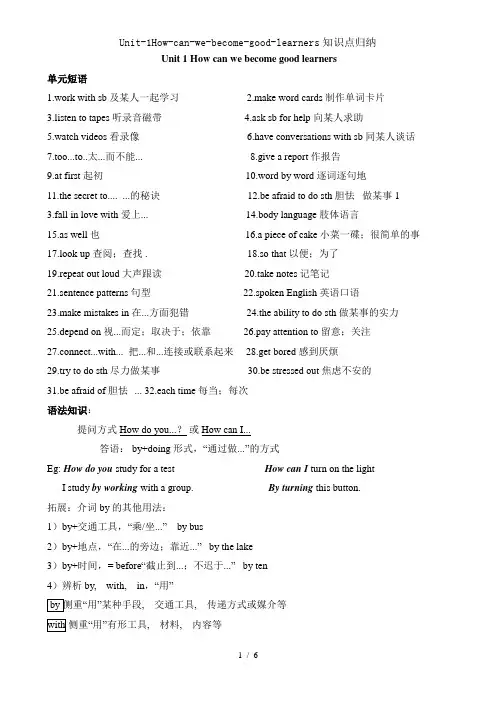
Unit 1 How can we become good learners单元短语1.work with sb及某人一起学习2.make word cards制作单词卡片3.listen to tapes听录音磁带4.ask sb for help向某人求助5.watch videos看录像6.have conversations with sb同某人谈话7.too...to..太...而不能...8.give a report作报告9.at first起初10.word by word逐词逐句地11.the secret to.... ...的秘诀12.be afraid to do sth胆怯做某事 1 3.fall in love with爱上... 14.body language肢体语言15.as well也16.a piece of cake小菜一碟;很简单的事17.look up查阅;查找 . 18.so that以便;为了19.repeat out loud大声跟读20.take notes记笔记21.sentence patterns句型22.spoken English英语口语23.make mistakes in在...方面犯错24.the ability to do sth做某事的实力25.depend on视...而定;取决于;依靠26.pay attention to留意;关注27.connect...with... 把...和...连接或联系起来28.get bored感到厌烦29.try to do sth尽力做某事30.be stressed out焦虑不安的31.be afraid of胆怯... 32.each time每当;每次语法知识:提问方式How do you...?或How can I...答语: by+doing形式,“通过做...”的方式Eg: How do you study for a test How can I turn on the lightI study by working with a group. By turning this button.拓展:介词by的其他用法:1)by+交通工具,“乘/坐...” by bus2)by+地点,“在...的旁边;靠近...” by the lake3)by+时间,= before“截止到...;不迟于...” by ten4)辨析by, with, in,“用”“用”某种手段, 交通工具, 传递方式或媒介等侧重“用”有形工具, 材料, 内容等“用”语言, 语调, 笔墨, 颜色等知识点讲解:section A1.by asking the teacher for help通过向老师求助。
人教版九年级全册Unit 1 How Can we become good learners 短文

人教版九年级全册Unit 1 How Can we become good learners 短文填空[真题+模拟](含解析)Unit 1 How Can we become good learners短文填空8篇Passage 1(2022·重庆璧山·统考一模)根据下面短文内容,在短文的空格处填上一个恰当的词,使短文完整、通顺。
You have learnt English for several years. Can you speak English confidently Many students are lack of confidence when speaking English. How can we speak English with more 1 Here is some advice to help you.Use positive (积极的) self-talk. Believe it or not, the most important person you talk to every day is yourself.2 you keep thinking English is too difficult and you will never improve, you are sure to start believing them. So you have to be patient and talk positively with yourself. Be3 to replace unhelpful thoughts or ideas with better ones.Speak louder, slower. To sound more confident, speak loudly enough so that anyone in the same room can easily hear you. Many English learnersworry that 4 too slowly will make them sound inexperienced. But speaking too fast may cause mistakes. So avoid worrying that you are speaking too slowly for the people 5 you.Speak in complete sentences. If you are not confident in your language ability, you will probably try to say as little as possible when you speak. This is a 6 problem for language learners. But using complete sentences can show others that you are not afraid to speak English. Read out loud. It can help build confidence in how your English sounds. The next time you are reading something, take a few minutes to read it aloud. First, read silently. 7 , listen to the radio. Third, try to read the story out loud 8 . At last, try listening to the speaker and reading out loud at the same time.Passage 2(2022秋·广东汕头·九年级统考期末)请用适当的词完成下面这篇短文。
新人教版九年级英语(全一册)知识点
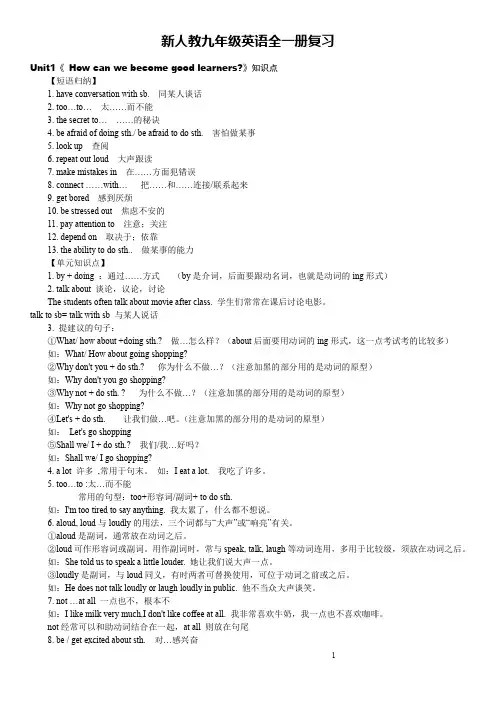
新人教九年级英语全一册复习Unit1《How can we become good learners?》知识点【短语归纳】1. have conversation with sb. 同某人谈话2. too…to… 太……而不能3. the secret to… ……的秘诀4. be afraid of doing sth./ be afraid to do sth. 害怕做某事5. look up 查阅6. repeat out loud 大声跟读7. make mistakes in 在……方面犯错误8. connect ……with… 把……和……连接/联系起来9. get bored 感到厌烦10. be stressed out 焦虑不安的11. pay attention to 注意;关注12. depend on 取决于;依靠13. the ability to do sth.. 做某事的能力【单元知识点】1. by + doing :通过……方式(by是介词,后面要跟动名词,也就是动词的ing形式)2. talk about 谈论,议论,讨论The students often talk about movie after class. 学生们常常在课后讨论电影。
talk to sb= talk with sb 与某人说话3. 提建议的句子:①What/ how about +doing sth.? 做…怎么样?(about后面要用动词的ing形式,这一点考试考的比较多)如:What/ How about going shopping?②Why don't you + do sth.? 你为什么不做…?(注意加黑的部分用的是动词的原型)如:Why don't you go shopping?③Why not + do sth. ? 为什么不做…?(注意加黑的部分用的是动词的原型)如:Why not go shopping?④Let's + do sth. 让我们做…吧。
+Unit1+How+can+we+become+good+课件23-24学年人教版英语九年级全册+
知识链接
Great works are performed not by strength but by perseverance
born of 出生于……家庭;源于…… He was born of a wealthy family.
他出生于一个富裕家庭。 born in 出生于…… My little son was born in December. 我的小儿子出生于十二月。 He was born in Australia. 他出生于澳大利亚。
Read Paragraph 6 and fill in the blanks.
Learning is a lifelong journey because every day brings something new. Everything that you learn beቤተ መጻሕፍቲ ባይዱomes a part of you and changes you, so learn wisely and learn well.
discuss them with your partner.
Great works are performed not by strength but by perseverance
always read English aloud, both in and out of school.
study with a group sometimes instead of working on your own.
是否
取决于
2.Whether or not you can learn well depends on yourl_ea_r_n_i_n_g___h_a_b_it.s
(完整版)人教版九年级英语课文原文unit1Howcanwebecomegoodlearners

Unit 1 How can we become good learners?Last year, I didn’t like my English class. Every class was like a bad dream. The teacher spoke so quickly that I didn’t understand her most of the time. I was afraid to ask questions because of my poor pronunciation. I just hid behind my textbook and never said anything.Then one day I watched an English movie called toy story. I fell in love with this exciting and funny movie! So I began to watch other English movies, too. Although I could not understand everything the characters said, their body language and the expressions on their faces helped me to get the meaning. I also realized I could get the meaning by listening for just the key words. My pronunciation improved as well by listening to the conversations in English movies. I discovered that listening something interesting is the secret to language learning. I also learned useful sentences like “It’s a piece cake”or “It serves you right”. I did not understand these sentences at first. But because I wanted to understand the story, I looked them up in the dictionary.Now I really enjoy my English class. I want to learn new words and more grammar so that I can have a better understanding of English movies.How Can You Become a Successful L earner?Everyone is born with the ability to learn. But weather or not you can do this well depends on your learning habits. Research shows that successful learners have some good habits in common.Creating an interest in what they learnStudies show that if you are interested in something, your brain is more active and it is also easier for you to pay attention to it for a long time. Good learners often connect what they need to learn with something interesting. For example,if they need to learn English and they like music or sports, they can listen to English songs or watch sports programs in English. This way they will not get bored.Practising and learning from mistakesGood learners think about what they are goog at and what they need to practise more. Remember, “Use it or loser it.”Even if you learn something well,you will forget it unless you use it. “Practice makes perfect.”Good learners will keep practising what they have learned, they are not afraid of making mistakes. Alexander Graham Bell did not invent the telephone overnight. He succeeded by trying many times and learning from his mistakes.Developing their studying skillsIt is not enough to just study hard. Good learners know the best way they can study. For example, they may take notes by writing down key words or by drawing mind maps. They also look for ways to review what they have learned. They may do this by reading their notes every day or by explaining the information to another student. Asking questionsGood learners often ask questions during or after class, They even ask each other and try to find out the answers. Knowledge comes from questioning.Learning is a lifelong journey because every brings something new. Everything they you learn becomes a part of you and changes you, so learn wisely and learn well.。
人教版英语九年级Unit1《Howcanwebecomegoodlearners》全单元说课稿
人教版英语九年级Unit 1《How can we become good learners》全单元说课稿一. 教材分析人教版英语九年级Unit 1《How can we become good learners》主要讨论了如何成为一名优秀的学习者。
本单元的主题贴近学生的生活,激发学生对学习的思考。
通过本单元的学习,学生可以了解和掌握一些良好的学习方法和技巧,提高学习效率。
二. 学情分析九年级的学生已经具备一定的学习经验和英语基础,但他们在学习方法和策略上可能还存在一些问题。
因此,教师在教学过程中要关注学生的个体差异,引导他们找到适合自己的学习方法,提高学习兴趣和效果。
三. 说教学目标1.知识目标:学生能够掌握本单元的生词和短语,理解课文内容,了解如何成为一名优秀的学习者。
2.能力目标:学生能够运用所学知识,运用不同的学习策略,提高自己的学习效率。
3.情感目标:学生能够激发对学习的热情,培养良好的学习习惯和态度。
四. 说教学重难点1.重点:学生能够掌握本单元的生词和短语,理解课文内容,了解如何成为一名优秀的学习者。
2.难点:学生能够运用所学知识,运用不同的学习策略,提高自己的学习效率。
五. 说教学方法与手段1.任务型教学法:通过完成各种任务,激发学生的学习兴趣,提高他们的学习积极性。
2.合作学习:鼓励学生小组讨论,培养他们的团队协作能力。
3.情境教学法:创设真实的学习情境,让学生在实践中运用所学知识。
4.多媒体辅助教学:运用多媒体课件和教学资源,提高课堂教学效果。
六. 说教学过程1.导入:通过提问方式引导学生思考什么是好的学习者,激发学生的学习兴趣。
2.呈现:展示课文内容,让学生整体理解课文主题。
3.读写:学生独立阅读课文,完成相关练习,巩固所学知识。
4.听说:学生分组讨论,分享自己的学习方法和策略,培养他们的口头表达能力。
5.展示:学生展示自己的学习成果,互相评价,提高自己的学习效果。
6.总结:教师对本节课的内容进行总结,强调良好的学习习惯和态度的重要性。
人教版九年级英语(全一册)课文同步翻译
人教版九年级英语(全一册)课文同步翻译新学期马上开始了,今天就和大家分享人教版九年级英语课文的同步翻译,请转发给有需要的孩子们!!1Unit1 How can we become good learners?Section A 2d----安妮,我有点紧张,我必须读完一本书,以便下周一作报告。
----听起来不太糟糕。
----但我是一个读书很慢的人。
----一开始只管快速阅读获取文章大意就好了,不要逐字逐句的读,按词组阅读。
----但我很多单词都不懂,我不得不用字典。
----尽量通过阅读上下文来猜测单词的意思,可能你知道的比你预象的要多。
----那听起来很难!----哦,耐心点,这得花时间。
你可以每天通过阅读你喜欢的东西得到提高。
你读得越多,你(阅读的速度)就越快。
Section A 3a我是如何学会学习英语的去年,我不喜欢我的英语课。
每节课像是一个噩梦。
老师说的太快以至于我大多数时候都听不太懂。
因为我糟糕的发音,我害怕问问题。
我只是躲在我的课本后面,从来不说一句话。
后来有一天我看了一部叫做《玩具总动员》的英语电影。
我爱上了这部既激动人心又滑稽有趣的电影!就这样我也开始看其他的英文电影。
虽然我无法听懂那些角色所说的全部内容,但他们的肢体语言和面部表情帮助我理解了意思。
我也意识到我可以通过只听关键词来理解意思。
通过听英文电影中的对话,我的发音也变的更好了。
我发现听一些有趣的内容是学习语言的秘诀。
我还学到了一些有用的句子比如“这简直是小菜一碟”或者“你活该”。
我起初不理解这些句子,但是因为我想理解这个故事,所以我查了字典。
现在我真的喜欢我的英语课。
我想学习生词和更多的语法,那样我对英语电影就能有更好的理解了。
Section B 2b怎么成为一个成功的学习者呢?每个人天生就拥有学习的能力。
但是你能否学习的好取决于你的学习习惯。
研究显示成功的学习者有一些共同的好习惯。
1.培养他们对所学东西的兴趣研究显示,如果你对某事物感兴趣,你的大脑会更活跃而且对你来说长时间地关注那个事物也容易些。
人教版英语9年级全一册单词
人教版英语九年级全一册单词Unit 1 How can we become good learners?1. textbook /ˈtekstbʊk/ 教科书;课本-例句:I read my textbook every day.(我每天都看我的课本。
)2. conversation /ˌkɒnvəˈseɪʃn/ 交谈;谈话-例句:We had a long conversation about our future.(我们就我们的未来进行了一次长谈。
)3. aloud /əˈlaʊd/ 大声地;出声地-例句:Please read the text aloud.(请大声朗读课文。
)4. pronunciation /prəˌnʌnsiˈeɪʃn/ 发音;读音-例句:Your pronunciation is very good.(你的发音非常好。
)5. sentence /ˈsentəns/ 句子-例句:Write a sentence with this word.(用这个词写一个句子。
)6. patient /ˈpeɪʃnt/ 有耐心的;病人-例句:The teacher is very patient with us.(老师对我们很有耐心。
)-短语:be patient with 对……有耐心7. expression /ɪkˈspreʃn/ 表达(方式);表示-例句:Her expression showed that she was angry.(她的表情表明她很生气。
)8. discover /dɪˈskʌvə(r)/ 发现;发觉-例句:Columbus discovered America.(哥伦布发现了美洲。
)9. secret /ˈsiːkrət/ 秘密;秘诀-例句:The secret of success is hard work.(成功的秘诀是努力工作。
)-短语:keep a secret 保守秘密10. look up (在词典、参考书中或通过电脑)查阅;抬头看-例句:If you don't know the word, you can look it up in the dictionary.(如果你不认识这个词,你可以查字典。
人教版英语九年级全册Unit1Howcanwebecomegoodlearners课教学设计
6.总结反馈,巩固提高:在教学结束时,教师引导学生对所学内容进行总结,并及时给予反馈,帮助学生巩固所学知识。
四、教学内容与过程
(一)导入新课
1.教师以生动有趣的故事导入新课,如讲述一位优秀学习者通过不断努力,总结出适合自己的学习方法,最终取得优异成绩的故事。以此激发学生的学习兴趣,引导他们思考如何成为优秀学习者。
针对这种情况,本节课将从以下几个方面进行教学设计:首先,关注学生的兴趣点,结合生活实际,引入生动有趣的案例,激发学生的学习兴趣。其次,注重学习策略的指导,引导学生总结适合自己的学习方法,提高学习效率。再次,关注学生个体差异,实施分层教学,使每个学生都能在原有基础上得到提高。最后,注重情感教育,培养学生的合作精神,提高他们的人际交往能力。
2.自主探究,合作交流:引导学生自主学习,结合个人实际情况,总结出适合自己的学习方法。
在此环节,教师可以设计一系列任务,如:让学生分组讨论,分享各自的学习心得;开展头脑风暴,让学生列举出他们认为有助于提高英语学习效率的方法。
3.分层教学,关注个体差异:针对不同水平的学生,设计不同难度的练习和活动,使每个学生都能在原有基础上得到提高。
提交成果:小组提交一份调查报告,包括调查方法、数据分析和改进建议。
(二)教学难点
1.帮助学生克服学习英语的心理障碍,树立自信心。
2.引导学生掌握有效的学习策略,提高学习效率。
3.激发学生的学习兴趣,培养良好的学习习惯。
教学设想:
1.创设情境,激发兴趣:通过引入生活实例,让学生感受到英语学习的实际意义,激发他们的学习兴趣。
例如,在导入环节,可以展示一位优秀学习者的一天,让学生观察并思考:这位学习者是如何安排时间、如何高效学习的。