
人教新目标八年级英语下册Unit 6 Section A(3a-3c)教案
新目标八年级下册
Unit 6 An old man tried to move the mountains.
Section A 3a(P43) 阅读课教学设计(40分钟)
一、教材分析
新目标这套教材根据学生的心理特点、认知水平和兴趣爱好来编写的。
从教材编排上说新版的八年级下册中的第六单元是一个全新的单元,主要是学习如何讲故事。
本单元通过中国传统的故事引入,学生首先学会几个中国传统故事的名字以及故事的英文表达方式,对于这些家喻户晓的故事学生们容易产生学习兴趣。
二、教学目标介绍
结合八年级下册中的第六单元Section A中2b和2d《愚公移山》的故事,使学生了解如何用英文叙述故事。
本节阅读课主要涉及到《西游记》的部分内容,《西游记》是学生们比较熟悉的,而用英文的方式阅读相关知识我想学生们还是首次,对此我先将生的单词拿出来讲解,在讲单词的过程中穿插阅读部分的相关内容,使学生们对本篇文章有大概的印象,为学生之后的阅读以及答题扫清障碍。
1. Knowledge Objects
⑴. Key vocabulary: tail, hide, magic stick, object
⑵. Key expressions: be new to, make changes, turn...into, unless, so ...that, be able to, as soon as, come out, become interested in, give up
2. Ability Objects
To train students’ ability of speaking and reading.
3. Moral Object
Students should love traditional Chinese stories.
4. Important Point:
Read the passage and answer the questions by themselves.
5. Difficult Point:
Learn to tell a story.
三、教学任务分析
1.采用口头的方式复习《愚公移山》内容,使用的句子有What do you think about the story of Yu Gong?/ How does the story begin?/What could Yu Gong do instead of moving the mountains? 使用学生口头表达的方法,通过对《愚公移山》的回顾,使学生能够更好的了解中国传统的故事。
2.学生通过口语的方式总结《愚公移山》后,引入本篇文章《西游记》的生单词tail, hide, magic stick, object在讲生单词时扩展与文章相关的内容,使学生对本课有一定的了解。
3.回答几个小问题如:Do you like Journey to the West? Why?/ Who is the main character in Journey to the West? Do you like him? Why? 鼓励学生根据刚才回答的问题以及生单词试着讲《西游记》的内容,通过口语的方式进行同时检测学生生单词的掌握情况。
4.泛读:大声朗读全文回答问题。
Which book is talked about?/ Who is the main character?/ What is he like?通过这种方式让学生了解本篇文章的大概内容。
5.精读:
【1】大声朗读第一自然段回答问题。
What happened in November 1979?
【2】阅读第二自然段完成表格3b的填写。
【3】四人一小组阅读第三自然段回答问题。
Why are children interested in reading about the Monkey King?
通过精读的方式使学生对本篇文章有一个更深入的了解。
在学生阅读的同时老师将文章中出现的短语及固定搭配书写在黑板上,每个自然段阅读完后老师及时让同学们猜短语的意思并造句或在文章中找出其具体位置。
最后做一个总结全文的习题3c,让学生更好的理解本篇文章。
6.拓展:通过文章的阅读进行一个采访活动,其内容与文章有关,但学生可以加入自己的想法。
1.复习《愚公移山》内容。
(What do you think about the story of Yu Gong?/ How does the story begin?/What could Yu Gong do instead of moving the mountains? )
2.引入生单词(tail, hide, magic stick, object)
3.根据单词与问题试讲《西游记》的故事内容。
4.泛读及回答问题
5.大声读以及小组读的方式精读以及完成阅读任务。
6.拓展本篇文章的内容。
7.布置作业。
五、教学过程的活动设计说明
1.复习上节课《愚公移山》的内容,学生口头表达《愚公移山》故事,完成对中国传统故事的回顾。
2.根据猴子引入本篇文章《西游记》的生单词,在讲生单词时扩展与文章相关的内容,如Monkey King can hide his tail, he can turn himself into a person.等等。
便于后面阅读的顺利进行。
3.通过生单词的学习让学生根据问题尝试讲《西游记》。
在学生遇到问题时老师给予帮助,学生可以展开丰富的想象力。
4.通过大声朗读的方式回答问题便于了解本篇文章的大概内容。
平时学生大声说英语的时间较少,所以通过大声朗读的方式可以提高学生的英语阅读能力以及口头说的能力。
5.每段逐一排查使学生对本篇文章有一个更深入的了解。
在学生阅读每个自然段的同时,老师书写每段短语及固定搭配,使学生了解其用法。
最后进行习题3c,学生对于本篇课文已经熟知,因此容易完成。
6.通过对于Monkey King 的了解,可以进行采访活动,学生展开合理的想象力完成对话。
7.布置作业。
写一篇关于孙悟空的小故事,将阅读的内容过渡到写作上。
英语人教版八年级下册Unit 6 Section A (3a-3c)
Unit 6 An old man tried to moved the mountains.Section A 2 (3a-3c)一、教学目标:1.知识与技能目标:1) 学习掌握下列词汇:object, magic, stick, hide, tail, turn…into, excite, western2)阅读短文,能按要求找到相应的信息。
3)通过这篇文章的学习,使学生掌握一些阅读技能和方法并以此提高学生们的阅读能力。
4) 学会讲故事。
2. 过程与方法运用任务型教学法,小组合作等方法,使学生能完成这节课的基本任务,并从这节课学到实用的阅读技巧。
3.情感态度价值观目标:1)激发学生对中国传统文化的兴趣。
2)引导学生能多阅读中国传统文学名著,让学生们明白中国传统文化的博大、精深,并吸取中国传统文化中的精华。
二、学情分析八年级的学生在进入初中后,接触英文短文快两年。
学生的阅读能力由于受各种原因的影响而参差不齐。
总得来说,大部分学生的阅读能力很弱,例如:有对于长句子的理解有困难,阅读速度太慢,阅读技巧掌握不牢等方面。
三、教学重难点1. 教学重点:1) 掌握本部分出现的生词和词组,达到熟练运用的目标。
2) 阅读短文,获得相关的信息。
通过阅读练习,来提高阅读能力。
2. 教学难点:1) 阅读短文,获得相关的信息的能力。
2) 掌握阅读技巧,并能运用在以后的学习中。
四、教学用具多媒体教学机、PPT三、教学过程Step 1 warm-up播放动画片《西游记》的主题曲《猴哥》,并通过提问引出The Monkey King。
(设计意图:通过学生们熟悉的歌曲,引起学生兴趣,活跃课堂气氛)Step 2 PresentationⅠPre-reading通过图片将课文中的句子逐句在屏幕上展示出来,并且教授重点单词和教读每一个句子。
重点句型稍作讲解。
(设计意图:在学生阅读文段之前,通过创设情境引出文段中的句子,为学生扫清单词和长难句障碍,有利于学生顺利完任务。
人教版初中英语八年级下册Unit6SectionA3a-3c教案设计
第二课时Section A 3a—4c教学目标:1.Improve the reading ability。
2.理解并掌握的重点单词和短语:object, hide, tail, magic, stick,excite,Western, fit, couple, smile, marry, turn…into…, keep doing sth., become interested in, once upon a time, fall in love, get married。
3.熟练运用as soon as, unless, so…that…结构。
教学重难点:1.掌握本部分出现的生词和词组,达到熟练运用的目标。
2.阅读短文,获得相关的信息。
通过阅读练习,来提高阅读能力。
3.熟练运用as soon as, unless, so…that…来讲述故事。
教学思路:本课教学内容是八年级下Unit 6 第二课时,是一节阅读课。
它的任务是训练和提高阅读技能,掌握语法、词汇和知识点等内容,让学生根据问题讲故事,练习句型,总结状语从句的基本用法。
教学准备:准备多媒体课件教学过程:Step Ⅰ.Leading inT: Let’s look at the picture. I think you must have known it verywell. In this story, there are four main characters. They are Zhu bajie, Sha Wujing, Tangseng a nd Sun Wukong. And I like Sun Wukong best. What about you? Do you like him? In fact, he has another name, the Monkey King. Sun Wukong h as a stick, and it’s a magic stick.He can make i t big and long. He can also make it small and short to keep it in his ear. So this classlet’s learn something more about him.Now let’s come to 3a.[设计意图]通过图片老师直接引出话题,引入新课,让学生提前感知所学内容。
人教八年级下册Unit6SectionA(3a3c)教学设计

3.课堂活动:设计丰富多样的力。
教学策略:结合教材内容,设计不同类型的练习题,让学生在活动中巩固所学知识,提高语言技能。
4.个性化教学:关注学生的个体差异,给予每个学生个性化的指导和帮助。
三、教学重难点和教学设想
(一)教学重难点
1.重点:本节课的重点在于学生对一般将来时态的掌握,以及运用该时态描述未来计划和行动。同时,新词汇和短语的识记、理解和运用也是教学的重点。
难点:如何引导学生在实际场景中灵活运用一般将来时态,以及如何帮助学生在交流中准确使用新词汇和短语。
2.重点:培养学生通过听力、口语、阅读等多种途径获取信息,提高其综合语言运用能力。
(二)过程与方法
1.通过小组合作、讨论等形式,让学生在互动中学习,培养其团队协作能力和解决问题的能力。
2.运用多媒体教学资源,如图片、视频等,创设真实语境,帮助学生理解和记忆目标词汇和句型,提高学生的学习兴趣和积极性。
3.引导学生通过听力、口语、阅读等多种方式获取信息,培养其综合语言运用能力。
(三)情感态度与价值观
3.交流展示:各小组展示旅行计划,组内成员用目标句型进行汇报,如:“I will visit my aunt and go shopping.”
(四)课堂练习
1.听力练习:教师播放3c部分的听力材料,学生听后完成相应的练习,巩固一般将来时态的用法。
2.口语练习:学生两人一组,根据3c部分的提示,进行角色扮演,模拟旅行场景,练习目标句型。
3.鼓励学生互相分享、交流作业成果,互相学习,共同进步。
4.家长应积极配合,关注孩子的学习进度,共同参与孩子的学习过程。
新目标(人教) 八年级下册英语教学课件 Unit 6 Section A(3a-3c)
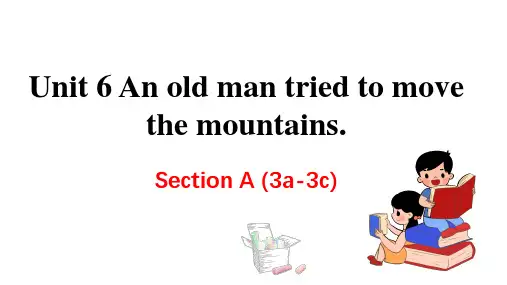
Do you know what story the classic tells of? The story is about four people. They went through eighty-one difficulties and went to the west for scriptures(真经). What are the names of the four main characters in Journey to the West ? They are Tang Seng, Sun Wukong, Zhu Bajie and Sha Heshang.
Which character do you like best?
Smart
What do you think of Sun Wukong? brave
lively
magic
Pre-reading
Look at the picture and guess.
1.Will this passage be about Monkey King? 2.Will this passage be a story about Monkey
3.The Monkey King is the main character in the traditional Chinese book Journey to the West. ( T )
Task 3 Scanning for details Read Para. 2 and find out the key words to finish the mind map.
King?
Tip: the theme picture(主题图)can help you understand!
Unit6SectionA3a3c教案人教版英语八年级下册
An old man tried to move the mountain.SectionA3a3c1.Teaching material$ Students analysisThis is a reading lesson. It is taken from Unit6 SectionA 3a3c,Book8B of Go Ror It. This is the second period of this unit. It is mainly abouta story Journey to the West. Students have learned a story Yu GongMoves a Mountain last period. This class continues to tell a story.Students in Grade 8 are still outgoing and active. They are interested in telling stories and they are also familiar with the story Journey to the West. So it is not too difficult for them to have this class.2.Teaching objectivesLanguage ability Ss are able to learn the new words and expressions, uch as: object, magic, urn…into….Learning ability Ss are able to learn the way of reading and to understand the story ,then to retell it by using the key words.Thinking quality Ss are able to learn from Monkey King to bee a brave and wise person.Cultural awareness Ss are able to study hard and face any trouble bravely.3.Teaching important$DifficultTeaching important: to teach students to understand the passage and learn the reading skills.Teaching difficult: Students’ reading ability will be improved.4.Teaching$Learning methodThe taskbased teaching method, situational approachThe cooperative learning method5.Teaching proceduresStep1. Leadin(3min)Show a video about Journey to the west and ask students some questions:What’s the name of the video?How many characters are there?Which character do you like best? Why?(To arouse students’ interests and lead in topic)reading(2min)Show the picture in 3a and ask students to guess the main idea of the passage.( To improve students’ predicting skills)Step3. Whilereading(20min)Fast reading1.Read the passage quickly and answer the questions.Which book is talked about?Who is the main character?What is he like?2.Lead students to analyze the structure of the passage.Careful reading1.Read paragraph 1 and answer the questions?What’s the name of the new TV program in England?Who is the main character?2.Read paragraph 2 and plete the chart about Monkey King.What he can do what he can’t do3.Read paragraph 3 and answer the question.What’s the influe nce to Chinese and Western children?4.Read the passage again and plete the sentences in 3c.5.Explain some language points.(To understand the main idea and the structure of the passage.) Step4. Postreading(10min)Pair work Work in pairs to talk about why you like or dislike Monkey King.3.Retell the story based on the mind map.Step5.Summary(2min)1.Summarize the key words and phrases.2.Retell the story by the mind map.Step6. Homework(1min).1.(You must)read a aloud the passage fluently and learn the useful expressions.2.(You can)retell or recite the story by the mind map.design.An old man tried to move the mountain.SectionA3a3cbackgroundwhat he can dospirit Monkey King what he can’t doChinese childrenInfluencewestern children。
人教新目标八年级英语下册Unit 6 Section A(3a-3c)教案

新目标八年级下册Unit 6 An old man tried to move the mountains.Section A 3a(P43) 阅读课教学设计(40分钟)一、教材分析新目标这套教材根据学生的心理特点、认知水平和兴趣爱好来编写的。
从教材编排上说新版的八年级下册中的第六单元是一个全新的单元,主要是学习如何讲故事。
本单元通过中国传统的故事引入,学生首先学会几个中国传统故事的名字以及故事的英文表达方式,对于这些家喻户晓的故事学生们容易产生学习兴趣。
二、教学目标介绍结合八年级下册中的第六单元Section A中2b和2d《愚公移山》的故事,使学生了解如何用英文叙述故事。
本节阅读课主要涉及到《西游记》的部分内容,《西游记》是学生们比较熟悉的,而用英文的方式阅读相关知识我想学生们还是首次,对此我先将生的单词拿出来讲解,在讲单词的过程中穿插阅读部分的相关内容,使学生们对本篇文章有大概的印象,为学生之后的阅读以及答题扫清障碍。
1. Knowledge Objects⑴. Key vocabulary: tail, hide, magic stick, object⑵. Key expressions: be new to, make changes, turn...into, unless, so ...that, be able to, as soon as, come out, become interested in, give up2. Ability ObjectsTo train students’ ability of speaking and reading.3. Moral ObjectStudents should love traditional Chinese stories.4. Important Point:Read the passage and answer the questions by themselves.5. Difficult Point:Learn to tell a story.三、教学任务分析1.采用口头的方式复习《愚公移山》内容,使用的句子有What do you think about the story of Yu Gong?/ How does the story begin?/What could Yu Gong do instead of moving the mountains? 使用学生口头表达的方法,通过对《愚公移山》的回顾,使学生能够更好的了解中国传统的故事。
人教版八年级下Unit6SectionA3a3c教学设计
f.课后作业:布置与环保相关的作业,如调查问卷、写作等,让学生在实际操作中深化对环保知识的理解。
6.教学评价:采用过程性评价和终结性评价相结合的方式,关注学生在学习过程中的表现,激发他们的学习积极性。
四、教学内容与过程
(一)导入新课
需要注意的是,学生在英语学习中仍存在一定程度的个体差异,部分学生对词汇和语法掌握不够扎实,可能会影响他们对本章节内容的理解和掌握。因此,在教学过程中,教师应关注每一个学生的成长,给予个性化指导,确保他们在原有基础上得到提高。
三、教学重难点和教学设想
(一)教学重难点
1.重点:本节课的重点在于让学生掌握环保相关的词汇和短语,如"prevent", "pollute","environment", "waste", "reuse", "recycle"等,并能运用一般现在时描述环保行为。此外,学会使用目标句型“What can we do to…?”, “We can…”进行问题回答和讨论。
2.任务型教学法:设计各种任务,如小组讨论、角色扮演等,让学生在实际操作中运用所学词汇和句型,提高他们的语言表达能力。
3.分层教学:针对学生的个体差异,设计不同难度的练习和活动,使每个学生都能在原有基础上得到提高。
4.情感教育:在教学过程中,注重培养学生的环保意识,让他们认识到自己日常行为对环境的影响,激发他们积极参与环保行动。
人教版八年级下Unit6SectionA3a3c教学设计
一、教学目标
(一)知识与技能
1.学生能够理解并掌握本节课所学的词汇和短语,如"prevent", "pollute", "environment", "waste", "reuse", "recycle"等,并能正确运用这些词汇描述环保相关的行为和措施。
人教版英语八年级下册:Unit 6 Section A 3a-3c-教案
小结
通过本节课的学习培养学生自主探究能力,理解细节,熟悉课文,加强记忆,检查了学生对课文的理解,培养学生自主探究能力,为写作做铺垫。本节课在熟练操练的基础上,为学生展示更多的情境,使学生在掌握课本知识后拓展,学到更多保持健康的方法。且形式也在原有的基础上加以拓展,使学生能够更灵活地运用句型。
Step 7、练测促学
I. Choose the correct words.
Hide tail turn…into western
1. They want to ____ the old houses into a hotel.
2. England lies to the _______ part of Europe.
3. She broke her ______ mirror into pieces.
4. Dogs wag their ____ when they’re pleased.
课堂练习
(难点巩固)
5. Don’t ____ behind the door. It’s not safe.
II. Fill in the blanks.
教师姓名
单位名称
填写时间
学科
英语
年级/册
八年级(下)
教 n tried to move the mountains.Section A 3a-3c
难点名称
Learn to give appropriate ask to the certain Legends and stories.
1.Let’s listen to a song about it!
Do you know the name of the story? ---Journey to the West.
2020年春人教新目标英语八年级下册Unit6SectionA3a-3c教案
3.成果分享:每个小组将选择一名代表来分享他们的讨论成果。这些成果将被记录在黑板上或投影仪上,以便全班都能看到。
(五)总结回顾(用时5分钟)
今天的学习,我们了解了现在进行时态的基本概念、重要性和应用。通过实践活动和小组讨论,我们加深了对现在进行时态的理解。我希望大家能够掌握这些知识点,并在日常生活中灵活运用。最后,如果有任何疑问或不明白的地方,请随时向我提问。
-活动要求:每人画一幅自己正在进行的动作,然后与同学交换描述。
-核心句型:I am drawing a picture. What are you doing? ...
本章节内容紧密围绕现在进行时态,通过图片、听力、小组活动等多种教学手段,帮助学生掌握并运用该时态描述正在进行的动作,提高学生的英语实际运用能力。
此外,教学难点部分的讲解,我发现通过举例和比较的方法有助于学生理解现在进行时态与一般现在时态的区别,但在实际运用中,部分学生仍容易混淆。因此,我打算在课后增加一些针对性的练习,帮助学生巩固这一知识点。
-举例:He is playing basketball.(他正在打篮球。)
(2)熟练运用现在进行时态描述正在进行的动作。
-举例:What is she doing? She is reading a book.(她在做什么?她在读书。)
(3)能够听懂并运用现在进行时态进行日常交流。
2.教学难点
(1)区分现在进行时态与一般现在时态。
-举例:She is sitting in the classroom.(她正坐在教室里。)
(3)听力训练中,学生需能够抓住关键信息,正确回答问题。
人教版英语八年级下册Unit6SectionA3a3c优秀教学案例
一、案例背景
本案例背景以人教版英语八年级下册Unit 6 Section A 3a 3c为例,本节课主要围绕“Will people have robots in the future?”这一主题展开。通过阅读短文,学生能够了解未来社会中机器人的应用前景,提高他们的阅读理解能力。同时,通过本节课的学习,学生能够运用所学知识进行情景交际,提高他们的语言运用能力。
4.教师利用多媒体课件、网络资源等现代教育技术,为学生提供丰富的学习材料,帮助学生更好地理解和掌握知识。
(三)学生小组讨论
1.教师将学生分成小组,每组选择一个特定的话题,如医疗、教育、交通等,讨论未来机器人在该领域的应用前景。
2.每个小组选择代表,向全班同学分享他们的讨论成果,其他同学可以提出问题或给予评价。
3.教师引导学生进行小组内讨论,鼓励他们发表自己的观点,培养他们的团队合作意识和沟通能力。
(四)总结归纳
1.教师引导学生总结本节课所学的知识,如重点词汇、句型和情景交际等。
2.教师强调本节课的重点和难点,提醒学生注意掌握。
3.教师针对学生的讨论成果,进行总结归纳,提炼出未来机器人应用前景的共性和特点。
(五)作业小结
1.教师布置作业,要求学生运用所学知识进行情景交际,如设计一个机器人,编写一个关于机器人的故事等。
2.教师提醒学生在完成作业的过程中,注意运用本节课所学的词汇和句型。
3.教师鼓励学生在课后进行自主学习,查找相关资料,拓宽自己的知识视野。
4.教师对学生的课堂表现和学习成果进行评价,给予鼓励和建议,为学生的后续学习提供指导。
(二)讲授新知
1.教师引导学生通过阅读短文,理解并掌握文章的主旨大意。