
傣族文化_英语ppt介绍
英语作文介绍傣族

英语作文介绍傣族The Dai people, also known as the Tai, are an ethnic group native to the southwestern Chinese province of Yunnan. They have a rich cultural heritage that includestraditional music, dance, and festivals. The Dai people are known for their colorful clothing, intricate embroidery,and unique cuisine.One of the most famous festivals of the Dai people is the Water Splashing Festival, which is celebrated in Aprilto mark the traditional New Year. During this festival, people splash water on each other to wash away the bad luck of the previous year and welcome good luck in the coming year. It is a time of joyous celebration and community bonding.The Dai people have a unique form of writing called the Dai script, which is based on the ancient Brahmi script. It is used primarily for religious and ceremonial purposes.The Dai language belongs to the Tai-Kadai language familyand is spoken by over one million people in China, Laos, Thailand, and Myanmar.Traditional Dai music is characterized by its use of traditional instruments such as the gong, drum, and bamboo flute. Dai music is often accompanied by traditional dance, which is known for its graceful movements and colorful costumes. The Dai people also have a rich tradition of storytelling through music and dance.The Dai people are predominantly Theravada Buddhists, and Buddhism plays a significant role in their daily lives. They have many Buddhist temples and pagodas scattered throughout their villages, where they gather to pray and make offerings. The Dai people also have a strong belief in spirits and ancestors, and they perform rituals to honor and appease them.In conclusion, the Dai people are a vibrant and culturally rich ethnic group with a long history and unique traditions. Their festivals, music, dance, and religiouspractices all contribute to the colorful tapestry of their cultural heritage.。
关于傣族文化的英语作文

关于傣族文化的英语作文English Answer:## The Enchanting Culture of the Dai People.Nestled amidst the verdant landscapes of Southeast Asia, the Dai people, an ethnic group with a rich and vibrant heritage, have preserved their unique customs andtraditions for centuries. With a population spanning southwestern China, northern Thailand, Laos, and Myanmar, the Dai have developed a distinct identity, marked by their colorful festivals, intricate textiles, and profoundspiritual beliefs.Origins and History.The origins of the Dai people are shrouded in mystery, but their ancestors are believed to have migrated from southern China in ancient times. Over the centuries, they established settlements in various mountainous and riverineregions, adapting their lifestyle to the diverse environments they encountered.Language and Script.The Dai possess their own distinct language, which belongs to the Tai-Kadai language family. It is closely related to the Lao, Shan, and Zhuang languages. The Dai script, an ancient pictographic system, is still used by some communities for religious texts and traditional rituals.Religion and Festivals.Theravada Buddhism is the dominant religion among the Dai people. The Water Splashing Festival, known locally as Songkran, is their most important annual celebration. It takes place in April and symbolizes the cleansing of sins and the renewal of life. During the festival, people engage in water splashing, boat races, and traditional dances.Textiles and Crafts.The Dai are renowned for their exquisite textiles, which feature intricate patterns and vibrant colors. Women are skilled weavers, and their creations are often adorned with silver and embroidery. Silverworking is another important craft among the Dai, and they produce a wide range of jewelry, including earrings, necklaces, and bracelets.Music and Dance.Music and dance play a vital role in Dai culture. The khuen, a bamboo mouth organ, is a popular instrument. Dai dances are characterized by their graceful movements and elaborate costumes. The Fon dance, performed by women, involves intricate hand gestures and colorful skirts.Traditions and Customs.The Dai have preserved a wealth of traditions and customs that have been passed down through generations. These include the veneration of ancestors, respect forelders, and a strong sense of community. Traditional ceremonies, such as weddings and funerals, are important social events.Preservation and Legacy.In recent years, the Dai people have faced challenges to their cultural heritage, including globalization and modernization. However, efforts are being made to preserve and promote their traditions. The Dai have established cultural centers, museums, and schools to pass on their knowledge to future generations.## Conclusion.The Dai people of Southeast Asia have a rich andvibrant culture that has been shaped by their unique history, environment, and beliefs. Their festivals, textiles, music, dance, and traditions offer a glimpse into a world that is both ancient and enduring. Preserving the Dai heritage is essential for ensuring the continuity of this remarkable culture.Chinese Answer:傣族文化。
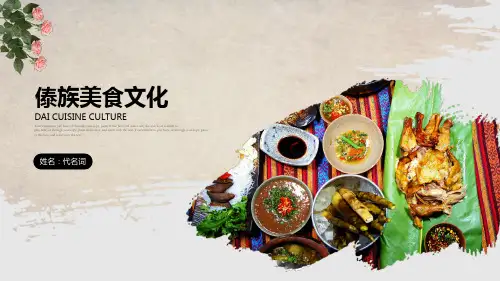
傣族美食文化ppt模板
02
您的内容打在这里,或者通过复制您的文本后,在此框中选择粘贴,并选择只保留文字。
在此输入标题内容
03
您的内容打在这里,或者通过复制您的文本后,在此框中选择粘贴,并选择只保留文字。
在此输入标题内容
04
您的内容打在这里,或者通过复制您的文本后,在此框中选择粘贴,并选择只保留文字。
第一部分
标题内容
您的内容打在这里,或通过复制文本后在此选择粘贴,并选择只保留文字。
标题内容
您的内容打在这里,或通过复制文本后在此选择粘贴,并选择只保留文字。
标题内容
您的内容打在这里,或通过复制文本后在此选择粘贴,并选择只保留文字。
标题内容
您的内容打在这里,或通过复制文本后在此选择粘贴,并选择只保留文字。
第二部分
DAI CUISINE CULTURE
Your content to play here, or through your copy, paste in this box, and select only the text.Your content to play here, or through your copy, paste in this box, and select only the text. Your content to play here, or through your copy, paste in this box, and select only the text.
Your content to play here, or through your copy, paste in this box, and select only the text.Your content to play here, or through your copy, paste in this box, and select only the text. Your content to play here, or through your copy, paste in this box, and select only the text.
傣族的特点和风俗英语作文
傣族的特点和风俗英语作文The Dai people, an ethnic group mainly residing in the southwestern provinces of China and the northern parts of Thailand, possess a rich cultural heritage characterized by unique customs and traditions. In this essay, we will explore the distinctive features and customs of the Dai people.First and foremost, the Dai people are renowned for their vibrant and colorful festivals, which play a significant role in their social and cultural life. One of the most famous festivals is the Water-Splashing Festival, celebrated during the Dai New Year. This festival, also known as the "Songkran Festival" in Thailand, involves joyful water fights where people splash water on each other to cleanse away the misfortunes of the past year and welcome the New Year with fresh hopes and blessings.Another hallmark of Dai culture is their traditional attire, which is both elegant and symbolic. Dai mentypically wear long-sleeved white shirts paired with loose-fitting trousers, while women don exquisite silk dresses adorned with intricate embroidery and silver ornaments. These garments not only reflect the Dai people's aesthetic sensibilities but also carry deep cultural meanings, symbolizing purity, prosperity, and harmony with nature.Furthermore, the Dai people have a rich culinary heritage characterized by diverse flavors and ingredients. Rice, fish, and tropical fruits are staple components of Dai cuisine, with dishes often infused with aromatic herbs and spices such as lemongrass, galangal, and coriander. Some popular delicacies include "bamboo rice," cooked inside bamboo tubes to impart a subtle earthy flavor, and "sour fish soup," a tangy broth made with fresh river fish and fragrant herbs.In addition to their festive celebrations and culinary delights, the Dai people have a strong sense of community and hospitality. Family bonds are highly valued, and communal activities such as village gatherings, traditional dances, and religious rituals serve to strengthen socialcohesion. Moreover, the Dai people are known for their warm and welcoming demeanor towards guests, often treating them to sumptuous feasts and offering heartfelt hospitality.Religion also plays a significant role in Dai culture, with Theravada Buddhism being the predominant faith. Buddhist temples, adorned with intricate carvings and colorful murals, serve as centers of spiritual life and social gatherings for the community. Monks, revered for their wisdom and piety, play an essential role in preserving and transmitting traditional beliefs and values to future generations.In conclusion, the Dai people are characterized bytheir vibrant festivals, elegant attire, diverse cuisine, strong sense of community, and profound spiritual beliefs. Through their rich cultural heritage, they continue to inspire awe and admiration, serving as guardians of tradition and ambassadors of cultural diversity in the modern world.。
傣族英语介绍概述作文模板
傣族英语介绍概述作文模板傣族英语介绍概述。
Introduction to Dai Ethnic Group in English。
The Dai ethnic group, also known as the Tai, is one of the 56 recognized ethnic groups in China. They areprimarily located in the southwestern province of Yunnan,as well as in the neighboring countries of Myanmar, Laos, and Thailand. The Dai people have a rich cultural heritage, with their own language, traditions, and customs that have been passed down through generations. In this article, we will provide an overview of the Dai ethnic group in English, exploring their history, culture, and unique characteristics.History。
The history of the Dai people can be traced back to ancient times, with their roots in the ancient Tai kingdomof Nanzhao and the Dali Kingdom. Over the centuries, theDai people have been influenced by various neighboring cultures, including the Han Chinese, Tibetan, and Burmese. This has resulted in a diverse and unique cultural identity that is distinct from other ethnic groups in the region.The Dai people have also been deeply influenced by Theravada Buddhism, which is the predominant religion in their communities.Language。
傣族泼水节文化介绍PPT

达提拉。
泼水节传说
英达提拉调查得知是负责掌管风、雷、 电、雨、晴、阴的天神捧玛点达拉乍无 视捧玛乍制定的旱、雨、冷三季之规, 凭借广大神通,蓄意作乱。
远古时候,傣族居住的地方遭受一场灾难。夏无雨,春 无风,秋无艳阳,淫雨满冬。需晴不晴,需雨不雨,四 季相淆,庄稼无法种,田荒地芜,人畜遭疫,人类面临 灭顶之灾。那个被人们称为帕雅晚的人,见到如此光景, 决心到天庭弄清原由,禀告天王英达提拉。他以4块木 板作成翅膀,腾空而起,冲入天庭,将人间遇到的灾难 报告了天王英达提拉。
泼
水
节
文
化
介
绍
P
P
T
模
板
Water-sprinkling festival culture introduction PPT
主讲人:XXX
时间:202X.X
泼
水
节
文
化
介
绍
P
P
T
模
板
CONTENTS
01 泼水节介绍 02 泼水节传说 03 泼水节习惯
泼
水
节
文
化
介
绍
P
P
T
模
板
泼水节介绍
The content of PPT for parents meeting of primary and secondary school students
泼水节传说
昆颂的第12个妻子帕哈聪明伶俐,又胆大心细 ,昆颂的头一落地,就呼呼呼地冒出大火, 房子快被火烧着了。帕哈不知所措,3个天神忙喊:“快把头抱起!”帕哈把头抱起来,大火 立即灭了。可是血迹沾在她手上,她的手像拿着火炭一样。3个天神又急忙喊:“11位姐妹 快舀金沙江的吉祥水,洗帕哈的手 ,泼昆颂的头!”姐妹们照天神的话去做,轮流给帕哈泼 水 ,帕哈的手不烫了。吉祥水泼在昆颂的头上,他的头不会烫人了。帕哈抱着昆颂的头,走 到金沙江边,把头丢下江里。除掉昆颂后,12个姑娘获得自由了。
傣族PPT
——傣族特色
傣族简介 特色艺术——孔雀舞 特色节日——泼水节 特色食物——虫类食品
特色服饰
傣族简介
傣族(The Dai ethnic group/ The shan ethnic group),在民族识别以前又被称作摆夷族,是中 国少数民族之一。散居于云南的大部分地方。傣 族通常喜欢聚居在大河流域、坝区和热带地区。 根据2006年全国人口普查,中国傣族人口有126万。 傣族历史悠久,与属壮洞语族的壮族、侗族、水 族、布依族、黎族、毛南族、仡佬族等有着密切 的渊源关系,都是“百越”“骆越”民族的后裔。 具有共同的分部区域、经济生活、文化习俗和民 族特点,语言方面至今仍保留着大量的同源词和 相同的语法结构。
孔雀舞
傣族的历史悠久,从公元1世纪,汉武帝开发西南后就与内 地在经济和文化等方面一直保持往来。东汉时,傣族首领多 次派遣使者率表演乐舞、魔术、杂技者到洛阳献艺。由此可 见,傣族的乐舞文化早在两千年前已有相当高的水平。 • 傣族人民喜爱和崇尚孔雀,不但许多的人们在家园中饲养 孔雀,而且把孔雀视为善良、智慧、美和吉祥、幸福的象征 。在种类繁多的傣族舞蹈中,《孔雀舞》是人们最喜爱、最 熟悉,也是变化和发展幅度最大的舞蹈之一。傣族民间传统 的《孔雀舞》有着很长历史,并被纳入了宗教 的礼仪之中。因此,每年的佛教节日和迎接新年时,都一定 要表演《孔雀舞》。至于必须要表演《孔雀舞》原因,还有 着一段优美的传说。
傣族服饰淡雅美观, 既讲究实用,又有很 强的装饰意味,颇能 体常穿 无领对襟或大襟小袖短衫,下着长管 裤,以白布、水红布或蓝布包头。傣 族妇女的服饰,因地区而异。西双版 纳的傣族妇女上着各色紧身内衣,外 罩紧无领窄袖短衫,下穿彩色统裙, 长及脚面,并用精美的银质腰带束裙; 德宏一带的傣族妇女,一部分也穿大 统裙短上衣,色彩艳丽,一部分(如 潞西、盈江等地)则穿白色或其它浅 色的大襟短衫,下着长裤,束一绣花 围腰,婚后改穿对襟短衫和统裙;新 平、元江一带的“花腰傣”,上穿开 襟短衫,着黑裙,裙上以彩色布条和 银泡装饰,缀成各式图案,光彩耀目。 各种傣族妇女服饰均能显出女性的秀 美窈窕之姿。傣族妇女均爱留长发, 束于头顶,有的以梳子或鲜花为饰, 有的包头巾,有的戴高筒形帽,有的 戴一顶尖顶大斗笠,各呈其秀,各显 其美,颇为别致。
傣族服饰英语简介
傣族服饰英语简介Dai costumes are traditional clothing worn by the Dai ethnic group in China. The Dai people, also known as the Tai people, are one of the ethnic minority groups in Yunnan province and some other parts of Southeast Asia.Dai costumes are known for their vibrant colors, exquisite patterns, and unique craftsmanship. The traditional attire includes various pieces, with different styles for men and women.For women, the traditional Dai costume consists of a long-sleeved blouse with embroidery and silver ornaments, a long skirt with delicate patterns, and a decorative belt. They also wear accessories like silver earrings, necklaces, and bracelets.Men usually wear a loose-fitting jacket with intricate designs and patterns, paired with loose trousers and a wide belt. They often complete their outfit with a turban or a hat.The costumes are made from high-quality silk, cotton, and other local materials, and they reflect the cultural heritage and identity of the Dai people. The designs and patterns often incorporate elements of nature, such as flowers, birds, and animals, which symbolize good luck and prosperity.Dai costumes are not only worn for daily life but also on special occasions like festivals, weddings, and ceremonies. They are an important part of the Dai people's identity and cultural traditions. In recent years, Dai costumes have gained recognition andpopularity outside of the Dai community. They are often showcased in fashion shows, cultural exhibitions, and tourism promotions, representing the unique beauty and rich cultural heritage of the Dai ethnic group.。
傣族泼水节英语介绍
傣族泼水节英语介绍The Dai Water-Splashing Festival.Nestled in the verdant heart of Yunnan Province, China, lies a vibrant ethnic community known for their rich cultural traditions and celebrations. Among these, the most prominent and enchanting is the Dai Water-Splashing Festival, an annual event that not only marks the New Year for the Dai people but also serves as a showcase for their unique culture and heritage.The festival, which falls in mid-April according to the Gregorian calendar, is a time of joy, jubilation, and water play. It's a day where the streets of Dai villages and towns are transformed into vibrant waterways, with people of all ages donning their best attire and taking to the streets with buckets, basins, and water guns. The aim is to drench one another in a symbolic cleansing, washing away the bad luck and impurities of the past year.For the Dai, this festival is not just a celebration;it's an embodiment of their philosophy and belief system. The water, a symbol of purity and life, is used to invoke blessings, pray for a prosperous year, and expressgratitude for the bounty of nature. It's also a way to promote unity and brotherhood among the community, as everyone joins in the fun, regardless of age or status.The festival begins with a series of religious rites, led by the village elders. These rites involve offerings to the spirits and prayers for a bountiful year. Following this, the streets erupt into a狂欢of color and water. People dance, sing, and splash each other with water, creating a festive and lively atmosphere. The young and old alike participate in this joyous celebration, often joining hands and dancing in the streets.The Water-Splashing Festival is not just a day of fun and frolic; it's also a showcase for the rich cultural traditions of the Dai people. On this day, you can witness various cultural performances, including chapter songs (zhang ha), elephant dances, and other traditional dances.These performances not only entertain the crowd but also serve as a way to preserve and promote the Dai culture.The festival also features a vibrant market, where you can find a range of traditional Dai crafts, foods, and other items. From beautiful hand-woven fabrics to delicious local delicacies, the market offers a taste of the rich cultural heritage of the Dai people.The Water-Splashing Festival is not just a local celebration; it has also become a major tourist attraction, drawing visitors from all over the world. The festival provides a unique opportunity for visitors to experience the rich culture, traditions, and spirit of the Dai people.In conclusion, the Dai Water-Splashing Festival is a vibrant and enchanting celebration that embodies the rich cultural heritage and traditions of the Dai people. It's a day of joy, unity, and祈福, where water serves as a symbol of purity, life, and good fortune. As the festival continues to draw visitors from around the globe, itremains a vibrant and important part of the cultural landscape of Yunnan Province.。
傣族—英文课件
3a) Tradition Language-Written Bayeux
3b)Tradition Language-Written Alphabet
3c) Tradition Language-Written
Dialects of The Dai Ethnic Group
• Dai le dialect • De hong dai dialect • Dai beng dialect • Jin ping dai dialect
(held in January, before the Spring Festival)
• Water-splashing
Festival • (held in mid-April)
• Summer Festival
• (15th October )
• Antiphonal Singing
Festival (held in 5th thread tied on the wrist of the bride and groom
5b)Marriage - Ceremony ➢ Invited “Zanha ” to sing
5c)Marriage - Food
6) Religion
When boys grow up to 7-8 years old, they are asked to enter the temple ,and tattoo is an essential step.
1) Location Map of Dai Ethnic Group
2) Introduction - History
Introduction Origin of Dai Brief history