
外研版(三起)-英语-六年级下册-Module 7 Unit 1 He spent about twenty-one hours in space.精品课件
六年级英语上册-Module-7-Unit-1-I-don’t-believe-it教案-外研版(三
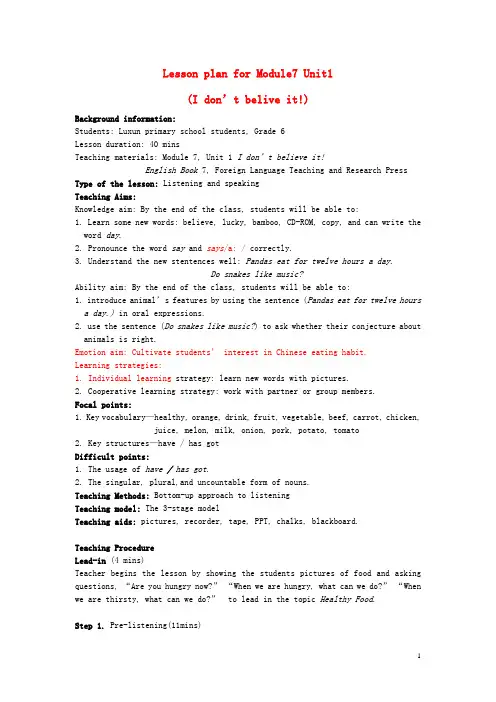
Lesson plan for Module7 Unit1(I don’t belive it!)Background information:Students: Luxun primary school students, Grade 6Lesson duration: 40 minsTeaching materials: Module 7, Unit1 I don’t believe it!English Book 7, Foreign Language Teaching and Research Press Type of the lesson: Listening and speakingTeaching Aims:Knowledge aim: By the end of the class, students will be able to:1. Learn some new words: believe, lucky, bamboo, CD-ROM, copy, and can write the word day.2. Pronounce the word say and says/a: / correctly.3. Understand the new stentences well: Pandas eat for twelve hours a day.Do snakes like music?Ability aim: By the end of the class, students will be able to:1. introduce animal’s features by using the sentence (Pandas eat for twelve hoursa day.) in oral expressions.2. use the sentence (Do snakes like music?) to ask whether their conjecture about animals is right.Emotion aim: Cultivate students’ interest in Chinese eating habit.Learning strategies:1. Individual learning strategy: learn new words with pictures.2. Cooperative learning strategy: work with partner or group members.Focal points:1. Key vocabulary—healthy, orange, drink, fruit, vegetable, beef, carrot, chicken,juice, melon, milk, onion, pork, potato, tomato2. Key structures—have / has gotDifficult points:1. The usage of have / has got.2. The singular, plural,and uncountable form of nouns.Teaching Methods: Bottom-up approach to listeningTeaching model: The 3-stage modelTeaching aids: pictures, recorder, tape, PPT, chalks, blackboard.Teaching ProcedureLead-in(4 mins)Teacher begins the lesson by showing the students pictures of food and asking questions, “Are you hungry now?” “When we are hungry, what can we do?” “When w e are thirsty, what can we do?” to lead in the topic Healthy Food.Step 1. Pre-listening(11mins)1. Write the words food and drink on the blackboard.2. Ask a student “What did you eat yesterday?” in order to classify the food into3 kinds, fruit, vegetable and meat. Blackboard layout as follow,3.Ask students “What’ the food?” students may repeat“Fruit, vegetables andmeat are food.”4. Ask students “What fruit/ vegetables/ meat/ drink do you know?”, and writetheir answers on the blackboard. When talk about juice, explain the expressions of different kinds of juice.(e.g. apple juice)5. Ask students to open their book and finish the three activities(Activity 1,2, 3) individually. Then call back the answers from the whole class as complete sentences.(e.g. Picture 1 is fruit, and in picture 1 there is an apple, a melon and an orange.)Activity 1 Work in pairs. Match the words with the pictures.Answersfood: 1;2;3 drink:4Activity 2 Label the food in the pictures with these words.Answersfruit:1 meat:3 vegetables:2Activity 3 Label the food and drink with these words.Answersa. melonb. applec. oranged. chickene. porkf. beefg. tomato h. potato i. carrot j. onion k. water l. milk m. Juice6. Explain and show the singular, plural, and uncountable form of nouns. Then askstudents to write the plural form near the words on P26, Ativity 1, and then askstudents to read the words on PPT.Step II. While-listening(15mins)1. Do Activity 4①. Teacher ask “Do you know Betty? What Betty and her mother have got?” then play the recording and ask students to focus on the shopping list.②. Play the recording again for them to check. Call back the answers from the wholeclass.③. Ask students work in pairs and make dialogue.(e.g. A: Have they got any apples?B: Yes, they have.)Answersoranges√ beef × onions × apples√ pork carrotsmelons× tomatoes√ milk chicken√ potatoes√ juice2. Do Activity 6①. Ask students to read the four sentences in Activity 6 silently, then one studentto read loudly.②. Play the recording for the students.③. Call back the answers from the whole class.Answers1. juice2. meat3. Yes, they have.4. No, they haven’t.④.Play the conversation again and pause after each phrase, point out the grammarpoint.⑤. Ask students to read these dialogues after the tape individually, and thenputthem into groups of four to practice the dialogue.Step III. Post-listening1.Do Activity 7(10mins)①Play the recording once without stopping.②Play the recording again and stop at the end of each line. Ask the whole classto repeat.③Ask students to practice in pairs.2.Do Activity 8. Choose six words in Activity 4. Work in pairs and makedialogues.①Ask students to choose six words secretly and not tell anyone.②Read the example with the class. Then pair them to make dialogues..③Ask some pairs of them to present the dialogues.Homework: Practice the conversation in Activity 5 and sounds in Activity 7.Blackboard Layout: key words and sentences。
Module7Unit1Idon’tbelieveit!(教学设计)外研版(三起)英语六年级上册

目标:通过具体案例,让学生深入了解“I don't believe it!”这个表达方式的特性。
过程:
选择几个典型的“I don't believe it!”案例进行分析。
详细介绍每个案例的背景、特点和意义,让学生全面了解“I don't believe it!”的多样性或复杂性。
2.拓展建议:
-口语练习:鼓励学生在家中与家人或朋友进行口语练习,用“I don't believe it!”描述一些令人惊讶的事情,提高口语表达能力和听力理解能力。
-写作练习:鼓励学生撰写一篇关于“I don't believe it!”的短文或日记,描述自己经历过的令人惊讶的事情,提高写作能力和表达能力。
学生对英语学习有较高的兴趣,特别是通过故事情节和角色扮演等互动活动。在能力方面,学生具有较强的自主学习和合作学习能力,能够积极参与课堂活动。在学习风格方面,学生偏好通过视觉和听觉方式学习,喜欢通过参与实践活动来学习。
3.学生可能遇到的困难和挑战:
在本章节的学习中,学生可能遇到以下困难和挑战:
-词汇和句型的记忆和运用,需要通过大量的练习和实际语境来巩固。
2.互动式教学:鼓励学生积极参与课堂讨论和小组活动,通过提问、回答和互动,提高学生的参与度和学习兴趣。
3.多元化评价:采用多元化的评价方式,如口头报告、小组讨论、作业完成情况等,全面评估学生的学习成果,激发学生的学习动力。
(二)存在主要问题
1.教学管理:课堂纪律管理有待加强,部分学生在课堂上注意力不集中,需要采取更有效的管理措施。
在文化意识方面,本章节的故事情节涉及不同的文化背景,学生将学习如何尊重和理解不同的文化,并培养他们的跨文化交际能力。
外研版(三起)英语六年级上册Module7Unit1Idon'tbelieveit教案

外研版(三起)英语六年级上册 Module7 Unit1 I don'tbelieve it教案一、教学内容本课为外研版(三起)英语六年级上册 Module7 Unit1 I don't believe it,主要教学内容包括一般过去时态的运用,以及描述过去发生的事情。
通过本课的学习,学生能够掌握一般过去时态的构成和用法,并能够运用所学知识描述过去发生的事情。
二、教学目标1. 知识与技能:学生能够掌握一般过去时态的构成和用法,并能够运用所学知识描述过去发生的事情。
2. 过程与方法:通过听、说、读、写的训练,提高学生的英语语言运用能力。
3. 情感态度与价值观:培养学生对英语学习的兴趣,提高学生的合作意识。
三、教学难点1. 一般过去时态的构成和用法。
2. 描述过去发生的事情的句型结构。
四、教具学具准备1. 教具:多媒体课件、黑板、教材。
2. 学具:英语课本、练习本、文具。
五、教学过程1. 导入a. 跟唱歌曲“Yesterday once more”b. 老师出示一张图片,描述图中发生的事情,引导学生关注过去时态。
2. 新课展示a. 老师创设情境,展示本课的主要句型。
b. 学生跟读并模仿句型。
3. 趣味练习a. 学生两人一组,用一般过去时态描述过去的事情。
b. 老师邀请几组学生上台展示,并给予评价。
4. 巩固提高a. 老师出示一些图片,学生用一般过去时态描述图片中的事情。
b. 学生互相交换练习,互相评价。
5. 课堂小结b. 学生分享学习收获。
六、板书设计1. 课程外研版(三起)英语六年级上册 Module7 Unit1 I don't believe it2. 重点句型:一般过去时态的构成和用法,描述过去发生的事情的句型结构。
3. 课堂活动安排:导入、新课展示、趣味练习、巩固提高、课堂小结。
七、作业设计1. 听力练习:听懂并能够复述本课的对话内容。
2. 口语练习:用一般过去时态描述过去的事情,不少于5句话。
2020春外研版六年级英语 下册 Module 7 unit1授课课件+作业

he did a lot of work there.
lots of people watched the video.
Yang Liwei was in it.
they were happy.
趣味活动:火眼金睛。 1. 小组合作,先准备所学过的不规则的动词原形和过去式的
词卡,分别放在两个盒子里。 2. 选派一人从盒子中摸出一张词卡,并大声读出来,其他成
Make sentences
Shenzhou V flew into space
Yang Liwei spent about twenty one hours in space
Yang Liwei made a video in space
Yang Liwei’s family met him at the airport
1. Neil Armstrong flew to the moon ___i_n____ 1969. 2. Li Qing spent __a_b_o_u_t__ three hours in the libra三
六
七
八
习题源于《典中点》
提示:点击 进入习题
四
五
九
习题源于《典中点》
一、根据图片和首字母提示补全句子。
1.
2.
1. October 1st is National Day in China. 2. Mum spends one hour reading books every night.
)/ spent spend + 时间+(in+)地点.
例句:She spent five years in England. 她在英国度过了五年。
外研版(三起)-英语-六年级下册--外研版三起Module 7 Unit 2教材同步讲解
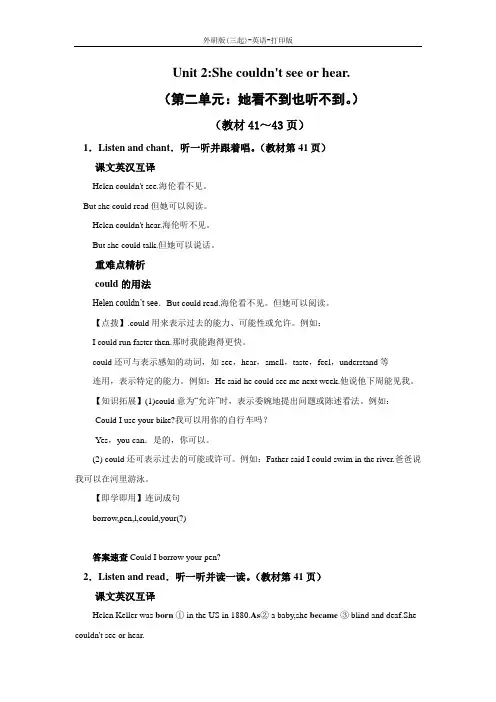
Unit 2:She couldn't see or hear.(第二单元:她看不到也听不到。
)(教材41~43页)1.Listen and chant.听一听并跟着唱。
(教材第41页)课文英汉互译Helen couldn't see.海伦看不见。
But she could read但她可以阅读。
Helen couldn't hear.海伦听不见。
But she could talk.但她可以说话。
重难点精析could的用法Helen couldn’t see.But could read.海伦看不见。
但她可以阅读。
【点拨】.could用来表示过去的能力、可能性或允许。
例如:I could run faster then.那时我能跑得更快。
could还可与表示感知的动词,如see,hear,smell,taste,feel,understand等连用,表示特定的能力。
例如:He said he could see me next week.他说他下周能见我。
【知识拓展】(1)could意为“允许”时,表示委婉地提出问题或陈述看法。
例如:-Could I use your bike?我可以用你的自行车吗?-Yes,you can.是的,你可以。
(2) could还可表示过去的可能或许可。
例如:Father said I could swim in the river.爸爸说我可以在河里游泳。
【即学即用】连词成句borrow,pen,l,could,your(?)答案速查Could I borrow your pen?2.Listen and read.听一听并读一读。
(教材第41页)课文英汉互译Helen Keller was born① in the US in 1880.As② a baby,she became③ blind and deaf.She couldn't see or hear.海伦·凯勒于1880年出生在美国。
Module7 Unit1 I don't believe it(课件)六年级英语上册(外研版三起)

gives
a present
What is the present? It's a DVD.
Look and say What are they doing?
They are watching the DVD together.
Listen and answer What do pandas love? How many hours do pandas eat a day?
Grandma: Why does the snake come out of the box? Do snakes like music?
Daming: Well, it says snakes can’t hear. They think the flute is dangerous.
Grandma: So the snake gets frightened!
Read and answer Do snakes like music? No, they don't.
Why?
Because snakes can't hear.
snake ,snake, the snake gets frightened.
Listen and repeat
Daming: And look at this picture. The snake can use its body to dance.
They think the flute is dangerous.
Grandma: So the snake gets frightened!
要求:
1. 分工明确,人人参与。 2. 语音正确、流利。 3. 注意语音、语调。
外研版(三起)-英语-六年级下册--外研版三起Module 7 Unit 1教材同步讲解
【新课堂】外研版三起Module 7 Unit 1教材同步讲解模块内容导读新课导学2003不一般,“神五”flew上了天,taikonaut杨利伟,21 hours太空游,儿子son记得牢,be proud of很自豪,国人、家人齐欢笑,科技强国最有效。
亲爱的同学们,让我们一起来看一下英雄杨利伟的太空之旅吧!语法索引Unit l(第一单元)1.一般过去时的用法 (113)2.ago的用法 (113)3.spend的用法 (115)4.also的用法 (116)5.辨析:too, also与either (116)6.proud的用法 (116)Unit 2(第二单元)7.could的用法 (119)8I be born的用法 (121)9.as的用法 (121)10.由助动词Did引导的一般疑问句的用法 (123)模块目标预览学前必备知识目标语音能够了解并掌握音标//,//,//,/d/;能够区分双元音//和/e/的发音。
词汇同学们,下列词汇要求你们能听懂、会说、会读、会写,你们能做到吗?单词model(模范,榜样),flew( fly的过去式)(飞,飞行),became(become的过去式)(变成),spent(spend的过去式)(度过),live(活着),proud(感到自豪的,感到骄傲的),about (大约),video(录像),born(出生,诞生),as(作为),herself(她自己)短语a long time ago(很久以前),in space(在太空中),be from(来自),make a video(制作一份录像),very famous(非常有名),be proud of(为……感到骄傲),come back(返回),go to the airport(去机场),a great day(美好的一天),fly into(飞入),all over(到处,遍及,处处) 同学们.下列词汇要求你们能听懂、会说、会读,你们能做到吗?单词Confucius(孔子,中国哲学家、教育家),blind(盲的),deaf(聋的),taikonaut(中国的太空人,宇航员),video(录像),travel(旅行),people(人们),famous(著名的)短语in October(在十月),a taikonaut(-名中国宇航员),space travel(太空旅行),on Saturday(在周六),blind and deaf(又盲又聋),learn to speak(学说话),lots of animals(许多动物)句型同学们,下列句型要求你们能听懂、会说、会读、会写,你们能做到吗?1.I flew to the earth in it a long time ago.很久以前我乘坐它飞向地球。
外研版(三起)-英语-六年级下册--外研版三起Module7Unit2教材同步讲解
外研版(三起)-英语-六年级下册--外研版三起Module7Unit2教材同步讲解Unit 2:She couldn't see or hear.(第⼆单元:她看不到也听不到。
)(教材41~43页)1.Listen and chant.听⼀听并跟着唱。
(教材第41页)课⽂英汉互译Helen couldn't see.海伦看不见。
But she could read但她可以阅读。
Helen couldn't hear.海伦听不见。
But she could talk.但她可以说话。
重难点精析could的⽤法Helen couldn’t see.But could read.海伦看不见。
但她可以阅读。
【点拨】.could⽤来表⽰过去的能⼒、可能性或允许。
例如:I could run faster then.那时我能跑得更快。
could还可与表⽰感知的动词,如see,hear,smell,taste,feel,understand等连⽤,表⽰特定的能⼒。
例如:He said he could see me next week.他说他下周能见我。
【知识拓展】(1)could意为“允许”时,表⽰委婉地提出问题或陈述看法。
例如:-Could I use your bike?我可以⽤你的⾃⾏车吗?-Yes,you can.是的,你可以。
(2) could还可表⽰过去的可能或许可。
例如:Father said I could swim in the river.爸爸说我可以在河⾥游泳。
【即学即⽤】连词成句borrow,pen,l,could,your(?)答案速查Could I borrow your pen?2.Listen and read.听⼀听并读⼀读。
(教材第41页)课⽂英汉互译Helen Keller was born① in the US in 1880.As② a baby,she became③ blind and deaf.She couldn't see or hear.海伦·凯勒于1880年出⽣在美国。
Module7Unit1What’sthis?(教案)外研版(三起)英语三年级上册
教案:Module 7 Unit 1 What’s this?一、教学目标1. 知识目标:(1)能够听懂、会说、会读本节课的生词和重点句子。
(2)能够用英语简单询问和描述物品。
2. 能力目标:(1)能够正确使用所学词汇和句型进行简单的日常交流。
(2)能够通过观察和描述,提高自己的观察力和表达能力。
3. 情感目标:(1)培养学生的合作意识,学会分享和交流。
(2)激发学生学习英语的兴趣,提高他们的自信心。
二、教学内容2. 句型:What’s this? It’s a/an… What’s that? It’s a/an…3. 情境:在文具店或学校教室中,描述和询问物品。
三、教学重点与难点1. 重点:能够正确拼读和书写本节课的生词,能够用句型What’s this?和What’s that?询问和描述物品。
2. 难点:能够正确运用What’s this?和What’s that?句型,询问和描述不熟悉的物品。
四、教具与学具准备1. 教具:PPT、卡片、文具、教室物品等。
2. 学具:课本、练习册、文具等。
五、教学过程1. 热身(5分钟)(1)跟唱歌曲“Hello, hello, hello!”,激发学生的学习兴趣。
(2)老师出示各种文具,让学生用中文描述这些文具。
2. 引入(10分钟)(1)老师出示一个神秘的盒子,引导学生猜测盒子里有什么。
(2)老师逐个出示文具,引导学生用中文描述这些文具。
3. 呈现(10分钟)(1)老师出示PPT,呈现本节课的生词和句型。
(2)老师用生词和句型进行示范,让学生跟随老师一起说。
4. 练习(10分钟)(1)小组活动:学生分小组,用所学生词和句型进行交流,描述小组成员的文具。
(2)游戏:老师出示各种文具,学生用所学生词和句型进行描述,老师判断学生是否能够正确描述。
5. 巩固(5分钟)(1)小组活动:学生分小组,用所学生词和句型进行角色扮演,模拟在文具店或学校教室的场景。
(2)全班活动:老师选取几个小组的表演,让全班学生一起进行评价。
Module 7(说课稿)外研版(三起)英语六年级下册
Module 7(说课稿)外研版(三起)英语六年级下册教材情况•课本:《外研版(三起)英语》六年级下册•模块:Module 7•课时数量:4课时•课型:听说课教学目标1.通过本节课对G等话题的学习,培养学生表达能力和交流技能。
2.培养学生观察能力,学会用形、色、大小等形容词来描绘事物。
3.培养学生的语感,提高学生的听力和口语水平。
4.让学生了解不同国家节日的文化背景,培养跨文化的认知。
教学内容及教学流程教学内容本节课的主要内容为G等话题,通过学习名家卡菲·安桑等人的图片,引导学生用形容词描述画面中的元素。
同时,还介绍了美国、英国、法国、日本等四个国家的主要节日和文化活动。
教学流程Step 1 自主学习学生自行观看课本中的图片,尝试用自己的语言描述图片中的元素及场景,教师适时提供指导。
Step 2 听力训练播放录音,由教师逐句进行简要解释,让学生理解对话中的重点,强化记忆。
听完对话后,学生可以配合图片来进行理解并复述。
Step 3 语音练习让学生跟录音模仿语音,并结合课本的指导进行发音练习。
注重单词发音、连读、语调等方面的训练。
Step 4 文化背景学习介绍美国、英国、法国、日本等四个国家的主要节日和文化活动,让学生了解这些节日的文化背景以及在各国间的差异。
Step 5 互动交流让学生在课堂上进行互动交流,结合学过的语言知识来进行G等话题的表达。
鼓励学生尝试多种表达方式,提高表达能力和语感。
教学方法本节课采用听说课的教学方式,注重学生的自主探究,借助多媒体描绘画面和文化活动,增强了学生的学习兴趣和主动性。
结合口语训练和语音练习,同时加强互动、交流,体现了“以学生为中心”的教学理念。
教学评价1.通过自主描述、跟读句子、口语练习和交流等环节,全方位的提升了学生听、说、读、写等各个方面的语言技能。
2.引入多媒体素材和跨文化学习元素,培养了学生的语感和文化认知。
3.注重学生的主动发现和思考,激发创造力和自我表达能力。